%4b%45%53
-
 KAIST to Showcase Noise Reduction and Robotics Technologies at 2026 Tech Fair
Technologies that reduce noise using thin, lightweight structures, make wireless charging devices lighter, and enable robots to navigate and perform tasks autonomously will be on display at the 2026 KAIST Tech Fair. The event will give companies an opportunity to explore technologies developed in KAIST laboratories and discuss potential applications in their products and manufacturing processes directly with the researchers.
KAIST announced on October 12 that it will hold the 2026 KAIST Tech Fair on October 13 in conjunction with KES 2026 (Korea Electronics Show) at COEX in Seoul. The event will showcase six technologies with strong commercial potential, alongside products and services from four faculty-founded startups, and offer consultations on technology transfer and joint research.
“KAIST’s vision of ‘Beyond Laboratory’ is about ensuring that outstanding research outcomes extend beyond the laboratory to create real value for industry and society,” said KAIST President Choongsik Bae. “We hope this year’s Tech Fair will connect KAIST’s innovative technologies with industry needs and lead to tangible partnerships in technology transfer and joint research that create new value for industry.”
KAIST will operate the KAIST Special Pavilion in Hall A at COEX from October 13 to 16. Industry representatives and other visitors will be able to explore the technologies and the faculty-founded startups’ products and services, as well as learn about KAIST’s support programs for technology commercialization.
A technology transfer briefing will take place on October 13, starting at 1:30 p.m., on the KES Stage in Hall B. KAIST researchers will present six technologies and explain their potential industrial applications and prospects for commercialization:
• Noise reduction technology that uses thin, lightweight structures to reduce noise and vibration (Professor Wonju Jeon, Department of Mechanical Engineering).
• Autonomous robotics technology that enables a robot to use its robotic arm to push obstacles out of the way and continue along its path (Professor Sung-Eui Yoon, School of Computing).
• Wireless charging component design technology that makes wireless charging devices lighter and more efficient (Dr. Changwoo Lee, Professor In Gwun Jang’s laboratory, Cho Chun Shik Graduate School of Mobility).
• Precision optical imaging technology that uses light to capture clear three-dimensional images within tissue over an extended depth range (Professor Hongki Yoo, Department of Mechanical Engineering).
• Antibacterial metal filter technology that allows filters to be washed and reused multiple times (Professor Sanha Kim, Department of Mechanical Engineering).
• Multicolor reflective material technology that uses microscopic dome-shaped structures to reflect light and produce a variety of colors and images (Professor Shin-Hyun Kim, Department of Chemical and Biomolecular Engineering).
Each presentation will include a 15-minute overview followed by a five-minute Q&A session. Industry representatives will be able to ask researchers how the technologies work, what sets them apart from existing approaches, and how they might be applied to their own products or processes.
One-on-one technology transfer consultations will also be held at the KES Lounge in Hall B. KAIST will match companies that register in advance with researchers to discuss technology adoption, joint research, further development and commercialization.
Four faculty-founded startups will exhibit at the KAIST Special Pavilion, showcasing their main products and technologies and meeting with companies, investors and other industry representatives.
DAIM Technology will present simulation technology for unmanned factories and autonomous manufacturing, along with systems for coordinating and controlling multiple robots. MilliTrack will showcase precision location tracking and spatial recognition solutions for industrial environments.
A2US will introduce air and water purification solutions based on technology that uses electricity to disperse water into fine droplets. Hypergram will showcase an industrial inspection solution combining AI with hyperspectral imaging, which analyzes light across a broad range of wavelengths. The solution detects contamination and surface defects that are difficult to identify with conventional cameras or the naked eye.
In addition to the faculty startup zone, the pavilion will feature an area showcasing technologies with commercial potential, an information area for the KAIST Office of Technology Value Creation, and a Brand KAIST area. Together, these exhibits will illustrate KAIST’s approach to technology commercialization, from identifying promising research outcomes and securing intellectual property rights to technology transfer, startup creation and further commercialization.
The KAIST Special Pavilion will also be a stop on the official KES VIP tour, providing an opportunity to introduce KAIST’s research outcomes and faculty-founded startups to representatives of major institutions and industries from Korea and around the world.
KAIST will support companies in taking the next steps after the event, helping turn discussions with researchers into technology transfer agreements, joint research and other forms of collaboration. It also plans to generate greater industrial and economic value from its research by tailoring technology marketing to industry needs and strengthening the links between technology transfer and startup creation.
Companies interested in attending the briefing or requesting a consultation can register in advance through the KAIST TLO website. For inquiries about the event or participation, please contact the KAIST Office of Technology Value Creation.
Registration: KAIST TLO website https://tlo.kaist.ac.kr/
Contact: KAIST Office of Technology Value Creation
Tel: +82-42-350-2978
Email: iptc@kaist.ac.kr
2026.10.12 View 349
KAIST to Showcase Noise Reduction and Robotics Technologies at 2026 Tech Fair
Technologies that reduce noise using thin, lightweight structures, make wireless charging devices lighter, and enable robots to navigate and perform tasks autonomously will be on display at the 2026 KAIST Tech Fair. The event will give companies an opportunity to explore technologies developed in KAIST laboratories and discuss potential applications in their products and manufacturing processes directly with the researchers.
KAIST announced on October 12 that it will hold the 2026 KAIST Tech Fair on October 13 in conjunction with KES 2026 (Korea Electronics Show) at COEX in Seoul. The event will showcase six technologies with strong commercial potential, alongside products and services from four faculty-founded startups, and offer consultations on technology transfer and joint research.
“KAIST’s vision of ‘Beyond Laboratory’ is about ensuring that outstanding research outcomes extend beyond the laboratory to create real value for industry and society,” said KAIST President Choongsik Bae. “We hope this year’s Tech Fair will connect KAIST’s innovative technologies with industry needs and lead to tangible partnerships in technology transfer and joint research that create new value for industry.”
KAIST will operate the KAIST Special Pavilion in Hall A at COEX from October 13 to 16. Industry representatives and other visitors will be able to explore the technologies and the faculty-founded startups’ products and services, as well as learn about KAIST’s support programs for technology commercialization.
A technology transfer briefing will take place on October 13, starting at 1:30 p.m., on the KES Stage in Hall B. KAIST researchers will present six technologies and explain their potential industrial applications and prospects for commercialization:
• Noise reduction technology that uses thin, lightweight structures to reduce noise and vibration (Professor Wonju Jeon, Department of Mechanical Engineering).
• Autonomous robotics technology that enables a robot to use its robotic arm to push obstacles out of the way and continue along its path (Professor Sung-Eui Yoon, School of Computing).
• Wireless charging component design technology that makes wireless charging devices lighter and more efficient (Dr. Changwoo Lee, Professor In Gwun Jang’s laboratory, Cho Chun Shik Graduate School of Mobility).
• Precision optical imaging technology that uses light to capture clear three-dimensional images within tissue over an extended depth range (Professor Hongki Yoo, Department of Mechanical Engineering).
• Antibacterial metal filter technology that allows filters to be washed and reused multiple times (Professor Sanha Kim, Department of Mechanical Engineering).
• Multicolor reflective material technology that uses microscopic dome-shaped structures to reflect light and produce a variety of colors and images (Professor Shin-Hyun Kim, Department of Chemical and Biomolecular Engineering).
Each presentation will include a 15-minute overview followed by a five-minute Q&A session. Industry representatives will be able to ask researchers how the technologies work, what sets them apart from existing approaches, and how they might be applied to their own products or processes.
One-on-one technology transfer consultations will also be held at the KES Lounge in Hall B. KAIST will match companies that register in advance with researchers to discuss technology adoption, joint research, further development and commercialization.
Four faculty-founded startups will exhibit at the KAIST Special Pavilion, showcasing their main products and technologies and meeting with companies, investors and other industry representatives.
DAIM Technology will present simulation technology for unmanned factories and autonomous manufacturing, along with systems for coordinating and controlling multiple robots. MilliTrack will showcase precision location tracking and spatial recognition solutions for industrial environments.
A2US will introduce air and water purification solutions based on technology that uses electricity to disperse water into fine droplets. Hypergram will showcase an industrial inspection solution combining AI with hyperspectral imaging, which analyzes light across a broad range of wavelengths. The solution detects contamination and surface defects that are difficult to identify with conventional cameras or the naked eye.
In addition to the faculty startup zone, the pavilion will feature an area showcasing technologies with commercial potential, an information area for the KAIST Office of Technology Value Creation, and a Brand KAIST area. Together, these exhibits will illustrate KAIST’s approach to technology commercialization, from identifying promising research outcomes and securing intellectual property rights to technology transfer, startup creation and further commercialization.
The KAIST Special Pavilion will also be a stop on the official KES VIP tour, providing an opportunity to introduce KAIST’s research outcomes and faculty-founded startups to representatives of major institutions and industries from Korea and around the world.
KAIST will support companies in taking the next steps after the event, helping turn discussions with researchers into technology transfer agreements, joint research and other forms of collaboration. It also plans to generate greater industrial and economic value from its research by tailoring technology marketing to industry needs and strengthening the links between technology transfer and startup creation.
Companies interested in attending the briefing or requesting a consultation can register in advance through the KAIST TLO website. For inquiries about the event or participation, please contact the KAIST Office of Technology Value Creation.
Registration: KAIST TLO website https://tlo.kaist.ac.kr/
Contact: KAIST Office of Technology Value Creation
Tel: +82-42-350-2978
Email: iptc@kaist.ac.kr
2026.10.12 View 349 -
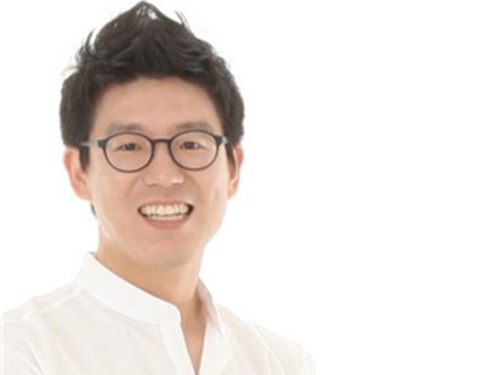 Professor Jae Kyoung Kim Receives the 2017 HSFP Award
The Human Frontier Science Program (HSFP), one of the most competitive research grants in life sciences, has funded researchers worldwide across and beyond the field since 1990. Each year, the program selects a handful of recipients who push the envelope of basic research in biology to bring breakthroughs from novel approaches. Among its 7,000 recipients thus far, 26 scientists have received the Nobel Prize. For that reason, HSFP grants are often referred to as “Nobel Prize Grants.”
Professor Jae Kyoung Kim of the Mathematical Sciences Department at KAIST and his international collaborators, Professor Robert Havekes from the University of Groningen, the Netherlands, Professor Sara Aton from the University of Michigan in Ann Arbor, the United States, and Professor Matias Zurbriggen from the University of Düsseldorf, Germany, won the Young Investigator Grants of the 2017 HSFP.
The 30 winning teams of the 2017 competition (in 9 Young Investigator Grants and 21 Program Grants) went through a rigorous year-long review process from a total of 1,073 applications submitted from more than 60 countries around the world. Each winning team will receive financial support averaging 110,000-125,000 USD per year for three years.
Although Professor Kim was trained as a mathematician, he has extended his research focus into biological sciences and attempted to solve some of the most difficult problems in biology by employing mathematical theories and applications including nonlinear dynamics, stochastic process, singular perturbation, and parameter estimation.
The project that won the Young Investigator Grants was a study on how a molecular circadian clock may affect sleep-regulated neurophysiology in mammals. Physiological and metabolic processes such as sleep, blood pressure, and hormone secretion exhibit circadian rhythms in mammals. Professor Kim used mathematical modeling and analysis to explain that the mammalian circadian clock is a hierarchical system, in which the master clock in the superchiasmatic nucleus, a tiny region in the brain that controls circadian rhythms, functions as a pacemaker and synchronizer of peripheral clocks to generate coherent systematic rhythms throughout the body.
Professor Kim said, “The mechanisms of our neuronal and hormonal activities regulating many of our bodily functions over a 24-hour cycle are not yet fully known. We go to sleep every night, but do not really know how it affects our brain functions. I hope my experience in mathematics, along with insights from biologists, can find meaningful answers to some of today’s puzzling problems in biological sciences, for example, revealing the complexities of our brains and showing how they work.”
“In the meantime, I hope collaborations between the fields of mathematics and biology, as yet a rare phenomenon in the Korean scientific community, will become more popular in the near future.”
Professor Kim received his doctoral degree in Applied and Interdisciplinary Mathematics in 2013 from the University of Michigan and joined KAIST in 2015. He has published numerous articles in reputable science journals such as Science, Molecular Cell, Proceedings of the National Academy of Sciences, and Nature Communications.
Both the Program Grants and Young Investigator Grants support international teams with members from at least two countries for innovative and creative research. This year, the Program Grants were awarded to research topics ranging from the evolution of counting and the role of extracellular vesicles in breast cancer bone metastasis to the examination of obesity from a mechanobiological point of view.
The Young Investigator Grants are limited to teams that established their independent research within the last five years and received their doctoral degrees within the last decade. Besides Professor Kim’s study, such topics as the use of infrasound for navigation by seabirds and protein formation in photochemistry and photophysics were awarded in 2017.
Full lists of the 2017 HFSP winners are available at: http://www.hfsp.org/awardees/newly-awarded.
About the Human Frontier Science Program (HFSP):
The HFSP is a research funding program implemented by the International Human Frontier Science Program (HFSPO) based in Strasbourg, France. It promotes intercontinental collaboration and training in cutting-edge, interdisciplinary research specializing in life sciences. Founded in 1989, the HFSPO consists of the European Union and 14 other countries including the G7 nations and South Korea.
2017.03.21 View 19596
Professor Jae Kyoung Kim Receives the 2017 HSFP Award
The Human Frontier Science Program (HSFP), one of the most competitive research grants in life sciences, has funded researchers worldwide across and beyond the field since 1990. Each year, the program selects a handful of recipients who push the envelope of basic research in biology to bring breakthroughs from novel approaches. Among its 7,000 recipients thus far, 26 scientists have received the Nobel Prize. For that reason, HSFP grants are often referred to as “Nobel Prize Grants.”
Professor Jae Kyoung Kim of the Mathematical Sciences Department at KAIST and his international collaborators, Professor Robert Havekes from the University of Groningen, the Netherlands, Professor Sara Aton from the University of Michigan in Ann Arbor, the United States, and Professor Matias Zurbriggen from the University of Düsseldorf, Germany, won the Young Investigator Grants of the 2017 HSFP.
The 30 winning teams of the 2017 competition (in 9 Young Investigator Grants and 21 Program Grants) went through a rigorous year-long review process from a total of 1,073 applications submitted from more than 60 countries around the world. Each winning team will receive financial support averaging 110,000-125,000 USD per year for three years.
Although Professor Kim was trained as a mathematician, he has extended his research focus into biological sciences and attempted to solve some of the most difficult problems in biology by employing mathematical theories and applications including nonlinear dynamics, stochastic process, singular perturbation, and parameter estimation.
The project that won the Young Investigator Grants was a study on how a molecular circadian clock may affect sleep-regulated neurophysiology in mammals. Physiological and metabolic processes such as sleep, blood pressure, and hormone secretion exhibit circadian rhythms in mammals. Professor Kim used mathematical modeling and analysis to explain that the mammalian circadian clock is a hierarchical system, in which the master clock in the superchiasmatic nucleus, a tiny region in the brain that controls circadian rhythms, functions as a pacemaker and synchronizer of peripheral clocks to generate coherent systematic rhythms throughout the body.
Professor Kim said, “The mechanisms of our neuronal and hormonal activities regulating many of our bodily functions over a 24-hour cycle are not yet fully known. We go to sleep every night, but do not really know how it affects our brain functions. I hope my experience in mathematics, along with insights from biologists, can find meaningful answers to some of today’s puzzling problems in biological sciences, for example, revealing the complexities of our brains and showing how they work.”
“In the meantime, I hope collaborations between the fields of mathematics and biology, as yet a rare phenomenon in the Korean scientific community, will become more popular in the near future.”
Professor Kim received his doctoral degree in Applied and Interdisciplinary Mathematics in 2013 from the University of Michigan and joined KAIST in 2015. He has published numerous articles in reputable science journals such as Science, Molecular Cell, Proceedings of the National Academy of Sciences, and Nature Communications.
Both the Program Grants and Young Investigator Grants support international teams with members from at least two countries for innovative and creative research. This year, the Program Grants were awarded to research topics ranging from the evolution of counting and the role of extracellular vesicles in breast cancer bone metastasis to the examination of obesity from a mechanobiological point of view.
The Young Investigator Grants are limited to teams that established their independent research within the last five years and received their doctoral degrees within the last decade. Besides Professor Kim’s study, such topics as the use of infrasound for navigation by seabirds and protein formation in photochemistry and photophysics were awarded in 2017.
Full lists of the 2017 HFSP winners are available at: http://www.hfsp.org/awardees/newly-awarded.
About the Human Frontier Science Program (HFSP):
The HFSP is a research funding program implemented by the International Human Frontier Science Program (HFSPO) based in Strasbourg, France. It promotes intercontinental collaboration and training in cutting-edge, interdisciplinary research specializing in life sciences. Founded in 1989, the HFSPO consists of the European Union and 14 other countries including the G7 nations and South Korea.
2017.03.21 View 19596