%53%61%6e%67%6d%69%6e%20%42%61%65
-
 KAIST’s Solarstill Box Wins Red Dot’s Highest Honor for Producing Clean Water Using Only Sunlight
A KAIST design that produces clean drinking water using only sunlight, without electricity or fuel, has won one of the world’s most prestigious design awards. The design received high international recognition not only for its technical completeness, but also for its sustainable approach, which enables residents in regions affected by water scarcity and water pollution to produce and manage clean water on their own.
KAIST (President Choongsik Bae) announced on the 17th of July that “Solarstill Box,” a solar-powered water purification and desalination device developed by a research team led by Professor Sangmin Bae from the Department of Industrial Design, has won the “Red Dot: Best of the Best” award in the Social Impact category at the Red Dot Award: Design Concept 2026, a globally renowned design competition.
The Red Dot Design Award is considered one of the world’s three major design awards, along with Germany’s iF Design Award and the United States’ IDEA (International Design Excellence Awards). Among them, the “Best of the Best” is the highest distinction, awarded to works that demonstrate the greatest innovation and completeness in each category.
This award is significant because it goes beyond recognition of product design excellence. It represents international acknowledgment that design can help address the shared human challenge of clean water access and create sustainable social value.
Solarstill Box is a low-cost water purification and desalination device that converts seawater or water containing salt and pollutants into drinking water through solar distillation. It was developed for coastal areas, saline regions, and off-grid communities that rely on contaminated water sources. The device is designed to produce clean water using only solar energy, without electricity, fuel, or separate filters.
The stepped trays inside the device increase the surface area for evaporation, improving the efficiency of solar distillation. As evaporated water vapor condenses on the transparent cover, contaminants such as salt, heavy metals, and bacteria are naturally separated, allowing only clean water to be collected.
Solarstill Box is also made of flat components based on Plaveneer sheets, allowing it to be produced and transported in a flat-pack format. Anyone can assemble it locally in about 20 minutes, and maintenance costs are reduced because only damaged parts need to be replaced. Another key feature is that it moves beyond the one-time delivery of relief supplies and instead creates a sustainable drinking water system that local residents can install and manage themselves.
Solarstill Box was developed as part of the “SEED Project,” a social contribution design research project by ID+IM Design Lab, led by Professor Sangmin Bae of the Department of Industrial Design, in collaboration with World Vision. Following this award, the research team plans to work with World Vision to pursue product commercialization and establish local distribution models. In the long term, the team aims to expand the project into a cooperative-based operating model in which local residents directly participate in manufacturing, distribution, and maintenance, thereby supporting both clean water access and sustainable community development.
The project aimed to improve access to clean drinking water in low-resource regions where water scarcity and pollution make it difficult to secure safe water. The design development was carried out by Professor Sangmin Bae, doctoral student Jungwoo Kim, master’s student Minsu Kim, and undergraduate student Seunghee Han.
Professor Sangmin Bae said, “Design should go beyond creating beautiful products; it should serve as a tool for solving social problems and changing people’s lives,” adding, “We hope Solarstill Box will provide practical help to communities in need of clean water and spread as a sustainable drinking water system that residents can operate on their own.”
Solarstill Box will be introduced to a global audience through the official award ceremony and exhibition of the Red Dot Award: Design Concept 2026, which will be held in October.
2026.07.20 View 2967
-
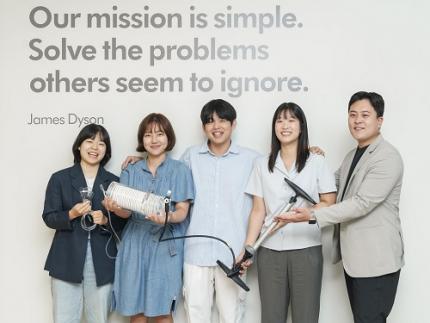 KAIST Industrial Design’s Professor Sangmin Bae’s team selected as Top 20 of James Dyson Award 2024
KAIST (President Kwang-Hyung Lee) announced that the 'Oxynizer', a non-electrical medical oxygen generator for developing countries designed by Professor Sangmin Bae's team in the Department of Industrial Design, has been selected to be the Top 20 of the James Dyson Award 2024. At the same time, it was announced on the 16th that it was selected as one of the top 100 ‘Prototypes for Humanity’ 2024 and will be exhibited in Dubai in November.
< Photo 1. Photo of the award-winning team of Professor Sangmin Bae’s students of KAIST Department of Industrial Designs at the James Dyson Award 2024 announcement of the National Winners >
The James Dyson Award is a design award hosted by Sir James Dyson, founder of Dyson, and receives ideas for solving everyday problems from next-generation engineers and designers around the world, and selects and awards innovative and excellent designs every year.
The ‘Oxynizer’ developed by Professor Sangmin Bae’s team was selected as the winner of the screening within Korea in September after competing with 122 domestic teams, and was awarded a prize of 5,000 pounds for idea advancement, product development, and commercialization.
< Photo 2. A photo of Professor Sangmin Bae’s students’ award-winning achievement, ‘Oxynizer’ >
In addition, on October 16th, it was selected as one of the top 20 international winners among 1,911 competing works from 29 countries around the world. The international winner will be selected by Sir James Dyson and announced on November 13th. The international competition winner will receive a prize of £5,000, and the winner will receive an additional £30,000, giving them the opportunity to commercialize their idea.
‘Prototype for Humanity’ is a global project hosted by Art Dubai Group and carried out in collaboration with Dubai Future Foundation, Dubai Arts & Culture Authority, and Dubai International Financial Center. It is a forum for international cooperation where leading universities around the world, including Harvard University and MIT, participate to discuss global problems and solutions.
‘Oxynizer’ was selected on September 11 as one of the top 100 out of 3,000 entries submitted by universities in over 100 countries, and will be exhibited at the Jumeirah Emirates Towers of Dubai Future Foundation from November 17 to 22. The organizers will select the top five during the exhibition period, and will award a total of $100,000 in prize money to the winners to support their research.
The ‘Oxynizer’ is a device developed by students Jiwon Kim, Kyeongho Park, Seung-Jun Lee, Jiwon Lee, Yeohyeon Jeong, and Jungwoo Kim under the guidance of Professor Sangmin Bae of KAIST, and is the result of research conducted in the ‘Design Project 1’ class for the graduate students of the Department of Industrial Design at KAIST.
< Photo 3. A photo of Professor Sangmin Bae’s students’ award-winning achievement, ‘Oxynizer’ >
This device was designed to solve the problem of difficulty in supplying oxygen in developing countries due to high installation and maintenance costs. The device was designed to create concentrated oxygen to supply it to a patient in urgent need using an air pump for bicycles, which should be found more easily than a medical oxygen tank.
Professor Sangmin Bae said, “This device creates oxygen using a bicycle air pump and supplies it to patients, and it can separate water vapor and nitrogen in the air using silica gel and zeolite, which are the main materials of the filter, to supply oxygen with a concentration of up to 50%.” “In addition, the filter can be heated and reused after 120 hours of use, so it has the advantage of being able to be used semi-permanently,” he emphasized.
< Photo 4. A photo of Professor Sangmin Bae’s students’ award-winning achievement, ‘Oxynizer’ >
The results of the self-research derived from the KAIST Industrial Design Department class were selected as a world-class award winner and exhibition piece in competition with excellent universities around the world, once again proving the global competitiveness of the KAIST Industrial Design Department.
2024.10.16 View 17248
-
 Jeju Inspired Packaging by ID+IM Design Lab Wins 2020 iF Design Award
A water bottle designed by researchers from the ID+IM Design Laboratory led by Professor Sangmin Bae from the Department of Industrial Design won the packaging section of the 2020 iF Design Award.
The iF Design Award, hosted by the Hannover Exhibition Center in Germany, is one of the three major international design competitions. It receives more than 7,000 submissions from participants representing 60 countries.
The Jeju Yong-Am-Soo (which means ‘volcanic mineral water’ in English) bottle design was a product of an academic-industrial cooperation project carried out by Professor Bae’s team and a Korean confectionery company, Orion Corporation, to create a design for a premium mineral water bottle.
The motif of the awarded design was the beautiful nature of Jeju Island in Korea. The columnar joints and the horizon of Jeju Island were each represented by horizontal and vertical lines, completing a simple yet sensuous design.
The mystical volcanic Mount Halla printed on the transparent front-label of the bottle represents the daytime of Jeju Island, while the rear-label design, which is reflected through the transparent front-label, symbolizes the nighttime of Jeju Island. By putting the Orion constellation, a symbol of tourist’s guide, right above the Orion Corporation’s brand logo, Professor Bae’s team ambiently promotes the company’s identity.
Although the design uses a significantly smaller amount of materials than traditional water bottles, it can withstand about four times the pressure and weight. The efficient structure therefore shows excellence in both aesthetic and functional areas.
Professor Bae said, “I am happy with the fact that the result of this academic-industrial cooperation project became mass-produced through commercialization and was recognized by an international design award.” He continued, “Even though it was difficult for my team to come up with the design that fits both manufacturing and the distribution processes, we worked hard to achieve the structural and functional aspects, while also expressing beauty through its appearance.”
(END)
2020.02.20 View 11776