%4a%75%6e%67%77%6f%6e%20%4b%69%6d
-
 Seeing Black Holes More Clearly with Laser Light
<(From Left) Researcher Junyong Choi, Researcher Woosong Jeong, Professor Jungwon Kim, Researcher Jihoon Baek >
Radio telescopes are instruments that capture faint radio signals from space and convert them into images of celestial bodies. To observe distant black holes clearly, multiple radio telescopes must capture cosmic signals at exactly the same time, acting as a single unit. Research teams at KAIST have developedr a new reference signal technology that uses laser light to precisely synchronize the observation timing and phase of these telescopes.
KAIST announced on January 15th that a research team led by Professor Jungwon Kim from the Department of Mechanical Engineering—in collaboration with the Korea Astronomy and Space Science Institute, the Korea Research Institute of Standards and Science, and the Max Planck Institute for Radio Astronomy (MPIfR) in Germany—has implemented a technology that directly applies optical frequency comb lasers to radio telescope receivers.
While a typical laser emits only one color (frequency), an optical frequency comb laser emits tens of thousands of extremely accurate colors arranged at regular intervals. This appearance resembles the teeth of a comb, hence the name "frequency comb." Since the frequency of each individual "tooth" is known exactly and the intervals can be precision-tuned to the level of an atomic clock, scientists refer to it as an "ultra-precision ruler made of light."
The core of Very Long Baseline Interferometry (VLBI), a technique where multiple radio telescopes observe simultaneously, is aligning the phases of the radio signals received by each telescope as if aligning them to a single precise ruler. However, existing electronic reference signal methods faced limitations; as observation frequencies increased, precise phase calibration is becoming more difficult.
In response, the KAIST research team developed a method to deliver the optical frequency comb laser directly into the radio telescope, based on the idea of "improving the fundamental precision of phase alignment by utilizing light (lasers) from the signal generation stage." Through this, they successfully solved the problems of reference signal generation and phase calibration simultaneously within a single optical system.
If the conventional method was like using a "ruler that makes phase alignment difficult" at higher frequencies, this new technology can be compared to setting a standard with an "ultra-precision ruler that fixes the phase with extremely stable light." As a result, they have laid the foundation for distant radio telescopes to interoperate as elaborately as one giant telescope.
This technology was verified through test observations at the Korea VLBI Network (KVN) Yonsei Radio Telescope. The research team succeeded in detecting stable interference patterns (fringes) between radio telescopes and proved through actual observation that precise phase calibration is possible. Recently, this system was also installed at the KVN SNU Pyeongchang Radio Telescope, leading to expanded experiments using multiple observation sites simultaneously.
The team expects that this will not only allow for clearer imaging of black holes but also drastically reduce phase delay errors between instruments—a long-standing issue in VLBI observations.
The applications of this technology are not limited to astronomical observations. The team anticipates that it can be expanded to various advanced fields requiring precise space-time measurements, such as▲ Intercontinental ultra-precision clock comparison ▲Space geodesy ▲Deep-space probe tracking
< Illustration of the system principle (Image generated by AI) >
Professor Jungwon Kim of KAIST stated, "This research is a case where the limits of existing electronic signal generation technology were overcome by directly applying optical frequency comb lasers to radio telescopes. It will significantly contribute to improving the precision of next-generation black hole observations and advancing the fields of frequency metrology and time standards."
Dr. Minji Hyun (currently at KRISS) and Dr. Changmin Ahn from KAIST participated as co-first authors. The research findings were published on January 4th in the international academic journal Light: Science & Applications.
Paper Title: Optical frequency comb integration in radio telescopes: advancing signal generation and phase calibration
DOI: 10.1038/s41377-025-02056-w
Lead Authors: Dr. Minji Hyun (KAIST, currently KRISS), Dr. Changmin Ahn (KAIST), Jungwon Kim (KAIST)
This research was conducted with support from the National Research Council of Science & Technology (NST) Creative Alliance Project(CAP), the National Research Foundation of Korea (NRF), and the Institute of Information & Communications Technology Planning & Evaluation (IITP).
2026.01.15 View 2360
Seeing Black Holes More Clearly with Laser Light
<(From Left) Researcher Junyong Choi, Researcher Woosong Jeong, Professor Jungwon Kim, Researcher Jihoon Baek >
Radio telescopes are instruments that capture faint radio signals from space and convert them into images of celestial bodies. To observe distant black holes clearly, multiple radio telescopes must capture cosmic signals at exactly the same time, acting as a single unit. Research teams at KAIST have developedr a new reference signal technology that uses laser light to precisely synchronize the observation timing and phase of these telescopes.
KAIST announced on January 15th that a research team led by Professor Jungwon Kim from the Department of Mechanical Engineering—in collaboration with the Korea Astronomy and Space Science Institute, the Korea Research Institute of Standards and Science, and the Max Planck Institute for Radio Astronomy (MPIfR) in Germany—has implemented a technology that directly applies optical frequency comb lasers to radio telescope receivers.
While a typical laser emits only one color (frequency), an optical frequency comb laser emits tens of thousands of extremely accurate colors arranged at regular intervals. This appearance resembles the teeth of a comb, hence the name "frequency comb." Since the frequency of each individual "tooth" is known exactly and the intervals can be precision-tuned to the level of an atomic clock, scientists refer to it as an "ultra-precision ruler made of light."
The core of Very Long Baseline Interferometry (VLBI), a technique where multiple radio telescopes observe simultaneously, is aligning the phases of the radio signals received by each telescope as if aligning them to a single precise ruler. However, existing electronic reference signal methods faced limitations; as observation frequencies increased, precise phase calibration is becoming more difficult.
In response, the KAIST research team developed a method to deliver the optical frequency comb laser directly into the radio telescope, based on the idea of "improving the fundamental precision of phase alignment by utilizing light (lasers) from the signal generation stage." Through this, they successfully solved the problems of reference signal generation and phase calibration simultaneously within a single optical system.
If the conventional method was like using a "ruler that makes phase alignment difficult" at higher frequencies, this new technology can be compared to setting a standard with an "ultra-precision ruler that fixes the phase with extremely stable light." As a result, they have laid the foundation for distant radio telescopes to interoperate as elaborately as one giant telescope.
This technology was verified through test observations at the Korea VLBI Network (KVN) Yonsei Radio Telescope. The research team succeeded in detecting stable interference patterns (fringes) between radio telescopes and proved through actual observation that precise phase calibration is possible. Recently, this system was also installed at the KVN SNU Pyeongchang Radio Telescope, leading to expanded experiments using multiple observation sites simultaneously.
The team expects that this will not only allow for clearer imaging of black holes but also drastically reduce phase delay errors between instruments—a long-standing issue in VLBI observations.
The applications of this technology are not limited to astronomical observations. The team anticipates that it can be expanded to various advanced fields requiring precise space-time measurements, such as▲ Intercontinental ultra-precision clock comparison ▲Space geodesy ▲Deep-space probe tracking
< Illustration of the system principle (Image generated by AI) >
Professor Jungwon Kim of KAIST stated, "This research is a case where the limits of existing electronic signal generation technology were overcome by directly applying optical frequency comb lasers to radio telescopes. It will significantly contribute to improving the precision of next-generation black hole observations and advancing the fields of frequency metrology and time standards."
Dr. Minji Hyun (currently at KRISS) and Dr. Changmin Ahn from KAIST participated as co-first authors. The research findings were published on January 4th in the international academic journal Light: Science & Applications.
Paper Title: Optical frequency comb integration in radio telescopes: advancing signal generation and phase calibration
DOI: 10.1038/s41377-025-02056-w
Lead Authors: Dr. Minji Hyun (KAIST, currently KRISS), Dr. Changmin Ahn (KAIST), Jungwon Kim (KAIST)
This research was conducted with support from the National Research Council of Science & Technology (NST) Creative Alliance Project(CAP), the National Research Foundation of Korea (NRF), and the Institute of Information & Communications Technology Planning & Evaluation (IITP).
2026.01.15 View 2360 -
 Ultra High Speed Optical Measurement Technology Developed
< (From left) Tae Jin Ha, CEO of VIRNECT, Kwang Hyung Lee, President of KAIST >
An open platform for industry-academia-research collaboration, which has accumulated K-Metaverse technology capabilities that break down the boundaries between reality and virtuality and share experiences beyond the limits of time and space, is expected to be built on our university campus.
Our university announced on the 13th that it’s signing an agreement for the establishment and operation of a 'Virtual Convergence Research Center' with the Graduate School of Metaverse and VIRNECT Co., Ltd. (CEO Tae Jin Ha), a domestic augmented/virtual reality (XR) specialized company and a startup founded by a KAIST alumnus.
The Virtual Convergence Research Center, which will be newly constructed on our university campus, plans to prepare for the future participation of related government-funded research institutes, and is expected to function as a national strategic hub that creates future growth engines for the Republic of Korea, going beyond simple industry-academia cooperation. VIRNECT Co., Ltd. plans to create the research center as an open research collaboration platform in which domestic and international industry, academia, and research institutes jointly participate with KAIST.
This research center is expected to experiment with the convergence of reality and virtuality and establish itself as a global hub for the 'K-Metaverse Innovation Ecosystem' where technology development, talent cultivation, and industrial diffusion are in a virtuous cycle.
VIRNECT Co., Ltd. was founded by KAIST alumnus Tae Jin Ha, listed on KOSDAQ in 2023, and won the CES Innovation Award for developing the industrial AI smart goggles 'VisionX'. It has grown into a representative domestic spatial computing company based on various industrial innovation technologies such as AI/XR solutions and digital twin. Synergistic co-prosperity with KAIST is anticipated through this collaboration.
Spatial computing and XR technology are areas where global big techs like Apple, Meta, Google, Microsoft, and Samsung are engaged in fierce competition for dominance, paying attention to them as the next-generation AI platforms. With major countries such as the US and China investing enormous capital and capabilities, the launch of the KAIST Virtual Convergence Research Center is evaluated as a strategic response for South Korea not to fall behind in the competition of the post-metaverse era.
The research center plans to lead both industrial productivity and social innovation as an R&BD (Research & Business Development) hub that integrates core technologies such as digital twin, metaverse, spatial/physical intelligence, and wearable XR. Furthermore, it will quickly verify the applicability to industrial sites and support the creation of new industries through a full-cycle system covering education, research, demonstration, commercialization, and diffusion.
Moreover, the research center will create national synergy by being closely linked with government policies. Strengthening the link between education and research, fostering a sustainable metaverse ecosystem, and expanding global leadership through an open industry-academia-research platform align with the government's strategy for advancing the virtual convergence industry.
< Executives from both organizations attending the signing ceremony >
VIRNECT CEO Tae Jin Ha said, "The long-term cooperation with KAIST is a stepping stone for us to leap forward as a game-changer in the global XR industry," adding, "We will strengthen virtual convergence technology competitiveness through research and education infrastructure and accelerate commercialization through demonstration."
Professor Woontack Woo, Dean of the Graduate School of Metaverse, emphasized, "The Virtual Convergence Research Center will serve as an open platform where industry, academia, and research institutes jointly experiment with K-Metaverse innovation, and a 'Meta Power Plant' that cultivates future core personnel and disseminates research results to the industry."
KAIST President Kwang Hyung Lee said, "This agreement is a strategic investment to secure global leadership by breaking down the boundaries between research and industry, going beyond simply creating a new research center," and "KAIST will spare no support for the research center."
With the future designation of the KAIST Virtual Convergence Research Center as a government-specialized graduate school/research center for the virtual convergence industry and increased industry cooperation, it will establish itself as a national innovation platform that concentrates South Korea's metaverse capabilities. This is expected to lead to the creation of new value for the future society and the strengthening of national competitiveness, going beyond simple technology development.
2025.10.13 View 2377
Ultra High Speed Optical Measurement Technology Developed
< (From left) Tae Jin Ha, CEO of VIRNECT, Kwang Hyung Lee, President of KAIST >
An open platform for industry-academia-research collaboration, which has accumulated K-Metaverse technology capabilities that break down the boundaries between reality and virtuality and share experiences beyond the limits of time and space, is expected to be built on our university campus.
Our university announced on the 13th that it’s signing an agreement for the establishment and operation of a 'Virtual Convergence Research Center' with the Graduate School of Metaverse and VIRNECT Co., Ltd. (CEO Tae Jin Ha), a domestic augmented/virtual reality (XR) specialized company and a startup founded by a KAIST alumnus.
The Virtual Convergence Research Center, which will be newly constructed on our university campus, plans to prepare for the future participation of related government-funded research institutes, and is expected to function as a national strategic hub that creates future growth engines for the Republic of Korea, going beyond simple industry-academia cooperation. VIRNECT Co., Ltd. plans to create the research center as an open research collaboration platform in which domestic and international industry, academia, and research institutes jointly participate with KAIST.
This research center is expected to experiment with the convergence of reality and virtuality and establish itself as a global hub for the 'K-Metaverse Innovation Ecosystem' where technology development, talent cultivation, and industrial diffusion are in a virtuous cycle.
VIRNECT Co., Ltd. was founded by KAIST alumnus Tae Jin Ha, listed on KOSDAQ in 2023, and won the CES Innovation Award for developing the industrial AI smart goggles 'VisionX'. It has grown into a representative domestic spatial computing company based on various industrial innovation technologies such as AI/XR solutions and digital twin. Synergistic co-prosperity with KAIST is anticipated through this collaboration.
Spatial computing and XR technology are areas where global big techs like Apple, Meta, Google, Microsoft, and Samsung are engaged in fierce competition for dominance, paying attention to them as the next-generation AI platforms. With major countries such as the US and China investing enormous capital and capabilities, the launch of the KAIST Virtual Convergence Research Center is evaluated as a strategic response for South Korea not to fall behind in the competition of the post-metaverse era.
The research center plans to lead both industrial productivity and social innovation as an R&BD (Research & Business Development) hub that integrates core technologies such as digital twin, metaverse, spatial/physical intelligence, and wearable XR. Furthermore, it will quickly verify the applicability to industrial sites and support the creation of new industries through a full-cycle system covering education, research, demonstration, commercialization, and diffusion.
Moreover, the research center will create national synergy by being closely linked with government policies. Strengthening the link between education and research, fostering a sustainable metaverse ecosystem, and expanding global leadership through an open industry-academia-research platform align with the government's strategy for advancing the virtual convergence industry.
< Executives from both organizations attending the signing ceremony >
VIRNECT CEO Tae Jin Ha said, "The long-term cooperation with KAIST is a stepping stone for us to leap forward as a game-changer in the global XR industry," adding, "We will strengthen virtual convergence technology competitiveness through research and education infrastructure and accelerate commercialization through demonstration."
Professor Woontack Woo, Dean of the Graduate School of Metaverse, emphasized, "The Virtual Convergence Research Center will serve as an open platform where industry, academia, and research institutes jointly experiment with K-Metaverse innovation, and a 'Meta Power Plant' that cultivates future core personnel and disseminates research results to the industry."
KAIST President Kwang Hyung Lee said, "This agreement is a strategic investment to secure global leadership by breaking down the boundaries between research and industry, going beyond simply creating a new research center," and "KAIST will spare no support for the research center."
With the future designation of the KAIST Virtual Convergence Research Center as a government-specialized graduate school/research center for the virtual convergence industry and increased industry cooperation, it will establish itself as a national innovation platform that concentrates South Korea's metaverse capabilities. This is expected to lead to the creation of new value for the future society and the strengthening of national competitiveness, going beyond simple technology development.
2025.10.13 View 2377 -
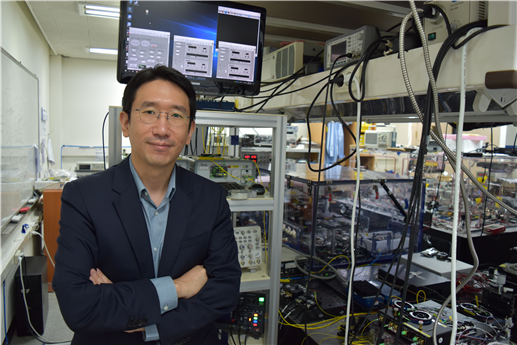 Scientist of October: Professor Jungwon Kim
Professor Jungwon Kim from the Department of Mechanical Engineering was selected as the ‘Scientist of the Month’ for October 2020 by the Ministry of Science and ICT and the National Research Foundation of Korea. Professor Kim was recognized for his contributions to expanding the horizons of the basics of precision engineering through his research on multifunctional ultrahigh-speed, high-resolution sensors. He received 10 million KRW in prize money.
Professor Kim was selected as the recipient of this award in celebration of “Measurement Day”, which commemorates October 26 as the day in which King Sejong the Great established a volume measurement system.
Professor Kim discovered that the time difference between the pulse of light created by a laser and the pulse of the current produced by a light-emitting diode was as small as 100 attoseconds (10-16 seconds). He then developed a unique multifunctional ultrahigh-speed, high-resolution Time-of-Flight (TOF) sensor that could take measurements of multiple points at the same time by sampling electric light. The sensor, with a measurement speed of 100 megahertz (100 million vibrations per second), a resolution of 180 picometers (1/5.5 billion meters), and a dynamic range of 150 decibels, overcame the limitations of both existing TOF techniques and laser interferometric techniques at the same time. The results of this research were published in Nature Photonics on February 10, 2020.
Professor Kim said, “I’d like to thank the graduate students who worked passionately with me, and KAIST for providing an environment in which I could fully focus on research. I am looking forward to the new and diverse applications in the field of machine manufacturing, such as studying the dynamic phenomena in microdevices, or taking ultraprecision measurement of shapes for advanced manufacturing.”
(END)
2020.10.15 View 20339
Scientist of October: Professor Jungwon Kim
Professor Jungwon Kim from the Department of Mechanical Engineering was selected as the ‘Scientist of the Month’ for October 2020 by the Ministry of Science and ICT and the National Research Foundation of Korea. Professor Kim was recognized for his contributions to expanding the horizons of the basics of precision engineering through his research on multifunctional ultrahigh-speed, high-resolution sensors. He received 10 million KRW in prize money.
Professor Kim was selected as the recipient of this award in celebration of “Measurement Day”, which commemorates October 26 as the day in which King Sejong the Great established a volume measurement system.
Professor Kim discovered that the time difference between the pulse of light created by a laser and the pulse of the current produced by a light-emitting diode was as small as 100 attoseconds (10-16 seconds). He then developed a unique multifunctional ultrahigh-speed, high-resolution Time-of-Flight (TOF) sensor that could take measurements of multiple points at the same time by sampling electric light. The sensor, with a measurement speed of 100 megahertz (100 million vibrations per second), a resolution of 180 picometers (1/5.5 billion meters), and a dynamic range of 150 decibels, overcame the limitations of both existing TOF techniques and laser interferometric techniques at the same time. The results of this research were published in Nature Photonics on February 10, 2020.
Professor Kim said, “I’d like to thank the graduate students who worked passionately with me, and KAIST for providing an environment in which I could fully focus on research. I am looking forward to the new and diverse applications in the field of machine manufacturing, such as studying the dynamic phenomena in microdevices, or taking ultraprecision measurement of shapes for advanced manufacturing.”
(END)
2020.10.15 View 20339 -
 Professor Jungwon Kim Wins Haerim Optics and Photonics Award
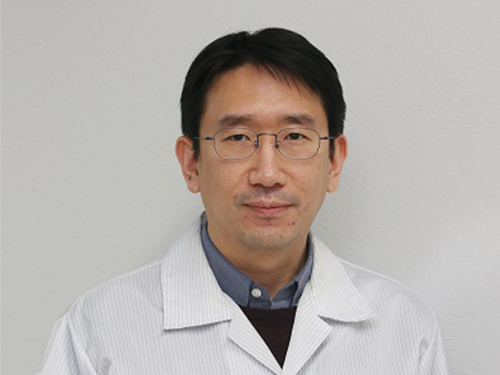
(Professor Jungwon Kim)
Professor Jungwon Kim from the Department of Mechanical Engineering received the 8th Haerim Optics and Photonics Award from the Optical Society of Korea (OSK).
He was recognized for his dedication to pioneering the field of microwave photonics by developing ultra-low noise fiber photonics lasers.
The Haerim Optics and Photonics Award is given to an outstanding researcher who has made academic contributions in the field of optics and photonics for the last five years.
The name of the award (Haerim) comes from the pen-name of the renowned scholar, Professor Un-Chul Paek, because it is maintained using funds he contributed to the OSK.
The OSK will confer the award on February 8 during the 29th OSK Annual Meeting and Winter Conference of 2018.
2018.02.07 View 13042
Professor Jungwon Kim Wins Haerim Optics and Photonics Award
(Professor Jungwon Kim)
Professor Jungwon Kim from the Department of Mechanical Engineering received the 8th Haerim Optics and Photonics Award from the Optical Society of Korea (OSK).
He was recognized for his dedication to pioneering the field of microwave photonics by developing ultra-low noise fiber photonics lasers.
The Haerim Optics and Photonics Award is given to an outstanding researcher who has made academic contributions in the field of optics and photonics for the last five years.
The name of the award (Haerim) comes from the pen-name of the renowned scholar, Professor Un-Chul Paek, because it is maintained using funds he contributed to the OSK.
The OSK will confer the award on February 8 during the 29th OSK Annual Meeting and Winter Conference of 2018.
2018.02.07 View 13042