Daeyoung+Kim
-
 KAIST Develops IoT Platform for Food Safety
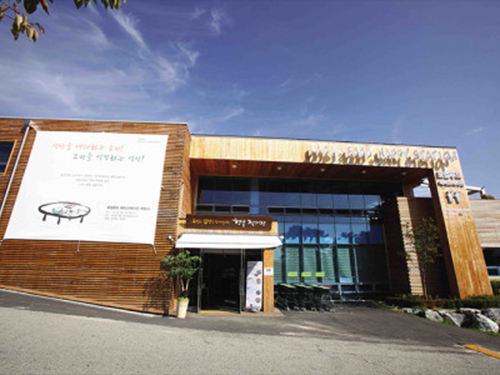
A research team led by the KAIST Auto-ID Labs developed a GS1 international standard-based IoTs infrastructure platform dubbed Oliot (Open Language of Internet of Things). This platform will be applied to Wanju Local Food, the nation’s largest cooperative, and will be in operation from April 5.
A total of eleven organizations participated in the development of Oliot, with KAIST as the center. This consortium is based on the GS1 international standard-based Oliot platform, which allows collecting and sharing data along the entire process of agrifood from production to processing, distribution, and consumption. It aims at increasing farm incomes and establishing a global ecosystem of domestic agriculture and stockbreeding that provides safe food.
Wanju Local Food is now the world’s first local food co-op with a traceability system from the initial stage of production planning to end sales based on GS1 international standards, which will ensure food safety.
KAIST has been sharing Oliot data in order to apply it to industries around the world. As of April 2018, approximately 900 enterprises and developers from more than 100 countries have downloaded it.
Professor Daeyoung Kim from the School of Computing, who is also Research Director of Auto-ID Labs said, “We are planning to disseminate Oliot to local food cooperatives throughout the nation. We will also cooperate with other countries, like China, Holland, and Hong Kong to create a better ecosystem for the global food industry.
“We are currently collaborating with related business to converge Oliot with AI or blockchain technology that can be applied to various services, such as healthcare and smart factories. Its tangible outcome will be revealed soon,” he added.
Auto-ID Labs are a global research consortium of six academic institutions that research and develop new technologies for advancing global commerce, partnering with GS1 (Global Standard 1), a non-profit organization that established standards for global commerce such as introducing barcodes to the retail industry. The Auto-ID Labs include MIT, University of Cambridge, Keio University, Fudan University, ETH Zurich/University of St. Gallen, and KAIST.
The consortium was supported by the Ministry of Science and ICT as well as the Institute for Information and Communications Technology Promotion for three years from 2015.
The launching of Oliot at Wanju Local Food will be held on April 5.
2018.04.03 View 9561
KAIST Develops IoT Platform for Food Safety
A research team led by the KAIST Auto-ID Labs developed a GS1 international standard-based IoTs infrastructure platform dubbed Oliot (Open Language of Internet of Things). This platform will be applied to Wanju Local Food, the nation’s largest cooperative, and will be in operation from April 5.
A total of eleven organizations participated in the development of Oliot, with KAIST as the center. This consortium is based on the GS1 international standard-based Oliot platform, which allows collecting and sharing data along the entire process of agrifood from production to processing, distribution, and consumption. It aims at increasing farm incomes and establishing a global ecosystem of domestic agriculture and stockbreeding that provides safe food.
Wanju Local Food is now the world’s first local food co-op with a traceability system from the initial stage of production planning to end sales based on GS1 international standards, which will ensure food safety.
KAIST has been sharing Oliot data in order to apply it to industries around the world. As of April 2018, approximately 900 enterprises and developers from more than 100 countries have downloaded it.
Professor Daeyoung Kim from the School of Computing, who is also Research Director of Auto-ID Labs said, “We are planning to disseminate Oliot to local food cooperatives throughout the nation. We will also cooperate with other countries, like China, Holland, and Hong Kong to create a better ecosystem for the global food industry.
“We are currently collaborating with related business to converge Oliot with AI or blockchain technology that can be applied to various services, such as healthcare and smart factories. Its tangible outcome will be revealed soon,” he added.
Auto-ID Labs are a global research consortium of six academic institutions that research and develop new technologies for advancing global commerce, partnering with GS1 (Global Standard 1), a non-profit organization that established standards for global commerce such as introducing barcodes to the retail industry. The Auto-ID Labs include MIT, University of Cambridge, Keio University, Fudan University, ETH Zurich/University of St. Gallen, and KAIST.
The consortium was supported by the Ministry of Science and ICT as well as the Institute for Information and Communications Technology Promotion for three years from 2015.
The launching of Oliot at Wanju Local Food will be held on April 5.
2018.04.03 View 9561 -
 KAIST Joins IoF 2020 with 'Oliot'
KAIST will take part in the Internet of Food & Farm 2020 (IoF 2020) project with its international standard IoT open source platform ‘Oliot’ (Open Language for the Internet of Things, http://oliot.org), developed by a research team under Professor Daeyoung Kim from the School of Computing. Dr. Kim is also the director at the Auto-ID Labs at KAIST (http://autoidlabs.org).
IoF 2020 is a project to provide solutions and facilitate the large-scale uptake of IoT by addressing the organizational and technological challenges the European farming and food sectors face today. The project will develop innovative IoT solutions by fostering co-creation in interactive improvement cycles focusing on user acceptability and business models to boost technology and market-readiness levels.
Along with 71 partners from 16 countries, Professor Kim’s ‘Oliot’ will play a part in creating an ecosystem for providing safe and healthy agrifood, incorporating ICT(information and communications technologies) into the areas of smart farms and the agrifood service sector over the next four years. The project received €30 million in funding from Horizon 2020, the largest research and innovation program in the EU. KAIST is the only Korean institution to participate in this project.
For the project, Professor Kim’s team will initially establish smart farm and food service testbeds for the domestic agrifood industry with ‘Oliot’ prior to connecting to the European one. Professor Kim said he will leverage Artificial Intelligence (AI) and deep learning in order to analyze the data collected from the ecosystems in the EU. He aims to open an integrated IoT platform system incorporated with AI technologies to serve governments, institutions, corporations, and farmers.
It is expected that technologies developed for IoF 2020 will also benefit the domestic agrifood market and its supply chain infrastructure. Oliot will also be expected to further advance domestic smart industries including health care and connected vehicles.
George Beers, project manager at Wageningen University & Research and the IoF 2020 project coordinator said, “IoF 2020 has the potential to transform the paradigm of the supply chain of agrifood from the farm to consumers’ dining tables. We believe this project will contribute to enhance European competitiveness and excellence in the food commerce industry.”
Professor Kim said, “Technological applications of international standard IoT have already started in the domestic agrifood industry in collaboration with KAIST. We are working now with Asian and South American countries, as well as European nations, for the integration of a global agrifood business ecosystem.”
Auto-ID Labs are a global research consortium of seven academic institutions that research and develop new technologies for advancing global commerce, partnering with GS1 (Global Standard 1), a non-profit organization that established standards for global commerce such as introducing barcodes to the retail industry. The Auto-ID Labs include MIT, University of Cambridge, Keio University, Fudan University, and ETH Zurich/University of St. Gallen as well as KAIST.
2017.01.18 View 7818
KAIST Joins IoF 2020 with 'Oliot'
KAIST will take part in the Internet of Food & Farm 2020 (IoF 2020) project with its international standard IoT open source platform ‘Oliot’ (Open Language for the Internet of Things, http://oliot.org), developed by a research team under Professor Daeyoung Kim from the School of Computing. Dr. Kim is also the director at the Auto-ID Labs at KAIST (http://autoidlabs.org).
IoF 2020 is a project to provide solutions and facilitate the large-scale uptake of IoT by addressing the organizational and technological challenges the European farming and food sectors face today. The project will develop innovative IoT solutions by fostering co-creation in interactive improvement cycles focusing on user acceptability and business models to boost technology and market-readiness levels.
Along with 71 partners from 16 countries, Professor Kim’s ‘Oliot’ will play a part in creating an ecosystem for providing safe and healthy agrifood, incorporating ICT(information and communications technologies) into the areas of smart farms and the agrifood service sector over the next four years. The project received €30 million in funding from Horizon 2020, the largest research and innovation program in the EU. KAIST is the only Korean institution to participate in this project.
For the project, Professor Kim’s team will initially establish smart farm and food service testbeds for the domestic agrifood industry with ‘Oliot’ prior to connecting to the European one. Professor Kim said he will leverage Artificial Intelligence (AI) and deep learning in order to analyze the data collected from the ecosystems in the EU. He aims to open an integrated IoT platform system incorporated with AI technologies to serve governments, institutions, corporations, and farmers.
It is expected that technologies developed for IoF 2020 will also benefit the domestic agrifood market and its supply chain infrastructure. Oliot will also be expected to further advance domestic smart industries including health care and connected vehicles.
George Beers, project manager at Wageningen University & Research and the IoF 2020 project coordinator said, “IoF 2020 has the potential to transform the paradigm of the supply chain of agrifood from the farm to consumers’ dining tables. We believe this project will contribute to enhance European competitiveness and excellence in the food commerce industry.”
Professor Kim said, “Technological applications of international standard IoT have already started in the domestic agrifood industry in collaboration with KAIST. We are working now with Asian and South American countries, as well as European nations, for the integration of a global agrifood business ecosystem.”
Auto-ID Labs are a global research consortium of seven academic institutions that research and develop new technologies for advancing global commerce, partnering with GS1 (Global Standard 1), a non-profit organization that established standards for global commerce such as introducing barcodes to the retail industry. The Auto-ID Labs include MIT, University of Cambridge, Keio University, Fudan University, and ETH Zurich/University of St. Gallen as well as KAIST.
2017.01.18 View 7818