%4e%45%55%52%41%4c%20%45%4e%47%49%4e%45%45%52%49%4e%47%20%4c%41%42
-
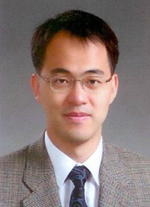 Professor Yoon-Key Nam Received the 2013 Emerging Scholars Award
Professor Yoon-Key Nam, the Department of Bio and Brain Engineering at KAIST, received the 2013 Emerging Scholars Award from the Korean BioChip Society (KBCS), an organization consisted of professionals and researchers in the biochip field such as proteomics, functional genomics, Bio-MEMS, nanotechnology, biosensors, and bioinformatics, at the fall annual conference of KBCS held on November 13th, 2013 at Kangwon National University in Korea.
Professor Nam was recognized for his development of neuron-on-a-chip technology through the convergence research of neuroscience and biochip.
Since 2008, the KBCS has been giving an award to one or two scholars under 40 years of age who have made a great stride in biochip research.
2014.01.27 View 13611
-
 Workshop on Biomedical IC to Be Held on March 26
KAIST will hold a workshop on "biomedical IC for future healthcare system" on March 26 at a lecture room of the School of Electrical Engineering & Computer Science. The workshop is organized by SEECS and the Korean Institute of Next Generation Computing.
At the workshop, a variety of new technologies expected to expedite the development of biomedical systems will be presented. KAIST Prof. Hoi-Jun Yoo will speak on the "body channel communication" using the human body as the signal transmission medium and Dr. Seung-Hwan Kim of Electronics and Telecommunications Research Institute (ETRI) on a wearable vital sign monitoring system.
Other subjects are CMOS (complementary metal-oxide semiconductor) fully electronic biosensor for biomolecular detection to be presented by KAIST Prof. Gyu-Hyeong Cho; nerve interface and IC (integrated circuit) system design by KAIST Prof. Yoon-gi Nam; design of neural recording and stimulation IC using time-varying magnetic field by KAIST Prof. Seong-Hwan Cho; low power multi-core digital signal processor for hearing aid by Dong-Wook Kim, senior researcher at the Samsung Advanced Institute of Technology; and a non-contact cardiac sensor by KAIST Prof. Seung-Chul Hong.
With the advent of the ageing society, medical expenses of the elderly people are rapidly increasing. As a way to address the issue, interests are growing in "ubiquitous healthcare," a technology that uses a large number of environmental and patient sensors and actuators to monitor and improve patients’ physical and mental condition.
The upcoming workshop is the first academic event on biomedical integrated chips to be held in Korea. The workshop will provide a valuable opportunity for experts in biomedical area to get together and examine the present status of Korean biomedical area and discuss about its future, KAIST officials said.
2009.03.20 View 29931