%75%6e%69%76%65%72%73%69%74%79
-
 Finding Solutions to Foreign Disinformation Through Youth Ideas
< Group Photo of the Awards Ceremony >
KAIST has announced that the awards ceremony for the ‘2025 Foreign Disinformation Response Idea Competition for University Students (Counter-Disinformation Challenge),’ organized by the Institute for Security Convergence in collaboration with the National Intelligence Service (NIS), is scheduled to be held on the afternoon of the 23rd at the KAIST Munji Campus.
This competition, held for the second time since its inaugural launch last year, was established to inform the public about the current state of the creation and spread of foreign disinformation and its resulting social and national harms, as well as to seek future response measures. It solicited practical ideas covering both technology and policy from university students and the general public.
Based on the awareness of the issues raised through last year’s competition, our university focused this year on strengthening the link between technology and policy and discovering ideas that can lead to actual research and development (R&D) and institutional improvements. Through this, the university plans to establish the foundation for a mid-to-long-term strategy for responding to foreign disinformation.
The competition was held from November 1st to December 5th in two categories: ▲ Technical ideas to prevent the spread of foreign disinformation, and ▲ Policy proposals and institutional improvement ideas to solve foreign disinformation issues. A total of 144 teams, comprising 259 university and graduate students (including those on leave) from across the country, participated.
Among them, 18 teams were selected as the final winners. This represents an improvement in both the scale of participation and the completeness of the proposals compared to last year, demonstrating the high level of interest among the youth in responding to foreign disinformation.
The awards consist of: ▲ Technical Idea category: 1 Grand Prize, 3 First Prizes, 5 Excellence Prizes; ▲ Policy Proposal and Institutional Improvement category: 1 Grand Prize, 3 First Prizes, 5 Excellence Prizes.
The Grand Prize (KAIST President's Award) in the ‘Technical Idea for Disinformation Response’ category will be awarded to Team ‘Lemming,’ composed of students Lee Jun, Kang Yun-ah, and Ma Seon-young from Jeju National University. Team Lemming proposed a technology that utilizes multi-persona AI agents to virtually simulate the creation, spread, and response processes of disinformation.
Additionally, the Grand Prize (KAIST President's Award) in the ‘Policy Proposal and Institutional Improvement for Disinformation Response’ category will be awarded to Team ‘Kim Anbo Girls,’ composed of student Kim Yeon-jung from Jungwon University and student Kim Hyun-jin from Baekseok Arts University.
Bae Joong-myeon, Director of the KAIST Institute for Security Convergence, stated, “Foreign disinformation is a future-type security threat where technology, policy, and society are complexly intertwined. We plan to link the students’ ideas to future R&D and policy reviews through collaboration with the National Intelligence Service and the Cyber Security Research Center of the KAIST Institute for Security Convergence.”
Meanwhile, the National Intelligence Service, which sponsored this competition, has been accepting reports of foreign disinformation 24 hours a day, 365 days a year through the ‘111 Reporting Center’ and its official website since September 2024, and is promoting the strengthening of an integrated response system through cooperation with related organizations.
< Event Poster >
2025.12.23 View 1400
Finding Solutions to Foreign Disinformation Through Youth Ideas
< Group Photo of the Awards Ceremony >
KAIST has announced that the awards ceremony for the ‘2025 Foreign Disinformation Response Idea Competition for University Students (Counter-Disinformation Challenge),’ organized by the Institute for Security Convergence in collaboration with the National Intelligence Service (NIS), is scheduled to be held on the afternoon of the 23rd at the KAIST Munji Campus.
This competition, held for the second time since its inaugural launch last year, was established to inform the public about the current state of the creation and spread of foreign disinformation and its resulting social and national harms, as well as to seek future response measures. It solicited practical ideas covering both technology and policy from university students and the general public.
Based on the awareness of the issues raised through last year’s competition, our university focused this year on strengthening the link between technology and policy and discovering ideas that can lead to actual research and development (R&D) and institutional improvements. Through this, the university plans to establish the foundation for a mid-to-long-term strategy for responding to foreign disinformation.
The competition was held from November 1st to December 5th in two categories: ▲ Technical ideas to prevent the spread of foreign disinformation, and ▲ Policy proposals and institutional improvement ideas to solve foreign disinformation issues. A total of 144 teams, comprising 259 university and graduate students (including those on leave) from across the country, participated.
Among them, 18 teams were selected as the final winners. This represents an improvement in both the scale of participation and the completeness of the proposals compared to last year, demonstrating the high level of interest among the youth in responding to foreign disinformation.
The awards consist of: ▲ Technical Idea category: 1 Grand Prize, 3 First Prizes, 5 Excellence Prizes; ▲ Policy Proposal and Institutional Improvement category: 1 Grand Prize, 3 First Prizes, 5 Excellence Prizes.
The Grand Prize (KAIST President's Award) in the ‘Technical Idea for Disinformation Response’ category will be awarded to Team ‘Lemming,’ composed of students Lee Jun, Kang Yun-ah, and Ma Seon-young from Jeju National University. Team Lemming proposed a technology that utilizes multi-persona AI agents to virtually simulate the creation, spread, and response processes of disinformation.
Additionally, the Grand Prize (KAIST President's Award) in the ‘Policy Proposal and Institutional Improvement for Disinformation Response’ category will be awarded to Team ‘Kim Anbo Girls,’ composed of student Kim Yeon-jung from Jungwon University and student Kim Hyun-jin from Baekseok Arts University.
Bae Joong-myeon, Director of the KAIST Institute for Security Convergence, stated, “Foreign disinformation is a future-type security threat where technology, policy, and society are complexly intertwined. We plan to link the students’ ideas to future R&D and policy reviews through collaboration with the National Intelligence Service and the Cyber Security Research Center of the KAIST Institute for Security Convergence.”
Meanwhile, the National Intelligence Service, which sponsored this competition, has been accepting reports of foreign disinformation 24 hours a day, 365 days a year through the ‘111 Reporting Center’ and its official website since September 2024, and is promoting the strengthening of an integrated response system through cooperation with related organizations.
< Event Poster >
2025.12.23 View 1400 -
 Students' Choice for Best UniversityNo. 1, Increase of approximately 2fold in Early Admission Applicants over 3 years
KAIST was selected as the number one 'Best University' by students. According to a recent survey, people in their teens to 50s rated KAIST as the most outstanding university (INUE-Korea Economic Daily University Evaluation). This shows that KAIST's innovative research and creative educational environment are highly regarded by the younger generation. KAIST announced that a total of 6,991 people applied for the 2026 academic year's undergraduate domestic early admission process. This is an increase of 491 people (7.6%) compared to the previous year, with the competition rate rising from 7.98:1 last year to 8.47:1 this year, continuing an upward trend for the fourth consecutive year. Notably, the scale of applications has increased by about 1.9 times compared to the 2023 academic year, showing a significant growth trend. This result aligns with the change in perception revealed in the '2025 INUE-Korea Economic Daily University Evaluation.' In this survey, those in their teens to 50s evaluated KAIST as the top university, but those over 60 years old rated Seoul National University highest, confirming a generational difference in perception. The steady increase in applicants, despite the decrease in the school-age population and the phenomenon of avoiding science and engineering fields, proves that KAIST's educational innovation and global competitiveness are receiving high trust from students. The upward trend in graduate school applicants is also evident. The number has increased by an annual average of 9.5% over the past four years, and foreign applicants have surged by 193%, greatly expanding the interest of outstanding international talents. This shows that KAIST's world-class faculty and cutting-edge research infrastructure are internationally recognized for their competitiveness. The student retention rate has also improved. The number of undergraduate dropouts decreased from 126 in the 2022 academic year to 96 in the 2024 academic year, and voluntary withdrawals to pursue medical or dental fields decreased from 58 to 44 during the same period. This result reverses the expectation that the number of dropouts would increase due to the expansion of medical school quotas. This success is analyzed as the result of KAIST's selection process, which comprehensively evaluates various materials such as the student record, self-introduction letter, and teacher recommendation, rather than just focusing on grades, to reflect not only academic competency but also the 'KAIST DNA' and the motivation for admission. KAIST has also introduced student-centered education systems such as the 'Undecided Major System' and the 'PNR System (Pass or No Record System),' expanding the autonomy of career choice. Through institutional innovation, such as the establishment of the Creative Challenge track and the activation of the Science Gifted Selection System, the university is enabling more outstanding talents to challenge themselves at KAIST. Yong Hyun Kim, KAIST's Dean of Admissions, explained, "As a result of supporting creative talent development and broadening the autonomy of career choice through student-centered systems such as the Undecided Major System and the PNR System which innovates grade notation, the number of applicants continues to increase despite difficult conditions." Kwang Hyung Lee, President of KAIST, stated, "The steady increase in science and engineering talents choosing KAIST is proof that our university's educational and research competitiveness is internationally recognized. The fact that people in their teens to 50s chose KAIST as the 'Best University, No. 1' in a recent survey shows a change in generational values and proves that KAIST is a university that will lead future innovation." He added, "KAIST will continue to nurture the best science and engineering talents that the nation and society need."
2025.10.22 View 9226
Students' Choice for Best UniversityNo. 1, Increase of approximately 2fold in Early Admission Applicants over 3 years
KAIST was selected as the number one 'Best University' by students. According to a recent survey, people in their teens to 50s rated KAIST as the most outstanding university (INUE-Korea Economic Daily University Evaluation). This shows that KAIST's innovative research and creative educational environment are highly regarded by the younger generation. KAIST announced that a total of 6,991 people applied for the 2026 academic year's undergraduate domestic early admission process. This is an increase of 491 people (7.6%) compared to the previous year, with the competition rate rising from 7.98:1 last year to 8.47:1 this year, continuing an upward trend for the fourth consecutive year. Notably, the scale of applications has increased by about 1.9 times compared to the 2023 academic year, showing a significant growth trend. This result aligns with the change in perception revealed in the '2025 INUE-Korea Economic Daily University Evaluation.' In this survey, those in their teens to 50s evaluated KAIST as the top university, but those over 60 years old rated Seoul National University highest, confirming a generational difference in perception. The steady increase in applicants, despite the decrease in the school-age population and the phenomenon of avoiding science and engineering fields, proves that KAIST's educational innovation and global competitiveness are receiving high trust from students. The upward trend in graduate school applicants is also evident. The number has increased by an annual average of 9.5% over the past four years, and foreign applicants have surged by 193%, greatly expanding the interest of outstanding international talents. This shows that KAIST's world-class faculty and cutting-edge research infrastructure are internationally recognized for their competitiveness. The student retention rate has also improved. The number of undergraduate dropouts decreased from 126 in the 2022 academic year to 96 in the 2024 academic year, and voluntary withdrawals to pursue medical or dental fields decreased from 58 to 44 during the same period. This result reverses the expectation that the number of dropouts would increase due to the expansion of medical school quotas. This success is analyzed as the result of KAIST's selection process, which comprehensively evaluates various materials such as the student record, self-introduction letter, and teacher recommendation, rather than just focusing on grades, to reflect not only academic competency but also the 'KAIST DNA' and the motivation for admission. KAIST has also introduced student-centered education systems such as the 'Undecided Major System' and the 'PNR System (Pass or No Record System),' expanding the autonomy of career choice. Through institutional innovation, such as the establishment of the Creative Challenge track and the activation of the Science Gifted Selection System, the university is enabling more outstanding talents to challenge themselves at KAIST. Yong Hyun Kim, KAIST's Dean of Admissions, explained, "As a result of supporting creative talent development and broadening the autonomy of career choice through student-centered systems such as the Undecided Major System and the PNR System which innovates grade notation, the number of applicants continues to increase despite difficult conditions." Kwang Hyung Lee, President of KAIST, stated, "The steady increase in science and engineering talents choosing KAIST is proof that our university's educational and research competitiveness is internationally recognized. The fact that people in their teens to 50s chose KAIST as the 'Best University, No. 1' in a recent survey shows a change in generational values and proves that KAIST is a university that will lead future innovation." He added, "KAIST will continue to nurture the best science and engineering talents that the nation and society need."
2025.10.22 View 9226 -
 Startup Nation Korea International Forum to be Held at KAIST
On September 9, KAIST announced that it will be co-hosting the 4th "2025 Startup Nation Korea International Forum" with JoongAng Ilbo and Seoul National University. The two-day event will be held from September 10 to 11 at the KI Building on the main KAIST campus in Daejeon. The forum aims to bring together various members of the startup ecosystem—including government officials, universities, research institutions, investors, entrepreneurs, media, and students—to find practical solutions to the "R&D paradox," where research and development achievements in the Korean science and technology sector don't lead to successful startups. First held at Seoul National University in 2022, this year's forum will take place at KAIST.
<KI Building, where the Startup Nation International Forum will be held>
This year's theme is "The Path to an Innovative Startup Cluster." The goal is to properly foster a startup cluster in Korea through industry-academia-research cooperation, which can serve as a new growth engine, similar to global innovation clusters like Boston in the United States, a hub for the biotech industry, and Zhongguancun, China's top innovation hub.
Day 1: Startup Nation Korea International Forum
On the morning of the first day, a pre-event will feature presentations on the future of innovation clusters centered in Hongneung, Seoul, and Daedeok, Daejeon, by Professor Lee Ji-hoon of Kangwon National University, Director Im Moon-taek, Chairman Park Han-oh of Bioneer, and Director Kim Hyun-woo of the Seoul Bio Hub Project. Separately from the main event, a "Corporate-Early Career Researcher Networking Day," hosted by the Ministry of Trade, Industry and Energy, is also scheduled.
The opening ceremony on the first day will begin with opening remarks by Hong Seok-hyun, Chairman of JoongAng Holdings, welcome addresses by KAIST President Lee Kwang-hyung and Seoul National University President Yoo Hong-lim, a congratulatory speech from President Lee Jae-myung (read on his behalf by Ha Jung-woo, Chief of AI Future Planning), and congratulatory remarks from the Ministry of Science and ICT, the Ministry of Trade, Industry and Energy, the Ministry of SMEs and Startups, the Korea Chamber of Commerce and Industry, and the Federation of Korean Industries.
Following the opening ceremony, keynote speeches will be delivered by Oh Sang-rok, President of the Korea Institute of Science and Technology (KIST); Johannes Fruehauf, President of LabCentral; and Liu De-ying, President of the Peking University Innovation and Entrepreneurship College. A panel discussion on fostering startups with a focus on clusters will also be held. The discussion will be moderated by Hyun-min Bae, Director of the KAIST Center for Entrepreneurship, and will include panelists such as Johannes Fruehauf, Liu De-ying, Moon-taek Im, Director of the Daedeok Innopolis Cluster Headquarters, Jong-tak Han, Director of the Daejeon City Corporate Support Policy Division, and Hyun-woo Kim, Director of the Seoul Bio Hub Project.
Innovation Startup Competition Awards Ceremony
The Innovation Startup Competition awards ceremony will be held on the afternoon of the first day. This year, the number of awards has been significantly expanded to 13 across three categories: the Grand Prize (9 awards), the Innovation Startup Challenge Award (3 awards), and the Innovation Startup Ecosystem Contribution Award (1 award).
Nine startups were selected for the Grand Prize: Rebellion (Minister of Science and ICT Award), Cureverse (Minister of Trade, Industry and Energy Award), Cryptolab (Minister of SMEs and Startups Award), SEMIFIVE (Chairman of the Korea Chamber of Commerce and Industry Award), Solivis (Chairman of the Federation of Korean Industries Award), Medical IP (KAIST President's Award), Selectstar (Seoul National University President's Award), Bluetile Labs (Chairman of the National Research Council of Science & Technology Award), and Naeil Technology (Chairman of the Innopolis Foundation Award).
Three startups were selected for the newly established Innovation Startup Challenge Award (for startups less than 3 years old): Panacia (Minister of Science and ICT Award), HyperAccel (Minister of Trade, Industry and Energy Award), and WatertreeNeZ (Minister of SMEs and Startups Award). Additionally, Korea Technology Finance Corporation was chosen for the first-ever Innovation Startup Ecosystem Contribution Award (Chairman of JoongAng Holdings Award).
Kim Kyung-hwan, Dean of the Sungkyunkwan University Graduate School of Global Entrepreneurship and head of the judging committee, said, "This year's competition featured a large number of deep-tech startups at a global level in AI, biotech, and semiconductors. A notable feature was the high number of companies with intellectual property rights, such as patents."
<Startup Nation Korea International Forum Poster>
Day 2: Startup Nation Korea International Forum
On the second day (September 11), Part 1 will feature IR pitching from eight startups recommended by KAIST, Seoul National University, and the Korea Technology Finance Corporation. A subsequent discussion on revitalizing the innovation startup ecosystem will be moderated by Professor Ahn Tae-wook of the KAIST Center for Entrepreneurship. The discussion will include experts from industry, academia, research, and investment, such as Park Dae-hee, Chairman of the Creative Economy Innovation Center Council; Cho Young-soo, Director of Planning and Coordination at the Korea Institute of Startup & Entrepreneurship Development; startup CEOs Kyu-nam Kim, Ji-min Park, and Kyung-jin Jung; and Ji-young Jang, CEO of Rising S Ventures. They will engage in an in-depth discussion on the current status and future direction of the startup ecosystem.
In the afternoon, a special session will be dedicated to showcasing cases of student startups from KAIST. CLASSUM, Smoore Talk, Innersia, and OINS will present their entrepreneurial journeys and achievements. These presentations are expected to highlight the competitiveness of university-based startup ecosystems.
Additionally, the "PEN Global Investment Forum (Investor's Reverse Pitch)" will be held with the participation of global investors. Venture capital experts from the United States, China, Hong Kong, and other regions will take the stage to share their investment strategies and outlook on the global market.
Following this, at the Innopolis Campus Lab Startup Seminar hosted by the KAIST Center for Entrepreneurship, Myung-soo Song, CEO of PEN Ventures, will give a presentation on overseas expansion for deep-tech companies through collaboration with global Corporate Venture Capital (CVCs), providing practical insights for startups looking to expand internationally. A networking session will also be held for participants to discover new collaboration opportunities. On the same morning, the Innopolis Foundation will hold a concurrent seminar to celebrate its 20th anniversary, focusing on "The Dissemination of AI and Deep-Tech Achievements."
Seok-hyun Hong, Chairman of JoongAng Holdings, said, "For Korea to leap forward as a startup nation, universities, research institutions, and industry must join forces. I hope this forum will serve as a starting point for presenting a vision for the Korean startup ecosystem and creating a startup cluster model that can compete on the world stage."
Hong-lim Yoo, President of Seoul National University, stated, "Seoul National University has been striving to connect research achievements to social value. I hope that through this forum with KAIST, we can create a cooperative model necessary for Korea to move toward becoming a global innovation startup nation."
Kwang-hyung Lee, President of KAIST, said, "KAIST is taking the lead in creating a Korean-style innovation model by connecting research and development achievements to actual startups and industries. I hope this international forum will be an opportunity to establish a Korean-style startup cluster model and strengthen our global competitiveness."
Innovation Startup Exhibition
An exhibition of innovative startups will also be held on the first floor of the KAIST building where the international forum is taking place. In addition to booths for the 13 startups selected in the Innovation Startup Competition, visitors can also meet 23 other innovative startups chosen by participating institutions like Seoul National University and KAIST.
The forum is sponsored by the Ministry of Science and ICT, the Ministry of Trade, Industry and Energy, the Ministry of SMEs and Startups, the Korea Chamber of Commerce and Industry, the Federation of Korean Industries, the National Research Council of Science & Technology, the Innopolis Foundation, the Korea Technology Finance Corporation, Chungcheongbuk-do Provincial Government, PEN Ventures, Korea Technology Finance Corporation, and DaedeokNet. The forum will be live-streamed on YouTube and the official websites (www.snkforum.co.kr, www.joongang.co.kr), where anyone can watch.
2025.09.09 View 6509
Startup Nation Korea International Forum to be Held at KAIST
On September 9, KAIST announced that it will be co-hosting the 4th "2025 Startup Nation Korea International Forum" with JoongAng Ilbo and Seoul National University. The two-day event will be held from September 10 to 11 at the KI Building on the main KAIST campus in Daejeon. The forum aims to bring together various members of the startup ecosystem—including government officials, universities, research institutions, investors, entrepreneurs, media, and students—to find practical solutions to the "R&D paradox," where research and development achievements in the Korean science and technology sector don't lead to successful startups. First held at Seoul National University in 2022, this year's forum will take place at KAIST.
<KI Building, where the Startup Nation International Forum will be held>
This year's theme is "The Path to an Innovative Startup Cluster." The goal is to properly foster a startup cluster in Korea through industry-academia-research cooperation, which can serve as a new growth engine, similar to global innovation clusters like Boston in the United States, a hub for the biotech industry, and Zhongguancun, China's top innovation hub.
Day 1: Startup Nation Korea International Forum
On the morning of the first day, a pre-event will feature presentations on the future of innovation clusters centered in Hongneung, Seoul, and Daedeok, Daejeon, by Professor Lee Ji-hoon of Kangwon National University, Director Im Moon-taek, Chairman Park Han-oh of Bioneer, and Director Kim Hyun-woo of the Seoul Bio Hub Project. Separately from the main event, a "Corporate-Early Career Researcher Networking Day," hosted by the Ministry of Trade, Industry and Energy, is also scheduled.
The opening ceremony on the first day will begin with opening remarks by Hong Seok-hyun, Chairman of JoongAng Holdings, welcome addresses by KAIST President Lee Kwang-hyung and Seoul National University President Yoo Hong-lim, a congratulatory speech from President Lee Jae-myung (read on his behalf by Ha Jung-woo, Chief of AI Future Planning), and congratulatory remarks from the Ministry of Science and ICT, the Ministry of Trade, Industry and Energy, the Ministry of SMEs and Startups, the Korea Chamber of Commerce and Industry, and the Federation of Korean Industries.
Following the opening ceremony, keynote speeches will be delivered by Oh Sang-rok, President of the Korea Institute of Science and Technology (KIST); Johannes Fruehauf, President of LabCentral; and Liu De-ying, President of the Peking University Innovation and Entrepreneurship College. A panel discussion on fostering startups with a focus on clusters will also be held. The discussion will be moderated by Hyun-min Bae, Director of the KAIST Center for Entrepreneurship, and will include panelists such as Johannes Fruehauf, Liu De-ying, Moon-taek Im, Director of the Daedeok Innopolis Cluster Headquarters, Jong-tak Han, Director of the Daejeon City Corporate Support Policy Division, and Hyun-woo Kim, Director of the Seoul Bio Hub Project.
Innovation Startup Competition Awards Ceremony
The Innovation Startup Competition awards ceremony will be held on the afternoon of the first day. This year, the number of awards has been significantly expanded to 13 across three categories: the Grand Prize (9 awards), the Innovation Startup Challenge Award (3 awards), and the Innovation Startup Ecosystem Contribution Award (1 award).
Nine startups were selected for the Grand Prize: Rebellion (Minister of Science and ICT Award), Cureverse (Minister of Trade, Industry and Energy Award), Cryptolab (Minister of SMEs and Startups Award), SEMIFIVE (Chairman of the Korea Chamber of Commerce and Industry Award), Solivis (Chairman of the Federation of Korean Industries Award), Medical IP (KAIST President's Award), Selectstar (Seoul National University President's Award), Bluetile Labs (Chairman of the National Research Council of Science & Technology Award), and Naeil Technology (Chairman of the Innopolis Foundation Award).
Three startups were selected for the newly established Innovation Startup Challenge Award (for startups less than 3 years old): Panacia (Minister of Science and ICT Award), HyperAccel (Minister of Trade, Industry and Energy Award), and WatertreeNeZ (Minister of SMEs and Startups Award). Additionally, Korea Technology Finance Corporation was chosen for the first-ever Innovation Startup Ecosystem Contribution Award (Chairman of JoongAng Holdings Award).
Kim Kyung-hwan, Dean of the Sungkyunkwan University Graduate School of Global Entrepreneurship and head of the judging committee, said, "This year's competition featured a large number of deep-tech startups at a global level in AI, biotech, and semiconductors. A notable feature was the high number of companies with intellectual property rights, such as patents."
<Startup Nation Korea International Forum Poster>
Day 2: Startup Nation Korea International Forum
On the second day (September 11), Part 1 will feature IR pitching from eight startups recommended by KAIST, Seoul National University, and the Korea Technology Finance Corporation. A subsequent discussion on revitalizing the innovation startup ecosystem will be moderated by Professor Ahn Tae-wook of the KAIST Center for Entrepreneurship. The discussion will include experts from industry, academia, research, and investment, such as Park Dae-hee, Chairman of the Creative Economy Innovation Center Council; Cho Young-soo, Director of Planning and Coordination at the Korea Institute of Startup & Entrepreneurship Development; startup CEOs Kyu-nam Kim, Ji-min Park, and Kyung-jin Jung; and Ji-young Jang, CEO of Rising S Ventures. They will engage in an in-depth discussion on the current status and future direction of the startup ecosystem.
In the afternoon, a special session will be dedicated to showcasing cases of student startups from KAIST. CLASSUM, Smoore Talk, Innersia, and OINS will present their entrepreneurial journeys and achievements. These presentations are expected to highlight the competitiveness of university-based startup ecosystems.
Additionally, the "PEN Global Investment Forum (Investor's Reverse Pitch)" will be held with the participation of global investors. Venture capital experts from the United States, China, Hong Kong, and other regions will take the stage to share their investment strategies and outlook on the global market.
Following this, at the Innopolis Campus Lab Startup Seminar hosted by the KAIST Center for Entrepreneurship, Myung-soo Song, CEO of PEN Ventures, will give a presentation on overseas expansion for deep-tech companies through collaboration with global Corporate Venture Capital (CVCs), providing practical insights for startups looking to expand internationally. A networking session will also be held for participants to discover new collaboration opportunities. On the same morning, the Innopolis Foundation will hold a concurrent seminar to celebrate its 20th anniversary, focusing on "The Dissemination of AI and Deep-Tech Achievements."
Seok-hyun Hong, Chairman of JoongAng Holdings, said, "For Korea to leap forward as a startup nation, universities, research institutions, and industry must join forces. I hope this forum will serve as a starting point for presenting a vision for the Korean startup ecosystem and creating a startup cluster model that can compete on the world stage."
Hong-lim Yoo, President of Seoul National University, stated, "Seoul National University has been striving to connect research achievements to social value. I hope that through this forum with KAIST, we can create a cooperative model necessary for Korea to move toward becoming a global innovation startup nation."
Kwang-hyung Lee, President of KAIST, said, "KAIST is taking the lead in creating a Korean-style innovation model by connecting research and development achievements to actual startups and industries. I hope this international forum will be an opportunity to establish a Korean-style startup cluster model and strengthen our global competitiveness."
Innovation Startup Exhibition
An exhibition of innovative startups will also be held on the first floor of the KAIST building where the international forum is taking place. In addition to booths for the 13 startups selected in the Innovation Startup Competition, visitors can also meet 23 other innovative startups chosen by participating institutions like Seoul National University and KAIST.
The forum is sponsored by the Ministry of Science and ICT, the Ministry of Trade, Industry and Energy, the Ministry of SMEs and Startups, the Korea Chamber of Commerce and Industry, the Federation of Korean Industries, the National Research Council of Science & Technology, the Innopolis Foundation, the Korea Technology Finance Corporation, Chungcheongbuk-do Provincial Government, PEN Ventures, Korea Technology Finance Corporation, and DaedeokNet. The forum will be live-streamed on YouTube and the official websites (www.snkforum.co.kr, www.joongang.co.kr), where anyone can watch.
2025.09.09 View 6509 -
 KAIST–Princeton University Officially Launch “Net-Zero Korea” to Address Climate Crisis
KAIST (President Kwang Hyung Lee) announced on the 27th of August that a research team led by Professor Hae-Won Jeon of the Graduate School of Green Growth and Sustainable Development has signed a memorandum of understanding (MOU) with the Andlinger Center for Energy and the Environment at Princeton University in the United States to promote joint research on carbon neutrality, officially launching the Net-Zero Korea (NZK) project. This project was unveiled at the World Climate Industry EXPO (WCE) held in BEXCO, Busan, and will begin with seed funding from Google.
The NZK project aims, in the short term, to accelerate the transition of Korea’s energy and industrial sectors toward carbon neutrality, and in the mid- to long term, to strengthen Korea’s energy system modeling capabilities for policy formulation and implementation. Energy system modeling plays a critical role in studying the transition to clean energy and carbon neutrality.
In particular, this research plans to apply Princeton’s leading modeling methodologies from the Net-Zero America project—published in 2021 and widely recognized—to the Korean context by integrating them with KAIST’s integrated assessment modeling research.
The Net-Zero Korea project will be supported by funding from Google, KAIST, and Princeton University. This research is characterized by its detailed analysis of a wide range of factors, from regional land-use changes to job creation, and by concretely visualizing the resulting transformations in energy and industrial systems. It will also be conducted through an international collaborative network while reflecting Korea’s specific conditions. In particular, KAIST will develop an optimization-based open-source energy and industrial system model that integrates the effects of international trade, thereby contributing to global academia and policy research.
Therefore, the core of this modeling research is to apply to Korea the precise analysis and realistic approach that drew attention in Net-Zero America. Through this, it will be possible to visualize changes in the energy and industrial systems at high spatial, temporal, sectoral, and technological resolution, and to comprehensively analyze various factors such as regional land-use changes, capital investment requirements, job creation, and health impacts from air pollution. This will provide stakeholders with practical and reliable information.
In addition, the KAIST research team will collaborate with Princeton researchers, who have conducted national-scale decarbonization modeling studies with major research institutions in Australia, Brazil, China, India, Poland, and others, leveraging a global research network for joint studies.
Building on its experience in developing globally recognized integrated assessment models (IAM) tailored to Korea, KAIST will lead a new initiative to integrate international trade impacts into optimization-based open-source energy and industrial system models. This effort seeks to overcome the limitations of existing national energy modeling by reflecting the particularity of Korea, where trade plays a vital role across the economy.
Professor Wei Peng, Princeton’s principal investigator, said: “Through collaboration with KAIST’s world-class experts in integrated assessment modeling, we will be able to build new research that combines the strengths of macro-energy models and integrated assessment models, thereby developing capabilities applicable to many countries where trade plays a crucial role in the economy, such as Korea.”
Antonia Gawel, Director of Partnerships at Google, stated: “We are very pleased to support this meaningful research being conducted by KAIST and Princeton University in Korea. It will greatly help Google achieve our goal of net-zero emissions across our supply chain by 2030.”
Professor Haewon McJeon of KAIST commented: “Through joint research with Princeton University, which has been leading net-zero studies, we expect to provide science-based evidence to support Korea’s achievement of carbon neutrality and sustainable energy.”
President Kwang Hyung Lee of KAIST remarked: “It is deeply meaningful that KAIST, as Korea’s representative research institution, joins hands with Princeton University, a leading institution in the United States, to jointly build a science-based policy support system for responding to the climate crisis. This collaboration will contribute not only to achieving carbon neutrality in Korean society but also to the global response to the climate crisis.”
2025.08.28 View 4779
KAIST–Princeton University Officially Launch “Net-Zero Korea” to Address Climate Crisis
KAIST (President Kwang Hyung Lee) announced on the 27th of August that a research team led by Professor Hae-Won Jeon of the Graduate School of Green Growth and Sustainable Development has signed a memorandum of understanding (MOU) with the Andlinger Center for Energy and the Environment at Princeton University in the United States to promote joint research on carbon neutrality, officially launching the Net-Zero Korea (NZK) project. This project was unveiled at the World Climate Industry EXPO (WCE) held in BEXCO, Busan, and will begin with seed funding from Google.
The NZK project aims, in the short term, to accelerate the transition of Korea’s energy and industrial sectors toward carbon neutrality, and in the mid- to long term, to strengthen Korea’s energy system modeling capabilities for policy formulation and implementation. Energy system modeling plays a critical role in studying the transition to clean energy and carbon neutrality.
In particular, this research plans to apply Princeton’s leading modeling methodologies from the Net-Zero America project—published in 2021 and widely recognized—to the Korean context by integrating them with KAIST’s integrated assessment modeling research.
The Net-Zero Korea project will be supported by funding from Google, KAIST, and Princeton University. This research is characterized by its detailed analysis of a wide range of factors, from regional land-use changes to job creation, and by concretely visualizing the resulting transformations in energy and industrial systems. It will also be conducted through an international collaborative network while reflecting Korea’s specific conditions. In particular, KAIST will develop an optimization-based open-source energy and industrial system model that integrates the effects of international trade, thereby contributing to global academia and policy research.
Therefore, the core of this modeling research is to apply to Korea the precise analysis and realistic approach that drew attention in Net-Zero America. Through this, it will be possible to visualize changes in the energy and industrial systems at high spatial, temporal, sectoral, and technological resolution, and to comprehensively analyze various factors such as regional land-use changes, capital investment requirements, job creation, and health impacts from air pollution. This will provide stakeholders with practical and reliable information.
In addition, the KAIST research team will collaborate with Princeton researchers, who have conducted national-scale decarbonization modeling studies with major research institutions in Australia, Brazil, China, India, Poland, and others, leveraging a global research network for joint studies.
Building on its experience in developing globally recognized integrated assessment models (IAM) tailored to Korea, KAIST will lead a new initiative to integrate international trade impacts into optimization-based open-source energy and industrial system models. This effort seeks to overcome the limitations of existing national energy modeling by reflecting the particularity of Korea, where trade plays a vital role across the economy.
Professor Wei Peng, Princeton’s principal investigator, said: “Through collaboration with KAIST’s world-class experts in integrated assessment modeling, we will be able to build new research that combines the strengths of macro-energy models and integrated assessment models, thereby developing capabilities applicable to many countries where trade plays a crucial role in the economy, such as Korea.”
Antonia Gawel, Director of Partnerships at Google, stated: “We are very pleased to support this meaningful research being conducted by KAIST and Princeton University in Korea. It will greatly help Google achieve our goal of net-zero emissions across our supply chain by 2030.”
Professor Haewon McJeon of KAIST commented: “Through joint research with Princeton University, which has been leading net-zero studies, we expect to provide science-based evidence to support Korea’s achievement of carbon neutrality and sustainable energy.”
President Kwang Hyung Lee of KAIST remarked: “It is deeply meaningful that KAIST, as Korea’s representative research institution, joins hands with Princeton University, a leading institution in the United States, to jointly build a science-based policy support system for responding to the climate crisis. This collaboration will contribute not only to achieving carbon neutrality in Korean society but also to the global response to the climate crisis.”
2025.08.28 View 4779 -
 King Saud University and KAIST discussed Strategic AI Partnership
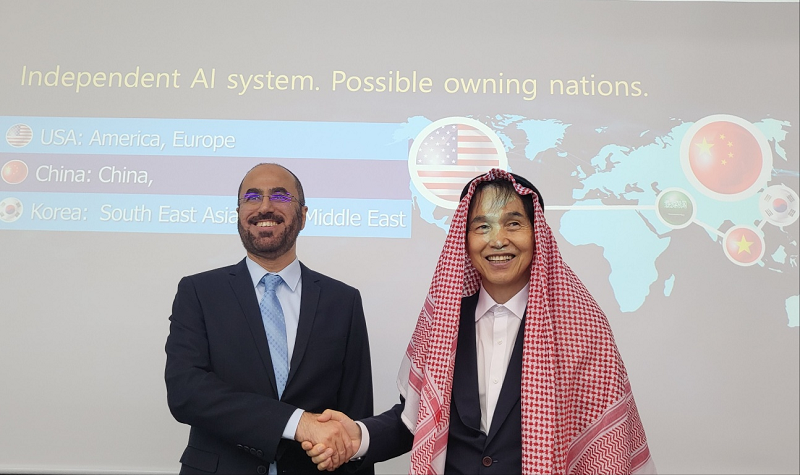
<From left> President Abdulla Al-Salman(King Saud University), President Kwang Hyung Lee(KAIST)
KAIST (President Kwang Hyung Lee) and King Saud University (President Abdulla Al-Salman) held a meeting on July 3 at the KAIST Campus in Seoul and agreed to pursue strategic cooperation in AI and digital platform development. The global AI landscape is increasingly polarized between closed models developed by the U.S. and China’s nationally focused technology ecosystems. In this context, many neutral countries have consistently called for an alternative third model that promotes both technological diversity and open access. President Lee has previously advocated for a "Tripartite Platform Strategy" (三分之計), proposing an international collaboration framework based on open-source principles to be free from binary digital power structures and foster cooperative coexistence.
This KAIST-KSU collaboration represents a step toward developing a new, inclusive AI model. The collaboration aims to establish an innovative multilateral framework, especially within the MENA, Japan, Korea, and Southeast Asia, by building an open-source-based AI alliance. Both institutions bring complementary strengths to the table. Saudi Arabia possesses large-scale capital and digital infrastructure, while Korea leads in core AI and semiconductor technologies, applied research, and talent cultivation.
Together, the two nations aim to establish a sustainable collaboration model that creates a virtuous cycle of investment, technology, and talent. This initiative is expected to contribute to the development of an open AI platform and promote diversity in the global AI ecosystem.
During the meeting, the two sides discussed key areas of future cooperation, including:
· Joint development of open-source AI technologies and digital platforms
· Launch of a KAIST-KSU dual graduate degree program
· Expansion of exchange programs for students, faculty, and researchers
· Collaborative research in basic science and STEM disciplines
In particular, the two institutions discussed to establish a joint AI research center to co-develop open AI models and explore practical industrial applications. The goal is to broaden access to AI technology and create an inclusive innovation environment for more countries and institutions.
President Abdulla Al-Salman stated, "Under Saudi Vision 2030, we are driving innovation in science and technology through new leadership, openness, and strategic investment. This partnership with KAIST will serve as a critical foundation for building a competitive AI ecosystem in the Middle East."
President Kwang Hyung Lee emphasized, "By combining Saudi Arabia's leadership, market, and investment capacity with KAIST's technological innovation and the rich talent pools from both countries, we will significantly contribute to diversifying the global AI ecosystem."
Both leaders further noted, "Through joint research leading to an independent AI model, our two institutions could establish a new axis beyond the existing US-China digital order—realizing a 'Tripartite AI Strategy' that will propel us into global markets extending far beyond the MENA and ASEAN regions."
KAIST and KSU plan to formalize this agreement by signing an MOU in the near future, followed by concrete actions such as launching the joint research institute and global talent development programs. This collaboration was initiated under the Korea Foundation’s Distinguished Guests Invitation Program, overseen by the Ministry of Foreign Affairs, and is expected to grow into a long-term strategic partnership with continued support from KF.
About King Saud University (KSU)
Founded in 1957, KSU is Saudi Arabia’s first and leading national university. As a top research-oriented institution in the Middle East, it has achieved international recognition in fields such as AI, energy, and biotechnology. It plays a central role in nurturing talent and driving innovation aligned with Saudi Arabia’s Vision 2030, and is expanding global partnerships to further strengthen its research capabilities.
About the Korea Foundation (KF)
Established in 1991 under the Ministry of Foreign Affairs, the Korea Foundation is a public diplomacy institution dedicated to strengthening international understanding and friendship with Korea. KF plays a key role in expanding Korea’s soft power through academic and cultural exchange, people-to-people networks, and global Korean studies programs. Its Distinguished Guests Invitation Program fosters strategic partnerships with global leaders in government, academia, and industry.
2025.07.04 View 5212
King Saud University and KAIST discussed Strategic AI Partnership
<From left> President Abdulla Al-Salman(King Saud University), President Kwang Hyung Lee(KAIST)
KAIST (President Kwang Hyung Lee) and King Saud University (President Abdulla Al-Salman) held a meeting on July 3 at the KAIST Campus in Seoul and agreed to pursue strategic cooperation in AI and digital platform development. The global AI landscape is increasingly polarized between closed models developed by the U.S. and China’s nationally focused technology ecosystems. In this context, many neutral countries have consistently called for an alternative third model that promotes both technological diversity and open access. President Lee has previously advocated for a "Tripartite Platform Strategy" (三分之計), proposing an international collaboration framework based on open-source principles to be free from binary digital power structures and foster cooperative coexistence.
This KAIST-KSU collaboration represents a step toward developing a new, inclusive AI model. The collaboration aims to establish an innovative multilateral framework, especially within the MENA, Japan, Korea, and Southeast Asia, by building an open-source-based AI alliance. Both institutions bring complementary strengths to the table. Saudi Arabia possesses large-scale capital and digital infrastructure, while Korea leads in core AI and semiconductor technologies, applied research, and talent cultivation.
Together, the two nations aim to establish a sustainable collaboration model that creates a virtuous cycle of investment, technology, and talent. This initiative is expected to contribute to the development of an open AI platform and promote diversity in the global AI ecosystem.
During the meeting, the two sides discussed key areas of future cooperation, including:
· Joint development of open-source AI technologies and digital platforms
· Launch of a KAIST-KSU dual graduate degree program
· Expansion of exchange programs for students, faculty, and researchers
· Collaborative research in basic science and STEM disciplines
In particular, the two institutions discussed to establish a joint AI research center to co-develop open AI models and explore practical industrial applications. The goal is to broaden access to AI technology and create an inclusive innovation environment for more countries and institutions.
President Abdulla Al-Salman stated, "Under Saudi Vision 2030, we are driving innovation in science and technology through new leadership, openness, and strategic investment. This partnership with KAIST will serve as a critical foundation for building a competitive AI ecosystem in the Middle East."
President Kwang Hyung Lee emphasized, "By combining Saudi Arabia's leadership, market, and investment capacity with KAIST's technological innovation and the rich talent pools from both countries, we will significantly contribute to diversifying the global AI ecosystem."
Both leaders further noted, "Through joint research leading to an independent AI model, our two institutions could establish a new axis beyond the existing US-China digital order—realizing a 'Tripartite AI Strategy' that will propel us into global markets extending far beyond the MENA and ASEAN regions."
KAIST and KSU plan to formalize this agreement by signing an MOU in the near future, followed by concrete actions such as launching the joint research institute and global talent development programs. This collaboration was initiated under the Korea Foundation’s Distinguished Guests Invitation Program, overseen by the Ministry of Foreign Affairs, and is expected to grow into a long-term strategic partnership with continued support from KF.
About King Saud University (KSU)
Founded in 1957, KSU is Saudi Arabia’s first and leading national university. As a top research-oriented institution in the Middle East, it has achieved international recognition in fields such as AI, energy, and biotechnology. It plays a central role in nurturing talent and driving innovation aligned with Saudi Arabia’s Vision 2030, and is expanding global partnerships to further strengthen its research capabilities.
About the Korea Foundation (KF)
Established in 1991 under the Ministry of Foreign Affairs, the Korea Foundation is a public diplomacy institution dedicated to strengthening international understanding and friendship with Korea. KF plays a key role in expanding Korea’s soft power through academic and cultural exchange, people-to-people networks, and global Korean studies programs. Its Distinguished Guests Invitation Program fosters strategic partnerships with global leaders in government, academia, and industry.
2025.07.04 View 5212 -
 KAIST Invites World-Renowned Scholars, Elevating Global Competitiveness
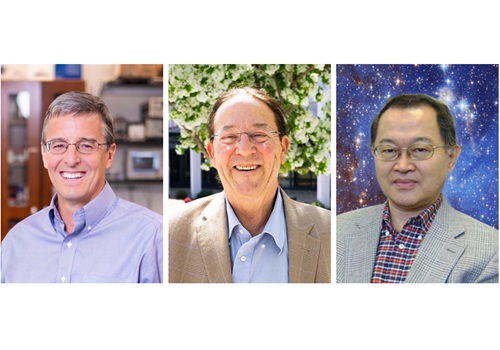
< Photo 1. (From left) Professor John Rogers, Professor Gregg Rothermel, Dr. Sang H. Choi >
KAIST announced on June 27th that it has appointed three world-renowned scholars, including Professor John A. Rogers of Northwestern University, USA, as Invited Distinguished Professors in key departments such as Materials Science and Engineering.
Professor John A. Rogers (Northwestern University, USA) will be working with the Department of Materials Science and Engineering from July 2025 to June 2028 with Professor Gregg Rothermel (North Carolina State University, USA) working with the School of Computing from August 2025 to July 2026, and Dr. Sang H. Choi (NASA Langley Research Center, USA) with the Department of Aerospace Engineering from May 2025 to April 2028.
Professor John A. Rogers, a person of global authority in the field of bio-integrated electronics, has been leading advanced convergence technologies such as flexible electronics, smart skin, and implantable sensors. His significant impact on academia and industry is evident through over 900 papers published in top-tier academic journals like Science, Nature, and Cell, and he comes in an H-index of 240*. His research group, the Rogers Research Group at Northwestern University, focuses on "Science that brings Solutions to Society," encompassing areas such as bio-integrated microsystems and unconventional nanofabrication techniques. He is the founding Director of the Querrey-Simpson Institute of Bioelectronics at Northwestern University.
* H-index 240: An H-index is a measurement used to assess the research productivity and impact of an individual authors. H-index 240 means that 240 or more papers have been cited at least 240 times each, indicating a significant impact and the presumable status as a world-class scholar.
The Department of Materials Science and Engineering plans to further enhance its research capabilities in next-generation bio-implantable materials and wearable devices and boost its global competitiveness through the invitation of Professor Rogers. In particular, it aims to create strong research synergies by linking with the development of bio-convergence interface materials, a core task of the Leading Research Center (ERC, total research budget of 13.5 billion KRW over 7 years) led by Professor Kun-Jae Lee.
Professor Gregg Rothermel, a world-renowned scholar in software engineering, was ranked second among the top 50 global researchers by Communications of the ACM. For over 30 years, he has conducted practical research to improve software reliability and quality. He has achieved influential research outcomes through collaborations with global companies such as Boeing, Microsoft, and Lockheed Martin. Dr. Rothermel's research at North Carolina State University focuses on software engineering and program analysis, with significant contributions through initiatives like the ESQuaReD Laboratory and the Software-Artifact Infrastructure Repository (SIR).
The School of Computing plans to strengthen its research capabilities in software engineering and conduct collaborative research on software design and testing to enhance the reliability and safety of AI-based software systems through the invitation of Professor Gregg Rothermel. In particular, he is expected to participate in the Big Data Edge-Cloud Service Research Center (ITRC, total research budget of 6.7 billion KRW over 8 years) led by Professor In-Young Ko of the School of Computing, and the Research on Improving Complex Mobility Safety (SafetyOps, Digital Columbus Project, total research budget of 3.5 billion KRW over 8 years), contributing to resolving uncertainties in machine learning-based AI software and advancing technology.
Dr. Sang H. Choi, a global expert in space exploration and energy harvesting, has worked at NASA Langley Research Center for over 40 years, authoring over 200 papers and reports, holding 45 patents, and receiving 71 awards from NASA. In 2022, he was inducted into the 'Inventors Hall of Fame' as part of NASA's Technology Transfer Program. This is a rare honor, recognizing researchers who have contributed to the private sector dissemination of space exploration technology, with only 35 individuals worldwide selected to date. Dr. Choi's extensive work at NASA includes research on advanced electronic and energetic materials, satellite sensors, and various nano-technologies.
Dr. Choi plans to collaborate with Associate Professor Hyun-Jung Kim (former NASA Research Scientist, 2009-2024), who joined the Department of Aerospace Engineering in September of 2024, to lead the development of core technologies for lunar exploration (energy sources, sensing, in-situ resource utilization ISRU).
KAIST President Kwang Hyung Lee stated, "It is very meaningful to be able to invite these world-class scholars. Through these appointments, KAIST will further strengthen its global competitiveness in research in the fields of advanced convergence technology such as bio-convergence electronics, AI software engineering, and space exploration, securing our position as the leader of global innovations."
2025.06.27 View 8127
KAIST Invites World-Renowned Scholars, Elevating Global Competitiveness
< Photo 1. (From left) Professor John Rogers, Professor Gregg Rothermel, Dr. Sang H. Choi >
KAIST announced on June 27th that it has appointed three world-renowned scholars, including Professor John A. Rogers of Northwestern University, USA, as Invited Distinguished Professors in key departments such as Materials Science and Engineering.
Professor John A. Rogers (Northwestern University, USA) will be working with the Department of Materials Science and Engineering from July 2025 to June 2028 with Professor Gregg Rothermel (North Carolina State University, USA) working with the School of Computing from August 2025 to July 2026, and Dr. Sang H. Choi (NASA Langley Research Center, USA) with the Department of Aerospace Engineering from May 2025 to April 2028.
Professor John A. Rogers, a person of global authority in the field of bio-integrated electronics, has been leading advanced convergence technologies such as flexible electronics, smart skin, and implantable sensors. His significant impact on academia and industry is evident through over 900 papers published in top-tier academic journals like Science, Nature, and Cell, and he comes in an H-index of 240*. His research group, the Rogers Research Group at Northwestern University, focuses on "Science that brings Solutions to Society," encompassing areas such as bio-integrated microsystems and unconventional nanofabrication techniques. He is the founding Director of the Querrey-Simpson Institute of Bioelectronics at Northwestern University.
* H-index 240: An H-index is a measurement used to assess the research productivity and impact of an individual authors. H-index 240 means that 240 or more papers have been cited at least 240 times each, indicating a significant impact and the presumable status as a world-class scholar.
The Department of Materials Science and Engineering plans to further enhance its research capabilities in next-generation bio-implantable materials and wearable devices and boost its global competitiveness through the invitation of Professor Rogers. In particular, it aims to create strong research synergies by linking with the development of bio-convergence interface materials, a core task of the Leading Research Center (ERC, total research budget of 13.5 billion KRW over 7 years) led by Professor Kun-Jae Lee.
Professor Gregg Rothermel, a world-renowned scholar in software engineering, was ranked second among the top 50 global researchers by Communications of the ACM. For over 30 years, he has conducted practical research to improve software reliability and quality. He has achieved influential research outcomes through collaborations with global companies such as Boeing, Microsoft, and Lockheed Martin. Dr. Rothermel's research at North Carolina State University focuses on software engineering and program analysis, with significant contributions through initiatives like the ESQuaReD Laboratory and the Software-Artifact Infrastructure Repository (SIR).
The School of Computing plans to strengthen its research capabilities in software engineering and conduct collaborative research on software design and testing to enhance the reliability and safety of AI-based software systems through the invitation of Professor Gregg Rothermel. In particular, he is expected to participate in the Big Data Edge-Cloud Service Research Center (ITRC, total research budget of 6.7 billion KRW over 8 years) led by Professor In-Young Ko of the School of Computing, and the Research on Improving Complex Mobility Safety (SafetyOps, Digital Columbus Project, total research budget of 3.5 billion KRW over 8 years), contributing to resolving uncertainties in machine learning-based AI software and advancing technology.
Dr. Sang H. Choi, a global expert in space exploration and energy harvesting, has worked at NASA Langley Research Center for over 40 years, authoring over 200 papers and reports, holding 45 patents, and receiving 71 awards from NASA. In 2022, he was inducted into the 'Inventors Hall of Fame' as part of NASA's Technology Transfer Program. This is a rare honor, recognizing researchers who have contributed to the private sector dissemination of space exploration technology, with only 35 individuals worldwide selected to date. Dr. Choi's extensive work at NASA includes research on advanced electronic and energetic materials, satellite sensors, and various nano-technologies.
Dr. Choi plans to collaborate with Associate Professor Hyun-Jung Kim (former NASA Research Scientist, 2009-2024), who joined the Department of Aerospace Engineering in September of 2024, to lead the development of core technologies for lunar exploration (energy sources, sensing, in-situ resource utilization ISRU).
KAIST President Kwang Hyung Lee stated, "It is very meaningful to be able to invite these world-class scholars. Through these appointments, KAIST will further strengthen its global competitiveness in research in the fields of advanced convergence technology such as bio-convergence electronics, AI software engineering, and space exploration, securing our position as the leader of global innovations."
2025.06.27 View 8127 -
 KAIST Develops Glare-Free, Heat-Blocking 'Smart Window'... Applicable to Buildings and Vehicles
• Professor Hong Chul Moon of the Department of Chemical and Biomolecular Engineering develops RECM, a next-generation smart window technology, expecting cooling energy savings and effective indoor thermal management.
• When using the developed RECM, a significantly superior temperature reduction effect is observed compared to conventional windows.
• With a 'pedestrian-friendly smart window' design that eliminates glare by suppressing external reflections, it is expected to be adapted in architectural structures, transportation, and more.
< (From left) First author Hoy Jung Jo, Professor Hong Chul Moon >
In the building sector, which accounts for approximately 40% of global energy consumption, heat ingress through windows has been identified as a primary cause of wasted heating and cooling energy. Our research team has successfully developed a 'pedestrian-friendly smart window' technology capable of not only reducing heating and cooling energy in urban buildings but also resolving the persistent issue of 'light pollution' in urban living.
On the 17th of June, Professor Hong Chul Moon's research team at KAIST's Department of Chemical and Biomolecular Engineering announced the development of a 'smart window technology' that allows users to control the light and heat entering through windows according to their intent, and effectively neutralize glare from external sources.
Recently, 'active smart window' technology, which enables free adjustment of light and heat based on user operation, has garnered significant attention. Unlike conventional windows that passively react to changes in temperature or light, this is a next-generation window system that can be controlled in real-time via electrical signals.
The next-generation smart window technology developed by the research team, RECM (Reversible Electrodeposition and Electrochromic Mirror), is a smart window system based on a single-structured *electrochromic device that can actively control the transmittance of visible light and near-infrared (heat).
*Electrochromic device: A device whose optical properties change in response to an electrical signal.
In particular, by effectively suppressing the glare phenomenon caused by external reflected light—a problem previously identified in traditional metal *deposition smart windows—through the combined application of electrochromic materials, a 'pedestrian-friendly smart window' suitable for building facades has been realized.
*Deposition: A process involving the electrochemical reaction to coat metal ions, such as Ag+, onto an electrode surface in solid form.
The RECM system developed in this study operates in three modes depending on voltage control.
Mode I (Transparent Mode) is advantageous for allowing sunlight to enter the indoor space during winter, as it transmits both light and heat like ordinary glass.
In Mode II (Colored Mode), *Prussian Blue (PB) and **DHV+• chemical species are formed through a redox (oxidation-reduction) reaction, causing the window to turn a deep blue color. In this state, light is absorbed, and only a portion of the heat is transmitted, allowing for privacy while enabling appropriate indoor temperature control.
*Prussian Blue: An electrochromic material that transitions between colorless and blue upon electrical stimulation.
**DHV+•: A radical state colored molecule generated upon electrical stimulation.
Mode III (Colored and Deposition Mode) involves the reduction and deposition of silver (Ag+) ions on the electrode surface, reflecting both light and heat. Concurrently, the colored material absorbs the reflected light, effectively blocking glare for external pedestrians.
The research team validated the practical indoor temperature reduction effect of the RECM technology through experiments utilizing a miniature model house. When a conventional glass window was installed, the indoor temperature rose to 58.7°C within 45 minutes. Conversely, when RECM was operated in Mode III, the temperature reached 31.5°C, demonstrating a temperature reduction effect of approximately 27.2°C.
Furthermore, since each state transition is achievable solely by electrical signals, it is regarded as an active smart technology capable of instantaneous response according to season, time, and intended use.
< Figure 1. Operation mechanism of the RECM smart window. The RECM system can switch among three states—transparent, colored, and colored & deposition—via electrical stimulation. At -1.6 V, DHV•+ and Prussian Blue (PB) are formed, blocking visible light to provide privacy protection and heat blocking. At -2.0 V, silver (Ag) is deposited on the electrode surface, reflecting light and heat, while DHV•+ and Prussian Blue absorb reflected light, effectively suppressing external glare. Through this mechanism, it functions as an active smart window that simultaneously controls light, heat, and glare. >
Professor Hong Chul Moon of KAIST, the corresponding author of this study, stated, "This research goes beyond existing smart window technologies limited to visible light control, presenting a truly smart window platform that comprehensively considers not only active indoor thermal control but also the visual safety of pedestrians." He added, "Various applications are anticipated, from urban buildings to vehicles and trains."
< Figure 2. Analysis of glare suppression effect of conventional reflective smart windows and RECM. This figure presents the results comparing the glare phenomenon occurring during silver (Ag) deposition between conventional reflective smart windows and RECM Mode III. Conventional reflective devices resulted in strong reflected light on the desk surface due to their high reflectivity. In contrast, RECM Mode III, where the colored material absorbed reflected light, showed a 33% reduction in reflected light intensity, and no reflected light was observed from outside. This highlights the RECM system's distinctiveness and practicality as a 'pedestrian-friendly smart window' optimized for dense urban environments, extending beyond just heat blocking. >
The findings of this research were published on June 13, 2025, in Volume 10, Issue 6 of 'ACS Energy Letters'. The listed authors for this publication are Hoy Jung Jo, Yeon Jae Jang, Hyeon-Don Kim, Kwang-Seop Kim, and Hong Chul Moon.
※ Paper Title: Glare-Free, Energy-Efficient Smart Windows: A Pedestrian-Friendly System with Dynamically Tunable Light and Heat Regulation
※ DOI: 10.1021/acsenergylett.5c00637
< Figure 3. Temperature reduction performance verification in a miniature model house. The actual heat blocking effect was evaluated by applying RECM devices to a model building. Under identical conditions, the indoor temperature with ordinary glass rose to 58.7°C, whereas with RECM in Mode III, it reached 31.5°C, demonstrating a maximum temperature reduction effect of 27.2°C. The indoor temperature difference was also visually confirmed through thermal images, which proves the potential for indoor temperature control in urban buildings. >
This research was supported by the Nano & Material Technology Development Program through the National Research Foundation of Korea (NRF) funded by the Ministry of Science and ICT and the internal research program of the Korea Institute of Machinery and Materials.
2025.06.20 View 9544
KAIST Develops Glare-Free, Heat-Blocking 'Smart Window'... Applicable to Buildings and Vehicles
• Professor Hong Chul Moon of the Department of Chemical and Biomolecular Engineering develops RECM, a next-generation smart window technology, expecting cooling energy savings and effective indoor thermal management.
• When using the developed RECM, a significantly superior temperature reduction effect is observed compared to conventional windows.
• With a 'pedestrian-friendly smart window' design that eliminates glare by suppressing external reflections, it is expected to be adapted in architectural structures, transportation, and more.
< (From left) First author Hoy Jung Jo, Professor Hong Chul Moon >
In the building sector, which accounts for approximately 40% of global energy consumption, heat ingress through windows has been identified as a primary cause of wasted heating and cooling energy. Our research team has successfully developed a 'pedestrian-friendly smart window' technology capable of not only reducing heating and cooling energy in urban buildings but also resolving the persistent issue of 'light pollution' in urban living.
On the 17th of June, Professor Hong Chul Moon's research team at KAIST's Department of Chemical and Biomolecular Engineering announced the development of a 'smart window technology' that allows users to control the light and heat entering through windows according to their intent, and effectively neutralize glare from external sources.
Recently, 'active smart window' technology, which enables free adjustment of light and heat based on user operation, has garnered significant attention. Unlike conventional windows that passively react to changes in temperature or light, this is a next-generation window system that can be controlled in real-time via electrical signals.
The next-generation smart window technology developed by the research team, RECM (Reversible Electrodeposition and Electrochromic Mirror), is a smart window system based on a single-structured *electrochromic device that can actively control the transmittance of visible light and near-infrared (heat).
*Electrochromic device: A device whose optical properties change in response to an electrical signal.
In particular, by effectively suppressing the glare phenomenon caused by external reflected light—a problem previously identified in traditional metal *deposition smart windows—through the combined application of electrochromic materials, a 'pedestrian-friendly smart window' suitable for building facades has been realized.
*Deposition: A process involving the electrochemical reaction to coat metal ions, such as Ag+, onto an electrode surface in solid form.
The RECM system developed in this study operates in three modes depending on voltage control.
Mode I (Transparent Mode) is advantageous for allowing sunlight to enter the indoor space during winter, as it transmits both light and heat like ordinary glass.
In Mode II (Colored Mode), *Prussian Blue (PB) and **DHV+• chemical species are formed through a redox (oxidation-reduction) reaction, causing the window to turn a deep blue color. In this state, light is absorbed, and only a portion of the heat is transmitted, allowing for privacy while enabling appropriate indoor temperature control.
*Prussian Blue: An electrochromic material that transitions between colorless and blue upon electrical stimulation.
**DHV+•: A radical state colored molecule generated upon electrical stimulation.
Mode III (Colored and Deposition Mode) involves the reduction and deposition of silver (Ag+) ions on the electrode surface, reflecting both light and heat. Concurrently, the colored material absorbs the reflected light, effectively blocking glare for external pedestrians.
The research team validated the practical indoor temperature reduction effect of the RECM technology through experiments utilizing a miniature model house. When a conventional glass window was installed, the indoor temperature rose to 58.7°C within 45 minutes. Conversely, when RECM was operated in Mode III, the temperature reached 31.5°C, demonstrating a temperature reduction effect of approximately 27.2°C.
Furthermore, since each state transition is achievable solely by electrical signals, it is regarded as an active smart technology capable of instantaneous response according to season, time, and intended use.
< Figure 1. Operation mechanism of the RECM smart window. The RECM system can switch among three states—transparent, colored, and colored & deposition—via electrical stimulation. At -1.6 V, DHV•+ and Prussian Blue (PB) are formed, blocking visible light to provide privacy protection and heat blocking. At -2.0 V, silver (Ag) is deposited on the electrode surface, reflecting light and heat, while DHV•+ and Prussian Blue absorb reflected light, effectively suppressing external glare. Through this mechanism, it functions as an active smart window that simultaneously controls light, heat, and glare. >
Professor Hong Chul Moon of KAIST, the corresponding author of this study, stated, "This research goes beyond existing smart window technologies limited to visible light control, presenting a truly smart window platform that comprehensively considers not only active indoor thermal control but also the visual safety of pedestrians." He added, "Various applications are anticipated, from urban buildings to vehicles and trains."
< Figure 2. Analysis of glare suppression effect of conventional reflective smart windows and RECM. This figure presents the results comparing the glare phenomenon occurring during silver (Ag) deposition between conventional reflective smart windows and RECM Mode III. Conventional reflective devices resulted in strong reflected light on the desk surface due to their high reflectivity. In contrast, RECM Mode III, where the colored material absorbed reflected light, showed a 33% reduction in reflected light intensity, and no reflected light was observed from outside. This highlights the RECM system's distinctiveness and practicality as a 'pedestrian-friendly smart window' optimized for dense urban environments, extending beyond just heat blocking. >
The findings of this research were published on June 13, 2025, in Volume 10, Issue 6 of 'ACS Energy Letters'. The listed authors for this publication are Hoy Jung Jo, Yeon Jae Jang, Hyeon-Don Kim, Kwang-Seop Kim, and Hong Chul Moon.
※ Paper Title: Glare-Free, Energy-Efficient Smart Windows: A Pedestrian-Friendly System with Dynamically Tunable Light and Heat Regulation
※ DOI: 10.1021/acsenergylett.5c00637
< Figure 3. Temperature reduction performance verification in a miniature model house. The actual heat blocking effect was evaluated by applying RECM devices to a model building. Under identical conditions, the indoor temperature with ordinary glass rose to 58.7°C, whereas with RECM in Mode III, it reached 31.5°C, demonstrating a maximum temperature reduction effect of 27.2°C. The indoor temperature difference was also visually confirmed through thermal images, which proves the potential for indoor temperature control in urban buildings. >
This research was supported by the Nano & Material Technology Development Program through the National Research Foundation of Korea (NRF) funded by the Ministry of Science and ICT and the internal research program of the Korea Institute of Machinery and Materials.
2025.06.20 View 9544 -
 ‘InnoCORE Research Group’ Launched to Lead AI Convergence Innovation
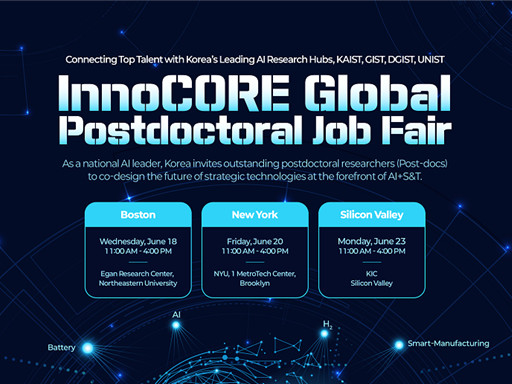
KAIST announced on the 16th of June that it has launched the ‘InnoCORE (Innovation-Core) Research Group,’ which will lead advanced strategic research in AI convergence (AI+S&T), in cooperation with the Ministry of Science and ICT (Minister Yoo Sang-im, hereinafter referred to as MSIT) and DGIST, GIST, and UNIST*. Through this, the group plans to actively recruit up to 200 world-class postdoctoral researchers.
DGIST (Daegu Gyeongbuk Institute of Science & Technology), GIST (Gwangju Institute of Science & Technology), UNIST (Ulsan National Institute of Science and Technology)
The ‘InnoCORE Research Group’ aims to foster core research personnel who will lead innovation in the field of AI convergence, focusing on nurturing and attracting high-level research talent in AI+Science & Technology. This is a strategic response to prevent brain drain of domestic talent and attract excellent overseas talent amidst the accelerating global competition for AI talent.
Through this initiative, our university plans to accelerate AI-based science and technology innovation and disseminate research achievements across industries and the economy by supporting top domestic and international postdoctoral researchers to dedicate themselves to developing AI convergence technologies in an advanced collaborative research environment.
The InnoCORE project for advanced AI+S&T convergence research and global talent attraction is jointly promoted by four science and technology institutes, including KAIST. It is structured around AI core technologies (such as hyper-scale language models, AI semiconductors) and AI convergence technologies (such as bio, manufacturing, energy, and aerospace).
As the leading institution, our university operates the following four research groups:
Hyper-scale Language Model Innovation Research Group: Advancement of LLM technology and research on generative AI, multimodal AI, and ensuring reliability.
AI-based Intelligent Design-Manufacturing Integration Research Group: Establishment of an AI platform for the entire lifecycle of the manufacturing industry and innovation in design and processes.
AI-Innovation Drug Research Group: Securing AI-based drug development technologies across the entire lifecycle and overcoming intractable diseases.
AI-Transformed Aerospace Research Group: AI transformation of aerospace systems throughout their lifecycle and development of new technologies such as autonomous flight and space communication.
< Poster on the InnoCORE Global Jobfair for Recruitment of Postdoctoral Researchers >
In addition, a total of eight research groups are formed to promote global collaborative convergence research, including those led by DGIST, GIST, and UNIST: ▲Bio-Integrated Physical AI, ▲Early Diagnosis of Brain Diseases AI+Nano Convergence, ▲Intelligent Hydrogen Technology Innovation, and ▲AI-Space Solar Power Research Group.
Starting in 2025, the four science and technology institutes, including KAIST, will officially begin recruiting 400 postdoctoral researchers in the AI+S&T fields. Selected postdoctoral researchers will be guaranteed high-level treatment with an annual salary of over 90 million KRW, and additional support through matching with companies and research projects is also planned.
In particular, global recruitment fairs will be held in major US regions to expand the attraction of excellent overseas talent. Local recruitment fairs will be held in Boston (Harvard, MIT), New York (NYU), and Silicon Valley (Stanford) in June, along with promotions through global academic journals such as Nature and Science, and LinkedIn.
KAIST plans to provide multiple mentor programs, global joint research opportunities, and excellent infrastructure (such as supercomputers, semiconductor fabs, and AI research platforms) within the research groups to enable postdoctoral researchers to collaborate with experts from various academic and industrial fields.
President Kwang Hyung Lee emphasized, “Through this InnoCORE project, KAIST will leap forward as a Global Hub for AI+S&T convergence research. Young researchers from around the world will challenge themselves and grow at KAIST, and our country will play a pivotal role in establishing itself as a leading nation in global AI convergence research and industry. To achieve this, we will spare no effort in providing the best research environment and active support.”
KAIST plans to actively pursue the InnoCORE project to secure global competitiveness in AI convergence research and contribute to the development of advanced industries. The eight selected research groups will finalize their detailed research plans by the end of June and commence full-scale research in July.
2025.06.19 View 10517
‘InnoCORE Research Group’ Launched to Lead AI Convergence Innovation
KAIST announced on the 16th of June that it has launched the ‘InnoCORE (Innovation-Core) Research Group,’ which will lead advanced strategic research in AI convergence (AI+S&T), in cooperation with the Ministry of Science and ICT (Minister Yoo Sang-im, hereinafter referred to as MSIT) and DGIST, GIST, and UNIST*. Through this, the group plans to actively recruit up to 200 world-class postdoctoral researchers.
DGIST (Daegu Gyeongbuk Institute of Science & Technology), GIST (Gwangju Institute of Science & Technology), UNIST (Ulsan National Institute of Science and Technology)
The ‘InnoCORE Research Group’ aims to foster core research personnel who will lead innovation in the field of AI convergence, focusing on nurturing and attracting high-level research talent in AI+Science & Technology. This is a strategic response to prevent brain drain of domestic talent and attract excellent overseas talent amidst the accelerating global competition for AI talent.
Through this initiative, our university plans to accelerate AI-based science and technology innovation and disseminate research achievements across industries and the economy by supporting top domestic and international postdoctoral researchers to dedicate themselves to developing AI convergence technologies in an advanced collaborative research environment.
The InnoCORE project for advanced AI+S&T convergence research and global talent attraction is jointly promoted by four science and technology institutes, including KAIST. It is structured around AI core technologies (such as hyper-scale language models, AI semiconductors) and AI convergence technologies (such as bio, manufacturing, energy, and aerospace).
As the leading institution, our university operates the following four research groups:
Hyper-scale Language Model Innovation Research Group: Advancement of LLM technology and research on generative AI, multimodal AI, and ensuring reliability.
AI-based Intelligent Design-Manufacturing Integration Research Group: Establishment of an AI platform for the entire lifecycle of the manufacturing industry and innovation in design and processes.
AI-Innovation Drug Research Group: Securing AI-based drug development technologies across the entire lifecycle and overcoming intractable diseases.
AI-Transformed Aerospace Research Group: AI transformation of aerospace systems throughout their lifecycle and development of new technologies such as autonomous flight and space communication.
< Poster on the InnoCORE Global Jobfair for Recruitment of Postdoctoral Researchers >
In addition, a total of eight research groups are formed to promote global collaborative convergence research, including those led by DGIST, GIST, and UNIST: ▲Bio-Integrated Physical AI, ▲Early Diagnosis of Brain Diseases AI+Nano Convergence, ▲Intelligent Hydrogen Technology Innovation, and ▲AI-Space Solar Power Research Group.
Starting in 2025, the four science and technology institutes, including KAIST, will officially begin recruiting 400 postdoctoral researchers in the AI+S&T fields. Selected postdoctoral researchers will be guaranteed high-level treatment with an annual salary of over 90 million KRW, and additional support through matching with companies and research projects is also planned.
In particular, global recruitment fairs will be held in major US regions to expand the attraction of excellent overseas talent. Local recruitment fairs will be held in Boston (Harvard, MIT), New York (NYU), and Silicon Valley (Stanford) in June, along with promotions through global academic journals such as Nature and Science, and LinkedIn.
KAIST plans to provide multiple mentor programs, global joint research opportunities, and excellent infrastructure (such as supercomputers, semiconductor fabs, and AI research platforms) within the research groups to enable postdoctoral researchers to collaborate with experts from various academic and industrial fields.
President Kwang Hyung Lee emphasized, “Through this InnoCORE project, KAIST will leap forward as a Global Hub for AI+S&T convergence research. Young researchers from around the world will challenge themselves and grow at KAIST, and our country will play a pivotal role in establishing itself as a leading nation in global AI convergence research and industry. To achieve this, we will spare no effort in providing the best research environment and active support.”
KAIST plans to actively pursue the InnoCORE project to secure global competitiveness in AI convergence research and contribute to the development of advanced industries. The eight selected research groups will finalize their detailed research plans by the end of June and commence full-scale research in July.
2025.06.19 View 10517 -
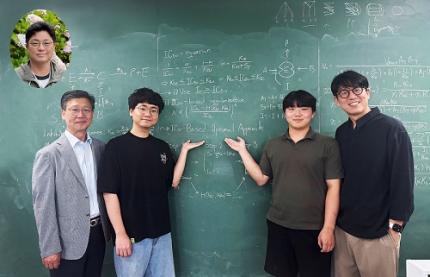 “One Experiment Is All It Takes”: KAIST Team Revolutionizes Drug Interaction Testing, Replacing 60,000 Studies
A groundbreaking new method developed by researchers at KAIST and Chungnam National University could drastically streamline drug interaction testing — replacing dozens of traditional experiments with just one.
The research, led by Professor Jae Kyoung Kim of KAIST Department of Mathematical Sciences & IBS Biomedical Mathematics Group and Professor Sang Kyum Kim of Chungnam National University's College of Pharmacy, introduces a novel analysis technique called 50-BOA, published in Nature Communications on June 5, 2025.
< Photo 1. (From left) Professor Sang Kyum Kim (Chungnam National University College of Pharmacy, co-corresponding author), Dr. Yun Min Song (IBS Biomedical Mathematics Group, formerly KAIST Department of Mathematical Sciences, co-first author), undergraduate student Hyeong Jun Jang (KAIST, co-first author), Professor Jae Kyoung Kim (KAIST and IBS Biomedical Mathematics Group, co-corresponding author) (Top left in the bubble) Professor Hwi-yeol Yun (Chungnam National University College of Pharmacy, co-author) >
For decades, scientists have had to repeat drug inhibition experiments across a wide range of concentrations to estimate inhibition constants — a process seen in over 60,000 scientific publications. But the KAIST-led team discovered that a single, well-chosen inhibitor concentration can yield even more accurate results.
< Figure 1. Graphical summary of 50-BOA. 50-BOA improves the accuracy and efficiency of inhibition constant estimation by using only a single inhibitor concentration instead of the traditionally used method of employing multiple inhibitor concentrations. >
“This approach challenges long-standing assumptions in experimental pharmacology,” says Prof. Kim. “It shows how mathematics can fundamentally redesign life science experiments.”
By mathematically analyzing the sources of error in conventional methods, the team found that over half the data typically collected adds no value or even skews results. Their new method not only cuts experimental effort by over 75%, but also enhances reproducibility and accuracy.
To help researchers adopt the method quickly, the team developed a user-friendly tool that takes simple Excel files as input, now freely available on GitHub:
☞ https://github.com/Mathbiomed/50-BOA
< Figure 2. The MATLAB and R package of 50-BOA at GitHub >
The work holds promise for faster and more reliable drug development, especially in assessing potential interactions in combination therapies. The U.S. FDA already emphasizes the importance of accurate enzyme inhibition assessment during early-stage drug evaluation — and this method could soon become a new gold standard.
2025.06.16 View 8829
“One Experiment Is All It Takes”: KAIST Team Revolutionizes Drug Interaction Testing, Replacing 60,000 Studies
A groundbreaking new method developed by researchers at KAIST and Chungnam National University could drastically streamline drug interaction testing — replacing dozens of traditional experiments with just one.
The research, led by Professor Jae Kyoung Kim of KAIST Department of Mathematical Sciences & IBS Biomedical Mathematics Group and Professor Sang Kyum Kim of Chungnam National University's College of Pharmacy, introduces a novel analysis technique called 50-BOA, published in Nature Communications on June 5, 2025.
< Photo 1. (From left) Professor Sang Kyum Kim (Chungnam National University College of Pharmacy, co-corresponding author), Dr. Yun Min Song (IBS Biomedical Mathematics Group, formerly KAIST Department of Mathematical Sciences, co-first author), undergraduate student Hyeong Jun Jang (KAIST, co-first author), Professor Jae Kyoung Kim (KAIST and IBS Biomedical Mathematics Group, co-corresponding author) (Top left in the bubble) Professor Hwi-yeol Yun (Chungnam National University College of Pharmacy, co-author) >
For decades, scientists have had to repeat drug inhibition experiments across a wide range of concentrations to estimate inhibition constants — a process seen in over 60,000 scientific publications. But the KAIST-led team discovered that a single, well-chosen inhibitor concentration can yield even more accurate results.
< Figure 1. Graphical summary of 50-BOA. 50-BOA improves the accuracy and efficiency of inhibition constant estimation by using only a single inhibitor concentration instead of the traditionally used method of employing multiple inhibitor concentrations. >
“This approach challenges long-standing assumptions in experimental pharmacology,” says Prof. Kim. “It shows how mathematics can fundamentally redesign life science experiments.”
By mathematically analyzing the sources of error in conventional methods, the team found that over half the data typically collected adds no value or even skews results. Their new method not only cuts experimental effort by over 75%, but also enhances reproducibility and accuracy.
To help researchers adopt the method quickly, the team developed a user-friendly tool that takes simple Excel files as input, now freely available on GitHub:
☞ https://github.com/Mathbiomed/50-BOA
< Figure 2. The MATLAB and R package of 50-BOA at GitHub >
The work holds promise for faster and more reliable drug development, especially in assessing potential interactions in combination therapies. The U.S. FDA already emphasizes the importance of accurate enzyme inhibition assessment during early-stage drug evaluation — and this method could soon become a new gold standard.
2025.06.16 View 8829 -
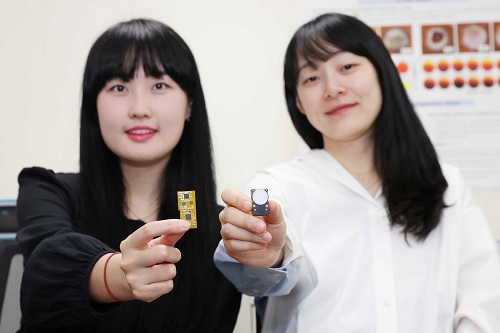 KAIST Succeeds in Real-Time Carbon Dioxide Monitoring Without Batteries or External Power
< (From left) Master's Student Gyurim Jang, Professor Kyeongha Kwon >
KAIST (President Kwang Hyung Lee) announced on June 9th that a research team led by Professor Kyeongha Kwon from the School of Electrical Engineering, in a joint study with Professor Hanjun Ryu's team at Chung-Ang University, has developed a self-powered wireless carbon dioxide (CO2) monitoring system. This innovative system harvests fine vibrational energy from its surroundings to periodically measure CO2 concentrations.
This breakthrough addresses a critical need in environmental monitoring: accurately understanding "how much" CO2 is being emitted to combat climate change and global warming. While CO2 monitoring technology is key to this, existing systems largely rely on batteries or wired power system, imposing limitations on installation and maintenance. The KAIST team tackled this by creating a self-powered wireless system that operates without external power.
The core of this new system is an "Inertia-driven Triboelectric Nanogenerator (TENG)" that converts vibrations (with amplitudes ranging from 20-4000 ㎛ and frequencies from 0-300 Hz) generated by industrial equipment or pipelines into electricity. This enables periodic CO2 concentration measurements and wireless transmission without the need for batteries.
< Figure 1. Concept and configuration of self-powered wireless CO2 monitoring system using fine vibration harvesting (a) System block diagram (b) Photo of fabricated system prototype >
The research team successfully amplified fine vibrations and induced resonance by combining spring-attached 4-stack TENGs. They achieved stable power production of 0.5 mW under conditions of 13 Hz and 0.56 g acceleration. The generated power was then used to operate a CO2 sensor and a Bluetooth Low Energy (BLE) system-on-a-chip (SoC).
Professor Kyeongha Kwon emphasized, "For efficient environmental monitoring, a system that can operate continuously without power limitations is essential." She explained, "In this research, we implemented a self-powered system that can periodically measure and wirelessly transmit CO2 concentrations based on the energy generated from an inertia-driven TENG." She added, "This technology can serve as a foundational technology for future self-powered environmental monitoring platforms integrating various sensors."
< Figure 2. TENG energy harvesting-based wireless CO2 sensing system operation results (c) Experimental setup (d) Measured CO2 concentration results powered by TENG and conventional DC power source >
This research was published on June 1st in the internationally renowned academic journal `Nano Energy (IF 16.8)`. Gyurim Jang, a master's student at KAIST, and Daniel Manaye Tiruneh, a master's student at Chung-Ang University, are the co-first authors of the paper.*Paper Title: Highly compact inertia-driven triboelectric nanogenerator for self-powered wireless CO2 monitoring via fine-vibration harvesting*DOI: 10.1016/j.nanoen.2025.110872
This research was supported by the Saudi Aramco-KAIST CO2 Management Center.
2025.06.09 View 56087
KAIST Succeeds in Real-Time Carbon Dioxide Monitoring Without Batteries or External Power
< (From left) Master's Student Gyurim Jang, Professor Kyeongha Kwon >
KAIST (President Kwang Hyung Lee) announced on June 9th that a research team led by Professor Kyeongha Kwon from the School of Electrical Engineering, in a joint study with Professor Hanjun Ryu's team at Chung-Ang University, has developed a self-powered wireless carbon dioxide (CO2) monitoring system. This innovative system harvests fine vibrational energy from its surroundings to periodically measure CO2 concentrations.
This breakthrough addresses a critical need in environmental monitoring: accurately understanding "how much" CO2 is being emitted to combat climate change and global warming. While CO2 monitoring technology is key to this, existing systems largely rely on batteries or wired power system, imposing limitations on installation and maintenance. The KAIST team tackled this by creating a self-powered wireless system that operates without external power.
The core of this new system is an "Inertia-driven Triboelectric Nanogenerator (TENG)" that converts vibrations (with amplitudes ranging from 20-4000 ㎛ and frequencies from 0-300 Hz) generated by industrial equipment or pipelines into electricity. This enables periodic CO2 concentration measurements and wireless transmission without the need for batteries.
< Figure 1. Concept and configuration of self-powered wireless CO2 monitoring system using fine vibration harvesting (a) System block diagram (b) Photo of fabricated system prototype >
The research team successfully amplified fine vibrations and induced resonance by combining spring-attached 4-stack TENGs. They achieved stable power production of 0.5 mW under conditions of 13 Hz and 0.56 g acceleration. The generated power was then used to operate a CO2 sensor and a Bluetooth Low Energy (BLE) system-on-a-chip (SoC).
Professor Kyeongha Kwon emphasized, "For efficient environmental monitoring, a system that can operate continuously without power limitations is essential." She explained, "In this research, we implemented a self-powered system that can periodically measure and wirelessly transmit CO2 concentrations based on the energy generated from an inertia-driven TENG." She added, "This technology can serve as a foundational technology for future self-powered environmental monitoring platforms integrating various sensors."
< Figure 2. TENG energy harvesting-based wireless CO2 sensing system operation results (c) Experimental setup (d) Measured CO2 concentration results powered by TENG and conventional DC power source >
This research was published on June 1st in the internationally renowned academic journal `Nano Energy (IF 16.8)`. Gyurim Jang, a master's student at KAIST, and Daniel Manaye Tiruneh, a master's student at Chung-Ang University, are the co-first authors of the paper.*Paper Title: Highly compact inertia-driven triboelectric nanogenerator for self-powered wireless CO2 monitoring via fine-vibration harvesting*DOI: 10.1016/j.nanoen.2025.110872
This research was supported by the Saudi Aramco-KAIST CO2 Management Center.
2025.06.09 View 56087 -
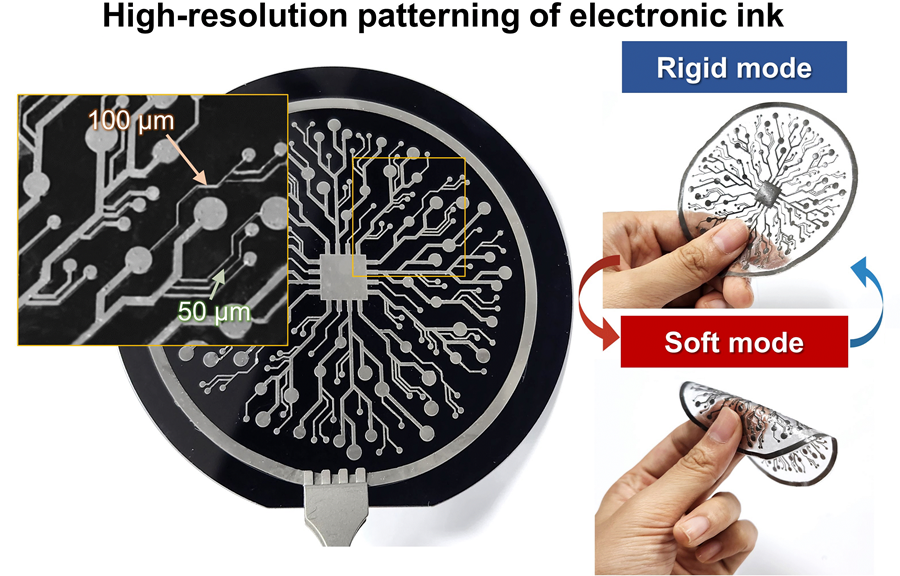 KAIST Research Team Develops Electronic Ink for Room-Temperature Printing of High-Resolution, Variable-Stiffness Electronics
A team of researchers from KAIST and Seoul National University has developed a groundbreaking electronic ink that enables room-temperature printing of variable-stiffness circuits capable of switching between rigid and soft modes. This advancement marks a significant leap toward next-generation wearable, implantable, and robotic devices.
< Photo 1. (From left) Professor Jae-Woong Jeong and PhD candidate Simok Lee of the School of Electrical Engineering, (in separate bubbles, from left) Professor Gun-Hee Lee of Pusan National University, Professor Seongjun Park of Seoul National University, Professor Steve Park of the Department of Materials Science and Engineering>
Variable-stiffness electronics are at the forefront of adaptive technology, offering the ability for a single device to transition between rigid and soft modes depending on its use case. Gallium, a metal known for its high rigidity contrast between solid and liquid states, is a promising candidate for such applications. However, its use has been hindered by challenges including high surface tension, low viscosity, and undesirable phase transitions during manufacturing.
On June 4th, a research team led by Professor Jae-Woong Jeong from the School of Electrical Engineering at KAIST, Professor Seongjun Park from the Digital Healthcare Major at Seoul National University, and Professor Steve Park from the Department of Materials Science and Engineering at KAIST introduced a novel liquid metal electronic ink. This ink allows for micro-scale circuit printing – thinner than a human hair – at room temperature, with the ability to reversibly switch between rigid and soft modes depending on temperature.
The new ink combines printable viscosity with excellent electrical conductivity, enabling the creation of complex, high-resolution multilayer circuits comparable to commercial printed circuit boards (PCBs). These circuits can dynamically change stiffness in response to temperature, presenting new opportunities for multifunctional electronics, medical technologies, and robotics.
Conventional electronics typically have fixed form factors – either rigid for durability or soft for wearability. Rigid devices like smartphones and laptops offer robust performance but are uncomfortable when worn, while soft electronics are more comfortable but lack precise handling. As demand grows for devices that can adapt their stiffness to context, variable-stiffness electronics are becoming increasingly important.
< Figure 1. Fabrication process of stable, high-viscosity electronic ink by dispersing micro-sized gallium particles in a polymer matrix (left). High-resolution large-area circuit printing process through pH-controlled chemical sintering (right). >
To address this challenge, the researchers focused on gallium, which melts just below body temperature. Solid gallium is quite stiff, while its liquid form is fluid and soft. Despite its potential, gallium’s use in electronic printing has been limited by its high surface tension and instability when melted.
To overcome these issues, the team developed a pH-controlled liquid metal ink printing process. By dispersing micro-sized gallium particles into a hydrophilic polyurethane matrix using a neutral solvent (dimethyl sulfoxide, or DMSO), they created a stable, high-viscosity ink suitable for precision printing. During post-print heating, the DMSO decomposes to form an acidic environment, which removes the oxide layer on the gallium particles. This triggers the particles to coalesce into electrically conductive networks with tunable mechanical properties.
The resulting printed circuits exhibit fine feature sizes (~50 μm), high conductivity (2.27 × 10⁶ S/m), and a stiffness modulation ratio of up to 1,465 – allowing the material to shift from plastic-like rigidity to rubber-like softness. Furthermore, the ink is compatible with conventional printing techniques such as screen printing and dip coating, supporting large-area and 3D device fabrication.
< Figure 2. Key features of the electronic ink. (i) High-resolution printing and multilayer integration capability. (ii) Batch fabrication capability through large-area screen printing. (iii) Complex three-dimensional structure printing capability through dip coating. (iv) Excellent electrical conductivity and stiffness control capability.>
The team demonstrated this technology by developing a multi-functional device that operates as a rigid portable electronic under normal conditions but transforms into a soft wearable healthcare device when attached to the body. They also created a neural probe that remains stiff during surgical insertion for accurate positioning but softens once inside brain tissue to reduce inflammation – highlighting its potential for biomedical implants.
< Figure 3. Variable stiffness wearable electronics with high-resolution circuits and multilayer structure comparable to commercial printed circuit boards (PCBs). Functions as a rigid portable electronic device at room temperature, then transforms into a wearable healthcare device by softening at body temperature upon skin contact.>
“The core achievement of this research lies in overcoming the longstanding challenges of liquid metal printing through our innovative technology,” said Professor Jeong. “By controlling the ink’s acidity, we were able to electrically and mechanically connect printed gallium particles, enabling the room-temperature fabrication of high-resolution, large-area circuits with tunable stiffness. This opens up new possibilities for future personal electronics, medical devices, and robotics.”
< Figure 4. Body-temperature softening neural probe implemented by coating electronic ink on an optical waveguide structure. (Left) Remains rigid during surgery for precise manipulation and brain insertion, then softens after implantation to minimize mechanical stress on the brain and greatly enhance biocompatibility. (Right) >
This research was published in Science Advances under the title, “Phase-Change Metal Ink with pH-Controlled Chemical Sintering for Versatile and Scalable Fabrication of Variable Stiffness Electronics.” The work was supported by the National Research Foundation of Korea, the Boston-Korea Project, and the BK21 FOUR Program.
2025.06.04 View 10446
KAIST Research Team Develops Electronic Ink for Room-Temperature Printing of High-Resolution, Variable-Stiffness Electronics
A team of researchers from KAIST and Seoul National University has developed a groundbreaking electronic ink that enables room-temperature printing of variable-stiffness circuits capable of switching between rigid and soft modes. This advancement marks a significant leap toward next-generation wearable, implantable, and robotic devices.
< Photo 1. (From left) Professor Jae-Woong Jeong and PhD candidate Simok Lee of the School of Electrical Engineering, (in separate bubbles, from left) Professor Gun-Hee Lee of Pusan National University, Professor Seongjun Park of Seoul National University, Professor Steve Park of the Department of Materials Science and Engineering>
Variable-stiffness electronics are at the forefront of adaptive technology, offering the ability for a single device to transition between rigid and soft modes depending on its use case. Gallium, a metal known for its high rigidity contrast between solid and liquid states, is a promising candidate for such applications. However, its use has been hindered by challenges including high surface tension, low viscosity, and undesirable phase transitions during manufacturing.
On June 4th, a research team led by Professor Jae-Woong Jeong from the School of Electrical Engineering at KAIST, Professor Seongjun Park from the Digital Healthcare Major at Seoul National University, and Professor Steve Park from the Department of Materials Science and Engineering at KAIST introduced a novel liquid metal electronic ink. This ink allows for micro-scale circuit printing – thinner than a human hair – at room temperature, with the ability to reversibly switch between rigid and soft modes depending on temperature.
The new ink combines printable viscosity with excellent electrical conductivity, enabling the creation of complex, high-resolution multilayer circuits comparable to commercial printed circuit boards (PCBs). These circuits can dynamically change stiffness in response to temperature, presenting new opportunities for multifunctional electronics, medical technologies, and robotics.
Conventional electronics typically have fixed form factors – either rigid for durability or soft for wearability. Rigid devices like smartphones and laptops offer robust performance but are uncomfortable when worn, while soft electronics are more comfortable but lack precise handling. As demand grows for devices that can adapt their stiffness to context, variable-stiffness electronics are becoming increasingly important.
< Figure 1. Fabrication process of stable, high-viscosity electronic ink by dispersing micro-sized gallium particles in a polymer matrix (left). High-resolution large-area circuit printing process through pH-controlled chemical sintering (right). >
To address this challenge, the researchers focused on gallium, which melts just below body temperature. Solid gallium is quite stiff, while its liquid form is fluid and soft. Despite its potential, gallium’s use in electronic printing has been limited by its high surface tension and instability when melted.
To overcome these issues, the team developed a pH-controlled liquid metal ink printing process. By dispersing micro-sized gallium particles into a hydrophilic polyurethane matrix using a neutral solvent (dimethyl sulfoxide, or DMSO), they created a stable, high-viscosity ink suitable for precision printing. During post-print heating, the DMSO decomposes to form an acidic environment, which removes the oxide layer on the gallium particles. This triggers the particles to coalesce into electrically conductive networks with tunable mechanical properties.
The resulting printed circuits exhibit fine feature sizes (~50 μm), high conductivity (2.27 × 10⁶ S/m), and a stiffness modulation ratio of up to 1,465 – allowing the material to shift from plastic-like rigidity to rubber-like softness. Furthermore, the ink is compatible with conventional printing techniques such as screen printing and dip coating, supporting large-area and 3D device fabrication.
< Figure 2. Key features of the electronic ink. (i) High-resolution printing and multilayer integration capability. (ii) Batch fabrication capability through large-area screen printing. (iii) Complex three-dimensional structure printing capability through dip coating. (iv) Excellent electrical conductivity and stiffness control capability.>
The team demonstrated this technology by developing a multi-functional device that operates as a rigid portable electronic under normal conditions but transforms into a soft wearable healthcare device when attached to the body. They also created a neural probe that remains stiff during surgical insertion for accurate positioning but softens once inside brain tissue to reduce inflammation – highlighting its potential for biomedical implants.
< Figure 3. Variable stiffness wearable electronics with high-resolution circuits and multilayer structure comparable to commercial printed circuit boards (PCBs). Functions as a rigid portable electronic device at room temperature, then transforms into a wearable healthcare device by softening at body temperature upon skin contact.>
“The core achievement of this research lies in overcoming the longstanding challenges of liquid metal printing through our innovative technology,” said Professor Jeong. “By controlling the ink’s acidity, we were able to electrically and mechanically connect printed gallium particles, enabling the room-temperature fabrication of high-resolution, large-area circuits with tunable stiffness. This opens up new possibilities for future personal electronics, medical devices, and robotics.”
< Figure 4. Body-temperature softening neural probe implemented by coating electronic ink on an optical waveguide structure. (Left) Remains rigid during surgery for precise manipulation and brain insertion, then softens after implantation to minimize mechanical stress on the brain and greatly enhance biocompatibility. (Right) >
This research was published in Science Advances under the title, “Phase-Change Metal Ink with pH-Controlled Chemical Sintering for Versatile and Scalable Fabrication of Variable Stiffness Electronics.” The work was supported by the National Research Foundation of Korea, the Boston-Korea Project, and the BK21 FOUR Program.
2025.06.04 View 10446 -
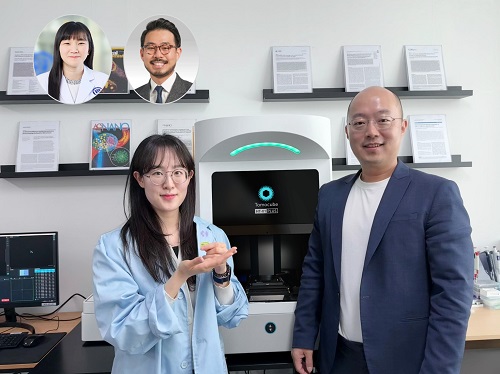 KAIST Develops Virtual Staining Technology for 3D Histopathology
Moving beyond traditional methods of observing thinly sliced and stained cancer tissues, a collaborative international research team led by KAIST has successfully developed a groundbreaking technology. This innovation uses advanced optical techniques combined with an artificial intelligence-based deep learning algorithm to create realistic, virtually stained 3D images of cancer tissue without the need for serial sectioning nor staining. This breakthrough is anticipated to pave the way for next-generation non-invasive pathological diagnosis.
< Photo 1. (From left) Juyeon Park (Ph.D. Candidate, Department of Physics), Professor YongKeun Park (Department of Physics) (Top left) Professor Su-Jin Shin (Gangnam Severance Hospital), Professor Tae Hyun Hwang (Vanderbilt University School of Medicine) >
KAIST (President Kwang Hyung Lee) announced on the 26th that a research team led by Professor YongKeun Park of the Department of Physics, in collaboration with Professor Su-Jin Shin's team at Yonsei University Gangnam Severance Hospital, Professor Tae Hyun Hwang's team at Mayo Clinic, and Tomocube's AI research team, has developed an innovative technology capable of vividly displaying the 3D structure of cancer tissues without separate staining.
For over 200 years, conventional pathology has relied on observing cancer tissues under a microscope, a method that only shows specific cross-sections of the 3D cancer tissue. This has limited the ability to understand the three-dimensional connections and spatial arrangements between cells.
To overcome this, the research team utilized holotomography (HT), an advanced optical technology, to measure the 3D refractive index information of tissues. They then integrated an AI-based deep learning algorithm to successfully generate virtual H&E* images.* H&E (Hematoxylin & Eosin): The most widely used staining method for observing pathological tissues. Hematoxylin stains cell nuclei blue, and eosin stains cytoplasm pink.
The research team quantitatively demonstrated that the images generated by this technology are highly similar to actual stained tissue images. Furthermore, the technology exhibited consistent performance across various organs and tissues, proving its versatility and reliability as a next-generation pathological analysis tool.
< Figure 1. Comparison of conventional 3D tissue pathology procedure and the 3D virtual H&E staining technology proposed in this study. The traditional method requires preparing and staining dozens of tissue slides, while the proposed technology can reduce the number of slides by up to 10 times and quickly generate H&E images without the staining process. >
Moreover, by validating the feasibility of this technology through joint research with hospitals and research institutions in Korea and the United States, utilizing Tomocube's holotomography equipment, the team demonstrated its potential for full-scale adoption in real-world pathological research settings.
Professor YongKeun Park stated, "This research marks a major advancement by transitioning pathological analysis from conventional 2D methods to comprehensive 3D imaging. It will greatly enhance biomedical research and clinical diagnostics, particularly in understanding cancer tumor boundaries and the intricate spatial arrangements of cells within tumor microenvironments."
< Figure 2. Results of AI-based 3D virtual H&E staining and quantitative analysis of pathological tissue. The virtually stained images enabled 3D reconstruction of key pathological features such as cell nuclei and glandular lumens. Based on this, various quantitative indicators, including cell nuclear distribution, volume, and surface area, could be extracted. >
This research, with Juyeon Park, a student of the Integrated Master’s and Ph.D. Program at KAIST, as the first author, was published online in the prestigious journal Nature Communications on May 22.
(Paper title: Revealing 3D microanatomical structures of unlabeled thick cancer tissues using holotomography and virtual H&E staining.
[https://doi.org/10.1038/s41467-025-59820-0]
This study was supported by the Leader Researcher Program of the National Research Foundation of Korea, the Global Industry Technology Cooperation Center Project of the Korea Institute for Advancement of Technology, and the Korea Health Industry Development Institute.
2025.05.26 View 11342
KAIST Develops Virtual Staining Technology for 3D Histopathology
Moving beyond traditional methods of observing thinly sliced and stained cancer tissues, a collaborative international research team led by KAIST has successfully developed a groundbreaking technology. This innovation uses advanced optical techniques combined with an artificial intelligence-based deep learning algorithm to create realistic, virtually stained 3D images of cancer tissue without the need for serial sectioning nor staining. This breakthrough is anticipated to pave the way for next-generation non-invasive pathological diagnosis.
< Photo 1. (From left) Juyeon Park (Ph.D. Candidate, Department of Physics), Professor YongKeun Park (Department of Physics) (Top left) Professor Su-Jin Shin (Gangnam Severance Hospital), Professor Tae Hyun Hwang (Vanderbilt University School of Medicine) >
KAIST (President Kwang Hyung Lee) announced on the 26th that a research team led by Professor YongKeun Park of the Department of Physics, in collaboration with Professor Su-Jin Shin's team at Yonsei University Gangnam Severance Hospital, Professor Tae Hyun Hwang's team at Mayo Clinic, and Tomocube's AI research team, has developed an innovative technology capable of vividly displaying the 3D structure of cancer tissues without separate staining.
For over 200 years, conventional pathology has relied on observing cancer tissues under a microscope, a method that only shows specific cross-sections of the 3D cancer tissue. This has limited the ability to understand the three-dimensional connections and spatial arrangements between cells.
To overcome this, the research team utilized holotomography (HT), an advanced optical technology, to measure the 3D refractive index information of tissues. They then integrated an AI-based deep learning algorithm to successfully generate virtual H&E* images.* H&E (Hematoxylin & Eosin): The most widely used staining method for observing pathological tissues. Hematoxylin stains cell nuclei blue, and eosin stains cytoplasm pink.
The research team quantitatively demonstrated that the images generated by this technology are highly similar to actual stained tissue images. Furthermore, the technology exhibited consistent performance across various organs and tissues, proving its versatility and reliability as a next-generation pathological analysis tool.
< Figure 1. Comparison of conventional 3D tissue pathology procedure and the 3D virtual H&E staining technology proposed in this study. The traditional method requires preparing and staining dozens of tissue slides, while the proposed technology can reduce the number of slides by up to 10 times and quickly generate H&E images without the staining process. >
Moreover, by validating the feasibility of this technology through joint research with hospitals and research institutions in Korea and the United States, utilizing Tomocube's holotomography equipment, the team demonstrated its potential for full-scale adoption in real-world pathological research settings.
Professor YongKeun Park stated, "This research marks a major advancement by transitioning pathological analysis from conventional 2D methods to comprehensive 3D imaging. It will greatly enhance biomedical research and clinical diagnostics, particularly in understanding cancer tumor boundaries and the intricate spatial arrangements of cells within tumor microenvironments."
< Figure 2. Results of AI-based 3D virtual H&E staining and quantitative analysis of pathological tissue. The virtually stained images enabled 3D reconstruction of key pathological features such as cell nuclei and glandular lumens. Based on this, various quantitative indicators, including cell nuclear distribution, volume, and surface area, could be extracted. >
This research, with Juyeon Park, a student of the Integrated Master’s and Ph.D. Program at KAIST, as the first author, was published online in the prestigious journal Nature Communications on May 22.
(Paper title: Revealing 3D microanatomical structures of unlabeled thick cancer tissues using holotomography and virtual H&E staining.
[https://doi.org/10.1038/s41467-025-59820-0]
This study was supported by the Leader Researcher Program of the National Research Foundation of Korea, the Global Industry Technology Cooperation Center Project of the Korea Institute for Advancement of Technology, and the Korea Health Industry Development Institute.
2025.05.26 View 11342