%6f%63%65%61%6e
-
 Professor Sung Yong Kim Publishes English Book, 'A Cup of Coffee and the Ocean'
<Professor Sung Yong Kim from Department of Mechanical Engineering>
Professor Sung Yong Kim of the Department of Mechanical Engineering announced the publication of his English book, ‘A Cup of Coffee and the Ocean: Basics of Ocean Dynamics for Everyone’, by the world-renowned academic publisher Springer Nature on August 22nd. The book was designed to easily explain the basics of the ocean, various physical phenomena, and safety common sense to high school students, university students, and the general public, using the familiar subject of coffee.
Professor Kim previously published 'Coffee and the Ocean,' Volume 34 of the 'Scholars Talk about Science and Technology' series, with support from the Korean Academy of Science and Technology in 2019. The new English edition is a rewrite based on that content, targeting an international readership.
The book explains the characteristics of fluids found in everyday coffee, expanding this to illustrate fluid phenomena in the ocean, and also includes various ocean-related safety tips. The goal is to help readers understand the principles of fluids and raise awareness of marine safety. Furthermore, it emphasizes that understanding the ocean is directly connected to national competence and includes a plea from the perspective of an oceanographer.
Professor Kim commented, "The ocean is a global shared space that is not limited by the boundaries of specific regions. This English book was published to broaden the understanding of the ocean not just domestically but among readers worldwide. Through this, I hope to see more oceanographers with a sense of mission who can see the bigger picture."
Book Cover Image
< Book Cover Image >
Related Book Links:
(Link for KAIST Insiders)
https://link-springer-com.libra.kaist.ac.kr/book/10.1007/978-981-96-6835-9
(Link for the General Public)
https://link.springer.com/book/10.1007/978-981-96-6835-9
< QR Code Linking to the Site >
This book was introduced on the UN Ocean Decade official website, and its significance is further amplified by its subject matter being closely aligned with the UN Sustainable Development Goals (SDGs).Furthermore, Professor Nadia Pinardi, who specializes in Physical Oceanography at the University of Bologna (Università di Bologna) in Italy, has communicated that the university plans to translate the book into Italian and utilize it as a textbook for marine education across Italy starting in 2027.The search results include a video featuring Professor Nadia Pinardi discussing sea level rise and coastal adaptation.
https://oceandecade.org/publications/a-cup-of-coffee-and-the-ocean-the-basics-of-ocean-dynamics/
2025.08.27 View 933
Professor Sung Yong Kim Publishes English Book, 'A Cup of Coffee and the Ocean'
<Professor Sung Yong Kim from Department of Mechanical Engineering>
Professor Sung Yong Kim of the Department of Mechanical Engineering announced the publication of his English book, ‘A Cup of Coffee and the Ocean: Basics of Ocean Dynamics for Everyone’, by the world-renowned academic publisher Springer Nature on August 22nd. The book was designed to easily explain the basics of the ocean, various physical phenomena, and safety common sense to high school students, university students, and the general public, using the familiar subject of coffee.
Professor Kim previously published 'Coffee and the Ocean,' Volume 34 of the 'Scholars Talk about Science and Technology' series, with support from the Korean Academy of Science and Technology in 2019. The new English edition is a rewrite based on that content, targeting an international readership.
The book explains the characteristics of fluids found in everyday coffee, expanding this to illustrate fluid phenomena in the ocean, and also includes various ocean-related safety tips. The goal is to help readers understand the principles of fluids and raise awareness of marine safety. Furthermore, it emphasizes that understanding the ocean is directly connected to national competence and includes a plea from the perspective of an oceanographer.
Professor Kim commented, "The ocean is a global shared space that is not limited by the boundaries of specific regions. This English book was published to broaden the understanding of the ocean not just domestically but among readers worldwide. Through this, I hope to see more oceanographers with a sense of mission who can see the bigger picture."
Book Cover Image
< Book Cover Image >
Related Book Links:
(Link for KAIST Insiders)
https://link-springer-com.libra.kaist.ac.kr/book/10.1007/978-981-96-6835-9
(Link for the General Public)
https://link.springer.com/book/10.1007/978-981-96-6835-9
< QR Code Linking to the Site >
This book was introduced on the UN Ocean Decade official website, and its significance is further amplified by its subject matter being closely aligned with the UN Sustainable Development Goals (SDGs).Furthermore, Professor Nadia Pinardi, who specializes in Physical Oceanography at the University of Bologna (Università di Bologna) in Italy, has communicated that the university plans to translate the book into Italian and utilize it as a textbook for marine education across Italy starting in 2027.The search results include a video featuring Professor Nadia Pinardi discussing sea level rise and coastal adaptation.
https://oceandecade.org/publications/a-cup-of-coffee-and-the-ocean-the-basics-of-ocean-dynamics/
2025.08.27 View 933 -
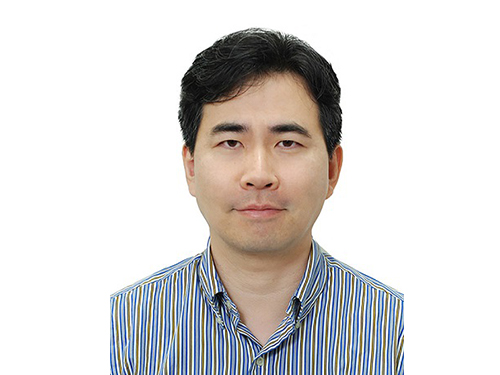 Professor Sung Yong Kim Elected as the Chair of PICES MONITOR
< Professor Sung Yong Kim >
Professor Sung Yong Kim from the Department of Mechanical Engineering was elected as the chair of the Technical Committee on Monitoring (MONITOR) of the North Pacific Marine Science Organization (PICES).
PICES is an intergovernmental marine science organization that was established in 1992 through a collaboration between six North Pacific nations including South Korea, Russia, the United States, Japan, China, and Canada to exchange and discuss research on the Pacific waters. Its headquarters is located in Canada and the organization consists of seven affiliated maritime science and marine technology committees.
Professor Kim was elected as the chair of the technical committee that focuses on monitoring and will be part of the Science Board as an ex-officio member. His term will last three years from November 2019.
Professor Kim was recognized for his academic excellence, expertise, and leadership among oceanographers both domestically and internationally.
Professor Kim will also participate as an academia civilian committee member of the Maritime and Fisheries Science and Technology Committee under the Korean Ministry of Oceans and Fisheries for two years from December 18, 2019.
He stated, “I will give my full efforts to broaden Korean oceanography research by participating in maritime leadership positions at home and abroad, and help South Korea become a maritime powerhouse.”
(END)
2019.12.22 View 16546
Professor Sung Yong Kim Elected as the Chair of PICES MONITOR
< Professor Sung Yong Kim >
Professor Sung Yong Kim from the Department of Mechanical Engineering was elected as the chair of the Technical Committee on Monitoring (MONITOR) of the North Pacific Marine Science Organization (PICES).
PICES is an intergovernmental marine science organization that was established in 1992 through a collaboration between six North Pacific nations including South Korea, Russia, the United States, Japan, China, and Canada to exchange and discuss research on the Pacific waters. Its headquarters is located in Canada and the organization consists of seven affiliated maritime science and marine technology committees.
Professor Kim was elected as the chair of the technical committee that focuses on monitoring and will be part of the Science Board as an ex-officio member. His term will last three years from November 2019.
Professor Kim was recognized for his academic excellence, expertise, and leadership among oceanographers both domestically and internationally.
Professor Kim will also participate as an academia civilian committee member of the Maritime and Fisheries Science and Technology Committee under the Korean Ministry of Oceans and Fisheries for two years from December 18, 2019.
He stated, “I will give my full efforts to broaden Korean oceanography research by participating in maritime leadership positions at home and abroad, and help South Korea become a maritime powerhouse.”
(END)
2019.12.22 View 16546 -
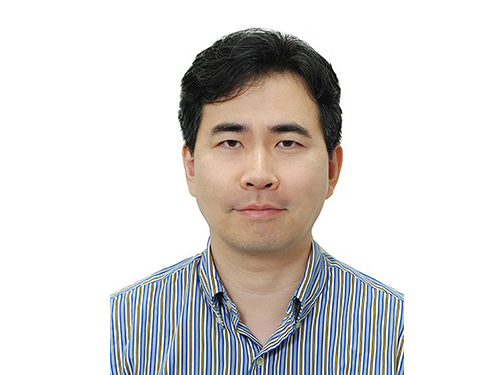 First Korean Member of OceanObs' Organizing Committee
Professor Sung Yong Kim from the Department of Mechanical Engineering became the first Korean to be elected as an organizing committee member of the international conference OceanObs’19’, specializing in the ocean observing field.
Professor Kim has been actively engaged in advisory panels, technical committees, and working groups for the North Pacific Marine Science Organization (PICES). Through numerous activities, he was recognized for his professionalism and academic achievements, which led him to be appointed as a member of the organizing committee.
The organizing committee is comprised of leading scholars and researchers from 20 countries, and Professor Kim will be the first Korean scientist to participate on the committee.
Since 1999, the conference has been held every decade. Global experts specializing in oceanic observation gather to discuss research directions for the next ten years by monitoring physical, biological, and chemical variables in regional, national, and global oceans and applying marine engineering.
This year, approximately 20 institutes including NASA’s Jet Propulsion Laboratory (JPL), the National Science Foundation, the National Oceanic and Atmospheric Administration, and the European Space Agency will support funds as well as high-tech equipment to the conference.
This year’s conference theme is the governance of global ocean observing systems such as underwater gliders, unmanned vehicles, remote sensing, and observatories. The conference will hold discussions on monitoring technology and information systems to ensure human safety as well as to develop and preserve food resources. Additionally, participants will explore ways to expand observational infrastructures and carry out multidisciplinary approaches.
There will also be collaborations with the Global Ocean Observing System (GOOS) and the Partnership for Observation of the Global Oceans (POGO) to organize ocean observing programs and discuss priorities.
Finally, they will set a long-term plan for solving major scientific issues, such as climate change, ocean acidification, energy, and marine pollution.
Professor Kim said, “Based on the outcomes drawn from the conference, I will carry out research on natural disasters and climate change monitoring by using unmanned observing systems. I will also encourage more multidisciplinary research in this field.”
2019.01.25 View 18481
First Korean Member of OceanObs' Organizing Committee
Professor Sung Yong Kim from the Department of Mechanical Engineering became the first Korean to be elected as an organizing committee member of the international conference OceanObs’19’, specializing in the ocean observing field.
Professor Kim has been actively engaged in advisory panels, technical committees, and working groups for the North Pacific Marine Science Organization (PICES). Through numerous activities, he was recognized for his professionalism and academic achievements, which led him to be appointed as a member of the organizing committee.
The organizing committee is comprised of leading scholars and researchers from 20 countries, and Professor Kim will be the first Korean scientist to participate on the committee.
Since 1999, the conference has been held every decade. Global experts specializing in oceanic observation gather to discuss research directions for the next ten years by monitoring physical, biological, and chemical variables in regional, national, and global oceans and applying marine engineering.
This year, approximately 20 institutes including NASA’s Jet Propulsion Laboratory (JPL), the National Science Foundation, the National Oceanic and Atmospheric Administration, and the European Space Agency will support funds as well as high-tech equipment to the conference.
This year’s conference theme is the governance of global ocean observing systems such as underwater gliders, unmanned vehicles, remote sensing, and observatories. The conference will hold discussions on monitoring technology and information systems to ensure human safety as well as to develop and preserve food resources. Additionally, participants will explore ways to expand observational infrastructures and carry out multidisciplinary approaches.
There will also be collaborations with the Global Ocean Observing System (GOOS) and the Partnership for Observation of the Global Oceans (POGO) to organize ocean observing programs and discuss priorities.
Finally, they will set a long-term plan for solving major scientific issues, such as climate change, ocean acidification, energy, and marine pollution.
Professor Kim said, “Based on the outcomes drawn from the conference, I will carry out research on natural disasters and climate change monitoring by using unmanned observing systems. I will also encourage more multidisciplinary research in this field.”
2019.01.25 View 18481 -
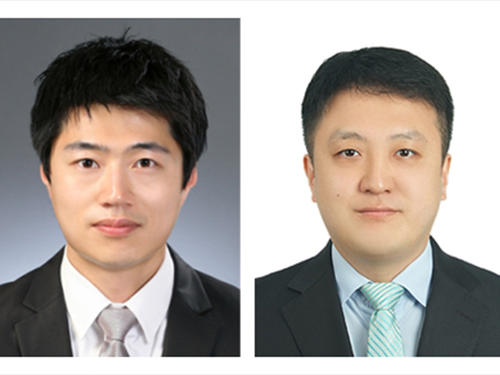 KAISTians Receive Future Ocean Science and Technology Awards
(From left: PhD candidates Minseok Kang and Junkeon Ahn)
PhD candidates Minseok Kang and Junkeon Ahn from the Department of Mechanical Engineering received Future Ocean Science and Technology Awards from the Korean Association of Ocean Science and Technology Societies (KAOSTS).
Since 2017, KAOSTS has conferred this award upon graduate students who have published outstanding papers on ocean science and technology in order to encourage young researchers in this area.
Kang published ‘Ship block assembly sequence planning considering productivity and welding deformation’ in Naval Architecture and Ocean Engineering in which he proposed an assembly sequence planning method for block assemblies that considers the geometric characteristics of blocks to determine feasible assembly sequences as well as assembly process and productivity factors.
Ahn published ‘Fuzzy-based FMEA of hybrid MCFC and gas turbine system for marine propulsion’ in Power Sources. In this research, he conducted a study proposing a fuzzy-based failure mode and effect analysis (FMEA) for a hybrid molten carbonate fuel cell and gas turbine system for liquefied hydrogen tankers.
2018.06.15 View 12855
KAISTians Receive Future Ocean Science and Technology Awards
(From left: PhD candidates Minseok Kang and Junkeon Ahn)
PhD candidates Minseok Kang and Junkeon Ahn from the Department of Mechanical Engineering received Future Ocean Science and Technology Awards from the Korean Association of Ocean Science and Technology Societies (KAOSTS).
Since 2017, KAOSTS has conferred this award upon graduate students who have published outstanding papers on ocean science and technology in order to encourage young researchers in this area.
Kang published ‘Ship block assembly sequence planning considering productivity and welding deformation’ in Naval Architecture and Ocean Engineering in which he proposed an assembly sequence planning method for block assemblies that considers the geometric characteristics of blocks to determine feasible assembly sequences as well as assembly process and productivity factors.
Ahn published ‘Fuzzy-based FMEA of hybrid MCFC and gas turbine system for marine propulsion’ in Power Sources. In this research, he conducted a study proposing a fuzzy-based failure mode and effect analysis (FMEA) for a hybrid molten carbonate fuel cell and gas turbine system for liquefied hydrogen tankers.
2018.06.15 View 12855 -
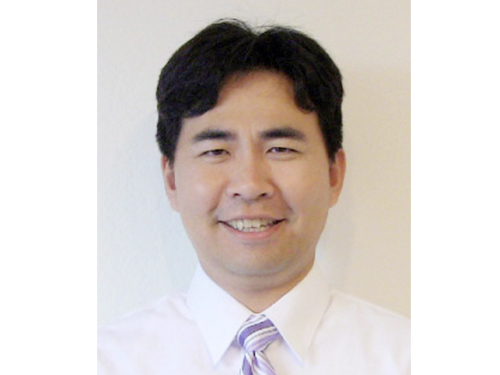 Professor Sung Yong Kim Presents a Keynote Speech at the International Ocean Color Science Meeting (IOCS) 2015
Professor Sung Yong Kim of the Mechanical Engineering Department at KAIST delivered a keynote speech at the International Ocean Color Science Meeting (IOCS) 2015 held in San Francisco on June 15-18, 2015. His speech was entitled “Research and Applications Using Sub-mesoscale GOCI (Geostationary Ocean Color Imager) Data.”
The IOCS, organized by the International Ocean Color Coordinating Group (IOCCG), is a community consultation meeting providing communication and collaboration between space agencies and the ocean color community, building strong ties among international representatives of the ocean color communities, and providing a forum for discussion and the evolution of community thinking on a range of issues.
Professor Kim was recognized for his contribution towards the development of remote exploration of sub-mesoscale processes including eddies, fronts, and environmental fluid dynamics.
He also attended the 26th General Assembly of the International Union of Geodesy and Geophysics (IUGG) in Prague, the Czech Republic, on June 22, 2015 and gave a presentation on the sub-mesoscale eddies circulation research.
2015.06.12 View 14953
Professor Sung Yong Kim Presents a Keynote Speech at the International Ocean Color Science Meeting (IOCS) 2015
Professor Sung Yong Kim of the Mechanical Engineering Department at KAIST delivered a keynote speech at the International Ocean Color Science Meeting (IOCS) 2015 held in San Francisco on June 15-18, 2015. His speech was entitled “Research and Applications Using Sub-mesoscale GOCI (Geostationary Ocean Color Imager) Data.”
The IOCS, organized by the International Ocean Color Coordinating Group (IOCCG), is a community consultation meeting providing communication and collaboration between space agencies and the ocean color community, building strong ties among international representatives of the ocean color communities, and providing a forum for discussion and the evolution of community thinking on a range of issues.
Professor Kim was recognized for his contribution towards the development of remote exploration of sub-mesoscale processes including eddies, fronts, and environmental fluid dynamics.
He also attended the 26th General Assembly of the International Union of Geodesy and Geophysics (IUGG) in Prague, the Czech Republic, on June 22, 2015 and gave a presentation on the sub-mesoscale eddies circulation research.
2015.06.12 View 14953 -
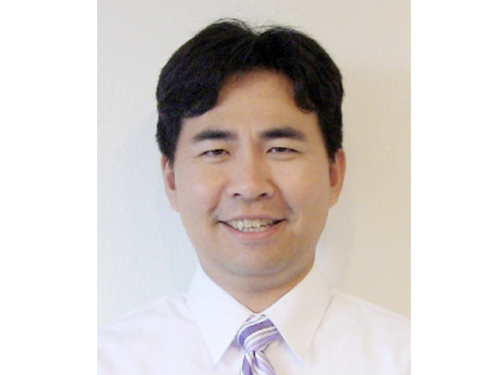 Professor Sung-Yong Kim Receives the Young Scientist Award
Professor Sung-Yong Kim of the Department of Ocean Systems Engineering at KAIST received the Young Scientist Award for 2014 conferred by the Korean Society of Oceanography (KSO). The award was presented at the KSO’s fall conference that took place on November 6, 2014 at the campus of the Naval Academy of the Republic of Korea in Jinhae.
Professor Kim has been recognized for his outstanding research in coastal oceanography and environmental fluid mechanics. His research papers are frequently published in prestigious journals such as the Journal of Geophysical Research-Oceans by the American Geophysical Union.
2014.11.11 View 10782
Professor Sung-Yong Kim Receives the Young Scientist Award
Professor Sung-Yong Kim of the Department of Ocean Systems Engineering at KAIST received the Young Scientist Award for 2014 conferred by the Korean Society of Oceanography (KSO). The award was presented at the KSO’s fall conference that took place on November 6, 2014 at the campus of the Naval Academy of the Republic of Korea in Jinhae.
Professor Kim has been recognized for his outstanding research in coastal oceanography and environmental fluid mechanics. His research papers are frequently published in prestigious journals such as the Journal of Geophysical Research-Oceans by the American Geophysical Union.
2014.11.11 View 10782 -
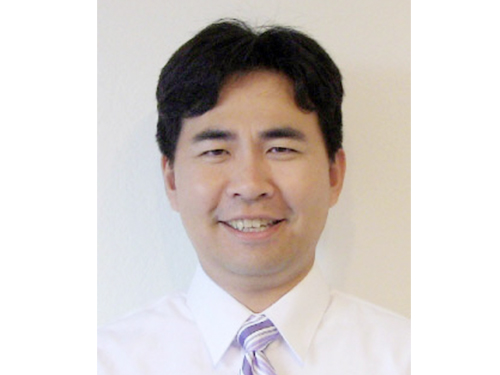 Professor Sung Yong Kim Appointed as Committee Member to Serve PICES
The Pacific International Council for the Exploration of the Sea: North Pacific Marine Science Organization (PICES) is an intergovernmental organization, which was established in 1992 to promote and coordinate marine research in the North Pacific and adjacent areas. Currently, the United States, Canada, Japan, China, Russia, and Korea are members of the organization.
Professor Sung Yong Kim of Ocean Systems Engineering, KAIST, has been appointed to serve the Scientific and Technical Committees of PICES. He will begin his stint from July 1, 2014. During his assignment, Professor Kim will identify the need for observation of the North Pacific marine environment, develop observation methodology, and publish an annual report on the observation.
Professor Kim is an expert in marine physics and environmental fluids, with a focus on coastal circulation and dynamics, mesoscale and submesoscale eddies, integrated coastal ocean observing system, and statistical and dynamic data analysis.
2014.06.18 View 13428
Professor Sung Yong Kim Appointed as Committee Member to Serve PICES
The Pacific International Council for the Exploration of the Sea: North Pacific Marine Science Organization (PICES) is an intergovernmental organization, which was established in 1992 to promote and coordinate marine research in the North Pacific and adjacent areas. Currently, the United States, Canada, Japan, China, Russia, and Korea are members of the organization.
Professor Sung Yong Kim of Ocean Systems Engineering, KAIST, has been appointed to serve the Scientific and Technical Committees of PICES. He will begin his stint from July 1, 2014. During his assignment, Professor Kim will identify the need for observation of the North Pacific marine environment, develop observation methodology, and publish an annual report on the observation.
Professor Kim is an expert in marine physics and environmental fluids, with a focus on coastal circulation and dynamics, mesoscale and submesoscale eddies, integrated coastal ocean observing system, and statistical and dynamic data analysis.
2014.06.18 View 13428 -
 KAIST Ocean Technology Center
The KAIST Ocean Technology Center was established and opened in Eureka hall.
The founding Center Director was given to Professor Han Soon Heung (department of Marine System and Engineering).
The newly found Center will be under the KAIST Mechanical Technology Research Center and will be actively developing ideas like deep sea marine plant, impact resistance to underwater explosion, and etc. and work to commercialize these technologies and contribute to the development of the Shipbuilding industry.
2012.01.31 View 11765
KAIST Ocean Technology Center
The KAIST Ocean Technology Center was established and opened in Eureka hall.
The founding Center Director was given to Professor Han Soon Heung (department of Marine System and Engineering).
The newly found Center will be under the KAIST Mechanical Technology Research Center and will be actively developing ideas like deep sea marine plant, impact resistance to underwater explosion, and etc. and work to commercialize these technologies and contribute to the development of the Shipbuilding industry.
2012.01.31 View 11765 -
World?'s First Automated Maritime-Docking between Naval Vessels
KAIST demonstrated the technology that allows automated maritime docking between naval vessels on the 26th of April at Busan, Korea.
The docking technology is seen as one of the key components for the mobile harbor as it prevents collision between two naval vessels upon docking. It was recognized as an important technology worldwide, but its technological limitations made it hard to commercialize.
The demonstrated included approaching a barge next to a cargo vessel, performing automated docking, and maintaining the docking and solutions in the advent of an emergency.
The mobile harbor is, in essence, is a ‘moving port’ and the automated docking technology is imperative to commercialize the mobile harbor. In order for a large container ship to unload cargo, the mobile harbor needs to approach the container ship and dock onto the side of the ship.
The technology required to keep the two moving vessels docked, out at sea, in an efficient and safe manner, is daunting. The conventional method involved sailors tying the two vessels together with rope which made it time consuming and hard to react quickly in emergency situations.
The KAIST mobile harbor research team developed the docking technology with ‘Mirae Industrial Machine’ Maritime Corporation, and ‘Ocean Space’. The mobile harbor will allow two vessels to perform loading and unloading of cargo regardless of wind and current, using robotic arms, vacuum attachment pads, wench, and are a complex, integrated system.
KAIST is planning on having a demonstration that encompasses all the technology required for mobile harbor: from the docking technology to the stabilizing crane technology.
Advancements made by KAIST are expected to speed up the commercialization and the real life application of mobile harbor.
2011.05.11 View 15173