lecture
-
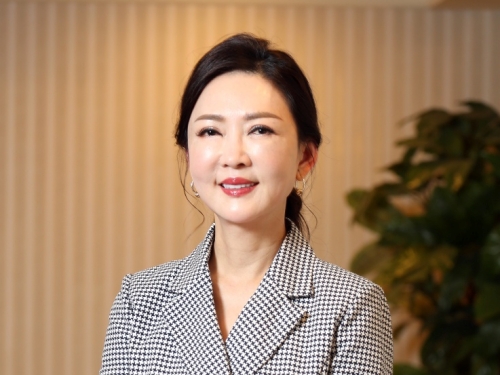 KAIST begins full-scale cooperation with Taiwan’s Formosa Group
< (From left) Senior Vice President for Planning and Budget Kyung-Soo Kim, and Professor Minee Choi of the Department of Brain and Cognitive Sciences of KAIST along with Chairman of Formosa Group Sandy Wang and KAIST President Kwang-Hyung Lee, and Dean Daesoo Kim of KAIST College of Life Science and Bioengineering >
KAIST is pursuing cooperation in the fields of advanced biotechnology and eco-friendly energy with Formosa Plastics Group, one of Taiwan's three largest companies.
To this end, Chairman Sandy Wang, a member of Formosa Group's standing committee and leader of the group's bio and eco-friendly energy sector, will visit KAIST on the 13th of this month. This is the first time that the owner of Formosa Group has made an official visit to KAIST.
Cooperation between the two institutions began last March when our university signed a memorandum of understanding on comprehensive exchange and cooperation with Ming Chi University of Science and Technology (明志科技大學), Chang Gung University(長庚大學), and Chang Gung Memorial Hospital(長庚記念醫院), three of many institutions established and supported by Formosa Group.
Based on this, Chairman Sandy Wang, who visits our university to promote more exchanges and cooperation, talked about ‘the education of children and corporate social return and practice of his father, Chairman Yung-Ching Wang,’ through a special lecture for the school leadership as a part of the Monthly Lecture on KAIST’s Leadership Innovation Day.
She then visited KAIST's research and engineering facilities related to Taiwan's future industries, such as advanced biotechnology and eco-friendly energy, and discussed global industry-academic cooperation plans. In the future, the two organizations plan to appoint adjunct professors and promote practical global cooperation, including joint student guidance and research cooperation. We plan to pursue effective mid- to long-term cooperation, such as conducting battery application research with the KAIST Next-Generation ESS Research Center and opening a graduate program specialized in stem cell and gene editing technology in connection with Chang Gung University and Chang Gung Memorial Hospital. The newly established cooperative relationship will also promote Formosa Group's investment and cooperation with KAIST's outstanding venture companies related to bio and eco-friendly energy to lay the foundation for innovative industrial cooperation between Taiwan and Korea.
President Kwang-Hyung Lee said, “The Formosa Group has a global network, so we regard it to be a key partner that will position KAIST’s bio and engineering technology in the global stages.” He also said, “With Chairman Sandy Wang’s visit, Taiwan is emerging as a global economic powerhouse,” and added, “We expect to continue our close cooperative relationship with the company.”
Formosa Group is a company founded by the late Chairman Yung-Ching Wang, the father of Chairman Sandy Wang. As the world's No. 1 plastic PVC producer, it is leading the core industries of Taiwan's economy, including semiconductors, steel, heavy industry, bio, and batteries. Chairman Yung-Ching Wang was respected by the Taiwanese people by setting an example of returning his wealth to society under the belief that the companies and assets he built ‘belonged to the people.’ Chang Gung University, Chang Gung Memorial Hospital, and Ming Chi University of Technology, which are pursuing cooperation with our university, were also established as part of the social contribution promoted by Chairman Yung-Ching Wang and are receiving financial support from Formosa Group.
2024.05.09 View 6665
KAIST begins full-scale cooperation with Taiwan’s Formosa Group
< (From left) Senior Vice President for Planning and Budget Kyung-Soo Kim, and Professor Minee Choi of the Department of Brain and Cognitive Sciences of KAIST along with Chairman of Formosa Group Sandy Wang and KAIST President Kwang-Hyung Lee, and Dean Daesoo Kim of KAIST College of Life Science and Bioengineering >
KAIST is pursuing cooperation in the fields of advanced biotechnology and eco-friendly energy with Formosa Plastics Group, one of Taiwan's three largest companies.
To this end, Chairman Sandy Wang, a member of Formosa Group's standing committee and leader of the group's bio and eco-friendly energy sector, will visit KAIST on the 13th of this month. This is the first time that the owner of Formosa Group has made an official visit to KAIST.
Cooperation between the two institutions began last March when our university signed a memorandum of understanding on comprehensive exchange and cooperation with Ming Chi University of Science and Technology (明志科技大學), Chang Gung University(長庚大學), and Chang Gung Memorial Hospital(長庚記念醫院), three of many institutions established and supported by Formosa Group.
Based on this, Chairman Sandy Wang, who visits our university to promote more exchanges and cooperation, talked about ‘the education of children and corporate social return and practice of his father, Chairman Yung-Ching Wang,’ through a special lecture for the school leadership as a part of the Monthly Lecture on KAIST’s Leadership Innovation Day.
She then visited KAIST's research and engineering facilities related to Taiwan's future industries, such as advanced biotechnology and eco-friendly energy, and discussed global industry-academic cooperation plans. In the future, the two organizations plan to appoint adjunct professors and promote practical global cooperation, including joint student guidance and research cooperation. We plan to pursue effective mid- to long-term cooperation, such as conducting battery application research with the KAIST Next-Generation ESS Research Center and opening a graduate program specialized in stem cell and gene editing technology in connection with Chang Gung University and Chang Gung Memorial Hospital. The newly established cooperative relationship will also promote Formosa Group's investment and cooperation with KAIST's outstanding venture companies related to bio and eco-friendly energy to lay the foundation for innovative industrial cooperation between Taiwan and Korea.
President Kwang-Hyung Lee said, “The Formosa Group has a global network, so we regard it to be a key partner that will position KAIST’s bio and engineering technology in the global stages.” He also said, “With Chairman Sandy Wang’s visit, Taiwan is emerging as a global economic powerhouse,” and added, “We expect to continue our close cooperative relationship with the company.”
Formosa Group is a company founded by the late Chairman Yung-Ching Wang, the father of Chairman Sandy Wang. As the world's No. 1 plastic PVC producer, it is leading the core industries of Taiwan's economy, including semiconductors, steel, heavy industry, bio, and batteries. Chairman Yung-Ching Wang was respected by the Taiwanese people by setting an example of returning his wealth to society under the belief that the companies and assets he built ‘belonged to the people.’ Chang Gung University, Chang Gung Memorial Hospital, and Ming Chi University of Technology, which are pursuing cooperation with our university, were also established as part of the social contribution promoted by Chairman Yung-Ching Wang and are receiving financial support from Formosa Group.
2024.05.09 View 6665 -
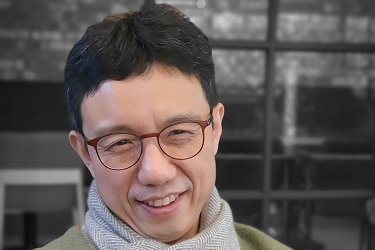 Professor Jong Chul Ye Appointed as Distinguished Lecturer of IEEE EMBS
Professor Jong Chul Ye from the Department of Bio and Brain Engineering was appointed as a distinguished lecturer by the International Association of Electrical and Electronic Engineers (IEEE) Engineering in Medicine and Biology Society (EMBS). Professor Ye was invited to deliver a lecture on his leading research on artificial intelligence (AI) technology in medical video restoration. He will serve a term of two years beginning in 2020.
IEEE EMBS's distinguished lecturer program is designed to educate researchers around the world on the latest trends and technology in biomedical engineering. Sponsored by IEEE, its members can attend lectures on the distinguished professor's research subject.
Professor Ye said, "We are at a time where the importance of AI in medical imaging is increasing.” He added, “I am proud to be appointed as a distinguished lecturer of the IEEE EMBS in recognition of my contributions to this field.”
(END)
2020.02.27 View 12617
Professor Jong Chul Ye Appointed as Distinguished Lecturer of IEEE EMBS
Professor Jong Chul Ye from the Department of Bio and Brain Engineering was appointed as a distinguished lecturer by the International Association of Electrical and Electronic Engineers (IEEE) Engineering in Medicine and Biology Society (EMBS). Professor Ye was invited to deliver a lecture on his leading research on artificial intelligence (AI) technology in medical video restoration. He will serve a term of two years beginning in 2020.
IEEE EMBS's distinguished lecturer program is designed to educate researchers around the world on the latest trends and technology in biomedical engineering. Sponsored by IEEE, its members can attend lectures on the distinguished professor's research subject.
Professor Ye said, "We are at a time where the importance of AI in medical imaging is increasing.” He added, “I am proud to be appointed as a distinguished lecturer of the IEEE EMBS in recognition of my contributions to this field.”
(END)
2020.02.27 View 12617 -
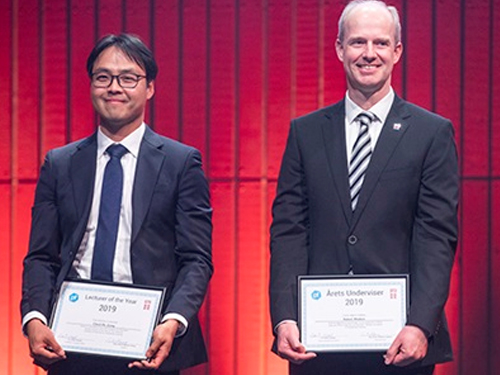 Professor Cheol-Ho Jeong Honored with the DTU Lecturer of the Year
A KAIST alumnus and an associate professor at the Technical University of Denmark (DTU), Dr. Cheol-Ho Jeong was selected as the recipient of the Lecturer of the Year 2019 Award by DTU.
Professor Jeong received his B.S., M.Sc., and Ph. D. degrees from KAIST’s Department of Mechanical Engineering in August 2007 under the supervision of Professor Jeong-Guon Ih, and has been serving as an assistant followed by associate professor at DTU’s Department of Electrical Engineering since October 2007. His research covers wide arrays of architectural acoustics, environmental acoustics, psychoacoustics, and structural acoustics. Every year, the students at DTU nominate one or two lecturer(s) of the year. The award celebrates and honors the selected lecturers for showing great commitment not only to education itself, but also to their communication and engagement with the students.
This year, the DTU student union Polyteknisk Forening nominated Professor Jeong for his outstanding course evaluations for his excellent teaching over the years. One of the student testimonies for the award read, "Professor Jeong is one of the best teachers I have ever had at DTU. He is very humane and approachable."
The awards ceremony was held on May 3 at DTU during the 2019 Annual Commemoration Party and Professor Jeong was warmly congratulated by the Crown Prince Couple of Denmark. The other award was given to Professor Robert Madsen from DTU’s Chemistry department.
©Photo and Quote: Ulrik Jantzen, Büro Jantzen, Camilla Christiane Hermann.
2019.05.30 View 8474
Professor Cheol-Ho Jeong Honored with the DTU Lecturer of the Year
A KAIST alumnus and an associate professor at the Technical University of Denmark (DTU), Dr. Cheol-Ho Jeong was selected as the recipient of the Lecturer of the Year 2019 Award by DTU.
Professor Jeong received his B.S., M.Sc., and Ph. D. degrees from KAIST’s Department of Mechanical Engineering in August 2007 under the supervision of Professor Jeong-Guon Ih, and has been serving as an assistant followed by associate professor at DTU’s Department of Electrical Engineering since October 2007. His research covers wide arrays of architectural acoustics, environmental acoustics, psychoacoustics, and structural acoustics. Every year, the students at DTU nominate one or two lecturer(s) of the year. The award celebrates and honors the selected lecturers for showing great commitment not only to education itself, but also to their communication and engagement with the students.
This year, the DTU student union Polyteknisk Forening nominated Professor Jeong for his outstanding course evaluations for his excellent teaching over the years. One of the student testimonies for the award read, "Professor Jeong is one of the best teachers I have ever had at DTU. He is very humane and approachable."
The awards ceremony was held on May 3 at DTU during the 2019 Annual Commemoration Party and Professor Jeong was warmly congratulated by the Crown Prince Couple of Denmark. The other award was given to Professor Robert Madsen from DTU’s Chemistry department.
©Photo and Quote: Ulrik Jantzen, Büro Jantzen, Camilla Christiane Hermann.
2019.05.30 View 8474 -
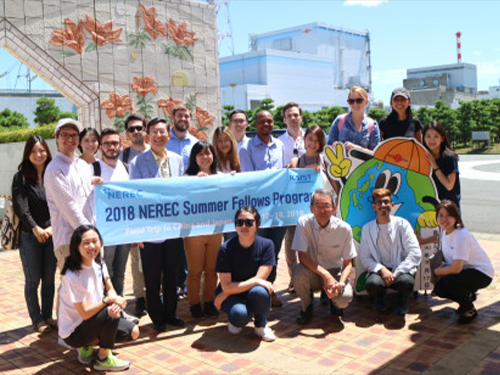 NEREC Summer Program Keeps Fellows Thinking, Engaged in Nuclear Nonproliferation
Nuclear technology is more than just technology. It is the fruit of the most advanced science and technology. It also requires high standards of policymaking and global cooperation for benefiting the technology.
As part of the fifth annual Nuclear Nonproliferation Education and Research Center (NEREC) Summer Fellows Program at KAIST, 24 students from 15 countries participated in six-week intensive education and training program. NEREC is the only university-based center dedicated to nuclear nonproliferation education and research established in 2014.
The program, which provides multidisciplinary lectures and seminars on nuclear technology and policy as well as international relations, was designed to nurture global nuclear technology experts well equipped in three areas: in-depth knowledge of technology, applicability gained from sound policy building, and negotiating for international cooperation. It now has grown into the most popular summer program at KAIST.
During the program from July 6 to August 18, participants were able to engage in enriching and stimulating learning experiences in tandem with policies and technology for the utilization and provision of peaceful and safe nuclear technology.
Participating fellows also had to conduct a group research project on a given topic. This year, they explored nuclear nonproliferation issues in relation to nuclear exports and brainstormed some recommendations for current policy. They presented their outcomes at the 2018 NEREC Conference on Nuclear Nonproliferation. After intensive lecture sessions and group research work, the fellows went off to key policy think-tanks, nuclear research institutes, and research power facilities in Korea, Japan, and China.
“NEREC emphasizes nuclear nonproliferation issues related to civilian nuclear power and the associated nuclear fuel cycle development from the point of technology users. I am very glad that the number of participants are increasing year by year,” said the Director of NEREC Man-Sung Yim, a professor in the Department of Nuclear and Quantum Engineering.
Participants’ majors vary from nuclear engineering to international relations to economics. The fellows divided into two groups of graduate and undergraduate courses. They expressed their deep satisfactory in the multidisciplinary lectures by scholars from KAIST, Seoul National University, and Korea National Defense University.
Many participants reported that they learned a lot, not only about policy and international relations but on the research they are conducting and what the key issues will be in dealing for producing meaningful research work.
Moad Aldbissi from the KTH Royal Institute of Technology is one of the students who shared the same view. He said, “Coming from a technical background in nuclear engineering, I managed to learn a lot about nuclear policy and international relations. The importance of integrating the technical and political fields became even clearer.”
Most students concurred that they recognized how important it was to make international collaboration in this powerful field for each country through this program.
“As an engineering student, I just approached this program like an empty glass in policy areas. While working with colleagues during the program, I came to understand how important it is to make cooperation in these fields for the better result of national development and international relations,” said Thanataon Pornphatdetaudom from the Tokyo Institute of Technology.
To Director Yim, this program is becoming well positioned to educate nuclear policy experts in a number of countries of strategic importance. He believes the continuous supply of these experts will contribute to promoting global nuclear nonproliferation and the peaceful use of nuclear energy while the use of nuclear technology continues.
2018.09.04 View 12229
NEREC Summer Program Keeps Fellows Thinking, Engaged in Nuclear Nonproliferation
Nuclear technology is more than just technology. It is the fruit of the most advanced science and technology. It also requires high standards of policymaking and global cooperation for benefiting the technology.
As part of the fifth annual Nuclear Nonproliferation Education and Research Center (NEREC) Summer Fellows Program at KAIST, 24 students from 15 countries participated in six-week intensive education and training program. NEREC is the only university-based center dedicated to nuclear nonproliferation education and research established in 2014.
The program, which provides multidisciplinary lectures and seminars on nuclear technology and policy as well as international relations, was designed to nurture global nuclear technology experts well equipped in three areas: in-depth knowledge of technology, applicability gained from sound policy building, and negotiating for international cooperation. It now has grown into the most popular summer program at KAIST.
During the program from July 6 to August 18, participants were able to engage in enriching and stimulating learning experiences in tandem with policies and technology for the utilization and provision of peaceful and safe nuclear technology.
Participating fellows also had to conduct a group research project on a given topic. This year, they explored nuclear nonproliferation issues in relation to nuclear exports and brainstormed some recommendations for current policy. They presented their outcomes at the 2018 NEREC Conference on Nuclear Nonproliferation. After intensive lecture sessions and group research work, the fellows went off to key policy think-tanks, nuclear research institutes, and research power facilities in Korea, Japan, and China.
“NEREC emphasizes nuclear nonproliferation issues related to civilian nuclear power and the associated nuclear fuel cycle development from the point of technology users. I am very glad that the number of participants are increasing year by year,” said the Director of NEREC Man-Sung Yim, a professor in the Department of Nuclear and Quantum Engineering.
Participants’ majors vary from nuclear engineering to international relations to economics. The fellows divided into two groups of graduate and undergraduate courses. They expressed their deep satisfactory in the multidisciplinary lectures by scholars from KAIST, Seoul National University, and Korea National Defense University.
Many participants reported that they learned a lot, not only about policy and international relations but on the research they are conducting and what the key issues will be in dealing for producing meaningful research work.
Moad Aldbissi from the KTH Royal Institute of Technology is one of the students who shared the same view. He said, “Coming from a technical background in nuclear engineering, I managed to learn a lot about nuclear policy and international relations. The importance of integrating the technical and political fields became even clearer.”
Most students concurred that they recognized how important it was to make international collaboration in this powerful field for each country through this program.
“As an engineering student, I just approached this program like an empty glass in policy areas. While working with colleagues during the program, I came to understand how important it is to make cooperation in these fields for the better result of national development and international relations,” said Thanataon Pornphatdetaudom from the Tokyo Institute of Technology.
To Director Yim, this program is becoming well positioned to educate nuclear policy experts in a number of countries of strategic importance. He believes the continuous supply of these experts will contribute to promoting global nuclear nonproliferation and the peaceful use of nuclear energy while the use of nuclear technology continues.
2018.09.04 View 12229 -
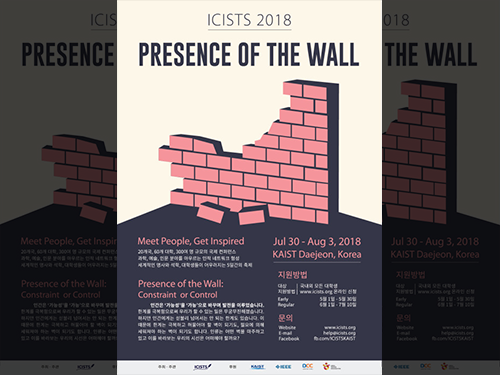 ICISTS 2018: Presence of the Wall, Constraint or Control
A KAIST undergraduates body, ICISTS (International Conference for Integration of Science, Technology and Society) will host the 2018 international conference from July 30 to August 3 at KAIST. Under the theme of “Presence of the Wall: Constraint or Control,” participants will share their opinions on the limits the global world is facing today and look for answers discussing various social issues and technologies. More than 300 students from 60 universities in 15 countries will attend the conference.
Speakers include CEO Sebastien Gendron of TransPod Inc., a Canadian company designing and manufacturing ultra-high-speed transportation technology and vehicles, researcher Sven Kreiss from the Visual Intelligence for Transportation of École Polytechnique Fédérale de Lausanne, Professor Des Freedman from the Department of Media and Communications of Goldsmiths, University of London and political scientist-technologist Wilneida Negrón at the Data & Society Research Institute of Ford Foundation in the US.
The conference will hold programs to facilitate the exchange of ideas among speakers and participants. Participants will make small teams for free discussions to share their ideas and thoughts about issues affecting the human race. Participants will be also assigned a team project in which they must come up with creative ideas based on the lectures. Moreover, they can try new gadgets from companies during the Experience Session.
ICISTS was established in 2005 by undergraduate students from KAIST. The organization holds an international conference every year to explore ways to create harmonization among society, science, and technology. It has grown to become Asia’s largest international student conference.
For learn more and register for the program, please visit http://www.icist.org
2018.05.30 View 7272
ICISTS 2018: Presence of the Wall, Constraint or Control
A KAIST undergraduates body, ICISTS (International Conference for Integration of Science, Technology and Society) will host the 2018 international conference from July 30 to August 3 at KAIST. Under the theme of “Presence of the Wall: Constraint or Control,” participants will share their opinions on the limits the global world is facing today and look for answers discussing various social issues and technologies. More than 300 students from 60 universities in 15 countries will attend the conference.
Speakers include CEO Sebastien Gendron of TransPod Inc., a Canadian company designing and manufacturing ultra-high-speed transportation technology and vehicles, researcher Sven Kreiss from the Visual Intelligence for Transportation of École Polytechnique Fédérale de Lausanne, Professor Des Freedman from the Department of Media and Communications of Goldsmiths, University of London and political scientist-technologist Wilneida Negrón at the Data & Society Research Institute of Ford Foundation in the US.
The conference will hold programs to facilitate the exchange of ideas among speakers and participants. Participants will make small teams for free discussions to share their ideas and thoughts about issues affecting the human race. Participants will be also assigned a team project in which they must come up with creative ideas based on the lectures. Moreover, they can try new gadgets from companies during the Experience Session.
ICISTS was established in 2005 by undergraduate students from KAIST. The organization holds an international conference every year to explore ways to create harmonization among society, science, and technology. It has grown to become Asia’s largest international student conference.
For learn more and register for the program, please visit http://www.icist.org
2018.05.30 View 7272 -
 Open Online Course in Science and Technology, STAR-MOOC
Four universities specializing in science and technology, along with POSTECH and UST, teamed up to establish programs for innovation in education programs, responding to the Fourth Industrial Revolution.
KAIST held an opening ceremony for the Science & Technology Advanced Research - Massive Open Online Course (STAR-MOOC) and signed an MoU with GIST, DGIST, UNIST, POSTECH, and UST.
STAR-MOOC was launched on February 26 to provide educational service to the public. It is a joint platform where people can take courses featuring lectures from professors from universities specializing in science and technology as well as national research universities.
It offers 15 courses covering basics, majors, and electives related to science and technology developed by the STAR-MOOC committee. Students can take a variety of courses.
At the opening ceremony, KAIST President Sung-Chul Shin, DGIST President Sang Hyuk Son, UST President Kil Choo Moon, POSTECH Vice President Wankyun Chung, UNIST Vice President Jae Sung Lee, GIST Vice President of Public Affairs Pil-hwan Park came to sign the MoU for provising educational services for the public.
During the ceremony, there was also time to introduce a technical agreement with a non-profit organization founded by NAVER, the CONNECT Foundation, for its courses and platform.
Universities participating in STAR-MOOC will put effort into capacity building in response to changes driven by the Fourth Industrial Revolution.
President Shin said, “STAR-MOOC is a platform that provides science and technology courses from basics to electives and major courses. It will become a leading educational platform.”
Students can register and choose courses from the website (http://starmooc.kr).
2018.03.19 View 9596
Open Online Course in Science and Technology, STAR-MOOC
Four universities specializing in science and technology, along with POSTECH and UST, teamed up to establish programs for innovation in education programs, responding to the Fourth Industrial Revolution.
KAIST held an opening ceremony for the Science & Technology Advanced Research - Massive Open Online Course (STAR-MOOC) and signed an MoU with GIST, DGIST, UNIST, POSTECH, and UST.
STAR-MOOC was launched on February 26 to provide educational service to the public. It is a joint platform where people can take courses featuring lectures from professors from universities specializing in science and technology as well as national research universities.
It offers 15 courses covering basics, majors, and electives related to science and technology developed by the STAR-MOOC committee. Students can take a variety of courses.
At the opening ceremony, KAIST President Sung-Chul Shin, DGIST President Sang Hyuk Son, UST President Kil Choo Moon, POSTECH Vice President Wankyun Chung, UNIST Vice President Jae Sung Lee, GIST Vice President of Public Affairs Pil-hwan Park came to sign the MoU for provising educational services for the public.
During the ceremony, there was also time to introduce a technical agreement with a non-profit organization founded by NAVER, the CONNECT Foundation, for its courses and platform.
Universities participating in STAR-MOOC will put effort into capacity building in response to changes driven by the Fourth Industrial Revolution.
President Shin said, “STAR-MOOC is a platform that provides science and technology courses from basics to electives and major courses. It will become a leading educational platform.”
Students can register and choose courses from the website (http://starmooc.kr).
2018.03.19 View 9596 -
 The 22nd Humanistic Education Opens to Daejeon Citizens
The KAIST Research Center for Humanities and Social Sciences will open up the 22nd Humanistic Education for Citizens every week from March 21 to April 25.
People can apply for this program through its website (http://hss.kaist.ac.kr), starting from March 12. Anyone living in Daejeon can participate in this program at no charge but the program is limited to 100 participants on a first-come, first-serve basis.
KAIST Humanistic Education for Citizens was established in 2012 and is held four times during a year to reinforce bonding with local citizens and enhance cultural refinement and an appreciation of literature.
With the topic ‘Are News Facts?” the seminar has invited six lecturers, including Researcher Soo Young Kim from the Institute of Communication Research, to navigate various issues that smart news users need to know in this era of massive news consumption.
The lecture is dedicated to discussing a current hot issue, the phenomenon of fake news, from various perspectives and to promote smart news consumption.
It will also help to provide an understanding of legal and policy changes regarding media production and distribution.
Professor Donghwan Ko, who is also the dean of the School of Humanities and Social Sciences said, “The lectures will provide information on various issues that people need to know more about for smart news consumption in the “infoglut” era from media, psychological, social, and legal perspectives.”
The lectures will be held every Wednesday at 3pm in the School of Humanities and Social Sciences.
2018.03.06 View 6557
The 22nd Humanistic Education Opens to Daejeon Citizens
The KAIST Research Center for Humanities and Social Sciences will open up the 22nd Humanistic Education for Citizens every week from March 21 to April 25.
People can apply for this program through its website (http://hss.kaist.ac.kr), starting from March 12. Anyone living in Daejeon can participate in this program at no charge but the program is limited to 100 participants on a first-come, first-serve basis.
KAIST Humanistic Education for Citizens was established in 2012 and is held four times during a year to reinforce bonding with local citizens and enhance cultural refinement and an appreciation of literature.
With the topic ‘Are News Facts?” the seminar has invited six lecturers, including Researcher Soo Young Kim from the Institute of Communication Research, to navigate various issues that smart news users need to know in this era of massive news consumption.
The lecture is dedicated to discussing a current hot issue, the phenomenon of fake news, from various perspectives and to promote smart news consumption.
It will also help to provide an understanding of legal and policy changes regarding media production and distribution.
Professor Donghwan Ko, who is also the dean of the School of Humanities and Social Sciences said, “The lectures will provide information on various issues that people need to know more about for smart news consumption in the “infoglut” era from media, psychological, social, and legal perspectives.”
The lectures will be held every Wednesday at 3pm in the School of Humanities and Social Sciences.
2018.03.06 View 6557 -
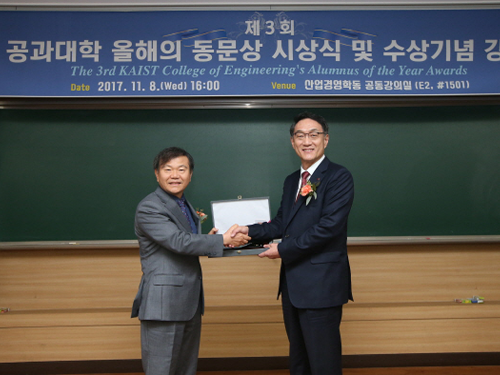 LG's Woo Jong Lee Named the Alumnus of College of Engineering
The College of Engineering at KAIST selected Woo Jong Lee, President and Head of the VC Business Division at LG Electronics Inc., as the 2017 Alumnus of the Year for the College of Engineering.
‘Alumnus of the Year’ is an award given to a distinguished alumnus who has contributed to the development of industrial technology or made outstanding academic achievements.
Lee graduated from KAIST with the master’s degrees in Industrial Engineering. He also worked at Daewoo Motors as an executive member in the development division. He has been a crucial human resource for LG since he joined the company in 2000.
While leading the VC business Division, which was established in 2013, Lee is recognized as a creative engineer as well as a leader in the automotive industry. Focusing on autonomous driving and eco-friendliness, he has been engaged in the production of major projects from the beginning to the end.
Since 2014, outstanding alumni whose achievements have represented KAIST at the highest level have received the award. The first recipient was Tae-Kyung Yoo, an executive at Lumens Co., Ltd., and the second recipient was Jung-Ju Kim, the founder of NXC. In 2016, the award was not given because an appropriate candidate could not be identified.
The award was held in the Industrial Engineering & Management Building (E2) on November 8. Faculty members including the dean of the College of Engineering Jong-Hwan Kim, the vice dean Hyochoong Bang, the head of Industrial & Systems Engineering Taesik Lee, and the dean of the KAIST Academy Tae-Eog Lee attended the ceremony.
After the ceremony, Lee delivered a lecture on ‘Auto-components Business of LG Electronics’ to KAIST students.
2017.11.09 View 9747
LG's Woo Jong Lee Named the Alumnus of College of Engineering
The College of Engineering at KAIST selected Woo Jong Lee, President and Head of the VC Business Division at LG Electronics Inc., as the 2017 Alumnus of the Year for the College of Engineering.
‘Alumnus of the Year’ is an award given to a distinguished alumnus who has contributed to the development of industrial technology or made outstanding academic achievements.
Lee graduated from KAIST with the master’s degrees in Industrial Engineering. He also worked at Daewoo Motors as an executive member in the development division. He has been a crucial human resource for LG since he joined the company in 2000.
While leading the VC business Division, which was established in 2013, Lee is recognized as a creative engineer as well as a leader in the automotive industry. Focusing on autonomous driving and eco-friendliness, he has been engaged in the production of major projects from the beginning to the end.
Since 2014, outstanding alumni whose achievements have represented KAIST at the highest level have received the award. The first recipient was Tae-Kyung Yoo, an executive at Lumens Co., Ltd., and the second recipient was Jung-Ju Kim, the founder of NXC. In 2016, the award was not given because an appropriate candidate could not be identified.
The award was held in the Industrial Engineering & Management Building (E2) on November 8. Faculty members including the dean of the College of Engineering Jong-Hwan Kim, the vice dean Hyochoong Bang, the head of Industrial & Systems Engineering Taesik Lee, and the dean of the KAIST Academy Tae-Eog Lee attended the ceremony.
After the ceremony, Lee delivered a lecture on ‘Auto-components Business of LG Electronics’ to KAIST students.
2017.11.09 View 9747 -
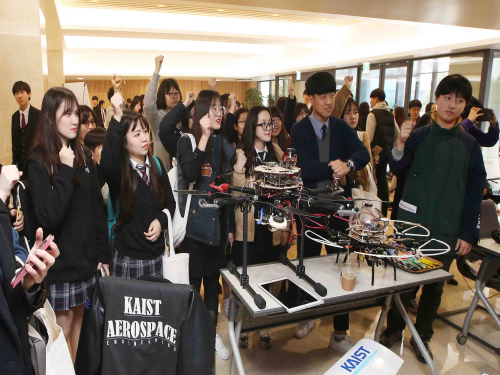 KAST Opened the Campus to the Public
KAIST hosted OPEN KAIST 2017 on the main campus from November 2 to 3, 2017. OPEN KAIST is a science and cultural event designed for students and the general public to experience and take a glance at research labs.
More than 10,000 visitors came to KAIST this year. Groups of families and students came to KAIST to experience various programs related to science.
Twenty departments, including Mechanical Engineering, Aerospace Engineering, the Graduate School of Cultural Technology, and Materials Science and Engineering participated in the event, along with three research centers and the Public Relations Office.
The event was composed of a total of 70 programs in four sections: lab tour, research performance exhibition, department introduction, and special lectures.
The kick off activity for the event was a trial game of the AI World Cup 2017 which will be hosted by KAIST in December 2017. Many people also visited the mobile health care showroom where they could experience what a future smart home and hospital would look like. It was also interesting to visit a futuristic living space for one-person households that provides virtual reality services.
KAIST hopes that the event offers an opportunity for children and students to get to know about science better. Professor Jong-Hwan Kim, the Dean of the College of Engineering at KAIST said, “OPEN KAIST is the one and only opportunity to visit and experience our research labs. KAIST will make every effort to take a step closer to the public by focusing on research that contributes to human society.”
2017.11.06 View 8118
KAST Opened the Campus to the Public
KAIST hosted OPEN KAIST 2017 on the main campus from November 2 to 3, 2017. OPEN KAIST is a science and cultural event designed for students and the general public to experience and take a glance at research labs.
More than 10,000 visitors came to KAIST this year. Groups of families and students came to KAIST to experience various programs related to science.
Twenty departments, including Mechanical Engineering, Aerospace Engineering, the Graduate School of Cultural Technology, and Materials Science and Engineering participated in the event, along with three research centers and the Public Relations Office.
The event was composed of a total of 70 programs in four sections: lab tour, research performance exhibition, department introduction, and special lectures.
The kick off activity for the event was a trial game of the AI World Cup 2017 which will be hosted by KAIST in December 2017. Many people also visited the mobile health care showroom where they could experience what a future smart home and hospital would look like. It was also interesting to visit a futuristic living space for one-person households that provides virtual reality services.
KAIST hopes that the event offers an opportunity for children and students to get to know about science better. Professor Jong-Hwan Kim, the Dean of the College of Engineering at KAIST said, “OPEN KAIST is the one and only opportunity to visit and experience our research labs. KAIST will make every effort to take a step closer to the public by focusing on research that contributes to human society.”
2017.11.06 View 8118 -
 2017 ICISTS Conference 'Draw the Web: Interactions in Society'
The KAIST undergraduate organization, ICISTS (International Conference for Integration of Science, Technology and Society) will convene its annual conference from July 31 to Aug. 4 at the KAIST Daejeon Campus. This year’s theme is “Draw the Web: Interactions in Society.” More than 300 participants from 60 universities in 20 countries will participate in the international conference hosted and planned by the student organization.
Speakers at the 2017 conference include leaders in technology, business, investment, and entrepreneurship, and many others highlighted by Christoffer O. Hernæs, chief digital officer of Skandiabanken and vice president of strategy and innovation at Sparebank; Vincent C. Müller, professor of the philosophy division of humanities & social sciences at Anatolia College; Nigel Parker, director of developer and platform evangelism at Microsoft APAC; and Jon Gosier, founder and CEO of WoundedMetrics, who was voted as one of the 25 most influential African-Americans in technology by Business Insider in 2013 and 2014.
ICISTS has organized and hosted this event, the largest academic conference hosted and organized by students in Asia, since 2005 as a way to discuss an incredibly challenging issue: how science and technology is being integrated into society. This year’s conference will explore how prominent technological advancements are integrated, and how the interactions between humanity and technology will affect society. This year’s sub-theme is “Settlement, Movement, and Inequality.”
In addition to the main session, ICISTS is preparing discussion sessions in which guest speakers and participants will divide into small groups to discuss their responses to the themes. Various additional events including a culture night and an excursion program will serve as opportunities to network with other participants. For more information on the program and how to register, please visit http://www.icist.org.
2017.05.22 View 9414
2017 ICISTS Conference 'Draw the Web: Interactions in Society'
The KAIST undergraduate organization, ICISTS (International Conference for Integration of Science, Technology and Society) will convene its annual conference from July 31 to Aug. 4 at the KAIST Daejeon Campus. This year’s theme is “Draw the Web: Interactions in Society.” More than 300 participants from 60 universities in 20 countries will participate in the international conference hosted and planned by the student organization.
Speakers at the 2017 conference include leaders in technology, business, investment, and entrepreneurship, and many others highlighted by Christoffer O. Hernæs, chief digital officer of Skandiabanken and vice president of strategy and innovation at Sparebank; Vincent C. Müller, professor of the philosophy division of humanities & social sciences at Anatolia College; Nigel Parker, director of developer and platform evangelism at Microsoft APAC; and Jon Gosier, founder and CEO of WoundedMetrics, who was voted as one of the 25 most influential African-Americans in technology by Business Insider in 2013 and 2014.
ICISTS has organized and hosted this event, the largest academic conference hosted and organized by students in Asia, since 2005 as a way to discuss an incredibly challenging issue: how science and technology is being integrated into society. This year’s conference will explore how prominent technological advancements are integrated, and how the interactions between humanity and technology will affect society. This year’s sub-theme is “Settlement, Movement, and Inequality.”
In addition to the main session, ICISTS is preparing discussion sessions in which guest speakers and participants will divide into small groups to discuss their responses to the themes. Various additional events including a culture night and an excursion program will serve as opportunities to network with other participants. For more information on the program and how to register, please visit http://www.icist.org.
2017.05.22 View 9414 -
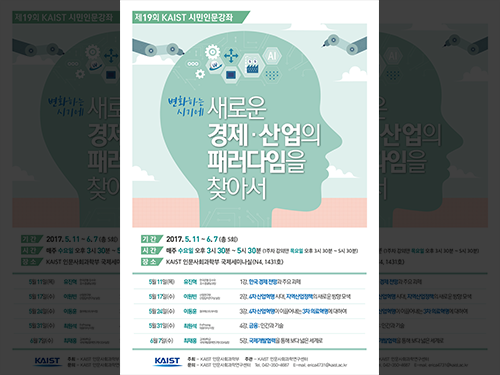 Seeking a New Economic and Industrial Paradigm
The School of Humanities & Social Science will offer the open lecture course titled ‘Seeking a New Economic and Industrial Paradigm’ from May11 to June 7. This is part of a quarterly lecture series run by the school and open to the public.
The open lecture is designed to provide opportunities for the public to identify future challenges and opportunities for Korea’s economy and industry. Experts in macroeconomics, finance, and global collaboration will provide glimpses of new directions for each sector as well as megatrends of emerging technologies on the heels of the 4th Industrial Revolution.
Jin Hyuk Yoo from the Bank of Korea will speak on the ‘Outlook and Challenges of the Korean Economy.’ He will identify the current economic situation and explain how to build on sustainable long-term economic growth in the opening course.
Won-Bin Lee of the Korea Institute for Industrial Economics & Trade will present on the ‘New Industrial Policy in the Era of the Fourth Industrial Revolution.’ His lecture will focus on fostering the local industry and creating its own ecosystem for furthering regional industries.
Dong-Hoon Lee of Donga ST will speak on the implications that the Fourth Industrial Revolution will bring about in the medical industry. Won-Suk Choi of FnPricing will introduce the FN business model, presenting the risks and benefits of fintech in his lecture ‘Finance: Human and Technology.’
Jae-Hong Choi of the Institute of International Development Cooperation at Korea University will give a talk titled ‘Toward the World through Global Cooperation.’ He will present on the history of Korea’s global cooperation initiatives and the role of KOICA, introducing its emerging economic and industrial cooperation model.
Professor Jeounghoon Kim, who is responsible for the public lecture program, said, “Korea now faces very diverse social economic and industrial challenges and we seem to be lost while searching for a solution. The public will have an opportunity to understand the current economic situation and its industrial implications.”
For registration and more info, please visit http://hss.kaist.ac.kr.
2017.04.26 View 9534
Seeking a New Economic and Industrial Paradigm
The School of Humanities & Social Science will offer the open lecture course titled ‘Seeking a New Economic and Industrial Paradigm’ from May11 to June 7. This is part of a quarterly lecture series run by the school and open to the public.
The open lecture is designed to provide opportunities for the public to identify future challenges and opportunities for Korea’s economy and industry. Experts in macroeconomics, finance, and global collaboration will provide glimpses of new directions for each sector as well as megatrends of emerging technologies on the heels of the 4th Industrial Revolution.
Jin Hyuk Yoo from the Bank of Korea will speak on the ‘Outlook and Challenges of the Korean Economy.’ He will identify the current economic situation and explain how to build on sustainable long-term economic growth in the opening course.
Won-Bin Lee of the Korea Institute for Industrial Economics & Trade will present on the ‘New Industrial Policy in the Era of the Fourth Industrial Revolution.’ His lecture will focus on fostering the local industry and creating its own ecosystem for furthering regional industries.
Dong-Hoon Lee of Donga ST will speak on the implications that the Fourth Industrial Revolution will bring about in the medical industry. Won-Suk Choi of FnPricing will introduce the FN business model, presenting the risks and benefits of fintech in his lecture ‘Finance: Human and Technology.’
Jae-Hong Choi of the Institute of International Development Cooperation at Korea University will give a talk titled ‘Toward the World through Global Cooperation.’ He will present on the history of Korea’s global cooperation initiatives and the role of KOICA, introducing its emerging economic and industrial cooperation model.
Professor Jeounghoon Kim, who is responsible for the public lecture program, said, “Korea now faces very diverse social economic and industrial challenges and we seem to be lost while searching for a solution. The public will have an opportunity to understand the current economic situation and its industrial implications.”
For registration and more info, please visit http://hss.kaist.ac.kr.
2017.04.26 View 9534 -
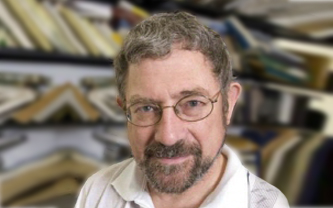 Nobel Laureate Dr. John Michael Kosterlitz Speaks at KAIST
KAIST’s Department of Physics will invite one of three co-recipients of the Nobel Prize in Physics 2016, Professor John Michael Kosterlitz of Brown University, on January 9, 2017, to speak about the exotic states of matter, which is entitled “Topological Defects and Phase Transitions.”
Professor Kosterlitz shares the Nobel award with two other researchers, David Thouless and Duncan Haldane. He is considered one of the pioneers in the field of topological phases. In the early 1970s, along with Thouless, he demonstrated that superconductivity could occur at low temperatures and explained the mechanism behind, phase transition, that makes superconductivity disappear at higher temperatures.
Over the last decade, topological materials and their applications have been widely studied with the hope of using them in new generations of electronics and superconductors, or in future quantum computers. Details of the lecture follow below:
Distinguished Lecture Series by KAIST’s Physics Department
· Speaker: Professor John Michael Kosterlitz of the Physics Department,
Brown University
· Topic: “Topological Defects and Phase Transitions”
· Date: January 9, 2017, 4:00 PM
· Place: Lecture Hall (#1501), College of Natural Sciences (E6-2)
2017.01.06 View 8559
Nobel Laureate Dr. John Michael Kosterlitz Speaks at KAIST
KAIST’s Department of Physics will invite one of three co-recipients of the Nobel Prize in Physics 2016, Professor John Michael Kosterlitz of Brown University, on January 9, 2017, to speak about the exotic states of matter, which is entitled “Topological Defects and Phase Transitions.”
Professor Kosterlitz shares the Nobel award with two other researchers, David Thouless and Duncan Haldane. He is considered one of the pioneers in the field of topological phases. In the early 1970s, along with Thouless, he demonstrated that superconductivity could occur at low temperatures and explained the mechanism behind, phase transition, that makes superconductivity disappear at higher temperatures.
Over the last decade, topological materials and their applications have been widely studied with the hope of using them in new generations of electronics and superconductors, or in future quantum computers. Details of the lecture follow below:
Distinguished Lecture Series by KAIST’s Physics Department
· Speaker: Professor John Michael Kosterlitz of the Physics Department,
Brown University
· Topic: “Topological Defects and Phase Transitions”
· Date: January 9, 2017, 4:00 PM
· Place: Lecture Hall (#1501), College of Natural Sciences (E6-2)
2017.01.06 View 8559