%66%65%6c%6c%6f%77%73
-
 European Academy of Microbiology welcomes 95 new Fellows
<KAIST Distinguished Professor Sang Yup Lee>
The European Academy of Microbiology (EAM) is pleased to announce the election of 95 new Fellows, recognising scientific excellence and long-standing contributions to microbiology.
The newly elected Fellows represent a diverse range of expertise across microbiology and related disciplines, spanning institutions across Europe and beyond. Their work reflects the breadth and dynamism of the field, from fundamental microbial research to applied innovations addressing global challenges in health, environment, and biotechnology.
Election to the EAM Fellowship recognises outstanding scientific achievement and leadership in microbiology. Fellows are selected through a rigorous nomination and evaluation process by existing members of the Academy.
With the addition of these new Fellows in different areas of microbiology from Europe and beyond, the EAM continues to strengthen its network of leading microbiologists. As Fellows of the Academy, members are committed to advancing knowledge, fostering collaboration, and supporting the next generation of scientists. Together they promote the visibility, impact and rapid progress of microbiology across the world.
Reflecting strength and diversity of microbiology
Commenting on the election, the EAM President Prof. Cecília M. Arraiano said:
“We are delighted to welcome this new group of Fellows to the European Academy of Microbiology. Their achievements and expertise reflect the strength and diversity of microbiology. The Academy thrives through the engagement of its Fellows, and we look forward to the perspectives and contributions they will bring to shape the future of microbial science.”
See the full list of the newly elected Fellows.
About the European Academy of Microbiology (EAM)
The European Academy of Microbiology, is part of the Federation of European Microbiological Societies (FEMS) network, and brings together eminent microbiologists whose work has significantly advanced the field. Through the collective expertise of its Fellows, the Academy contributes to scientific dialogue, supports emerging priorities in microbiology, and helps amplify the impact of microbiological research for society.
2026.03.20 View 828
European Academy of Microbiology welcomes 95 new Fellows
<KAIST Distinguished Professor Sang Yup Lee>
The European Academy of Microbiology (EAM) is pleased to announce the election of 95 new Fellows, recognising scientific excellence and long-standing contributions to microbiology.
The newly elected Fellows represent a diverse range of expertise across microbiology and related disciplines, spanning institutions across Europe and beyond. Their work reflects the breadth and dynamism of the field, from fundamental microbial research to applied innovations addressing global challenges in health, environment, and biotechnology.
Election to the EAM Fellowship recognises outstanding scientific achievement and leadership in microbiology. Fellows are selected through a rigorous nomination and evaluation process by existing members of the Academy.
With the addition of these new Fellows in different areas of microbiology from Europe and beyond, the EAM continues to strengthen its network of leading microbiologists. As Fellows of the Academy, members are committed to advancing knowledge, fostering collaboration, and supporting the next generation of scientists. Together they promote the visibility, impact and rapid progress of microbiology across the world.
Reflecting strength and diversity of microbiology
Commenting on the election, the EAM President Prof. Cecília M. Arraiano said:
“We are delighted to welcome this new group of Fellows to the European Academy of Microbiology. Their achievements and expertise reflect the strength and diversity of microbiology. The Academy thrives through the engagement of its Fellows, and we look forward to the perspectives and contributions they will bring to shape the future of microbial science.”
See the full list of the newly elected Fellows.
About the European Academy of Microbiology (EAM)
The European Academy of Microbiology, is part of the Federation of European Microbiological Societies (FEMS) network, and brings together eminent microbiologists whose work has significantly advanced the field. Through the collective expertise of its Fellows, the Academy contributes to scientific dialogue, supports emerging priorities in microbiology, and helps amplify the impact of microbiological research for society.
2026.03.20 View 828 -
 KAIST to Develop a Korean-style ChatGPT Platform Specifically Geared Toward Medical Diagnosis and Drug Discovery
On May 23rd, KAIST (President Kwang-Hyung Lee) announced that its Digital Bio-Health AI Research Center (Director: Professor JongChul Ye of KAIST Kim Jaechul Graduate School of AI) has been selected for the Ministry of Science and ICT's 'AI Top-Tier Young Researcher Support Program (AI Star Fellowship Project).' With a total investment of ₩11.5 billion from May 2025 to December 2030, the center will embark on the full-scale development of AI technology and a platform capable of independently inferring and determining the kinds of diseases, and discovering new drugs.
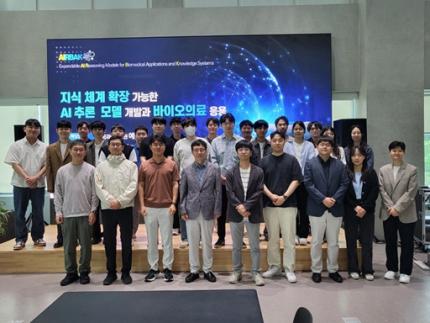
< Photo. On May 20th, a kick-off meeting for the AI Star Fellowship Project was held at KAIST Kim Jaechul Graduate School of AI’s Yangjae Research Center with the KAIST research team and participating organizations of Samsung Medical Center, NAVER Cloud, and HITS. [From left to right in the front row] Professor Jaegul Joo (KAIST), Professor Yoonjae Choi (KAIST), Professor Woo Youn Kim (KAIST/HITS), Professor JongChul Ye (KAIST), Professor Sungsoo Ahn (KAIST), Dr. Haanju Yoo (NAVER Cloud), Yoonho Lee (KAIST), HyeYoon Moon (Samsung Medical Center), Dr. Su Min Kim (Samsung Medical Center) >
This project aims to foster an innovative AI research ecosystem centered on young researchers and develop an inferential AI agent that can utilize and automatically expand specialized knowledge systems in the bio and medical fields.
Professor JongChul Ye of the Kim Jaechul Graduate School of AI will serve as the lead researcher, with young researchers from KAIST including Professors Yoonjae Choi, Kimin Lee, Sungsoo Ahn, and Chanyoung Park, along with mid-career researchers like Professors Jaegul Joo and Woo Youn Kim, jointly undertaking the project. They will collaborate with various laboratories within KAIST to conduct comprehensive research covering the entire cycle from the theoretical foundations of AI inference to its practical application.
Specifically, the main goals include: - Building high-performance inference models that integrate diverse medical knowledge systems to enhance the precision and reliability of diagnosis and treatment. - Developing a convergence inference platform that efficiently combines symbol-based inference with neural network models. - Securing AI technology for new drug development and biomarker discovery based on 'cell ontology.'
Furthermore, through close collaboration with industry and medical institutions such as Samsung Medical Center, NAVER Cloud, and HITS Co., Ltd., the project aims to achieve: - Clinical diagnostic AI utilizing medical knowledge systems. - AI-based molecular target exploration for new drug development. - Commercialization of an extendible AI inference platform.
Professor JongChul Ye, Director of KAIST's Digital Bio-Health AI Research Center, stated, "At a time when competition in AI inference model development is intensifying, it is a great honor for KAIST to lead the development of AI technology specialized in the bio and medical fields with world-class young researchers." He added, "We will do our best to ensure that the participating young researchers reach a world-leading level in terms of research achievements after the completion of this seven-year project starting in 2025."
The AI Star Fellowship is a newly established program where post-doctoral researchers and faculty members within seven years of appointment participate as project leaders (PLs) to independently lead research. Multiple laboratories within a university and demand-side companies form a consortium to operate the program.
Through this initiative, KAIST plans to nurture bio-medical convergence AI talent and simultaneously promote the commercialization of core technologies in collaboration with Samsung Medical Center, NAVER Cloud, and HITS.
2025.05.26 View 15582
KAIST to Develop a Korean-style ChatGPT Platform Specifically Geared Toward Medical Diagnosis and Drug Discovery
On May 23rd, KAIST (President Kwang-Hyung Lee) announced that its Digital Bio-Health AI Research Center (Director: Professor JongChul Ye of KAIST Kim Jaechul Graduate School of AI) has been selected for the Ministry of Science and ICT's 'AI Top-Tier Young Researcher Support Program (AI Star Fellowship Project).' With a total investment of ₩11.5 billion from May 2025 to December 2030, the center will embark on the full-scale development of AI technology and a platform capable of independently inferring and determining the kinds of diseases, and discovering new drugs.
< Photo. On May 20th, a kick-off meeting for the AI Star Fellowship Project was held at KAIST Kim Jaechul Graduate School of AI’s Yangjae Research Center with the KAIST research team and participating organizations of Samsung Medical Center, NAVER Cloud, and HITS. [From left to right in the front row] Professor Jaegul Joo (KAIST), Professor Yoonjae Choi (KAIST), Professor Woo Youn Kim (KAIST/HITS), Professor JongChul Ye (KAIST), Professor Sungsoo Ahn (KAIST), Dr. Haanju Yoo (NAVER Cloud), Yoonho Lee (KAIST), HyeYoon Moon (Samsung Medical Center), Dr. Su Min Kim (Samsung Medical Center) >
This project aims to foster an innovative AI research ecosystem centered on young researchers and develop an inferential AI agent that can utilize and automatically expand specialized knowledge systems in the bio and medical fields.
Professor JongChul Ye of the Kim Jaechul Graduate School of AI will serve as the lead researcher, with young researchers from KAIST including Professors Yoonjae Choi, Kimin Lee, Sungsoo Ahn, and Chanyoung Park, along with mid-career researchers like Professors Jaegul Joo and Woo Youn Kim, jointly undertaking the project. They will collaborate with various laboratories within KAIST to conduct comprehensive research covering the entire cycle from the theoretical foundations of AI inference to its practical application.
Specifically, the main goals include: - Building high-performance inference models that integrate diverse medical knowledge systems to enhance the precision and reliability of diagnosis and treatment. - Developing a convergence inference platform that efficiently combines symbol-based inference with neural network models. - Securing AI technology for new drug development and biomarker discovery based on 'cell ontology.'
Furthermore, through close collaboration with industry and medical institutions such as Samsung Medical Center, NAVER Cloud, and HITS Co., Ltd., the project aims to achieve: - Clinical diagnostic AI utilizing medical knowledge systems. - AI-based molecular target exploration for new drug development. - Commercialization of an extendible AI inference platform.
Professor JongChul Ye, Director of KAIST's Digital Bio-Health AI Research Center, stated, "At a time when competition in AI inference model development is intensifying, it is a great honor for KAIST to lead the development of AI technology specialized in the bio and medical fields with world-class young researchers." He added, "We will do our best to ensure that the participating young researchers reach a world-leading level in terms of research achievements after the completion of this seven-year project starting in 2025."
The AI Star Fellowship is a newly established program where post-doctoral researchers and faculty members within seven years of appointment participate as project leaders (PLs) to independently lead research. Multiple laboratories within a university and demand-side companies form a consortium to operate the program.
Through this initiative, KAIST plans to nurture bio-medical convergence AI talent and simultaneously promote the commercialization of core technologies in collaboration with Samsung Medical Center, NAVER Cloud, and HITS.
2025.05.26 View 15582 -
 Seanie Lee of KAIST Kim Jaechul Graduate School of AI, named the 2023 Apple Scholars in AI Machine Learning
Seanie Lee, a Ph.D. candidate at the Kim Jaechul Graduate School of AI, has been selected as one of the Apple Scholars in AI/ML PhD fellowship program recipients for 2023. Lee, advised by Sung Ju Hwang and Juho Lee, is a rising star in AI.
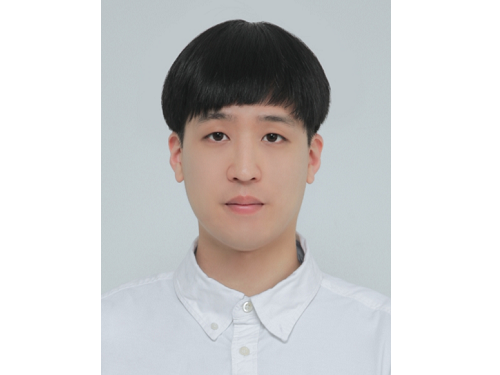
< Seanie Lee of KAIST Kim Jaechul Graduate School of AI >
The Apple Scholars in AI/ML PhD fellowship program, launched in 2020, aims to discover and support young researchers with a promising future in computer science. Each year, a handful of graduate students in related fields worldwide are selected for the program. For the following two years, the selected students are provided with financial support for research, international conference attendance, internship opportunities, and mentorship by an Apple engineer.
This year, 22 PhD students were selected from leading universities worldwide, including Johns Hopkins University, MIT, Stanford University, Imperial College London, Edinburgh University, Tsinghua University, HKUST, and Technion. Seanie Lee is the first Korean student to be selected for the program.
Lee’s research focuses on transfer learning, a subfield of AI that reuses pre-trained AI models on large datasets such as images or text corpora to train them for new purposes.
(*text corpus: a collection of text resources in computer-readable forms)
His work aims to improve the performance of transfer learning by developing new data augmentation methods that allow for more effective training using few training data samples and new regularization techniques that prevent the overfitting of large AI models to training data. He has published 11 papers, all of which were accepted to top-tier conferences such as the Annual Meeting of the Association for Computational Linguistics (ACL), International Conference on Learning Representations (ICLR), and Annual Conference on Neural Information Processing Systems (NeurIPS).
“Being selected as one of the Apple Scholars in AI/ML PhD fellowship program is a great motivation for me,” said Lee. “So far, AI research has been largely focused on computer vision and natural language processing, but I want to push the boundaries now and use modern tools of AI to solve problems in natural science, like physics.”
2023.04.20 View 12931
Seanie Lee of KAIST Kim Jaechul Graduate School of AI, named the 2023 Apple Scholars in AI Machine Learning
Seanie Lee, a Ph.D. candidate at the Kim Jaechul Graduate School of AI, has been selected as one of the Apple Scholars in AI/ML PhD fellowship program recipients for 2023. Lee, advised by Sung Ju Hwang and Juho Lee, is a rising star in AI.
< Seanie Lee of KAIST Kim Jaechul Graduate School of AI >
The Apple Scholars in AI/ML PhD fellowship program, launched in 2020, aims to discover and support young researchers with a promising future in computer science. Each year, a handful of graduate students in related fields worldwide are selected for the program. For the following two years, the selected students are provided with financial support for research, international conference attendance, internship opportunities, and mentorship by an Apple engineer.
This year, 22 PhD students were selected from leading universities worldwide, including Johns Hopkins University, MIT, Stanford University, Imperial College London, Edinburgh University, Tsinghua University, HKUST, and Technion. Seanie Lee is the first Korean student to be selected for the program.
Lee’s research focuses on transfer learning, a subfield of AI that reuses pre-trained AI models on large datasets such as images or text corpora to train them for new purposes.
(*text corpus: a collection of text resources in computer-readable forms)
His work aims to improve the performance of transfer learning by developing new data augmentation methods that allow for more effective training using few training data samples and new regularization techniques that prevent the overfitting of large AI models to training data. He has published 11 papers, all of which were accepted to top-tier conferences such as the Annual Meeting of the Association for Computational Linguistics (ACL), International Conference on Learning Representations (ICLR), and Annual Conference on Neural Information Processing Systems (NeurIPS).
“Being selected as one of the Apple Scholars in AI/ML PhD fellowship program is a great motivation for me,” said Lee. “So far, AI research has been largely focused on computer vision and natural language processing, but I want to push the boundaries now and use modern tools of AI to solve problems in natural science, like physics.”
2023.04.20 View 12931 -
 Yuji Roh Awarded 2022 Microsoft Research PhD Fellowship
KAIST PhD candidate Yuji Roh of the School of Electrical Engineering (advisor: Prof. Steven Euijong Whang) was selected as a recipient of the 2022 Microsoft Research PhD Fellowship.
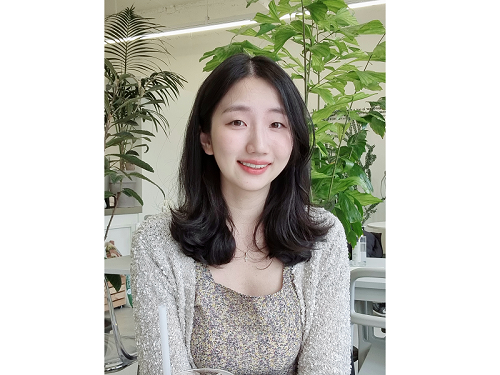
< KAIST PhD candidate Yuji Roh (advisor: Prof. Steven Euijong Whang) >
The Microsoft Research PhD Fellowship is a scholarship program that recognizes outstanding graduate students for their exceptional and innovative research in areas relevant to computer science and related fields. This year, 36 people from around the world received the fellowship, and Yuji Roh from KAIST EE is the only recipient from universities in Korea. Each selected fellow will receive a $10,000 scholarship and an opportunity to intern at Microsoft under the guidance of an experienced researcher.
Yuji Roh was named a fellow in the field of “Machine Learning” for her outstanding achievements in Trustworthy AI. Her research highlights include designing a state-of-the-art fair training framework using batch selection and developing novel algorithms for both fair and robust training. Her works have been presented at the top machine learning conferences ICML, ICLR, and NeurIPS among others. She also co-presented a tutorial on Trustworthy AI at the top data mining conference ACM SIGKDD. She is currently interning at the NVIDIA Research AI Algorithms Group developing large-scale real-world fair AI frameworks.
The list of fellowship recipients and the interview videos are displayed on the Microsoft webpage and Youtube.
The list of recipients: https://www.microsoft.com/en-us/research/academic-program/phd-fellowship/2022-recipients/
Interview (Global): https://www.youtube.com/watch?v=T4Q-XwOOoJc
Interview (Asia): https://www.youtube.com/watch?v=qwq3R1XU8UE
[Highlighted research achievements by Yuji Roh: Fair batch selection framework]
[Highlighted research achievements by Yuji Roh: Fair and robust training framework]
2022.10.28 View 24325
Yuji Roh Awarded 2022 Microsoft Research PhD Fellowship
KAIST PhD candidate Yuji Roh of the School of Electrical Engineering (advisor: Prof. Steven Euijong Whang) was selected as a recipient of the 2022 Microsoft Research PhD Fellowship.
< KAIST PhD candidate Yuji Roh (advisor: Prof. Steven Euijong Whang) >
The Microsoft Research PhD Fellowship is a scholarship program that recognizes outstanding graduate students for their exceptional and innovative research in areas relevant to computer science and related fields. This year, 36 people from around the world received the fellowship, and Yuji Roh from KAIST EE is the only recipient from universities in Korea. Each selected fellow will receive a $10,000 scholarship and an opportunity to intern at Microsoft under the guidance of an experienced researcher.
Yuji Roh was named a fellow in the field of “Machine Learning” for her outstanding achievements in Trustworthy AI. Her research highlights include designing a state-of-the-art fair training framework using batch selection and developing novel algorithms for both fair and robust training. Her works have been presented at the top machine learning conferences ICML, ICLR, and NeurIPS among others. She also co-presented a tutorial on Trustworthy AI at the top data mining conference ACM SIGKDD. She is currently interning at the NVIDIA Research AI Algorithms Group developing large-scale real-world fair AI frameworks.
The list of fellowship recipients and the interview videos are displayed on the Microsoft webpage and Youtube.
The list of recipients: https://www.microsoft.com/en-us/research/academic-program/phd-fellowship/2022-recipients/
Interview (Global): https://www.youtube.com/watch?v=T4Q-XwOOoJc
Interview (Asia): https://www.youtube.com/watch?v=qwq3R1XU8UE
[Highlighted research achievements by Yuji Roh: Fair batch selection framework]
[Highlighted research achievements by Yuji Roh: Fair and robust training framework]
2022.10.28 View 24325 -
 KAIST and Google Partner to Develop AI Curriculum
Two KAIST professors, Hyun Wook Ka from the School of Transdisciplinary Studies and Young Jae Jang from the Department of Industrial and Systems Engineering, were recipients of Google Education Grants that will support the development of new AI courses integrating the latest industrial technology. This collaboration is part of the KAIST-Google Partnership, which was established in July 2019 with the goal of nurturing AI talent at KAIST.
The two proposals -- Professor Ka’s ‘Cloud AI-Empowered Multimodal Data Analysis for Human Affect Detection and Recognition’ and Professor Jang’s ‘Learning Smart Factory with AI’-- were selected by the KAIST Graduate School of AI through a school-wide competition held in July. The proposals then went through a final review by Google and were accepted. The two professors will receive $7,500 each for developing AI courses using Google technology for one year.
Professor Ka’s curriculum aims to provide a rich learning experience for students by providing basic knowledge on data science and AI and helping them obtain better problem solving and application skills using practical and interdisciplinary data science and AI technology.
Professor Jang’s curriculum is designed to solve real-world manufacturing problems using AI and it will be field-oriented. Professor Jang has been managing three industry-academic collaboration centers in manufacturing and smart factories within KAIST and plans to develop his courses to go beyond theory and be centered on case studies for solving real-world manufacturing problems using AI.
Professor Jang said, “Data is at the core of smart factories and AI education, but there is often not enough of it for the education to be effective. The KAIST Advanced Manufacturing Laboratory has a testbed for directly acquiring data generated from real semiconductor automation equipment, analyzing it, and applying algorithms, which enables truly effective smart factory and AI education.”
KAIST signed a partnership with Google in July 2019 to foster global AI talent and is operating various programs to train AI experts and support excellent AI research for two years.
The Google AI Focused Research Award supports world-class faculty performing cutting-edge research and was previously awarded to professors Sung Ju Hwang from the Graduate School of AI and Steven Whang from the School of Electrical Engineering along with Google Cloud Platform (GCP) credits. These two professors have been collaborating with Google teams since October 2018 and recently extended their projects to continue through 2021.
In addition, a Google Ph.D. Fellowship was awarded to Taesik Gong from the School of Computing in October this year, and three Student Travel Grants were awarded to Sejun Park from the School of Electrical Engineering, Chulhyung Lee from the Department of Mathematical Sciences, and Sangyun Lee from the School of Computing earlier in March. Five students were also recommended for the Google Internship program in March.
(END)
2020.12.11 View 20891
KAIST and Google Partner to Develop AI Curriculum
Two KAIST professors, Hyun Wook Ka from the School of Transdisciplinary Studies and Young Jae Jang from the Department of Industrial and Systems Engineering, were recipients of Google Education Grants that will support the development of new AI courses integrating the latest industrial technology. This collaboration is part of the KAIST-Google Partnership, which was established in July 2019 with the goal of nurturing AI talent at KAIST.
The two proposals -- Professor Ka’s ‘Cloud AI-Empowered Multimodal Data Analysis for Human Affect Detection and Recognition’ and Professor Jang’s ‘Learning Smart Factory with AI’-- were selected by the KAIST Graduate School of AI through a school-wide competition held in July. The proposals then went through a final review by Google and were accepted. The two professors will receive $7,500 each for developing AI courses using Google technology for one year.
Professor Ka’s curriculum aims to provide a rich learning experience for students by providing basic knowledge on data science and AI and helping them obtain better problem solving and application skills using practical and interdisciplinary data science and AI technology.
Professor Jang’s curriculum is designed to solve real-world manufacturing problems using AI and it will be field-oriented. Professor Jang has been managing three industry-academic collaboration centers in manufacturing and smart factories within KAIST and plans to develop his courses to go beyond theory and be centered on case studies for solving real-world manufacturing problems using AI.
Professor Jang said, “Data is at the core of smart factories and AI education, but there is often not enough of it for the education to be effective. The KAIST Advanced Manufacturing Laboratory has a testbed for directly acquiring data generated from real semiconductor automation equipment, analyzing it, and applying algorithms, which enables truly effective smart factory and AI education.”
KAIST signed a partnership with Google in July 2019 to foster global AI talent and is operating various programs to train AI experts and support excellent AI research for two years.
The Google AI Focused Research Award supports world-class faculty performing cutting-edge research and was previously awarded to professors Sung Ju Hwang from the Graduate School of AI and Steven Whang from the School of Electrical Engineering along with Google Cloud Platform (GCP) credits. These two professors have been collaborating with Google teams since October 2018 and recently extended their projects to continue through 2021.
In addition, a Google Ph.D. Fellowship was awarded to Taesik Gong from the School of Computing in October this year, and three Student Travel Grants were awarded to Sejun Park from the School of Electrical Engineering, Chulhyung Lee from the Department of Mathematical Sciences, and Sangyun Lee from the School of Computing earlier in March. Five students were also recommended for the Google Internship program in March.
(END)
2020.12.11 View 20891 -
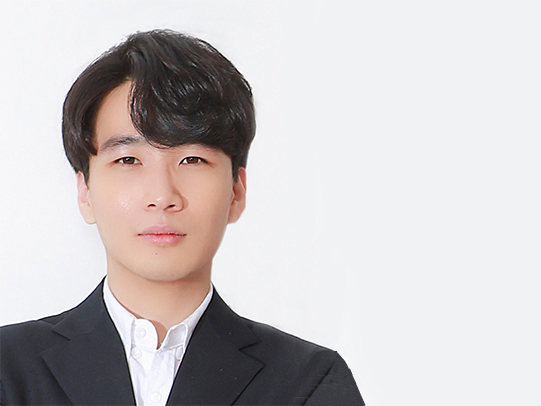 Taesik Gong Named Google PhD Fellow
PhD candidate Taesik Gong from the School of Computing was named a 2020 Google PhD Fellow in the field of machine learning.
The Google PhD Fellowship Program has recognized and supported outstanding graduate students in computer science and related fields since 2009. Gong is one of two Korean students chosen as the recipients of Google Fellowships this year. A total of 53 students across the world in 12 fields were awarded this fellowship.
Gong’s research on condition-independent mobile sensing powered by machine learning earned him this year’s fellowship. He has published and presented his work through many conferences including ACM SenSys and ACM UbiComp, and has worked at Microsoft Research Asia and Nokia Bell Labs as a research intern. Gong was also the winner of the NAVER PhD Fellowship Award in 2018.
(END)
2020.10.15 View 20075
Taesik Gong Named Google PhD Fellow
PhD candidate Taesik Gong from the School of Computing was named a 2020 Google PhD Fellow in the field of machine learning.
The Google PhD Fellowship Program has recognized and supported outstanding graduate students in computer science and related fields since 2009. Gong is one of two Korean students chosen as the recipients of Google Fellowships this year. A total of 53 students across the world in 12 fields were awarded this fellowship.
Gong’s research on condition-independent mobile sensing powered by machine learning earned him this year’s fellowship. He has published and presented his work through many conferences including ACM SenSys and ACM UbiComp, and has worked at Microsoft Research Asia and Nokia Bell Labs as a research intern. Gong was also the winner of the NAVER PhD Fellowship Award in 2018.
(END)
2020.10.15 View 20075 -
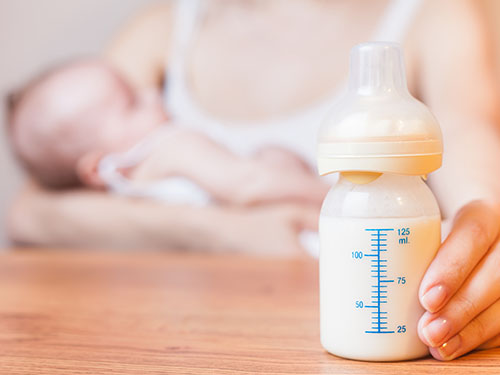 Breastfeeding Helps Prevent Mothers from Developing Diabetes after Childbirth
A team of South Korean researchers found that lactation can lower the incidence and reduce the risk of maternal postpartum diabetes. The researchers identified that lactation increases the mass and function of pancreatic beta cells through serotonin production. The team suggested that sustained improvements in pancreatic beta cells, which can last for years even after the cessation of lactation, improve mothers’ metabolic health in addition to providing health benefits for infants.
Pregnancy imposes a substantial metabolic burden on women through weight gain and increased insulin resistance. Various other factors, including a history of gestational diabetes, maternal age, and obesity, further affect women’s risk of progressing to diabetes after delivery, and the risk of postpartum diabetes increases more in women who have had gestational diabetes and/or repeated deliveries.
Diabetes-related complications include damage to blood vessels, which can lead to cardiovascular and cerebrovascular diseases such as heart attack and stroke, and problems with the nerves, eyes, kidneys, and many more. Since diabetes can pose a serious threat to mothers’ metabolic health, the management of maternal metabolic risk factors is important, especially in the peripartum period. Previous epidemiological studies have reported that lactation reduces the risk of postpartum diabetes, but the mechanisms underlying this benefit have remained elusive.
The study, published in Science Translational Medicine on April 29, explains the biology underpinning this observation on the beneficial effects of lactation. Professor Hail Kim from the Graduate School of Medical Science and Engineering at KAIST led and jointly conducted the study in conjunction with researchers from the Seoul National University Bundang Hospital (SNUBH) and Chungnam National University (CNU) in Korea, and the University of California, San Francisco (UCSF) in the US.
In their study, the team observed that the milk-secreting hormone ‘prolactin’ in lactating mothers not only promotes milk production, but also plays a major role in stimulating insulin-secreting pancreatic beta cells that regulate blood glucose in the body.
The researchers also found that ‘serotonin’, known as a chemical that contributes to wellbeing and happiness, is produced in pancreatic beta cells during lactation. Serotonin in pancreatic beta cells act as an antioxidant and reduce oxidative stress, making mothers’ beta cells healthier. Serotonin also induces the proliferation of beta cells, thereby increasing the beta cell mass and helping maintain proper glucose levels.
The research team conducted follow-up examinations on a total of 174 postpartum women, 85 lactated and 99 non-lactated, at two months postpartum and annually thereafter for at least three years. The results demonstrated that mothers who had undergone lactation improved pancreatic beta cell mass and function, and showed improved glucose homeostasis with approximately 20mg/dL lower glucose levels, thereby reducing the risk of postpartum diabetes in women. Surprisingly, this beneficial effect was maintained after the cessation of lactation, for more than three years after delivery.
Professor Kim said, “We are happy to prove that lactation benefits female metabolic health by improving beta cell mass and function as well as glycemic control.”
“Our future studies on the modulation of the molecular serotonergic pathway in accordance with the management of maternal metabolic risk factors may lead to new therapeutics to help prevent mothers from developing metabolic disorders,” he added.
This work was supported by grants from the National Research Foundation (NRF) and the National Research Council of Science and Technology (NST) of Korea, the National Institutes of Health (NIH), the Larry L. Hillblom Foundation, and the Health Fellowship Foundation.
Image credit: Professor Hail Kim, KAIST
Image usage restrictions: News organizations may use or redistribute this image, with proper attribution, as part of news coverage of this paper only.
Publication:
Moon, J. H et al. (2020) ‘Lactation improves pancreatic β cell mass and function through serotonin production.’ Science Translational Medicine, 12, eaay0455. Available online at https://doi.org/10.1126/scitranslmed.aay0455
Profile: Hail Kim, MD, PhD
hailkim@kaist.edu
Associate Professor
Graduate School of Medical Science and Engineering (GSMSE)
Korea Advanced Institute of Science and Technology (KAIST)
Profile: Hak Chul Jang, MD, PhD
janghak@snu.ac.kr
Professor
Division of Endocrinology and Metabolism
Seoul National University Bundang Hospital (SNUBH)
President
Korean Diabetes Association
Profile: Joon Ho Moon, MD, PhD
moonjoonho@gmail.com
Clinical Fellow
Division of Endocrinology and Metabolism
SNUBH
Profile: Hyeongseok Kim, MD, PhD
hskim85kor@gmail.com
Assistant Professor
Chungnam National University (CNU)
Profile: Professor Michael S. German, MD
Michael.German@ucsf.edu
Professor
Diabetes Center
University of California, San Francisco (UCSF)
(END)
2020.04.29 View 30467
Breastfeeding Helps Prevent Mothers from Developing Diabetes after Childbirth
A team of South Korean researchers found that lactation can lower the incidence and reduce the risk of maternal postpartum diabetes. The researchers identified that lactation increases the mass and function of pancreatic beta cells through serotonin production. The team suggested that sustained improvements in pancreatic beta cells, which can last for years even after the cessation of lactation, improve mothers’ metabolic health in addition to providing health benefits for infants.
Pregnancy imposes a substantial metabolic burden on women through weight gain and increased insulin resistance. Various other factors, including a history of gestational diabetes, maternal age, and obesity, further affect women’s risk of progressing to diabetes after delivery, and the risk of postpartum diabetes increases more in women who have had gestational diabetes and/or repeated deliveries.
Diabetes-related complications include damage to blood vessels, which can lead to cardiovascular and cerebrovascular diseases such as heart attack and stroke, and problems with the nerves, eyes, kidneys, and many more. Since diabetes can pose a serious threat to mothers’ metabolic health, the management of maternal metabolic risk factors is important, especially in the peripartum period. Previous epidemiological studies have reported that lactation reduces the risk of postpartum diabetes, but the mechanisms underlying this benefit have remained elusive.
The study, published in Science Translational Medicine on April 29, explains the biology underpinning this observation on the beneficial effects of lactation. Professor Hail Kim from the Graduate School of Medical Science and Engineering at KAIST led and jointly conducted the study in conjunction with researchers from the Seoul National University Bundang Hospital (SNUBH) and Chungnam National University (CNU) in Korea, and the University of California, San Francisco (UCSF) in the US.
In their study, the team observed that the milk-secreting hormone ‘prolactin’ in lactating mothers not only promotes milk production, but also plays a major role in stimulating insulin-secreting pancreatic beta cells that regulate blood glucose in the body.
The researchers also found that ‘serotonin’, known as a chemical that contributes to wellbeing and happiness, is produced in pancreatic beta cells during lactation. Serotonin in pancreatic beta cells act as an antioxidant and reduce oxidative stress, making mothers’ beta cells healthier. Serotonin also induces the proliferation of beta cells, thereby increasing the beta cell mass and helping maintain proper glucose levels.
The research team conducted follow-up examinations on a total of 174 postpartum women, 85 lactated and 99 non-lactated, at two months postpartum and annually thereafter for at least three years. The results demonstrated that mothers who had undergone lactation improved pancreatic beta cell mass and function, and showed improved glucose homeostasis with approximately 20mg/dL lower glucose levels, thereby reducing the risk of postpartum diabetes in women. Surprisingly, this beneficial effect was maintained after the cessation of lactation, for more than three years after delivery.
Professor Kim said, “We are happy to prove that lactation benefits female metabolic health by improving beta cell mass and function as well as glycemic control.”
“Our future studies on the modulation of the molecular serotonergic pathway in accordance with the management of maternal metabolic risk factors may lead to new therapeutics to help prevent mothers from developing metabolic disorders,” he added.
This work was supported by grants from the National Research Foundation (NRF) and the National Research Council of Science and Technology (NST) of Korea, the National Institutes of Health (NIH), the Larry L. Hillblom Foundation, and the Health Fellowship Foundation.
Image credit: Professor Hail Kim, KAIST
Image usage restrictions: News organizations may use or redistribute this image, with proper attribution, as part of news coverage of this paper only.
Publication:
Moon, J. H et al. (2020) ‘Lactation improves pancreatic β cell mass and function through serotonin production.’ Science Translational Medicine, 12, eaay0455. Available online at https://doi.org/10.1126/scitranslmed.aay0455
Profile: Hail Kim, MD, PhD
hailkim@kaist.edu
Associate Professor
Graduate School of Medical Science and Engineering (GSMSE)
Korea Advanced Institute of Science and Technology (KAIST)
Profile: Hak Chul Jang, MD, PhD
janghak@snu.ac.kr
Professor
Division of Endocrinology and Metabolism
Seoul National University Bundang Hospital (SNUBH)
President
Korean Diabetes Association
Profile: Joon Ho Moon, MD, PhD
moonjoonho@gmail.com
Clinical Fellow
Division of Endocrinology and Metabolism
SNUBH
Profile: Hyeongseok Kim, MD, PhD
hskim85kor@gmail.com
Assistant Professor
Chungnam National University (CNU)
Profile: Professor Michael S. German, MD
Michael.German@ucsf.edu
Professor
Diabetes Center
University of California, San Francisco (UCSF)
(END)
2020.04.29 View 30467 -
 A Mathematical Model Reveals Long-Distance Cell Communication Mechanism
How can tens of thousands of people in a large football stadium all clap together with the same beat even though they can only hear the people near them clapping?
A combination of a partial differential equation and a synthetic circuit in microbes answers this question. An interdisciplinary collaborative team of Professor Jae Kyoung Kim at KAIST, Professor Krešimir Josić at the University of Houston, and Professor Matt Bennett at Rice University has identified how a large community can communicate with each other almost simultaneously even with very short distance signaling. The research was reported at Nature Chemical Biology.
Cells often communicate using signaling molecules, which can travel only a short distance. Nevertheless, the cells can also communicate over large distances to spur collective action. The team revealed a cell communication mechanism that quickly forms a network of local interactions to spur collective action, even in large communities.
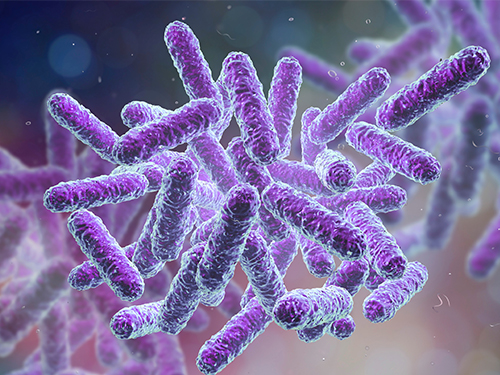
The research team used an engineered transcriptional circuit of combined positive and negative feedback loops in E. coli, which can periodically release two types of signaling molecules: activator and repressor. As the signaling molecules travel over a short distance, cells can only talk to their nearest neighbors. However, cell communities synchronize oscillatory gene expression in spatially extended systems as long as the transcriptional circuit contains a positive feedback loop for the activator.
Professor Kim said that analyzing and understanding such high-dimensional dynamics was extremely difficult. He explained, “That’s why we used high-dimensional partial differential equation to describe the system based on the interactions among various types of molecules.” Surprisingly, the mathematical model accurately simulates the synthesis of the signaling molecules in the cell and their spatial diffusion throughout the chamber and their effect on neighboring cells.
The team simplified the high-dimensional system into a one-dimensional orbit, noting that the system repeats periodically. This allowed them to discover that cells can make one voice when they lowered their own voice and listened to the others. “It turns out the positive feedback loop reduces the distance between moving points and finally makes them move all together. That’s why you clap louder when you hear applause from nearby neighbors and everyone eventually claps together at almost the same time,” said Professor Kim.
Professor Kim added, “Math is a powerful as it simplifies complex thing so that we can find an essential underlying property. This finding would not have been possible without the simplification of complex systems using mathematics."
The National Institutes of Health, the National Science Foundation, the Robert A. Welch Foundation, the Hamill Foundation, the National Research Foundation of Korea, and the T.J. Park Science Fellowship of POSCO supported the research.
(Figure: Complex molecular interactions among microbial consortia is simplified as interactions among points on a limit cycle (right).)
2019.10.15 View 37466
A Mathematical Model Reveals Long-Distance Cell Communication Mechanism
How can tens of thousands of people in a large football stadium all clap together with the same beat even though they can only hear the people near them clapping?
A combination of a partial differential equation and a synthetic circuit in microbes answers this question. An interdisciplinary collaborative team of Professor Jae Kyoung Kim at KAIST, Professor Krešimir Josić at the University of Houston, and Professor Matt Bennett at Rice University has identified how a large community can communicate with each other almost simultaneously even with very short distance signaling. The research was reported at Nature Chemical Biology.
Cells often communicate using signaling molecules, which can travel only a short distance. Nevertheless, the cells can also communicate over large distances to spur collective action. The team revealed a cell communication mechanism that quickly forms a network of local interactions to spur collective action, even in large communities.
The research team used an engineered transcriptional circuit of combined positive and negative feedback loops in E. coli, which can periodically release two types of signaling molecules: activator and repressor. As the signaling molecules travel over a short distance, cells can only talk to their nearest neighbors. However, cell communities synchronize oscillatory gene expression in spatially extended systems as long as the transcriptional circuit contains a positive feedback loop for the activator.
Professor Kim said that analyzing and understanding such high-dimensional dynamics was extremely difficult. He explained, “That’s why we used high-dimensional partial differential equation to describe the system based on the interactions among various types of molecules.” Surprisingly, the mathematical model accurately simulates the synthesis of the signaling molecules in the cell and their spatial diffusion throughout the chamber and their effect on neighboring cells.
The team simplified the high-dimensional system into a one-dimensional orbit, noting that the system repeats periodically. This allowed them to discover that cells can make one voice when they lowered their own voice and listened to the others. “It turns out the positive feedback loop reduces the distance between moving points and finally makes them move all together. That’s why you clap louder when you hear applause from nearby neighbors and everyone eventually claps together at almost the same time,” said Professor Kim.
Professor Kim added, “Math is a powerful as it simplifies complex thing so that we can find an essential underlying property. This finding would not have been possible without the simplification of complex systems using mathematics."
The National Institutes of Health, the National Science Foundation, the Robert A. Welch Foundation, the Hamill Foundation, the National Research Foundation of Korea, and the T.J. Park Science Fellowship of POSCO supported the research.
(Figure: Complex molecular interactions among microbial consortia is simplified as interactions among points on a limit cycle (right).)
2019.10.15 View 37466 -
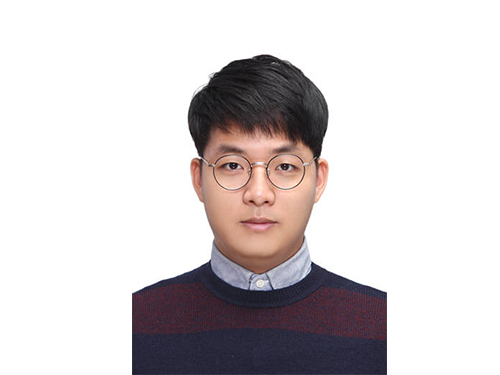 Sungjoon Park Named Google PhD Fellow
PhD candidate Sungjoon Park from the School of Computing was named a 2019 Google PhD Fellow in the field of natural language processing. The Google PhD fellowship program has recognized and supported outstanding graduate students in computer science and related fields since 2009. Park is one of three Korean students chosen as the recipients of Google Fellowships this year. A total of 54 students across the world in 12 fields were awarded this fellowship.
Park’s research on computational psychotherapy using natural language processing (NLP) powered by machine learning earned him this year’s fellowship. He presented of learning distributed representations in Korean and their interpretations during the 2017 Annual Conference of the Association for Computational Linguistics and the 2018 Conference on Empirical Methods in Natural Language Processing. He also applied machine learning-based natural language processing into computational psychotherapy so that a trained machine learning model could categorize client's verbal responses in a counseling dialogue. This was presented at the Annual Conference of the North American Chapter of the Association for Computational Linguistics.
More recently, he has been developing on neural response generation model and the prediction and extraction of complex emotion in text, and computational psychotherapy applications.
2019.09.17 View 15639
Sungjoon Park Named Google PhD Fellow
PhD candidate Sungjoon Park from the School of Computing was named a 2019 Google PhD Fellow in the field of natural language processing. The Google PhD fellowship program has recognized and supported outstanding graduate students in computer science and related fields since 2009. Park is one of three Korean students chosen as the recipients of Google Fellowships this year. A total of 54 students across the world in 12 fields were awarded this fellowship.
Park’s research on computational psychotherapy using natural language processing (NLP) powered by machine learning earned him this year’s fellowship. He presented of learning distributed representations in Korean and their interpretations during the 2017 Annual Conference of the Association for Computational Linguistics and the 2018 Conference on Empirical Methods in Natural Language Processing. He also applied machine learning-based natural language processing into computational psychotherapy so that a trained machine learning model could categorize client's verbal responses in a counseling dialogue. This was presented at the Annual Conference of the North American Chapter of the Association for Computational Linguistics.
More recently, he has been developing on neural response generation model and the prediction and extraction of complex emotion in text, and computational psychotherapy applications.
2019.09.17 View 15639 -
 KAIST-Google Partnership for AI Education and Research
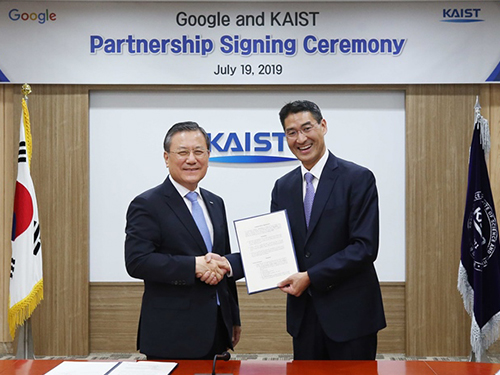
Google has agreed to support KAIST students and professors in the fields of AI research and education. President Sung-Chul Shin and Google Korea Country Director John Lee signed the collaboration agreement during a ceremony on July 19 at KAIST.
Under the agreement, Google will fund the Google AI-Focused Research Awards Program, the PhD Fellowship Program, and Student Travel Grants for KAIST. In addition, Google will continue to provide more academic and career building opportunities for students, including Google internship programs.
KAIST and Google has been collaborating for years. Professor Steven Whang at the School of Electrical Engineering and Professor Sung Ju Hwang at the School of Computing won the AI-Focused Award in 2018 and conduct their researches on "Improving Generalization and Reliability of Any Deep Neural Networks" and "Automatic and Acitionable Model Analysis for TFX," respectively. Outstanding PhD students have been recognized through the PhD Fellowship Program. However, this new collaboration agreement will focus on research, academic development, and technological innovation in AI.
Google plans to support research in the fields of deep learning, cloud machine learning, and voice technologies. Google will fund the development of two educational programs based on Google open source technology each year for two years that will be used in the new AI Graduate School opening for the fall semester.
John Lee of Google Korea said, “This partnership lays a solid foundation for deeper collaboration.” President Shin added, “This partnership will not only advance Korea’s global competitiveness in AI-powered industries but also contribute to the global community by nurturing talents in this most extensive discipline.”
2019.07.22 View 14596
KAIST-Google Partnership for AI Education and Research
Google has agreed to support KAIST students and professors in the fields of AI research and education. President Sung-Chul Shin and Google Korea Country Director John Lee signed the collaboration agreement during a ceremony on July 19 at KAIST.
Under the agreement, Google will fund the Google AI-Focused Research Awards Program, the PhD Fellowship Program, and Student Travel Grants for KAIST. In addition, Google will continue to provide more academic and career building opportunities for students, including Google internship programs.
KAIST and Google has been collaborating for years. Professor Steven Whang at the School of Electrical Engineering and Professor Sung Ju Hwang at the School of Computing won the AI-Focused Award in 2018 and conduct their researches on "Improving Generalization and Reliability of Any Deep Neural Networks" and "Automatic and Acitionable Model Analysis for TFX," respectively. Outstanding PhD students have been recognized through the PhD Fellowship Program. However, this new collaboration agreement will focus on research, academic development, and technological innovation in AI.
Google plans to support research in the fields of deep learning, cloud machine learning, and voice technologies. Google will fund the development of two educational programs based on Google open source technology each year for two years that will be used in the new AI Graduate School opening for the fall semester.
John Lee of Google Korea said, “This partnership lays a solid foundation for deeper collaboration.” President Shin added, “This partnership will not only advance Korea’s global competitiveness in AI-powered industries but also contribute to the global community by nurturing talents in this most extensive discipline.”
2019.07.22 View 14596 -
 New Members of KAST and Y-KAST 2019
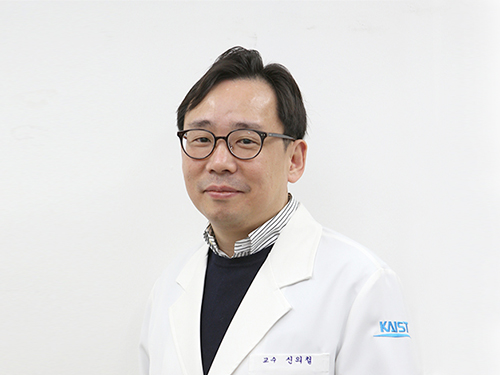
(Professor Eui-Cheol Shin from the Graduate School of Medical Science and Engineering)
Professor Eui-Cheol Shin from the Graduate School of Medical Science and Engineering became a new fellow of the Korean Academy of Science and Technology (KAST) along with 25 other scientists in Korea. He is one of the top virus immunologists in Korea and has published a review article in Nature Reviews Immunology.
Meanwhile KAST selected and announced 26 young scientists under the age 43 who have shown great potential and the creativity to carry out next-generation research. The list of Y-KAST (Young Korean Academy of Science and Technology) includes six KAIST professors: Professor Ji Oon Lee from the Department of Mathematical Sciences, Professor Mi Hee Lim from the Department of Chemistry, Professor Shin-Hyun Kim from the Department of Chemical and Biomolecular Engineering, Professor Jung-Ryul Lee from the Department of Aerospace Engineering, Professor Hyunjoo Jenny Lee from the School of Electrical Engineering, and Professor Yeon Sik Jung from the Department of Materials Science and Engineering.
KAST conferred their fellowships and Y-KAST membership during the New Year Reception.
2019.01.22 View 14490
New Members of KAST and Y-KAST 2019
(Professor Eui-Cheol Shin from the Graduate School of Medical Science and Engineering)
Professor Eui-Cheol Shin from the Graduate School of Medical Science and Engineering became a new fellow of the Korean Academy of Science and Technology (KAST) along with 25 other scientists in Korea. He is one of the top virus immunologists in Korea and has published a review article in Nature Reviews Immunology.
Meanwhile KAST selected and announced 26 young scientists under the age 43 who have shown great potential and the creativity to carry out next-generation research. The list of Y-KAST (Young Korean Academy of Science and Technology) includes six KAIST professors: Professor Ji Oon Lee from the Department of Mathematical Sciences, Professor Mi Hee Lim from the Department of Chemistry, Professor Shin-Hyun Kim from the Department of Chemical and Biomolecular Engineering, Professor Jung-Ryul Lee from the Department of Aerospace Engineering, Professor Hyunjoo Jenny Lee from the School of Electrical Engineering, and Professor Yeon Sik Jung from the Department of Materials Science and Engineering.
KAST conferred their fellowships and Y-KAST membership during the New Year Reception.
2019.01.22 View 14490 -
 NEREC Summer Program Keeps Fellows Thinking, Engaged in Nuclear Nonproliferation
Nuclear technology is more than just technology. It is the fruit of the most advanced science and technology. It also requires high standards of policymaking and global cooperation for benefiting the technology.
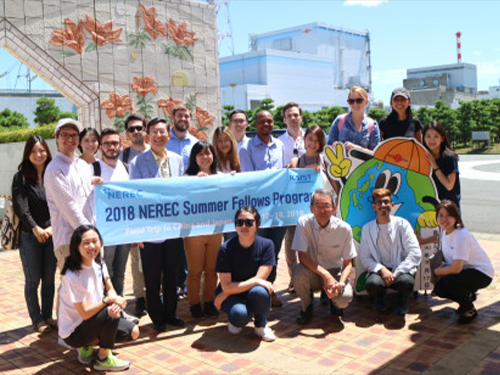
As part of the fifth annual Nuclear Nonproliferation Education and Research Center (NEREC) Summer Fellows Program at KAIST, 24 students from 15 countries participated in six-week intensive education and training program. NEREC is the only university-based center dedicated to nuclear nonproliferation education and research established in 2014.
The program, which provides multidisciplinary lectures and seminars on nuclear technology and policy as well as international relations, was designed to nurture global nuclear technology experts well equipped in three areas: in-depth knowledge of technology, applicability gained from sound policy building, and negotiating for international cooperation. It now has grown into the most popular summer program at KAIST.
During the program from July 6 to August 18, participants were able to engage in enriching and stimulating learning experiences in tandem with policies and technology for the utilization and provision of peaceful and safe nuclear technology.
Participating fellows also had to conduct a group research project on a given topic. This year, they explored nuclear nonproliferation issues in relation to nuclear exports and brainstormed some recommendations for current policy. They presented their outcomes at the 2018 NEREC Conference on Nuclear Nonproliferation. After intensive lecture sessions and group research work, the fellows went off to key policy think-tanks, nuclear research institutes, and research power facilities in Korea, Japan, and China.
“NEREC emphasizes nuclear nonproliferation issues related to civilian nuclear power and the associated nuclear fuel cycle development from the point of technology users. I am very glad that the number of participants are increasing year by year,” said the Director of NEREC Man-Sung Yim, a professor in the Department of Nuclear and Quantum Engineering.
Participants’ majors vary from nuclear engineering to international relations to economics. The fellows divided into two groups of graduate and undergraduate courses. They expressed their deep satisfactory in the multidisciplinary lectures by scholars from KAIST, Seoul National University, and Korea National Defense University.
Many participants reported that they learned a lot, not only about policy and international relations but on the research they are conducting and what the key issues will be in dealing for producing meaningful research work.
Moad Aldbissi from the KTH Royal Institute of Technology is one of the students who shared the same view. He said, “Coming from a technical background in nuclear engineering, I managed to learn a lot about nuclear policy and international relations. The importance of integrating the technical and political fields became even clearer.”
Most students concurred that they recognized how important it was to make international collaboration in this powerful field for each country through this program.
“As an engineering student, I just approached this program like an empty glass in policy areas. While working with colleagues during the program, I came to understand how important it is to make cooperation in these fields for the better result of national development and international relations,” said Thanataon Pornphatdetaudom from the Tokyo Institute of Technology.
To Director Yim, this program is becoming well positioned to educate nuclear policy experts in a number of countries of strategic importance. He believes the continuous supply of these experts will contribute to promoting global nuclear nonproliferation and the peaceful use of nuclear energy while the use of nuclear technology continues.
2018.09.04 View 16708
NEREC Summer Program Keeps Fellows Thinking, Engaged in Nuclear Nonproliferation
Nuclear technology is more than just technology. It is the fruit of the most advanced science and technology. It also requires high standards of policymaking and global cooperation for benefiting the technology.
As part of the fifth annual Nuclear Nonproliferation Education and Research Center (NEREC) Summer Fellows Program at KAIST, 24 students from 15 countries participated in six-week intensive education and training program. NEREC is the only university-based center dedicated to nuclear nonproliferation education and research established in 2014.
The program, which provides multidisciplinary lectures and seminars on nuclear technology and policy as well as international relations, was designed to nurture global nuclear technology experts well equipped in three areas: in-depth knowledge of technology, applicability gained from sound policy building, and negotiating for international cooperation. It now has grown into the most popular summer program at KAIST.
During the program from July 6 to August 18, participants were able to engage in enriching and stimulating learning experiences in tandem with policies and technology for the utilization and provision of peaceful and safe nuclear technology.
Participating fellows also had to conduct a group research project on a given topic. This year, they explored nuclear nonproliferation issues in relation to nuclear exports and brainstormed some recommendations for current policy. They presented their outcomes at the 2018 NEREC Conference on Nuclear Nonproliferation. After intensive lecture sessions and group research work, the fellows went off to key policy think-tanks, nuclear research institutes, and research power facilities in Korea, Japan, and China.
“NEREC emphasizes nuclear nonproliferation issues related to civilian nuclear power and the associated nuclear fuel cycle development from the point of technology users. I am very glad that the number of participants are increasing year by year,” said the Director of NEREC Man-Sung Yim, a professor in the Department of Nuclear and Quantum Engineering.
Participants’ majors vary from nuclear engineering to international relations to economics. The fellows divided into two groups of graduate and undergraduate courses. They expressed their deep satisfactory in the multidisciplinary lectures by scholars from KAIST, Seoul National University, and Korea National Defense University.
Many participants reported that they learned a lot, not only about policy and international relations but on the research they are conducting and what the key issues will be in dealing for producing meaningful research work.
Moad Aldbissi from the KTH Royal Institute of Technology is one of the students who shared the same view. He said, “Coming from a technical background in nuclear engineering, I managed to learn a lot about nuclear policy and international relations. The importance of integrating the technical and political fields became even clearer.”
Most students concurred that they recognized how important it was to make international collaboration in this powerful field for each country through this program.
“As an engineering student, I just approached this program like an empty glass in policy areas. While working with colleagues during the program, I came to understand how important it is to make cooperation in these fields for the better result of national development and international relations,” said Thanataon Pornphatdetaudom from the Tokyo Institute of Technology.
To Director Yim, this program is becoming well positioned to educate nuclear policy experts in a number of countries of strategic importance. He believes the continuous supply of these experts will contribute to promoting global nuclear nonproliferation and the peaceful use of nuclear energy while the use of nuclear technology continues.
2018.09.04 View 16708