%63%61%74%61%6c%79%73%74
-
 KAIST Develops “24/7 Unmanned Synthesis Platform” Using Robots and Light to Produce Drug Candidates
Even when AI designs molecules with potential as medicines, drug development can be delayed if the process of actually producing them is slow. KAIST researchers have developed an “unmanned synthesis platform” that uses synthesis robots and light to automatically carry out the entire process from mixing raw materials to synthesis and analysis. The technology is expected to help secure a wider range of drug candidate compounds by reducing the burden of repetitive experiments.
KAIST (President Choongsik Bae) announced on October 18 that a research team led by Professor Yoonsu Park of the Department of Chemistry developed an unmanned synthesis platform combining visible light with a continuous-flow process. Using the platform, the researchers synthesized the “N-methyl pyrrole” scaffold, a fundamental molecular framework used in pharmaceutical development, and demonstrated the potential to scale up production through continuous manufacturing.
In drug development, molecules that have been designed must actually be synthesized so that their efficacy and safety can be tested. However, even slight differences in molecular structure can require entirely new reaction conditions, and even when small-scale synthesis is successful, scaling up production can alter the way light or heat is transferred, requiring the conditions to be adjusted again.
To reduce this burden, the research team integrated a raw-material dispensing robot, automated pumps, a light-irradiation reaction system, and analytical equipment into a single system. Once a researcher prepares the equipment and sets the conditions, the robot mixes the raw materials, and pumps continuously feed the raw-material solution through a narrow tube at a constant rate. Visible light is then irradiated onto the tube to induce the chemical reaction.
This method, in which raw materials are continuously fed through the system while undergoing a reaction, is called a “continuous-flow process.” It is similar to continuously supplying ingredients into a small pot rather than putting everything into a large pot at once. Using a narrow tube makes it easier to distribute light evenly throughout the solution, while production can be increased simply by operating the same process for a longer period.
After the reaction is completed, the solution is automatically transferred to analytical equipment. The equipment determines whether the desired compound has been successfully produced and how much has been made. From mixing the raw materials to checking the final results, the entire process proceeds automatically without requiring researchers to manually transfer and measure the solution each time.
To evaluate the performance of the automated system, the research team benchmarked a single-atom editing reaction. This is a new technology that selectively replaces a specific atom while keeping the overall molecular framework of a starting material called furan* intact. The compounds produced in this way can change how a drug binds to proteins in the body, and the technology is attracting attention in drug development for this reason.
* Furan: A five-membered ring compound composed of oxygen and carbon. It is a basic starting material that serves as a molecular scaffold for the synthesis of pharmaceuticals and other chemical substances.
The research team applied the synthetic method to more than 20 furan-based compounds. Even in structurally complex natural products, the desired portion could be modified while leaving the rest of the structure intact. In the continuous-flow process, the team also succeeded in continuously producing the N-methyl pyrrole scaffold.
Drug development involves producing compounds with slightly different structures and comparing their efficacy and safety. For example, part of an existing compound may be modified and then tested to determine whether it binds more effectively to a therapeutic target protein or has lower toxicity than the original compound. The new technology is expected to make it more efficient to obtain the compounds needed for such comparisons, helping researchers identify promising drug candidates.
Professor Yoonsu Park said, “How quickly and reliably designed molecules can be synthesized will determine the speed of future drug development,” adding, “We expect the platform developed in this study to provide a foundation for moving toward an era of automated organic synthesis by enabling reaction conditions to be quantified and reproduced.”
Hyeonbhin Byeon and Hojin Hong of the KAIST Department of Chemistry participated in the study as co-first authors, while Professor Yoonsu Park and InnoCORE Fellow Ha Eun Kim of the InnoCORE AI-CRED Innovative Drug Research Group participated as corresponding authors. The research findings were published online on August 7 in JACS Au, an international journal published by the American Chemical Society.
Paper title: Direct Access to the Simplest N-Substituted Pyrroles from Furans Enabled by Tailored Photocatalysts,
DOI: 10.1021/jacsau.6c01035
This research was supported by the Korea Basic Science Institute’s Young Researcher Infrastructure Support Program (Project No. RS-2025-00642970) and the InnoCORE AI-CRED Innovative Drug Research Group (Project No. N10260004).
2026.10.19 View 1877
-
 KAIST Develops a Strategy to Balance Radical Generation and Catalyst Regeneration, Enabling Challenging Chemical Reactions
Radicals, atoms or molecules that readily react with other substances to form new bonds, are useful tools for building complex substances such as pharmaceuticals. But even when a radical is generated efficiently, the reaction cannot continue unless the catalyst returns to its original state. A KAIST research team has developed a new strategy that balances radical generation and catalyst regeneration, broadening the possibility of using even substrates that are difficult to activate to synthesize the complex molecules needed for pharmaceuticals and other applications.
KAIST (President Choongsik Bae) announced on September 20 that a research team led by Professor Sarah Yunmi Lee from the Department of Chemistry has developed a method that uses a ligand, a molecule that attaches to a metal catalyst and controls its properties, to effectively regulate the process by which a copper catalyst generates a radical and then returns to its original state.
The team used a cyclopropenimine (CPI)-based ligand to tune the copper catalyst’s redox behavior, helping it generate radicals and return to its active state.
In this study, the team used tertiary alkyl halides, compounds where bromine or chlorine is attached to a tertiary carbon center, as starting materials. When the copper catalyst breaks this bond, a highly reactive radical is generated, and this radical then forms a new carbon–carbon bond with another part of the same molecule, creating a ring-shaped structure. The process is similar to tying the two loose ends of a string together to form a loop. This is called a radical cyclization reaction.
When the team compared several types of ligands, they found that that generating more radicals did not necessarily lead to more of the desired product. Some ligands were very effective at generating radicals but produced almost none of the final product.
The best-performing CPI-based ligand, however, allowed radical generation and catalyst regeneration to proceed in balance. If the catalyst is compared to a worker performing a task repeatedly, the CPI ligand acts as a helper that lets the worker move on to the next task without stopping after finishing one.
As a result, the team synthesized in high yields 3,3-disubstituted oxindoles, compounds with a ring framework relevant to medicinal chemistry used in pharmaceuticals and bioactive substances.
Notably, substrates bearing bromine reacted efficiently even at room temperature. The team also succeeded in reacting substrates with strong carbon-chlorine bonds that do not break easily. This demonstrated that even tertiary alkyl chlorides, which had previously been difficult to handle, can now be used to synthesize a range of oxindole compounds that were difficult to make before.
The key finding of this study is that generating radicals well is not enough on its own. Rather than simply raising the reactivity of a single step, the team showed that balancing the entire catalytic cycle, including both radical generation and catalyst regeneration, makes it possible to design more efficient catalysts and extend the approach to new reactions.
This principle could expand the range of challenging substrates available for chemical synthesis. It may also help researchers develop more efficient methods for constructing complex molecules relevant to pharmaceuticals and other bioactive compounds under milder conditions.
Professor Sarah Yunmi Lee said, " This study shows that efficient radical generation alone is not sufficient and that the different processes within a catalytic cycle must proceed in balance." She added, "We expect this approach can be applied to the development of new radical-based catalytic reactions that make use of challenging substrates that have previously been difficult to activate."
The study, with Sarah Jang, a student in the integrated master’s–PhD program in the Department of Chemistry at KAIST, and Seongryeol Jeung, who earned a master’s degree at Yonsei University, as co-first authors, and with Sumin Kim, an integrated master's and PhD student in the Department of Chemistry at KAIST, also participating, was published online on August 3 in the Journal of the American Chemical Society (JACS), an international journal published by the American Chemical Society (ACS).
Paper title: Cyclopropenimine-Enabled Redox Control in Copper-Catalyzed Radical Cyclization to 3,3-Disubstituted Oxindoles
DOI: 10.1021/jacs.6c09015
Author information: Sarah Jang (KAIST, co-first author), Seongryeol Jeung (Yonsei University, co-first author), Sumin Kim (KAIST, third author), Sarah Yunmi Lee (KAIST, corresponding author)
This research was supported by the Samsung Science and Technology Foundation under Project SSTF-BA2202-06.
2026.09.21 View 3384
-
 KAIST Develops Self-Regenerating Catalyst That Restores Its Own Performance, Opening a Breakthrough for CO₂ Conversion Technology
<(From Left) Professor Dong Young Chung, Ph.D Candidate Hongmin An, Hanjoo Kim>
Technologies that convert carbon dioxide (CO₂) emitted from factories and power plants into useful chemical feedstocks are considered key to achieving carbon neutrality. However, rapid degradation of catalyst performance has long hindered commercialization. KAIST researchers have now developed a “self-regenerating” catalyst that restores its activity during operation, offering a potential solution to this challenge.
KAIST (President Kwang Hyung Lee) announced on the 11th of March that a research team led by Professor Dong Young Chung from the Department of Chemical and Biomolecular Engineering has identified the fundamental cause of catalyst degradation in electrochemical reactions that convert CO₂ into useful materials and has developed a new design strategy that allows catalysts to maintain their active state during the reaction.
<Schematic Illustration of Copper Catalyst Reconstruction>
The research team focused particularly on copper (Cu) catalysts, which are widely used in CO₂ conversion reactions. Copper catalysts are known not to simply degrade during reactions but instead undergo a process called surface reconstruction, in which their surface structure continuously changes. The study revealed that the performance and lifetime of the catalyst vary significantly depending on how this reconstruction occurs.
The researchers discovered that copper catalyst reconstruction occurs mainly through two different mechanisms. The first involves formation and reduction of oxide layers on the catalyst surface. While this temporarily increases catalytic activity, it ultimately leads to long-term degradation of catalyst performance.
The second mechanism involves partial dissolution of the catalyst metal into the electrolyte followed by redeposition onto the catalyst surface. During this process, new reactive sites—known as active sites—are continuously created on the catalyst surface.
Based on this mechanism, the team proposed a method that allows the catalyst to maintain its active state during the reaction. By introducing a trace amount of copper ions into the electrolyte, dissolution and redeposition of copper occur in a balanced cycle on the catalyst surface. This continuous cycle generates new active sites, enabling the catalyst to maintain stable performance over extended periods.
Importantly, this technology can be implemented without complex additional processes or high-voltage conditions, significantly reducing energy consumption while enabling stable production of high-value C₂ compounds such as ethylene and ethanol. C₂ compounds are molecules containing two carbon atoms and are industrially important chemicals used as feedstocks for plastics, fuels, and other materials.
This research is significant because it proposes a new design concept in which catalysts are not merely optimized at the initial stage but are engineered to maintain their optimal state throughout the reaction process. The concept is expected to be applicable not only to CO₂ conversion technologies but also to a wide range of electrochemical energy conversion systems.
Professor Dong Young Chung stated, “This research approached catalyst degradation not as an inevitable phenomenon but as a controllable process,” adding, “We proposed a new strategy that allows catalysts to continuously maintain optimal activity during the reaction.”
The study was led by Hanjoo Kim, a doctoral student at KAIST, and Hongmin An, a combined master’s-doctoral student, as co-first authors. The research was published online on February 5 in the Journal of the American Chemical Society (JACS), one of the world’s most prestigious journals in chemistry.
※ Paper title: “Dynamic Interface Engineering via Mechanistic Understanding of Copper Reconstruction in Electrochemical CO₂ Reduction Reaction” DOI: 10.1021/jacs.5c16244
This research was supported by the Global Young Connect Program for Materials and the National Strategic Materials Technology Development Program funded through the National Research Foundation of Korea.
2026.03.11 View 5073
-
 KAIST Transforms Hydrogen Energy by Flattening Granular Catalysts into Paper-Thin Sheets
<(From Left) Ph.D candidate HyunWoo J Yang, Ph.D candidate SangJae Lee, Professor EunAe Cho, Ph.D candidate DongWon Shin>
Catalysts are the “invisible engines” of hydrogen energy, governing both hydrogen production and electricity generation. Conventional catalysts are typically fabricated in granular particle form, which is easy to synthesize but suffers from inefficient use of precious metals and limited durability. KAIST researchers have introduced a paper-thin sheet architecture in place of granules, demonstrating that a structural innovation—rather than new materials—can simultaneously reduce precious-metal usage while enhancing both hydrogen production and fuel-cell performance.
KAIST (President Kwang Hyung Lee) announced on the 21st of January that a research team led by Professor EunAe Cho of the Department of Materials Science and Engineering has developed a new catalyst architecture that dramatically reduces the amount of expensive precious metals required while simultaneously improving hydrogen production and fuel-cell performance.
The core of this research lies in the application of ultrathin nanosheet structures, with thicknesses tens of thousands of times thinner than a human hair, enabling the team to overcome both efficiency and durability limitations of conventional catalysts.
Water electrolyzers and fuel cells are key technologies for hydrogen energy production and utilization. However, their commercialization has been severely constrained by the scarcity and high cost of iridium (Ir) and platinum (Pt), which are commonly used as catalysts. In conventional particle-based catalysts, only a limited surface area participates in reactions, and long-term operation inevitably leads to performance degradation.
To address this, the research team transformed agglomerated catalyst particles into paper-like, ultrathin and laterally extended sheets. For water electrolysis, they developed ultrathin iridium nanosheets with lateral size of 1–3 micrometers and thicknesses below 2 nanometers. This structure dramatically increased the active surface area participating in reactions, enabling significantly higher hydrogen production with the same amount of iridium.
< Ultrafine Iridium Nanosheet (AI-generated image) >
In addition, the team discovered that these ultrathin nanosheets naturally formed interconnected conductive pathways on titanium oxide (TiO2), a material previously considered unsuitable as a catalyst support due to its poor electrical conductivity. As a result, titanium oxide could be stably used as a catalyst support, further enhancing durability.
The resulting catalyst achieved a 38% higher hydrogen production rate than commercial catalysts and operated stably for over 1,000 hours under high-load, industry-relevant conditions (1 A/cm2*). Notably, even with approximately 65% less iridium, the catalyst delivered performance comparable to commercial benchmarks, demonstrating a major reduction in precious-metal usage.
*1 A/cm2: a high-current condition corresponding to intensive operation of practical hydrogen-production systems
The team further applied the ultrathin nanosheet design strategy to fuel-cell catalysts, producing platinum–copper nanosheets with thicknesses again tens of thousands of times thinner than a human hair.
In fuel-cell evaluations, this catalyst exhibited a 13-fold improvement in mass activity per unit platinum compared with commercial catalysts, and delivered approximately 2.3 times higher performance in full fuel-cell tests. Even after 50,000 accelerated durability cycles, the catalyst retained about 65% of its initial performance, significantly outperforming conventional catalysts. Importantly, the same performance was achieved while reducing platinum usage by approximately 60%.
Professor EunAe Cho emphasized, “This study presents a new catalyst architecture that simultaneously enhances hydrogen production and fuel-cell performance while using far less expensive precious metals,” adding, “It represents a critical turning point for lowering the cost of hydrogen energy and accelerating its commercialization.”
<Schematic illustration of ultrathin nanosheet synthesis and transmission electron microscopy (TEM) images of the fabricated catalyst>
<Fabrication process of an ultrathin nanosheet catalyst and transmission electron microscopy (TEM) images of the fabricated catalyst>
The results of this work were published in two separate papers, both based on the shared core technology of ultrathin nanosheet architectures—one focused on hydrogen-production catalysts and the other on fuel-cell catalysts.
The iridium nanosheet study, with doctoral candidate Dongwon Shin as first author, was published online on December 10, 2025, in ACS Nano (IF 16.0).
※ Paper title: “Ultrathin Iridium Nanosheets on Titanium Oxide for High-Efficiency and Durable Proton Exchange Membrane Water Electrolysis,” DOI: 10.1021/acsnano.5c15659
The platinum–copper nanosheet study, with SangJae Lee and doctoral candidate HyunWoo Yang as co–first authors, was published online on December 11, 2025, in Nano Letters (IF 9.6).
※ Paper title: “Ultrathin PtCu Nanosheets: A New Frontier in Highly Efficient and Durable Catalysts for the Oxygen Reduction Reaction,” DOI: 10.1021/acs.nanolett.5c04848
This research was supported by the Energy Human Resource Development Program of the Korea Institute of Energy Technology Evaluation and Planning (KETEP) under the Ministry of Trade, Industry and Energy, and by the Nano- and Materials-Technology Development Program of the National Research Foundation of Korea under the Ministry of Science and ICT.
2026.01.23 View 4396
-
 KAIST Designs a New Atomic Catalyst for Air Pollution Reduction
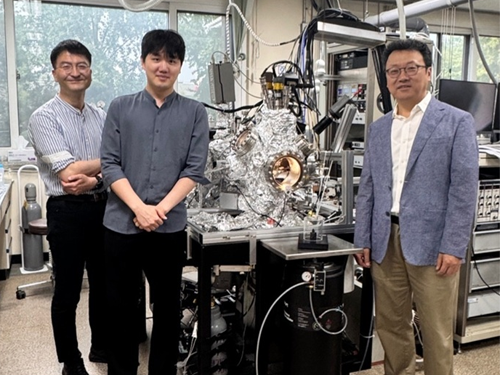
<(From Left)Professor Jong Hun Kim from Inha University, Dr. Gyuho Han and Professor Jeong Young Park from KAIST>
Platinum diselenide (PtSe2) is a two-dimensional multilayer material in which each layer is composed of platinum (Pt) and selenium (Se). It is known that its excellent crystallinity and precise control of interlayer interactions allow modulation of various physical and chemical properties. Due to these characteristics, it has been actively researched in multiple fields, including semiconductors, photodetectors, and electrochemical devices. Now, a research team has proposed a new design concept in which atomically dispersed platinum on the surface of platinum diselenide can function as a catalyst for gas reactions. Through this, they have proven its potential as a next-generation gas-phase catalyst technology for high-efficiency carbon dioxide conversion and carbon monoxide reduction.
KAIST (President Kwang Hyung Lee) announced on July 22 that a joint research team led by Endowed Chair Professor Jeong Young Park from the Department of Chemistry, along with Professor Hyun You Kim's team from Chungnam National University and Professor Yeonwoong (Eric) Jung's team from the University of Central Florida (UCF), has achieved excellent carbon monoxide oxidation performance by utilizing platinum atoms exposed on the surface of platinum diselenide, a type of two-dimensional transition metal dichalcogenide (TMD).
To maximize catalytic performance, the research team designed the catalyst by dispersing platinum atoms uniformly across the surface, departing from the conventional use of bulk platinum. This strategy allows more efficient catalytic reactions using a smaller amount of platinum. It also enhances electronic interactions between platinum and selenium by tuning the surface electronic structure. As a result, the platinum diselenide film with a thickness of a few nanometers showed superior carbon monoxide oxidation performance across the entire temperature range compared to a conventional platinum thin film under identical conditions.
In particular, carbon monoxide and oxygen were evenly adsorbed on the surface in similar proportions, increasing the likelihood that they would encounter each other and react, which significantly enhanced the catalytic activity. This improvement is primarily attributed to the increased exposure of surface platinum atoms resulting from selenium vacancies (Se-vacancies), which provide adsorption sites for gas molecules.
The research team confirmed in real-time that these platinum atoms served as active adsorption sites during the actual reaction process, using ambient-pressure X-ray photoelectron spectroscopy (AP-XPS) conducted at the Pohang Accelerator Laboratory. This high-precision analysis was enabled by advanced instrumentation capable of observing surfaces at the nanometer scale under ambient pressure conditions. At the same time, computer simulations based on density functional theory (DFT) demonstrated that platinum diselenide exhibits distinct electronic behavior compared to conventional platinum.
*Density Functional Theory (DFT): A quantum mechanical method for calculating the total energy of a system based on electron density.
Professor Jeong Young Park stated, “This research presents a new design strategy that utilizes platinum diselenide, a two-dimensional layered material distinct from conventional platinum catalysts, to enable catalytic functions optimized for gas-phase reactions.” He added, “The electronic interaction between platinum and selenium created favorable conditions for the balanced adsorption of carbon monoxide and oxygen. By designing the catalyst to exhibit higher reactivity across the entire temperature range than conventional platinum, we improved its practical applicability. This enabled a high-efficiency catalytic reaction mechanism through atomic-level design, a two-dimensional material platform, and precise adsorption control.”
This research was co-authored by Dr. Gyuho Han from the Department of Chemistry at KAIST, Dr. Hyuk Choi from the Department of Materials Science and Engineering at Chungnam National University, and Professor Jong Hun Kim from Inha University. The study was published on July 3 in the world-renowned journal Nature Communications.
Paper Title: Enhanced catalytic activity on atomically dispersed PtSe2 two-dimensional layers
DOI: 10.1038/s41467-025-61320-0
This research was supported by the Mid-Career Researcher Program of the Ministry of Science and ICT, the Core Research Institute Program of the Ministry of Education, the National Strategic Technology Materials Development Project, the U.S. National Science Foundation (NSF) CAREER Program, research funding from Inha University, and the Postdoctoral Researcher Program (P3) at UCF. Accelerator-based analysis was conducted in cooperation with the Pohang Accelerator Laboratory and the Korea Basic Science Institute (KBSI).
2025.07.22 View 7806
-
 New and Highly Efficient Recycling Technology to Turn Used Tires into Raw Materials for Rubber and Nylon
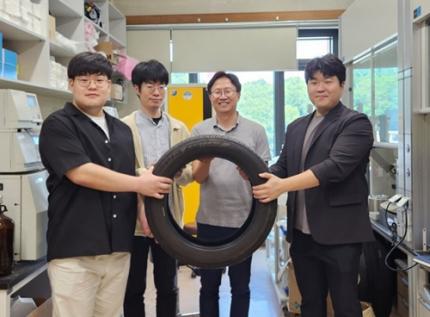
< (From left) Kyungmin Choi (MS-Ph.D. integrated course, Department of Chemistry), Dr. Beomsoon Park, Professor Soon Hyeok Hong, Dr. Kyoungil Cho >
Approximately 1.5 billions of tires are discarded globally every year, and this is identified as one of the major causes of serious environmental pollution. The research team at the Department of Chemistry at KAIST has achieved a breakthrough by selectively converting waste tires into high-purity cyclic alkenes, valuable chemical building blocks used in the production of rubber and nylon fibers. This advance marks a new milestone in chemical recycling technology for waste tires.
The team, led by Professor Soon Hyeok Hong, has developed a dual-catalyst-based reaction system that overcomes the long-standing challenges associated with recycling vulcanized rubber materials.
Tires are composed of complex blends of synthetic and natural rubber, and their physical strength and durability are reinforced with additives such as silica, carbon black, and antioxidants. In particular, cross-linking between rubber chains is formed through the vulcanization process, giving them a structure resistant to heat and pressure, which is one of the main reasons why chemical recycling of waste tires is difficult.
Until now, waste tire recycling has mainly relied on pyrolysis or mechanical recycling methods. The pyrolysis method is a technology that decomposes polymer chains at high temperatures of 350-800°C to convert them into fuel oil, but it clearly has limitations such as high energy consumption, low selectivity, and the production of low-quality hydrocarbon mixtures.
To solve these problems, the research team developed a method to convert waste rubber into useful chemicals using dual catalysis. The first catalyst helps to break down rubber molecules by changing their bonding structure, and the second catalyst creates cyclic compounds through a ring-closing reaction.
This process shows high selectivity of up to 92% and a yield of 82%. The produced cyclopentene can be recycled into rubber, and cyclohexene can be used as a raw material for nylon fibers, making them industrially very valuable.
The research team successfully applied the developed system to discarded waste tires, achieving selective conversion into high-purity cyclic alkenes. Unlike the existing pyrolysis method, this is evaluated as a new turning point in the field of waste tire recycling as it can produce high-value chemicals through low-temperature precision catalytic reactions.
In addition, this catalytic platform is compatible with a wide range of synthetic and waste rubbers, positioning it as a promising foundation for scalable, circular solutions in the polymer and materials industries.
< Figure 1. Development of a Catalytic Method for Chemical Recycling of Waste Rubber >
Professor Hong stated, "This research offers an innovative solution for the chemical recycling of waste tires. We aim to develop next-generation high-efficiency catalysts and lay the groundwork for commercialization to enhance economic feasibility. Ultimately, our goal is to contribute to solving the broader waste plastic problem through fundamental chemistry."
This research, in which Beomsoon Park, Kyoungil Cho, and Kyungmin Choi participated, was supported by the National Research Foundation of Korea and was published online in the internationally renowned academic journal ‘Chem’ on June 18th.
※Paper Title: Catalytic and Selective Chemical Recycling of Post-Consumer Rubbers into Cycloalkenes
※DOI: 10.1016/j.chempr.2025.102625
2025.06.26 View 13460
-
 KAIST Successfully Develops High-Performance Water Electrolysis Without Platinum, Bringing Hydrogen Economy Closer
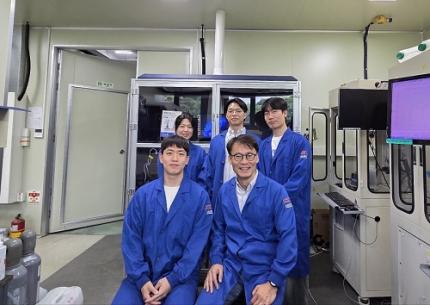
< Photo 1. (Front row, from left) Jeesoo Park (Ph.D. Candidate), Professor Hee-Tak Kim (Back row, from left) Kyunghwa Seok (Ph.D. Candidate), Dr. Gisu Doo, Euntaek Oh (Ph.D. Candidate) >
Hydrogen is gaining attention as a clean energy source that emits no carbon. Among various methods, water electrolysis, which splits water into hydrogen and oxygen using electricity, is recognized as an eco-friendly hydrogen production method. Specifically, proton exchange membrane water electrolysis (PEMWE) is considered a next-generation hydrogen production technology due to its ability to produce high-purity hydrogen at high pressure. However, existing PEMWE technology has faced limitations in commercialization due to its heavy reliance on expensive precious metal catalysts and coating materials. Korean researchers have now proposed a new solution to address these technical and economic bottlenecks.
KAIST (President Kwang Hyung Lee) announced on June 11th that a research team led by Professor Hee-Tak Kim of the Department of Chemical and Biomolecular Engineering, in a joint study with Dr. Gisu Doo of the Korea Institute of Energy Research (KIER, President Chang-keun Lee), has developed a next-generation water electrolysis technology that achieves high performance without the need for expensive platinum (Pt) coating.
The research team focused on the primary reason why 'iridium oxide (IrOx),' a highly active catalyst for water electrolysis electrodes, fails to perform optimally. They found that this is due to inefficient electron transfer and, for the first time in the world, demonstrated that performance can be maximized simply by controlling the catalyst particle size.
In this study, it was revealed that the reason iridium oxide catalysts do not exhibit excellent performance without platinum coating is due to 'electron transport resistance' that occurs at the interface between the catalyst, the ion conductor (hereinafter referred to as ionomer), and the Ti (titanium) substrate—core components inherently used together in water electrolysis electrodes.
Specifically, they identified that the 'pinch-off' phenomenon, where the electron pathway is blocked between the catalyst, ionomer, and titanium substrate, is the critical cause of reduced conductivity. The ionomer has properties close to an electron insulator, thereby hindering electron flow when it surrounds catalyst particles. Furthermore, when the ionomer comes into contact with the titanium substrate, an electron barrier forms on the surface oxide layer of the titanium substrate, significantly increasing resistance.
< Figure 1. Infographic related to electron transport resistance at the catalyst layer/diffusion layer interface >
To address this, the research team fabricated and compared catalysts of various particle sizes. Through single-cell evaluation and multiphysics simulations, they demonstrated, for the first time globally, that when iridium oxide catalyst particles with a size of 20 nanometers (nm) or larger are used, the ionomer mixed region decreases, ensuring an electron pathway and restoring conductivity.
Moreover, they successfully optimized the interfacial structure through precise design, simultaneously ensuring both reactivity and electron transport. This achievement demonstrated that the previously unavoidable trade-off between catalyst activity and conductivity can be overcome through meticulous interfacial design.
This breakthrough is expected to be a significant milestone not only for the development of high-performance catalyst materials but also for the future commercialization of proton exchange membrane water electrolysis systems that can achieve high efficiency while drastically reducing the amount of precious metals used.
Professor Hee-Tak Kim stated, "This research presents a new interface design strategy that can resolve the interfacial conductivity problem, which was a bottleneck in high-performance water electrolysis technology." He added, "By securing high performance even without expensive materials like platinum, it will be a stepping stone closer to realizing a hydrogen economy."
This research, with Jeesoo Park, a Ph.D. student from the Department of Chemical and Biomolecular Engineering at KAIST, as the first author, was published on June 7th in 'Energy & Environmental Science' (IF: 32.4, 2025), a leading international journal in the energy and environmental fields, and was recognized for its innovativeness and impact. (Paper title: On the interface electron transport problem of highly active IrOx catalysts, DOI: 10.1039/D4EE05816J).
This research was supported by the New and Renewable Energy Core Technology Development Project of the Ministry of Trade, Industry and Energy.
2025.06.11 View 16353
-
 KAIST Develops Novel Catalyst With 100-Fold Platinum Efficiency
Propylene, a key building block used in producing plastics, textiles, automotive components, and electronics, is essential to the petrochemical industry. A KAIST research team has developed a novel catalyst that dramatically enhances the efficiency of propylene production while significantly reducing costs.
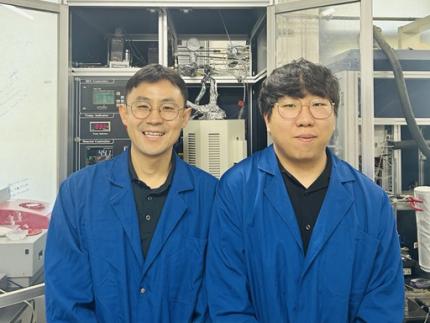
< Photo. Professor Minkee Choi (left), and Ph.D. Candidate Susung Lee (right) of the Department of Chemical and Biomolecular Engineering >
KAIST (represented by President Kwang-Hyung Lee) announced on the 12th of May that a research group led by Professor Minkee Choi from the Department of Chemical and Biomolecular Engineering has successfully developed a new catalyst using inexpensive metals—gallium (Ga) and alumina (Al₂O₃)—with only a trace amount of platinum (100 ppm, or 0.01%). Remarkably, this new catalyst outperforms conventional industrial catalysts that use high concentrations of platinum (10,000 ppm).
Propylene is commonly produced through the propane dehydrogenation (PDH) process, which removes hydrogen from propane. Platinum has long been used as a catalyst in PDH due to its high efficiency in breaking carbon-hydrogen bonds and facilitating hydrogen removal. However, platinum is costly and suffers from performance degradation over repeated use.
To address this, the KAIST team engineered a catalyst that incorporates only a minimal amount of platinum, relying on gallium and alumina as the primary components.
< Figure 1. Schematic diagram showing the catalytic cooperation between gallium (Ga) and platinum (Pt) >
The core mechanism of the catalyst involves a cooperative function between the metals: gallium activates the C–H bond in propane to produce propylene, while platinum bonds the residual hydrogen atoms on the surface to form hydrogen gas (H₂), which is then released. This division of roles allows for high catalytic efficiency despite the drastic reduction in platinum content.
The researchers identified an optimal platinum-to-gallium ratio that delivered peak performance and provided a scientific rationale and quantitative metrics to predict this ideal composition.
Additionally, the team addressed a major limitation of traditional platinum catalysts: sintering—the agglomeration of platinum particles during repeated use, which causes performance loss. By adding a small amount of cerium (Ce), the researchers successfully suppressed this aggregation. As a result, the new catalyst maintained stable performance even after more than 20 reaction-regeneration cycles.
< Figure 2. Performance comparison of KAIST's newly developed catalyst (100 ppm platinum) and existing commercial platinum catalyst (10,000 ppm platinum) >
Professor Choi stated, “This research demonstrates the possibility of reducing platinum usage to 1/100th of current levels without compromising, and even enhancing, performance. It presents significant economic and environmental advantages, including lower catalyst costs, extended replacement intervals, and reduced catalyst waste.”
He added, “We are planning to evaluate this technology for large-scale process demonstration and commercialization. If adopted in industry, it could greatly improve the economic viability and efficiency of propylene production.”
The study was led by Professor Minkee Choi as corresponding author, with Ph.D. candidate Susung Lee as the first author. The findings were published in the Journal of the American Chemical Society (JACS), a leading journal in chemistry and chemical engineering, on February 13.※ Paper title: Ideal Bifunctional Catalysis for Propane Dehydrogenation over Pt-Promoted Gallia-Alumina and Minimized Use of Precious Elements※ DOI: https://pubs.acs.org/doi/10.1021/jacs.4c13787
The research was supported by the National Research Foundation of Korea and Hanwha Solutions Corporation.
2025.05.12 View 8548
-
 KAIST Develops World-Leading Ammonia Catalyst for Hydrogen Economy
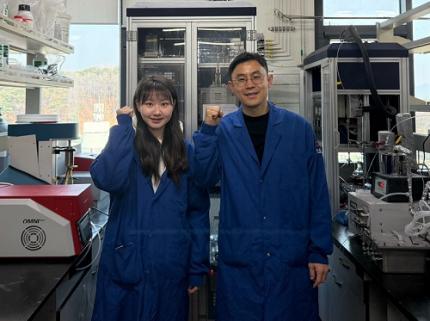
Hydrogen production using renewable energy is a key technology for eco-friendly energy and chemical production. However, storing and transporting hydrogen remains a challenge. To address this, researchers worldwide are investigating methods to store hydrogen in the form of ammonia (NH₃), which is carbon-free and easier to liquify. A research team at KAIST has successfully developed a high-performance catalyst that enables ammonia synthesis at very low temperatures and pressures without energy loss.
KAIST (represented by President Kwang Hyung Lee) announced on the 11th of March that a research team led by Professor Minkee Choi from the Department of Chemical and Biomolecular Engineering has developed an innovative catalytic system that significantly enhances ammonia production while drastically reducing energy consumption and CO₂ emissions.
< (From left) Baek Ye-jun, Ph.D. candidate in the Department of Biochemical Engineering, Professor Choi Min-ki >
Currently, ammonia is produced using the Haber-Bosch process, a technology over a century old that relies on iron (Fe)-based catalysts. This method requires extreme conditions—temperatures above 500°C and pressures exceeding 100 atmospheres—resulting in enormous energy consumption and contributing significantly to global CO₂ emissions. Additionally, ammonia is primarily produced in large-scale industrial plants, leading to high distribution costs.
As an alternative, there is growing interest in an eco-friendly process that synthesizes ammonia using green hydrogen—produced via water electrolysis—under mild conditions (300°C, 10 atmospheres). However, developing catalysts that can achieve high ammonia productivity at such low temperatures and pressures is essential, as current technologies struggle to maintain efficiency under these conditions.
The research team developed a novel catalyst by incorporating ruthenium (Ru) nanoparticles and highly basic barium oxide (BaO) particles onto a conductive carbon surface, allowing it to function like a chemical capacitor*.
*Capacitor: A device that stores electrical energy by separating positive and negative charges.
During ammonia synthesis, hydrogen molecules (H₂) first dissociate into hydrogen atoms (H) on the ruthenium catalyst. These hydrogen atoms are further split into protons (H⁺) and electrons (e⁻). The study revealed that the acidic protons are stored in the strongly basic BaO, while the remaining electrons are separated and stored in ruthenium and carbon.
This unique chemical capacitor effect significantly enhances the ruthenium catalyst's electron density, accelerating nitrogen (N₂) dissociation—the rate-limiting step of ammonia synthesis—thereby dramatically increasing catalytic activity.
Furthermore, the team discovered that optimizing the nanostructure of the carbon material further boosts the electron density of ruthenium, maximizing catalytic performance. As a result, the new catalyst demonstrated over seven times higher ammonia synthesis performance compared to state-of-the-art catalysts under mild conditions (300°C, 10 atm).
< Schematic diagram showing the mechanism of ruthenium catalyst activity enhancement by barium oxide cocatalyst >
Professor Minkee Choi stated, “This research has garnered significant attention for demonstrating that catalytic activity can be greatly enhanced by controlling electron transfer within a thermal catalytic reaction system, not just in electrochemical processes.”
He further explained, “Our findings confirm that high-performance catalysts can enable efficient ammonia synthesis under low-temperature and low-pressure conditions. This could shift ammonia production from centralized, large-scale industrial plants to decentralized, small-scale production, making the hydrogen economy more sustainable and flexible.”
The study was led by Professor Minkee Choi as corresponding author and Yaejun Baik, a Ph.D. candidate, as first author. The research findings were published in Nature Catalysis on February 24.
(Paper title: “Electron and proton storage on separate Ru and BaO domains mediated by conductive low-work-function carbon to accelerate ammonia synthesis,” https://doi.org/10.1038/s41929-025-01302-z)
This research was supported by the Korea Institute of Energy Research and the National Research Foundation of Korea.
2025.03.11 View 12375
-
 KAIST Develops a Fire-risk Free Self-Powered Hydrogen Production System
KAIST researchers have developed a new hydrogen production system that overcomes the current limitations of green hydrogen production. By using a water-splitting system with an aqueous electrolyte, this system is expected to block fire risks and enable stable hydrogen production.
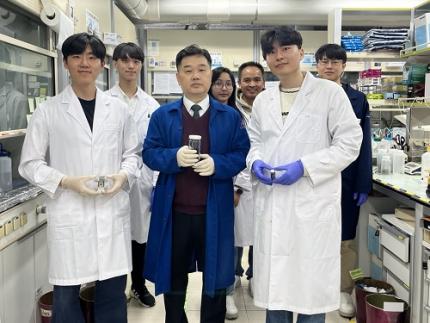
KAIST (represented by President Kwang Hyung Lee) announced on the 22nd of October that a research team led by Professor Jeung Ku Kang from the Department of Materials Science and Engineering developed a self-powered hydrogen production system based on a high-performance zinc-air battery*.
*Zinc-air battery: A primary battery that absorbs oxygen from the air and uses it as an oxidant. Its advantage is long life, but its low electromotive force is a disadvantage.
Hydrogen (H₂) is a key raw material for synthesizing high-value-added substances, and it is gaining attention as a clean fuel with an energy density (142 MJ/kg) more than three times higher than traditional fossil fuels (gasoline, diesel, etc.). However, most current hydrogen production methods impose environmental burden as they emit carbon dioxide (CO₂).
While green hydrogen can be produced by splitting water using renewable energy sources such as solar cells and wind power, these sources are subject to irregular power generation due to weather and temperature fluctuations, leading to low water-splitting efficiency.
To overcome this, air batteries that can emit sufficient voltage (greater than 1.23V) for water splitting have been gaining attention. However, achieving sufficient capacity requires expensive precious metal catalysts and the performance of the catalyst materials becomes significantly degraded during prolonged charge and discharge cycles. Thus, it is essential to develop catalysts that are effective for the water-splitting reactions (oxygen and hydrogen evolution) and materials that can stabilize the repeated charge and discharge reactions (oxygen reduction and evolution) in zinc-air battery electrodes.
In response, Professor Kang's research team proposed a method to synthesize a non-precious metal catalyst material (G-SHELL) that is effective for three different catalytic reactions (oxygen evolution, hydrogen evolution, and oxygen reduction) by growing nano-sized, metal-organic frameworks on graphene oxide.
The team incorporated the developed catalyst material into the air cathode of a zinc-air battery, confirming that it achieved approximately five times higher energy density (797Wh/kg), high power characteristics (275.8mW/cm²), and long-term stability even under repeated charge and discharge conditions compared to conventional batteries.
Additionally, the zinc-air battery, which operates using an aqueous electrolyte, is safe from fire risks. It is expected that this system can be applied as a next-generation energy storage device when linked with water electrolysis systems, offering an environmentally friendly method for hydrogen production.
< Figure 1. Illustrations of a trifunctional graphene-sandwiched heterojunction-embedded layered lattice (G-SHELL) structure. Schematic representation of a) synthesis procedures of G-SHELL from a zeolitic imidazole framework, b) hollow core-layered shell structure with trifunctional sites for oxygen reduction evolution (ORR), oxygen evolution reaction (OER), and hydrogen evolution reaction (HER), and c) heterojunctions, eterojunction-induced internal electric fields, and the corresponding band structure. >
Professor Kang explained, "By developing a catalyst material with high activity and durability for three different electrochemical catalytic reactions at low temperatures using simple methods, the self-powered hydrogen production system we implemented based on zinc-air batteries presents a new breakthrough to overcome the current limitations of green hydrogen production."
<Figure 2. Electrochemical performance of a ZAB-driven water-splitting cell with G-SHELL. Diagram of a self-driven water-splitting cell integrated by combining a ZAB with an alkaline water electrolyzer.>
PhD candidate Dong Won Kim and Jihoon Kim, a master's student in the Department of Materials Science and Engineering at KAIST, were co-first authors of this research, which was published in the international journal Advanced Science on September 17th in the multidisciplinary field of materials science. (Paper Title: “Trifunctional Graphene-Sandwiched Heterojunction-Embedded Layered Lattice Electrocatalyst for High Performance in Zn-Air Battery-Driven Water Splitting”)
This research was supported by the Nano and Material Technology Development Program of the Ministry of Science and ICT and the National Research Foundation of Korea’s Future Technology Research Laboratory.
2024.10.22 View 16737
-
 KAIST Changes the Paradigm of Drug Discovery with World's First Atomic Editing
In pioneering drug development, the new technology that enables the easy and rapid editing of key atoms responsible for drug efficacy has been regarded as a fundamental and "dream" technology, revolutionizing the process of discovering potential drug candidates. KAIST researchers have become the first in the world to successfully develop single-atom editing technology that maximizes drug efficacy.
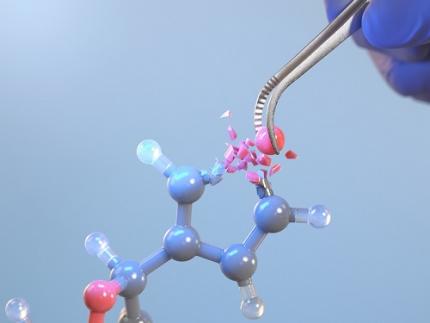
On October 8th, KAIST (represented by President Kwang-Hyung Lee) announced that Professor Yoonsu Park’s research team from the Department of Chemistry successfully developed technology that enables the easy editing and correction of oxygen atoms in furan compounds into nitrogen atoms, directly converting them into pyrrole frameworks, which are widely used in pharmaceuticals.
< Image. Conceptual image illustrating the main idea of the research >
This research was published in the prestigious scientific journal Science on October 3rd under the title "Photocatalytic Furan-to-Pyrrole Conversion."
Many drugs have complex chemical structures, but their efficacy is often determined by a single critical atom. Atoms like oxygen and nitrogen play a central role in enhancing the pharmacological effects of these drugs, particularly against viruses.
This phenomenon, where the introduction of specific atoms into a drug molecule dramatically affects its efficacy, is known as the "Single Atom Effect." In leading-edge drug development, discovering atoms that maximize drug efficacy is key.
However, evaluating the Single Atom Effect has traditionally required multi-step, costly synthesis processes, as it has been difficult to selectively edit single atoms within stable ring structures containing oxygen or nitrogen.
Professor Park’s team overcame this challenge by introducing a photocatalyst that uses light energy. They developed a photocatalyst that acts as a “molecular scissor,” freely cutting and attaching five-membered rings, enabling single-atom editing at room temperature and atmospheric pressure—a world first.
The team discovered a new reaction mechanism in which the excited molecular scissor removes oxygen from furan via single-electron oxidation and then sequentially adds a nitrogen atom.
Donghyeon Kim and Jaehyun You, the study's first authors and candidates in KAIST’s integrated master's and doctoral program in the Department of Chemistry, explained that this technique offers high versatility by utilizing light energy to replace harsh conditions. They further noted that the technology enables selective editing, even when applied to complex natural products or pharmaceuticals. Professor Yoonsu Park, who led the research, remarked, "This breakthrough, which allows for the selective editing of five-membered organic ring structures, will open new doors for building libraries of drug candidates, a key challenge in pharmaceuticals. I hope this foundational technology will be used to revolutionize the drug development process."
The significance of this research was highlighted in the Perspective section of Science, a feature where a peer scientist of prominence outside of the project group provides commentary on an impactful research.
This research was supported by the National Research Foundation of Korea’s Creative Research Program, the Cross-Generation Collaborative Lab Project at KAIST, and the POSCO Science Fellowship of the POSCO TJ Park Foundation.
2024.10.11 View 15095
-
 A KAIST Research Team Develops Diesel Reforming Catalyst Enabling Hydrogen Production for Future Mobile Fuel Cells
This catalyst capability allowing stable hydrogen production from commercial diesel is expected to be applied in mobile fuel cell systems in the future hydrogen economy
On August 16, a joint research team led by Professors Joongmyeon Bae and Kang Taek Lee of KAIST’s Department of Mechanical Engineering and Dr. Chan-Woo Lee of Korea Institute of Energy Research (KIER) announced the successful development of a highly active and durable reforming catalyst allowing hydrogen production from commercial diesel.
Fuel reforming is a hydrogen production technique that extracts hydrogen from hydrocarbons through catalytic reactions. Diesel, being a liquid fuel, has a high storage density for hydrogen and is easy to transport and store. There have therefore been continuous research efforts to apply hydrogel supply systems using diesel reformation in mobile fuel cells, such as for auxiliary power in heavy trucks or air-independent propulsion (AIP) systems in submarines.
However, diesel is a mixture of high hydrocarbons including long-chained paraffin, double-bonded olefin, and aromatic hydrocarbons with benzene groups, and it requires a highly active catalyst to effectively break them down. In addition, the catalyst must be extremely durable against caulking and sintering, as they are often the main causes of catalyst degradation. Such challenges have limited the use of diesel reformation technologies to date.
The joint research team successfully developed a highly active and durable diesel reforming catalyst through elution (a heat treatment method used to uniformly grow active metals retained in an oxide support as ions in the form of metal nanoparticles), forming alloy nanoparticles. The design was based on the fact that eluted nanoparticles strongly interact with the support, allowing a high degree of dispersion at high temperatures, and that producing an alloy from dissimilar metals can increase the performance of catalysts through a synergistic effect.
The research team introduced a solution combustion synthesis method to produce a multi-component catalyst with a trace amount of platinum (Pt) and ruthenium (Ru) penetrated into a ceria (CeO2) lattice, which is a structure commonly used as a support for catalysts in redox reactions. When exposed to a diesel reforming reaction environment, the catalyst induces Pt-Ru alloy nanoparticle formation upon Pt and Ru elution onto the support surface.
In addition to the catalyst analysis, the research team also succeeded in characterizing the behaviour of active metal elution and alloy formation from an energetic perspective using a density functional theory-based calculation. In a performance comparison test between the Pt-Ru alloy catalyst against existing single-metal catalysts, the reforming activity was shown to have improved, as it showed a 100% fuel conversion rate even at a low temperature (600oC, compared to the original 800oC). In a long-term durability test (800oC, 200 hours), the catalyst showed commercial stability by successfully producing hydrogen from commercial diesel without performance degradation.
The study was conducted by Ph.D. candidate Jaemyung Lee of KAIST’s Department of Mechanical Engineering as the first author. Ph.D. candidate Changho Yeon of KIER, Dr. Jiwoo Oh of KAIST’s Department of Mechanical Engineering, Dr. Gwangwoo Han of KIER, Ph.D. candidate Jeong Do Yoo of KAIST’s Department of Mechanical Engineering, and Dr. Hyung Joong Yun of the Korea Basic Science Institute contributed as co-authors. Dr. Chan-Woo Lee of KIER and Professors Kang Taek Lee and Joongmyeon Bae of KAIST’s Department of Mechanical Engineering contributed as corresponding authors. The research was published in the online version of Applied Catalysis B: Environmental (IF 24.319, JCR 0.93%) on June 17, under the title “Highly Active and Stable Catalyst with Exsolved PtRu Alloy Nanoparticles for Hydrogen Production via Commercial Diesel Reforming”.
Professor Joongmyeon Bae said, “The fact that hydrogen can be stably produced from commercial diesel makes this a very meaningful achievement, and we look forward to this technology contributing to the active introduction of mobile fuel cell systems in the early hydrogen economy.” He added, “Our approach to catalyst design may be applied not only to reforming reactions, but also in various other fields.”
This research was supported by the National Research Foundation of Korea through funding from the Ministry of Science, ICT and Future Planning.
Figure. Schematic diagram of high-performance diesel reforming catalyst with eluted platinum-ruthenium alloy nanoparticles and long-term durability verification experiment results for commercial diesel reforming reaction
2022.09.07 View 30818