Opening
-
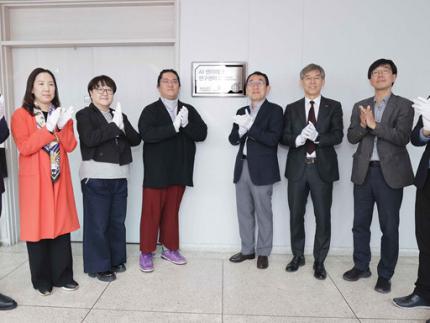 KAIST, Galaxy Corporation Hold Signboard Ceremony for ‘AI Entertech Research Center’
KAIST (President Kwang-Hyung Lee) announced on the 9th that it will hold a signboard ceremony for the establishment of the ‘AI Entertech Research Center’ with the artificial intelligence entertech company, Galaxy Corporation (CEO Yong-ho Choi) at the main campus of KAIST.
< (Galaxy Corporation, from center to the left) CEO Yongho Choi, Director Hyunjung Kim and related persons / (KAIST, from center to the right) Professor SeungSeob Lee of the Department of Mechanical Engineering, Provost and Executive Vice President Gyun Min Lee, Dean Jung Kim of the Department of Mechanical Engineering and Professor Yong Jin Yoon of the same department >
This collaboration is a part of KAIST’s art convergence research strategy and is an extension of its efforts to lead future K-Culture through the development of creative cultural content based on science and technology. Beyond simple technological development, KAIST has been continuously implementing the convergence model of ‘Tech-Art’ that expands the horizon of the content industry through the fusion of emotional technology and cultural imagination.
Previously, KAIST established the ‘Sumi Jo Performing Arts Research Center’ in collaboration with world-renowned soprano Sumi Jo, a visiting professor, and has been leading the convergence research of art and engineering, such as AI-based interactive performance technology and immersive content. The establishment of the ‘AI Entertech Research Center’ this time is being evaluated as a new challenge for the technological expansion of the K-content industry.
In addition, the role of singer G-Dragon (real name Kwon Ji-yong), an artist affiliated with Galaxy Corporation and a visiting professor in the Department of Mechanical Engineering at KAIST, was also a major factor. Since being appointed to KAIST last year, Professor Kwon has been actively promoting the establishment of a research center and soliciting KAIST research projects through his agency to develop the ‘AI Entertech’ field, which fuses entertainment and cutting-edge technology.
< (Galaxy Corporation, from center to the left) CEO Yongho Choi, Director Hyunjung Kim and related persons / (KAIST, from center to the right) Professor SeungSeob Lee of the Department of Mechanical Engineering, Provost and Executive Vice President Gyun Min Lee, Dean Jung Kim of the Department of Mechanical Engineering and Professor Yong Jin Yoon of the same department >
The AI Entertech Research Center is scheduled to officially launch in the third quarter of this year, and this inauguration ceremony was held in line with Professor Kwon Ji-yong’s schedule to visit KAIST. Galaxy Corporation recently had a private meeting with Microsoft (MS) CEO Nadella as the only entertech company, and is actively promoting the globalization of AI entertech. In addition, since last year, it has established a cooperative relationship with KAIST and plans to actively seek the convergence of entertech and technology that transcends time and space through the establishment of a research center.
Professor Kwon Ji-yong will attend the ‘Innovate Korea 2025’ event co-hosted by KAIST, Herald Media Group, and the National Research Council of Science and Technology, held at the KAIST Lyu Keun-Chul Sports Complex in the afternoon of the same day, and will give a special talk on the topic of ‘The Future of AI Entertech.’ In addition to Professor Kwon, Professor SeungSeob Lee of the Department of Mechanical Engineering at KAIST, Professor Sang-gyun Kim of Kyunghee University, and CEO Yong-ho Choi of Galaxy Corporation will also participate in this talk show.
The two organizations signed an MOU last year to jointly research science and technology for the global spread of K-pop, and the establishment of this research center is the first tangible result of this. Once the research center is fully operational, various projects such as the development of an AI-based entertech platform and joint research on global content technology will be promoted.
< A photo of Professor Kwon Ji-yong (right) from at the talk show with KAIST President Kwang-Hyung Lee (left) from the previous year >
Yong-ho Choi, Galaxy Corporation CHO (Chief Happiness Officer), said, “This collaboration is the starting point for providing a completely new entertainment experience to fans around the world by grafting KAIST AI and cutting-edge technologies onto the fandom platform,” and added, “The convergence of AI and entertech is not just technological advancement; it is a driving force for innovation that enriches human life.”
Kwang-Hyung Lee, KAIST President, said, “I am confident that KAIST’s scientific and technological capabilities, combined with Professor Kwon Ji-yong’s global sensibility, will lead the technological evolution of K-culture,” and added, “I hope that KAIST’s spirit of challenge and research DNA will create a new wave in the entertech market.”
Meanwhile, Galaxy Corporation, the agency of Professor G-Dragon Kwon Ji-yong, is an AI entertainment technology company that presents a new paradigm based on IP, media, tech, and entertainment convergence technology. (End)
2025.04.09 View 3994
KAIST, Galaxy Corporation Hold Signboard Ceremony for ‘AI Entertech Research Center’
KAIST (President Kwang-Hyung Lee) announced on the 9th that it will hold a signboard ceremony for the establishment of the ‘AI Entertech Research Center’ with the artificial intelligence entertech company, Galaxy Corporation (CEO Yong-ho Choi) at the main campus of KAIST.
< (Galaxy Corporation, from center to the left) CEO Yongho Choi, Director Hyunjung Kim and related persons / (KAIST, from center to the right) Professor SeungSeob Lee of the Department of Mechanical Engineering, Provost and Executive Vice President Gyun Min Lee, Dean Jung Kim of the Department of Mechanical Engineering and Professor Yong Jin Yoon of the same department >
This collaboration is a part of KAIST’s art convergence research strategy and is an extension of its efforts to lead future K-Culture through the development of creative cultural content based on science and technology. Beyond simple technological development, KAIST has been continuously implementing the convergence model of ‘Tech-Art’ that expands the horizon of the content industry through the fusion of emotional technology and cultural imagination.
Previously, KAIST established the ‘Sumi Jo Performing Arts Research Center’ in collaboration with world-renowned soprano Sumi Jo, a visiting professor, and has been leading the convergence research of art and engineering, such as AI-based interactive performance technology and immersive content. The establishment of the ‘AI Entertech Research Center’ this time is being evaluated as a new challenge for the technological expansion of the K-content industry.
In addition, the role of singer G-Dragon (real name Kwon Ji-yong), an artist affiliated with Galaxy Corporation and a visiting professor in the Department of Mechanical Engineering at KAIST, was also a major factor. Since being appointed to KAIST last year, Professor Kwon has been actively promoting the establishment of a research center and soliciting KAIST research projects through his agency to develop the ‘AI Entertech’ field, which fuses entertainment and cutting-edge technology.
< (Galaxy Corporation, from center to the left) CEO Yongho Choi, Director Hyunjung Kim and related persons / (KAIST, from center to the right) Professor SeungSeob Lee of the Department of Mechanical Engineering, Provost and Executive Vice President Gyun Min Lee, Dean Jung Kim of the Department of Mechanical Engineering and Professor Yong Jin Yoon of the same department >
The AI Entertech Research Center is scheduled to officially launch in the third quarter of this year, and this inauguration ceremony was held in line with Professor Kwon Ji-yong’s schedule to visit KAIST. Galaxy Corporation recently had a private meeting with Microsoft (MS) CEO Nadella as the only entertech company, and is actively promoting the globalization of AI entertech. In addition, since last year, it has established a cooperative relationship with KAIST and plans to actively seek the convergence of entertech and technology that transcends time and space through the establishment of a research center.
Professor Kwon Ji-yong will attend the ‘Innovate Korea 2025’ event co-hosted by KAIST, Herald Media Group, and the National Research Council of Science and Technology, held at the KAIST Lyu Keun-Chul Sports Complex in the afternoon of the same day, and will give a special talk on the topic of ‘The Future of AI Entertech.’ In addition to Professor Kwon, Professor SeungSeob Lee of the Department of Mechanical Engineering at KAIST, Professor Sang-gyun Kim of Kyunghee University, and CEO Yong-ho Choi of Galaxy Corporation will also participate in this talk show.
The two organizations signed an MOU last year to jointly research science and technology for the global spread of K-pop, and the establishment of this research center is the first tangible result of this. Once the research center is fully operational, various projects such as the development of an AI-based entertech platform and joint research on global content technology will be promoted.
< A photo of Professor Kwon Ji-yong (right) from at the talk show with KAIST President Kwang-Hyung Lee (left) from the previous year >
Yong-ho Choi, Galaxy Corporation CHO (Chief Happiness Officer), said, “This collaboration is the starting point for providing a completely new entertainment experience to fans around the world by grafting KAIST AI and cutting-edge technologies onto the fandom platform,” and added, “The convergence of AI and entertech is not just technological advancement; it is a driving force for innovation that enriches human life.”
Kwang-Hyung Lee, KAIST President, said, “I am confident that KAIST’s scientific and technological capabilities, combined with Professor Kwon Ji-yong’s global sensibility, will lead the technological evolution of K-culture,” and added, “I hope that KAIST’s spirit of challenge and research DNA will create a new wave in the entertech market.”
Meanwhile, Galaxy Corporation, the agency of Professor G-Dragon Kwon Ji-yong, is an AI entertainment technology company that presents a new paradigm based on IP, media, tech, and entertainment convergence technology. (End)
2025.04.09 View 3994 -
 KAIST Opens Newly Expanded Center for Contemplative Research in Collaboration with Brain and Cognitive Sciences Department
KAIST (represented by President Kwang Hyung Lee) announced on January 2nd that it would hold an opening ceremony for the expanded KAIST Center for Contemplative Research (Director Wan Doo Kim) at the Creativity Learning Building on its Daejeon campus on January 3 (Friday).
Established in 2018 with the mission of "integrating meditation and science for the happiness and prosperity of humanity," the KAIST Center for Contemplative Research has been expanding its scope of research into the neuroscience of meditation and training empathetic educators who will lead the field of meditation science in collaboration with the Brain and Cognitive Sciences Department, which was established in 2022.
Supported by the Plato Academy Foundation and with funding from SK Discovery for the facility’s expansion, the center now occupies an extended space on the 5th floor of the Creativity Learning Center. The new facilities include: ▲ Advanced Research Equipment ▲ Meditation Science Laboratories ▲ VR/XR-Based Meditation Experience Rooms ▲ A Large Digital Art Meditation Hall ▲ Personal Meditation Halls.
Particularly, the center plans to conduct next-generation meditation research using cutting-edge technologies such as: ▲ Brain-Computer Interface Technology ▲ Meditation Wearable Devices ▲ Metaverse-Based Meditation Environments.
The opening ceremony, scheduled for the morning of January 3 (Friday), was attended by key figures, including Plato Academy Foundation Chairman Chang-Won Choi, MindLab CEO Professor Seong-Taek Cho, Bosung Group Vice President Byung-Chul Lee, and KAIST President Kwang Hyung Lee.
The event began with a national moment of silence to honor the victims of the recent Jeju Air passenger accident. It included a progress report by the center director, a lecture by Professor Jaeseung Jeong, panel discussions, and more.
Following a tour of the expanded facilities, the center hosted a 20-minute hands-on meditation science session using *Looxid Labs EEG devices for the first 50 participants.
*Looxid Labs EEG Device: A real-time brainwave measurement device developed by KAIST startup Looxid Labs that enables users to experience efficient and AI-powered data-driven meditation science practice (Looxid Labs website: https://looxidlabs.com/).
During the ceremony, Director of the Center for Contemplative Research Wan Doo Kim presented on "The Mission, Vision, and Future of the KAIST Center for Contemplative Research." Yujin Lee, a combined master’s and doctoral researcher from the Brain and Cognitive Sciences Department, shared insights on "The Latest Trends in Meditation Science Research."
A panel discussion and Q&A session on "The Convergence of Meditation and Brain and Cognitive Sciences" followed featuring Professors Jaeseung Jeong, HyungDong Park (Brain and Cognitive Sciences), and Jiyoung Park (Digital Humanities and Social Sciences).
Director Wan Doo Kim commented, “With this expanded opening, we aim to offer advanced meditation programs integrating brain and cognitive sciences and cutting-edge technology not only to KAIST members but also to the general public interested in meditation. We will continue to dedicate ourselves to interdisciplinary research between meditation and science.”
2025.01.03 View 4183
KAIST Opens Newly Expanded Center for Contemplative Research in Collaboration with Brain and Cognitive Sciences Department
KAIST (represented by President Kwang Hyung Lee) announced on January 2nd that it would hold an opening ceremony for the expanded KAIST Center for Contemplative Research (Director Wan Doo Kim) at the Creativity Learning Building on its Daejeon campus on January 3 (Friday).
Established in 2018 with the mission of "integrating meditation and science for the happiness and prosperity of humanity," the KAIST Center for Contemplative Research has been expanding its scope of research into the neuroscience of meditation and training empathetic educators who will lead the field of meditation science in collaboration with the Brain and Cognitive Sciences Department, which was established in 2022.
Supported by the Plato Academy Foundation and with funding from SK Discovery for the facility’s expansion, the center now occupies an extended space on the 5th floor of the Creativity Learning Center. The new facilities include: ▲ Advanced Research Equipment ▲ Meditation Science Laboratories ▲ VR/XR-Based Meditation Experience Rooms ▲ A Large Digital Art Meditation Hall ▲ Personal Meditation Halls.
Particularly, the center plans to conduct next-generation meditation research using cutting-edge technologies such as: ▲ Brain-Computer Interface Technology ▲ Meditation Wearable Devices ▲ Metaverse-Based Meditation Environments.
The opening ceremony, scheduled for the morning of January 3 (Friday), was attended by key figures, including Plato Academy Foundation Chairman Chang-Won Choi, MindLab CEO Professor Seong-Taek Cho, Bosung Group Vice President Byung-Chul Lee, and KAIST President Kwang Hyung Lee.
The event began with a national moment of silence to honor the victims of the recent Jeju Air passenger accident. It included a progress report by the center director, a lecture by Professor Jaeseung Jeong, panel discussions, and more.
Following a tour of the expanded facilities, the center hosted a 20-minute hands-on meditation science session using *Looxid Labs EEG devices for the first 50 participants.
*Looxid Labs EEG Device: A real-time brainwave measurement device developed by KAIST startup Looxid Labs that enables users to experience efficient and AI-powered data-driven meditation science practice (Looxid Labs website: https://looxidlabs.com/).
During the ceremony, Director of the Center for Contemplative Research Wan Doo Kim presented on "The Mission, Vision, and Future of the KAIST Center for Contemplative Research." Yujin Lee, a combined master’s and doctoral researcher from the Brain and Cognitive Sciences Department, shared insights on "The Latest Trends in Meditation Science Research."
A panel discussion and Q&A session on "The Convergence of Meditation and Brain and Cognitive Sciences" followed featuring Professors Jaeseung Jeong, HyungDong Park (Brain and Cognitive Sciences), and Jiyoung Park (Digital Humanities and Social Sciences).
Director Wan Doo Kim commented, “With this expanded opening, we aim to offer advanced meditation programs integrating brain and cognitive sciences and cutting-edge technology not only to KAIST members but also to the general public interested in meditation. We will continue to dedicate ourselves to interdisciplinary research between meditation and science.”
2025.01.03 View 4183 -
 Cho Cheon Shik Graduate School of Green Transportation Initiated
KAIST established the Graduate School of Green Transportation in efforts to participate actively in the green transportation market and train experts in the field.
The opening ceremony was conducted in the KI building with President of KAIST Seo Nam Pyo and other dignitaries from Ministry of Land, Transport and Maritime Affairs, Korea Rail Network Authority, Korea Airports Corporation, Korea Railroad Research Institute, Land, Transport and Maritime Experts Training Institute, Seoul Development Institute, LG Innotech, Hyundai Rotem, and other major companies in the field of transportation attending.
The graduate school was founded with funding from donation made by Chairman Cho Cheon Shik. Developer of OLEV Professor Cho Dong Ho is the dean of the school and 16 other professors are a part of the school.
Courses offered include ‘Transportation Technology’ and ‘Transportation management’ and will focus mostly on allowing students to be a part of the graduate school with flexibility.
In terms of research there is the OLEV and mobile harbor and research will be done on electric and electronics, mechanics, materials, aeronautics, maritime, construction, environment, and etc. and will be an interdisciplinary research.
A memorandum of understanding was signed by the companies mentioned above which has now paved the way for experts to be trained and thus upgrade the level of technology in the field of green transportation.
Professor Seo of KAIST commented, ‘Korea is ranked top 10 in the world for greenhouse gas emissions and it has become hard to avoid global pressure. The results of researched performed at KAIST will allow Korea to form a green, sustainable society leading in the field of green transportation and dominate the market.
2011.02.23 View 19328
Cho Cheon Shik Graduate School of Green Transportation Initiated
KAIST established the Graduate School of Green Transportation in efforts to participate actively in the green transportation market and train experts in the field.
The opening ceremony was conducted in the KI building with President of KAIST Seo Nam Pyo and other dignitaries from Ministry of Land, Transport and Maritime Affairs, Korea Rail Network Authority, Korea Airports Corporation, Korea Railroad Research Institute, Land, Transport and Maritime Experts Training Institute, Seoul Development Institute, LG Innotech, Hyundai Rotem, and other major companies in the field of transportation attending.
The graduate school was founded with funding from donation made by Chairman Cho Cheon Shik. Developer of OLEV Professor Cho Dong Ho is the dean of the school and 16 other professors are a part of the school.
Courses offered include ‘Transportation Technology’ and ‘Transportation management’ and will focus mostly on allowing students to be a part of the graduate school with flexibility.
In terms of research there is the OLEV and mobile harbor and research will be done on electric and electronics, mechanics, materials, aeronautics, maritime, construction, environment, and etc. and will be an interdisciplinary research.
A memorandum of understanding was signed by the companies mentioned above which has now paved the way for experts to be trained and thus upgrade the level of technology in the field of green transportation.
Professor Seo of KAIST commented, ‘Korea is ranked top 10 in the world for greenhouse gas emissions and it has become hard to avoid global pressure. The results of researched performed at KAIST will allow Korea to form a green, sustainable society leading in the field of green transportation and dominate the market.
2011.02.23 View 19328 -
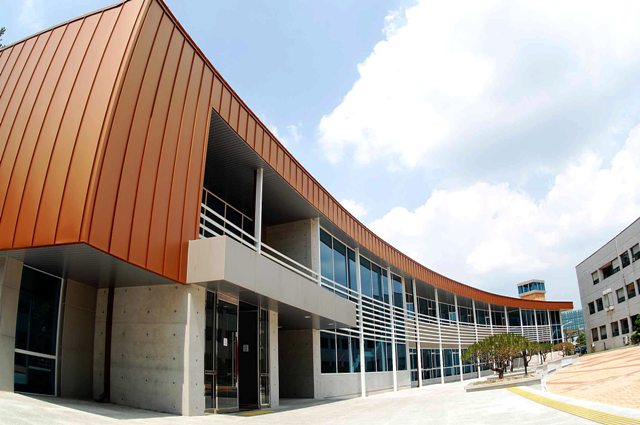 International Center was built to promote greater exchanges and collaborations between the international community and KAIST.
On July 9, 2010, KAIST held an opening ceremony for the construction of International Center. The Center will serve as an internal and external liaison for the university, providing a source of assistance to faculty, administrators, and students on matters related to international activities and initiatives. It will also pursue greater exchanges and collaborations between the international community and KAIST.
The facility accommodates various meetings, exhibitions, library, language services, and other amenities. The International Cooperation Team of KAIST will be moved into this building and provide a variety of services, such as immigration regulations, cultural adjustment, employment, to assist international students, scholars, faculty, and staff at KAIST, as well as Korean students seeking opportunities to study, work, or travel abroad. An international nursery school will also be inside the building so that foreign faculty and students with children can have convenience and quality child care while they are teaching or studying.
At the center will be held many different kinds of international event—one among them is KAIST-ONE, a festival held twice a year in spring and fall to introduce and share culture, education, and food of the global community at KAIST.
2010.07.19 View 13586
International Center was built to promote greater exchanges and collaborations between the international community and KAIST.
On July 9, 2010, KAIST held an opening ceremony for the construction of International Center. The Center will serve as an internal and external liaison for the university, providing a source of assistance to faculty, administrators, and students on matters related to international activities and initiatives. It will also pursue greater exchanges and collaborations between the international community and KAIST.
The facility accommodates various meetings, exhibitions, library, language services, and other amenities. The International Cooperation Team of KAIST will be moved into this building and provide a variety of services, such as immigration regulations, cultural adjustment, employment, to assist international students, scholars, faculty, and staff at KAIST, as well as Korean students seeking opportunities to study, work, or travel abroad. An international nursery school will also be inside the building so that foreign faculty and students with children can have convenience and quality child care while they are teaching or studying.
At the center will be held many different kinds of international event—one among them is KAIST-ONE, a festival held twice a year in spring and fall to introduce and share culture, education, and food of the global community at KAIST.
2010.07.19 View 13586 -
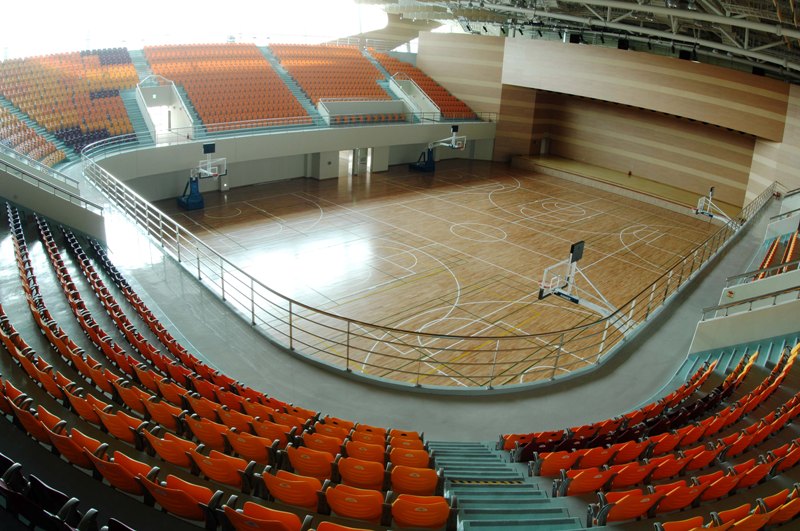 A new facility at KAIST opened on July 6, 2010.
Ryu Geun-Chul Sports Complelx will allow students, faculty and staff to pause a moment and exhale in the hustle and bustle of their daily lives.
An opening ceremony celebrating the completion of a new facility for the KAIST family was held on July 6, 2010 at the campus. Had it not been for contributions of many people and organizations throughout the nation, among others, Dr. Geun-Chul Ryu, POSCO, Woori Bank, members of KAIST community, parents, and other citizens, it would be impossible to build the facility, said the university.
The Complex, a three-story building with a basement, has an indoor court for basketball and volleyball with 3,000 individual seats, 200 meters of running track, indoor golf range, a fitness center, and other convenient facilities.
Any members of KAIST community can visit the building and relax their body and mind stressed with work and study. It also provides a large space for ceremonial and cultural gatherings such as 2010 KAIST commencement ceremony.
The official name of the building is “Ryu Geun-Chul Sports Complelx,” which was created in appreciation of Dr. Geun-Chul Ryu’s generous act who had donated 57.8 billion won worth of real estate to KAIST in August 2008.
2010.07.07 View 14914
A new facility at KAIST opened on July 6, 2010.
Ryu Geun-Chul Sports Complelx will allow students, faculty and staff to pause a moment and exhale in the hustle and bustle of their daily lives.
An opening ceremony celebrating the completion of a new facility for the KAIST family was held on July 6, 2010 at the campus. Had it not been for contributions of many people and organizations throughout the nation, among others, Dr. Geun-Chul Ryu, POSCO, Woori Bank, members of KAIST community, parents, and other citizens, it would be impossible to build the facility, said the university.
The Complex, a three-story building with a basement, has an indoor court for basketball and volleyball with 3,000 individual seats, 200 meters of running track, indoor golf range, a fitness center, and other convenient facilities.
Any members of KAIST community can visit the building and relax their body and mind stressed with work and study. It also provides a large space for ceremonial and cultural gatherings such as 2010 KAIST commencement ceremony.
The official name of the building is “Ryu Geun-Chul Sports Complelx,” which was created in appreciation of Dr. Geun-Chul Ryu’s generous act who had donated 57.8 billion won worth of real estate to KAIST in August 2008.
2010.07.07 View 14914 -
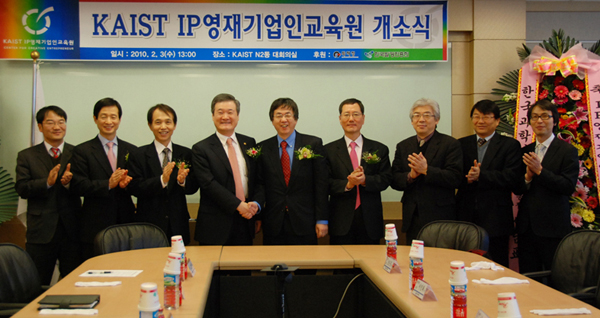 Opening Ceremony Held on February 3, 2010 for Intellectual Property Training Center
KAIST Opened Training Center for Young Entrepreneurs
Commissioner Jung-Sik Koh of Korean Intellectual Property Office (KIPO) and KAIST faculty members including Soon-Hong Jang, Vice President of Operations and Kwang-Hyung Lee, Dean of Academic Affairs Office, joined an opening ceremony held on February 3rd, 2010 to launch a training center for the next generation entrepreneurs who will lead the intellectual property (IP) industry in Korea.
The training center was built in cooperation with KIPO to educate and support young entrepreneurs and prepare them to become tomorrow’s IP business leaders like Bill Gates of Microsoft and Google’s founders, Larry Page and Sergey Brin.
Going through a vigorous selection process, a total of 101 students (51 for intermediate and 50 for advanced level) were chosen last December for an orientation program that will begin February 3rd and continue through February 5th. In addition to the training center at KAIST, KIPO supported to launch another training center at the Pohang University of Science and Technology (POSTECH), which has been up and running since January 27th, 2010.
2010.02.04 View 16441
Opening Ceremony Held on February 3, 2010 for Intellectual Property Training Center
KAIST Opened Training Center for Young Entrepreneurs
Commissioner Jung-Sik Koh of Korean Intellectual Property Office (KIPO) and KAIST faculty members including Soon-Hong Jang, Vice President of Operations and Kwang-Hyung Lee, Dean of Academic Affairs Office, joined an opening ceremony held on February 3rd, 2010 to launch a training center for the next generation entrepreneurs who will lead the intellectual property (IP) industry in Korea.
The training center was built in cooperation with KIPO to educate and support young entrepreneurs and prepare them to become tomorrow’s IP business leaders like Bill Gates of Microsoft and Google’s founders, Larry Page and Sergey Brin.
Going through a vigorous selection process, a total of 101 students (51 for intermediate and 50 for advanced level) were chosen last December for an orientation program that will begin February 3rd and continue through February 5th. In addition to the training center at KAIST, KIPO supported to launch another training center at the Pohang University of Science and Technology (POSTECH), which has been up and running since January 27th, 2010.
2010.02.04 View 16441 -
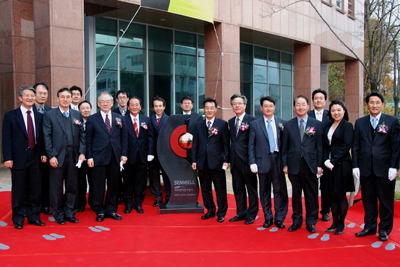 KAIST Opens Cell Bench Research Center
KAIST opened a cell bench research center on the campus on Monday, Nov. 17, as a joint project with Samsung Electric Co. and Samsung Medical Center.
On hand at the opening ceremony were about 100 persons from the three organizations, including KAIST President Nam-Pyo Suh, Samsung Electric"s Chief Technology Officer (CTO) Byung-Cheon Koh and Samsung Medical Center Vice President Hyo-Geun Lim.
The newly-opened research center will be involved in the development of individually-tailored anti-cancer medicine using bio-inspired cell chips and technologies for clinical applications. Prof. Young-Ho Cho of the Department of Bio and Brain Engineering was named director of the research center.
"Top-notch professionals from the electronic industry, academia and the medical community have gathered together to establish this research center. We expect the center will open a new path for the science and technology community and the industry to combine their strengths and develop innovative anti-cancer therapeutics," said KAIST President Nam-Pyo Suh at the opening ceremony.
"The development of bio-cell chip technology represents a new challenge for the Samsung Electric which has focused on information technologies thus far. Through cooperation with KAIST and Samsung Medical Center, we expect to be able to develop a simple and efficient cure for cancer patients," commented Samsung Electric CTO Byung-Cheon Koh.
The research center will be initially concentrating on the development of cell chips for lung cancer, one of the primary causes of death for Koreans.
2008.11.17 View 19033
KAIST Opens Cell Bench Research Center
KAIST opened a cell bench research center on the campus on Monday, Nov. 17, as a joint project with Samsung Electric Co. and Samsung Medical Center.
On hand at the opening ceremony were about 100 persons from the three organizations, including KAIST President Nam-Pyo Suh, Samsung Electric"s Chief Technology Officer (CTO) Byung-Cheon Koh and Samsung Medical Center Vice President Hyo-Geun Lim.
The newly-opened research center will be involved in the development of individually-tailored anti-cancer medicine using bio-inspired cell chips and technologies for clinical applications. Prof. Young-Ho Cho of the Department of Bio and Brain Engineering was named director of the research center.
"Top-notch professionals from the electronic industry, academia and the medical community have gathered together to establish this research center. We expect the center will open a new path for the science and technology community and the industry to combine their strengths and develop innovative anti-cancer therapeutics," said KAIST President Nam-Pyo Suh at the opening ceremony.
"The development of bio-cell chip technology represents a new challenge for the Samsung Electric which has focused on information technologies thus far. Through cooperation with KAIST and Samsung Medical Center, we expect to be able to develop a simple and efficient cure for cancer patients," commented Samsung Electric CTO Byung-Cheon Koh.
The research center will be initially concentrating on the development of cell chips for lung cancer, one of the primary causes of death for Koreans.
2008.11.17 View 19033 -
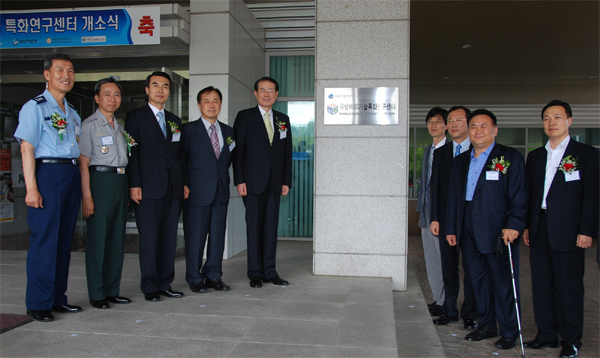 KAIST Opens M&S Technology Research Center
KAIST held an opening ceremony for a new defense research center focusing on modelling & simulation located at its main campus in Daejeon on Thursday (June 19).
The opening of the M&S Technology Research Center is aimed at developing technologies and processes to test, practice and operate newly-developed precision and micro weapons systems in virtual space. The center will be supported by two state-run defense agencies, the Defense Acquisition Program Administration and the Korean Agency for Defense Development.
The new research center is expected to receive a total of 11.5 billion won (US$11.2 million) research grants from the state for the next eight years until 2016. The center will be involved in the development of sophisticated, complex and inter-related weapons system and training research personnel in the specialized area.
The research center will undertake a total of 21 specific projects in collaboration with seven other universities in Korea. Also joining the projects are such overseas institutions as Georgia Institute of Technology and the U.S. Naval Post-Graduate School, and private defense solution providers including Posdata, Samsung Thales and LIG Nex 1.
The opening of the research center comes at a time when modelling and simulation gain growing importance as today"s armies employ more sophisticated, complex and inter-related. weapons systems and equipment than ever before.
Tae-Uk Lee, director of the research center said: "The opening of the center will spur development of operational technologies of precision and micro weapons system on our own, departing from dependence on advanced countries."
2008.06.19 View 19439
KAIST Opens M&S Technology Research Center
KAIST held an opening ceremony for a new defense research center focusing on modelling & simulation located at its main campus in Daejeon on Thursday (June 19).
The opening of the M&S Technology Research Center is aimed at developing technologies and processes to test, practice and operate newly-developed precision and micro weapons systems in virtual space. The center will be supported by two state-run defense agencies, the Defense Acquisition Program Administration and the Korean Agency for Defense Development.
The new research center is expected to receive a total of 11.5 billion won (US$11.2 million) research grants from the state for the next eight years until 2016. The center will be involved in the development of sophisticated, complex and inter-related weapons system and training research personnel in the specialized area.
The research center will undertake a total of 21 specific projects in collaboration with seven other universities in Korea. Also joining the projects are such overseas institutions as Georgia Institute of Technology and the U.S. Naval Post-Graduate School, and private defense solution providers including Posdata, Samsung Thales and LIG Nex 1.
The opening of the research center comes at a time when modelling and simulation gain growing importance as today"s armies employ more sophisticated, complex and inter-related. weapons systems and equipment than ever before.
Tae-Uk Lee, director of the research center said: "The opening of the center will spur development of operational technologies of precision and micro weapons system on our own, departing from dependence on advanced countries."
2008.06.19 View 19439 -
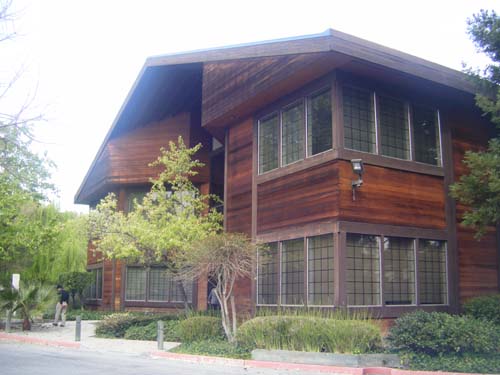 KAIST to Open Liaison Office in Silicon Valley
KAIST will open a liaison office in Silicon Valley, California, within the first half of this year to serve as a beachhead of its operations in the United States, university authorities announced Monday.
The opening of "KAIST America" office will be financially supported by the Silicon Valley-based Ambex Venture Group. The liaison office will be located at the first floor of the AmBex building in Sunnyvale.
The liaison office will be responsible for overseeing joint research between KAIST and the U.S. National Aeronautics and Space Administration (NASA) and KAIST"s other cooperative projects in research and development with enterprises and universities in Silicon Valley. It will also be engaged in forming a network among KAIST alumni members in the United States, raising funds within the U.S. and managing the money. The office will arrange KAIST students" internship in the companies in Silicon Valley.
"KAIST America is part of the globalization strategies that KAIST has pursued consistently. It is aimed at helping set up venture firms based on the technologies that KAIST has developed so far and generating funds needed for further development of the university," said Sun-Heung Jang, KAIST vice president.
AmBex, a venture capital company that invests in information technology, health science and financial service firms, was founded by Jong-Moon Lee, a member of Presidents" Advisory Council at KAIST. The AmBex building is situated near Stanford University, University of California in Berkeley, Google and Yahoo.
KAIST President Nam Pyo Suh will invite Stanford and UC Berkeley professors, executives of Silicon Valley enterprises and KAIST alumni in the area to the opening ceremony of the liaison office to be held some time in the first half of this year.
2008.03.25 View 14978
KAIST to Open Liaison Office in Silicon Valley
KAIST will open a liaison office in Silicon Valley, California, within the first half of this year to serve as a beachhead of its operations in the United States, university authorities announced Monday.
The opening of "KAIST America" office will be financially supported by the Silicon Valley-based Ambex Venture Group. The liaison office will be located at the first floor of the AmBex building in Sunnyvale.
The liaison office will be responsible for overseeing joint research between KAIST and the U.S. National Aeronautics and Space Administration (NASA) and KAIST"s other cooperative projects in research and development with enterprises and universities in Silicon Valley. It will also be engaged in forming a network among KAIST alumni members in the United States, raising funds within the U.S. and managing the money. The office will arrange KAIST students" internship in the companies in Silicon Valley.
"KAIST America is part of the globalization strategies that KAIST has pursued consistently. It is aimed at helping set up venture firms based on the technologies that KAIST has developed so far and generating funds needed for further development of the university," said Sun-Heung Jang, KAIST vice president.
AmBex, a venture capital company that invests in information technology, health science and financial service firms, was founded by Jong-Moon Lee, a member of Presidents" Advisory Council at KAIST. The AmBex building is situated near Stanford University, University of California in Berkeley, Google and Yahoo.
KAIST President Nam Pyo Suh will invite Stanford and UC Berkeley professors, executives of Silicon Valley enterprises and KAIST alumni in the area to the opening ceremony of the liaison office to be held some time in the first half of this year.
2008.03.25 View 14978 -
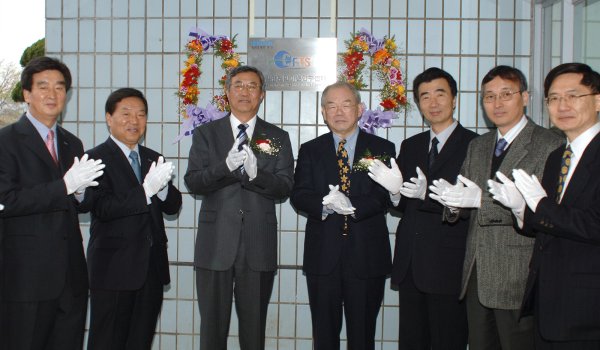 KAIST Opens CFTS
- To research the prevention of the illegal production of security technologies
- Total 1.5 billion won of research expenses and 102 researchers to be invested for the next three years- Opening ceremony at the computer science building, KAIST on April 13 at 10 am
KAIST (President Nam-Pyo Suh) will open ‘the Center of Fusion Technology for Security (CFTS)’ under the auspices of the Korea Minting & Security Printing Corporation (KOMSCO, President Hae-Sung Lee) to undertake researches over the prevention of illegal reproduction of security technologies. The opening ceremony was held at the computer science building, KAIST on Friday, April 13.
Total .1.5 billion won of research expenses and 102 researchers will be invested in the center for the next three years.
Main research fields are ▲ advanced IT-based information concealment methods ▲ utilization of energy transfer luminescence in host guest nano-substances ▲ the utilization of quantum-dot, non-crystal carbon and piezoelectric elements ▲ development of radio frequency identification (RFID), optical, biological security element-applied technologies, etc.
“We’ll develop fusion technologies for security that can easily detect forgeries and alterations of security products by introducing advanced IT, optical, chemical engineering, and biological elements. The development of core technologies applied to security products will activate domestic security markets and enable the export of relevant technologies,” said General Research Director Heung-Kyu Lee, a professor of Computer Sciences.
2007.04.19 View 16752
KAIST Opens CFTS
- To research the prevention of the illegal production of security technologies
- Total 1.5 billion won of research expenses and 102 researchers to be invested for the next three years- Opening ceremony at the computer science building, KAIST on April 13 at 10 am
KAIST (President Nam-Pyo Suh) will open ‘the Center of Fusion Technology for Security (CFTS)’ under the auspices of the Korea Minting & Security Printing Corporation (KOMSCO, President Hae-Sung Lee) to undertake researches over the prevention of illegal reproduction of security technologies. The opening ceremony was held at the computer science building, KAIST on Friday, April 13.
Total .1.5 billion won of research expenses and 102 researchers will be invested in the center for the next three years.
Main research fields are ▲ advanced IT-based information concealment methods ▲ utilization of energy transfer luminescence in host guest nano-substances ▲ the utilization of quantum-dot, non-crystal carbon and piezoelectric elements ▲ development of radio frequency identification (RFID), optical, biological security element-applied technologies, etc.
“We’ll develop fusion technologies for security that can easily detect forgeries and alterations of security products by introducing advanced IT, optical, chemical engineering, and biological elements. The development of core technologies applied to security products will activate domestic security markets and enable the export of relevant technologies,” said General Research Director Heung-Kyu Lee, a professor of Computer Sciences.
2007.04.19 View 16752 -
KAIST Chong-Moon Lee Library Opens
KAIST Chong-Moon Lee Library Opens
Jong-Moon Lee Library, management education library for scientists possessing the biggest amount of entrepreneurship data in Asia, opens in KAIST (President Nam-Pyo Suh) on Thursday, November 9, 2006.
Jong-Moon Lee Library was planned when Jong-Moon Lee, Chairman of AmBex, donated 2 million dollar to KAIST and founded Entrepreneurship Research Center at KAIST in 2004. Chairman Lee emphasized on the necessity of management education for scientists of advanced technology-based venture companies and set the management plan for Jong-Moon Lee Library securing the biggest amount of Entrepreneurship data in Asia.
Jong-Moon Lee Library possesses books for inspiring entrepreneurship, including ▲ books regarding how to prepare and evaluate business plans that support the realization of business ideas such as venture company founding, etc. ▲ administrative books necessary for company management such as leadership and finance, accounting, etc. ▲ economic books that foster reader’s insight over economy and society. The number of books is about 4,900 and various journals including Harvard Business Review are also provided.
KAIST Entrepreneurship Research Center (President Tae-Yong Yang) is now carrying out ▲ the management of entrepreneurship library for Engineering students and businessmen ▲ programs for entrepreneurship education and venture-company founding ▲aid for business plan forums and academic conferences. It benchmarks Stanford Technology Venture Program (STVP) of Stanford University, which is evaluated the most excellent program in researches and realization of entrepreneurship, and manages education programs for scientific manpower with international managing minds on the basis of world’s best capabilities in scientific researches and education of KAIST.
President Yang explained about the management plan by saying, “Following Chairman Jong-Moon Lee’s intention, the center will educate entrepreneurship to engineering students and properly diagnose initial values of excellent technologies, thereby making venture companies flourish.”
2006.11.16 View 18040
-
KAIST tech-clinic center opens
- Consists of total 124 staffs including KAIST professors, experts from state-run institutes in Daedeok Innopolis, etc.
- Introduce the patient treatment system of general hospitals and provide the services of diagnosis, treatment, and later management of small and medium-sized venture enterprises
A tech-clinic center is opened in KAIST to solve technical problems of enterprises in Daedeok Innopolis.
KAIST (President Nam Pyo Suh) and Daedeok Innopolis (President&CEO In Chul Park) held the opening ceremony of ‘Daedeok Innopolis-designated KAIST tech-clinic center’ at the High-tech Venture Hall in KAIST, 5:00 p.m. Monday, August 28.
KAIST tech-clinic center consists of total 124 staffs including KAIST professors and researchers, experts from state-run institutes in Daedeok Innopolis, etc.
The staffs will take charge of general diagnosis and treatment in the fields of Information Communication, BioTechnologies, Nano-Technologies, Environmental Engineering, Management, Design, and so on.
The tech-clinic center, upon the request by small and medium-sized enterprises, will dispatch the staffs in the corresponding field to check the state of the enterprises and provide assistance to solve problems in technology development and researches.
The center plans to transfer technologies that enterprises need and solve long-term tasks through joint/ entrusted researches.
The center will also perform treatments in the fields of management, law, and accounting of enterprises in association with company founding and management consultation project, which is being promoted by Daedeok Innopolis.
Unlike the existing consulting institutes that put a high value on consultation, the center is featured with its distinguished way of running that it will analyze the causes of problems, find fundamental solutions, and perform even later management.
An official from KAIST said, “Considering various circumstances, it’s not easy for individual enterprises to find suitable experts in the corresponding fields and request proper solutions to settle their problems. That’s the reason why KAIST has promoted this project. KAIST hopes many enterprises in Daedeok Innopolis based on the cutting-edge technologies will gain substantial assistance from this center.”
An official from Daedeok Innopolis said, “In order to provide practical supports, the treatment will be carried out in preliminary/ routine/ expert phases. Also, it is planned to strengthen regular omnidirectional support services for enterprises in association with the internet web call center, etc.”
2006.09.05 View 17498