Nuclear
-
 KAIST Uses AI to Discover Optimal New Material for Removing Radioactive Iodine Contamination
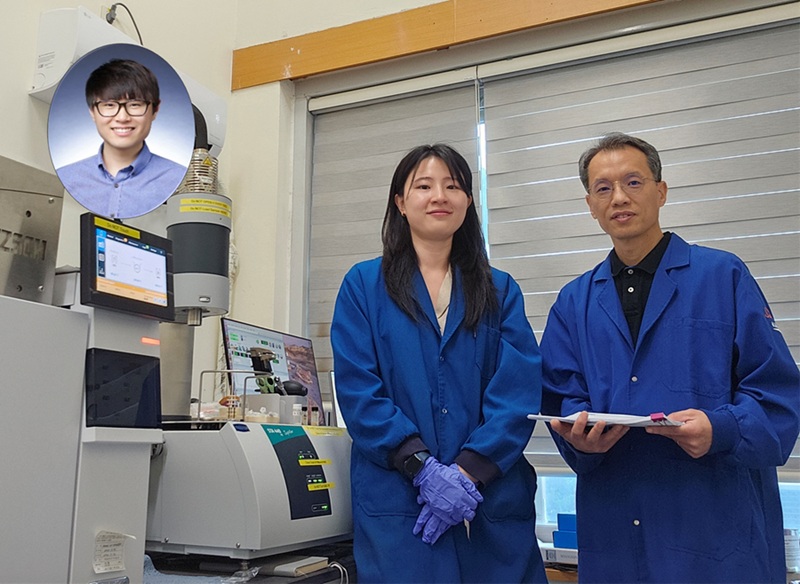
<(From the Right) Professor Ho Jin Ryu, Department of Nuclear and Quantum Engineering, Dr. Sujeong Lee, a graduate of the KAIST Department of Materials Science and Engineering, and Dr. Juhwan Noh of KRICT’s Digital Chemistry Research Center>
Managing radioactive waste is one of the core challenges in the use of nuclear energy. In particular, radioactive iodine poses serious environmental and health risks due to its long half-life (15.7 million years in the case of I-129), high mobility, and toxicity to living organisms. A Korean research team has successfully used artificial intelligence to discover a new material that can remove iodine for nuclear environmental remediation. The team plans to push forward with commercialization through various industry-academia collaborations, from iodine-adsorbing powders to contaminated water treatment filters.
KAIST (President Kwang Hyung Lee) announced on the 2of July that Professor Ho Jin Ryu's research team from the Department of Nuclear and Quantum Engineering, in collaboration with Dr. Juhwan Noh of the Digital Chemistry Research Center at the Korea Research Institute of Chemical Technology (KRICT, President Young Kook Lee), which operates under the National Research Council of Science & Technology (NST, Chairman Youngsik Kim), developed a technique using AI to discover new materials that effectively remove radioactive iodine contaminants.
Recent studies show that radioactive iodine primarily exists in aqueous environments in the form of iodate (IO₃⁻). However, existing silver-based adsorbents have weak chemical adsorption strength for iodate, making them inefficient. Therefore, it is imperative to develop new adsorbent materials that can effectively remove iodate.
Professor Ho Jin Ryu’s team used a machine learning-based experimental strategy to identify optimal iodate adsorbents among compounds called Layered Double Hydroxides (LDHs), which contain various metal elements.
The multi-metal LDH developed in this study – Cu₃(CrFeAl), based on copper, chromium, iron, and aluminum—showed exceptional adsorption performance, removing over 90% of iodate. This achievement was made possible by efficiently exploring a vast compositional space using AI-driven active learning, which would be difficult to search through conventional trial-and-error experiments.
<Picture2. Concept of Developed AI-Based Technology for Exploring New Materials for Radioactive Contamination Removal>
The research team focused on the fact that LDHs, like high-entropy materials, can incorporate a wide range of metal compositions and possess structures favorable for anion adsorption. However, due to the overwhelming number of possible metal combinations in multi-metal LDHs, identifying the optimal composition through traditional experimental methods has been nearly impossible.
To overcome this, the team employed AI (machine learning). Starting with experimental data from 24 binary and 96 ternary LDH compositions, they expanded their search to include quaternary and quinary candidates. As a result, they were able to discover the optimal material for iodate removal by testing only 16% of the total candidate materials.
Professor Ho Jin Ryu stated, “This study shows the potential of using artificial intelligence to efficiently identify radioactive decontamination materials from a vast pool of new material candidates, which is expected to accelerate research for developing new materials for nuclear environmental cleanup.”
The research team has filed a domestic patent application for the developed powder technology and is currently proceeding with an international patent application. They plan to enhance the material’s performance under various conditions and pursue commercialization through industry-academia cooperation in the development of filters for treating contaminated water.
Dr. Sujeong Lee, a graduate of the KAIST Department of Materials Science and Engineering, and Dr. Juhwan Noh of KRICT’s Digital Chemistry Research Center, participated as the co-first authors of the study. The results were published online on May 26 in the internationally renowned environmental publication Journal of Hazardous Materials.
※ Paper title: Discovery of multi-metal-layered double hydroxides for decontamination of iodate by machine learning-assisted experiments ※ DOI: https://doi.org/10.1016/j.jhazmat.2025.138735
This research was supported by the Nuclear Energy Research Infrastructure Program and the Nano-Materials Technology Development Program funded by the Ministry of Science and ICT and the National Research Foundation of Korea.
2025.07.03 View 1368
KAIST Uses AI to Discover Optimal New Material for Removing Radioactive Iodine Contamination
<(From the Right) Professor Ho Jin Ryu, Department of Nuclear and Quantum Engineering, Dr. Sujeong Lee, a graduate of the KAIST Department of Materials Science and Engineering, and Dr. Juhwan Noh of KRICT’s Digital Chemistry Research Center>
Managing radioactive waste is one of the core challenges in the use of nuclear energy. In particular, radioactive iodine poses serious environmental and health risks due to its long half-life (15.7 million years in the case of I-129), high mobility, and toxicity to living organisms. A Korean research team has successfully used artificial intelligence to discover a new material that can remove iodine for nuclear environmental remediation. The team plans to push forward with commercialization through various industry-academia collaborations, from iodine-adsorbing powders to contaminated water treatment filters.
KAIST (President Kwang Hyung Lee) announced on the 2of July that Professor Ho Jin Ryu's research team from the Department of Nuclear and Quantum Engineering, in collaboration with Dr. Juhwan Noh of the Digital Chemistry Research Center at the Korea Research Institute of Chemical Technology (KRICT, President Young Kook Lee), which operates under the National Research Council of Science & Technology (NST, Chairman Youngsik Kim), developed a technique using AI to discover new materials that effectively remove radioactive iodine contaminants.
Recent studies show that radioactive iodine primarily exists in aqueous environments in the form of iodate (IO₃⁻). However, existing silver-based adsorbents have weak chemical adsorption strength for iodate, making them inefficient. Therefore, it is imperative to develop new adsorbent materials that can effectively remove iodate.
Professor Ho Jin Ryu’s team used a machine learning-based experimental strategy to identify optimal iodate adsorbents among compounds called Layered Double Hydroxides (LDHs), which contain various metal elements.
The multi-metal LDH developed in this study – Cu₃(CrFeAl), based on copper, chromium, iron, and aluminum—showed exceptional adsorption performance, removing over 90% of iodate. This achievement was made possible by efficiently exploring a vast compositional space using AI-driven active learning, which would be difficult to search through conventional trial-and-error experiments.
<Picture2. Concept of Developed AI-Based Technology for Exploring New Materials for Radioactive Contamination Removal>
The research team focused on the fact that LDHs, like high-entropy materials, can incorporate a wide range of metal compositions and possess structures favorable for anion adsorption. However, due to the overwhelming number of possible metal combinations in multi-metal LDHs, identifying the optimal composition through traditional experimental methods has been nearly impossible.
To overcome this, the team employed AI (machine learning). Starting with experimental data from 24 binary and 96 ternary LDH compositions, they expanded their search to include quaternary and quinary candidates. As a result, they were able to discover the optimal material for iodate removal by testing only 16% of the total candidate materials.
Professor Ho Jin Ryu stated, “This study shows the potential of using artificial intelligence to efficiently identify radioactive decontamination materials from a vast pool of new material candidates, which is expected to accelerate research for developing new materials for nuclear environmental cleanup.”
The research team has filed a domestic patent application for the developed powder technology and is currently proceeding with an international patent application. They plan to enhance the material’s performance under various conditions and pursue commercialization through industry-academia cooperation in the development of filters for treating contaminated water.
Dr. Sujeong Lee, a graduate of the KAIST Department of Materials Science and Engineering, and Dr. Juhwan Noh of KRICT’s Digital Chemistry Research Center, participated as the co-first authors of the study. The results were published online on May 26 in the internationally renowned environmental publication Journal of Hazardous Materials.
※ Paper title: Discovery of multi-metal-layered double hydroxides for decontamination of iodate by machine learning-assisted experiments ※ DOI: https://doi.org/10.1016/j.jhazmat.2025.138735
This research was supported by the Nuclear Energy Research Infrastructure Program and the Nano-Materials Technology Development Program funded by the Ministry of Science and ICT and the National Research Foundation of Korea.
2025.07.03 View 1368 -
 Simultaneous Analysis of 21 Chemical Reactions... AI to Transform New Drug Development
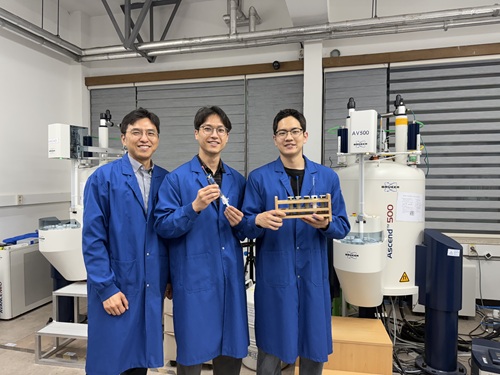
< Photo 1. (From left) Professor Hyunwoo Kim and students Donghun Kim and Gyeongseon Choi in the Integrated M.S./Ph.D. program of the Department of Chemistry >
Thalidomide, a drug once used to alleviate morning sickness in pregnant women, exhibits distinct properties due to its optical isomers* in the body: one isomer has a sedative effect, while the other causes severe side effects like birth defects. As this example illustrates, precise organic synthesis techniques, which selectively synthesize only the desired optical isomer, are crucial in new drug development. Overcoming the traditional methods that struggled with simultaneously analyzing multiple reactants, our research team has developed the world's first technology to precisely analyze 21 types of reactants simultaneously. This breakthrough is expected to make a significant contribution to new drug development utilizing AI and robots.
*Optical Isomers: A pair of molecules with the same chemical formula that are mirror images of each other and cannot be superimposed due to their asymmetric structure. This is analogous to a left and right hand, which are similar in form but cannot be perfectly overlaid.
KAIST's Professor Hyunwoo Kim's research team in the Department of Chemistry announced on the 16th that they have developed an innovative optical isomer analysis technology suitable for the era of AI-driven autonomous synthesis*. This research is the world's first technology to precisely analyze asymmetric catalytic reactions involving multiple reactants simultaneously using high-resolution fluorine nuclear magnetic resonance spectroscopy (19F NMR). It is expected to make groundbreaking contributions to various fields, including new drug development and catalyst optimization.
*AI-driven Autonomous Synthesis: An advanced technology that automates and optimizes chemical substance synthesis processes using artificial intelligence (AI). It is gaining attention as a core element for realizing automated and intelligent research environments in future laboratories. AI predicts and adjusts experimental conditions, interprets results, and designs subsequent experiments independently, minimizing human intervention in repetitive experiments and significantly increasing research efficiency and innovativeness.
Currently, while autonomous synthesis systems can automate everything from reaction design to execution, reaction analysis still relies on individual processing using traditional equipment. This leads to slower speeds and bottlenecks, making it unsuitable for high-speed repetitive experiments.
Furthermore, multi-substrate simultaneous screening techniques proposed in the 1990s garnered attention as a strategy to maximize reaction analysis efficiency. However, limitations of existing chromatography-based analysis methods restricted the number of applicable substrates. In asymmetric synthesis reactions, which selectively synthesize only the desired optical isomer, simultaneously analyzing more than 10 types of substrates was nearly impossible.
< Figure 1. Conventional organic reaction evaluation methods follow a process of deriving optimal reaction conditions using a single substrate, then expanding the substrate scope one by one under those conditions, leaving potential reaction areas unexplored. To overcome this, high-throughput screening is introduced to broadly explore catalyst reactivity for various substrates. When combined with multi-substrate screening, this approach allows for a much broader and more systematic understanding of reaction scope and trends. >
To overcome these limitations, the research team developed a 19F NMR-based multi-substrate simultaneous screening technology. This method involves performing asymmetric catalytic reactions with multiple reactants in a single reaction vessel, introducing a fluorine functional group into the products, and then applying their self-developed chiral cobalt reagent to clearly quantify all optical isomers using 19F NMR.
Utilizing the excellent resolution and sensitivity of 19F NMR, the research team successfully performed asymmetric synthesis reactions of 21 substrates simultaneously in a single reaction vessel and quantitatively measured the product yield and optical isomer ratio without any separate purification steps.
Professor Hyunwoo Kim stated, "While anyone can perform asymmetric synthesis reactions with multiple substrates in one reactor, accurately analyzing all the products has been a challenging problem to solve until now. We expect that achieving world-class multi-substrate screening analysis technology will greatly contribute to enhancing the analytical capabilities of AI-driven autonomous synthesis platforms."
< Figure 2. A method for analyzing multi-substrate asymmetric catalytic reactions, where different substrates react simultaneously in a single reactor, using fluorine nuclear magnetic resonance has been implemented. By utilizing the characteristics of fluorine nuclear magnetic resonance, which has a clean background signal and a wide chemical shift range, the reactivity of each substrate can be quantitatively analyzed. It is also shown that the optical activity of all reactants can be simultaneously measured using a cobalt metal complex. >
He further added, "This research provides a technology that can rapidly verify the efficiency and selectivity of asymmetric catalytic reactions essential for new drug development, and it is expected to be utilized as a core analytical tool for AI-driven autonomous research."
< Figure 3. It can be seen that in a multi-substrate reductive amination reaction using a total of 21 substrates, the yield and optical activity of the reactants according to the catalyst system were simultaneously measured using a fluorine nuclear magnetic resonance-based analysis platform. The yield of each reactant is indicated by color saturation, and the optical activity by numbers. >
Donghun Kim (first author, Integrated M.S./Ph.D. program) and Gyeongseon Choi (second author, Integrated M.S./Ph.D. program) from the KAIST Department of Chemistry participated in this research. The study was published online in the Journal of the American Chemical Society on May 27, 2025.※ Paper Title: One-pot Multisubstrate Screening for Asymmetric Catalysis Enabled by 19F NMR-based Simultaneous Chiral Analysis※ DOI: 10.1021/jacs.5c03446
This research was supported by the National Research Foundation of Korea's Mid-Career Researcher Program, the Asymmetric Catalytic Reaction Design Center, and the KAIST KC30 Project.
< Figure 4. Conceptual diagram of performing multi-substrate screening reactions and utilizing fluorine nuclear magnetic resonance spectroscopy. >
2025.06.16 View 2969
Simultaneous Analysis of 21 Chemical Reactions... AI to Transform New Drug Development
< Photo 1. (From left) Professor Hyunwoo Kim and students Donghun Kim and Gyeongseon Choi in the Integrated M.S./Ph.D. program of the Department of Chemistry >
Thalidomide, a drug once used to alleviate morning sickness in pregnant women, exhibits distinct properties due to its optical isomers* in the body: one isomer has a sedative effect, while the other causes severe side effects like birth defects. As this example illustrates, precise organic synthesis techniques, which selectively synthesize only the desired optical isomer, are crucial in new drug development. Overcoming the traditional methods that struggled with simultaneously analyzing multiple reactants, our research team has developed the world's first technology to precisely analyze 21 types of reactants simultaneously. This breakthrough is expected to make a significant contribution to new drug development utilizing AI and robots.
*Optical Isomers: A pair of molecules with the same chemical formula that are mirror images of each other and cannot be superimposed due to their asymmetric structure. This is analogous to a left and right hand, which are similar in form but cannot be perfectly overlaid.
KAIST's Professor Hyunwoo Kim's research team in the Department of Chemistry announced on the 16th that they have developed an innovative optical isomer analysis technology suitable for the era of AI-driven autonomous synthesis*. This research is the world's first technology to precisely analyze asymmetric catalytic reactions involving multiple reactants simultaneously using high-resolution fluorine nuclear magnetic resonance spectroscopy (19F NMR). It is expected to make groundbreaking contributions to various fields, including new drug development and catalyst optimization.
*AI-driven Autonomous Synthesis: An advanced technology that automates and optimizes chemical substance synthesis processes using artificial intelligence (AI). It is gaining attention as a core element for realizing automated and intelligent research environments in future laboratories. AI predicts and adjusts experimental conditions, interprets results, and designs subsequent experiments independently, minimizing human intervention in repetitive experiments and significantly increasing research efficiency and innovativeness.
Currently, while autonomous synthesis systems can automate everything from reaction design to execution, reaction analysis still relies on individual processing using traditional equipment. This leads to slower speeds and bottlenecks, making it unsuitable for high-speed repetitive experiments.
Furthermore, multi-substrate simultaneous screening techniques proposed in the 1990s garnered attention as a strategy to maximize reaction analysis efficiency. However, limitations of existing chromatography-based analysis methods restricted the number of applicable substrates. In asymmetric synthesis reactions, which selectively synthesize only the desired optical isomer, simultaneously analyzing more than 10 types of substrates was nearly impossible.
< Figure 1. Conventional organic reaction evaluation methods follow a process of deriving optimal reaction conditions using a single substrate, then expanding the substrate scope one by one under those conditions, leaving potential reaction areas unexplored. To overcome this, high-throughput screening is introduced to broadly explore catalyst reactivity for various substrates. When combined with multi-substrate screening, this approach allows for a much broader and more systematic understanding of reaction scope and trends. >
To overcome these limitations, the research team developed a 19F NMR-based multi-substrate simultaneous screening technology. This method involves performing asymmetric catalytic reactions with multiple reactants in a single reaction vessel, introducing a fluorine functional group into the products, and then applying their self-developed chiral cobalt reagent to clearly quantify all optical isomers using 19F NMR.
Utilizing the excellent resolution and sensitivity of 19F NMR, the research team successfully performed asymmetric synthesis reactions of 21 substrates simultaneously in a single reaction vessel and quantitatively measured the product yield and optical isomer ratio without any separate purification steps.
Professor Hyunwoo Kim stated, "While anyone can perform asymmetric synthesis reactions with multiple substrates in one reactor, accurately analyzing all the products has been a challenging problem to solve until now. We expect that achieving world-class multi-substrate screening analysis technology will greatly contribute to enhancing the analytical capabilities of AI-driven autonomous synthesis platforms."
< Figure 2. A method for analyzing multi-substrate asymmetric catalytic reactions, where different substrates react simultaneously in a single reactor, using fluorine nuclear magnetic resonance has been implemented. By utilizing the characteristics of fluorine nuclear magnetic resonance, which has a clean background signal and a wide chemical shift range, the reactivity of each substrate can be quantitatively analyzed. It is also shown that the optical activity of all reactants can be simultaneously measured using a cobalt metal complex. >
He further added, "This research provides a technology that can rapidly verify the efficiency and selectivity of asymmetric catalytic reactions essential for new drug development, and it is expected to be utilized as a core analytical tool for AI-driven autonomous research."
< Figure 3. It can be seen that in a multi-substrate reductive amination reaction using a total of 21 substrates, the yield and optical activity of the reactants according to the catalyst system were simultaneously measured using a fluorine nuclear magnetic resonance-based analysis platform. The yield of each reactant is indicated by color saturation, and the optical activity by numbers. >
Donghun Kim (first author, Integrated M.S./Ph.D. program) and Gyeongseon Choi (second author, Integrated M.S./Ph.D. program) from the KAIST Department of Chemistry participated in this research. The study was published online in the Journal of the American Chemical Society on May 27, 2025.※ Paper Title: One-pot Multisubstrate Screening for Asymmetric Catalysis Enabled by 19F NMR-based Simultaneous Chiral Analysis※ DOI: 10.1021/jacs.5c03446
This research was supported by the National Research Foundation of Korea's Mid-Career Researcher Program, the Asymmetric Catalytic Reaction Design Center, and the KAIST KC30 Project.
< Figure 4. Conceptual diagram of performing multi-substrate screening reactions and utilizing fluorine nuclear magnetic resonance spectroscopy. >
2025.06.16 View 2969 -
 'Jumping Genes' Found to Alter Human Colon Genomes, Offering Insights into Aging and Tumorigenesis
The Korea Advanced Institute of Science and Technology (KAIST) and their collaborators have conducted a groundbreaking study targeting 'jumping genes' in the entire genomes of the human large intestine. Published in Nature on May 18 2023, the research unveils the surprising activity of 'Long interspersed nuclear element-1 (L1),' a type of jumping gene previously thought to be mostly dormant in human genomes. The study shows that L1 genes can become activated and disrupt genomic functions throughout an individual's lifetime, particularly in the colorectal epithelium.
(Paper Title: Widespread somatic L1 retrotransposition in normal colorectal epithelium, https://www.nature.com/articles/s41586-023-06046-z)
With approximately 500,000 L1 jumping genes, accounting for 17% of the human genome, they have long been recognized for their contribution to the evolution of the human species by introducing 'disruptive innovation' to genome sequences. Until now, it was believed that most L1 elements had lost their ability to jump in normal tissues of modern humans. However, this study reveals that some L1 jumping genes can be widely activated in normal cells, leading to the accumulation of genomic mutations over an individual's lifetime. The rate of L1 jumping and resulting genomic changes vary among different cell types, with a notable concentration observed in aged colon epithelial cells. The study illustrates that every colonic epithelial cell experiences an L1 jumping event by the age of 40 on average.
The research, led by co-first authors Chang Hyun Nam (a graduate student at KAIST) and Dr. Jeonghwan Youk (former graduate student at KAIST and assistant clinical professor at Seoul National University Hospital), involved the analysis of whole-genome sequences from 899 single cells obtained from skin (fibroblasts), blood, and colon epithelial tissues collected from 28 individuals. The study uncovers the activation of L1 jumping genes in normal cells, resulting in the gradual accumulation of genomic mutations over time. Additionally, the team explored epigenomic (DNA methylation) sequences to understand the mechanism behind L1 jumping gene activation. They found that cells with activated L1 jumping genes exhibit epigenetic instability, suggesting the critical role of epigenetic changes in regulating L1 jumping gene activity. Most of these epigenomic instabilities were found to arise during the early stages of embryogenesis. The study provides valuable insights into the aging process and the development of diseases in human colorectal tissues.
"This study illustrates that genomic damage in normal cells is acquired not only through exposure to carcinogens but also through the activity of endogenous components whose impact was previously unclear. Genomes of apparently healthy aged cells, particularly in the colorectal epithelium, become mosaic due to the activity of L1 jumping genes," said Prof. Young Seok Ju at KAIST.
"We emphasize the essential and ongoing collaboration among researchers in clinical medicine and basic medical sciences," said Prof. Min Jung Kim of the Department of Surgery at Seoul National University Hospital. "This case highlights the critical role of systematically collected human tissues from clinical settings in unraveling the complex process of disease development in humans."
"I am delighted that the research team's advancements in single-cell genome technology have come to fruition. We will persistently strive to lead in single-cell genome technology," said Prof. Hyun Woo Kwon of the Department of Nuclear Medicine at Korea University School of Medicine.
The research team received support from the Research Leader Program and the Young Researcher Program of the National Research Foundation of Korea, a grant from the MD-PhD/Medical Scientist Training Program through the Korea Health Industry Development Institute, and the Suh Kyungbae Foundation.
< Figure 1. Experimental design of the study >
< Figure 2. Schematic diagram illustrating factors influencing the soL1R landscape. >
Genetic composition of rc-L1s is inherited from the parents. The methylation landscape of rc-L1 promoters is predominantly determined by global DNA demethylation, followed by remethylation processes in the developmental stages. Then, when an rc-L1 is promoter demethylated in a specific cell lineage, the source expresses L1 transcripts thus making possible the induction of soL1Rs.
2023.05.22 View 10829
'Jumping Genes' Found to Alter Human Colon Genomes, Offering Insights into Aging and Tumorigenesis
The Korea Advanced Institute of Science and Technology (KAIST) and their collaborators have conducted a groundbreaking study targeting 'jumping genes' in the entire genomes of the human large intestine. Published in Nature on May 18 2023, the research unveils the surprising activity of 'Long interspersed nuclear element-1 (L1),' a type of jumping gene previously thought to be mostly dormant in human genomes. The study shows that L1 genes can become activated and disrupt genomic functions throughout an individual's lifetime, particularly in the colorectal epithelium.
(Paper Title: Widespread somatic L1 retrotransposition in normal colorectal epithelium, https://www.nature.com/articles/s41586-023-06046-z)
With approximately 500,000 L1 jumping genes, accounting for 17% of the human genome, they have long been recognized for their contribution to the evolution of the human species by introducing 'disruptive innovation' to genome sequences. Until now, it was believed that most L1 elements had lost their ability to jump in normal tissues of modern humans. However, this study reveals that some L1 jumping genes can be widely activated in normal cells, leading to the accumulation of genomic mutations over an individual's lifetime. The rate of L1 jumping and resulting genomic changes vary among different cell types, with a notable concentration observed in aged colon epithelial cells. The study illustrates that every colonic epithelial cell experiences an L1 jumping event by the age of 40 on average.
The research, led by co-first authors Chang Hyun Nam (a graduate student at KAIST) and Dr. Jeonghwan Youk (former graduate student at KAIST and assistant clinical professor at Seoul National University Hospital), involved the analysis of whole-genome sequences from 899 single cells obtained from skin (fibroblasts), blood, and colon epithelial tissues collected from 28 individuals. The study uncovers the activation of L1 jumping genes in normal cells, resulting in the gradual accumulation of genomic mutations over time. Additionally, the team explored epigenomic (DNA methylation) sequences to understand the mechanism behind L1 jumping gene activation. They found that cells with activated L1 jumping genes exhibit epigenetic instability, suggesting the critical role of epigenetic changes in regulating L1 jumping gene activity. Most of these epigenomic instabilities were found to arise during the early stages of embryogenesis. The study provides valuable insights into the aging process and the development of diseases in human colorectal tissues.
"This study illustrates that genomic damage in normal cells is acquired not only through exposure to carcinogens but also through the activity of endogenous components whose impact was previously unclear. Genomes of apparently healthy aged cells, particularly in the colorectal epithelium, become mosaic due to the activity of L1 jumping genes," said Prof. Young Seok Ju at KAIST.
"We emphasize the essential and ongoing collaboration among researchers in clinical medicine and basic medical sciences," said Prof. Min Jung Kim of the Department of Surgery at Seoul National University Hospital. "This case highlights the critical role of systematically collected human tissues from clinical settings in unraveling the complex process of disease development in humans."
"I am delighted that the research team's advancements in single-cell genome technology have come to fruition. We will persistently strive to lead in single-cell genome technology," said Prof. Hyun Woo Kwon of the Department of Nuclear Medicine at Korea University School of Medicine.
The research team received support from the Research Leader Program and the Young Researcher Program of the National Research Foundation of Korea, a grant from the MD-PhD/Medical Scientist Training Program through the Korea Health Industry Development Institute, and the Suh Kyungbae Foundation.
< Figure 1. Experimental design of the study >
< Figure 2. Schematic diagram illustrating factors influencing the soL1R landscape. >
Genetic composition of rc-L1s is inherited from the parents. The methylation landscape of rc-L1 promoters is predominantly determined by global DNA demethylation, followed by remethylation processes in the developmental stages. Then, when an rc-L1 is promoter demethylated in a specific cell lineage, the source expresses L1 transcripts thus making possible the induction of soL1Rs.
2023.05.22 View 10829 -
 Professor Poong Hyun Seong Elected INSC Chair
Professor Emeritus Poong Hyun Seong from the Department of Nuclear and Quantum Engineering was elected as the Chairman of the International Nuclear Societies Council (INSC). His two-year term began on January 1.
The INSC is an organization made up of nuclear societies all over the world, representing more than 80,000 nuclear professionals. The INSC founded in 1990 acts as a global forum to establish common goals of nuclear power usage, delivering the views and ideas of professionals throughout their regional societies.
The INSC has advocated for nuclear power to be deemed an indispensable clean energy resources that can mitigate the climate change. The council has engaged in public awareness and publicity activities promoting the advantages of nuclear energy for developing next-generation power plants such as small nuclear reactors, local heating system, seawater desalination, and fair production of energy.
Professor Seong is a globally renowned scholar in the fields of nuclear instrumentation control and human factor engineering. He retired last year after 30-year career at KAIST. He took on leadership roles in the Korea Nuclear Society and served as a member of the Korea Nuclear Safety and Security Commission as well as Atomic Energy Commission. A fellow at the America Nuclear Society, Professor Seong served as the first vice chair of the INSC and he received the Don Miller Award in 2019. The award established in 2009 by the American Nuclear Society in honor of former ANS President Don Miller is given to an individual who has made a significant contribution to the advancement of nuclear instrumentation and control of human-machine interfaces.
He led the leadership role to help the Korean government steered into efficient and reasonable energy policymaking. More recently, as the Korean government decided to abandon nuclear energy, he actively opposed the government’s pivot. Professor Seong said, “Advanced countries like the US, UK, France, and Japan push forward the production of renewable energy by driving nuclear power plant under their pledges toward carbon neutrality by 2050. However, we are very concerned about the government’s policy shift to decrease the number of nuclear power plants while increasing the fossil fuel usage. I don’t think we can realize carbon neutrality by 2050 with the current policy.”
(END)
2021.01.13 View 8460
Professor Poong Hyun Seong Elected INSC Chair
Professor Emeritus Poong Hyun Seong from the Department of Nuclear and Quantum Engineering was elected as the Chairman of the International Nuclear Societies Council (INSC). His two-year term began on January 1.
The INSC is an organization made up of nuclear societies all over the world, representing more than 80,000 nuclear professionals. The INSC founded in 1990 acts as a global forum to establish common goals of nuclear power usage, delivering the views and ideas of professionals throughout their regional societies.
The INSC has advocated for nuclear power to be deemed an indispensable clean energy resources that can mitigate the climate change. The council has engaged in public awareness and publicity activities promoting the advantages of nuclear energy for developing next-generation power plants such as small nuclear reactors, local heating system, seawater desalination, and fair production of energy.
Professor Seong is a globally renowned scholar in the fields of nuclear instrumentation control and human factor engineering. He retired last year after 30-year career at KAIST. He took on leadership roles in the Korea Nuclear Society and served as a member of the Korea Nuclear Safety and Security Commission as well as Atomic Energy Commission. A fellow at the America Nuclear Society, Professor Seong served as the first vice chair of the INSC and he received the Don Miller Award in 2019. The award established in 2009 by the American Nuclear Society in honor of former ANS President Don Miller is given to an individual who has made a significant contribution to the advancement of nuclear instrumentation and control of human-machine interfaces.
He led the leadership role to help the Korean government steered into efficient and reasonable energy policymaking. More recently, as the Korean government decided to abandon nuclear energy, he actively opposed the government’s pivot. Professor Seong said, “Advanced countries like the US, UK, France, and Japan push forward the production of renewable energy by driving nuclear power plant under their pledges toward carbon neutrality by 2050. However, we are very concerned about the government’s policy shift to decrease the number of nuclear power plants while increasing the fossil fuel usage. I don’t think we can realize carbon neutrality by 2050 with the current policy.”
(END)
2021.01.13 View 8460 -
 Professor Sungyeol Choi Receives Science and ICT Ministerial Commendation
< Professor Sungyeol Choi >
Professor Sungyeol Choi from the Department of Nuclear and Quantum Engineering received the Science and ICT Ministerial Commendation on the 9th Annual Nuclear Safety and Promotion Day last month, in recognition of his contributions to the promotion of nuclear energy through the safe management of spent nuclear fuel and radioactive waste.
Professor Choi developed high-precision, multi-physics codes that can predict and prevent abnormal power fluctuations caused by boron hideout within nuclear fuel in a pressurized water reactor, solving the problem that has caused economic losses of tens of billions of won every year from industrial sites.
He is now developing a new technology that can reduce high-level waste by recycling spent nuclear fuel, while preventing nuclear material from being used for nuclear weapons, which is one of the biggest challenges faced by the nuclear industry.
In 2017, his first year in office as a KAIST professor, Professor Choi was selected as the youngest and the only member under 50 of the Standing Scientific Advisory Committee at the Information Exchange Meeting on Partitioning and Transmutation (IEMPT), an authoritative association on the disposal of high-level nuclear waste.
The following year, he became the first Korean to receive the Early Career Award, which is given to one person every two years by the International Youth Nuclear Congress.
2020.01.15 View 6614
Professor Sungyeol Choi Receives Science and ICT Ministerial Commendation
< Professor Sungyeol Choi >
Professor Sungyeol Choi from the Department of Nuclear and Quantum Engineering received the Science and ICT Ministerial Commendation on the 9th Annual Nuclear Safety and Promotion Day last month, in recognition of his contributions to the promotion of nuclear energy through the safe management of spent nuclear fuel and radioactive waste.
Professor Choi developed high-precision, multi-physics codes that can predict and prevent abnormal power fluctuations caused by boron hideout within nuclear fuel in a pressurized water reactor, solving the problem that has caused economic losses of tens of billions of won every year from industrial sites.
He is now developing a new technology that can reduce high-level waste by recycling spent nuclear fuel, while preventing nuclear material from being used for nuclear weapons, which is one of the biggest challenges faced by the nuclear industry.
In 2017, his first year in office as a KAIST professor, Professor Choi was selected as the youngest and the only member under 50 of the Standing Scientific Advisory Committee at the Information Exchange Meeting on Partitioning and Transmutation (IEMPT), an authoritative association on the disposal of high-level nuclear waste.
The following year, he became the first Korean to receive the Early Career Award, which is given to one person every two years by the International Youth Nuclear Congress.
2020.01.15 View 6614 -
 Gallium-Based Solvating Agent Efficiently Analyzes Optically Active Alcohols
A KAIST research team has developed a gallium-based metal complex enabling the rapid chiral analysis of alcohols. A team working under Professor Hyunwoo Kim reported the efficient new alcohol analysis method using nuclear magnetic resonance (NMR) spectroscopy in iScience.
Enantiopure chiral alcohols are ubiquitous in nature and widely utilized as pharmaceuticals. This importance of chirality in synthetic and medicinal chemistry has advanced the search for rapid and facile methods to determine the enantiomeric purities of compounds. To date, chiral analysis has been performed using high-performance liquid chromatography (HPLC) with chiral columns.
Along with the HPLC technique, chiral analysis using NMR spectroscopy has gained tremendous attention as an alternative to traditionally employed chromatographic methods due to its simplicity and rapid detection for real-time measurement. However, this method carries drawbacks such as line-broadening, narrow substrate scope, and poor resolution. Thus, compared with popular methods of chromatographic analysis, NMR spectroscopy is infrequently used for chiral analysis.
In principle, a chiral solvating agent is additionally required for the NMR measurement of chiral alcohols to obtain two distinct signals. However, NMR analysis of chiral alcohols has been challenging due to weak binding interactions with chiral solvating agents. To overcome the intrinsic difficulty of relatively weak molecular interactions that are common for alcohols, many researchers have used multifunctional alcohols to enhance interactions with solvating agents.
Instead, the KAIST team successfully varied the physical properties of metal complexes to induce stronger interactions with alcohols rather than the strategy of using multifunctional analytes, in the hopes of developing a universal chiral solvating agent for alcohols. Compared to the current method of chiral analysis used in the pharmaceutical industry, alcohols that do not possess chromophores can also be directly analyzed with the gallium complexes.
Professor Kim said that this method could be a complementary chiral analysis technique at the industry level in the near future. He added that since the developed gallium complex can determine enantiomeric excess within minutes, it can be further utilized to monitor asymmetric synthesis. This feature will benefit a large number of researchers in the organic chemistry community, as well as the pharmaceutical industry.
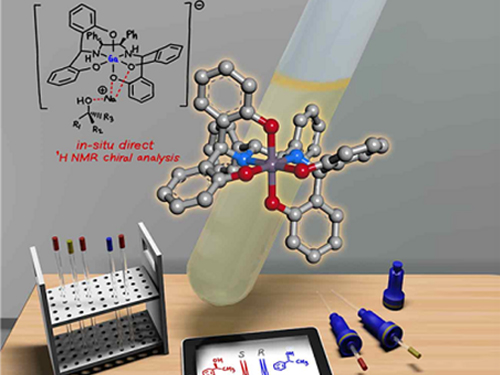
(Figure: Schematic view of the in-situ direct 1H NMR chiral analysis.)
-Profile:
Professor Hyunwoo Kim
Department of Chemistry
KAIST
http://mdos.kaist.ac.kr
hwk34@kaist.ac.kr
For more on this article,
please go to https://doi.org/10.1016/j.isci2019.07051
2019.11.14 View 13168
Gallium-Based Solvating Agent Efficiently Analyzes Optically Active Alcohols
A KAIST research team has developed a gallium-based metal complex enabling the rapid chiral analysis of alcohols. A team working under Professor Hyunwoo Kim reported the efficient new alcohol analysis method using nuclear magnetic resonance (NMR) spectroscopy in iScience.
Enantiopure chiral alcohols are ubiquitous in nature and widely utilized as pharmaceuticals. This importance of chirality in synthetic and medicinal chemistry has advanced the search for rapid and facile methods to determine the enantiomeric purities of compounds. To date, chiral analysis has been performed using high-performance liquid chromatography (HPLC) with chiral columns.
Along with the HPLC technique, chiral analysis using NMR spectroscopy has gained tremendous attention as an alternative to traditionally employed chromatographic methods due to its simplicity and rapid detection for real-time measurement. However, this method carries drawbacks such as line-broadening, narrow substrate scope, and poor resolution. Thus, compared with popular methods of chromatographic analysis, NMR spectroscopy is infrequently used for chiral analysis.
In principle, a chiral solvating agent is additionally required for the NMR measurement of chiral alcohols to obtain two distinct signals. However, NMR analysis of chiral alcohols has been challenging due to weak binding interactions with chiral solvating agents. To overcome the intrinsic difficulty of relatively weak molecular interactions that are common for alcohols, many researchers have used multifunctional alcohols to enhance interactions with solvating agents.
Instead, the KAIST team successfully varied the physical properties of metal complexes to induce stronger interactions with alcohols rather than the strategy of using multifunctional analytes, in the hopes of developing a universal chiral solvating agent for alcohols. Compared to the current method of chiral analysis used in the pharmaceutical industry, alcohols that do not possess chromophores can also be directly analyzed with the gallium complexes.
Professor Kim said that this method could be a complementary chiral analysis technique at the industry level in the near future. He added that since the developed gallium complex can determine enantiomeric excess within minutes, it can be further utilized to monitor asymmetric synthesis. This feature will benefit a large number of researchers in the organic chemistry community, as well as the pharmaceutical industry.
(Figure: Schematic view of the in-situ direct 1H NMR chiral analysis.)
-Profile:
Professor Hyunwoo Kim
Department of Chemistry
KAIST
http://mdos.kaist.ac.kr
hwk34@kaist.ac.kr
For more on this article,
please go to https://doi.org/10.1016/j.isci2019.07051
2019.11.14 View 13168 -
 Professor Yim Appointed As Associate Editor of Nuclear Technology
Professor Man-Sung Yim from the Department of Nuclear and Quantum Engineering was appointed as the associate editor (for the Asian region) of Nuclear Technology ― a leading international research journal of the American Nuclear Society. Professor Yim will serve his term for three years from May 2019.
The American Nuclear Society, established in 1954, is comprised of more than 11,000 global members and aims to advance nuclear science, engineering, and technology while supporting the peaceful and beneficial applications of nuclear energy. Since its first publication in 1971, Nuclear Technology has been a representative journal of the society, reporting state-of-the-art information on all phases of the practical applications of nuclear technology.
Professor Yim is being recognized worldwide for his pioneering nuclear education, research, and policy studies in the fields of non-proliferation, safeguards for severe accident management, and waste management. He served as the head professor of the Department of Nuclear and Quantum Engineering and established the Nonproliferation Education and Research Center (NEREC) at KAIST.
Professor Yim remarked, “Asia has an important role to play at the forefront of the world’s nuclear research considering that nuclear development is most actively being carried out in the Asian region these days.”
2019.05.17 View 9753
Professor Yim Appointed As Associate Editor of Nuclear Technology
Professor Man-Sung Yim from the Department of Nuclear and Quantum Engineering was appointed as the associate editor (for the Asian region) of Nuclear Technology ― a leading international research journal of the American Nuclear Society. Professor Yim will serve his term for three years from May 2019.
The American Nuclear Society, established in 1954, is comprised of more than 11,000 global members and aims to advance nuclear science, engineering, and technology while supporting the peaceful and beneficial applications of nuclear energy. Since its first publication in 1971, Nuclear Technology has been a representative journal of the society, reporting state-of-the-art information on all phases of the practical applications of nuclear technology.
Professor Yim is being recognized worldwide for his pioneering nuclear education, research, and policy studies in the fields of non-proliferation, safeguards for severe accident management, and waste management. He served as the head professor of the Department of Nuclear and Quantum Engineering and established the Nonproliferation Education and Research Center (NEREC) at KAIST.
Professor Yim remarked, “Asia has an important role to play at the forefront of the world’s nuclear research considering that nuclear development is most actively being carried out in the Asian region these days.”
2019.05.17 View 9753 -
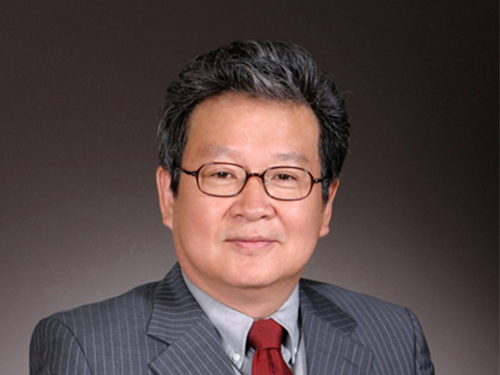 Chair Professor Seong Honored with Don Miller Award
(Professor Poong-Hyun Seong)
Chair Professor Poong-Hyun Seong from the Department of Nuclear & Quantum Engineering was selected as the recipient of the Don Miller Award by the American Nuclear Society.
The award, established in 2009 by the American Nuclear Society in honor of former ANS President Don Miller, is given to an individual or team who has made a significant contribution to the advancement of one or both of the fields of nuclear instrumentation and control of human-machine interfaces through individual or combined activities. The award ceremony will be held on June 10 during the 2019 annual meeting of the ANS in Minneapolis in the US.
Professor Seong is being recognized for his pioneering research and training in the fields of nuclear instrumentation control and human factor engineering at Korea. His research significantly contributed to safety improvements in nuclear power plants and have been recognized worldwide. Professor Seong, a fellow of the ANS, now serves as the first vice chair of the International Nuclear Societies Council and will take up the role of chair in 2021.
Professor Seong said that, “ Korea is one of the most outstanding countries working on research in the fields of nuclear instrumentation control and human factors. KAIST PhDs are teaching at many universities at home and abroad. I look forward this award bringing new hope to our nuclear research and the domestic nuclear industry, which is now in difficult times.”
2019.04.11 View 6520
Chair Professor Seong Honored with Don Miller Award
(Professor Poong-Hyun Seong)
Chair Professor Poong-Hyun Seong from the Department of Nuclear & Quantum Engineering was selected as the recipient of the Don Miller Award by the American Nuclear Society.
The award, established in 2009 by the American Nuclear Society in honor of former ANS President Don Miller, is given to an individual or team who has made a significant contribution to the advancement of one or both of the fields of nuclear instrumentation and control of human-machine interfaces through individual or combined activities. The award ceremony will be held on June 10 during the 2019 annual meeting of the ANS in Minneapolis in the US.
Professor Seong is being recognized for his pioneering research and training in the fields of nuclear instrumentation control and human factor engineering at Korea. His research significantly contributed to safety improvements in nuclear power plants and have been recognized worldwide. Professor Seong, a fellow of the ANS, now serves as the first vice chair of the International Nuclear Societies Council and will take up the role of chair in 2021.
Professor Seong said that, “ Korea is one of the most outstanding countries working on research in the fields of nuclear instrumentation control and human factors. KAIST PhDs are teaching at many universities at home and abroad. I look forward this award bringing new hope to our nuclear research and the domestic nuclear industry, which is now in difficult times.”
2019.04.11 View 6520 -
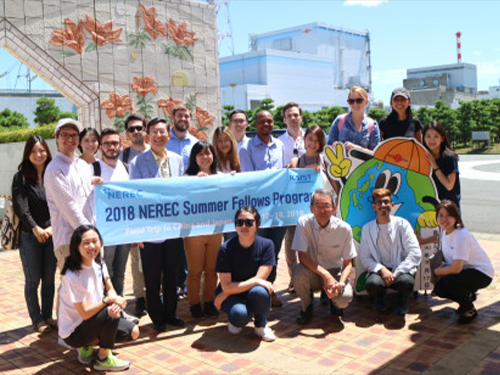 NEREC Summer Program Keeps Fellows Thinking, Engaged in Nuclear Nonproliferation
Nuclear technology is more than just technology. It is the fruit of the most advanced science and technology. It also requires high standards of policymaking and global cooperation for benefiting the technology.
As part of the fifth annual Nuclear Nonproliferation Education and Research Center (NEREC) Summer Fellows Program at KAIST, 24 students from 15 countries participated in six-week intensive education and training program. NEREC is the only university-based center dedicated to nuclear nonproliferation education and research established in 2014.
The program, which provides multidisciplinary lectures and seminars on nuclear technology and policy as well as international relations, was designed to nurture global nuclear technology experts well equipped in three areas: in-depth knowledge of technology, applicability gained from sound policy building, and negotiating for international cooperation. It now has grown into the most popular summer program at KAIST.
During the program from July 6 to August 18, participants were able to engage in enriching and stimulating learning experiences in tandem with policies and technology for the utilization and provision of peaceful and safe nuclear technology.
Participating fellows also had to conduct a group research project on a given topic. This year, they explored nuclear nonproliferation issues in relation to nuclear exports and brainstormed some recommendations for current policy. They presented their outcomes at the 2018 NEREC Conference on Nuclear Nonproliferation. After intensive lecture sessions and group research work, the fellows went off to key policy think-tanks, nuclear research institutes, and research power facilities in Korea, Japan, and China.
“NEREC emphasizes nuclear nonproliferation issues related to civilian nuclear power and the associated nuclear fuel cycle development from the point of technology users. I am very glad that the number of participants are increasing year by year,” said the Director of NEREC Man-Sung Yim, a professor in the Department of Nuclear and Quantum Engineering.
Participants’ majors vary from nuclear engineering to international relations to economics. The fellows divided into two groups of graduate and undergraduate courses. They expressed their deep satisfactory in the multidisciplinary lectures by scholars from KAIST, Seoul National University, and Korea National Defense University.
Many participants reported that they learned a lot, not only about policy and international relations but on the research they are conducting and what the key issues will be in dealing for producing meaningful research work.
Moad Aldbissi from the KTH Royal Institute of Technology is one of the students who shared the same view. He said, “Coming from a technical background in nuclear engineering, I managed to learn a lot about nuclear policy and international relations. The importance of integrating the technical and political fields became even clearer.”
Most students concurred that they recognized how important it was to make international collaboration in this powerful field for each country through this program.
“As an engineering student, I just approached this program like an empty glass in policy areas. While working with colleagues during the program, I came to understand how important it is to make cooperation in these fields for the better result of national development and international relations,” said Thanataon Pornphatdetaudom from the Tokyo Institute of Technology.
To Director Yim, this program is becoming well positioned to educate nuclear policy experts in a number of countries of strategic importance. He believes the continuous supply of these experts will contribute to promoting global nuclear nonproliferation and the peaceful use of nuclear energy while the use of nuclear technology continues.
2018.09.04 View 13220
NEREC Summer Program Keeps Fellows Thinking, Engaged in Nuclear Nonproliferation
Nuclear technology is more than just technology. It is the fruit of the most advanced science and technology. It also requires high standards of policymaking and global cooperation for benefiting the technology.
As part of the fifth annual Nuclear Nonproliferation Education and Research Center (NEREC) Summer Fellows Program at KAIST, 24 students from 15 countries participated in six-week intensive education and training program. NEREC is the only university-based center dedicated to nuclear nonproliferation education and research established in 2014.
The program, which provides multidisciplinary lectures and seminars on nuclear technology and policy as well as international relations, was designed to nurture global nuclear technology experts well equipped in three areas: in-depth knowledge of technology, applicability gained from sound policy building, and negotiating for international cooperation. It now has grown into the most popular summer program at KAIST.
During the program from July 6 to August 18, participants were able to engage in enriching and stimulating learning experiences in tandem with policies and technology for the utilization and provision of peaceful and safe nuclear technology.
Participating fellows also had to conduct a group research project on a given topic. This year, they explored nuclear nonproliferation issues in relation to nuclear exports and brainstormed some recommendations for current policy. They presented their outcomes at the 2018 NEREC Conference on Nuclear Nonproliferation. After intensive lecture sessions and group research work, the fellows went off to key policy think-tanks, nuclear research institutes, and research power facilities in Korea, Japan, and China.
“NEREC emphasizes nuclear nonproliferation issues related to civilian nuclear power and the associated nuclear fuel cycle development from the point of technology users. I am very glad that the number of participants are increasing year by year,” said the Director of NEREC Man-Sung Yim, a professor in the Department of Nuclear and Quantum Engineering.
Participants’ majors vary from nuclear engineering to international relations to economics. The fellows divided into two groups of graduate and undergraduate courses. They expressed their deep satisfactory in the multidisciplinary lectures by scholars from KAIST, Seoul National University, and Korea National Defense University.
Many participants reported that they learned a lot, not only about policy and international relations but on the research they are conducting and what the key issues will be in dealing for producing meaningful research work.
Moad Aldbissi from the KTH Royal Institute of Technology is one of the students who shared the same view. He said, “Coming from a technical background in nuclear engineering, I managed to learn a lot about nuclear policy and international relations. The importance of integrating the technical and political fields became even clearer.”
Most students concurred that they recognized how important it was to make international collaboration in this powerful field for each country through this program.
“As an engineering student, I just approached this program like an empty glass in policy areas. While working with colleagues during the program, I came to understand how important it is to make cooperation in these fields for the better result of national development and international relations,” said Thanataon Pornphatdetaudom from the Tokyo Institute of Technology.
To Director Yim, this program is becoming well positioned to educate nuclear policy experts in a number of countries of strategic importance. He believes the continuous supply of these experts will contribute to promoting global nuclear nonproliferation and the peaceful use of nuclear energy while the use of nuclear technology continues.
2018.09.04 View 13220 -
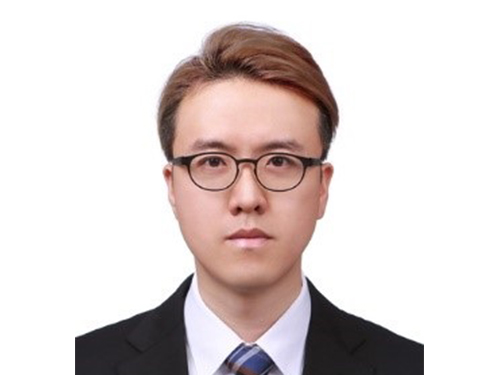 The First Recipient of the KPS Award in Plasma Physics
( Research Professor Sanghoo Park)
Research Professor Sanghoo Park received the Young Researcher Award in Plasma Physics during the Korean Physical Society (KPS)’s Spring Meeting from April 25 to 27.
He is a KAIST graduate with a PhD in Physics and currently holds the position of research professor in the Department of Nuclear and Quantum Engineering.
The Young Researcher Award in Plasma Physics is given to a specialist in plasma who has the potential to make a contribution to plasma and accelerator physics in Korea.
Professor Park has gained recognition for his work, including awards, publications in 24 journals, and 12 technical patent registrations of plasma, which led to his selection as the recipient of this award.
He is now conducting a leading role in this field nationally and internationally by delving into the study of partially-ionized plasma.
Professor Park said, “It is my great honor to become the first recipient of the Young Researcher Award in Plasma Physics. I will continue to engage in research to develop the field of plasma in Korea.”
2018.05.08 View 8578
The First Recipient of the KPS Award in Plasma Physics
( Research Professor Sanghoo Park)
Research Professor Sanghoo Park received the Young Researcher Award in Plasma Physics during the Korean Physical Society (KPS)’s Spring Meeting from April 25 to 27.
He is a KAIST graduate with a PhD in Physics and currently holds the position of research professor in the Department of Nuclear and Quantum Engineering.
The Young Researcher Award in Plasma Physics is given to a specialist in plasma who has the potential to make a contribution to plasma and accelerator physics in Korea.
Professor Park has gained recognition for his work, including awards, publications in 24 journals, and 12 technical patent registrations of plasma, which led to his selection as the recipient of this award.
He is now conducting a leading role in this field nationally and internationally by delving into the study of partially-ionized plasma.
Professor Park said, “It is my great honor to become the first recipient of the Young Researcher Award in Plasma Physics. I will continue to engage in research to develop the field of plasma in Korea.”
2018.05.08 View 8578 -
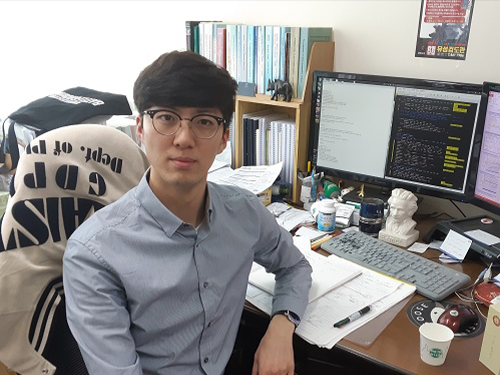 Park Chosen for Principality of Monaco/ITER Postdoctoral Fellowship
(Jaesun Park in the Integrated Master's and Doctoral Degree Program )
Jaesun Park from the Department of Physics, was selected as a Principality of Monaco/ITER Postdoctoral Fellowship recipient.
This program was established by the Principality of Monaco and an international organization, ITER, in January 2008 to support postdoctoral researchers who will be working for ITER. It is a relatively competitive program because it chooses only five people every two years.
The selected postdoctoral researchers will be working for ITER for two years while conducting research projects with outstanding researchers in the field of nuclear fusion.
ITER, one of the most ambitious energy projects, was launched in 1985 with the purpose of carrying out joint research on nuclear fusion energy. Currently, about 800 people are working for this organization.
Seven ITER member countries (i.e. Korea, the European Union, the United States, China, Japan, Russia, and India) are sharing the expenses and engaging in mega-scale science projects. Korea shares 9.1% (20 billion Euro) of the total construction costs of ITER experimental devices.
Park will begin his duties in early 2019.
2018.05.04 View 11335
Park Chosen for Principality of Monaco/ITER Postdoctoral Fellowship
(Jaesun Park in the Integrated Master's and Doctoral Degree Program )
Jaesun Park from the Department of Physics, was selected as a Principality of Monaco/ITER Postdoctoral Fellowship recipient.
This program was established by the Principality of Monaco and an international organization, ITER, in January 2008 to support postdoctoral researchers who will be working for ITER. It is a relatively competitive program because it chooses only five people every two years.
The selected postdoctoral researchers will be working for ITER for two years while conducting research projects with outstanding researchers in the field of nuclear fusion.
ITER, one of the most ambitious energy projects, was launched in 1985 with the purpose of carrying out joint research on nuclear fusion energy. Currently, about 800 people are working for this organization.
Seven ITER member countries (i.e. Korea, the European Union, the United States, China, Japan, Russia, and India) are sharing the expenses and engaging in mega-scale science projects. Korea shares 9.1% (20 billion Euro) of the total construction costs of ITER experimental devices.
Park will begin his duties in early 2019.
2018.05.04 View 11335 -
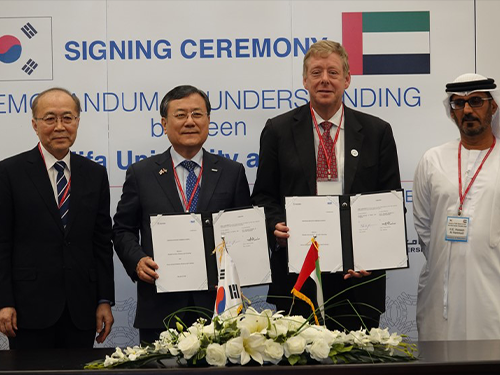 KAIST-KU Sign MOU on 4th Industrial Technology Development
(President Shin(second from left) poses with Khalifa University President Tod Laursen after signing an MOU in the UAE on March 25. Far left is Chairman of the NST Kwangyun Wohn and far right is the UAE Minister of Educatiion Hussain Al Hammadi.)
KAIST President Sung-Chul Shin and Khalifa University Interim President Tod Laursen signed an MOU on the Fourth Industrial Technology Development on March 25 in the UAE.
They signed the MOU during the UAE-ROK Nuclear Friendship and KAIST Alumni Night at Khalifa University co-hosted by KAIST and the Korea Atomic Energy Research Institute (KAERI). The MOU will bring new opportunities to further expand bilateral cooperation in education and training in the relevant technologies called for the era of the Fourth Industrial Revolution.
More than 100 dignitaries including Chairman of National Research Council of Science and Technology (NST) in Korea Dr. Kwangyun Wohn, President of KAERI Jaejoo Ha, the UAE Minister of Education His Excellency Hussain Al Hammadi, Minister of State for Advanced Sciences Her Excellency Sarah bint Yousef Al Amiri, and His Excellency Federal Authority for Nuclear Regulation (FANR) Director General Christopher Viktorsson attended the event. In particular, a significant number of Emirati graduates of the KUSTAR-KAIST education program and many others who completed various KAIST training programs joined the event.
The Nuclear Friendship Night was celebrating the completion of the first nuclear power plant in Barakah exported by Korea. This is the first nuclear reactor in the Middle East, which is to start operation later this year. The event also coincided with Korean President Moon Jae-In’s state visit to the UAE.
KAIST and KAERI gathered distinguished leaders from the higher education and nuclear industries at the event in response to the UAE government’s top national agenda of fostering future talents and promoting the nuclear industry in order to ensure energy security.
KAIST and Khalifa University signed an initial agreement in education and research in 2009 when the governments of Korea and the UAE signed a contract to build four nuclear power plants in Barakah. Since then, the two universities have worked together closely in the areas of nuclear engineering, bio-medical engineering, robotics, mechanical engineering, chemical engineering, and materials science. With this signing on the new MOU, the partnership between the two institutions will mark the second phase of educating high-caliber human resources in science and technology of the two countries.
The KAIST Alumni Night also brought more opportunities to appreciate the achievements that the two countries have made through collaboration in education and research, mostly represented in the field of nuclear technology between KAIST and Khalifa University. During the event, KAIST graduates also shared their experiences from the education at KAIST, followed by the welcoming speeches from the UAE Minister of Education and the UAE Minister of State for Advanced Sciences.
KAIST President Shin, in his welcoming speech at the event, said, “I look forward to more students in the UAE having the opportunity to experience the world’s top-level education and global environment that KAIST offers. The collaboration with Khalifa University and the UAE is very important for building both countries’ future growth.”
KU President Laursen said, “This MOU on research cooperation focusing on technologies for the Fourth Industrial Revolution, nuclear engineering, and other technical areas will further consolidate our partnership with KAIST and support us in developing human capital suitable to take on future challenges in the science and technology sectors. We firmly believe the talent pool of experts created by this initiative will contribute to the overall economic growth of the UAE.”
2018.03.26 View 12477
KAIST-KU Sign MOU on 4th Industrial Technology Development
(President Shin(second from left) poses with Khalifa University President Tod Laursen after signing an MOU in the UAE on March 25. Far left is Chairman of the NST Kwangyun Wohn and far right is the UAE Minister of Educatiion Hussain Al Hammadi.)
KAIST President Sung-Chul Shin and Khalifa University Interim President Tod Laursen signed an MOU on the Fourth Industrial Technology Development on March 25 in the UAE.
They signed the MOU during the UAE-ROK Nuclear Friendship and KAIST Alumni Night at Khalifa University co-hosted by KAIST and the Korea Atomic Energy Research Institute (KAERI). The MOU will bring new opportunities to further expand bilateral cooperation in education and training in the relevant technologies called for the era of the Fourth Industrial Revolution.
More than 100 dignitaries including Chairman of National Research Council of Science and Technology (NST) in Korea Dr. Kwangyun Wohn, President of KAERI Jaejoo Ha, the UAE Minister of Education His Excellency Hussain Al Hammadi, Minister of State for Advanced Sciences Her Excellency Sarah bint Yousef Al Amiri, and His Excellency Federal Authority for Nuclear Regulation (FANR) Director General Christopher Viktorsson attended the event. In particular, a significant number of Emirati graduates of the KUSTAR-KAIST education program and many others who completed various KAIST training programs joined the event.
The Nuclear Friendship Night was celebrating the completion of the first nuclear power plant in Barakah exported by Korea. This is the first nuclear reactor in the Middle East, which is to start operation later this year. The event also coincided with Korean President Moon Jae-In’s state visit to the UAE.
KAIST and KAERI gathered distinguished leaders from the higher education and nuclear industries at the event in response to the UAE government’s top national agenda of fostering future talents and promoting the nuclear industry in order to ensure energy security.
KAIST and Khalifa University signed an initial agreement in education and research in 2009 when the governments of Korea and the UAE signed a contract to build four nuclear power plants in Barakah. Since then, the two universities have worked together closely in the areas of nuclear engineering, bio-medical engineering, robotics, mechanical engineering, chemical engineering, and materials science. With this signing on the new MOU, the partnership between the two institutions will mark the second phase of educating high-caliber human resources in science and technology of the two countries.
The KAIST Alumni Night also brought more opportunities to appreciate the achievements that the two countries have made through collaboration in education and research, mostly represented in the field of nuclear technology between KAIST and Khalifa University. During the event, KAIST graduates also shared their experiences from the education at KAIST, followed by the welcoming speeches from the UAE Minister of Education and the UAE Minister of State for Advanced Sciences.
KAIST President Shin, in his welcoming speech at the event, said, “I look forward to more students in the UAE having the opportunity to experience the world’s top-level education and global environment that KAIST offers. The collaboration with Khalifa University and the UAE is very important for building both countries’ future growth.”
KU President Laursen said, “This MOU on research cooperation focusing on technologies for the Fourth Industrial Revolution, nuclear engineering, and other technical areas will further consolidate our partnership with KAIST and support us in developing human capital suitable to take on future challenges in the science and technology sectors. We firmly believe the talent pool of experts created by this initiative will contribute to the overall economic growth of the UAE.”
2018.03.26 View 12477