%4d%65%64%69%63%61%6c
-
 KAIST Breaks Ground on 'Innovative Digital Institute of Medical Science' to Cultivate Physician-Scientists and Medical Engineers
<Groundbreaking Ceremony for the Innovative Digital Institute of Medical Science>
The success of the AI and bio-health industries depends on how many convergence-oriented talents, who understand both medicine and science/technology simultaneously, can be secured. While major global universities are accelerating the establishment of medical schools and convergence education, our university has officially commenced the construction of core infrastructure that will determine South Korea's bio-health competitiveness.
KAIST announced on February 19th that the Graduate School of Medical Science and Engineering held a groundbreaking ceremony for the ‘Innovative Digital Institute of Medical Science,’ a key infrastructure that will lead the future of the Korean bio-health industry, and has begun full-scale construction.
The Innovative Digital Institute of Medical Science, to be built at the KAIST Munji Campus, is a project designed to support the national development goal of ‘Realizing a Powerhouse in Medical AI, Pharmaceuticals, and Bio-health’ by fostering key talent and establishing an innovative startup infrastructure. A total project cost of 42.232 billion KRW will be invested through cooperation between the government, Daejeon City, and KAIST. It is being constructed with a total floor area of approximately 10,000 square meters (3,025 pyeong) and is scheduled for completion in November 2027.
Through the establishment of this institute, our university expects to create a foundation to expand the scale of physician-scientist training from the current level of about 20 per year to 50–70 per year, which accounts for approximately 50% of the national demand. Through this, we plan to establish a full-cycle support system so that convergence-type talents, who possess medical and clinical experience as well as science, technology, and AI capabilities, can grow into leading figures in the development of innovative new drugs, vaccines, and medical devices.
This talent cultivation strategy is also in line with global trends. Convergence models of science/engineering and medicine are spreading around global science and technology universities, such as the approval for the new medical school at the Hong Kong University of Science and Technology (November 2025), the merger between Tokyo Institute of Technology and Tokyo Medical and Dental University (October 2024), and the establishment and operation of the medical school at Nanyang Technological University in Singapore. This demonstrates the strategic importance of cultivating physician-scientists and medical engineers who will lead the future bio-health industry.
In contrast, the proportion of medical school graduates in Korea entering the fields of physician-scientists or medical engineers remains below 1%, leading to concerns about a decline in future bio-health competitiveness due to a shortage of manpower.
The Innovative Digital Institute of Medical Science will feature advanced research and support facilities, including an AI Precision Medicine Platform Research Center, a Data-driven Convergence Healthcare R&D Center, an Advanced Biomedical Data Analysis Center, a Digital Medical-Bio Open Lab, and open networking halls and seminar rooms.
In particular, the 6th floor, the top floor, will host the Daejeon Bio-Medical Venture Cluster. Similar to ‘LabCentral’ in Boston, USA, this is planned to be operated as an open innovation space where high-cost research equipment can be shared not only by KAIST researchers but also by researchers from government-funded research institutes in the Daedeok Innopolis and bio-medical startups, allowing them to share research results and technologies and collaborate freely.
The Innovative Digital Institute of Medical Science is expected to serve as an innovation hub that supplements the structural limitations of the Daejeon Bio Cluster, moving beyond being a simple education and research facility. Leading domestic bio companies such as Alteogen, LigaChem Bio, and Peptron are concentrated nearby, and the site is adjacent to the ‘Wonchon-dong Advanced Bio-Medical Innovation District’ being promoted by Daejeon City, providing an ecosystem where industry, academia, research, and hospitals are organically connected.
KAIST plans to use this to vitalize translational research that connects clinical demands from hospitals with basic research from the university, and to promote the development of medical AI and digital data-based technologies to continuously create success stories of physician-scientist startups such as Sovagen and Enocras.
Kwang Hyung Lee, President of KAIST, stated, “The KAIST Innovative Digital Institute of Medical Science will become a core base for the future AI digital health industry, growing science and engineering talents into physician-scientists and medical engineers. Through translational research and startups based on industry-academia-research-hospital cooperation, we will enhance national bio-health industrial competitiveness and contribute to the promotion of human health.”
<Bird’s-Eye View of the Innovative Digital Medical Science Institute>
2026.02.19 View 2164
KAIST Breaks Ground on 'Innovative Digital Institute of Medical Science' to Cultivate Physician-Scientists and Medical Engineers
<Groundbreaking Ceremony for the Innovative Digital Institute of Medical Science>
The success of the AI and bio-health industries depends on how many convergence-oriented talents, who understand both medicine and science/technology simultaneously, can be secured. While major global universities are accelerating the establishment of medical schools and convergence education, our university has officially commenced the construction of core infrastructure that will determine South Korea's bio-health competitiveness.
KAIST announced on February 19th that the Graduate School of Medical Science and Engineering held a groundbreaking ceremony for the ‘Innovative Digital Institute of Medical Science,’ a key infrastructure that will lead the future of the Korean bio-health industry, and has begun full-scale construction.
The Innovative Digital Institute of Medical Science, to be built at the KAIST Munji Campus, is a project designed to support the national development goal of ‘Realizing a Powerhouse in Medical AI, Pharmaceuticals, and Bio-health’ by fostering key talent and establishing an innovative startup infrastructure. A total project cost of 42.232 billion KRW will be invested through cooperation between the government, Daejeon City, and KAIST. It is being constructed with a total floor area of approximately 10,000 square meters (3,025 pyeong) and is scheduled for completion in November 2027.
Through the establishment of this institute, our university expects to create a foundation to expand the scale of physician-scientist training from the current level of about 20 per year to 50–70 per year, which accounts for approximately 50% of the national demand. Through this, we plan to establish a full-cycle support system so that convergence-type talents, who possess medical and clinical experience as well as science, technology, and AI capabilities, can grow into leading figures in the development of innovative new drugs, vaccines, and medical devices.
This talent cultivation strategy is also in line with global trends. Convergence models of science/engineering and medicine are spreading around global science and technology universities, such as the approval for the new medical school at the Hong Kong University of Science and Technology (November 2025), the merger between Tokyo Institute of Technology and Tokyo Medical and Dental University (October 2024), and the establishment and operation of the medical school at Nanyang Technological University in Singapore. This demonstrates the strategic importance of cultivating physician-scientists and medical engineers who will lead the future bio-health industry.
In contrast, the proportion of medical school graduates in Korea entering the fields of physician-scientists or medical engineers remains below 1%, leading to concerns about a decline in future bio-health competitiveness due to a shortage of manpower.
The Innovative Digital Institute of Medical Science will feature advanced research and support facilities, including an AI Precision Medicine Platform Research Center, a Data-driven Convergence Healthcare R&D Center, an Advanced Biomedical Data Analysis Center, a Digital Medical-Bio Open Lab, and open networking halls and seminar rooms.
In particular, the 6th floor, the top floor, will host the Daejeon Bio-Medical Venture Cluster. Similar to ‘LabCentral’ in Boston, USA, this is planned to be operated as an open innovation space where high-cost research equipment can be shared not only by KAIST researchers but also by researchers from government-funded research institutes in the Daedeok Innopolis and bio-medical startups, allowing them to share research results and technologies and collaborate freely.
The Innovative Digital Institute of Medical Science is expected to serve as an innovation hub that supplements the structural limitations of the Daejeon Bio Cluster, moving beyond being a simple education and research facility. Leading domestic bio companies such as Alteogen, LigaChem Bio, and Peptron are concentrated nearby, and the site is adjacent to the ‘Wonchon-dong Advanced Bio-Medical Innovation District’ being promoted by Daejeon City, providing an ecosystem where industry, academia, research, and hospitals are organically connected.
KAIST plans to use this to vitalize translational research that connects clinical demands from hospitals with basic research from the university, and to promote the development of medical AI and digital data-based technologies to continuously create success stories of physician-scientist startups such as Sovagen and Enocras.
Kwang Hyung Lee, President of KAIST, stated, “The KAIST Innovative Digital Institute of Medical Science will become a core base for the future AI digital health industry, growing science and engineering talents into physician-scientists and medical engineers. Through translational research and startups based on industry-academia-research-hospital cooperation, we will enhance national bio-health industrial competitiveness and contribute to the promotion of human health.”
<Bird’s-Eye View of the Innovative Digital Medical Science Institute>
2026.02.19 View 2164 -
 KAIST Mourns the Passing of A. Neil Pappalardo, Former Chairman of MEDITECH
KAIST extends its deepest condolences on the passing of A. Neil Pappalardo, former Chairman of MEDITECH and a longtime friend and advisor to the University.
Mr. Pappalardo was a steadfast supporter of KAIST’s vision to become a world-leading university. He showed particular care for the health and well-being of the KAIST community, a commitment that continues today through the Neil Pappalardo Medical Clinic Center, named in his honor, on campus.
As a member of the KAIST President’s Advisory Council, he shared his wisdom, insight, and unwavering belief in the potential of KAIST.
KAIST will remember Mr. Pappalardo for his extraordinary generosity, foresight, and dedication to nurturing future generations. His legacy lives on within the KAIST community.
We offer our sincere sympathies to his family and loved ones, and we honor his life with lasting respect and gratitude.
2026.02.01 View 701
KAIST Mourns the Passing of A. Neil Pappalardo, Former Chairman of MEDITECH
KAIST extends its deepest condolences on the passing of A. Neil Pappalardo, former Chairman of MEDITECH and a longtime friend and advisor to the University.
Mr. Pappalardo was a steadfast supporter of KAIST’s vision to become a world-leading university. He showed particular care for the health and well-being of the KAIST community, a commitment that continues today through the Neil Pappalardo Medical Clinic Center, named in his honor, on campus.
As a member of the KAIST President’s Advisory Council, he shared his wisdom, insight, and unwavering belief in the potential of KAIST.
KAIST will remember Mr. Pappalardo for his extraordinary generosity, foresight, and dedication to nurturing future generations. His legacy lives on within the KAIST community.
We offer our sincere sympathies to his family and loved ones, and we honor his life with lasting respect and gratitude.
2026.02.01 View 701 -
 AI Opens a New Era in Medical Science and Bio
< (From left) KAIST Professors Yoonjae Choi, Tae-Kyun Kim, Jong Chul Ye, Hyunwoo Kim, Seunghoon Hong, Sang Yup Lee >
KAIST announced on the 14th of November that it has been selected as a major participating institution in the 'Lunit Consortium' for the 'AI Specialized Foundation Model Development Project' supervised by the Ministry of Science and ICT, and has officially started developing an AI foundation model for the medical science and bio fields. Through this project, KAIST plans to develop an 'AI Foundation Model Specialized for Medical Science' that encompasses the entire lifecycle of bio and medical data, and lead the creation of an AI based life science innovation ecosystem. The 'Lunit Consortium' includes 7 companies-Lunit, Trillion Labs, Kakao Healthcare, Igenscience, SK Biopharm, and Rebellion-along with 9 medical and research institutions, including KAIST, Seoul National University, NYU, National Health Insurance Service Ilsan Hospital, and Yonsei Severance Hospital. This consortium will be supported by 256 state of the art B200 GPUs to build and demonstrate a 'Chain of Evidence-Based Full-Cycle Medical Science AI Model', an AI system that connects and analyzes medical data from beginning to end, and a 'Multi-Agent Service', a system where multiple AIs collaborate to perform diagnosis and prediction. KAIST's participation in this project involves a joint research team formed by professors from the School of Computing and the Kim Jaechul Graduate School of AI. Professors Yoonjae Choi, Tae-Kyun Kim, Jong Chul Ye, Hyunwoo Kim, and Seunghoon Hong will serve as the research team, and Vice President for Research Sang Yup Lee will take on an advisory role. The research team is not merely collecting data but they are establishing a strategy (L1~L7 stages) to precisely process and systematically manage medical and life science data so that the AI can actually learn and utilize it. Through this, they plan to develop and verify an AI model that connects and analyzes diverse life science data, including medical information, gene/protein data, and new drug candidates. The data the research team aims to integrate includes a wide range from language to actual patient treatment information. Specifically, L1 represents language data, L2 is the structure of molecules, L3 is proteins and antibodies, L4 is omics data encompassing genetic and protein information, L5 is drug information, L6 is medical science research and clinical data, and L7 is real-world clinical data obtained from actual hospitals. In essence, the data handled by the AI connects everything from speech and text to molecules, proteins, drugs, clinical research, and actual patient treatment information.
< The process of training AI by viewing X ray images and doctor's interpretation (text) together (MedViLL from Professor Jae-Yoon Choi' s lab) >
Vice President Sang Yup Lee is a world-renowned scholar in the fields of synthetic biology and systems metabolic engineering, leading the establishment of a bio manufacturing platform and policy advice through the convergence of life science, engineering, and AI. He advises on the analysis of life information (omics) such as genes and proteins and designs a feedback system for verifying experimental results, supporting the Korean-developed medical AI model to secure international reliability and competitiveness. Vice President Lee stated, "AI technology is breaking down the boundaries of life science and engineering, creating a new paradigm for knowledge creation," adding, "KAIST will utilize full cycle medical science data to accelerate the era where AI uncovers the causes of diseases and predicts treatments." KAIST President Kwang Hyung Lee said, "KAIST will contribute to creating an AI-based life science innovation ecosystem, lead the innovation of national strategic industries through world-class AI-bio convergence research, and drive the progress of human health and science and technology." The model developed in the Lunit Consortium will be released as an Open License for commercial use, and is expected to expand into various medical and healthcare services such as national health chatbots. With this participation, KAIST plans to strengthen research on AI-based life science data infrastructure establishment, medical AI standardization, and AI ethics and policy advice, leading the AI transition of national bio and medical science research.
2025.11.14 View 2655
AI Opens a New Era in Medical Science and Bio
< (From left) KAIST Professors Yoonjae Choi, Tae-Kyun Kim, Jong Chul Ye, Hyunwoo Kim, Seunghoon Hong, Sang Yup Lee >
KAIST announced on the 14th of November that it has been selected as a major participating institution in the 'Lunit Consortium' for the 'AI Specialized Foundation Model Development Project' supervised by the Ministry of Science and ICT, and has officially started developing an AI foundation model for the medical science and bio fields. Through this project, KAIST plans to develop an 'AI Foundation Model Specialized for Medical Science' that encompasses the entire lifecycle of bio and medical data, and lead the creation of an AI based life science innovation ecosystem. The 'Lunit Consortium' includes 7 companies-Lunit, Trillion Labs, Kakao Healthcare, Igenscience, SK Biopharm, and Rebellion-along with 9 medical and research institutions, including KAIST, Seoul National University, NYU, National Health Insurance Service Ilsan Hospital, and Yonsei Severance Hospital. This consortium will be supported by 256 state of the art B200 GPUs to build and demonstrate a 'Chain of Evidence-Based Full-Cycle Medical Science AI Model', an AI system that connects and analyzes medical data from beginning to end, and a 'Multi-Agent Service', a system where multiple AIs collaborate to perform diagnosis and prediction. KAIST's participation in this project involves a joint research team formed by professors from the School of Computing and the Kim Jaechul Graduate School of AI. Professors Yoonjae Choi, Tae-Kyun Kim, Jong Chul Ye, Hyunwoo Kim, and Seunghoon Hong will serve as the research team, and Vice President for Research Sang Yup Lee will take on an advisory role. The research team is not merely collecting data but they are establishing a strategy (L1~L7 stages) to precisely process and systematically manage medical and life science data so that the AI can actually learn and utilize it. Through this, they plan to develop and verify an AI model that connects and analyzes diverse life science data, including medical information, gene/protein data, and new drug candidates. The data the research team aims to integrate includes a wide range from language to actual patient treatment information. Specifically, L1 represents language data, L2 is the structure of molecules, L3 is proteins and antibodies, L4 is omics data encompassing genetic and protein information, L5 is drug information, L6 is medical science research and clinical data, and L7 is real-world clinical data obtained from actual hospitals. In essence, the data handled by the AI connects everything from speech and text to molecules, proteins, drugs, clinical research, and actual patient treatment information.
< The process of training AI by viewing X ray images and doctor's interpretation (text) together (MedViLL from Professor Jae-Yoon Choi' s lab) >
Vice President Sang Yup Lee is a world-renowned scholar in the fields of synthetic biology and systems metabolic engineering, leading the establishment of a bio manufacturing platform and policy advice through the convergence of life science, engineering, and AI. He advises on the analysis of life information (omics) such as genes and proteins and designs a feedback system for verifying experimental results, supporting the Korean-developed medical AI model to secure international reliability and competitiveness. Vice President Lee stated, "AI technology is breaking down the boundaries of life science and engineering, creating a new paradigm for knowledge creation," adding, "KAIST will utilize full cycle medical science data to accelerate the era where AI uncovers the causes of diseases and predicts treatments." KAIST President Kwang Hyung Lee said, "KAIST will contribute to creating an AI-based life science innovation ecosystem, lead the innovation of national strategic industries through world-class AI-bio convergence research, and drive the progress of human health and science and technology." The model developed in the Lunit Consortium will be released as an Open License for commercial use, and is expected to expand into various medical and healthcare services such as national health chatbots. With this participation, KAIST plans to strengthen research on AI-based life science data infrastructure establishment, medical AI standardization, and AI ethics and policy advice, leading the AI transition of national bio and medical science research.
2025.11.14 View 2655 -
 KAIST Uncovers the Mechanism Behind Overactive Immune Cells
<(From Right) Professor Eui-Cheol Shin, Ph.D candidate So-Young Kim, Professor Su-Hyung Park, Professor Hyuk Soo Eun, Dr. Hoyoung Lee>
“Why do immune cells that are supposed to eliminate viruses suddenly turn against our own body?”
There are instances where killer T cells—which are meant to precisely remove virus-infected cells—malfunction like overheated engines, attacking even healthy cells and damaging tissues. A KAIST research team has now identified the key mechanism that regulates this excessive activation of killer T cells, offering new insights into controlling immune overreactions and developing therapies for immune-related diseases.
KAIST (President Kwang Hyung Lee) announced on November 5 that a research team led by Professors Eui-Cheol Shin and Su-Hyung Park from the Graduate School of Medical Science and Engineering, in collaboration with Professor Hyuk Soo Eun from Chungnam National University College of Medicine, has uncovered the molecular basis of nonspecific activation in killer T cells and proposed a new therapeutic strategy to control it.
Killer T cells (CD8⁺ T cells) selectively eliminate infected cells to prevent viral spread. However, when excessively activated, they can attack uninfected cells, causing inflammation and tissue damage. Such overactive immune responses can lead to severe viral infections and autoimmune diseases.
In 2018, Professor Shin’s team was the first in the world to discover that killer T cells can be nonspecifically activated by cytokines and randomly attack host cells—a phenomenon they termed “bystander activation of T cells”. The current study builds on that discovery by revealing the molecular mechanism driving this abnormal process.
The team focused on a cytokine called interleukin-15 (IL-15). Experiments showed that IL-15 can abnormally excite killer T cells by a bystander activation mechanism, causing them to attack uninfected host cells. However, when there is a concurrent antigen-specific stimulation, IL-15-induced bystander activation is suppressed.
The researchers further identified that this suppression occurs through an intracellular signaling process. When the concentration of calcium ions (Ca²⁺) changes, a protein called calcineurin activates, which in turn triggers a regulatory protein known as NFAT, suppressing IL-15-induced bystander activation of killer T cells. In other words, the calcineurin–NFAT pathway activated by antigen stimulation acts as a brake on overactivation by a bystander mechanism.
The team also discovered that some immunosuppressants, which are known to block the calcineurin pathway, may not always suppress immune responses—in certain contexts, they can instead promote IL-15-induced bystander activation of killer T cells. This finding underscores that not all immunosuppressants work the same way and that treatments must be carefully tailored to each patient’s immune response.
Through gene expression analysis, the researchers identified a gene set that increase only in abnormally activated killer T cells induced by IL-15 as markers. They further confirmed that these same markers were elevated in bystander killer T cells from patients with acute hepatitis A, suggesting that the markers could be used for disease diagnosis.
<In a normal immune response, killer T cells are activated by antigen stimulation and selectively eliminate only virus-infected cells, thereby controlling viral replication and promoting the patient’s rapid recovery. However, when killer T cells are nonspecifically overactivated by interleukin-15, they may randomly attack normal cells as well, causing excessive tissue damage and leading to severe disease. Future research may identify diseases in which such nonspecific hyperimmune responses occur, making it possible to develop new drugs to control them>
This study provides crucial clues for understanding the pathogenesis of various immune-related diseases, including severe viral infections, chronic inflammatory disorders, autoimmune diseases, and organ transplant rejection. It also paves the way for developing novel immunoregulatory therapies targeting IL-15 signaling.
Professor Eui-Cheol Shin explained that, “this study shows that killer T cells are not merely defenders—they can transform into ‘nonspecific attackers’ depending on the inflammatory environment. By precisely regulating this abnormal activation, we may be able to develop new treatments for intractable immune diseases.”
This research was published in the journal Immunity on October 31, with Dr. Hoyoung Lee and Ph.D. candidate So-Young Kim as co–first authors.
Title: “TCR signaling via NFATc1 constrains IL-15-induced bystander activation of human memory CD8⁺ T cells”, DOI: doi.org/10.1016/j.immuni.2025.10.002
The study was supported by the National Research Foundation of Korea (NRF), the Korea Health Industry Development Institute (KHIDI), and the Institute for Basic Science (IBS).
2025.11.06 View 2925
KAIST Uncovers the Mechanism Behind Overactive Immune Cells
<(From Right) Professor Eui-Cheol Shin, Ph.D candidate So-Young Kim, Professor Su-Hyung Park, Professor Hyuk Soo Eun, Dr. Hoyoung Lee>
“Why do immune cells that are supposed to eliminate viruses suddenly turn against our own body?”
There are instances where killer T cells—which are meant to precisely remove virus-infected cells—malfunction like overheated engines, attacking even healthy cells and damaging tissues. A KAIST research team has now identified the key mechanism that regulates this excessive activation of killer T cells, offering new insights into controlling immune overreactions and developing therapies for immune-related diseases.
KAIST (President Kwang Hyung Lee) announced on November 5 that a research team led by Professors Eui-Cheol Shin and Su-Hyung Park from the Graduate School of Medical Science and Engineering, in collaboration with Professor Hyuk Soo Eun from Chungnam National University College of Medicine, has uncovered the molecular basis of nonspecific activation in killer T cells and proposed a new therapeutic strategy to control it.
Killer T cells (CD8⁺ T cells) selectively eliminate infected cells to prevent viral spread. However, when excessively activated, they can attack uninfected cells, causing inflammation and tissue damage. Such overactive immune responses can lead to severe viral infections and autoimmune diseases.
In 2018, Professor Shin’s team was the first in the world to discover that killer T cells can be nonspecifically activated by cytokines and randomly attack host cells—a phenomenon they termed “bystander activation of T cells”. The current study builds on that discovery by revealing the molecular mechanism driving this abnormal process.
The team focused on a cytokine called interleukin-15 (IL-15). Experiments showed that IL-15 can abnormally excite killer T cells by a bystander activation mechanism, causing them to attack uninfected host cells. However, when there is a concurrent antigen-specific stimulation, IL-15-induced bystander activation is suppressed.
The researchers further identified that this suppression occurs through an intracellular signaling process. When the concentration of calcium ions (Ca²⁺) changes, a protein called calcineurin activates, which in turn triggers a regulatory protein known as NFAT, suppressing IL-15-induced bystander activation of killer T cells. In other words, the calcineurin–NFAT pathway activated by antigen stimulation acts as a brake on overactivation by a bystander mechanism.
The team also discovered that some immunosuppressants, which are known to block the calcineurin pathway, may not always suppress immune responses—in certain contexts, they can instead promote IL-15-induced bystander activation of killer T cells. This finding underscores that not all immunosuppressants work the same way and that treatments must be carefully tailored to each patient’s immune response.
Through gene expression analysis, the researchers identified a gene set that increase only in abnormally activated killer T cells induced by IL-15 as markers. They further confirmed that these same markers were elevated in bystander killer T cells from patients with acute hepatitis A, suggesting that the markers could be used for disease diagnosis.
<In a normal immune response, killer T cells are activated by antigen stimulation and selectively eliminate only virus-infected cells, thereby controlling viral replication and promoting the patient’s rapid recovery. However, when killer T cells are nonspecifically overactivated by interleukin-15, they may randomly attack normal cells as well, causing excessive tissue damage and leading to severe disease. Future research may identify diseases in which such nonspecific hyperimmune responses occur, making it possible to develop new drugs to control them>
This study provides crucial clues for understanding the pathogenesis of various immune-related diseases, including severe viral infections, chronic inflammatory disorders, autoimmune diseases, and organ transplant rejection. It also paves the way for developing novel immunoregulatory therapies targeting IL-15 signaling.
Professor Eui-Cheol Shin explained that, “this study shows that killer T cells are not merely defenders—they can transform into ‘nonspecific attackers’ depending on the inflammatory environment. By precisely regulating this abnormal activation, we may be able to develop new treatments for intractable immune diseases.”
This research was published in the journal Immunity on October 31, with Dr. Hoyoung Lee and Ph.D. candidate So-Young Kim as co–first authors.
Title: “TCR signaling via NFATc1 constrains IL-15-induced bystander activation of human memory CD8⁺ T cells”, DOI: doi.org/10.1016/j.immuni.2025.10.002
The study was supported by the National Research Foundation of Korea (NRF), the Korea Health Industry Development Institute (KHIDI), and the Institute for Basic Science (IBS).
2025.11.06 View 2925 -
 KAIST Exports Global License for New Drug Candidate for Intractable Epilepsy Worth 750 Billion KRW
<(From Left) Professor Jeong Ho Lee, CEO Cheolwon Park, Principal Researcher Sang-min Park>
KAIST (President Kwang Hyung Lee) announced on the 9th of October that Sovargen (co-led by CEOs Cheolwon Park and Jeong Ho Lee), a faculty startup led by Professor Jeong Ho Lee of the KAIST Graduate School of Medical Science and Engineering, has successfully achieved a global technology export deal worth a total of 750 billion KRW. The deal involves an innovative RNA-based new drug candidate for the treatment of intractable epilepsy.
This achievement is drawing attention as a representative example of how groundbreaking discoveries from KAIST’s fundamental medical science research can evolve into actual drug development and global market expansion.
Professor Jeong Ho Lee’s research team was the first in the world to identify that the cause of severe brain diseases such as intractable epilepsy and malignant brain tumors lies in brain somatic mutations—acquired mutations that occur in neural stem cells. Their findings were published in Nature (2015) and Nature Medicine (2018).
Later, together with Cheolwon Park of Sovargen, an expert in drug development, they discovered an RNA-based therapeutic—an Antisense Oligonucleotide (ASO)—that directly targets MTOR, a key mutated gene responsible for epilepsy. Through a large-scale technology transfer agreement with a global pharmaceutical company, they also demonstrated the drug’s commercial potential.
This achievement is particularly significant in that it was led by Professor Jeong Ho Lee, a physician-scientist (M.D.-Ph.D.) who integrates intensive basic research with translational studies and venture entrepreneurship.
An idea that originated in a basic research lab has developed into the world’s first innovative drug (first-in-class) candidate through a startup, creating a virtuous cycle that connects back to the global market.
Sovargen’s Principal Researcher Sang Min Park (KAIST Graduate School of Medical Science and Engineering alumnus) stated, “From identifying the disease cause to developing a new drug and exporting the technology globally, this achievement was made possible entirely through the power of Korean science.” Sovargen CEO Cheolwon Park added, “This success was made possible thanks to the strong support of President Kwang Hyung Lee and key KAIST leaders for both the Graduate School of Medical Science and Engineering and faculty-led startups.”
Professor Jeong Ho Lee commented, “While traditional medical schools in Korea are centered around clinical practice, KAIST fosters a research culture focused on innovation and industrialization. This enabled us to achieve both groundbreaking basic research and global new drug technology export.” He continued, “This success serves as an excellent example of the future direction of KAIST’s medical science research.”
Experts have evaluated this accomplishment as one that opens new therapeutic possibilities for patients suffering from intractable epilepsy—conditions that previously had no treatment options—while also demonstrating that Korean medical science and biotech ventures are capable of competing on the global stage in innovative new drug development.
KAIST President Kwang Hyung Lee remarked, “This achievement is a representative example of how KAIST’s research philosophy—‘from fundamentals to industry’—has been realized in the field of medical science.” He added, “KAIST will continue to pursue bold fundamental research to lead innovations that advance human health and the future bioindustry.”
2025.10.10 View 2292
KAIST Exports Global License for New Drug Candidate for Intractable Epilepsy Worth 750 Billion KRW
<(From Left) Professor Jeong Ho Lee, CEO Cheolwon Park, Principal Researcher Sang-min Park>
KAIST (President Kwang Hyung Lee) announced on the 9th of October that Sovargen (co-led by CEOs Cheolwon Park and Jeong Ho Lee), a faculty startup led by Professor Jeong Ho Lee of the KAIST Graduate School of Medical Science and Engineering, has successfully achieved a global technology export deal worth a total of 750 billion KRW. The deal involves an innovative RNA-based new drug candidate for the treatment of intractable epilepsy.
This achievement is drawing attention as a representative example of how groundbreaking discoveries from KAIST’s fundamental medical science research can evolve into actual drug development and global market expansion.
Professor Jeong Ho Lee’s research team was the first in the world to identify that the cause of severe brain diseases such as intractable epilepsy and malignant brain tumors lies in brain somatic mutations—acquired mutations that occur in neural stem cells. Their findings were published in Nature (2015) and Nature Medicine (2018).
Later, together with Cheolwon Park of Sovargen, an expert in drug development, they discovered an RNA-based therapeutic—an Antisense Oligonucleotide (ASO)—that directly targets MTOR, a key mutated gene responsible for epilepsy. Through a large-scale technology transfer agreement with a global pharmaceutical company, they also demonstrated the drug’s commercial potential.
This achievement is particularly significant in that it was led by Professor Jeong Ho Lee, a physician-scientist (M.D.-Ph.D.) who integrates intensive basic research with translational studies and venture entrepreneurship.
An idea that originated in a basic research lab has developed into the world’s first innovative drug (first-in-class) candidate through a startup, creating a virtuous cycle that connects back to the global market.
Sovargen’s Principal Researcher Sang Min Park (KAIST Graduate School of Medical Science and Engineering alumnus) stated, “From identifying the disease cause to developing a new drug and exporting the technology globally, this achievement was made possible entirely through the power of Korean science.” Sovargen CEO Cheolwon Park added, “This success was made possible thanks to the strong support of President Kwang Hyung Lee and key KAIST leaders for both the Graduate School of Medical Science and Engineering and faculty-led startups.”
Professor Jeong Ho Lee commented, “While traditional medical schools in Korea are centered around clinical practice, KAIST fosters a research culture focused on innovation and industrialization. This enabled us to achieve both groundbreaking basic research and global new drug technology export.” He continued, “This success serves as an excellent example of the future direction of KAIST’s medical science research.”
Experts have evaluated this accomplishment as one that opens new therapeutic possibilities for patients suffering from intractable epilepsy—conditions that previously had no treatment options—while also demonstrating that Korean medical science and biotech ventures are capable of competing on the global stage in innovative new drug development.
KAIST President Kwang Hyung Lee remarked, “This achievement is a representative example of how KAIST’s research philosophy—‘from fundamentals to industry’—has been realized in the field of medical science.” He added, “KAIST will continue to pursue bold fundamental research to lead innovations that advance human health and the future bioindustry.”
2025.10.10 View 2292 -
 KAIST, Cancer Cell Nuclear Hypertrophy May Suppress Spread
<(From Left) Ph.D candidate Saemyeong Hong, Dr. Changgon Kim, Professor Joon Kim, Professor Ji Hun Kim>
In tissue biopsies, cancer cells are frequently observed to have nuclei (the cell's genetic information storage) larger than normal. Until now, this was considered a sign that the cancer was worsening, but the exact cause and effect had not been elucidated. In this study, the KAIST research team found that cancer cell nuclear hypertrophy is not a cause of malignancy but a temporary response to replication stress, and that it can, in fact, suppress metastasis. This discovery is expected to lead to the development of new diagnostic and therapeutic strategies for cancer and metastasis inhibition.
KAIST (President Kwang Hyung Lee) announced on the September 26th that a research team led by Professor Joon Kim of the Graduate School of Medical Science and Engineering, in collaboration with the research teams of Professor Ji Hun Kim and Professor You-Me Kim, discovered the molecular reason why the nucleus enlarges in cancer cells. This achievement provides an important clue for understanding nuclear hypertrophy, a phenomenon frequently observed in pathological examinations but whose direct cause and relationship with cancer development were unclear.
The research team confirmed that DNA replication stress (the burden and error signal that occurs when a cell copies its DNA), which is common in cancer cells, causes the 'actin' protein inside the nucleus to aggregate (polymerize), which is the direct cause of the nuclear enlargement.
<Mechanisms Inducing Nuclear Enlargement in Cancer Cells and Its Impact on Cellular Physiology>
This result suggests that the change in cancer cell nuclear size may not simply be a "trait evolved by the cancer cell for its benefit." Rather, it suggests that it is a temporary, makeshift response to stress, and that it may impose constraints on the cancer cell's potential for metastasis.
Therefore, future research needs to explore whether changes in nuclear size can become a target for cancer treatment or a clue related to the suppression of metastasis. That is, nuclear hypertrophy may be a temporary response to replication stress and should not necessarily be seen as indicating the malignancy of the cancer.
This conclusion was substantiated through: (1) Gene Function Screening (inhibiting thousands of genes sequentially to find the key genes involved in nuclear size regulation); (2) Transcriptome Analysis (confirming which gene programs are activated when the nucleus enlarges); (3) 3D Genome Structure Analysis (Hi-C), which revealed that nuclear hypertrophy is not just a size change but is connected to changes in DNA folding and gene arrangement; and (4) Mouse Xenograft Models (confirming that cancer cells with enlarged nuclei actually have reduced motility and metastatic ability).
Professor Joon Kim of the Graduate School of Medical Science and Engineering said, "We confirmed that DNA replication stress disrupts the nuclear size balance, explaining the underlying mechanism of long-standing pathological observations," adding, "The possibility of utilizing nuclear structural changes as a new indicator for cancer diagnosis and metastasis prediction has now opened up."
Dr. Changgon Kim (currently a Hematology and Oncology specialist at Korea University Anam Hospital) and Saemyeong Hong, a PhD candidate from the KAIST Graduate School of Medical Science and Engineering, participated as co-first authors in this study. The results were published online in the international journal PNAS (Proceedings of the National Academy of Sciences of the United States of America) on September 9th.
※ Paper Title: Replication stress-induced nuclear hypertrophy alters chromatin topology and impacts cancer cell fitness ※ DOI: https://doi.org/10.1073/pnas.2424709122
Meanwhile, this research was supported by the Mid-career Researcher Program and the Engineering Research Center (ERC) program of the National Research Foundation of Korea.
2025.09.29 View 2538
KAIST, Cancer Cell Nuclear Hypertrophy May Suppress Spread
<(From Left) Ph.D candidate Saemyeong Hong, Dr. Changgon Kim, Professor Joon Kim, Professor Ji Hun Kim>
In tissue biopsies, cancer cells are frequently observed to have nuclei (the cell's genetic information storage) larger than normal. Until now, this was considered a sign that the cancer was worsening, but the exact cause and effect had not been elucidated. In this study, the KAIST research team found that cancer cell nuclear hypertrophy is not a cause of malignancy but a temporary response to replication stress, and that it can, in fact, suppress metastasis. This discovery is expected to lead to the development of new diagnostic and therapeutic strategies for cancer and metastasis inhibition.
KAIST (President Kwang Hyung Lee) announced on the September 26th that a research team led by Professor Joon Kim of the Graduate School of Medical Science and Engineering, in collaboration with the research teams of Professor Ji Hun Kim and Professor You-Me Kim, discovered the molecular reason why the nucleus enlarges in cancer cells. This achievement provides an important clue for understanding nuclear hypertrophy, a phenomenon frequently observed in pathological examinations but whose direct cause and relationship with cancer development were unclear.
The research team confirmed that DNA replication stress (the burden and error signal that occurs when a cell copies its DNA), which is common in cancer cells, causes the 'actin' protein inside the nucleus to aggregate (polymerize), which is the direct cause of the nuclear enlargement.
<Mechanisms Inducing Nuclear Enlargement in Cancer Cells and Its Impact on Cellular Physiology>
This result suggests that the change in cancer cell nuclear size may not simply be a "trait evolved by the cancer cell for its benefit." Rather, it suggests that it is a temporary, makeshift response to stress, and that it may impose constraints on the cancer cell's potential for metastasis.
Therefore, future research needs to explore whether changes in nuclear size can become a target for cancer treatment or a clue related to the suppression of metastasis. That is, nuclear hypertrophy may be a temporary response to replication stress and should not necessarily be seen as indicating the malignancy of the cancer.
This conclusion was substantiated through: (1) Gene Function Screening (inhibiting thousands of genes sequentially to find the key genes involved in nuclear size regulation); (2) Transcriptome Analysis (confirming which gene programs are activated when the nucleus enlarges); (3) 3D Genome Structure Analysis (Hi-C), which revealed that nuclear hypertrophy is not just a size change but is connected to changes in DNA folding and gene arrangement; and (4) Mouse Xenograft Models (confirming that cancer cells with enlarged nuclei actually have reduced motility and metastatic ability).
Professor Joon Kim of the Graduate School of Medical Science and Engineering said, "We confirmed that DNA replication stress disrupts the nuclear size balance, explaining the underlying mechanism of long-standing pathological observations," adding, "The possibility of utilizing nuclear structural changes as a new indicator for cancer diagnosis and metastasis prediction has now opened up."
Dr. Changgon Kim (currently a Hematology and Oncology specialist at Korea University Anam Hospital) and Saemyeong Hong, a PhD candidate from the KAIST Graduate School of Medical Science and Engineering, participated as co-first authors in this study. The results were published online in the international journal PNAS (Proceedings of the National Academy of Sciences of the United States of America) on September 9th.
※ Paper Title: Replication stress-induced nuclear hypertrophy alters chromatin topology and impacts cancer cell fitness ※ DOI: https://doi.org/10.1073/pnas.2424709122
Meanwhile, this research was supported by the Mid-career Researcher Program and the Engineering Research Center (ERC) program of the National Research Foundation of Korea.
2025.09.29 View 2538 -
 Professor Jinsoo Kim Donates 3.4 Billion Won in Stocks to Pioneer Solutions for Climate and Food Crises through Gene Editing
< (From left) Daesoo Kim, Dean of College of Life Sciences and BioEngineering / Kyunmin Lee, Vice President for Academic Affairs/ Professor Jinsoo Kim/ Kwang Hyung Lee, President / Sang Yup Lee, Vice President for Research>
KAIST announced that Professor Jinsoo Kim of the Graduate School of Medical Science and Engineering has donated 85,000 shares of ToolGen Inc. stock to help overcome climate disasters and agricultural crises. The shares are valued at approximately 3.438 billion won as of September 15, and KAIST plans to use them to actively promote innovative research in the fields of agriculture and life sciences.
The donation will be used to establish the "Center for Plant-based Carbon Capture," which is scheduled to be founded in the second half of this year. Based on this, KAIST aims to contribute to a sustainable future by fully embarking on research to address climate change and global food security issues.
The research center will focus on developing technologies that maximize the photosynthetic efficiency of plants and microalgae. The goal is to contribute to carbon neutrality by increasing the absorption rate of atmospheric carbon dioxide, while also significantly improving food productivity to enhance food security.
The core technology is the "direct editing technology for organelle DNA (chloroplasts and mitochondria)," which Professor Kim developed for the first time in the world. Chloroplasts, which perform photosynthesis using sunlight, and mitochondria, which act as the cell's energy powerhouse, have their own DNA that could not be edited with existing CRISPR technology. This new technology can precisely edit even this DNA, and it can also be used in the future for research and treatment of intractable genetic diseases.
Furthermore, because the crops developed with this technology involve direct editing of the DNA already present in the plant rather than inserting foreign genes, they are not considered GMOs (Genetically Modified Organisms). They are recognized as "Non-GMOs" in countries like the United States and Japan. This lowers regulatory barriers and increases consumer acceptance, greatly expanding the potential for commercialization and market entry.
With the establishment of this research center, KAIST anticipates various achievements, including overcoming the food crisis amid climate change, a revolutionary increase in agricultural productivity, the presentation of sustainable carbon reduction methods, and the creation of a next-generation bioenergy industry.
Applying Professor Kim's core technology, high-efficiency crops that can absorb a large amount of carbon dioxide and be used as an energy source can be mass-produced. These crops can be used as a raw material for Sustainable Aviation Fuel (SAF), an eco-friendly aviation fuel, which is expected to be an important stepping stone for Korea to emerge as a powerhouse in future aviation fuels.
Professor Kim stated, "The climate change and food security crises facing humanity are no longer issues that we can turn a blind eye to. I decided to make this donation with the hope of contributing to a sustainable future through the advancement of gene editing science and technology, talent cultivation, and industry-academia-research collaboration."
KAIST President Kwang Hyung Lee emphasized, "Professor Jinsoo Kim's donation is a role model that shows a scientist's dedication and social responsibility. KAIST will lead innovative technologies and take the lead in solving the global climate and food crises through the Center for Plant-based Carbon Capture."
2025.09.16 View 2117
Professor Jinsoo Kim Donates 3.4 Billion Won in Stocks to Pioneer Solutions for Climate and Food Crises through Gene Editing
< (From left) Daesoo Kim, Dean of College of Life Sciences and BioEngineering / Kyunmin Lee, Vice President for Academic Affairs/ Professor Jinsoo Kim/ Kwang Hyung Lee, President / Sang Yup Lee, Vice President for Research>
KAIST announced that Professor Jinsoo Kim of the Graduate School of Medical Science and Engineering has donated 85,000 shares of ToolGen Inc. stock to help overcome climate disasters and agricultural crises. The shares are valued at approximately 3.438 billion won as of September 15, and KAIST plans to use them to actively promote innovative research in the fields of agriculture and life sciences.
The donation will be used to establish the "Center for Plant-based Carbon Capture," which is scheduled to be founded in the second half of this year. Based on this, KAIST aims to contribute to a sustainable future by fully embarking on research to address climate change and global food security issues.
The research center will focus on developing technologies that maximize the photosynthetic efficiency of plants and microalgae. The goal is to contribute to carbon neutrality by increasing the absorption rate of atmospheric carbon dioxide, while also significantly improving food productivity to enhance food security.
The core technology is the "direct editing technology for organelle DNA (chloroplasts and mitochondria)," which Professor Kim developed for the first time in the world. Chloroplasts, which perform photosynthesis using sunlight, and mitochondria, which act as the cell's energy powerhouse, have their own DNA that could not be edited with existing CRISPR technology. This new technology can precisely edit even this DNA, and it can also be used in the future for research and treatment of intractable genetic diseases.
Furthermore, because the crops developed with this technology involve direct editing of the DNA already present in the plant rather than inserting foreign genes, they are not considered GMOs (Genetically Modified Organisms). They are recognized as "Non-GMOs" in countries like the United States and Japan. This lowers regulatory barriers and increases consumer acceptance, greatly expanding the potential for commercialization and market entry.
With the establishment of this research center, KAIST anticipates various achievements, including overcoming the food crisis amid climate change, a revolutionary increase in agricultural productivity, the presentation of sustainable carbon reduction methods, and the creation of a next-generation bioenergy industry.
Applying Professor Kim's core technology, high-efficiency crops that can absorb a large amount of carbon dioxide and be used as an energy source can be mass-produced. These crops can be used as a raw material for Sustainable Aviation Fuel (SAF), an eco-friendly aviation fuel, which is expected to be an important stepping stone for Korea to emerge as a powerhouse in future aviation fuels.
Professor Kim stated, "The climate change and food security crises facing humanity are no longer issues that we can turn a blind eye to. I decided to make this donation with the hope of contributing to a sustainable future through the advancement of gene editing science and technology, talent cultivation, and industry-academia-research collaboration."
KAIST President Kwang Hyung Lee emphasized, "Professor Jinsoo Kim's donation is a role model that shows a scientist's dedication and social responsibility. KAIST will lead innovative technologies and take the lead in solving the global climate and food crises through the Center for Plant-based Carbon Capture."
2025.09.16 View 2117 -
 Opening the Door to Personalized Bipolar Disorder Treatment
<(From Left) Professor Jinju Han, Dr. Gyu Hyeon Baek, Dr. Dayeon Kim, Dr. Geurim Son, Dr. Hyunsu Do>
Bipolar disorder, also known as 'manic-depressive illness,' a brain disorder known to have afflicted the famous painter Vincent van Gogh, is characterized by recurrent episodes of mania and depression. This disease affects about 1-2% of the world's population, and the risk of suicide is 10 to 30 times higher than in the general population. However, because each patient's response to lithium, the main treatment, varies greatly, there is an urgent need to develop personalized treatments. In response, a research team at KAIST has identified the differences in lithium responsiveness and presented the new possibility of developing personalized treatments and a drug discovery platform based on this finding.
On September 10th, the research team led by Professor Jinju Han from the KAIST Graduate School of Medical Science and Engineering announced they were the first to identify metabolic differences in astrocytes based on lithium responsiveness, thereby suggesting the potential for personalized treatment develogpment for bipolar disorder.
Astrocytes are star-shaped cells in the brain that act as 'helpers to neurons,' providing them with nutrients and maintaining the brain's environment.
Breaking away from the existing neuron-centric research paradigm, Professor Jinju Han's team focused on astrocytes, which make up half of the brain's cells, and discovered that they play a key role in regulating the metabolism of bipolar disorder.
The research team differentiated induced pluripotent stem cells (iPSCs) from patients' cells into astrocytes (a process in which stem cells grow and specialize into cells with specific functions) and observed them. As a result, it was confirmed that the cells' energy metabolism changed significantly depending on whether they responded to lithium.
In cases of no lithium response, distinct metabolic abnormalities were observed, including an excessive accumulation of lipid droplets (tiny fat storage depots) inside the cells, decreased mitochondrial function (the cell's power plant), an over-activation of the glucose breakdown process, and excessive lactate secretion.
<The process of astrocyte-neuron interaction in patients with bipolar disorder>
Specifically, in the astrocytes of lithium-responsive patients, lipid droplets decreased upon lithium treatment, but there was no improvement in non-responsive patients. Furthermore, significant differences were found in the metabolites produced by astrocytes depending on the patient type. This suggests that the cell's energy factory does not function properly depending on the lithium response, and alternative pathways are overused, leading to a buildup of byproducts.
This finding is particularly significant as it proves that astrocytes play a key role in regulating energy metabolism in bipolar disorder, explaining the differences in lithium responsiveness and paving the way for personalized treatment strategies for each patient.
Professor Jinju Han stated, "The development of new treatments targeting astrocytes is now possible, which could provide better treatment strategies for patients who do not respond to existing medications."
This research was published online on August 22 in Molecular Psychiatry, a leading international journal in the field of neuropsychiatric disorders.
※ Paper Title: Differential effects of lithium on metabolic dysfunctions in astrocytes derived from bipolar disorder patients DOI: https://doi.org/10.1038/s41380-025-03176-w
※ Author Information: Gyu Hyeon Baek, Dayeon Kim, Geurim Son, Hyunsu Do (KAIST, co-first authors) and Jinju Han (KAIST, corresponding author).
This research was supported by the National Research Foundation of Korea and the Korea Environmental Industry and Technology Institute, among others.
2025.09.10 View 2569
Opening the Door to Personalized Bipolar Disorder Treatment
<(From Left) Professor Jinju Han, Dr. Gyu Hyeon Baek, Dr. Dayeon Kim, Dr. Geurim Son, Dr. Hyunsu Do>
Bipolar disorder, also known as 'manic-depressive illness,' a brain disorder known to have afflicted the famous painter Vincent van Gogh, is characterized by recurrent episodes of mania and depression. This disease affects about 1-2% of the world's population, and the risk of suicide is 10 to 30 times higher than in the general population. However, because each patient's response to lithium, the main treatment, varies greatly, there is an urgent need to develop personalized treatments. In response, a research team at KAIST has identified the differences in lithium responsiveness and presented the new possibility of developing personalized treatments and a drug discovery platform based on this finding.
On September 10th, the research team led by Professor Jinju Han from the KAIST Graduate School of Medical Science and Engineering announced they were the first to identify metabolic differences in astrocytes based on lithium responsiveness, thereby suggesting the potential for personalized treatment develogpment for bipolar disorder.
Astrocytes are star-shaped cells in the brain that act as 'helpers to neurons,' providing them with nutrients and maintaining the brain's environment.
Breaking away from the existing neuron-centric research paradigm, Professor Jinju Han's team focused on astrocytes, which make up half of the brain's cells, and discovered that they play a key role in regulating the metabolism of bipolar disorder.
The research team differentiated induced pluripotent stem cells (iPSCs) from patients' cells into astrocytes (a process in which stem cells grow and specialize into cells with specific functions) and observed them. As a result, it was confirmed that the cells' energy metabolism changed significantly depending on whether they responded to lithium.
In cases of no lithium response, distinct metabolic abnormalities were observed, including an excessive accumulation of lipid droplets (tiny fat storage depots) inside the cells, decreased mitochondrial function (the cell's power plant), an over-activation of the glucose breakdown process, and excessive lactate secretion.
<The process of astrocyte-neuron interaction in patients with bipolar disorder>
Specifically, in the astrocytes of lithium-responsive patients, lipid droplets decreased upon lithium treatment, but there was no improvement in non-responsive patients. Furthermore, significant differences were found in the metabolites produced by astrocytes depending on the patient type. This suggests that the cell's energy factory does not function properly depending on the lithium response, and alternative pathways are overused, leading to a buildup of byproducts.
This finding is particularly significant as it proves that astrocytes play a key role in regulating energy metabolism in bipolar disorder, explaining the differences in lithium responsiveness and paving the way for personalized treatment strategies for each patient.
Professor Jinju Han stated, "The development of new treatments targeting astrocytes is now possible, which could provide better treatment strategies for patients who do not respond to existing medications."
This research was published online on August 22 in Molecular Psychiatry, a leading international journal in the field of neuropsychiatric disorders.
※ Paper Title: Differential effects of lithium on metabolic dysfunctions in astrocytes derived from bipolar disorder patients DOI: https://doi.org/10.1038/s41380-025-03176-w
※ Author Information: Gyu Hyeon Baek, Dayeon Kim, Geurim Son, Hyunsu Do (KAIST, co-first authors) and Jinju Han (KAIST, corresponding author).
This research was supported by the National Research Foundation of Korea and the Korea Environmental Industry and Technology Institute, among others.
2025.09.10 View 2569 -
 KAIST reveals for the first time the mechanism by which alcohol triggers liver inflammation
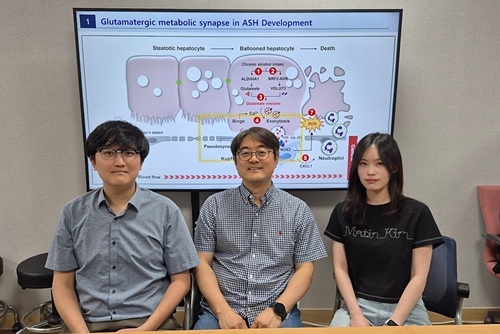
<(From left)Dr. Keungmo Yang, Professor Won-Il Jeong, Ph.D candidate Kyurae Kim>
Excessive alcohol consumption causes alcoholic liver disease, and about 20% of these cases progress to alcohol-associated steatohepatitis (ASH), which can lead to liver cirrhosis and liver failure. Early diagnosis and treatment are therefore extremely important. A KAIST research team has identified a new molecular mechanism in which alcohol-damaged liver cells increase reactive oxygen species (ROS), leading to cell death and inflammatory responses. In addition, they discovered that Kupffer cells, immune cells residing in the liver, act as a “dual-function regulator” that can either promote or suppress inflammation through interactions with liver cells.
KAIST (President Kwang-Hyung Lee) announced on the 17th that a research team led by Professor Won-Il Jeong from the Graduate School of Medical Science and Engineering, in collaboration with Professor Won Kim’s team at Seoul National University Boramae Medical Center, has uncovered the molecular pathway of liver damage and inflammation caused by alcohol consumption. This finding offers new clues for the diagnosis and treatment of alcohol-associated liver disease (ALD).
Professor Won-Il Jeong’s research team found that during chronic alcohol intake, expression of the vesicular glutamate transporter VGLUT3 increases, leading to glutamate accumulation in hepatocytes. Subsequent binge drinking causes rapid changes in intracellular calcium levels, which then triggers glutamate* secretion. The secreted glutamate stimulates the glutamate receptor mGluR5 on liver-resident macrophages (Kupffer cells), which induces ROS production and activates a pathological pathway resulting in hepatocyte death and inflammation.
*Glutamate: A type of amino acid involved in intercellular signaling, protein synthesis, and energy metabolism in various tissues including the brain and liver. In excess, it can cause overexcitation and death of nerve cells.
Glutamate accumulation in perivenous hepatocytes through vesicular glutamate transporter 3 after 2-week EtOH intake and its release by binge drinking>
A particularly groundbreaking aspect of this study is that damaged hepatocytes and Kupffer cells can form a "pseudosynapse"—a structure similar to a synapse which is previously thought to occur only in the brain—enabling them to exchange signals. This is the first time such a phenomenon has been identified in the liver.
This pseudosynapse forms when hepatocytes expand (ballooning) due to alcohol, becoming physically attached to Kupffer cells. Simply put, the damaged hepatocytes don’t just die—they send distress signals to nearby immune cells, prompting a response.
This discovery proposes a new paradigm: even in peripheral organs, direct structural contact between cells can allow signal transmission. It also shows that damaged hepatocytes can actively stimulate macrophages and induce regeneration through cell death, revealing the liver’s “autonomous recovery function.”
The team also confirmed in animal models that genetic or pharmacological inhibition of VGLUT3, mGluR5, or the ROS-producing enzyme NOX2 reduces alcohol-induced liver damage. They also confirmed that the same mechanism observed in animal models was present in human patients with ALD by analyzing blood and liver tissue samples.
Professor Won-Il Jeong of KAIST said, “These findings may serve as new molecular targets for early diagnosis and treatment of ASH in the future.”
This study was jointly led by Dr. Keungmo Yang (now at Yeouido St. Mary’s Hospital) and Kyurae Kim, a doctoral candidate at KAIST, who served as co–first authors. It was conducted in collaboration with Professor Won Kim’s team at Seoul National University Boramae Medical Center and was published in the journal Nature Communications on July 1.
※ Article Title: Binge drinking triggers VGLUT3-mediated glutamate secretion and subsequent hepatic inflammation by activating mGluR5/NOX2 in Kupffer cells ※ DOI: https://doi.org/10.1038/s41467-025-60820-3
This study was supported by the Ministry of Science and ICT through the National Research Foundation of Korea's Global Leader Program, Mid-Career Researcher Program, and the Bio & Medical Technology Development Program.
2025.07.17 View 3399
KAIST reveals for the first time the mechanism by which alcohol triggers liver inflammation
<(From left)Dr. Keungmo Yang, Professor Won-Il Jeong, Ph.D candidate Kyurae Kim>
Excessive alcohol consumption causes alcoholic liver disease, and about 20% of these cases progress to alcohol-associated steatohepatitis (ASH), which can lead to liver cirrhosis and liver failure. Early diagnosis and treatment are therefore extremely important. A KAIST research team has identified a new molecular mechanism in which alcohol-damaged liver cells increase reactive oxygen species (ROS), leading to cell death and inflammatory responses. In addition, they discovered that Kupffer cells, immune cells residing in the liver, act as a “dual-function regulator” that can either promote or suppress inflammation through interactions with liver cells.
KAIST (President Kwang-Hyung Lee) announced on the 17th that a research team led by Professor Won-Il Jeong from the Graduate School of Medical Science and Engineering, in collaboration with Professor Won Kim’s team at Seoul National University Boramae Medical Center, has uncovered the molecular pathway of liver damage and inflammation caused by alcohol consumption. This finding offers new clues for the diagnosis and treatment of alcohol-associated liver disease (ALD).
Professor Won-Il Jeong’s research team found that during chronic alcohol intake, expression of the vesicular glutamate transporter VGLUT3 increases, leading to glutamate accumulation in hepatocytes. Subsequent binge drinking causes rapid changes in intracellular calcium levels, which then triggers glutamate* secretion. The secreted glutamate stimulates the glutamate receptor mGluR5 on liver-resident macrophages (Kupffer cells), which induces ROS production and activates a pathological pathway resulting in hepatocyte death and inflammation.
*Glutamate: A type of amino acid involved in intercellular signaling, protein synthesis, and energy metabolism in various tissues including the brain and liver. In excess, it can cause overexcitation and death of nerve cells.
Glutamate accumulation in perivenous hepatocytes through vesicular glutamate transporter 3 after 2-week EtOH intake and its release by binge drinking>
A particularly groundbreaking aspect of this study is that damaged hepatocytes and Kupffer cells can form a "pseudosynapse"—a structure similar to a synapse which is previously thought to occur only in the brain—enabling them to exchange signals. This is the first time such a phenomenon has been identified in the liver.
This pseudosynapse forms when hepatocytes expand (ballooning) due to alcohol, becoming physically attached to Kupffer cells. Simply put, the damaged hepatocytes don’t just die—they send distress signals to nearby immune cells, prompting a response.
This discovery proposes a new paradigm: even in peripheral organs, direct structural contact between cells can allow signal transmission. It also shows that damaged hepatocytes can actively stimulate macrophages and induce regeneration through cell death, revealing the liver’s “autonomous recovery function.”
The team also confirmed in animal models that genetic or pharmacological inhibition of VGLUT3, mGluR5, or the ROS-producing enzyme NOX2 reduces alcohol-induced liver damage. They also confirmed that the same mechanism observed in animal models was present in human patients with ALD by analyzing blood and liver tissue samples.
Professor Won-Il Jeong of KAIST said, “These findings may serve as new molecular targets for early diagnosis and treatment of ASH in the future.”
This study was jointly led by Dr. Keungmo Yang (now at Yeouido St. Mary’s Hospital) and Kyurae Kim, a doctoral candidate at KAIST, who served as co–first authors. It was conducted in collaboration with Professor Won Kim’s team at Seoul National University Boramae Medical Center and was published in the journal Nature Communications on July 1.
※ Article Title: Binge drinking triggers VGLUT3-mediated glutamate secretion and subsequent hepatic inflammation by activating mGluR5/NOX2 in Kupffer cells ※ DOI: https://doi.org/10.1038/s41467-025-60820-3
This study was supported by the Ministry of Science and ICT through the National Research Foundation of Korea's Global Leader Program, Mid-Career Researcher Program, and the Bio & Medical Technology Development Program.
2025.07.17 View 3399 -
 KAIST to Develop a Korean-style ChatGPT Platform Specifically Geared Toward Medical Diagnosis and Drug Discovery
On May 23rd, KAIST (President Kwang-Hyung Lee) announced that its Digital Bio-Health AI Research Center (Director: Professor JongChul Ye of KAIST Kim Jaechul Graduate School of AI) has been selected for the Ministry of Science and ICT's 'AI Top-Tier Young Researcher Support Program (AI Star Fellowship Project).' With a total investment of ₩11.5 billion from May 2025 to December 2030, the center will embark on the full-scale development of AI technology and a platform capable of independently inferring and determining the kinds of diseases, and discovering new drugs.
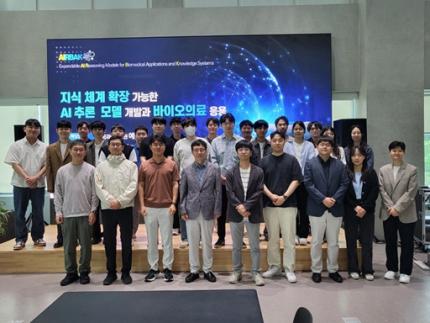
< Photo. On May 20th, a kick-off meeting for the AI Star Fellowship Project was held at KAIST Kim Jaechul Graduate School of AI’s Yangjae Research Center with the KAIST research team and participating organizations of Samsung Medical Center, NAVER Cloud, and HITS. [From left to right in the front row] Professor Jaegul Joo (KAIST), Professor Yoonjae Choi (KAIST), Professor Woo Youn Kim (KAIST/HITS), Professor JongChul Ye (KAIST), Professor Sungsoo Ahn (KAIST), Dr. Haanju Yoo (NAVER Cloud), Yoonho Lee (KAIST), HyeYoon Moon (Samsung Medical Center), Dr. Su Min Kim (Samsung Medical Center) >
This project aims to foster an innovative AI research ecosystem centered on young researchers and develop an inferential AI agent that can utilize and automatically expand specialized knowledge systems in the bio and medical fields.
Professor JongChul Ye of the Kim Jaechul Graduate School of AI will serve as the lead researcher, with young researchers from KAIST including Professors Yoonjae Choi, Kimin Lee, Sungsoo Ahn, and Chanyoung Park, along with mid-career researchers like Professors Jaegul Joo and Woo Youn Kim, jointly undertaking the project. They will collaborate with various laboratories within KAIST to conduct comprehensive research covering the entire cycle from the theoretical foundations of AI inference to its practical application.
Specifically, the main goals include: - Building high-performance inference models that integrate diverse medical knowledge systems to enhance the precision and reliability of diagnosis and treatment. - Developing a convergence inference platform that efficiently combines symbol-based inference with neural network models. - Securing AI technology for new drug development and biomarker discovery based on 'cell ontology.'
Furthermore, through close collaboration with industry and medical institutions such as Samsung Medical Center, NAVER Cloud, and HITS Co., Ltd., the project aims to achieve: - Clinical diagnostic AI utilizing medical knowledge systems. - AI-based molecular target exploration for new drug development. - Commercialization of an extendible AI inference platform.
Professor JongChul Ye, Director of KAIST's Digital Bio-Health AI Research Center, stated, "At a time when competition in AI inference model development is intensifying, it is a great honor for KAIST to lead the development of AI technology specialized in the bio and medical fields with world-class young researchers." He added, "We will do our best to ensure that the participating young researchers reach a world-leading level in terms of research achievements after the completion of this seven-year project starting in 2025."
The AI Star Fellowship is a newly established program where post-doctoral researchers and faculty members within seven years of appointment participate as project leaders (PLs) to independently lead research. Multiple laboratories within a university and demand-side companies form a consortium to operate the program.
Through this initiative, KAIST plans to nurture bio-medical convergence AI talent and simultaneously promote the commercialization of core technologies in collaboration with Samsung Medical Center, NAVER Cloud, and HITS.
2025.05.26 View 15020
KAIST to Develop a Korean-style ChatGPT Platform Specifically Geared Toward Medical Diagnosis and Drug Discovery
On May 23rd, KAIST (President Kwang-Hyung Lee) announced that its Digital Bio-Health AI Research Center (Director: Professor JongChul Ye of KAIST Kim Jaechul Graduate School of AI) has been selected for the Ministry of Science and ICT's 'AI Top-Tier Young Researcher Support Program (AI Star Fellowship Project).' With a total investment of ₩11.5 billion from May 2025 to December 2030, the center will embark on the full-scale development of AI technology and a platform capable of independently inferring and determining the kinds of diseases, and discovering new drugs.
< Photo. On May 20th, a kick-off meeting for the AI Star Fellowship Project was held at KAIST Kim Jaechul Graduate School of AI’s Yangjae Research Center with the KAIST research team and participating organizations of Samsung Medical Center, NAVER Cloud, and HITS. [From left to right in the front row] Professor Jaegul Joo (KAIST), Professor Yoonjae Choi (KAIST), Professor Woo Youn Kim (KAIST/HITS), Professor JongChul Ye (KAIST), Professor Sungsoo Ahn (KAIST), Dr. Haanju Yoo (NAVER Cloud), Yoonho Lee (KAIST), HyeYoon Moon (Samsung Medical Center), Dr. Su Min Kim (Samsung Medical Center) >
This project aims to foster an innovative AI research ecosystem centered on young researchers and develop an inferential AI agent that can utilize and automatically expand specialized knowledge systems in the bio and medical fields.
Professor JongChul Ye of the Kim Jaechul Graduate School of AI will serve as the lead researcher, with young researchers from KAIST including Professors Yoonjae Choi, Kimin Lee, Sungsoo Ahn, and Chanyoung Park, along with mid-career researchers like Professors Jaegul Joo and Woo Youn Kim, jointly undertaking the project. They will collaborate with various laboratories within KAIST to conduct comprehensive research covering the entire cycle from the theoretical foundations of AI inference to its practical application.
Specifically, the main goals include: - Building high-performance inference models that integrate diverse medical knowledge systems to enhance the precision and reliability of diagnosis and treatment. - Developing a convergence inference platform that efficiently combines symbol-based inference with neural network models. - Securing AI technology for new drug development and biomarker discovery based on 'cell ontology.'
Furthermore, through close collaboration with industry and medical institutions such as Samsung Medical Center, NAVER Cloud, and HITS Co., Ltd., the project aims to achieve: - Clinical diagnostic AI utilizing medical knowledge systems. - AI-based molecular target exploration for new drug development. - Commercialization of an extendible AI inference platform.
Professor JongChul Ye, Director of KAIST's Digital Bio-Health AI Research Center, stated, "At a time when competition in AI inference model development is intensifying, it is a great honor for KAIST to lead the development of AI technology specialized in the bio and medical fields with world-class young researchers." He added, "We will do our best to ensure that the participating young researchers reach a world-leading level in terms of research achievements after the completion of this seven-year project starting in 2025."
The AI Star Fellowship is a newly established program where post-doctoral researchers and faculty members within seven years of appointment participate as project leaders (PLs) to independently lead research. Multiple laboratories within a university and demand-side companies form a consortium to operate the program.
Through this initiative, KAIST plans to nurture bio-medical convergence AI talent and simultaneously promote the commercialization of core technologies in collaboration with Samsung Medical Center, NAVER Cloud, and HITS.
2025.05.26 View 15020 -
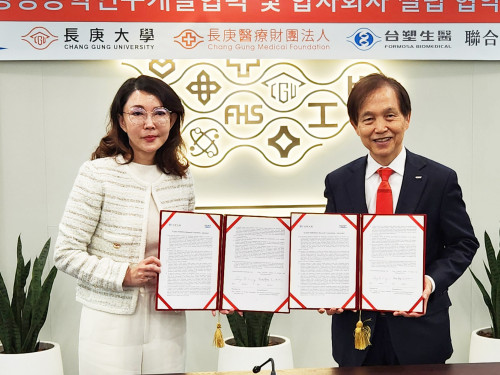 Formosa Group of Taiwan to Establish Bio R&D Center at KAIST Investing 12.5 M USD
KAIST (President Kwang-Hyung Lee) announced on February 17th that it signed an agreement for cooperation in the bio-medical field with Formosa Group, one of the three largest companies in Taiwan.
< Formosa Group Chairman Sandy Wang and KAIST President Kwang-Hyung Lee at the signing ceremony >
Formosa Group Executive Committee member and Chairman Sandy Wang, who leads the group's bio and eco-friendly energy sectors, decided to establish a bio-medical research center within KAIST and invest approximately KRW 18 billion or more over 5 years. In addition, to commercialize the research results, KAIST and Formosa Group will establish a joint venture in Korea with KAIST Holdings, a KAIST-funded company.
The cooperation between the two organizations began in early 2023 when KAIST signed a comprehensive exchange and cooperation agreement (MOU) with Ming Chi University of Science and Technology (明志科技大學), Chang Gung University (長庚大學), and Chang Gung Memorial Hospital (長庚記念醫院), which are established and supported by Formosa Group. Afterwards, Chairman Sandy Wang visited KAIST in May 2024 and signed a more specific business agreement (MOA).
KAIST Holdings is a holding company established by KAIST, a government-funded organization, to attract investment and conduct business, and will pursue the establishment of a joint venture with a 50:50 equity structure in cooperation with Formosa Group. KAIST Holdings will invest KAIST’s intellectual property rights, and Formosa Group will invest a corresponding amount of funds.
The KAIST-Formosa joint venture will provide research funds to the KAIST-Formosa Bio-Medical Research Center to be established in the future, secure the right to implement the intellectual property rights generated, and promote full-scale business.
The KAIST-Formosa Bio-Medical Research Center will establish a ‘brain organoid bank’ created by obtaining tissues from hundreds of patients with degenerative brain diseases, thereby securing high-dimensional data that will reveal the fundamental causes of aging and disease. It is expected that KAIST’s world-class artificial intelligence technology will analyze large-scale patient data to find the causes of aging and disease.
Through this business, it is expected that by 2030, five years from now, it will discover more than 10 types of intractable brain disease treatments and expand to more than 20 businesses, including human cell-centered diagnostics and preclinical businesses, and secure infrastructure and intellectual property rights that can create value worth approximately KRW 250 billion.
The Chang Gung Memorial Hospital in Taiwan has 10,000 beds and handles 35,000 patients per day, and systematically accumulates patient tissue and clinical data. Chang Gung Memorial Hospital will differentiate the tissues of patients with degenerative brain diseases and send them to the KAIST-Formosa Bio-Medical Research Center, which will then produce brain organoids to be used for disease research and new drug development. This will allow the world’s largest patient tissue data bank to be established.
Dean Daesoo Kim of the College of Life Science and Bioengineering at KAIST said, “This collaboration between KAIST and Formosa Group is a new research collaboration model that goes beyond joint research to establish a joint venture and global commercialization of developed technologies, and it is significant in that it can serve as an opportunity to promote biomedical research and development.”
With this agreement, KAIST, which has been promoting the KAIST Advanced Regenerative Medicine Engineering Center in Osong K-Bio Square, has secured a practical global partner.
< Representatives of the Formosa Group and KAIST >
KAIST’s Senior Vice President for Planning and Budget, Professor Kyung-Soo Kim emphasized, “KAIST has made great efforts to secure an edge in state-of-the-art biomedical fields such as stem cells and gene editing technology, by attracting the world’s best experts and discovering global cooperation partners, and these results can ultimately be linked to the Osong K-Bio Square project.”
SVP Kim then predicted, “In particular, the practical cooperation with Taiwan’s best Formosa Chang Gung Memorial Hospital, which has abundant clinical experience in stem cell treatment, will be an important axis of KAIST’s bio innovation strategy.”
Formosa Chairman Sandy Wang emphasized that this investment and cooperation is built on trust in KAIST’s R&D capabilities and the passion of its researchers. And added that through this, the Formosa Group will practice corporate social responsibility and take an important first step together with KAIST to protect the welfare and health of humanity. She also went on the say that she expects to see the cooperation expanded to various fields such as mobility and semiconductors based on the successes begotten from the cooperation in the bio field.
KAIST President Kwang-Hyung Lee said, “I evaluate this agreement as one of the most important events that will spearhead KAIST into overseas biotechnology stages,” and added, “I expect that this cooperation will be an opportunity for Taiwan and Korea, both of which have IT industry-centered structures, to create new growth engines in the bio industry.” Meanwhile, Formosa Group is a company founded by Chairman Sandy Wang’s father, Chairman Yung-Ching Wang. It is the world’s No. 1 plastic PVC producer and is leading core industries of the Taiwanese economy, including semiconductors, steel, heavy industry, bio, and batteries. Chairman Yung-Ching Wang was respected by the Taiwanese people for his exemplary return of wealth to society under the belief that the companies and assets he founded “belong to the people.”
2025.02.17 View 10837
Formosa Group of Taiwan to Establish Bio R&D Center at KAIST Investing 12.5 M USD
KAIST (President Kwang-Hyung Lee) announced on February 17th that it signed an agreement for cooperation in the bio-medical field with Formosa Group, one of the three largest companies in Taiwan.
< Formosa Group Chairman Sandy Wang and KAIST President Kwang-Hyung Lee at the signing ceremony >
Formosa Group Executive Committee member and Chairman Sandy Wang, who leads the group's bio and eco-friendly energy sectors, decided to establish a bio-medical research center within KAIST and invest approximately KRW 18 billion or more over 5 years. In addition, to commercialize the research results, KAIST and Formosa Group will establish a joint venture in Korea with KAIST Holdings, a KAIST-funded company.
The cooperation between the two organizations began in early 2023 when KAIST signed a comprehensive exchange and cooperation agreement (MOU) with Ming Chi University of Science and Technology (明志科技大學), Chang Gung University (長庚大學), and Chang Gung Memorial Hospital (長庚記念醫院), which are established and supported by Formosa Group. Afterwards, Chairman Sandy Wang visited KAIST in May 2024 and signed a more specific business agreement (MOA).
KAIST Holdings is a holding company established by KAIST, a government-funded organization, to attract investment and conduct business, and will pursue the establishment of a joint venture with a 50:50 equity structure in cooperation with Formosa Group. KAIST Holdings will invest KAIST’s intellectual property rights, and Formosa Group will invest a corresponding amount of funds.
The KAIST-Formosa joint venture will provide research funds to the KAIST-Formosa Bio-Medical Research Center to be established in the future, secure the right to implement the intellectual property rights generated, and promote full-scale business.
The KAIST-Formosa Bio-Medical Research Center will establish a ‘brain organoid bank’ created by obtaining tissues from hundreds of patients with degenerative brain diseases, thereby securing high-dimensional data that will reveal the fundamental causes of aging and disease. It is expected that KAIST’s world-class artificial intelligence technology will analyze large-scale patient data to find the causes of aging and disease.
Through this business, it is expected that by 2030, five years from now, it will discover more than 10 types of intractable brain disease treatments and expand to more than 20 businesses, including human cell-centered diagnostics and preclinical businesses, and secure infrastructure and intellectual property rights that can create value worth approximately KRW 250 billion.
The Chang Gung Memorial Hospital in Taiwan has 10,000 beds and handles 35,000 patients per day, and systematically accumulates patient tissue and clinical data. Chang Gung Memorial Hospital will differentiate the tissues of patients with degenerative brain diseases and send them to the KAIST-Formosa Bio-Medical Research Center, which will then produce brain organoids to be used for disease research and new drug development. This will allow the world’s largest patient tissue data bank to be established.
Dean Daesoo Kim of the College of Life Science and Bioengineering at KAIST said, “This collaboration between KAIST and Formosa Group is a new research collaboration model that goes beyond joint research to establish a joint venture and global commercialization of developed technologies, and it is significant in that it can serve as an opportunity to promote biomedical research and development.”
With this agreement, KAIST, which has been promoting the KAIST Advanced Regenerative Medicine Engineering Center in Osong K-Bio Square, has secured a practical global partner.
< Representatives of the Formosa Group and KAIST >
KAIST’s Senior Vice President for Planning and Budget, Professor Kyung-Soo Kim emphasized, “KAIST has made great efforts to secure an edge in state-of-the-art biomedical fields such as stem cells and gene editing technology, by attracting the world’s best experts and discovering global cooperation partners, and these results can ultimately be linked to the Osong K-Bio Square project.”
SVP Kim then predicted, “In particular, the practical cooperation with Taiwan’s best Formosa Chang Gung Memorial Hospital, which has abundant clinical experience in stem cell treatment, will be an important axis of KAIST’s bio innovation strategy.”
Formosa Chairman Sandy Wang emphasized that this investment and cooperation is built on trust in KAIST’s R&D capabilities and the passion of its researchers. And added that through this, the Formosa Group will practice corporate social responsibility and take an important first step together with KAIST to protect the welfare and health of humanity. She also went on the say that she expects to see the cooperation expanded to various fields such as mobility and semiconductors based on the successes begotten from the cooperation in the bio field.
KAIST President Kwang-Hyung Lee said, “I evaluate this agreement as one of the most important events that will spearhead KAIST into overseas biotechnology stages,” and added, “I expect that this cooperation will be an opportunity for Taiwan and Korea, both of which have IT industry-centered structures, to create new growth engines in the bio industry.” Meanwhile, Formosa Group is a company founded by Chairman Sandy Wang’s father, Chairman Yung-Ching Wang. It is the world’s No. 1 plastic PVC producer and is leading core industries of the Taiwanese economy, including semiconductors, steel, heavy industry, bio, and batteries. Chairman Yung-Ching Wang was respected by the Taiwanese people for his exemplary return of wealth to society under the belief that the companies and assets he founded “belong to the people.”
2025.02.17 View 10837 -
 Genome Sequencing Unveils Mutational Impacts of Radiation on Mammalian Cells
Recent release of the waste water from Japan's Fukushima nuclear disaster stirred apprehension regarding the health implications of radiation exposure. Classified as a Group 1 carcinogen, ionizing radiation has long been associated with various cancers and genetic disorders, as evidenced by survivors and descendants of atomic bombings and the Chernobyl disaster. Despite much smaller amount, we remain consistently exposed to low levels of radiation in everyday life and medical procedures.
Radiation, whether in the form of high-energy particles or electromagnetic waves, is conventionally known to break our cellular DNA, leading to cancer and genetic disorders. Yet, our understanding of the quantitative and qualitative mutational impacts of ionizing radiation has been incomplete.
On the 14th, Professor Young Seok Ju and his research team from KAIST, in collaboration with Dr. Tae Gen Son from the Dongnam Institute of Radiological and Medical Science, and Professors Kyung Su Kim and Ji Hyun Chang from Seoul National University, unveiled a breakthrough. Their study, led by joint first authors Drs. Jeonghwan Youk, Hyun Woo Kwon, Joonoh Lim, Eunji Kim and Tae-Woo Kim, titled "Quantitative and qualitative mutational impact of ionizing radiation on normal cells," was published in Cell Genomics.
Employing meticulous techniques, the research team comprehensively analyzed the whole-genome sequences of cells pre- and post-radiation exposure, pinpointing radiation-induced DNA mutations. Experiments involving cells from different organs of humans and mice exposed to varying radiation doses revealed mutation patterns correlating with exposure levels. (Figure 1)
Notably, exposure to 1 Gray (Gy) of radiation resulted in on average 14 mutations in every post-exposure cell. (Figure 2) Unlike other carcinogens, radiation-induced mutations primarily comprised short base deletions and a set of structural variations including inversions, translocations, and various complex genomic rearrangements. (Figure 3) Interestingly, experiments subjecting cells to low radiation dose rate over 100 days demonstrated that mutation quantities, under equivalent total radiation doses, mirrored those of high-dose exposure.
"Through this study, we have clearly elucidated the effects of radiation on cells at the molecular level," said Prof. Ju at KAIST. "Now we understand better how radiation changes the DNA of our cells," he added.
Dr. Son from the Dongnam Institute of Radiological and Medical Science stated, "Based on this study, we will continue to research the effects of very low and very high doses of radiation on the human body," and further remarked, "We will advance the development of safe and effective radiation therapy techniques."
Professors Kim and Chang from Seoul National University College of Medicine expressed their views, saying, "Through this study, we believe we now have a tool to accurately understand the impact of radiation on human DNA," and added, "We hope that many subsequent studies will emerge using the research methodologies employed in this study."
This research represents a significant leap forward in radiation studies, made possible through collaborative efforts and interdisciplinary approaches. This pioneering research engaged scholars from diverse backgrounds, spanning from the Genetic Engineering Research Institute at Seoul National University, the Cambridge Stem Cell Institute in the UK, the Institute for Molecular Biotechnology in Austria (IMBA), and the Genome Insight Inc. (a KAIST spin-off start-up). This study was supported by various institutions including the National Research Foundation of Korea, Dongnam Institute of Radiological and Medical Science (supported by Ministry of Science and ICT, the government of South Korea), the Suh Kyungbae Foundation, the Human Frontier Science Program (HFSP), and the Korea University Anam Hospital Korea Foundation for the Advancement of Science and Creativity, the Ministry of Science and ICT, and the National R&D Program.
2024.02.15 View 14472
Genome Sequencing Unveils Mutational Impacts of Radiation on Mammalian Cells
Recent release of the waste water from Japan's Fukushima nuclear disaster stirred apprehension regarding the health implications of radiation exposure. Classified as a Group 1 carcinogen, ionizing radiation has long been associated with various cancers and genetic disorders, as evidenced by survivors and descendants of atomic bombings and the Chernobyl disaster. Despite much smaller amount, we remain consistently exposed to low levels of radiation in everyday life and medical procedures.
Radiation, whether in the form of high-energy particles or electromagnetic waves, is conventionally known to break our cellular DNA, leading to cancer and genetic disorders. Yet, our understanding of the quantitative and qualitative mutational impacts of ionizing radiation has been incomplete.
On the 14th, Professor Young Seok Ju and his research team from KAIST, in collaboration with Dr. Tae Gen Son from the Dongnam Institute of Radiological and Medical Science, and Professors Kyung Su Kim and Ji Hyun Chang from Seoul National University, unveiled a breakthrough. Their study, led by joint first authors Drs. Jeonghwan Youk, Hyun Woo Kwon, Joonoh Lim, Eunji Kim and Tae-Woo Kim, titled "Quantitative and qualitative mutational impact of ionizing radiation on normal cells," was published in Cell Genomics.
Employing meticulous techniques, the research team comprehensively analyzed the whole-genome sequences of cells pre- and post-radiation exposure, pinpointing radiation-induced DNA mutations. Experiments involving cells from different organs of humans and mice exposed to varying radiation doses revealed mutation patterns correlating with exposure levels. (Figure 1)
Notably, exposure to 1 Gray (Gy) of radiation resulted in on average 14 mutations in every post-exposure cell. (Figure 2) Unlike other carcinogens, radiation-induced mutations primarily comprised short base deletions and a set of structural variations including inversions, translocations, and various complex genomic rearrangements. (Figure 3) Interestingly, experiments subjecting cells to low radiation dose rate over 100 days demonstrated that mutation quantities, under equivalent total radiation doses, mirrored those of high-dose exposure.
"Through this study, we have clearly elucidated the effects of radiation on cells at the molecular level," said Prof. Ju at KAIST. "Now we understand better how radiation changes the DNA of our cells," he added.
Dr. Son from the Dongnam Institute of Radiological and Medical Science stated, "Based on this study, we will continue to research the effects of very low and very high doses of radiation on the human body," and further remarked, "We will advance the development of safe and effective radiation therapy techniques."
Professors Kim and Chang from Seoul National University College of Medicine expressed their views, saying, "Through this study, we believe we now have a tool to accurately understand the impact of radiation on human DNA," and added, "We hope that many subsequent studies will emerge using the research methodologies employed in this study."
This research represents a significant leap forward in radiation studies, made possible through collaborative efforts and interdisciplinary approaches. This pioneering research engaged scholars from diverse backgrounds, spanning from the Genetic Engineering Research Institute at Seoul National University, the Cambridge Stem Cell Institute in the UK, the Institute for Molecular Biotechnology in Austria (IMBA), and the Genome Insight Inc. (a KAIST spin-off start-up). This study was supported by various institutions including the National Research Foundation of Korea, Dongnam Institute of Radiological and Medical Science (supported by Ministry of Science and ICT, the government of South Korea), the Suh Kyungbae Foundation, the Human Frontier Science Program (HFSP), and the Korea University Anam Hospital Korea Foundation for the Advancement of Science and Creativity, the Ministry of Science and ICT, and the National R&D Program.
2024.02.15 View 14472