%4c%61%75%72%65%61%74%65
-
 InnoCORE Research Group Successfully Achieves AI Protein Design with Nobel Laureate David Baker
< (From left) Professor Gyu Rie Lee, Professor David Baker >
Under the foundation of research cooperation established through the Ministry of Science and ICT's InnoCORE (InnoCORE) project, KAIST InnoCORE researchers have derived meaningful research results. Following a visit by Professor David Baker (University of Washington, USA), the 2024 Nobel Laureate in Chemistry, KAIST has revealed research findings on designing proteins that accurately recognize desired compounds using AI through joint research.
KAIST announced on April 9th that Professor Gyu Rie Lee of the Department of Biological Sciences—a researcher participating in the AI-CRED Innovative Drug InnoCORE Research Group—successfully designed artificial proteins that selectively recognize specific compounds using AI through joint research with Professor David Baker.
This research is characterized by using AI to design proteins that recognize specific compounds from scratch (de novo) and implementing them as functional biosensors. While the conventional approach mainly involved searching natural proteins or modifying some of their functions, this research is highly significant in that it ‘custom-built’ proteins with desired functions through AI-based design and even completed experimental verification.
In particular, the research team successfully designed a protein that selectively recognizes the stress hormone cortisol and implemented an AI-designed biosensor based on it. This is evaluated as a case that extends beyond protein design to actual measurable sensor technology, solving the long-standing challenge of small-molecule recognition in the field of protein design.
These research results are expected to be utilized in various fields such as disease diagnosis, new drug development, and environmental monitoring in the future. It can precisely detect biomarkers in the blood to diagnose diseases early and contribute to the development of targeted therapies through the design of proteins that selectively recognize specific molecules. Furthermore, it is expected that the implementation of customized biosensor technology will become possible, such as real-time monitoring of air and water quality through the development of sensors that detect environmental pollutants.
Designing new proteins (de novo proteins) that recognize compounds has been considered a challenge in the field of protein design for a long time because it requires precise calculations at the atomic level. The research team developed an AI model that precisely reflects protein-ligand interactions and successfully designed binding proteins using it.
As a result, artificial binding proteins were designed for six types of compounds, including metabolites and small-molecule drugs, and their functions were verified through experiments. In particular, a cortisol biosensor was developed by designing a chemical-induced dimer based on a new protein that binds with cortisol. A provisional patent for the relevant design technology has been filed in the United States.
Professor Gyu Rie Lee stated, “This research experimentally proves that AI can be used to design proteins that precisely recognize specific compounds,” and added, “We plan to expand this into protein design technology that can be utilized in various fields such as disease diagnosis, new drug development, and environmental monitoring in the future.”
Professor Gyu Rie Lee of the KAIST Department of Biological Sciences participated in this research as the first author, and Professor David Baker as the corresponding author. The study was published in the international academic journal Nature Communications on March 28, 2026. ※ Paper Title: Small-molecule binding and sensing with a designed protein family DOI: https://doi.org/10.1038/s41467-026-70953-8 Authors: Gyu Rie Lee, Samuel J. Pellock, Christoffer Norn, Doug Tischer, Justas Dauparas, Ivan Anishchenko, Jaron A. M. Mercer, Alex Kang, Asim K. Bera, Hannah Nguyen, Evans Brackenbrough, Banumathi Sankaran, Inna Goreshnik, Dionne Vafeados, Nicole Roullier, Hannah L. Han, Brian Coventry, Hugh K. Haddox, David R. Liu, Andy Hsien-Wei Yeh & David Baker
< Image of Research Content Summary >
Professor Gyu Rie Lee is a new professor who joined KAIST in February 2025 and leads the Protein Design Laboratory. She possesses world-class expertise in the field of precise protein complex design at the atomic level and is performing various research projects such as AI-based protein design, artificial enzyme design, and RNA-recognizing protein development. She is also participating as a mentor professor in the AI-CRED Innovative Drug Research Group of the InnoCORE project, conducting research on enzyme and peptide drug design.
Professor Lee conducted research as a postdoctoral researcher and Staff Scientist in Professor David Baker’s laboratory (University of Washington, USA, Howard Hughes Medical Institute) from 2018 to 2024. Professor David Baker is a world-renowned scholar in the field of protein structure prediction and design and was awarded the Nobel Prize in Chemistry in 2024.
Director Do-Heon Lee, a mentor professor of the AI-CRED Innovative Drug Research Group, stated, “This achievement is a meaningful result derived through cooperation between InnoCORE researchers and a global scholar,” and added, “We will further strengthen our research capabilities based on active research collaboration with postdoctoral researchers recruited through the InnoCORE project to continue creating innovative results in the AI drug development and bio-fields.”
Meanwhile, KAIST will host a lecture on Thursday, April 9th at 4 PM in the KI Building Fusion Hall featuring Professor David Baker and Professor Hannele Ruohola-Baker (University of Washington, USA) under the theme of ‘Advances in AI-powered protein design and biomedical science’ to mark Professor David Baker’s visit to Korea. This event is held with the support of the KAIST International Scholar Invitation Program, KAI-X, the InnoCORE AI-CRED Innovative Drug Group, and the Ministry of Science and ICT’s Overseas Excellent Research Institute Cooperation Hub Construction Project.
< Poster for Professor David Baker’s Invited Lecture >
KAIST President Kwang Hyung Lee stated, “Through cooperation with Nobel Laureate Professor David Baker, we have derived a meaningful achievement in AI-based protein design,” and added, “This research is an example showing that KAIST is leading innovative research alongside world-class research institutions.”
Meanwhile, the KAIST InnoCORE Research Group aims to accelerate AI-based scientific and technological innovation and promote global joint research by supporting top-tier domestic and international postdoctoral researchers to devote themselves to the development of AI convergence technology in a cutting-edge collective research environment. As the lead institution, KAIST operates the ▲Hyper-scale Large Language Model Innovation Research Group ▲AI-based Intelligent Design-Manufacturing Integration Research Group ▲AI-CRED Innovative Drug Research Group and ▲AI-Transformed Aerospace Research Group.
2026.04.09 View 1445
InnoCORE Research Group Successfully Achieves AI Protein Design with Nobel Laureate David Baker
< (From left) Professor Gyu Rie Lee, Professor David Baker >
Under the foundation of research cooperation established through the Ministry of Science and ICT's InnoCORE (InnoCORE) project, KAIST InnoCORE researchers have derived meaningful research results. Following a visit by Professor David Baker (University of Washington, USA), the 2024 Nobel Laureate in Chemistry, KAIST has revealed research findings on designing proteins that accurately recognize desired compounds using AI through joint research.
KAIST announced on April 9th that Professor Gyu Rie Lee of the Department of Biological Sciences—a researcher participating in the AI-CRED Innovative Drug InnoCORE Research Group—successfully designed artificial proteins that selectively recognize specific compounds using AI through joint research with Professor David Baker.
This research is characterized by using AI to design proteins that recognize specific compounds from scratch (de novo) and implementing them as functional biosensors. While the conventional approach mainly involved searching natural proteins or modifying some of their functions, this research is highly significant in that it ‘custom-built’ proteins with desired functions through AI-based design and even completed experimental verification.
In particular, the research team successfully designed a protein that selectively recognizes the stress hormone cortisol and implemented an AI-designed biosensor based on it. This is evaluated as a case that extends beyond protein design to actual measurable sensor technology, solving the long-standing challenge of small-molecule recognition in the field of protein design.
These research results are expected to be utilized in various fields such as disease diagnosis, new drug development, and environmental monitoring in the future. It can precisely detect biomarkers in the blood to diagnose diseases early and contribute to the development of targeted therapies through the design of proteins that selectively recognize specific molecules. Furthermore, it is expected that the implementation of customized biosensor technology will become possible, such as real-time monitoring of air and water quality through the development of sensors that detect environmental pollutants.
Designing new proteins (de novo proteins) that recognize compounds has been considered a challenge in the field of protein design for a long time because it requires precise calculations at the atomic level. The research team developed an AI model that precisely reflects protein-ligand interactions and successfully designed binding proteins using it.
As a result, artificial binding proteins were designed for six types of compounds, including metabolites and small-molecule drugs, and their functions were verified through experiments. In particular, a cortisol biosensor was developed by designing a chemical-induced dimer based on a new protein that binds with cortisol. A provisional patent for the relevant design technology has been filed in the United States.
Professor Gyu Rie Lee stated, “This research experimentally proves that AI can be used to design proteins that precisely recognize specific compounds,” and added, “We plan to expand this into protein design technology that can be utilized in various fields such as disease diagnosis, new drug development, and environmental monitoring in the future.”
Professor Gyu Rie Lee of the KAIST Department of Biological Sciences participated in this research as the first author, and Professor David Baker as the corresponding author. The study was published in the international academic journal Nature Communications on March 28, 2026. ※ Paper Title: Small-molecule binding and sensing with a designed protein family DOI: https://doi.org/10.1038/s41467-026-70953-8 Authors: Gyu Rie Lee, Samuel J. Pellock, Christoffer Norn, Doug Tischer, Justas Dauparas, Ivan Anishchenko, Jaron A. M. Mercer, Alex Kang, Asim K. Bera, Hannah Nguyen, Evans Brackenbrough, Banumathi Sankaran, Inna Goreshnik, Dionne Vafeados, Nicole Roullier, Hannah L. Han, Brian Coventry, Hugh K. Haddox, David R. Liu, Andy Hsien-Wei Yeh & David Baker
< Image of Research Content Summary >
Professor Gyu Rie Lee is a new professor who joined KAIST in February 2025 and leads the Protein Design Laboratory. She possesses world-class expertise in the field of precise protein complex design at the atomic level and is performing various research projects such as AI-based protein design, artificial enzyme design, and RNA-recognizing protein development. She is also participating as a mentor professor in the AI-CRED Innovative Drug Research Group of the InnoCORE project, conducting research on enzyme and peptide drug design.
Professor Lee conducted research as a postdoctoral researcher and Staff Scientist in Professor David Baker’s laboratory (University of Washington, USA, Howard Hughes Medical Institute) from 2018 to 2024. Professor David Baker is a world-renowned scholar in the field of protein structure prediction and design and was awarded the Nobel Prize in Chemistry in 2024.
Director Do-Heon Lee, a mentor professor of the AI-CRED Innovative Drug Research Group, stated, “This achievement is a meaningful result derived through cooperation between InnoCORE researchers and a global scholar,” and added, “We will further strengthen our research capabilities based on active research collaboration with postdoctoral researchers recruited through the InnoCORE project to continue creating innovative results in the AI drug development and bio-fields.”
Meanwhile, KAIST will host a lecture on Thursday, April 9th at 4 PM in the KI Building Fusion Hall featuring Professor David Baker and Professor Hannele Ruohola-Baker (University of Washington, USA) under the theme of ‘Advances in AI-powered protein design and biomedical science’ to mark Professor David Baker’s visit to Korea. This event is held with the support of the KAIST International Scholar Invitation Program, KAI-X, the InnoCORE AI-CRED Innovative Drug Group, and the Ministry of Science and ICT’s Overseas Excellent Research Institute Cooperation Hub Construction Project.
< Poster for Professor David Baker’s Invited Lecture >
KAIST President Kwang Hyung Lee stated, “Through cooperation with Nobel Laureate Professor David Baker, we have derived a meaningful achievement in AI-based protein design,” and added, “This research is an example showing that KAIST is leading innovative research alongside world-class research institutions.”
Meanwhile, the KAIST InnoCORE Research Group aims to accelerate AI-based scientific and technological innovation and promote global joint research by supporting top-tier domestic and international postdoctoral researchers to devote themselves to the development of AI convergence technology in a cutting-edge collective research environment. As the lead institution, KAIST operates the ▲Hyper-scale Large Language Model Innovation Research Group ▲AI-based Intelligent Design-Manufacturing Integration Research Group ▲AI-CRED Innovative Drug Research Group and ▲AI-Transformed Aerospace Research Group.
2026.04.09 View 1445 -
 Professor Sang Yup Lee Selected as IETI 'Laureate Distinguished Fellow'
<Professor Sang Yup Lee of the Department of Chemical and Biomolecular Engineering>
Professor Sang Yup Lee of KAIST Department of Chemical and Biomolecular Engineering has been selected as a 'Laureate Distinguished Fellow,' the highest rank of fellow, by the International Engineering and Technology Institute (IETI).
Professor Lee is a globally renowned biotechnologist who has been leading research on the sustainable production of bio-based chemicals, and he received the 'ENI Award' in 2018. With this selection, he stands shoulder-to-shoulder with the world's top scholars, including recipients of the Nobel, Fields, and Turing Prizes.
IETI is an international academic organization established in Hong Kong in 2015 to promote innovation and international cooperation in the fields of engineering, technology, and science. Each year, the institute selects researchers with significant academic influence worldwide and appoints them into three grades: Laureate Distinguished Fellow, Distinguished Fellow, and Fellow. Professor Lee has been named to the most prestigious grade among these.
<IETI 2025 Fellow Selection Photo>
A total of 70 new fellows were selected in 2025. Among them, 14 individuals were named Laureate Distinguished Fellows, which includes recipients of top honors such as the Nobel, Fields, and Turing Prizes. Besides Professor Lee, this group includes Dudley Herschbach of Harvard University (Nobel Prize in Chemistry), Vint Cerf of Google (Turing Award), and Shigefumi Mori of Kyoto University (Fields Medal).
IETI stated that the selection process involved a rigorous five-step procedure: nomination, qualification review, document screening, expert voting, and final evaluation. It also expressed hope that the newly appointed fellows will demonstrate academic leadership in their respective research fields and contribute to global scientific and technological innovation and the promotion of international cooperation.
2025.11.10 View 2307
Professor Sang Yup Lee Selected as IETI 'Laureate Distinguished Fellow'
<Professor Sang Yup Lee of the Department of Chemical and Biomolecular Engineering>
Professor Sang Yup Lee of KAIST Department of Chemical and Biomolecular Engineering has been selected as a 'Laureate Distinguished Fellow,' the highest rank of fellow, by the International Engineering and Technology Institute (IETI).
Professor Lee is a globally renowned biotechnologist who has been leading research on the sustainable production of bio-based chemicals, and he received the 'ENI Award' in 2018. With this selection, he stands shoulder-to-shoulder with the world's top scholars, including recipients of the Nobel, Fields, and Turing Prizes.
IETI is an international academic organization established in Hong Kong in 2015 to promote innovation and international cooperation in the fields of engineering, technology, and science. Each year, the institute selects researchers with significant academic influence worldwide and appoints them into three grades: Laureate Distinguished Fellow, Distinguished Fellow, and Fellow. Professor Lee has been named to the most prestigious grade among these.
<IETI 2025 Fellow Selection Photo>
A total of 70 new fellows were selected in 2025. Among them, 14 individuals were named Laureate Distinguished Fellows, which includes recipients of top honors such as the Nobel, Fields, and Turing Prizes. Besides Professor Lee, this group includes Dudley Herschbach of Harvard University (Nobel Prize in Chemistry), Vint Cerf of Google (Turing Award), and Shigefumi Mori of Kyoto University (Fields Medal).
IETI stated that the selection process involved a rigorous five-step procedure: nomination, qualification review, document screening, expert voting, and final evaluation. It also expressed hope that the newly appointed fellows will demonstrate academic leadership in their respective research fields and contribute to global scientific and technological innovation and the promotion of international cooperation.
2025.11.10 View 2307 -
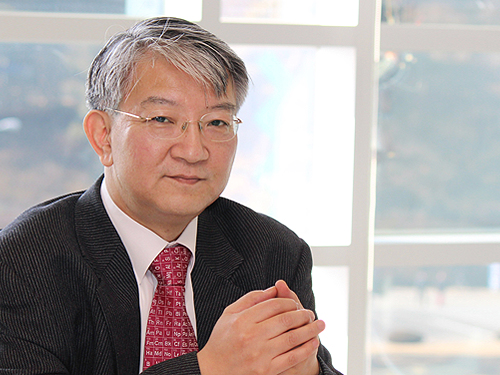 Distinguished Professor Sang Yup Lee Honored with the 23rd NAEK Award
(Distinguished Professor Sang Yup Lee from the Department of Chemical and Biomolecular Engineering)
Distinguished Professor Sang Yup Lee from the Department of Chemical and Biomolecular Engineering was honored to be the laureate of the 23rd NAEK Award.
The NAEK (National Academy of Engineering of Korea) Award was instituted in 1997 to honor and recognize engineers who have made significant contributions to the development of the engineering and technology field at universities, industries, and institutions. Every year, it is conferred to only one person who has achieved original and world-leading research that has led to national development.
Distinguished Professor Lee is a pioneering scholar of the field of systems metabolic engineering and he was recognized for his significant achievements in the biochemical industry by developing novel microbial bioprocesses. In particular, he is globally renowned for biological plastic synthesis, making or decomposing polymers with microorganisms instead of using fossil resources.
He has produced numerous high-quality research breakthroughs in metabolic and systems engineering. In 2016, he produced an easily degradable plastic with Escherichia coli (E. coli). In 2018, he successfully produced aromatic polyesters, the main material for PET (poly ethylene terephthalate) from E. coli strains. He also identified microorganism structures for PET degradation and improved its degradability with a novel variant.
His research was ranked number one in the research and development division of Top Ten Science and Technology News 2018 announced by Korean Federation of Science & Technology Societies. He is one of highly cited researchers (HCR) ranked in the top 1% by citations for their field by the Clarivate Analytics.
2019.03.21 View 13750
Distinguished Professor Sang Yup Lee Honored with the 23rd NAEK Award
(Distinguished Professor Sang Yup Lee from the Department of Chemical and Biomolecular Engineering)
Distinguished Professor Sang Yup Lee from the Department of Chemical and Biomolecular Engineering was honored to be the laureate of the 23rd NAEK Award.
The NAEK (National Academy of Engineering of Korea) Award was instituted in 1997 to honor and recognize engineers who have made significant contributions to the development of the engineering and technology field at universities, industries, and institutions. Every year, it is conferred to only one person who has achieved original and world-leading research that has led to national development.
Distinguished Professor Lee is a pioneering scholar of the field of systems metabolic engineering and he was recognized for his significant achievements in the biochemical industry by developing novel microbial bioprocesses. In particular, he is globally renowned for biological plastic synthesis, making or decomposing polymers with microorganisms instead of using fossil resources.
He has produced numerous high-quality research breakthroughs in metabolic and systems engineering. In 2016, he produced an easily degradable plastic with Escherichia coli (E. coli). In 2018, he successfully produced aromatic polyesters, the main material for PET (poly ethylene terephthalate) from E. coli strains. He also identified microorganism structures for PET degradation and improved its degradability with a novel variant.
His research was ranked number one in the research and development division of Top Ten Science and Technology News 2018 announced by Korean Federation of Science & Technology Societies. He is one of highly cited researchers (HCR) ranked in the top 1% by citations for their field by the Clarivate Analytics.
2019.03.21 View 13750 -
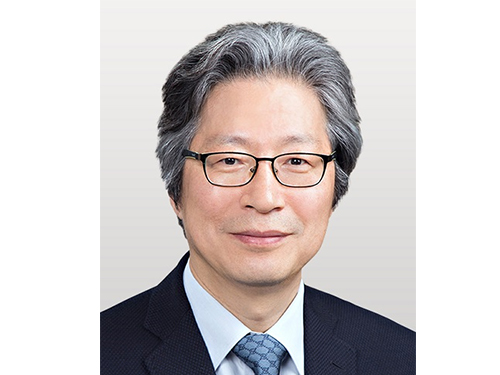 Professor Gou Young Koh, 2018 Laureate of Ho-Am Prize
Distinguished Professor Gou Young Koh from the Graduate School of Medical Science and Engineering was appointed a 2018 laureate in medicine of the Ho-Am Prize by the Ho-Am Foundation. Professor Koh is a renowned expert in the field of tumor angiogenesis by exploring the hidden nature of capillary and lymphatic vessels in human organs.
He was recognized for demonstrating the effective reduction of tumor progression and metastasis via tumor vessel normalization. This counterintuitive study result is regarded as a stepping stone for a drug discovery to prevent microvascular diseases.
Besides Professor Koh, Professor Hee Oh from Yale University (Science), Professor Nam-Gyu Park from Sungkyunkwan University (Engineering), Opera Singer Kwangchul Youn (The Arts) and Sister Carla Kang (Community Service) received awards.
The Ho-Am Prize is presented to individuals who have contributed to academics, the arts, and social development, or furthered the welfare of humanity, and commemorates the noble spirit of public service espoused by the late Chairman Byung-chull Lee, who used the pen name Ho-Am.
It was established in 1990 by Kun-Hee Lee, the chairman of Samsung. Awards have been presented to 143 individuals worth a total of 24.4 billion KRW.
2018.04.11 View 12884
Professor Gou Young Koh, 2018 Laureate of Ho-Am Prize
Distinguished Professor Gou Young Koh from the Graduate School of Medical Science and Engineering was appointed a 2018 laureate in medicine of the Ho-Am Prize by the Ho-Am Foundation. Professor Koh is a renowned expert in the field of tumor angiogenesis by exploring the hidden nature of capillary and lymphatic vessels in human organs.
He was recognized for demonstrating the effective reduction of tumor progression and metastasis via tumor vessel normalization. This counterintuitive study result is regarded as a stepping stone for a drug discovery to prevent microvascular diseases.
Besides Professor Koh, Professor Hee Oh from Yale University (Science), Professor Nam-Gyu Park from Sungkyunkwan University (Engineering), Opera Singer Kwangchul Youn (The Arts) and Sister Carla Kang (Community Service) received awards.
The Ho-Am Prize is presented to individuals who have contributed to academics, the arts, and social development, or furthered the welfare of humanity, and commemorates the noble spirit of public service espoused by the late Chairman Byung-chull Lee, who used the pen name Ho-Am.
It was established in 1990 by Kun-Hee Lee, the chairman of Samsung. Awards have been presented to 143 individuals worth a total of 24.4 billion KRW.
2018.04.11 View 12884