%49%54%55
-
 KAIST, National Quantum Fab Research Institute Opening Ceremony and Research Building Groundbreaking Ceremony Held
<Groundbreaking Ceremony Shovel Scene for the KAIST National Quantum Fab Research Building>
KAIST announced on December 3rd that it held the opening ceremony for the National Quantum Fab Research Institute and the groundbreaking ceremony for the Quantum Fab Research Building at the KAIST main campus in Daejeon, officially commencing the construction of the nation's core infrastructure to enhance South Korea's quantum technology competitiveness.
The event began with a progress report and introduction of the institute by Yong Hoon Cho, Director of the Quantum Fab Research Institute, followed by a groundbreaking ceremony to mark the official start of the Quantum Fab Research Building's construction and an unveiling of the plaque. Approximately 50 officials attended the event, including Jang-woo Lee, Mayor of Daejeon, Kwang Hyung Lee, President of KAIST, and the presidents of the National Nanofab Center and the Korea Research Institute of Standards and Science, representing government, local government, and collaborating organizations.
<Plaque-Unveiling Scene at the Opening of the KAIST National Quantum Fab Research Institute>
Since being selected as the lead institution for the Quantum Fab in a competition held by the Ministry of Science and ICT and the Institute for Information & Communications Technology Planning & Evaluation last year, our university secured a commitment of 20 billion KRW from the Daejeon Metropolitan City for construction costs and completed the institute's establishment and design. The new Quantum Fab Research Building, with a total floor area of 2,498 ㎡, is targeted for completion in 2027.
The new building will house South Korea's largest specialized, open-access cleanroom fab for quantum devices. A total of 45 billion KRW or more will be invested by 2031, including national funds, local government funds, and KAIST's budget. Over 37 units of advanced equipment will be installed in the 1st and 3rd-floor FAB cleanrooms in stages, along with stability facilities such as Class 100-1,000 cleanliness standards, constant temperature/humidity, and emergency power supply.
The KAIST Quantum Fab operates on a fully open-access system allowing researchers to directly carry out processes. It will support processing technologies for various quantum platforms, including photons, point defects, and neutral atoms, and will also enhance user programs such as training and workshops. Phase 1 service began in July of this year, and Phase 2 full-scale operation, based on the newly installed equipment, will start in 2028.
Jang-woo Lee, Mayor of Daejeon, stated, "The KAIST open-access Quantum Fab is a core platform that will lead the industrialization of quantum technology in South Korea," adding, "Especially since the US and South Korea have designated quantum computing as a strategic field in their $350 billion technology cooperation package, Daejeon's role is becoming even more crucial."
Director Yong-Hoon Cho said, "Through a user-centric process support system, we will play a central role in the national quantum research ecosystem," adding, "Based on our research capabilities and support system, we will expand industry-academia-research cooperation and aim to leap forward as a pilot quantum fab."
President Kwang Hyung Lee remarked, "Quantum science and technology is a core strategic area that will determine the future technological hegemony," and "We will take this opening and groundbreaking ceremony as an opportunity for industry, academia, research, and government to join forces and strengthen the competitiveness of the national quantum ecosystem."
KAIST plans to focus on establishing a self-sustainable virtuous cycle system centered around the Quantum Fab, and will further dedicate efforts to enhancing national strategic technology competitiveness through the nurturing of specialized talent and the development of processing technologies for each platform.
<Bird’s Eye View of the KAIST National Quantum Fab Research Building>
2025.12.04 View 2886
KAIST, National Quantum Fab Research Institute Opening Ceremony and Research Building Groundbreaking Ceremony Held
<Groundbreaking Ceremony Shovel Scene for the KAIST National Quantum Fab Research Building>
KAIST announced on December 3rd that it held the opening ceremony for the National Quantum Fab Research Institute and the groundbreaking ceremony for the Quantum Fab Research Building at the KAIST main campus in Daejeon, officially commencing the construction of the nation's core infrastructure to enhance South Korea's quantum technology competitiveness.
The event began with a progress report and introduction of the institute by Yong Hoon Cho, Director of the Quantum Fab Research Institute, followed by a groundbreaking ceremony to mark the official start of the Quantum Fab Research Building's construction and an unveiling of the plaque. Approximately 50 officials attended the event, including Jang-woo Lee, Mayor of Daejeon, Kwang Hyung Lee, President of KAIST, and the presidents of the National Nanofab Center and the Korea Research Institute of Standards and Science, representing government, local government, and collaborating organizations.
<Plaque-Unveiling Scene at the Opening of the KAIST National Quantum Fab Research Institute>
Since being selected as the lead institution for the Quantum Fab in a competition held by the Ministry of Science and ICT and the Institute for Information & Communications Technology Planning & Evaluation last year, our university secured a commitment of 20 billion KRW from the Daejeon Metropolitan City for construction costs and completed the institute's establishment and design. The new Quantum Fab Research Building, with a total floor area of 2,498 ㎡, is targeted for completion in 2027.
The new building will house South Korea's largest specialized, open-access cleanroom fab for quantum devices. A total of 45 billion KRW or more will be invested by 2031, including national funds, local government funds, and KAIST's budget. Over 37 units of advanced equipment will be installed in the 1st and 3rd-floor FAB cleanrooms in stages, along with stability facilities such as Class 100-1,000 cleanliness standards, constant temperature/humidity, and emergency power supply.
The KAIST Quantum Fab operates on a fully open-access system allowing researchers to directly carry out processes. It will support processing technologies for various quantum platforms, including photons, point defects, and neutral atoms, and will also enhance user programs such as training and workshops. Phase 1 service began in July of this year, and Phase 2 full-scale operation, based on the newly installed equipment, will start in 2028.
Jang-woo Lee, Mayor of Daejeon, stated, "The KAIST open-access Quantum Fab is a core platform that will lead the industrialization of quantum technology in South Korea," adding, "Especially since the US and South Korea have designated quantum computing as a strategic field in their $350 billion technology cooperation package, Daejeon's role is becoming even more crucial."
Director Yong-Hoon Cho said, "Through a user-centric process support system, we will play a central role in the national quantum research ecosystem," adding, "Based on our research capabilities and support system, we will expand industry-academia-research cooperation and aim to leap forward as a pilot quantum fab."
President Kwang Hyung Lee remarked, "Quantum science and technology is a core strategic area that will determine the future technological hegemony," and "We will take this opening and groundbreaking ceremony as an opportunity for industry, academia, research, and government to join forces and strengthen the competitiveness of the national quantum ecosystem."
KAIST plans to focus on establishing a self-sustainable virtuous cycle system centered around the Quantum Fab, and will further dedicate efforts to enhancing national strategic technology competitiveness through the nurturing of specialized talent and the development of processing technologies for each platform.
<Bird’s Eye View of the KAIST National Quantum Fab Research Building>
2025.12.04 View 2886 -
 Robot-Operated Space Station Construction Goal... 'In-space Servicing and Manufacturing Research Center' Launched
<Plaque Handover Ceremony. (From left) Jae-Hung Han, Director of the Space Research Institute, Ju-won Kang, Head of Engineering Group at the National Research Foundation of Korea Basic Research Headquarters>
KAIST's Space Research Institute announced on the 24th of October that it officially launched the 'Innovative Research Center for the Development of Core Technologies in In-space Servicing and Manufacturing (ISMRC)' at the KAIST Academic Cultural Center on Friday, October 24. About 150 officials from major organizations, including the Korea Aerospace Administration, the National Research Foundation of Korea, and Daejeon Metropolitan City, as well as domestic and foreign space experts, attended the opening ceremony to discuss future cooperation measures. The 'KAIST In-space Servicing and Manufacturing Research Center (ISMRC)' is a large-scale research hub selected for the Ministry of Science and ICT's 2025 Basic Research Project, with a total of 71.2 billion KRW long-term project planned over the next 10 years, including 50 billion KRW in national funding. Daejeon City will also provide a total of 3.6 billion KRW, with 400 million KRW annually starting from 2026. The research goals are to secure core technologies for next-generation space exploration, including: ▲ Construction of Unmanned Space Stations, ▲ Robotics-based In-space Manufacturing, and ▲ Resource Recovery Technology. A team of 14 KAIST professors, led by Director Jae-Hung Han, will spearhead the research, with major domestic and foreign space companies and research institutions participating in joint research. As the 'New Space' era fully commences globally, the In-space Servicing and Manufacturing industry is projected to grow to tens of trillions of Korean won by 2030, driven by the reduction of launch costs and the expansion of private sector participation. This field is evaluated as a core area that will fundamentally change the way humanity engages in space activities, including extending satellite lifespan, on-orbit maintenance and operation, and securing and manufacturing resources in space. Meanwhile, an international symposium was held for two days on October 23-24 at the KAIST Academic Cultural Center and KI Building, coinciding with the opening ceremony.
<Director Jae-Hung Han of the Space Research Institute presenting>
The symposium was composed of a total of six sessions, including: ▲ Exchange Meeting on Additive Manufacturing Tecnology for Aerospace, ▲ International Workshop on Aerospace Composites, ▲ Workshop on Swarm Satellite Development, and ▲ Workshop on In-space Servicing and Manufacturing Robotics. Major domestic and foreign institutions and experts, including the Korea Aerospace Research Institute, Japan Advanced Institute of Science and Technology, and California Institute of Technology (Caltech), attended to discuss the future direction of next-generation space technology development and international cooperation measures. Cheol-woong Son, Director-General of Future Strategy Industry Office at Daejeon City, said, "We will develop the Innovative Research Center into a Daejeon-type space industry innovation platform with KAIST," and "Daejeon City will concentrate its capabilities to help local businesses grow and establish Daejeon as the central city for the Republic of Korea's space industry." Jae-Hung Han, Director of the KAIST Space Research Institute, said, "We will lead the core technologies for in-space servicing and manufacturing through cooperation between industry, academia, research institutes, and government, and contribute to the establishment of a private sector-focused industrial ecosystem," adding, "KAIST will grow into a comprehensive research hub that encompasses R&D, talent nurturing, and technology commercialization."
<Group Photo of Participants at the Opening Ceremony of the In-space Servicing and Manufacturing Research Center>
Kwang Hyung Lee, President of KAIST, said, "The field of in-space servicing and manufacturing is a core area that will change the paradigm of the future space industry," and "KAIST will lead the Republic of Korea to become the center for opening a new era of the space industry through innovative technology development and global cooperation." KAIST plans to perform the role of breaking down the boundaries between academia and industry, focusing on these technologies, and laying the foundation for next-generation space activities.
2025.10.24 View 3943
Robot-Operated Space Station Construction Goal... 'In-space Servicing and Manufacturing Research Center' Launched
<Plaque Handover Ceremony. (From left) Jae-Hung Han, Director of the Space Research Institute, Ju-won Kang, Head of Engineering Group at the National Research Foundation of Korea Basic Research Headquarters>
KAIST's Space Research Institute announced on the 24th of October that it officially launched the 'Innovative Research Center for the Development of Core Technologies in In-space Servicing and Manufacturing (ISMRC)' at the KAIST Academic Cultural Center on Friday, October 24. About 150 officials from major organizations, including the Korea Aerospace Administration, the National Research Foundation of Korea, and Daejeon Metropolitan City, as well as domestic and foreign space experts, attended the opening ceremony to discuss future cooperation measures. The 'KAIST In-space Servicing and Manufacturing Research Center (ISMRC)' is a large-scale research hub selected for the Ministry of Science and ICT's 2025 Basic Research Project, with a total of 71.2 billion KRW long-term project planned over the next 10 years, including 50 billion KRW in national funding. Daejeon City will also provide a total of 3.6 billion KRW, with 400 million KRW annually starting from 2026. The research goals are to secure core technologies for next-generation space exploration, including: ▲ Construction of Unmanned Space Stations, ▲ Robotics-based In-space Manufacturing, and ▲ Resource Recovery Technology. A team of 14 KAIST professors, led by Director Jae-Hung Han, will spearhead the research, with major domestic and foreign space companies and research institutions participating in joint research. As the 'New Space' era fully commences globally, the In-space Servicing and Manufacturing industry is projected to grow to tens of trillions of Korean won by 2030, driven by the reduction of launch costs and the expansion of private sector participation. This field is evaluated as a core area that will fundamentally change the way humanity engages in space activities, including extending satellite lifespan, on-orbit maintenance and operation, and securing and manufacturing resources in space. Meanwhile, an international symposium was held for two days on October 23-24 at the KAIST Academic Cultural Center and KI Building, coinciding with the opening ceremony.
<Director Jae-Hung Han of the Space Research Institute presenting>
The symposium was composed of a total of six sessions, including: ▲ Exchange Meeting on Additive Manufacturing Tecnology for Aerospace, ▲ International Workshop on Aerospace Composites, ▲ Workshop on Swarm Satellite Development, and ▲ Workshop on In-space Servicing and Manufacturing Robotics. Major domestic and foreign institutions and experts, including the Korea Aerospace Research Institute, Japan Advanced Institute of Science and Technology, and California Institute of Technology (Caltech), attended to discuss the future direction of next-generation space technology development and international cooperation measures. Cheol-woong Son, Director-General of Future Strategy Industry Office at Daejeon City, said, "We will develop the Innovative Research Center into a Daejeon-type space industry innovation platform with KAIST," and "Daejeon City will concentrate its capabilities to help local businesses grow and establish Daejeon as the central city for the Republic of Korea's space industry." Jae-Hung Han, Director of the KAIST Space Research Institute, said, "We will lead the core technologies for in-space servicing and manufacturing through cooperation between industry, academia, research institutes, and government, and contribute to the establishment of a private sector-focused industrial ecosystem," adding, "KAIST will grow into a comprehensive research hub that encompasses R&D, talent nurturing, and technology commercialization."
<Group Photo of Participants at the Opening Ceremony of the In-space Servicing and Manufacturing Research Center>
Kwang Hyung Lee, President of KAIST, said, "The field of in-space servicing and manufacturing is a core area that will change the paradigm of the future space industry," and "KAIST will lead the Republic of Korea to become the center for opening a new era of the space industry through innovative technology development and global cooperation." KAIST plans to perform the role of breaking down the boundaries between academia and industry, focusing on these technologies, and laying the foundation for next-generation space activities.
2025.10.24 View 3943 -
 City AI Research Institute Selected for Ministry of Science and ICT's Brain Pool (BP) Institutional Recruitment Program
<Professor Yoonjin Yoon from the Department of Civil and Environmental Engineering at KAIST>
KAIST's City AI Research Institute (Director: Professor Yoonjin Yoon) has been selected for the Ministry of Science and ICT's Brain Pool (BP) Institutional Recruitment Program. This achievement is the culmination of a joint proposal spearheaded by Institute Director Professor Yoonjin Yoon, along with Professor Soyoung In of the Department of Civil and Environmental Engineering and Professor Sujin Han of the School of Electrical Engineering. It is the result of high praise for the institute's research capabilities in the field of Urban AI and its potential for international collaboration.
This BP project, with a total budget of 2.1 billion KRW, will be carried out over 28 months. It plans to actively pursue AI research focused on solving urban problems by inviting renowned overseas scholars to focus on three core areas: Geospatial AI, Climate AI, and Physical AI. Through this, the institute aims to develop core AI technologies based on a collaboration system involving industry, academia, research institutions, and government. This will lead the way in sustainable urban growth and the transition to an 'Cognitive City,' continuing research to proactively diagnose and respond to various issues that citizens can experience firsthand.
This project is particularly significant as it is a female-centered institutional Brain Pool project. KAIST plans to systematically support the growth of early-career female researchers and actively expand the participation of next-generation female scientists and engineers in international research networks. This is expected to significantly contribute to the development of female research personnel and the strengthening of research leadership, areas that are relatively lacking in domestic science and engineering fields.
Furthermore, through long-term joint research with researchers from world-leading universities such as MIT, NYU, UIUC, UBC, USF, and the University of Toronto, the City AI Research Institute is set to become a leading Urban AI research hub in Korea and Asia.
Moving forward, the institute will continue to dedicate itself to core research for responding to the complex challenges of future cities and advancing innovative technology through artificial intelligence, based on global cooperation.
2025.10.10 View 2080
City AI Research Institute Selected for Ministry of Science and ICT's Brain Pool (BP) Institutional Recruitment Program
<Professor Yoonjin Yoon from the Department of Civil and Environmental Engineering at KAIST>
KAIST's City AI Research Institute (Director: Professor Yoonjin Yoon) has been selected for the Ministry of Science and ICT's Brain Pool (BP) Institutional Recruitment Program. This achievement is the culmination of a joint proposal spearheaded by Institute Director Professor Yoonjin Yoon, along with Professor Soyoung In of the Department of Civil and Environmental Engineering and Professor Sujin Han of the School of Electrical Engineering. It is the result of high praise for the institute's research capabilities in the field of Urban AI and its potential for international collaboration.
This BP project, with a total budget of 2.1 billion KRW, will be carried out over 28 months. It plans to actively pursue AI research focused on solving urban problems by inviting renowned overseas scholars to focus on three core areas: Geospatial AI, Climate AI, and Physical AI. Through this, the institute aims to develop core AI technologies based on a collaboration system involving industry, academia, research institutions, and government. This will lead the way in sustainable urban growth and the transition to an 'Cognitive City,' continuing research to proactively diagnose and respond to various issues that citizens can experience firsthand.
This project is particularly significant as it is a female-centered institutional Brain Pool project. KAIST plans to systematically support the growth of early-career female researchers and actively expand the participation of next-generation female scientists and engineers in international research networks. This is expected to significantly contribute to the development of female research personnel and the strengthening of research leadership, areas that are relatively lacking in domestic science and engineering fields.
Furthermore, through long-term joint research with researchers from world-leading universities such as MIT, NYU, UIUC, UBC, USF, and the University of Toronto, the City AI Research Institute is set to become a leading Urban AI research hub in Korea and Asia.
Moving forward, the institute will continue to dedicate itself to core research for responding to the complex challenges of future cities and advancing innovative technology through artificial intelligence, based on global cooperation.
2025.10.10 View 2080 -
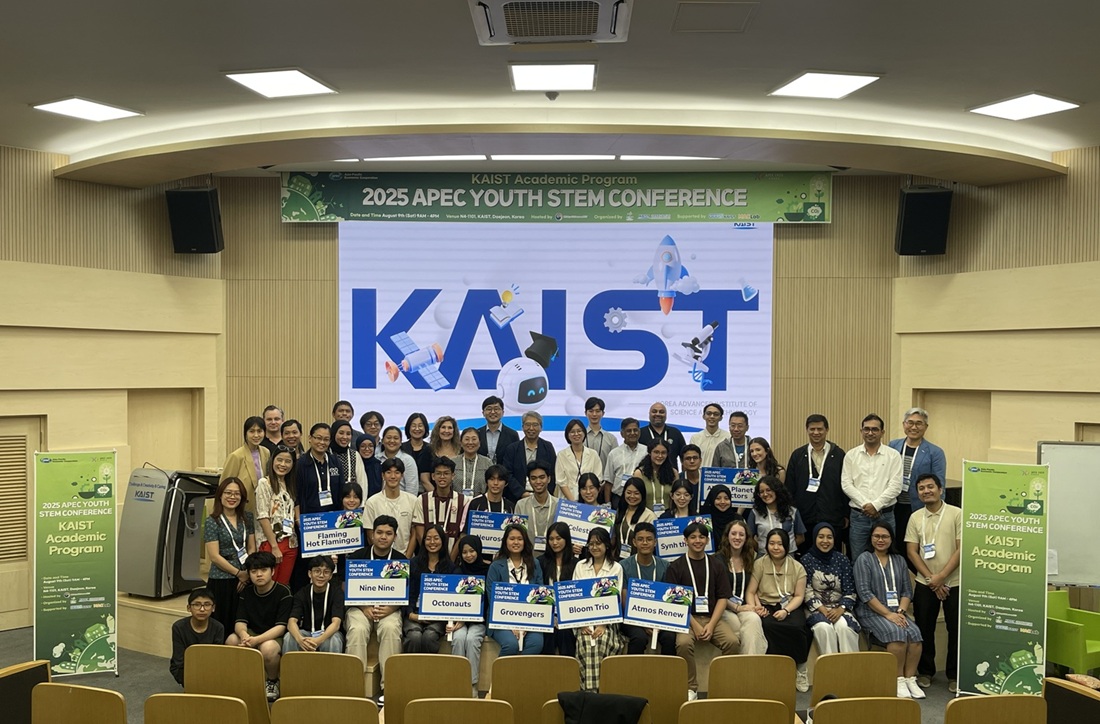 2025 APEC Youth STEM Science Exchange Program Successfully Completed
<Photo1. Group photo at the end of the program>
KAIST (President Kwang Hyung Lee) announced on the 11thof August that it successfully hosted the 'APEC Youth STEM Conference KAIST Academic Program,' a global science exchange program for 28 youth researchers from 10 countries and over 30 experts who participated in the '2025 APEC Youth STEM* Collaborative Research and Competition.' The event was held at the main campus in Daejeon on Saturday, August 9.
STEM (Science, Technology, Engineering, Math) refers to the fields of science and engineering.
The competition was hosted by the Ministry of Science and ICT and organized by the APEC Science Gifted Mentoring Center. It took place from Wednesday, August 6, to Saturday, August 9, 2025, at KAIST in Daejeon and the Korea Science Academy of KAIST in Busan. The KAIST program was organized by the APEC Science Gifted Mentoring Center and supported by the KAIST Institute for the Gifted and Talented in Science Education.
Participants had the opportunity to experience Korea's cutting-edge research infrastructure firsthand, broaden their horizons in science and technology, and collaborate and exchange ideas with future science talents from the APEC region.
As the 2025 APEC chair, Korea is promoting various international collaborations to discover and nurture the next generation of talent in the STEM fields. The KAIST academic exchange program was particularly meaningful as it was designed with the international goal of revitalizing science gifted exchanges and expanding the basis for cooperation among APEC member countries. It moved beyond the traditional online-centric research collaboration model to focus on hands-on, on-site, and convergence research experiences.
The global science exchange program at KAIST introduced participants to KAIST's world-class educational and research environment and provided various academic content to allow them to experience real-world examples of convergence technology-based research.
<Photo2. Program Activities>
First, the KAIST Admissions Office participated, introducing KAIST's admissions system and its educational and research environment to outstanding international students, providing an opportunity to attract global talent. Following this, Dr. Tae-kyun Kwon of the Music and Audio Computing Lab at the Graduate School of Culture Technology presented a convergence art project based on musical artificial intelligence data, including a research demonstration in an anechoic chamber.
<Photo3. Participation in a music AI research demonstration>
Furthermore, a Climate Talk Concert program was organized under the leadership of the Graduate School of Green Growth and Sustainability, in connection with the theme of the APEC Youth STEM Collaborative Research: 'Youth-led STEM Solutions: Enhancing Climate Resilience.'
The program was planned and hosted by Dean Jiyong Eom. It provided a platform for young people to explore creative and practical STEM-based solutions to the climate crisis and seek opportunities for international cooperation.
<Photo4. Participation in Music AI Research Demonstration >
The program was a meaningful time for APEC youth researchers, offering practical support for their research through special lectures and Q&A sessions on:
Interdisciplinary Research and Education in the Era of Climate Crisis (Dean Jiyong Eom)
Energy Transition Technology in the Carbon Neutral Era (Professor Jeongrak Son)
Policies for Energy System Change (Professor Jihyo Kim)
Carbon Neutral Bio-technology (Professor Gyeongrok Choi)
After the afternoon talk concert, Lee Jing Jing, a student from Brunei, shared her thoughts, saying, "The lectures by the four professors were very meaningful and insightful. I was able to think about energy transition plans to solve climate change from various perspectives."
Si-jong Kwak, Director of the KAIST Global Institute for Talented Education, stated, "I hope that young people from all over the world will directly experience KAIST's research areas and environment, expand their interest in KAIST, and continue to grow as outstanding talents in the fields of science and engineering."
KAIST President Kwang Hyung Lee said, "KAIST will be at the center of science and technology-based international cooperation and will spare no effort to support future talents in developing creative and practical problem-solving skills. I hope this event served as an opportunity for young people to understand the value of global cooperation and grow into future science leaders."
2025.08.11 View 5465
2025 APEC Youth STEM Science Exchange Program Successfully Completed
<Photo1. Group photo at the end of the program>
KAIST (President Kwang Hyung Lee) announced on the 11thof August that it successfully hosted the 'APEC Youth STEM Conference KAIST Academic Program,' a global science exchange program for 28 youth researchers from 10 countries and over 30 experts who participated in the '2025 APEC Youth STEM* Collaborative Research and Competition.' The event was held at the main campus in Daejeon on Saturday, August 9.
STEM (Science, Technology, Engineering, Math) refers to the fields of science and engineering.
The competition was hosted by the Ministry of Science and ICT and organized by the APEC Science Gifted Mentoring Center. It took place from Wednesday, August 6, to Saturday, August 9, 2025, at KAIST in Daejeon and the Korea Science Academy of KAIST in Busan. The KAIST program was organized by the APEC Science Gifted Mentoring Center and supported by the KAIST Institute for the Gifted and Talented in Science Education.
Participants had the opportunity to experience Korea's cutting-edge research infrastructure firsthand, broaden their horizons in science and technology, and collaborate and exchange ideas with future science talents from the APEC region.
As the 2025 APEC chair, Korea is promoting various international collaborations to discover and nurture the next generation of talent in the STEM fields. The KAIST academic exchange program was particularly meaningful as it was designed with the international goal of revitalizing science gifted exchanges and expanding the basis for cooperation among APEC member countries. It moved beyond the traditional online-centric research collaboration model to focus on hands-on, on-site, and convergence research experiences.
The global science exchange program at KAIST introduced participants to KAIST's world-class educational and research environment and provided various academic content to allow them to experience real-world examples of convergence technology-based research.
<Photo2. Program Activities>
First, the KAIST Admissions Office participated, introducing KAIST's admissions system and its educational and research environment to outstanding international students, providing an opportunity to attract global talent. Following this, Dr. Tae-kyun Kwon of the Music and Audio Computing Lab at the Graduate School of Culture Technology presented a convergence art project based on musical artificial intelligence data, including a research demonstration in an anechoic chamber.
<Photo3. Participation in a music AI research demonstration>
Furthermore, a Climate Talk Concert program was organized under the leadership of the Graduate School of Green Growth and Sustainability, in connection with the theme of the APEC Youth STEM Collaborative Research: 'Youth-led STEM Solutions: Enhancing Climate Resilience.'
The program was planned and hosted by Dean Jiyong Eom. It provided a platform for young people to explore creative and practical STEM-based solutions to the climate crisis and seek opportunities for international cooperation.
<Photo4. Participation in Music AI Research Demonstration >
The program was a meaningful time for APEC youth researchers, offering practical support for their research through special lectures and Q&A sessions on:
Interdisciplinary Research and Education in the Era of Climate Crisis (Dean Jiyong Eom)
Energy Transition Technology in the Carbon Neutral Era (Professor Jeongrak Son)
Policies for Energy System Change (Professor Jihyo Kim)
Carbon Neutral Bio-technology (Professor Gyeongrok Choi)
After the afternoon talk concert, Lee Jing Jing, a student from Brunei, shared her thoughts, saying, "The lectures by the four professors were very meaningful and insightful. I was able to think about energy transition plans to solve climate change from various perspectives."
Si-jong Kwak, Director of the KAIST Global Institute for Talented Education, stated, "I hope that young people from all over the world will directly experience KAIST's research areas and environment, expand their interest in KAIST, and continue to grow as outstanding talents in the fields of science and engineering."
KAIST President Kwang Hyung Lee said, "KAIST will be at the center of science and technology-based international cooperation and will spare no effort to support future talents in developing creative and practical problem-solving skills. I hope this event served as an opportunity for young people to understand the value of global cooperation and grow into future science leaders."
2025.08.11 View 5465 -
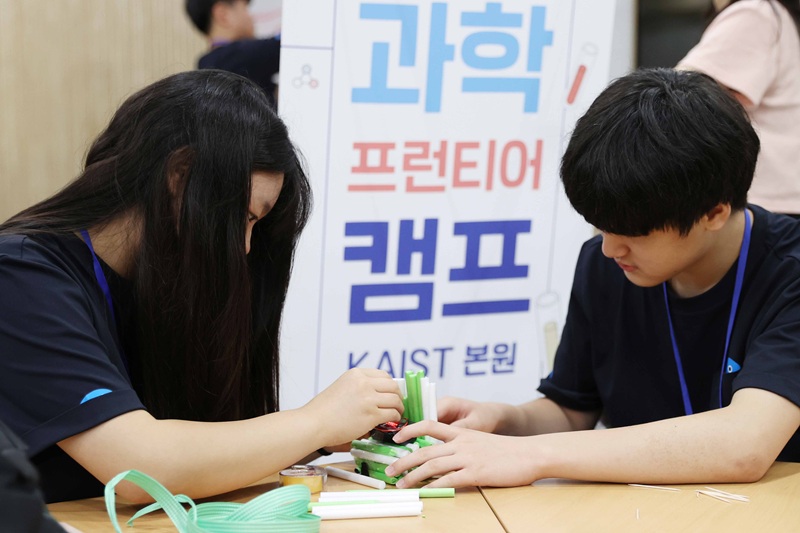 KAIST Holds '2025 KAIST Science Frontier Camp' for Multicultural Youth
<2025 KAIST Science Frontier Camp Activities>
KAIST (President Kwang Hyung Lee) announced on the 18th of July that it hosted the '2025 KAIST Science Frontier Camp' for multicultural youth from the 15th for three days and two nights at the Creative Learning Building on its main campus in Daejeon.
This event was organized in accordance with the 'Multicultural Talent Nurturing Agreement' signed by KAIST and GS Caltex in 2024. It marks the first year of a mid-to-long-term project in which 100 million KRW in development funds will be contributed annually for four years. The Global Institute for Talented Education organized the camp, and approximately 30 middle school students from multicultural families affiliated with the 'Hanmaum Educational Volunteer Group' (Director, Honorary Professor Byung Kyu Choi), a mentoring and volunteer organization for multicultural students, participated.
The camp participants enjoyed developing their scientific thinking skills and problem-solving abilities, and broadening their understanding of STEM (Science, Technology, Engineering, and Mathematics) career paths through a variety of science activity programs, including: △'Black Box: Record the Egg's Last Moment!' △'Find the Best Strategy! Heuristic Algorithm Challenge' △'Future Society and AI, Finding Career Directions' △'Distance Dominates the World!' and △'Career Talk Concert.'
During the opening ceremony, Director Byung Kyu Choi delivered a congratulatory speech. Additionally, Yong Hyun Kim, Dean of Admissions at KAIST, gave a special lecture titled 'La La Land KAIST – A Story of Chasing the Dream of a Young Scientist,' sharing honest stories about careers and dreams as a scientist.
Gi Jung Yoo, a freshman from the Division of Undeclared Majors who participated in the camp as a student mentor, shared that he had a very meaningful time mentoring the participating students, who are future STEM hopefuls, sharing vivid experiences as well as insights on metric functions. He added his hope that more students would be given such opportunities.
< Students Actively Taking Part in the Camp Activities>
Si Jong Kwak, Director of the Global Institute for Talented Education, stated, "We hope this will be a practical way to help students foster their interest in science, learn the joy of discussion and communication, and design their future."
KAIST President Kwang Hyung Lee remarked, "This camp was a valuable opportunity for students from diverse cultural backgrounds to gain confidence through science and envision their future." He added, "KAIST will continue to dedicate efforts to nurturing multicultural talent and contribute to creating a sustainable society."
Since 2024, KAIST has introduced and selected multicultural students through its Equal Opportunity Admission track. Utilizing the development funds from GS Caltex, KAIST also established the 'GS Caltex Multicultural Excellence Scholarship Program.' Through this scholarship program, undergraduate students from multicultural families receive living expenses each semester, allowing them to focus more stably on their studies. As the number of applicants for the Equal Opportunity Admission track is increasing every year, more multicultural students are expected to benefit from scholarships in the future.
Additionally, in May, both organizations invited Ms. Si Si Wu Fong, a foreign employee at GS Caltex, to give a special lecture titled 'Working Life for Foreigners in Korea' to support foreign students' career exploration. Foreign students who attended the lecture reported positive feedback, stating that they gained practical career information and were motivated to pursue employment in STEM fields in Korea.
KAIST plans to continue strengthening its efforts to nurture multicultural talent, increase understanding of the upcoming multicultural society, and help spread social values.
<At the 2025 KAIST Science Frontier Camp>
2025.07.18 View 3429
KAIST Holds '2025 KAIST Science Frontier Camp' for Multicultural Youth
<2025 KAIST Science Frontier Camp Activities>
KAIST (President Kwang Hyung Lee) announced on the 18th of July that it hosted the '2025 KAIST Science Frontier Camp' for multicultural youth from the 15th for three days and two nights at the Creative Learning Building on its main campus in Daejeon.
This event was organized in accordance with the 'Multicultural Talent Nurturing Agreement' signed by KAIST and GS Caltex in 2024. It marks the first year of a mid-to-long-term project in which 100 million KRW in development funds will be contributed annually for four years. The Global Institute for Talented Education organized the camp, and approximately 30 middle school students from multicultural families affiliated with the 'Hanmaum Educational Volunteer Group' (Director, Honorary Professor Byung Kyu Choi), a mentoring and volunteer organization for multicultural students, participated.
The camp participants enjoyed developing their scientific thinking skills and problem-solving abilities, and broadening their understanding of STEM (Science, Technology, Engineering, and Mathematics) career paths through a variety of science activity programs, including: △'Black Box: Record the Egg's Last Moment!' △'Find the Best Strategy! Heuristic Algorithm Challenge' △'Future Society and AI, Finding Career Directions' △'Distance Dominates the World!' and △'Career Talk Concert.'
During the opening ceremony, Director Byung Kyu Choi delivered a congratulatory speech. Additionally, Yong Hyun Kim, Dean of Admissions at KAIST, gave a special lecture titled 'La La Land KAIST – A Story of Chasing the Dream of a Young Scientist,' sharing honest stories about careers and dreams as a scientist.
Gi Jung Yoo, a freshman from the Division of Undeclared Majors who participated in the camp as a student mentor, shared that he had a very meaningful time mentoring the participating students, who are future STEM hopefuls, sharing vivid experiences as well as insights on metric functions. He added his hope that more students would be given such opportunities.
< Students Actively Taking Part in the Camp Activities>
Si Jong Kwak, Director of the Global Institute for Talented Education, stated, "We hope this will be a practical way to help students foster their interest in science, learn the joy of discussion and communication, and design their future."
KAIST President Kwang Hyung Lee remarked, "This camp was a valuable opportunity for students from diverse cultural backgrounds to gain confidence through science and envision their future." He added, "KAIST will continue to dedicate efforts to nurturing multicultural talent and contribute to creating a sustainable society."
Since 2024, KAIST has introduced and selected multicultural students through its Equal Opportunity Admission track. Utilizing the development funds from GS Caltex, KAIST also established the 'GS Caltex Multicultural Excellence Scholarship Program.' Through this scholarship program, undergraduate students from multicultural families receive living expenses each semester, allowing them to focus more stably on their studies. As the number of applicants for the Equal Opportunity Admission track is increasing every year, more multicultural students are expected to benefit from scholarships in the future.
Additionally, in May, both organizations invited Ms. Si Si Wu Fong, a foreign employee at GS Caltex, to give a special lecture titled 'Working Life for Foreigners in Korea' to support foreign students' career exploration. Foreign students who attended the lecture reported positive feedback, stating that they gained practical career information and were motivated to pursue employment in STEM fields in Korea.
KAIST plans to continue strengthening its efforts to nurture multicultural talent, increase understanding of the upcoming multicultural society, and help spread social values.
<At the 2025 KAIST Science Frontier Camp>
2025.07.18 View 3429 -
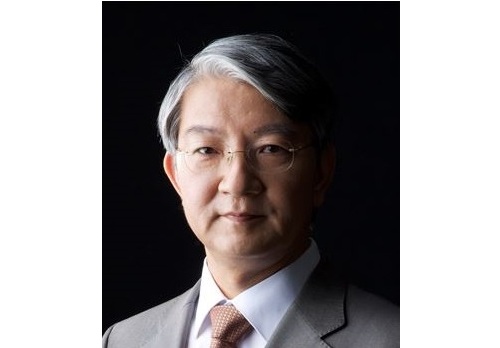 Distinguished Professor Sang Yup Lee Wins 2025 Global Metabolic Engineering Award
< Distinguished Professor Sang Yup Lee (Senior Vice President for Research) from the Department of Chemical & Biomolecular Engineering >
KAIST announced on the 20th that Professor Sang Yup Lee, who serves as the Vice President for Research and a Distinguished Professor at our university, has been awarded the '2025 Gregory N. Stephanopoulos Award for Metabolic Engineering' by the International Metabolic Engineering Society (IMES). Professor Lee delivered his award lecture at the 16th Metabolic Engineering Conference (ME16), held in Copenhagen, Denmark, from June 15th to 19th.
This award was established through contributions from the American Institute of Chemical Engineers (AIChE) Foundation, as well as fellow colleagues and acquaintances, to honor the achievements of Dr. Gregory Stephanopoulos, widely recognized as one of the pioneers of metabolic engineering. Presented biennially, the award recognizes scientists who have successfully commercialized fundamental research in metabolic engineering or have made outstanding contributions to the quantitative analysis, design, and modeling of metabolic pathways.
Professor Sang Yup Lee boasts an impressive record of over 770 journal papers and more than 860 patents. His groundbreaking research in metabolic engineering and biochemical engineering is highly acclaimed globally.
Throughout his 31 years as a professor at KAIST, Professor Lee has developed various metabolic engineering-based technologies and strategies. These advancements have been transferred to industries, facilitating the production of bulk chemicals, polymers, natural products, pharmaceuticals, and health functional foods. He has also founded companies and actively engages in advisory roles with various enterprises.
The International Metabolic Engineering Society (IMES) defines metabolic engineering as the manipulation of metabolic pathways in microorganisms or cells to produce useful substances (such as pharmaceuticals, biofuels, and chemical products). It utilizes tools like systems biology, synthetic biology, and computational modeling with the aim of enhancing the economic viability and sustainability of bio-based processes.
Furthermore, Professor Lee previously received the Merck Metabolic Engineering Award, a prominent international award in the field, in 2008. In 2018, he was honored with the Eni Award, often referred to as the Nobel Prize in energy, presented by the President of Italy.
Professor Sang Yup Lee remarked, "Metabolic engineering is a discipline that leads the current and future of biotechnology. It is a tremendous honor to receive this meaningful award at a time when the transition to a bio-based economy is accelerating. Together with my students and fellow researchers, we have generated numerous patents and transferred technologies to industry, and also established startups in the fields of biofuels, wound healing, and cosmetics. I will continue to pursue research that encompasses both fundamental research and technological commercialization."
The 'International Metabolic Engineering Society (IMES)' is a specialized society under the American Institute of Chemical Engineers. Its mission is to enable the production of various bio-based products, including pharmaceuticals, food additives, chemicals, and fuels, through metabolic engineering. The society hosts the Metabolic Engineering Conference biennially, offering researchers opportunities for knowledge exchange and collaboration.
2025.06.20 View 6819
Distinguished Professor Sang Yup Lee Wins 2025 Global Metabolic Engineering Award
< Distinguished Professor Sang Yup Lee (Senior Vice President for Research) from the Department of Chemical & Biomolecular Engineering >
KAIST announced on the 20th that Professor Sang Yup Lee, who serves as the Vice President for Research and a Distinguished Professor at our university, has been awarded the '2025 Gregory N. Stephanopoulos Award for Metabolic Engineering' by the International Metabolic Engineering Society (IMES). Professor Lee delivered his award lecture at the 16th Metabolic Engineering Conference (ME16), held in Copenhagen, Denmark, from June 15th to 19th.
This award was established through contributions from the American Institute of Chemical Engineers (AIChE) Foundation, as well as fellow colleagues and acquaintances, to honor the achievements of Dr. Gregory Stephanopoulos, widely recognized as one of the pioneers of metabolic engineering. Presented biennially, the award recognizes scientists who have successfully commercialized fundamental research in metabolic engineering or have made outstanding contributions to the quantitative analysis, design, and modeling of metabolic pathways.
Professor Sang Yup Lee boasts an impressive record of over 770 journal papers and more than 860 patents. His groundbreaking research in metabolic engineering and biochemical engineering is highly acclaimed globally.
Throughout his 31 years as a professor at KAIST, Professor Lee has developed various metabolic engineering-based technologies and strategies. These advancements have been transferred to industries, facilitating the production of bulk chemicals, polymers, natural products, pharmaceuticals, and health functional foods. He has also founded companies and actively engages in advisory roles with various enterprises.
The International Metabolic Engineering Society (IMES) defines metabolic engineering as the manipulation of metabolic pathways in microorganisms or cells to produce useful substances (such as pharmaceuticals, biofuels, and chemical products). It utilizes tools like systems biology, synthetic biology, and computational modeling with the aim of enhancing the economic viability and sustainability of bio-based processes.
Furthermore, Professor Lee previously received the Merck Metabolic Engineering Award, a prominent international award in the field, in 2008. In 2018, he was honored with the Eni Award, often referred to as the Nobel Prize in energy, presented by the President of Italy.
Professor Sang Yup Lee remarked, "Metabolic engineering is a discipline that leads the current and future of biotechnology. It is a tremendous honor to receive this meaningful award at a time when the transition to a bio-based economy is accelerating. Together with my students and fellow researchers, we have generated numerous patents and transferred technologies to industry, and also established startups in the fields of biofuels, wound healing, and cosmetics. I will continue to pursue research that encompasses both fundamental research and technological commercialization."
The 'International Metabolic Engineering Society (IMES)' is a specialized society under the American Institute of Chemical Engineers. Its mission is to enable the production of various bio-based products, including pharmaceuticals, food additives, chemicals, and fuels, through metabolic engineering. The society hosts the Metabolic Engineering Conference biennially, offering researchers opportunities for knowledge exchange and collaboration.
2025.06.20 View 6819 -
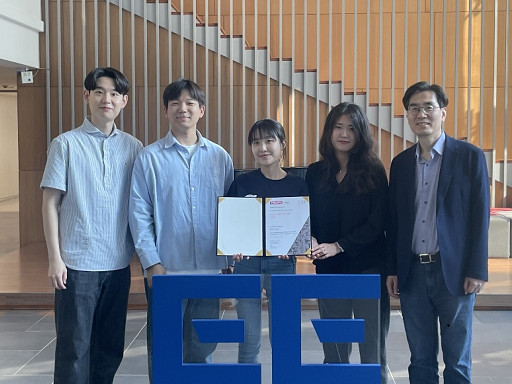 Professor Hyun Myung's Team Wins First Place in a Challenge at ICRA by IEEE
< Photo 1. (From left) Daebeom Kim (Team Leader, Ph.D. student), Seungjae Lee (Ph.D. student), Seoyeon Jang (Ph.D. student), Jei Kong (Master's student), Professor Hyun Myung >
A team of the Urban Robotics Lab, led by Professor Hyun Myung from the KAIST School of Electrical Engineering, achieved a remarkable first-place overall victory in the Nothing Stands Still Challenge (NSS Challenge) 2025, held at the 2025 IEEE International Conference on Robotics and Automation (ICRA), the world's most prestigious robotics conference, from May 19 to 23 in Atlanta, USA.
The NSS Challenge was co-hosted by HILTI, a global construction company based in Liechtenstein, and Stanford University's Gradient Spaces Group. It is an expanded version of the HILTI SLAM (Simultaneous Localization and Mapping)* Challenge, which has been held since 2021, and is considered one of the most prominent challenges at 2025 IEEE ICRA.*SLAM: Refers to Simultaneous Localization and Mapping, a technology where robots, drones, autonomous vehicles, etc., determine their own position and simultaneously create a map of their surroundings.
< Photo 2. A scene from the oral presentation on the winning team's technology (Speakers: Seungjae Lee and Seoyeon Jang, Ph.D. candidates of KAIST School of Electrical Engineering) >
This challenge primarily evaluates how accurately and robustly LiDAR scan data, collected at various times, can be registered in situations with frequent structural changes, such as construction and industrial environments. In particular, it is regarded as a highly technical competition because it deals with multi-session localization and mapping (Multi-session SLAM) technology that responds to structural changes occurring over multiple timeframes, rather than just single-point registration accuracy.
The Urban Robotics Lab team secured first place overall, surpassing National Taiwan University (3rd place) and Northwestern Polytechnical University of China (2nd place) by a significant margin, with their unique localization and mapping technology that solves the problem of registering LiDAR data collected across multiple times and spaces. The winning team will be awarded a prize of $4,000.
< Figure 1. Example of Multiway-Registration for Registering Multiple Scans >
The Urban Robotics Lab team independently developed a multiway-registration framework that can robustly register multiple scans even without prior connection information. This framework consists of an algorithm for summarizing feature points within scans and finding correspondences (CubicFeat), an algorithm for performing global registration based on the found correspondences (Quatro), and an algorithm for refining results based on change detection (Chamelion). This combination of technologies ensures stable registration performance based on fixed structures, even in highly dynamic industrial environments.
< Figure 2. Example of Change Detection Using the Chamelion Algorithm>
LiDAR scan registration technology is a core component of SLAM (Simultaneous Localization And Mapping) in various autonomous systems such as autonomous vehicles, autonomous robots, autonomous walking systems, and autonomous flying vehicles.
Professor Hyun Myung of the School of Electrical Engineering stated, "This award-winning technology is evaluated as a case that simultaneously proves both academic value and industrial applicability by maximizing the performance of precisely estimating the relative positions between different scans even in complex environments. I am grateful to the students who challenged themselves and never gave up, even when many teams abandoned due to the high difficulty."
< Figure 3. Competition Result Board, Lower RMSE (Root Mean Squared Error) Indicates Higher Score (Unit: meters)>
The Urban Robotics Lab team first participated in the SLAM Challenge in 2022, winning second place among academic teams, and in 2023, they secured first place overall in the LiDAR category and first place among academic teams in the vision category.
2025.05.30 View 13347
Professor Hyun Myung's Team Wins First Place in a Challenge at ICRA by IEEE
< Photo 1. (From left) Daebeom Kim (Team Leader, Ph.D. student), Seungjae Lee (Ph.D. student), Seoyeon Jang (Ph.D. student), Jei Kong (Master's student), Professor Hyun Myung >
A team of the Urban Robotics Lab, led by Professor Hyun Myung from the KAIST School of Electrical Engineering, achieved a remarkable first-place overall victory in the Nothing Stands Still Challenge (NSS Challenge) 2025, held at the 2025 IEEE International Conference on Robotics and Automation (ICRA), the world's most prestigious robotics conference, from May 19 to 23 in Atlanta, USA.
The NSS Challenge was co-hosted by HILTI, a global construction company based in Liechtenstein, and Stanford University's Gradient Spaces Group. It is an expanded version of the HILTI SLAM (Simultaneous Localization and Mapping)* Challenge, which has been held since 2021, and is considered one of the most prominent challenges at 2025 IEEE ICRA.*SLAM: Refers to Simultaneous Localization and Mapping, a technology where robots, drones, autonomous vehicles, etc., determine their own position and simultaneously create a map of their surroundings.
< Photo 2. A scene from the oral presentation on the winning team's technology (Speakers: Seungjae Lee and Seoyeon Jang, Ph.D. candidates of KAIST School of Electrical Engineering) >
This challenge primarily evaluates how accurately and robustly LiDAR scan data, collected at various times, can be registered in situations with frequent structural changes, such as construction and industrial environments. In particular, it is regarded as a highly technical competition because it deals with multi-session localization and mapping (Multi-session SLAM) technology that responds to structural changes occurring over multiple timeframes, rather than just single-point registration accuracy.
The Urban Robotics Lab team secured first place overall, surpassing National Taiwan University (3rd place) and Northwestern Polytechnical University of China (2nd place) by a significant margin, with their unique localization and mapping technology that solves the problem of registering LiDAR data collected across multiple times and spaces. The winning team will be awarded a prize of $4,000.
< Figure 1. Example of Multiway-Registration for Registering Multiple Scans >
The Urban Robotics Lab team independently developed a multiway-registration framework that can robustly register multiple scans even without prior connection information. This framework consists of an algorithm for summarizing feature points within scans and finding correspondences (CubicFeat), an algorithm for performing global registration based on the found correspondences (Quatro), and an algorithm for refining results based on change detection (Chamelion). This combination of technologies ensures stable registration performance based on fixed structures, even in highly dynamic industrial environments.
< Figure 2. Example of Change Detection Using the Chamelion Algorithm>
LiDAR scan registration technology is a core component of SLAM (Simultaneous Localization And Mapping) in various autonomous systems such as autonomous vehicles, autonomous robots, autonomous walking systems, and autonomous flying vehicles.
Professor Hyun Myung of the School of Electrical Engineering stated, "This award-winning technology is evaluated as a case that simultaneously proves both academic value and industrial applicability by maximizing the performance of precisely estimating the relative positions between different scans even in complex environments. I am grateful to the students who challenged themselves and never gave up, even when many teams abandoned due to the high difficulty."
< Figure 3. Competition Result Board, Lower RMSE (Root Mean Squared Error) Indicates Higher Score (Unit: meters)>
The Urban Robotics Lab team first participated in the SLAM Challenge in 2022, winning second place among academic teams, and in 2023, they secured first place overall in the LiDAR category and first place among academic teams in the vision category.
2025.05.30 View 13347 -
 Editing Parkinson's Disease – KAIST Makes World's First Discovery of an Inflammatory RNA Editing Enzyme through Co-work with UCL Researchers
< Professor Minee Choi of the Department of Brain and Cognitive Sciences (top left). Professor Sonia Gandhi (top right) and Professor Klenerman of the University College London (bottom right) >
Parkinson's disease (PD) is a neurodegenerative disorder in which the α-synuclein protein abnormally aggregates within brain cells, causing neuronal damage. Through international collaboration, researchers at KAIST have revealed that RNA editing plays a crucial role in regulating neuroinflammation, a key pathology of Parkinson's disease.
KAIST (represented by President Kwang-Hyung Lee) announced on the 27th of April that a research team led by Professor Minee L. Choi from the Department of Brain and Cognitive Sciences, in collaboration with University College London (UCL) and the Francis Crick Institute, discovered that the RNA editing enzyme ADAR1 plays an important role in controlling immune responses in astrocytes, glial cells that trigger protective reactions in the brain, and demonstrated that this mechanism is critically involved in the progression of Parkinson’s disease.
Professor Choi's research team created a co-culture model composed of astrocytes and neurons derived from stem cells originating from Parkinson's disease patients, in order to study the inflammatory responses of brain immune cells. They then treated the model with α-synuclein aggregates, which are known to cause Parkinson’s disease, and analyzed how the immune cells' inflammatory responses changed.
< Figure 1. Schematic diagram of the inflammatory RNA editing model in Parkinson's disease >
As a result, it was found that early pathological forms of α-synuclein, known as oligomers, activated the Toll-like receptor pathway, which acts as a danger sensor in astrocytes, as well as the interferon response pathway, an immune signaling network that combats viruses and pathogens. During this process, the RNA editing enzyme ADAR1 was expressed and transformed into an isoform with an altered protein structure and function.
Notably, the RNA editing activity of ADAR1, which normally functions to regulate immune responses during viral infections by converting adenosine (A) to inosine (I) through a process known as A-to-I RNA editing, was found to be abnormally focused on genes that cause inflammation rather than operating under normal conditions. This phenomenon was observed not only in the patient-derived neuron models but also in postmortem brain tissues from actual Parkinson’s disease patients.
< Figure 2. Experimental design and inflammatory response induction in astrocytes following treatment with α-synuclein oligomers (abnormally folded protein fragments) >
This directly proves that the dysregulation of RNA editing induces chronic inflammatory responses in astrocytes, ultimately leading to neuronal toxicity and pathological progression.
This study is significant in that it newly identified the regulation of RNA editing within astrocytes as a key mechanism behind neuroinflammatory responses. In particular, it suggests that ADAR1 could serve as a novel genetic target for the treatment of Parkinson’s disease.
It is also noteworthy that the study reflected actual pathological characteristics of patients by utilizing patient-specific induced pluripotent stem cell-based precision models for brain diseases.
Professor Minee L. Choi stated, “This study demonstrates that the regulator of inflammation caused by protein aggregation operates at the new layer of RNA editing, offering a completely different therapeutic strategy from existing approaches to Parkinson's disease treatment." She further emphasized, “RNA editing technology could become an important turning point in the development of therapeutics for neuroinflammation.”
< Figure 3. When treated with α-synuclein oligomers, the causative agent of Parkinson's disease, A-to-I RNA editing is induced to change genetic information by ADAR in patient-derived stem cell-differentiated glial cells, confirming that α-synuclein is likely to be associated with the progression of Parkinson's disease through RNA editing >
This study was published in Science Advances on April 11, with Professor Choi listed as a co-first author.
Paper Title: Astrocytic RNA editing regulates the host immune response to alpha-synuclein, Science Advances Vol.11, Issue 15. (DOI:10.1126/sciadv.adp8504)
Lead Authors: Karishma D’Sa (UCL, Co-First Author), Minee L. Choi (KAIST, Co-First Author), Mina Ryten (UCL, Corresponding Author), Sonia Gandhi (Francis Crick Institute, University of Cambridge, Corresponding Author)
This research was supported by the Brain Research Program and the Excellent Young Researcher Program of the National Research Foundation of Korea, as well as KAIST’s Daekyo Cognitive Enhancement Program.
2025.05.02 View 9766
Editing Parkinson's Disease – KAIST Makes World's First Discovery of an Inflammatory RNA Editing Enzyme through Co-work with UCL Researchers
< Professor Minee Choi of the Department of Brain and Cognitive Sciences (top left). Professor Sonia Gandhi (top right) and Professor Klenerman of the University College London (bottom right) >
Parkinson's disease (PD) is a neurodegenerative disorder in which the α-synuclein protein abnormally aggregates within brain cells, causing neuronal damage. Through international collaboration, researchers at KAIST have revealed that RNA editing plays a crucial role in regulating neuroinflammation, a key pathology of Parkinson's disease.
KAIST (represented by President Kwang-Hyung Lee) announced on the 27th of April that a research team led by Professor Minee L. Choi from the Department of Brain and Cognitive Sciences, in collaboration with University College London (UCL) and the Francis Crick Institute, discovered that the RNA editing enzyme ADAR1 plays an important role in controlling immune responses in astrocytes, glial cells that trigger protective reactions in the brain, and demonstrated that this mechanism is critically involved in the progression of Parkinson’s disease.
Professor Choi's research team created a co-culture model composed of astrocytes and neurons derived from stem cells originating from Parkinson's disease patients, in order to study the inflammatory responses of brain immune cells. They then treated the model with α-synuclein aggregates, which are known to cause Parkinson’s disease, and analyzed how the immune cells' inflammatory responses changed.
< Figure 1. Schematic diagram of the inflammatory RNA editing model in Parkinson's disease >
As a result, it was found that early pathological forms of α-synuclein, known as oligomers, activated the Toll-like receptor pathway, which acts as a danger sensor in astrocytes, as well as the interferon response pathway, an immune signaling network that combats viruses and pathogens. During this process, the RNA editing enzyme ADAR1 was expressed and transformed into an isoform with an altered protein structure and function.
Notably, the RNA editing activity of ADAR1, which normally functions to regulate immune responses during viral infections by converting adenosine (A) to inosine (I) through a process known as A-to-I RNA editing, was found to be abnormally focused on genes that cause inflammation rather than operating under normal conditions. This phenomenon was observed not only in the patient-derived neuron models but also in postmortem brain tissues from actual Parkinson’s disease patients.
< Figure 2. Experimental design and inflammatory response induction in astrocytes following treatment with α-synuclein oligomers (abnormally folded protein fragments) >
This directly proves that the dysregulation of RNA editing induces chronic inflammatory responses in astrocytes, ultimately leading to neuronal toxicity and pathological progression.
This study is significant in that it newly identified the regulation of RNA editing within astrocytes as a key mechanism behind neuroinflammatory responses. In particular, it suggests that ADAR1 could serve as a novel genetic target for the treatment of Parkinson’s disease.
It is also noteworthy that the study reflected actual pathological characteristics of patients by utilizing patient-specific induced pluripotent stem cell-based precision models for brain diseases.
Professor Minee L. Choi stated, “This study demonstrates that the regulator of inflammation caused by protein aggregation operates at the new layer of RNA editing, offering a completely different therapeutic strategy from existing approaches to Parkinson's disease treatment." She further emphasized, “RNA editing technology could become an important turning point in the development of therapeutics for neuroinflammation.”
< Figure 3. When treated with α-synuclein oligomers, the causative agent of Parkinson's disease, A-to-I RNA editing is induced to change genetic information by ADAR in patient-derived stem cell-differentiated glial cells, confirming that α-synuclein is likely to be associated with the progression of Parkinson's disease through RNA editing >
This study was published in Science Advances on April 11, with Professor Choi listed as a co-first author.
Paper Title: Astrocytic RNA editing regulates the host immune response to alpha-synuclein, Science Advances Vol.11, Issue 15. (DOI:10.1126/sciadv.adp8504)
Lead Authors: Karishma D’Sa (UCL, Co-First Author), Minee L. Choi (KAIST, Co-First Author), Mina Ryten (UCL, Corresponding Author), Sonia Gandhi (Francis Crick Institute, University of Cambridge, Corresponding Author)
This research was supported by the Brain Research Program and the Excellent Young Researcher Program of the National Research Foundation of Korea, as well as KAIST’s Daekyo Cognitive Enhancement Program.
2025.05.02 View 9766 -
 KAIST sends out Music and Bio-Signs of Professor Kwon Ji-yong, a.k.a. G-Dragon, into Space to Pulsate through Universe and Resonate among Stars
KAIST (President Kwang-Hyung Lee) announced on the 10th of April that it successfully promoted the world’s first ‘Space Sound Source Transmission Project’ based on media art at the KAIST Space Research Institute on April 9th through collaboration between Professor Jinjoon Lee of the Graduate School of Culture Technology, a world-renowned media artist, and the global K-Pop artist, G-Dragon.
This project was proposed as part of the ‘AI Entertech Research Center’ being promoted by KAIST and Galaxy Corporation. It is a project to transmit the message and sound of G-Dragon (real name, Kwon Ji-yong), a singer/song writer affiliated with Galaxy Corporation and a visiting professor in the Department of Mechanical Engineering at KAIST, to space for the first time in the world.
This is a convergence project that combines science, technology, art, and popular music, and is a new form of ‘space culture content’ experiment that connects KAIST’s cutting-edge space technology, Professor Jinjoon Lee’s media art work, and G-Dragon’s voice and sound source containing his latest digital single, "HOME SWEET HOME".
< Photo 1. Professor Jinjoon Lee's Open Your Eyes Project "Iris"'s imagery projected on the 13m space antenna at the Space Research Institute >
This collaboration was planned with the theme of ‘emotional signals that expand the inner universe of humans to the outer universe.’ The image of G-Dragon’s iris was augmented through AI as a window into soul symbolizing his uniqueness and identity, and the new song “Home Sweet Home” was combined as an audio message containing the vibration of that emotion.
This was actually transmitted into space using a next-generation small satellite developed by KAIST Space Research Institute, completing a symbolic performance in which an individual’s inner universe is transmitted to outer space.
Professor Jinjoon Lee’s cinematic media art work “Iris” was unveiled at the site. This work was screened in the world’s first projection mapping method* on KAIST Space Research Institute’s 13m space antenna. This video was created using generative artificial intelligence (AI) technology based on the image of G-Dragon's iris, and combined with sound using the data of the sounds of Emile Bell rings – the bell that holds a thousand years of history, it presented an emotional art experience that transcends time and space.
*Projection Mapping: A technology that projects light and images onto actual structures to create visual changes, and is a method of expression that artistically reinterprets space.
This work is one of the major research achievements of KAIST TX Lab and Professor Lee based on new media technology based on biometric data such as iris, heartbeat, and brain waves.
Professor Jinjoon Lee said, "The iris is a symbol that reflects inner emotions and identity, so much so that it is called the 'mirror of the soul,' and this work sought to express 'the infinite universe seen from the inside of humanity' through G-Dragon's gaze."
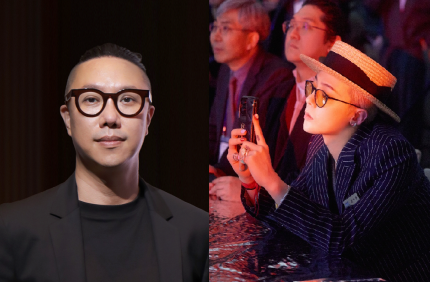
< Photo 2. (From left) Professor Jinjoon Lee of the Graduate School of Culture Technology and G-Dragon (Visiting Professor Kwon Ji-yong of the Department of Mechanical Engineering) >
He continued, "The universe is a realm of technology as well as a stage for imagination and emotion, and I look forward to an encounter with the unknown through a new attempt to speak of art in the language of science including AI and imagine science in the form of art." “G-Dragon’s voice and music have now begun their journey to space,” said Yong-ho Choi, Galaxy Corporation’s Chief Happiness Officer (CHO). “This project is an act of leaving music as a legacy for humanity, while also having an important meaning of attempting to communicate with space.” He added, “This is a pioneering step to introduce human culture to space, and it will remain as a monumental performance that opens a new chapter in the history of music comparable to the Beatles.”
Galaxy Corporation is leading the future entertainment technology industry through its collaboration with KAIST, and was recently selected as the only entertainment technology company in a private meeting with Microsoft CEO Nadella. In particular, it is promoting the globalization of AI entertainment technology, receiving praise as a “pioneer of imagination” for new forms of AI entertainment content, including the AI contents for the deceased.
< Photo 3. Photo of G-Dragon's Home Sweet Home being sent into the space via Professor Jinjoon Lee's Space Sound Source Transmission Project >
Through this project, KAIST Space Research Institute presented new possibilities for utilizing satellite technology, and showed a model for science to connect with society in a more popular way.
KAIST President Kwang-Hyung Lee said, “KAIST is a place that always supports new imaginations and challenges,” and added, “We will continue to strive to continue creative research that no one has ever thought of, like this project that combines science, technology, and art.”
In the meantime, Galaxy Corporation, the agency of G-Dragon’s Professor Kwon Ji-yong, is an AI entertainment company that presents a new paradigm based on IP, media, tech, and entertainment convergence technology.
2025.04.10 View 11605
KAIST sends out Music and Bio-Signs of Professor Kwon Ji-yong, a.k.a. G-Dragon, into Space to Pulsate through Universe and Resonate among Stars
KAIST (President Kwang-Hyung Lee) announced on the 10th of April that it successfully promoted the world’s first ‘Space Sound Source Transmission Project’ based on media art at the KAIST Space Research Institute on April 9th through collaboration between Professor Jinjoon Lee of the Graduate School of Culture Technology, a world-renowned media artist, and the global K-Pop artist, G-Dragon.
This project was proposed as part of the ‘AI Entertech Research Center’ being promoted by KAIST and Galaxy Corporation. It is a project to transmit the message and sound of G-Dragon (real name, Kwon Ji-yong), a singer/song writer affiliated with Galaxy Corporation and a visiting professor in the Department of Mechanical Engineering at KAIST, to space for the first time in the world.
This is a convergence project that combines science, technology, art, and popular music, and is a new form of ‘space culture content’ experiment that connects KAIST’s cutting-edge space technology, Professor Jinjoon Lee’s media art work, and G-Dragon’s voice and sound source containing his latest digital single, "HOME SWEET HOME".
< Photo 1. Professor Jinjoon Lee's Open Your Eyes Project "Iris"'s imagery projected on the 13m space antenna at the Space Research Institute >
This collaboration was planned with the theme of ‘emotional signals that expand the inner universe of humans to the outer universe.’ The image of G-Dragon’s iris was augmented through AI as a window into soul symbolizing his uniqueness and identity, and the new song “Home Sweet Home” was combined as an audio message containing the vibration of that emotion.
This was actually transmitted into space using a next-generation small satellite developed by KAIST Space Research Institute, completing a symbolic performance in which an individual’s inner universe is transmitted to outer space.
Professor Jinjoon Lee’s cinematic media art work “Iris” was unveiled at the site. This work was screened in the world’s first projection mapping method* on KAIST Space Research Institute’s 13m space antenna. This video was created using generative artificial intelligence (AI) technology based on the image of G-Dragon's iris, and combined with sound using the data of the sounds of Emile Bell rings – the bell that holds a thousand years of history, it presented an emotional art experience that transcends time and space.
*Projection Mapping: A technology that projects light and images onto actual structures to create visual changes, and is a method of expression that artistically reinterprets space.
This work is one of the major research achievements of KAIST TX Lab and Professor Lee based on new media technology based on biometric data such as iris, heartbeat, and brain waves.
Professor Jinjoon Lee said, "The iris is a symbol that reflects inner emotions and identity, so much so that it is called the 'mirror of the soul,' and this work sought to express 'the infinite universe seen from the inside of humanity' through G-Dragon's gaze."
< Photo 2. (From left) Professor Jinjoon Lee of the Graduate School of Culture Technology and G-Dragon (Visiting Professor Kwon Ji-yong of the Department of Mechanical Engineering) >
He continued, "The universe is a realm of technology as well as a stage for imagination and emotion, and I look forward to an encounter with the unknown through a new attempt to speak of art in the language of science including AI and imagine science in the form of art." “G-Dragon’s voice and music have now begun their journey to space,” said Yong-ho Choi, Galaxy Corporation’s Chief Happiness Officer (CHO). “This project is an act of leaving music as a legacy for humanity, while also having an important meaning of attempting to communicate with space.” He added, “This is a pioneering step to introduce human culture to space, and it will remain as a monumental performance that opens a new chapter in the history of music comparable to the Beatles.”
Galaxy Corporation is leading the future entertainment technology industry through its collaboration with KAIST, and was recently selected as the only entertainment technology company in a private meeting with Microsoft CEO Nadella. In particular, it is promoting the globalization of AI entertainment technology, receiving praise as a “pioneer of imagination” for new forms of AI entertainment content, including the AI contents for the deceased.
< Photo 3. Photo of G-Dragon's Home Sweet Home being sent into the space via Professor Jinjoon Lee's Space Sound Source Transmission Project >
Through this project, KAIST Space Research Institute presented new possibilities for utilizing satellite technology, and showed a model for science to connect with society in a more popular way.
KAIST President Kwang-Hyung Lee said, “KAIST is a place that always supports new imaginations and challenges,” and added, “We will continue to strive to continue creative research that no one has ever thought of, like this project that combines science, technology, and art.”
In the meantime, Galaxy Corporation, the agency of G-Dragon’s Professor Kwon Ji-yong, is an AI entertainment company that presents a new paradigm based on IP, media, tech, and entertainment convergence technology.
2025.04.10 View 11605 -
 A Way for Smartwatches to Detect Depression Risks Devised by KAIST and U of Michigan Researchers
- A international joint research team of KAIST and the University of Michigan developed a digital biomarker for predicting symptoms of depression based on data collected by smartwatches
- It has the potential to be used as a medical technology to replace the economically burdensome fMRI measurement test
- It is expected to expand the scope of digital health data analysis
The CORONA virus pandemic also brought about a pandemic of mental illness. Approximately one billion people worldwide suffer from various psychiatric conditions. Korea is one of more serious cases, with approximately 1.8 million patients exhibiting depression and anxiety disorders, and the total number of patients with clinical mental diseases has increased by 37% in five years to approximately 4.65 million. A joint research team from Korea and the US has developed a technology that uses biometric data collected through wearable devices to predict tomorrow's mood and, further, to predict the possibility of developing symptoms of depression.
< Figure 1. Schematic diagram of the research results. Based on the biometric data collected by a smartwatch, a mathematical algorithm that solves the inverse problem to estimate the brain's circadian phase and sleep stages has been developed. This algorithm can estimate the degrees of circadian disruption, and these estimates can be used as the digital biomarkers to predict depression risks. >
KAIST (President Kwang Hyung Lee) announced on the 15th of January that the research team under Professor Dae Wook Kim from the Department of Brain and Cognitive Sciences and the team under Professor Daniel B. Forger from the Department of Mathematics at the University of Michigan in the United States have developed a technology to predict symptoms of depression such as sleep disorders, depression, loss of appetite, overeating, and decreased concentration in shift workers from the activity and heart rate data collected from smartwatches.
According to WHO, a promising new treatment direction for mental illness focuses on the sleep and circadian timekeeping system located in the hypothalamus of the brain, which directly affect impulsivity, emotional responses, decision-making, and overall mood.
However, in order to measure endogenous circadian rhythms and sleep states, blood or saliva must be drawn every 30 minutes throughout the night to measure changes in the concentration of the melatonin hormone in our bodies and polysomnography (PSG) must be performed. As such treatments requires hospitalization and most psychiatric patients only visit for outpatient treatment, there has been no significant progress in developing treatment methods that take these two factors into account. In addition, the cost of the PSG test, which is approximately $1000, leaves mental health treatment considering sleep and circadian rhythms out of reach for the socially disadvantaged.
The solution to overcome these problems is to employ wearable devices for the easier collection of biometric data such as heart rate, body temperature, and activity level in real time without spatial constraints. However, current wearable devices have the limitation of providing only indirect information on biomarkers required by medical staff, such as the phase of the circadian clock.
The joint research team developed a filtering technology that accurately estimates the phase of the circadian clock, which changes daily, such as heart rate and activity time series data collected from a smartwatch. This is an implementation of a digital twin that precisely describes the circadian rhythm in the brain, and it can be used to estimate circadian rhythm disruption.
< Figure 2. The suprachiasmatic nucleus located in the hypothalamus of the brain is the central biological clock that regulates the 24-hour physiological rhythm and plays a key role in maintaining the body’s circadian rhythm. If the phase of this biological clock is disrupted, it affects various parts of the brain, which can cause psychiatric conditions such as depression. >
The possibility of using the digital twin of this circadian clock to predict the symptoms of depression was verified through collaboration with the research team of Professor Srijan Sen of the Michigan Neuroscience Institute and Professor Amy Bohnert of the Department of Psychiatry of the University of Michigan.
The collaborative research team conducted a large-scale prospective cohort study involving approximately 800 shift workers and showed that the circadian rhythm disruption digital biomarker estimated through the technology can predict tomorrow's mood as well as six symptoms, including sleep problems, appetite changes, decreased concentration, and suicidal thoughts, which are representative symptoms of depression.
< Figure 3. The circadian rhythm of hormones such as melatonin regulates various physiological functions and behaviors such as heart rate and activity level. These physiological and behavioral signals can be measured in daily life through wearable devices. In order to estimate the body’s circadian rhythm inversely based on the measured biometric signals, a mathematical algorithm is needed. This algorithm plays a key role in accurately identifying the characteristics of circadian rhythms by extracting hidden physiological patterns from biosignals. >
Professor Dae Wook Kim said, "It is very meaningful to be able to conduct research that provides a clue for ways to apply wearable biometric data using mathematics that have not previously been utilized for actual disease management." He added, "We expect that this research will be able to present continuous and non-invasive mental health monitoring technology. This is expected to present a new paradigm for mental health care. By resolving some of the major problems socially disadvantaged people may face in current treatment practices, they may be able to take more active steps when experiencing symptoms of depression, such as seeking counsel before things get out of hand."
< Figure 4. A mathematical algorithm was devised to circumvent the problems of estimating the phase of the brain's biological clock and sleep stages inversely from the biodata collected by a smartwatch. This algorithm can estimate the degree of daily circadian rhythm disruption, and this estimate can be used as a digital biomarker to predict depression symptoms. >
The results of this study, in which Professor Dae Wook Kim of the Department of Brain and Cognitive Sciences at KAIST participated as the joint first author and corresponding author, were published in the online version of the international academic journal npj Digital Medicine on December 5, 2024. (Paper title: The real-world association between digital markers of circadian disruption and mental health risks) DOI: 10.1038/s41746-024-01348-6
This study was conducted with the support of the KAIST's Research Support Program for New Faculty Members, the US National Science Foundation, the US National Institutes of Health, and the US Army Research Institute MURI Program.
2025.01.20 View 17073
A Way for Smartwatches to Detect Depression Risks Devised by KAIST and U of Michigan Researchers
- A international joint research team of KAIST and the University of Michigan developed a digital biomarker for predicting symptoms of depression based on data collected by smartwatches
- It has the potential to be used as a medical technology to replace the economically burdensome fMRI measurement test
- It is expected to expand the scope of digital health data analysis
The CORONA virus pandemic also brought about a pandemic of mental illness. Approximately one billion people worldwide suffer from various psychiatric conditions. Korea is one of more serious cases, with approximately 1.8 million patients exhibiting depression and anxiety disorders, and the total number of patients with clinical mental diseases has increased by 37% in five years to approximately 4.65 million. A joint research team from Korea and the US has developed a technology that uses biometric data collected through wearable devices to predict tomorrow's mood and, further, to predict the possibility of developing symptoms of depression.
< Figure 1. Schematic diagram of the research results. Based on the biometric data collected by a smartwatch, a mathematical algorithm that solves the inverse problem to estimate the brain's circadian phase and sleep stages has been developed. This algorithm can estimate the degrees of circadian disruption, and these estimates can be used as the digital biomarkers to predict depression risks. >
KAIST (President Kwang Hyung Lee) announced on the 15th of January that the research team under Professor Dae Wook Kim from the Department of Brain and Cognitive Sciences and the team under Professor Daniel B. Forger from the Department of Mathematics at the University of Michigan in the United States have developed a technology to predict symptoms of depression such as sleep disorders, depression, loss of appetite, overeating, and decreased concentration in shift workers from the activity and heart rate data collected from smartwatches.
According to WHO, a promising new treatment direction for mental illness focuses on the sleep and circadian timekeeping system located in the hypothalamus of the brain, which directly affect impulsivity, emotional responses, decision-making, and overall mood.
However, in order to measure endogenous circadian rhythms and sleep states, blood or saliva must be drawn every 30 minutes throughout the night to measure changes in the concentration of the melatonin hormone in our bodies and polysomnography (PSG) must be performed. As such treatments requires hospitalization and most psychiatric patients only visit for outpatient treatment, there has been no significant progress in developing treatment methods that take these two factors into account. In addition, the cost of the PSG test, which is approximately $1000, leaves mental health treatment considering sleep and circadian rhythms out of reach for the socially disadvantaged.
The solution to overcome these problems is to employ wearable devices for the easier collection of biometric data such as heart rate, body temperature, and activity level in real time without spatial constraints. However, current wearable devices have the limitation of providing only indirect information on biomarkers required by medical staff, such as the phase of the circadian clock.
The joint research team developed a filtering technology that accurately estimates the phase of the circadian clock, which changes daily, such as heart rate and activity time series data collected from a smartwatch. This is an implementation of a digital twin that precisely describes the circadian rhythm in the brain, and it can be used to estimate circadian rhythm disruption.
< Figure 2. The suprachiasmatic nucleus located in the hypothalamus of the brain is the central biological clock that regulates the 24-hour physiological rhythm and plays a key role in maintaining the body’s circadian rhythm. If the phase of this biological clock is disrupted, it affects various parts of the brain, which can cause psychiatric conditions such as depression. >
The possibility of using the digital twin of this circadian clock to predict the symptoms of depression was verified through collaboration with the research team of Professor Srijan Sen of the Michigan Neuroscience Institute and Professor Amy Bohnert of the Department of Psychiatry of the University of Michigan.
The collaborative research team conducted a large-scale prospective cohort study involving approximately 800 shift workers and showed that the circadian rhythm disruption digital biomarker estimated through the technology can predict tomorrow's mood as well as six symptoms, including sleep problems, appetite changes, decreased concentration, and suicidal thoughts, which are representative symptoms of depression.
< Figure 3. The circadian rhythm of hormones such as melatonin regulates various physiological functions and behaviors such as heart rate and activity level. These physiological and behavioral signals can be measured in daily life through wearable devices. In order to estimate the body’s circadian rhythm inversely based on the measured biometric signals, a mathematical algorithm is needed. This algorithm plays a key role in accurately identifying the characteristics of circadian rhythms by extracting hidden physiological patterns from biosignals. >
Professor Dae Wook Kim said, "It is very meaningful to be able to conduct research that provides a clue for ways to apply wearable biometric data using mathematics that have not previously been utilized for actual disease management." He added, "We expect that this research will be able to present continuous and non-invasive mental health monitoring technology. This is expected to present a new paradigm for mental health care. By resolving some of the major problems socially disadvantaged people may face in current treatment practices, they may be able to take more active steps when experiencing symptoms of depression, such as seeking counsel before things get out of hand."
< Figure 4. A mathematical algorithm was devised to circumvent the problems of estimating the phase of the brain's biological clock and sleep stages inversely from the biodata collected by a smartwatch. This algorithm can estimate the degree of daily circadian rhythm disruption, and this estimate can be used as a digital biomarker to predict depression symptoms. >
The results of this study, in which Professor Dae Wook Kim of the Department of Brain and Cognitive Sciences at KAIST participated as the joint first author and corresponding author, were published in the online version of the international academic journal npj Digital Medicine on December 5, 2024. (Paper title: The real-world association between digital markers of circadian disruption and mental health risks) DOI: 10.1038/s41746-024-01348-6
This study was conducted with the support of the KAIST's Research Support Program for New Faculty Members, the US National Science Foundation, the US National Institutes of Health, and the US Army Research Institute MURI Program.
2025.01.20 View 17073 -
 KAIST Develops Microbial Liquid Egg Substitute
A team of researchers published a paper on developing a substitute for eggs using microorganisms, grabbing international attention. It is expected that the development of egg substitutes using non-animal raw materials will solve the problems of factory farming, which causes problems like increased emission of greenhouse gas and waste, and contribute to building a sustainable food system that allows easy protein intake.
KAIST (President Kwang-Hyung Lee) announced that Research Professor Kyeong Rok Choi from the Biological Process Research Center and Distinguished Professor Sang Yup Lee from the Department of Chemical and Biomolecular Engineering have published a paper on the development of an "Eco-Friendly Liquid Egg Substitute Derived from Microorganisms."
Eggs play a crucial role in various culinary applications due to their unique physicochemical properties such as gelling, foaming, and emulsifying, while also providing essential nutrients. However, traditional egg production is not only unethical and resource-intensive but also has significant environmental impacts such as greenhouse gas emissions and waste issues. Additionally, factors such as wars and trade regulations have led to significant increases in egg prices, highlighting food security concerns. In response to these issues, there has been growing interest in egg substitutes made from non-animal sources to establish a sustainable food system.
Although there has been progress in developing non-animal protein-based egg substitutes, no substitute has been able to fully replicate the essential functional properties of liquid eggs, such as gelling and foaming, while also providing complete nutrition. In this context, the research team aimed to develop a liquid egg substitute using microbial biomass, which has a protein content comparable to that of meat per unit dry mass. Various microorganisms, such as yeast, Bacillus, lactic acid bacteria, and other probiotics, have been proven safe through long-term human consumption. Microbial biomass requires fewer resources like water and land during production, and possesses high-quality nutrients, making it a promising sustainable food resource.
< Figure 1. Comparison of heat treatment results of microbial pellets and microbial lysates >
However, the semi-solid microbial biomass recovered through microbial cultivation was observed to turn liquid upon heating, unlike liquid egg. To address this, the research team devised a microbial lysate by breaking down the cell walls and cell membranes of microorganisms, which correspond to the eggshell. They found that the microbial lysate's proteins coagulated when heated and formed a gel similar to that of liquid egg. The gel formed from the heated microbial lysate was found to have microscopic structures and physical properties similar to those of boiled eggs. The addition of microbial-derived edible enzymes or plant-based materials allowed for the adjustment of its properties, enabling the creation of various textures.
Furthermore, the researchers demonstrated that the microbial lysate could form stable foams widely used in baking, such as meringues (made from egg whites). They successfully baked meringue cookies using this lysate, showing its potential as a functional liquid egg substitute.
Distinguished Professor Sang Yup Lee stated, "This substitute has excellent nutritional components, making it suitable for regular food consumption. It is especially promising as emergency food for long-term space travel, wartime situations, and other emergencies. More importantly, it contributes to securing a sustainable food system."
< Figure 2. Example of foaming ability of microbial lysate and meringue cookie production >
< Figure 3. Example of foaming ability of microbial lysate and meringue cookie production >
The paper was published online in the journal npj Science of Food, issued by Nature.
- Paper Title: Microbial lysates repurposed as liquid egg substitutes
- Authors: Kyeong Rok Choi (first author), Da-Hee Ahn, Seok Yeong Jung, YuHyun Lee, and Sang Yup Lee (corresponding author)
This research was supported by the Ministry of Science and ICT's project for developing eco-friendly chemical technologies to replace petroleum (Project Leader: Distinguished Professor Sang Yup Lee, KAIST) and the Rural Development Administration's Agricultural Microorganisms Project Group (Director: Professor Pan-sik Jang, Seoul National University) for developing protein production technology from inorganic substances through microbial metabolic system control (Project Leader: Research Professor Kyeong Rok Choi, KAIST).
2024.07.05 View 11683
KAIST Develops Microbial Liquid Egg Substitute
A team of researchers published a paper on developing a substitute for eggs using microorganisms, grabbing international attention. It is expected that the development of egg substitutes using non-animal raw materials will solve the problems of factory farming, which causes problems like increased emission of greenhouse gas and waste, and contribute to building a sustainable food system that allows easy protein intake.
KAIST (President Kwang-Hyung Lee) announced that Research Professor Kyeong Rok Choi from the Biological Process Research Center and Distinguished Professor Sang Yup Lee from the Department of Chemical and Biomolecular Engineering have published a paper on the development of an "Eco-Friendly Liquid Egg Substitute Derived from Microorganisms."
Eggs play a crucial role in various culinary applications due to their unique physicochemical properties such as gelling, foaming, and emulsifying, while also providing essential nutrients. However, traditional egg production is not only unethical and resource-intensive but also has significant environmental impacts such as greenhouse gas emissions and waste issues. Additionally, factors such as wars and trade regulations have led to significant increases in egg prices, highlighting food security concerns. In response to these issues, there has been growing interest in egg substitutes made from non-animal sources to establish a sustainable food system.
Although there has been progress in developing non-animal protein-based egg substitutes, no substitute has been able to fully replicate the essential functional properties of liquid eggs, such as gelling and foaming, while also providing complete nutrition. In this context, the research team aimed to develop a liquid egg substitute using microbial biomass, which has a protein content comparable to that of meat per unit dry mass. Various microorganisms, such as yeast, Bacillus, lactic acid bacteria, and other probiotics, have been proven safe through long-term human consumption. Microbial biomass requires fewer resources like water and land during production, and possesses high-quality nutrients, making it a promising sustainable food resource.
< Figure 1. Comparison of heat treatment results of microbial pellets and microbial lysates >
However, the semi-solid microbial biomass recovered through microbial cultivation was observed to turn liquid upon heating, unlike liquid egg. To address this, the research team devised a microbial lysate by breaking down the cell walls and cell membranes of microorganisms, which correspond to the eggshell. They found that the microbial lysate's proteins coagulated when heated and formed a gel similar to that of liquid egg. The gel formed from the heated microbial lysate was found to have microscopic structures and physical properties similar to those of boiled eggs. The addition of microbial-derived edible enzymes or plant-based materials allowed for the adjustment of its properties, enabling the creation of various textures.
Furthermore, the researchers demonstrated that the microbial lysate could form stable foams widely used in baking, such as meringues (made from egg whites). They successfully baked meringue cookies using this lysate, showing its potential as a functional liquid egg substitute.
Distinguished Professor Sang Yup Lee stated, "This substitute has excellent nutritional components, making it suitable for regular food consumption. It is especially promising as emergency food for long-term space travel, wartime situations, and other emergencies. More importantly, it contributes to securing a sustainable food system."
< Figure 2. Example of foaming ability of microbial lysate and meringue cookie production >
< Figure 3. Example of foaming ability of microbial lysate and meringue cookie production >
The paper was published online in the journal npj Science of Food, issued by Nature.
- Paper Title: Microbial lysates repurposed as liquid egg substitutes
- Authors: Kyeong Rok Choi (first author), Da-Hee Ahn, Seok Yeong Jung, YuHyun Lee, and Sang Yup Lee (corresponding author)
This research was supported by the Ministry of Science and ICT's project for developing eco-friendly chemical technologies to replace petroleum (Project Leader: Distinguished Professor Sang Yup Lee, KAIST) and the Rural Development Administration's Agricultural Microorganisms Project Group (Director: Professor Pan-sik Jang, Seoul National University) for developing protein production technology from inorganic substances through microbial metabolic system control (Project Leader: Research Professor Kyeong Rok Choi, KAIST).
2024.07.05 View 11683 -
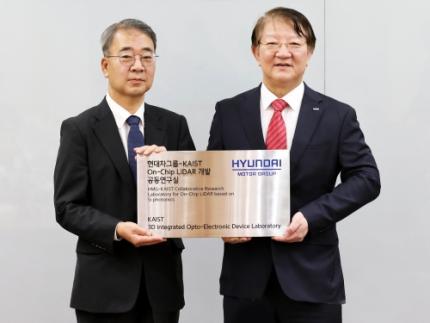 KAIST to begin Joint Research to Develop Next-Generation LiDAR System with Hyundai Motor Group
< (From left) Jong-Soo Lee, Executive Vice President at Hyundai Motor, Sang-Yup Lee, Senior Vice President for Research at KAIST >
The ‘Hyundai Motor Group-KAIST On-Chip LiDAR Joint Research Lab’ was opened at KAIST’s main campus in Daejeon to develop LiDAR sensors for advanced autonomous vehicles.
The joint research lab aims to develop high-performance and compact on-chip sensors and new signal detection technology, which are essential in the increasingly competitive autonomous driving market. On-chip sensors, which utilize semiconductor manufacturing technology to add various functions, can reduce the size of LiDAR systems compared to conventional methods and secure price competitiveness through mass production using semiconductor fabrication processes.
The joint research lab will consist of about 30 researchers, including the Hyundai-Kia Institute of Advanced Technology Development research team and KAIST professors Sanghyeon Kim, Sangsik Kim, Wanyeong Jung, and Hamza Kurt from KAIST’s School of Electrical Engineering, and will operate for four years until 2028.
KAIST will be leading the specialized work of each research team, such as for the development of silicon optoelectronic on-chip LiDAR components, the fabrication of high-speed, high-power integrated circuits to run the LiDAR systems, and the optimization and verification of LiDAR systems.
Hyundai Motor and Kia, together with Hyundai NGV, a specialized industry-academia cooperation institution, will oversee the operation of the joint research lab and provide support such as monitoring technological trends, suggesting research directions, deriving core ideas, and recommending technologies and experts to enhance research capabilities.
A Hyundai Motor Group official said, "We believe that this cooperation between Hyundai Motor Company and Kia, the leader in autonomous driving technology, and KAIST, the home of world-class technology, will hasten the achievement of fully autonomous driving." He added, "We will do our best to enable the lab to produce tangible results.”
Professor Sanghyeon Kim said, "The LiDAR sensor, which serves as the eyes of a car, is a core technology for future autonomous vehicle development that is essential for automobile companies to internalize."
2024.02.27 View 18978
KAIST to begin Joint Research to Develop Next-Generation LiDAR System with Hyundai Motor Group
< (From left) Jong-Soo Lee, Executive Vice President at Hyundai Motor, Sang-Yup Lee, Senior Vice President for Research at KAIST >
The ‘Hyundai Motor Group-KAIST On-Chip LiDAR Joint Research Lab’ was opened at KAIST’s main campus in Daejeon to develop LiDAR sensors for advanced autonomous vehicles.
The joint research lab aims to develop high-performance and compact on-chip sensors and new signal detection technology, which are essential in the increasingly competitive autonomous driving market. On-chip sensors, which utilize semiconductor manufacturing technology to add various functions, can reduce the size of LiDAR systems compared to conventional methods and secure price competitiveness through mass production using semiconductor fabrication processes.
The joint research lab will consist of about 30 researchers, including the Hyundai-Kia Institute of Advanced Technology Development research team and KAIST professors Sanghyeon Kim, Sangsik Kim, Wanyeong Jung, and Hamza Kurt from KAIST’s School of Electrical Engineering, and will operate for four years until 2028.
KAIST will be leading the specialized work of each research team, such as for the development of silicon optoelectronic on-chip LiDAR components, the fabrication of high-speed, high-power integrated circuits to run the LiDAR systems, and the optimization and verification of LiDAR systems.
Hyundai Motor and Kia, together with Hyundai NGV, a specialized industry-academia cooperation institution, will oversee the operation of the joint research lab and provide support such as monitoring technological trends, suggesting research directions, deriving core ideas, and recommending technologies and experts to enhance research capabilities.
A Hyundai Motor Group official said, "We believe that this cooperation between Hyundai Motor Company and Kia, the leader in autonomous driving technology, and KAIST, the home of world-class technology, will hasten the achievement of fully autonomous driving." He added, "We will do our best to enable the lab to produce tangible results.”
Professor Sanghyeon Kim said, "The LiDAR sensor, which serves as the eyes of a car, is a core technology for future autonomous vehicle development that is essential for automobile companies to internalize."
2024.02.27 View 18978