%46%6f%72%75%6d
-
 KAIST holds Global Science and Technology Cooperation Forum… Discusses sustainable international cooperation measures
KAIST announced on June 11th that the Global Center for Development and Strategy (G-CODEs) hosted the "Forum on Global Cooperation in Science and Technology: Beyond Crisis, Toward Sustainable Cooperation" at the KAIST Academic Cultural Complex on June 10th.
This forum was organized to review South Korea's international cooperation strategies and execution capabilities under a rapidly changing environment for international cooperation in science and technology, driven by intensifying competition for technological hegemony, restructuring of global supply chains, and rising uncertainty in energy security.
In particular, this forum was organized as a follow-up event to the 'Global Science and Technology Cooperation Forum: Reflection and Outlook' held last year. While last year's forum discussed South Korea's response strategies amid the restructuring of the global science and technology order, this year's forum continued the discussion with a focus on more specific cooperation tasks, such as execution capabilities and institutional foundations for international cooperation, fostering professional talent, international joint research, and research security.
Beginning with opening remarks by Sang-wook Kang, Director General for Planning and Coordination at the Ministry of Science and ICT, the forum proceeded with a total of three sessions.
In the first session, 'Restructuring Science and Technology International Cooperation in the Era of Techno-Geopolitics,' So Young Kim, Vice President of International Office at KAIST, served as the chair to discuss the direction of international cooperation in science and technology according to changes in the economic security and techno-geopolitical environment. Wonho Yeon, Director at Hyundai Motor Group Global Policy Office, presented global cooperation strategies in the era of economic security; Eunkyo Cho, Head of Team at the Korea Institute for Industrial Economics & Trade (KIET), presented the potential for Korea-China cooperation in the era of physical AI; and Inkyoung Sun, Research Fellow at the Science and Technology Policy Institute (STEPI), presented the importance of research security for international joint research. Subsequently, Damian Bank, Professor at the Global Center for Development and Strategy (G-CODEs) at KAIST, and Chaegwon Lim, Professor at the School of Electrical Engineering at KAIST, participated in the panel discussion.
In the second session, 'International Joint Research: Issues and Challenges,' Jae-Yong Choung, Professor at the Graduate School of Science and Technology Policy at KAIST, served as the chair to address practical experiences and institutional challenges of international joint research. Eunseong Kim, Professor at the Department of Physics and the Graduate School of Quantum Science and Technology at KAIST, shared the experiences of the KAIST-MIT global partnership, and Dr. Hae-Jung Lee from the National Institute of Standards and Technology (NIST) in the United States presented South Korea's collaborative capabilities and areas for improvement from the perspective of an overseas partner.
Seokkyun Woo, Professor at the Graduate School of Science and Technology Policy at KAIST, analyzed the current status and characteristics of international cooperation research by government-funded research institutes currently being conducted by the G-CODEs research center, and discussed directions for improving the international cooperation support system. Ju Young Kim, Policy Officer at the Delegation of the European Union to the Republic of Korea, and Hyerin Park, Center Head at the Korea Research Institute of Standards and Science (KRISS), participated in the panel discussion.
In the third session, 'Fostering Talent for Science and Technology International Cooperation,' Sukyung Park, Professor at the Department of Mechanical Engineering at KAIST, served as the chair to discuss fostering professional talent and institutional foundations for international cooperation. EunJu Jun, Director at the Korea Atomic Energy Research Institute (KAERI), Mi-Jung Um, Center Head at the Science and Technology Policy Institute (STEPI), Jonghoon Moon, Deputy Director at the Ministry of Science and ICT, Jinyeob Na, Deputy Director at the Ministry of Foreign Affairs, and Eun Jung Koh, Head of Division at the Korea Institute of Human Resources Development in Science and Technology (KIRD), participated as panelists to discuss ways to foster convergence talent, capabilities and training required for practical personnel in international cooperation, career development, and establishing support systems.
Kyung Ryul Park, Director of the Global Center for Development and Strategy (G-CODEs) at KAIST, said, "This forum was a venue to examine the changes and challenges surrounding international cooperation in science and technology and to seek sustainable cooperation measures. Reflecting its recently surging importance, students and participants showed high interest in nurturing future convergence talent for international cooperation in science and technology."
Kwang Hyung Lee, President of KAIST, stated, "International cooperation in science and technology is an important foundation for national competitiveness and future growth. I hope this forum serves as an opportunity to seek sustainable methods for international cooperation in science and technology amid a rapidly changing global environment." (End)
※ Forum Presentation Materials: Global Center for Development and Strategy Website (https://global.kaist.ac.kr/)
<Forum on Global Cooperation in Science and Technology>
2026.06.11 View 3527
-
 Graduate School of Global Digital Innovation (GDI) Hosts 'AI⁺ Global Prosperity Forum 2026'
The Graduate School of Global Digital Innovation (GDI) of KAIST will host the "AI⁺ Global Prosperity Forum 2026" on June 24 at the Chung Kunmo Conference Hall (5F), KAIST Academic Cultural Complex (E9).
KAIST Graduate School of Global Digital Innovation (GDI) is carrying out the "ICT Global Specialized Convergence Talent Cultivation Program" supported by the Ministry of Science and ICT and the Institute of Information & Communications Technology Planning & Evaluation (IITP). Since the launch of the Global IT Technology Program (ITTP) in 2006, GDI has grown into South Korea's representative global digital talent fostering platform over the past 20 years, nurturing approximately 260 government officials, public institution experts, and industry leaders from over 80 countries. GDI serves as a vehicle for global cooperation, sharing Korea's digital innovation experience and policy know-how with the international community, and promoting various collaborative projects such as international joint research, policy cooperation, and digital transformation projects based on its global network.
This forum, organized by GDI as part of the ICT Global Specialized Convergence Talent Cultivation Program under the theme 'Advancing Global AI Leadership Through Partnership and Innovation,' is designed to discuss global cooperation strategies for international partnership, digital transformation, and sustainable development in the AI era.
The event is expected to bring together approximately 60 government officials, international organization experts, researchers, and industry leaders from around 30 countries across Asia, Africa, Latin America, the Middle East, and Europe. Notably, representatives from the African Development Bank (AfDB), the Ministry of Communications and Digital Affairs of Indonesia, and various foreign governments, public institutions, and international organizations will participate to share AI governance, digital transformation, innovation policies, and international cooperation cases.
The forum will feature two main sessions:
Session 1: Global AI Partnership and Collaboration
Session 2: AI Policy, Governance, AI Innovation, and Applications
Participants will discuss global cooperation models in the AI era, digital transformation in the public sector, and methods for establishing AI policy and governance frameworks.
In addition, an 'AI⁺ Industry Showcase' featuring Korean AI and digital innovation enterprises alongside corporate exhibition booths will be operated simultaneously. Participating companies will introduce their innovative AI-based technologies and services, and seek opportunities for Proof of Concept (PoC), joint research, digital transformation projects, and overseas market expansion through business matching sessions with foreign government and public institution officials.
This forum is highly anticipated to serve as a global platform connecting AI technology, policy, industry, and international cooperation, while sharing Korea's AI capabilities and digital innovation experiences with the world and creating practical cooperative outcomes such as international joint research and digital transformation projects.
Seunghun Han, Head of the Graduate School of Global Digital Innovation, stated, "AI has moved beyond mere technology to become a core agenda for national development and international cooperation." He added, "We expect this forum to serve as a venue where policymakers, experts, and companies from around the world gather to explore future AI cooperation strategies and build new global partnerships."
The forum is open to any researchers, students, and the general public interested in AI and global cooperation through pre-registration (https://docs.google.com/forms/d/1QmYMqaD4uoT11NxUZb4ZSQBVgDxex5DJ3_4-eCoqgVI/edit).
※ Inquiries: KAIST Graduate School of Global Digital Innovation (gdi.adm@kaist.ac.kr / 042-350-6845)
2026.06.11 View 4565
-
 The 4th Korea AI System Forum Breakfast Lecture Successfully Concluded
A special event was held to explore the trend of "Physical AI," where artificial intelligence directly connects with the physical world and rapidly permeates industrial sites. On the morning of Monday, September 8, KAIST's Graduate School of AI Semiconductor held the "4th Korea AI System Forum (KAISF)" breakfast lecture at the Onoma Hotel in Daejeon.
At the lecture, Yoon-seok Pyu, a director at ROBOTIS, Inc., gave a special presentation on the topic, "Physical AI Research Trends and the Development History of Task-Oriented Humanoid AI Workers." Director Pyu introduced the current state of global Physical AI research and specifically explained ROBOTIS's strategy for developing humanoid robots tailored to industrial sites.
<Group photo of attendees at the 4th Korea AI System Forum>
In particular, the participants were shown the potential of a robot platform that can be applied in real industrial settings, thanks to technical advances in core components like the robot's ability to learn tasks through imitation learning, and the company's small, high-power actuators and self-developed reducers. He shared examples of the company's "AI Worker" development, which is specialized for the manufacturing, logistics, and service sectors, based on ROBOTIS's vision of "Freedom from Work."
Beyond simple technological concepts, attendees actively exchanged opinions and deeply agreed on the need for Physical AI robots that can be used stably and efficiently in the field.
Hoe-jun Yoo, chairman of the Korea AI System Forum (a KAIST professor), stated, "Physical AI is a field where countries around the world are fiercely competing to secure a leading position. KAISF will support our
companies to lead in the global market by building a Korean-style industrial ecosystem."
Going forward, KAISF plans to focus on ensuring that Korean Physical AI technology gains a competitive edge on the global stage by closely connecting industry, academia, and research institutions. Through this effort, it will promote the creation of a differentiated industrial ecosystem that encompasses AI semiconductors, robotics, and system integration.
2025.09.09 View 6315
-
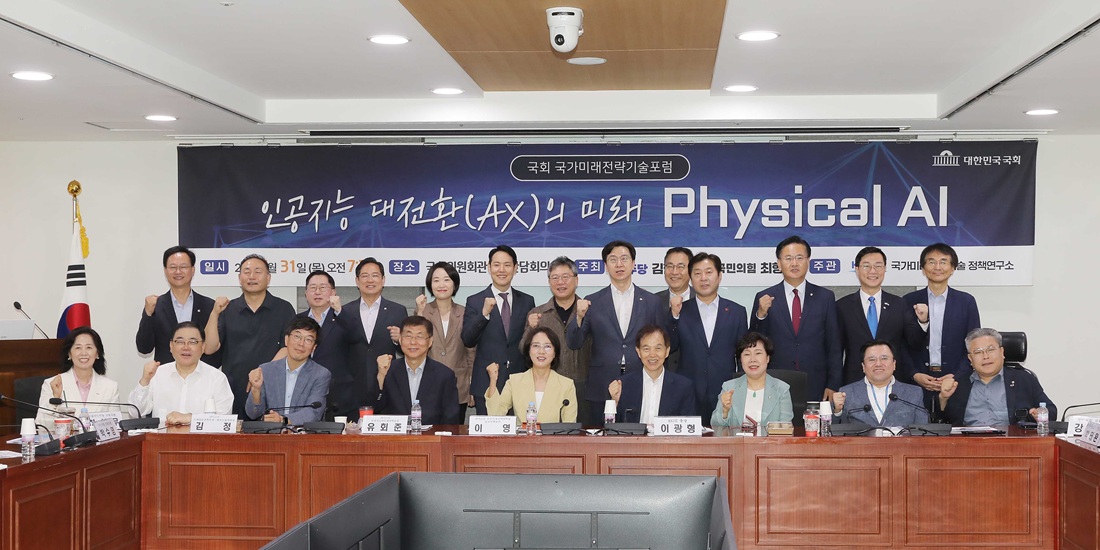 KAIST Successfully Presents the Future of AI Transformation and Physical AI Strategy at the 1st National Strategic Technology Forum
<(Front row, fourth from the right) President Kwang Hyung Lee of KAIST, (back row, fifth from the right) Forum co-host Representative Hyung-Doo Choi, (back row, sixth from the left) Forum co-host Representative Han-Kyu Kim, along with ruling and opposition party members of the Science, ICT, Broadcasting, and Communications Committee and the Trade, Industry, Energy, SMEs, and Startups Committee, as well as Professors Hoe-Jun Yoo and Jung Kim from KAIST)>
KAIST (President Kwang Hyung Lee) announced on July that it had successfully held the “1st National Strategic Technology Forum” at the National Assembly Members' Office Building that day under the theme “The Future of Artificial Intelligence Transformation (AX): Physical AI.” This bipartisan policy forum aimed to discuss strategies for technology hegemony by leveraging Korea’s strengths in AI semiconductors and manufacturing.
The forum was hosted by KAIST and co-organized by Representative Hyung-Du Choi (People Power Party), the secretary of the National Assembly's Science, ICT, Broadcasting, and Communications Committee, and Representative Han-Kyu Kim (Democratic Party), a member of the Trade, Industry, Energy, SMEs, and Startups Committee. It marks the beginning of a five-part forum series, scheduled monthly through the rest of the year except for October.
The overarching theme, “Artificial Intelligence Transformation (AX),” was designed to address the structural changes reshaping industry, the economy, and society due to the spread of generative AI.
< KAIST President Kwang Hyung Lee delivering his remarks >
The first session focused on “Physical AI,” reflecting how AI innovation—sparked by the proliferation of large language models (LLMs)—is rapidly expanding into the physical realm through ultra-low-power, ultra-lightweight semiconductors. This includes applications in robotics, sensors, and edge devices. Physical AI refers to technologies that interact directly with the real world through AI integration with robotics, autonomous driving, and smart factories. It is drawing attention as a promising next-generation field where Korea can secure a strategic edge, given its strengths in semiconductors and manufacturing.
<Hoi-Jun Yoo, Dean of the KAIST Graduate School of AI Semiconductor>
Hoi-Jun Yoo, Dean of the KAIST Graduate School of AI Semiconductor, gave a presentation titled “The Second AI Innovation Enabled by Ultra-Low-Power AI Semiconductors and Lightweight AI Models,” covering semiconductor trends for implementing Physical AI, academic and industrial strategies for robotics and semiconductors, and Korea’s development direction for “K-Physical AI.”
<Professor Jung Kim, the head of KAIST’s Department of Mechanical and Aerospace Engineering>
Following that, Professor Jung Kim, the head of KAIST’s Department of Mechanical and Aerospace Engineering gave a talk on “Trends in Physical AI and Humanoid Robots,” predicting a new industrial paradigm shaped by AI-robot convergence. He presented global trends, Korea’s development trajectory, and survival strategies for humanoid robots that can supplement or replace human intellectual and physical functions.
During the open discussion that followed, participating lawmakers and experts engaged in in-depth conversations about the need for bipartisan strategies and collaboration.
Representative Hyung-Du Choi (People Power Party) stated, “Through this forum as a platform for public discourse, I will work to ensure that legislation and policy align with the direction of the science and technology field, and that necessary measures are taken promptly to strengthen national competitiveness.”
Representative Han-Kyu Kim (Democratic Party) emphasized, “As strategic planning in science and technology accelerates, it becomes more difficult to coordinate policies involving multiple ministries. Forums like this, which enable ongoing communication among stakeholders, are instrumental in finding effective solutions.”
KAIST President Kwang Hyung Lee remarked, “Although Korea is a latecomer in the generative AI field, we have a unique opportunity to gain strategic superiority in Physical AI, thanks to our technological capabilities in manufacturing, semiconductors, and robotics.” He added, “I hope lawmakers from both the ruling and opposition parties, along with experts, will come together regularly to devise practical policies and contribute to the advancement of Korea’s science and technology.”
<Poster of National Strategic Technology Forum>
This forum series aims to explore policy and institutional solutions to help Korea gain technological leadership in a global context where strategic technologies—such as AI, semiconductors, biotechnology, and energy—directly influence national security and economic sovereignty. Lawmakers from both the Science, ICT, Broadcasting, and Communications Committee and the Trade, Industry, Energy, SMEs, and Startups Committee will continue to participate, fostering bipartisan dialogue. The forums are coordinated by the KAIST Policy Research Institute for National Strategic Technologies.
2025.07.31 View 6965
-
 KAIST Hosts 2025 Integrity Week: In Commitment to Moral Excellence with Programs like "Integrity Consultation on Call" - Promoting Ethical Conduct and Rebuilding Trust
KAIST announced on May 26th that it hosted the "2025 KAIST Integrity Week." The goal was to enhance the integrity and anti-corruption awareness of its members and foster a culture of responsibility and trust within the organization. This initiative included participatory programs such as consultations, education, and campaigns on research and academic integrity.
Under the theme "KAIST Practicing Responsibility and Trust," this Integrity Week featured diverse programs designed for both faculty, staff, and students.
< The Integrity Week Poster >
On the first day of Integrity Week, President Kwang Hyung Lee sent a letter to all members, proclaiming KAIST's commitment to integrity and emphasizing its importance.
Key programs include:
• "Integrity Consultations on Call" to enhance the culture of ethical conduct.
• A program in a quiz show format, the “Integrity Golden Bell,"
• Integrity and Anti-Corruption Education Day.
• Integrity Campaigns aimed at improving internal culture of observing the code of conduct.
These events are designed to encourage participation from both faculty, staff, and students.
In particular, the " Integrity Consultations on Call" were held for graduate student council executives, departmental graduate student representatives, and research support personnel. This was a forum to discuss integrity issues and improvement measures that may arise during research and administrative tasks. It will also serve to share effective integrity policies, such as conflict of interest prevention systems and anonymous reporting legal counsel services.
The "Integrity Golden Bell" event was aimed to enhance faculty and staff's understanding of anti-corruption laws, including the Improper Solicitation and Graft Act and the Conflict of Interest Prevention Act, and to encourage their voluntary commitment to these principles.
< The Integrity Week Poster >
The goals KAIST was targeting to achieve through this Integrity Week, was to integrate the value of ethical practices in daily routines and cultivate a healthy culture within the working environment in which its working colleagues can trust each other. Furthermore, KAIST aims to make integrity a core value that can bolster sustainable development, encouraging all members to actively participate in practicing honest and responsible research and academic work.
President Kwang Hyung Lee stated, "Ethical conduct and honesty is at the essence of science and technology that people of the community must uphold conscientiously, and it should be the foundation for KAIST to regain and maintain global trust. We hope that through this Integrity Week, the value of integrity will take deeper root within our research culture and daily lives."
2025.05.26 View 8189
-
 2025 National Strategic Technology Innovation Forum Held - Seeking ROK-U.S. Cooperation
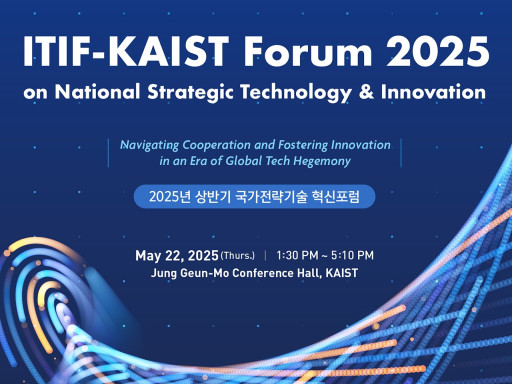
The Future Institute for National Strategic Technology and Policy (FINST&P) at KAIST will host the 'National Strategic Technology* Innovation Forum for 1st half of 2025' on Thursday, May 22, at the Chung Kunmo Conference Hall in the Academic and Culture Building (E9) at the KAIST Main Campus in Daejeon.
* National Strategic Technologies: Technologies recognized for their strategic importance in terms of diplomacy and security, with significant impact on the national economy and related industries, and serving as the foundation for future innovation, including the creation of new technologies and industries. Currently, 12 major technologies such as AI, advanced bio, quantum, and semiconductors, and 50 detailed key technologies are being selected and supported (「Special Act on Fostering National Strategic Technologies」).
This forum will examine the policy direction for fostering national strategic technologies in South Korea amidst rapidly changing international dynamics, such as escalating conflict between the United States and China and increasing global security uncertainties. Furthermore, it will discuss ways to strengthen technology innovation between South Korea and the United States to secure scientific and technological sovereignty and future growth engines.
The forum will feature: △An opening address by KAIST President Kwang-Hyung Lee △Congratulatory remarks by Minister Sang-im Yoo of the Ministry of Science and ICT △A keynote speech by Robert D. Atkinson, President of the Information Technology and Innovation Foundation (ITIF) of the U.S. Subsequently, △Part 1, ‘ROK-U.S. Science and Technology Cooperation,’ will share the latest global trends in national strategic technologies and discuss ROK-U.S. science and technology cooperation under the U.S.-China technology hegemony structure.
Following this, △Part 2, ‘ROK-U.S. Cooperation in Key Detailed Technology Fields,’ will analyze R&D trends and current issues focusing on major national strategic technologies, and derive action-oriented policy tasks that South Korea can pursue based on ROK-U.S. cooperation.
< National Strategic Technology Innovation Forum Poster >
Each session of Part 1 and Part 2 will consist of presentations by domestic and international experts, followed by a comprehensive discussion and Q&A with the audience, promising more in-depth discussions.
Robert D. Atkinson, President of the U.S. Information Technology and Innovation Foundation (ITIF), in his keynote speech ‘The Trump 2.0 Era: South Korea's New Growth Strategy,’ suggests that South Korea should shift from its existing export-oriented growth to a new growth strategy based on broad technological innovation, and promote technological innovation by improving "shadow regulations" imposed by social practices.
The first presenter in Part 1, Stephen Ezell, Vice President for Global Innovation Policy at ITIF, emphasizes in ‘U.S.-China Conflict: South Korea's Response and Global Implications’ that South Korea must overcome the crisis by improving overall national productivity and fostering a competitive service industry.
Following this, Kyungjin Song, Country Representative of The Asia Foundation Korea Office, suggests in ‘Strengthening ROK-U.S. Strategic Technology Partnership Cooperation’ that as global technological hegemony competition changes the diplomatic and security landscape, ROK-U.S. cooperation should advance towards an institutional and sustainable cooperation foundation through a multi-layered partnership structure involving both countries' parliaments, industries, academia, and civil society.
Jaemin Jung, Dean of the College of Humanities and Social Sciences at KAIST, in ‘The Value of Humanities, Social Sciences, and Arts in the Age of Artificial Intelligence,’ explains the role and importance of the KAIST College of Humanities and Social Sciences in connecting technological innovation with human-centered values, as responsible technological development of artificial intelligence (AI) is difficult without insights into humans, society, and culture, presenting examples through AI joint research projects conducted with MIT.
As the first presenter in Part 2, Yong-hee Kim, Director of the Future Institute for National Strategic Technology and Policy (FINST&P) at KAIST, in ‘ROK-U.S. Cooperation for Truly Sustainable Next-Generation Nuclear Power,’ states that many countries or companies are pursuing nuclear power for carbon neutrality and energy security. He suggests that to achieve sustainable nuclear power, three major issues—safety, spent fuel, and uranium resources—need to be resolved, and the molten salt fast reactor (MSFR), an advanced reactor, can be an effective solution.*Molten Salt Fast Reactor (MSFR): A type of Generation IV nuclear reactor that uses molten salt as nuclear fuel and coolant in a fast neutron reactor.
Byung Hee Hong, Professor at Seoul National University's Department of Chemistry, predicts in ‘Innovation in Strategic Industries Led by Graphene Mass Production Technology’ that graphene is a ‘dream new material’ that will overcome the limitations of existing technologies. If South Korea succeeds in mass-producing graphene, it will bring tremendous innovation across key industries such as AI semiconductors and sensors, quantum computing, and biomedical.
Finally, Hoi-Jun Yoo, Distinguished Professor at the KAIST Graduate School of Artificial Intelligence Semiconductor, in ‘The Present and Future of AI Semiconductors,’ explains that with the full-scale utilization of large-scale AI like ChatGPT, semiconductor design is tending to reorganize from a computation-centric to a memory-centric approach. He then presents the direction and feasibility of mid-to-long-term strategies for the competitive development of Korean AI semiconductors.
KAIST President Kwang-Hyung Lee stated the purpose of the event, saying, "As national strategic technology is a core agenda directly linked to our nation's future growth, KAIST will continue to provide a platform for science and technology and policy to communicate, together with domestic and international industry-academia-research institutions."
This event is co-hosted with the U.S. think tank Information Technology and Innovation Foundation (ITIF), which has played a leading role in science and technology innovation policy, with the sponsorship of the Ministry of Science and ICT.
2025.05.16 View 10015
-
 NYU-KAIST Global AI & Digital Governance Conference Held
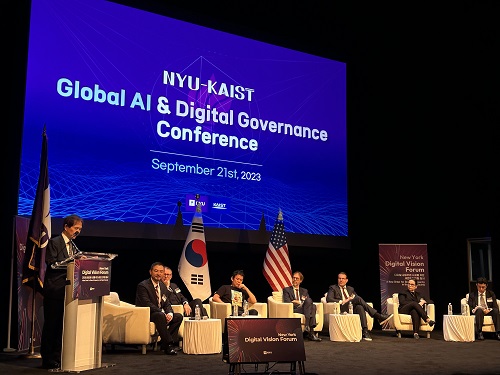
< Photo 1. Opening of NYU-KAIST Global AI & Digital Governance Conference >
In attendance of the Minister of Science and ICT Jong-ho Lee, NYU President Linda G. Mills, and KAIST President Kwang Hyung Lee, KAIST co-hosted the NYU-KAIST Global AI & Digital Governance Conference at the Paulson Center of New York University (NYU) in New York City, USA on September 21st, 9:30 pm.
At the conference, KAIST and NYU discussed the direction and policies for ‘global AI and digital governance’ with participants of upto 300 people which includes scholars, professors, and students involved in the academic field of AI and digitalization from both Korea and the United States and other international backgrounds. This conference was a forum of an international discussion that sought new directions for AI and digital technology take in the future and gathered consensus on regulations.
Following a welcoming address by KAIST President, Kwang Hyung Lee and a congratulatory message from the Minister of Science and ICT, Jong-ho Lee, a panel discussion was held, moderated by Professor Matthew Liao, a graduate of Princeton and Oxford University, currently serving as a professor at NYU and the director at the Center for Bioethics of the NYU School of Global Public Health.
Six prominent scholars took part in the panel discussion. Prof. Kyung-hyun Cho of NYU Applied Mathematics and Data Science Center, a KAIST graduate who has joined the ranks of the world-class in AI language models and Professor Jong Chul Ye, the Director of Promotion Council for Digital Health at KAIST, who is leading innovative research in the field of medical AI working in collaboration with major hospitals at home and abroad was on the panel. Additionally, Professor Luciano Floridi, a founding member of the Yale University Center for Digital Ethics, Professor Shannon Vallor, the Baillie Gifford Professor in the Ethics of Data and Artificial Intelligence at the University of Edinburgh of the UK, Professor Stefaan Verhulst, a Co-Founder and the DIrector of GovLab‘s Data Program at NYU’s Tandon School of Engineering, and Professor Urs Gasser, who is in charge of public policy, governance and innovative technology at the Technical University of Munich, also participated.
Professor Matthew Liao from NYU led the discussion on various topics such as the ways to to regulate AI and digital technologies; the concerns about how deep learning technology being developed in medicinal purposes could be used in warfare; the scope of responsibilities Al scientists' responsibility should carry in ensuring the usage of AI are limited to benign purposes only; the effects of external regulation on the AI model developers and the research they pursue; and on the lessons that can be learned from the regulations in other fields.
During the panel discussion, there was an exchange of ideas about a system of standards that could harmonize digital development and regulatory and social ethics in today’s situation in which digital transformation accelerates technological development at a global level, there is a looming concern that while such advancements are bringing economic vitality it may create digital divides and probles like manipulation of public opinion. Professor Jong-cheol Ye of KAIST (Director of the Promotion Council for Digital Health), in particular, emphasized that it is important to find a point of balance that does not hinder the advancements rather than opting to enforcing strict regulations.
< Photo 2. Panel Discussion in Session at NYU-KAIST Global AI & Digital Governance Conference >
KAIST President Kwang Hyung Lee explained, “At the Digital Governance Forum we had last October, we focused on exploring new governance to solve digital challenges in the time of global digital transition, and this year’s main focus was on regulations.”
“This conference served as an opportunity of immense value as we came to understand that appropriate regulations can be a motivation to spur further developments rather than a hurdle when it comes to technological advancements, and that it is important for us to clearly understand artificial intelligence and consider what should and can be regulated when we are to set regulations on artificial intelligence,” he continued.
Earlier, KAIST signed a cooperation agreement with NYU to build a joint campus, June last year and held a plaque presentation ceremony for the KAIST NYU Joint Campus last September to promote joint research between the two universities. KAIST is currently conducting joint research with NYU in nine fields, including AI and digital research. The KAIST-NYU Joint Campus was conceived with the goal of building an innovative sandbox campus centering aroung science, technology, engineering, and mathematics (STEM) combining NYU's excellent humanities and arts as well as basic science and convergence research capabilities with KAIST's science and technology.
KAIST has contributed to the development of Korea's industry and economy through technological innovation aiding in the nation’s transformation into an innovative nation with scientific and technological prowess. KAIST will now pursue an anchor/base strategy to raise KAIST's awareness in New York through the NYU Joint Campus by establishing a KAIST campus within the campus of NYU, the heart of New York.
2023.09.22 View 26748
-
 KAIST-NYU Digital Governance Forum Held
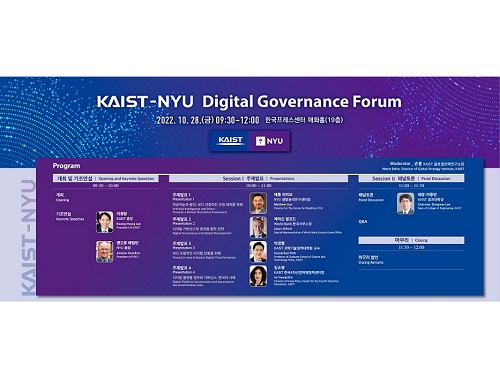
KAIST (President Kwang Hyung Lee) held the 'KAIST-NYU Digital Governance Forum' at the Korea Press Center in the morning of October 28th, 2022.
This forum was held in continuation to discuss the objectives of the 'Digital Vision Forum' that was hosted by New York University (NYU) back in September in the United States, and is the first public event to be held through joint efforts by KAIST and NYU since the signage of the 'KAIST-NYU Joint Campus' was presented at the New York forum.
< Signage of KAIST-NYU Joint Campus >
This forum was promoted based on the consensus of the two universities to create an international forum of solidarity to solve global challenges and seek new governance in the era of digital transformation.
Digital innovation technology is expected to bring economic and industrial benefits as well as political, social and ethical risks such as accelerating the digital divide, among others. In particular, in a time of global digital transformation, as the competition for digital and AI supremacy based on technology nationalism catches fire, there is an emergent need for a global governance system in which digital innovation and the value of freedom co-exist. With the consensus formed through this forum with NYU, KAIST plans to focus on detailing the vision for future digital cooperation that encompasses various stakeholders in our society.
To this end, President Kwang Hyung Lee of KAIST and President Andrew Hamilton of NYU led the forum with keynote addresses with President Hamilton taking part virtually, followed by NYU Professor Matthew Liao, a world-renowned scholar specialized in the ethics in the field of science and technology, and Jason Allford, Special Representative of the World Bank Group to Korea, presenting on relevant topics for discussion.
From KAIST, Professor Kyung Ryul Park of the Graduate School of Science and Technology Policy and Director So Young Kim of the Korea Policy Center for the Fourth Industrial Revolution, followed with their presentations. A panel discussion on governance in the period of digital transformation was also held, led by Professor Dongman Lee, the Dean of the College of Engineering.
To kick things off, Professor Matthew Liao of NYU proposed a normative system that can harmonize technology and social ethics while explaining various ethical issues following the technological development of artificial intelligence.
Jason Allford, Special Representative of the World Bank Group to Korea, outlined the changing roles of government in the digital era from the perspective of transparency and government efficiency and explained global development strategies through various cases of digital innovations by international organizations.
Professor Kyung Ryul Park of the Graduate School of Science and Technology Policy at KAIST emphasized that the core of new digital governance is not only innovative technology but also the participation and harmony of various stakeholders at home at abroad and brought up the importance of multi-dimensional international solidarity based on digital transformation that goes beyond the flat ‘technological geopolitics.’
Professor So Young Kim, the Director of the Korea Policy Center for the Fourth Industrial Revolution at KAIST, commented on the current government's digital platform strategy and emphasized the need for a leading digital transformation strategy that goes beyond the governance of the existing government.
Edward Mermelstein, the Commissioner for International Affairs of New York City, said, “The City of New York, shall also provide active support for the cooperative governance initiative organized by KAIST in Korea. As the conversation progresses further, we can draw up plans to organize international organizations to support the effort, likely to be named ‘Digitization for Good’, and we can go on to consider future collaboration,” to express the city’s willingness and anticipation for active cooperation.
Andrew Hamilton, the President of NYU, said "NYU is thrilled by the partnership we are embarking upon with KAIST, which goes hand in hand with our global tradition, and is based upon our bedrock commitment to the free movement of people and ideas.” He added that “As data-driven software, AI, and social networks become even more essential parts of our daily lives, I am confident that today’s discussions will lead to new and promising insights.”
President Kwang Hyung Lee of KAIST said, “It is significant that we are to cooperate with New York University to prepare a venue to assess the changes of the forth coming era at a time in which digital technology, government platforms, and public data are attracting attention as a medium that can create various social and economic value.”
President Lee added, “KAIST and NYU, the two institutions in cross-continental partnership to lead innovations in higher education via the creation of a joint campus, have joined forces to host this forum to create an opportunity to envision the future of a cooperative governance that is inclusive of key players like the government, businesses, the civil societies, academia, and international organizations.”
The 'KAIST-NYU Digital Governance Forum' was broadcast live on KAIST’s Official YouTube Channel from 9:30 am on the 28th of October (Korea Standard Time) with simultaneous interpretation provided in both Korean and English. A recording of the video is available online for everyone to watch free of charge.
KAIST’s YouTube Channel: https://www.youtube.com/c/KAISTofficial
Forum Recording with English interpretation: https://youtu.be/Vs31i7BtfEw
2022.10.28 View 14149
-
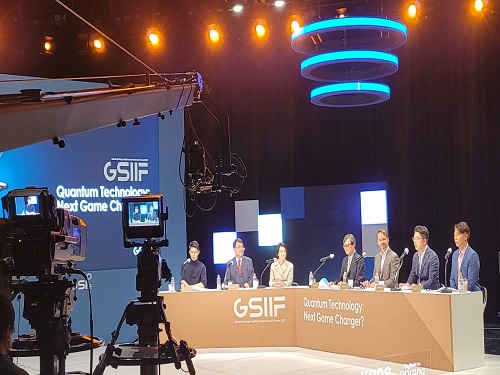 Quantum Technology: the Next Game Changer?
The 6th KAIST Global Strategy Institute Forum explores how quantum technology has evolved into a new growth engine for the future
The participants of the 6th KAIST Global Strategy Institute (GSI) Forum on April 20 agreed that the emerging technology of quantum computing will be a game changer of the future. As KAIST President Kwang Hyung Lee said in his opening remarks, the future is quantum and that future is rapidly approaching. Keynote speakers and panelists presented their insights on the disruptive innovations we are already experiencing.
The three keynote speakers included Dr. Jerry M. Chow, IBM fellow and director of quantum infrastructure, Professor John Preskill from Caltech, and Professor Jungsang Kim from Duke University. They discussed the academic impact and industrial applications of quantum technology, and its prospects for the future.
Dr. Chow leads IBM Quantum’s hardware system development efforts, focusing on research and system deployment. Professor Preskill is one of the leading quantum information science and quantum computation scholars. He coined the term “quantum supremacy.” Professor Kim is the co-founder and CTO of IonQ Inc., which develops general-purpose trapped ion quantum computers and software to generate, optimize, and execute quantum circuits.
Two leading quantum scholars from KAIST, Professor June-Koo Kevin Rhee and Professor Youngik Sohn, and Professor Andreas Heinrich from the IBS Center for Quantum Nanoscience also participated in the forum as panelists. Professor Rhee is the founder of the nation’s first quantum computing software company and leads the AI Quantum Computing IT Research Center at KAIST.
During the panel session, Professor Rhee said that although it is undeniable the quantum computing will be a game changer, there are several challenges. For instance, the first actual quantum computer is NISQ (Noisy intermediate-scale quantum era), which is still incomplete. However, it is expected to outperform a supercomputer. Until then, it is important to advance the accuracy of quantum computation in order to offer super computation speeds.
Professor Sohn, who worked at PsiQuantum, detailed how quantum computers will affect our society. He said that PsiQuantum is developing silicon photonics that will control photons. We can’t begin to imagine how silicon photonics will transform our society. Things will change slowly but the scale would be massive.
The keynote speakers presented how quantum cryptography communications and its sensing technology will serve as disruptive innovations. Dr. Chow stressed that to realize the potential growth and innovation, additional R&D is needed. More research groups and scholars should be nurtured. Only then will the rich R&D resources be able to create breakthroughs in quantum-related industries. Lastly, the commercialization of quantum computing must be advanced, which will enable the provision of diverse services. In addition, more technological and industrial infrastructure must be built to better accommodate quantum computing.
Professor Preskill believes that quantum computing will benefit humanity. He cited two basic reasons for his optimistic prediction: quantum complexity and quantum error corrections. He explained why quantum computing is so powerful: quantum computer can easily solve the problems classically considered difficult, such as factorization. In addition, quantum computer has the potential to efficiently simulate all of the physical processes taking place in nature.
Despite such dramatic advantages, why does it seem so difficult? Professor Preskill believes this is because we want qubits (quantum bits or ‘qubits’ are the basic unit of quantum information) to interact very strongly with each other. Because computations can fail, we don’t want qubits to interact with the environment unless we can control and predict them.
As for quantum computing in the NISQ era, he said that NISQ will be an exciting tool for exploring physics. Professor Preskill does not believe that NISQ will change the world alone, rather it is a step forward toward more powerful quantum technologies in the future. He added that a potentially transformable, scalable quantum computer could still be decades away.
Professor Preskill said that a large number of qubits, higher accuracy, and better quality will require a significant investment. He said if we expand with better ideas, we can make a better system. In the longer term, quantum technology will bring significant benefits to the technological sectors and society in the fields of materials, physics, chemistry, and energy production.
Professor Kim from Duke University presented on the practical applications of quantum computing, especially in the startup environment. He said that although there is no right answer for the early applications of quantum computing, developing new approaches to solve difficult problems and raising the accessibility of the technology will be important for ensuring the growth of technology-based startups.
2022.04.21 View 23532
-
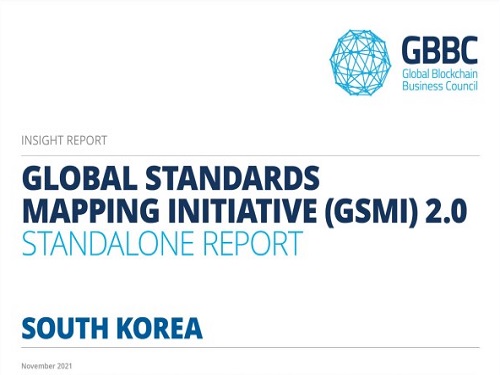 KPC4IR Publishes Global Standards Mapping Initiative 2.0
The report highlights South Korea as an early adopter of blockchain in policy and business
The KAIST Policy Center for the 4IR (KPC4IR), one of the nine working groups of the Global Blockchain Business Council (GBBC), published the Global Standards Mapping Initiative (GSMI) 2.0, highlighting Korea as an early adopter of blockchain. The report also offers an overview of how blockchain was adopted through an analysis of policy and business cases of South Korea.
In partnership with 131 institutions, GSMI 2.0 maps, catalogues, and analyzes data from 187 jurisdictions, 479 industry consortia, 38 technical standards, and 389 university courses and degree programs to provide a holistic view of the industry’s global activity.
Among the nine working groups, KAIST is the sole investigator for researching South Korea’s adoption of blockchain for policy and business. It says that in terms of policy and regulations for blockchain as a virtual asset, South Korea amended the Act on Reporting and Using Specific Financial Transaction Information to comply with the Financial Action Task Force’s recommendations.
The report also reviewed South Korea’s blockchain R&D. Seventeen ministries have funded 417 projects to cultivate blockchain inventions since 2015. Significantly, the Ministry of Science and ICT’s Blockchain Convergence Technology Development Program supported 50 projects between 2018 and 2021. Their R&D focused on virtual assets during the initial stage in 2015 and soon shifted its application to various domains, including identification and logistics.
The report noted that the Korea Customs Service was one of the first agencies in the world to introduce blockchain into customs clearance. Through collaborations with the private sector, the Korean government has also created the world’s first blockchain-based vaccination certification services and extended it to a globally integrated decentralized identity system.
Finally, the report states that these South Korean cases highlight three ambiguities in blockchain policies. First, blockchain involves both financial and industrial features. Thus, it needs a new regulatory framework that embraces the two features together.
Second, integrating services on a blockchain platform will bring forth seamless automation of industries across the manufacturing, financial, and public sectors. South Korea, which already has well-proven manufacturing capabilities, is in need of a comprehensive strategy to encompass multiple services on one platform.
Third, the two cases of the government’s adoption of blockchain suggest that innovations in blockchain can be facilitated through effective cooperation among government ministries and agencies regarding particular businesses in the private sector. Consequently, the government’s policy is not simply to invest in virtual assets but also to develop a virtual-physical world woven by blockchain. The new environment demands that South Korea transform its policy stances on blockchain, from specialization to comprehensiveness and cooperation.
Professor So Young Kim who heads the center said, “This report shows the main lessons from South Korea for other countries adopting blockchain. We will continue to work closely with our partners including the World Economic Forum to investigate many other global issues.”
2021.12.21 View 14444
-
 GSI Forum Highlights Global Collaboration Toward a Sustainable Global Economy
The forum stresses global collaboration to make the global value chain more resilient
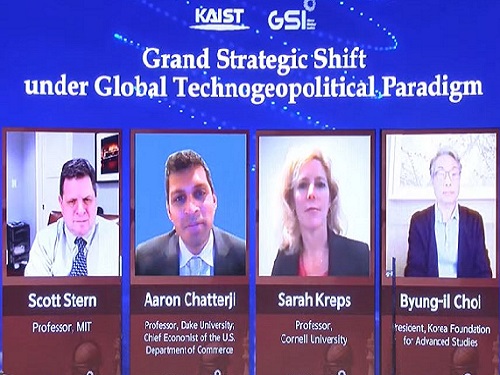
Speakers at the 5th Global Strategy Institute International Forum on October 28 stressed the importance of global collaboration for rebuilding the global economy and making innovations in national science and technology governance in order to enhance national competitiveness. The forum entitled “Grand Strategic Shift under Global Techno-Geopolitical Paradigm” examined strategies for making the global supply chain more resilient and rebuild the global economy as well as how Korea could advance in the technology race.
Speakers concurred that technology has become an issue of national security. The global supply chain has been disrupted amid the global pandemic and intense conflict between the U.S. and China. Speakers presented a common solution: global collaboration and innovations in science and technology governance.
KAIST President Kwang Hyung Lee said in his opening remarks that the future ‘world map’ may turn out very differently depending on how we prepare and what we envision for the future. He also stressed the importance of technology sovereignty, adding that only those who can create their own new technology independently will be the future leaders.
Prime Minister Boo Kyum Kim and Vice Minister of Science and ICT Hongtaek Yong delivered congratulatory remarks. Keynote speakers included Professor Scott Stern from the MIT Sloan School of Management, Professor Aaron Chatterji from the Fuqua School of Business at Duke University, Professor Sarah Kreps from the Department of Government at Cornell University, SK Group Chairperson Tae-Won Chey, President Woo Il Lee of the Korean Federation of Science and Technology Societies, Professor Young Kwan Yoon at Seoul National University, President Eun Mee Kim of Ewha Womans University, and President Ieehwan Kim of the University of Science and Technology.
During the first session, Professor Chatterji stressed that how to make supply chains resilience will be the key for making long-term strategy with relevant government policy. He said that AI has become a general purpose technology (GPT) and Korea ranked 4th in AI innovation in the world, but how to translate this innovativeness into national strategic leadership will be a new challenge for Korea. He suggested that Korea strengthen its strategic partnerships with allies such as the U.S. and provide opportunities not only for established players but start-ups and entrepreneurs. Meanwhile, Professor Kreps said that industrial policy should also leverage trust and innovations for building technology alliances with a more longer-term approach, without antagonizing certain groups of nations.
Vice President for Planning and Budget Bowon Kim who joined the forum as a discussant pointed out that in this hyper-connected era, nothing can be manufactured in a single company and country without the global supply chain. “In longer-term policy and strategies, we should embrace China as a global economy partner and include all nations around the world.”
Chairman Chey from SK said that the clear role among universities, industry, and the government doesn’t exist any longer. Now, universities are working hard for the commercialization of technology from their labs. Industry is nurturing the talents inept for future industry, and the government is trying to introduce a more private-sector approach. As such, universities, the government, and industry should embrace all-inclusive approaches encompassing global politics and trade to lead on the global stage.
Meanwhile in the second session, all of the speakers stressed innovation in science and technology governance in order to adopt to the new industrial paradigm. They agreed to make prompt innovations and solid collaborative systems among the government ministries to ensure national competitiveness, especially in the field of science and technology.
President Lee from KOFST said Korea should adopt a first mover strategy and the government should adopt a mission-oriented projects and deregulate more. He pointed out that when mandating more autonomy in decision making, scientists and students can make more creative outcomes.
Professor Yoon at SNU stressed the close alliance with the U.S. in the technology race, but suggested that Korea should also seek ways to help minimize the technology gap between advanced and developing countries. Universities should also be allowed more autonomy in running creative curriculum and academic affairs to in order boost the competitiveness of science and technology.
President Kim from Ewha pointed out the role of education as a public good. In some countries, strengthening science and technology can be accomplished with wider educational opportunities in middle and high schools. President Kim also stressed expanding strategic partnerships. She said Korea should expand its alliances and partnerships, not only with the U.S. but with European countries and other niche countries where certain technologies are superior.
President Kim of UST stressed a new science and technology leadership is required to build technology sovereignty and the government should spearhead the deregulations of the government policy.
This GSI forum was co-hosted by two think-tanks at KAIST, the Korea Policy Center for the Fourth Industrial Revolution (KPC4IR) and the Innovation Strategy and Policy Institute (ISPI).
2021.10.28 View 19241
-
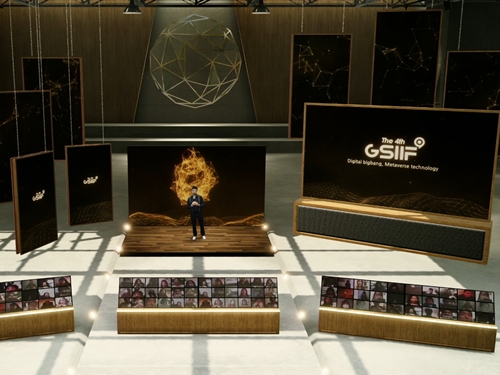 Digital Big Bang, Metaverse Technologies
The GSI Forum 2021 will explore the potential of new metaverse technologies that will change our daily lives
KAIST will be hosting a live online international forum on Sept.8 at 9 am (KST) through its KAIST YouTube channel. The forum will explore global trends regarding metaverse technology innovations and applications and discuss how we can build a new technology ecosystem.
Titled `Digital Big Bang, Metaverse Technology,' the Global Strategy Institute-International Forum 2021 will be the fourth event of its kind, following the three international forums held in 2020. The forum will delve into the development trends of metaverse platforms and AR/VR technologies and gather experts to discuss how such technologies could transform multiple aspects of our future, including education.
President Kwang Hyung Lee explains in his opening remarks that new technologies are truly opening a new horizon for our lives, saying, “In the education sector, digital technology will also create new opportunities to resolve the longstanding pedagogical shortfalls of one-way knowledge delivery systems. New digital technologies will help to unlock the creativity of our students. Education tailored to the students’ individual levels will not only help them accumulate knowledge but improve their ability to use it. Universities around the world are now at the same starting line. We should carve out our own distinct metaverse that is viable for human interactions and diverse technological experiences that promote students’ creativity and collaborative minds.”
Minster of Science and ICT Hyesook Lim will introduce how the Korean government is working to develop metaverse industries as a new potential engine of growth for the future in her welcoming remarks. The government’s efforts include collaborations with the private sector, investments in R&D, the development of talent, and regulatory reforms. Minister Lim will also emphasize the importance of national-level discussions regarding the establishment of a metaverse ecosystem and long-term value creation.
The organizers have invited global experts to share their knowledge and insights.
Kidong Bae, who is in charge of the KT Enterprise Project and ‘Metaverse One Team’ will talk about the current trends in the metaverse market and their implications, as well as KT’s XR technology references. He will also introduce strategies to establish and utilize a metaverse ecosystem, and highlight their new technologies as a global leader in 5G networks.
Jinha Lee, co-founder and CPO of the American AR solution company Spatial, will showcase a remote collaboration office that utilizes AR technology as a potential solution for collaborative activities in the post-COVID-19 era, where remote working is the ‘new normal.’ Furthermore, Lee will discuss how future workplaces that are not limited by space or distance will affect our values and creativity.
Professor Frank Steinicke from the University of Hamburg will present the ideal form of next-generation immersive technology that combines intelligent virtual agents, mixed reality, and IoT, and discuss his predictions for how the future of metaverse technology will be affected.
Marco Tempest, a creative technologist at NASA and a Director’s Fellow at the MIT Media Lab, will also be joining the forum as a plenary speaker. Tempest will discuss the potential of immersive technology in media, marketing, and entertainment, and will propose a future direction for immersive technology to enable the sharing of experiences, emotions, and knowledge.
Other speakers include Beomjoo Kim from Unity Technologies Korea, Professor Woontaek Woo from the Graduate School of Culture Technology at KAIST, Vice President of Global Sales at Labster Joseph Ferraro, and CEO of 3DBear Jussi Kajala. They will make presentations on metaverse technology applications for future education.
The keynote session will also have an online panel consisting of 50 domestic and overseas metaverse specialists, scientists, and teachers. The forum will hold a Q&A and discussion session where the panel members can ask questions to the keynote speakers regarding the prospects of metaverse and immersive technologies for education.
GSI Director Hoon Sohn stated, "KAIST will seize new opportunities that will arise in a future centered around metaverse technology and will be at the forefront to take advantage of the growing demand for innovative science and technology in non-contact societies. KAIST will also play a pivotal role in facilitating global cooperation, which will be vital to establish a metaverse ecosystem.”
2021.09.07 View 15777