environment
-
 KAIST Hosts 2025 Integrity Week: In Commitment to Moral Excellence with Programs like "Integrity Consultation on Call" - Promoting Ethical Conduct and Rebuilding Trust
KAIST announced on May 26th that it hosted the "2025 KAIST Integrity Week." The goal was to enhance the integrity and anti-corruption awareness of its members and foster a culture of responsibility and trust within the organization. This initiative included participatory programs such as consultations, education, and campaigns on research and academic integrity.
Under the theme "KAIST Practicing Responsibility and Trust," this Integrity Week featured diverse programs designed for both faculty, staff, and students.
< The Integrity Week Poster >
On the first day of Integrity Week, President Kwang Hyung Lee sent a letter to all members, proclaiming KAIST's commitment to integrity and emphasizing its importance.
Key programs include:
• "Integrity Consultations on Call" to enhance the culture of ethical conduct.
• A program in a quiz show format, the “Integrity Golden Bell,"
• Integrity and Anti-Corruption Education Day.
• Integrity Campaigns aimed at improving internal culture of observing the code of conduct.
These events are designed to encourage participation from both faculty, staff, and students.
In particular, the " Integrity Consultations on Call" were held for graduate student council executives, departmental graduate student representatives, and research support personnel. This was a forum to discuss integrity issues and improvement measures that may arise during research and administrative tasks. It will also serve to share effective integrity policies, such as conflict of interest prevention systems and anonymous reporting legal counsel services.
The "Integrity Golden Bell" event was aimed to enhance faculty and staff's understanding of anti-corruption laws, including the Improper Solicitation and Graft Act and the Conflict of Interest Prevention Act, and to encourage their voluntary commitment to these principles.
< The Integrity Week Poster >
The goals KAIST was targeting to achieve through this Integrity Week, was to integrate the value of ethical practices in daily routines and cultivate a healthy culture within the working environment in which its working colleagues can trust each other. Furthermore, KAIST aims to make integrity a core value that can bolster sustainable development, encouraging all members to actively participate in practicing honest and responsible research and academic work.
President Kwang Hyung Lee stated, "Ethical conduct and honesty is at the essence of science and technology that people of the community must uphold conscientiously, and it should be the foundation for KAIST to regain and maintain global trust. We hope that through this Integrity Week, the value of integrity will take deeper root within our research culture and daily lives."
2025.05.26 View 264
KAIST Hosts 2025 Integrity Week: In Commitment to Moral Excellence with Programs like "Integrity Consultation on Call" - Promoting Ethical Conduct and Rebuilding Trust
KAIST announced on May 26th that it hosted the "2025 KAIST Integrity Week." The goal was to enhance the integrity and anti-corruption awareness of its members and foster a culture of responsibility and trust within the organization. This initiative included participatory programs such as consultations, education, and campaigns on research and academic integrity.
Under the theme "KAIST Practicing Responsibility and Trust," this Integrity Week featured diverse programs designed for both faculty, staff, and students.
< The Integrity Week Poster >
On the first day of Integrity Week, President Kwang Hyung Lee sent a letter to all members, proclaiming KAIST's commitment to integrity and emphasizing its importance.
Key programs include:
• "Integrity Consultations on Call" to enhance the culture of ethical conduct.
• A program in a quiz show format, the “Integrity Golden Bell,"
• Integrity and Anti-Corruption Education Day.
• Integrity Campaigns aimed at improving internal culture of observing the code of conduct.
These events are designed to encourage participation from both faculty, staff, and students.
In particular, the " Integrity Consultations on Call" were held for graduate student council executives, departmental graduate student representatives, and research support personnel. This was a forum to discuss integrity issues and improvement measures that may arise during research and administrative tasks. It will also serve to share effective integrity policies, such as conflict of interest prevention systems and anonymous reporting legal counsel services.
The "Integrity Golden Bell" event was aimed to enhance faculty and staff's understanding of anti-corruption laws, including the Improper Solicitation and Graft Act and the Conflict of Interest Prevention Act, and to encourage their voluntary commitment to these principles.
< The Integrity Week Poster >
The goals KAIST was targeting to achieve through this Integrity Week, was to integrate the value of ethical practices in daily routines and cultivate a healthy culture within the working environment in which its working colleagues can trust each other. Furthermore, KAIST aims to make integrity a core value that can bolster sustainable development, encouraging all members to actively participate in practicing honest and responsible research and academic work.
President Kwang Hyung Lee stated, "Ethical conduct and honesty is at the essence of science and technology that people of the community must uphold conscientiously, and it should be the foundation for KAIST to regain and maintain global trust. We hope that through this Integrity Week, the value of integrity will take deeper root within our research culture and daily lives."
2025.05.26 View 264 -
 A KAIST Research Team Develops an Ultra-High Performing “Universal Electrode” for Next-Generation Fuel Cells
Fuel cells are devices that generate electricity with high efficiency using hydrogen, a clean energy source, and are expected to play an important part in the upcoming hydrogen society. The recent development of an excellent universal electrode material that is applicable to all next-generation fuel cells and can withstand 700 hours of operation has therefore garnered a great deal of attention.
On August 9, a joint research team led by Prof. WooChul Jung from the KAIST Department of Materials Science and Engineering, Prof. Kang Taek Lee from the KAIST Department of Mechanical Engineering, and Prof. Jun Hyuk Kim from the Department of Chemical Engineering at Hongik University announced the development of an electrode material that is applicable to both oxygen- and proton-conducting solid oxide cells.
Depending on the type of ion conducted by the electrolyte, ceramic fuel cells are categorized into either solid oxide fuel cells (SOFC) or protonic ceramic fuel cells (PCFC). As they can both convert between electricity and hydrogen production, fuel cells can be categorized into a total of four device types. These devices are applicable in hydrogen fuel cell vehicles, hydrogen charging stations, and power generation systems, and are henceforth emerging as core next-generation technologies for a carbon-neutral society.
However, these devices have a chronic problem where the speed of their slowest reaction would decrease with a drop of driving temperature, which greatly reduces device efficiency. Various studies have been conducted to solve this, but most reported that electrode materials have low catalytic activity and their applications are limited to specific devices, which limits them from being used as SOFCs that require reversible power conversion and hydrogen production.
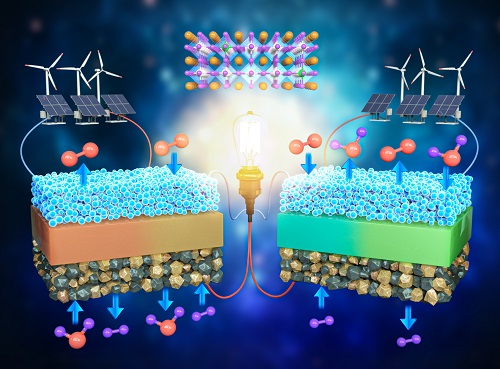
< Figure 1. Schematic diagram of high-performance oxygen ion conductive solid oxide fuel cell (SOFC) and proton conductive ceramic fuel cell (PCFC) operates with the new universal electrodes >
To solve this issue, the research team doped a perovskite oxide material with Ta5+, a high valence ion that did not receive much attention in the field. Through this, the team successfully stabilized what is usually a highly unstable crystal structure, and confirmed that catalytic activity improved by 100 times.
The electrode material developed by the team was applied to all four of the mentioned device types. Furthermore, their efficiencies were greater than any of the devices reported thus far, and showed excellent performance by stably running for much longer (700 hours) compared to existing materials that deteriorated within the first 100 hours of operation.
< Figure 2. (a) Power conversion and hydrogen production performance chart for the protonic ceramic fuel cell (PCFC) with the new universal electrodes (b) and performance comparison with other reported devices >
This research, in which KAIST’s Ph.D. candidates Dongyeon Kim and Sejong Ahn, and Professor Jun Hyuk Kim from Hongik University contributed as co-first authors, was published in the internationally renowned Energy & Environmental Science under the title, "Oxygen-Electrode for Reversible Solid Oxide Electrochemical Cells at Reduced Temperatures".
Prof. WooChul Jung said, “We broke free from the idea that we must develop a completely new material to solve an existing problem, and instead suggested a way to control the crystal structure of a lesser-known material to develop a high-efficiency fuel cell, and that’s what makes these results more significant.”
Prof. Kang Taek Lee added, “Unlike previously reported materials that could only be applied to one device type at a time, our material has the flexibility of being applicable to all four. We therefore look forward to its contribution in the commercialization of eco-friendly energy technology including fuel cells and water-splitting equipment for hydrogen production.”
This research was supported by a National Research Foundation of Korea (NRF) grant funded by the Korean Ministry of Science and ICT.
2023.08.22 View 7408
A KAIST Research Team Develops an Ultra-High Performing “Universal Electrode” for Next-Generation Fuel Cells
Fuel cells are devices that generate electricity with high efficiency using hydrogen, a clean energy source, and are expected to play an important part in the upcoming hydrogen society. The recent development of an excellent universal electrode material that is applicable to all next-generation fuel cells and can withstand 700 hours of operation has therefore garnered a great deal of attention.
On August 9, a joint research team led by Prof. WooChul Jung from the KAIST Department of Materials Science and Engineering, Prof. Kang Taek Lee from the KAIST Department of Mechanical Engineering, and Prof. Jun Hyuk Kim from the Department of Chemical Engineering at Hongik University announced the development of an electrode material that is applicable to both oxygen- and proton-conducting solid oxide cells.
Depending on the type of ion conducted by the electrolyte, ceramic fuel cells are categorized into either solid oxide fuel cells (SOFC) or protonic ceramic fuel cells (PCFC). As they can both convert between electricity and hydrogen production, fuel cells can be categorized into a total of four device types. These devices are applicable in hydrogen fuel cell vehicles, hydrogen charging stations, and power generation systems, and are henceforth emerging as core next-generation technologies for a carbon-neutral society.
However, these devices have a chronic problem where the speed of their slowest reaction would decrease with a drop of driving temperature, which greatly reduces device efficiency. Various studies have been conducted to solve this, but most reported that electrode materials have low catalytic activity and their applications are limited to specific devices, which limits them from being used as SOFCs that require reversible power conversion and hydrogen production.
< Figure 1. Schematic diagram of high-performance oxygen ion conductive solid oxide fuel cell (SOFC) and proton conductive ceramic fuel cell (PCFC) operates with the new universal electrodes >
To solve this issue, the research team doped a perovskite oxide material with Ta5+, a high valence ion that did not receive much attention in the field. Through this, the team successfully stabilized what is usually a highly unstable crystal structure, and confirmed that catalytic activity improved by 100 times.
The electrode material developed by the team was applied to all four of the mentioned device types. Furthermore, their efficiencies were greater than any of the devices reported thus far, and showed excellent performance by stably running for much longer (700 hours) compared to existing materials that deteriorated within the first 100 hours of operation.
< Figure 2. (a) Power conversion and hydrogen production performance chart for the protonic ceramic fuel cell (PCFC) with the new universal electrodes (b) and performance comparison with other reported devices >
This research, in which KAIST’s Ph.D. candidates Dongyeon Kim and Sejong Ahn, and Professor Jun Hyuk Kim from Hongik University contributed as co-first authors, was published in the internationally renowned Energy & Environmental Science under the title, "Oxygen-Electrode for Reversible Solid Oxide Electrochemical Cells at Reduced Temperatures".
Prof. WooChul Jung said, “We broke free from the idea that we must develop a completely new material to solve an existing problem, and instead suggested a way to control the crystal structure of a lesser-known material to develop a high-efficiency fuel cell, and that’s what makes these results more significant.”
Prof. Kang Taek Lee added, “Unlike previously reported materials that could only be applied to one device type at a time, our material has the flexibility of being applicable to all four. We therefore look forward to its contribution in the commercialization of eco-friendly energy technology including fuel cells and water-splitting equipment for hydrogen production.”
This research was supported by a National Research Foundation of Korea (NRF) grant funded by the Korean Ministry of Science and ICT.
2023.08.22 View 7408 -
 KAIST Civil Engineering Students named Runner-up at the 2023 ULI Hines Student Competition - Asia Pacific
A team of five students from the Korea Advanced Institute of Science and Technology (KAIST) were awarded second place in a premier urban design student competition hosted by the Urban Land Institute and Hines, 2023 ULI Hines Student Competition - Asia Pacific.
The competition, which was held for the first time in the Asia-Pacific region, is an internationally recognized event which typically attract hundreds of applicants.
Jonah Remigio, Sojung Noh, Estefania Rodriguez, Jihyun Kang, and Ayantu Teshome, who joined forces under the name of “Team Hashtag Development”, were supported by faculty advisors Dr. Albert Han and Dr. Youngchul Kim of the Department of Civil and Environmental Engineering to imagine a more sustainable and enriched way of living in the Jurong district of Singapore.
Their submission, titled “Proposal: The Nest”, analyzed the big data within Singapore, using the data to determine which real estate business strategies would best enhance the quality of living and economy of the region.
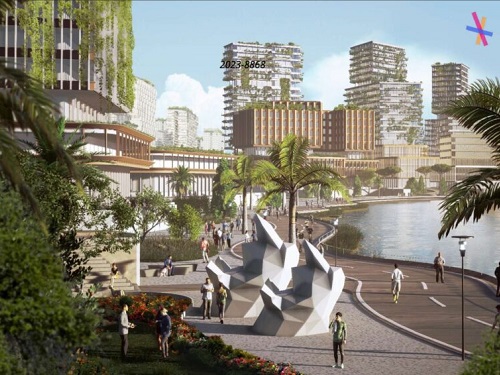
Their final design, "The Nest" utilized mixed-use zoning to integrate the site’s scenic waterfront with homes, medical innovation, and sustainable technology, altogether creating a place to innovate, inhabit, and immerse.
< The Nest by Team Hashtag Development (Jonah Remigio, Ayantu Teshome Mossisa, Estefania Ayelen Rodriguez del Puerto, Sojung Noh, Jihyun Kang) ©2023 Urban Land Institute >
Ultimately, the team was recognized for their hard work and determination, imprinting South Korea’s indelible footprint in the arena of international scholastic achievement as they were named to be one of the Finalists on April 13th.
< Members of Team Hashtag Development >
Team Hashtag Development gave a virtual presentation to a jury of six ULI members on April 20th along with the "Team The REAL" from the University of Economics Ho Chi Minh City of Vietnam and "Team Omusubi" from the Waseda University of Japan, the team that submitted the proposal "Jurong Urban Health Campus" which was announced to be the winner on the 31st of May, after the virtual briefing by the top three finalists.
2023.06.26 View 7887
KAIST Civil Engineering Students named Runner-up at the 2023 ULI Hines Student Competition - Asia Pacific
A team of five students from the Korea Advanced Institute of Science and Technology (KAIST) were awarded second place in a premier urban design student competition hosted by the Urban Land Institute and Hines, 2023 ULI Hines Student Competition - Asia Pacific.
The competition, which was held for the first time in the Asia-Pacific region, is an internationally recognized event which typically attract hundreds of applicants.
Jonah Remigio, Sojung Noh, Estefania Rodriguez, Jihyun Kang, and Ayantu Teshome, who joined forces under the name of “Team Hashtag Development”, were supported by faculty advisors Dr. Albert Han and Dr. Youngchul Kim of the Department of Civil and Environmental Engineering to imagine a more sustainable and enriched way of living in the Jurong district of Singapore.
Their submission, titled “Proposal: The Nest”, analyzed the big data within Singapore, using the data to determine which real estate business strategies would best enhance the quality of living and economy of the region.
Their final design, "The Nest" utilized mixed-use zoning to integrate the site’s scenic waterfront with homes, medical innovation, and sustainable technology, altogether creating a place to innovate, inhabit, and immerse.
< The Nest by Team Hashtag Development (Jonah Remigio, Ayantu Teshome Mossisa, Estefania Ayelen Rodriguez del Puerto, Sojung Noh, Jihyun Kang) ©2023 Urban Land Institute >
Ultimately, the team was recognized for their hard work and determination, imprinting South Korea’s indelible footprint in the arena of international scholastic achievement as they were named to be one of the Finalists on April 13th.
< Members of Team Hashtag Development >
Team Hashtag Development gave a virtual presentation to a jury of six ULI members on April 20th along with the "Team The REAL" from the University of Economics Ho Chi Minh City of Vietnam and "Team Omusubi" from the Waseda University of Japan, the team that submitted the proposal "Jurong Urban Health Campus" which was announced to be the winner on the 31st of May, after the virtual briefing by the top three finalists.
2023.06.26 View 7887 -
 Researchers Report Longest-lived Aqueous Flow Batteries
New technology to overcome the life limit of next-generation water-cell batteries
A research team led by Professor Hee-Tak Kim from the Department of Chemical and Biomolecular Engineering has developed water-based zinc/bromine redox flow batteries (ZBBs) with the best life expectancy among all the redox flow batteries reported by identifying and solving the deterioration issue with zinc electrodes.
Professor Kim, head of the Advanced Battery Center at KAIST's Nano-fusion Research Institute, said, "We presented a new technology to overcome the life limit of next-generation water-cell batteries. Not only is it cheaper than conventional lithium-ion batteries, but it can contribute to the expansion of renewable energy and the safe supply of energy storage systems that can run with more than 80 percent energy efficiency."
ZBBs were found to have stable life spans of more than 5,000 cycles, even at a high current density of 100 mA/cm2. It was also confirmed that it represented the highest output and life expectancy compared to Redox flow batteries (RFBs) reported worldwide, which use other redox couples such as zinc-bromine, zinc-iodine, zinc-iron, and vanadium.
Recently, more attention has been focused on energy storage system (ESS) that can improve energy utilization efficiency by storing new and late-night power in large quantities and supplying it to the grid if necessary to supplement the intermittent nature of renewable energy and meet peak power demand.
However, lithium-ion batteries (LIBs), which are currently the core technology of ESSs, have been criticized for not being suitable for ESSs, which store large amounts of electricity due to their inherent risk of ignition and fire. In fact, a total of 33 cases of ESSs using LIBs in Korea had fire accidents, and 35% of all ESS facilities were shut down. This is estimated to have resulted in more than 700 billion won in losses.
As a result, water-based RFBs have drawn great attention. In particular, ZBBs that use ultra-low-cost bromide (ZnBr2) as an active material have been developed for ESSs since the 1970s, with their advantages of high cell voltage, high energy density, and low price compared to other RFBs. Until now, however, the commercialization of ZBBs has been delayed due to the short life span caused by the zinc electrodes. In particular, the uneven "dendrite" growth behavior of zinc metals during the charging and discharging process leads to internal short circuits in the battery which shorten its life.
The research team noted that self-aggregation occurs through the surface diffusion of zinc nuclei on the carbon electrode surface with low surface energy, and determined that self-aggregation was the main cause of zinc dendrite formation through quantum mechanics-based computer simulations and transmission electron microscopy. Furthermore, it was found that the surface diffusion of the zinc nuclei was inhibited in certain carbon fault structures so that dendrites were not produced.
Single vacancy defect, where one carbon atom is removed, exchanges zinc nuclei and electrons, and is strongly coupled, thus inhibiting surface diffusion and enabling uniform nuclear production/growth. The research team applied carbon electrodes with high density fault structure to ZBBs, achieving life characteristics of more than 5,000 cycles at a high charge current density (100 mA/cm2), which is 30 times that of LIBs.
This ESS technology, which can supply eco-friendly electric energy such as renewable energy to the private sector through technology that can drive safe and cheap redox flow batteries for long life, is expected to draw attention once again.
Publication:
Ju-Hyuk Lee, Riyul Kim, Soohyun Kim, Jiyun Heo, Hyeokjin Kwon, Jung Hoon Yang, and Hee-Tak Kim. 2020. Dendrite-free Zn electrodeposition triggered by interatomic orbital hybridization of Zn and single vacancy carbon defects for aqueous Zn-based flow batteries. Energy and Environmental Science, 2020, 13, 2839-2848.
Link to download the full-text paper:http://xlink.rsc.org/?DOI=D0EE00723D
Profile: Prof. Hee-Tak Kimheetak.kim@kaist.ac.krhttp://eed.kaist.ac.krAssociate ProfessorDepartment of Chemical & Biomolecular EngineeringKAIST
2020.12.16 View 13764
Researchers Report Longest-lived Aqueous Flow Batteries
New technology to overcome the life limit of next-generation water-cell batteries
A research team led by Professor Hee-Tak Kim from the Department of Chemical and Biomolecular Engineering has developed water-based zinc/bromine redox flow batteries (ZBBs) with the best life expectancy among all the redox flow batteries reported by identifying and solving the deterioration issue with zinc electrodes.
Professor Kim, head of the Advanced Battery Center at KAIST's Nano-fusion Research Institute, said, "We presented a new technology to overcome the life limit of next-generation water-cell batteries. Not only is it cheaper than conventional lithium-ion batteries, but it can contribute to the expansion of renewable energy and the safe supply of energy storage systems that can run with more than 80 percent energy efficiency."
ZBBs were found to have stable life spans of more than 5,000 cycles, even at a high current density of 100 mA/cm2. It was also confirmed that it represented the highest output and life expectancy compared to Redox flow batteries (RFBs) reported worldwide, which use other redox couples such as zinc-bromine, zinc-iodine, zinc-iron, and vanadium.
Recently, more attention has been focused on energy storage system (ESS) that can improve energy utilization efficiency by storing new and late-night power in large quantities and supplying it to the grid if necessary to supplement the intermittent nature of renewable energy and meet peak power demand.
However, lithium-ion batteries (LIBs), which are currently the core technology of ESSs, have been criticized for not being suitable for ESSs, which store large amounts of electricity due to their inherent risk of ignition and fire. In fact, a total of 33 cases of ESSs using LIBs in Korea had fire accidents, and 35% of all ESS facilities were shut down. This is estimated to have resulted in more than 700 billion won in losses.
As a result, water-based RFBs have drawn great attention. In particular, ZBBs that use ultra-low-cost bromide (ZnBr2) as an active material have been developed for ESSs since the 1970s, with their advantages of high cell voltage, high energy density, and low price compared to other RFBs. Until now, however, the commercialization of ZBBs has been delayed due to the short life span caused by the zinc electrodes. In particular, the uneven "dendrite" growth behavior of zinc metals during the charging and discharging process leads to internal short circuits in the battery which shorten its life.
The research team noted that self-aggregation occurs through the surface diffusion of zinc nuclei on the carbon electrode surface with low surface energy, and determined that self-aggregation was the main cause of zinc dendrite formation through quantum mechanics-based computer simulations and transmission electron microscopy. Furthermore, it was found that the surface diffusion of the zinc nuclei was inhibited in certain carbon fault structures so that dendrites were not produced.
Single vacancy defect, where one carbon atom is removed, exchanges zinc nuclei and electrons, and is strongly coupled, thus inhibiting surface diffusion and enabling uniform nuclear production/growth. The research team applied carbon electrodes with high density fault structure to ZBBs, achieving life characteristics of more than 5,000 cycles at a high charge current density (100 mA/cm2), which is 30 times that of LIBs.
This ESS technology, which can supply eco-friendly electric energy such as renewable energy to the private sector through technology that can drive safe and cheap redox flow batteries for long life, is expected to draw attention once again.
Publication:
Ju-Hyuk Lee, Riyul Kim, Soohyun Kim, Jiyun Heo, Hyeokjin Kwon, Jung Hoon Yang, and Hee-Tak Kim. 2020. Dendrite-free Zn electrodeposition triggered by interatomic orbital hybridization of Zn and single vacancy carbon defects for aqueous Zn-based flow batteries. Energy and Environmental Science, 2020, 13, 2839-2848.
Link to download the full-text paper:http://xlink.rsc.org/?DOI=D0EE00723D
Profile: Prof. Hee-Tak Kimheetak.kim@kaist.ac.krhttp://eed.kaist.ac.krAssociate ProfessorDepartment of Chemical & Biomolecular EngineeringKAIST
2020.12.16 View 13764 -
 Professor Sung Yong Kim Elected as the Chair of PICES MONITOR
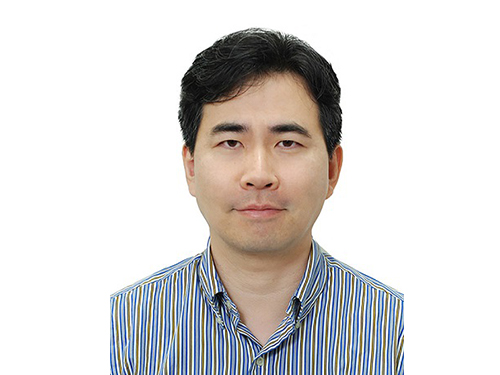
< Professor Sung Yong Kim >
Professor Sung Yong Kim from the Department of Mechanical Engineering was elected as the chair of the Technical Committee on Monitoring (MONITOR) of the North Pacific Marine Science Organization (PICES).
PICES is an intergovernmental marine science organization that was established in 1992 through a collaboration between six North Pacific nations including South Korea, Russia, the United States, Japan, China, and Canada to exchange and discuss research on the Pacific waters. Its headquarters is located in Canada and the organization consists of seven affiliated maritime science and marine technology committees.
Professor Kim was elected as the chair of the technical committee that focuses on monitoring and will be part of the Science Board as an ex-officio member. His term will last three years from November 2019.
Professor Kim was recognized for his academic excellence, expertise, and leadership among oceanographers both domestically and internationally.
Professor Kim will also participate as an academia civilian committee member of the Maritime and Fisheries Science and Technology Committee under the Korean Ministry of Oceans and Fisheries for two years from December 18, 2019.
He stated, “I will give my full efforts to broaden Korean oceanography research by participating in maritime leadership positions at home and abroad, and help South Korea become a maritime powerhouse.”
(END)
2019.12.22 View 10199
Professor Sung Yong Kim Elected as the Chair of PICES MONITOR
< Professor Sung Yong Kim >
Professor Sung Yong Kim from the Department of Mechanical Engineering was elected as the chair of the Technical Committee on Monitoring (MONITOR) of the North Pacific Marine Science Organization (PICES).
PICES is an intergovernmental marine science organization that was established in 1992 through a collaboration between six North Pacific nations including South Korea, Russia, the United States, Japan, China, and Canada to exchange and discuss research on the Pacific waters. Its headquarters is located in Canada and the organization consists of seven affiliated maritime science and marine technology committees.
Professor Kim was elected as the chair of the technical committee that focuses on monitoring and will be part of the Science Board as an ex-officio member. His term will last three years from November 2019.
Professor Kim was recognized for his academic excellence, expertise, and leadership among oceanographers both domestically and internationally.
Professor Kim will also participate as an academia civilian committee member of the Maritime and Fisheries Science and Technology Committee under the Korean Ministry of Oceans and Fisheries for two years from December 18, 2019.
He stated, “I will give my full efforts to broaden Korean oceanography research by participating in maritime leadership positions at home and abroad, and help South Korea become a maritime powerhouse.”
(END)
2019.12.22 View 10199 -
 Flexible User Interface Distribution for Ubiquitous Multi-Device Interaction
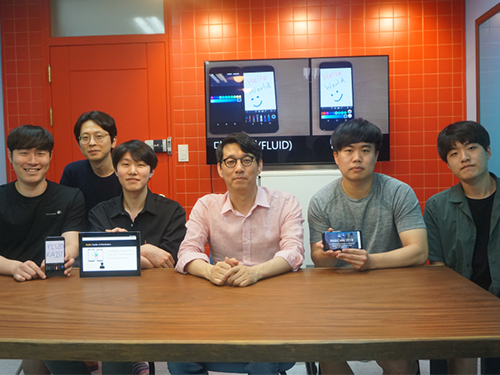
< Research Group of Professor Insik Shin (center) >
KAIST researchers have developed mobile software platform technology that allows a mobile application (app) to be executed simultaneously and more dynamically on multiple smart devices. Its high flexibility and broad applicability can help accelerate a shift from the current single-device paradigm to a multiple one, which enables users to utilize mobile apps in ways previously unthinkable.
Recent trends in mobile and IoT technologies in this era of 5G high-speed wireless communication have been hallmarked by the emergence of new display hardware and smart devices such as dual screens, foldable screens, smart watches, smart TVs, and smart cars. However, the current mobile app ecosystem is still confined to the conventional single-device paradigm in which users can employ only one screen on one device at a time. Due to this limitation, the real potential of multi-device environments has not been fully explored.
A KAIST research team led by Professor Insik Shin from the School of Computing, in collaboration with Professor Steve Ko’s group from the State University of New York at Buffalo, has developed mobile software platform technology named FLUID that can flexibly distribute the user interfaces (UIs) of an app to a number of other devices in real time without needing any modifications. The proposed technology provides single-device virtualization, and ensures that the interactions between the distributed UI elements across multiple devices remain intact.
This flexible multimodal interaction can be realized in diverse ubiquitous user experiences (UX), such as using live video steaming and chatting apps including YouTube, LiveMe, and AfreecaTV. FLUID can ensure that the video is not obscured by the chat window by distributing and displaying them separately on different devices respectively, which lets users enjoy the chat function while watching the video at the same time.
In addition, the UI for the destination input on a navigation app can be migrated into the passenger’s device with the help of FLUID, so that the destination can be easily and safely entered by the passenger while the driver is at the wheel.
FLUID can also support 5G multi-view apps – the latest service that allows sports or games to be viewed from various angles on a single device. With FLUID, the user can watch the event simultaneously from different viewpoints on multiple devices without switching between viewpoints on a single screen.
PhD candidate Sangeun Oh, who is the first author, and his team implemented the prototype of FLUID on the leading open-source mobile operating system, Android, and confirmed that it can successfully deliver the new UX to 20 existing legacy apps.
“This new technology can be applied to next-generation products from South Korean companies such as LG’s dual screen phone and Samsung’s foldable phone and is expected to embolden their competitiveness by giving them a head-start in the global market.” said Professor Shin.
This study will be presented at the 25th Annual International Conference on Mobile Computing and Networking (ACM MobiCom 2019) October 21 through 25 in Los Cabos, Mexico. The research was supported by the National Science Foundation (NSF) (CNS-1350883 (CAREER) and CNS-1618531).
Figure 1. Live video streaming and chatting app scenario
Figure 2. Navigation app scenario
Figure 3. 5G multi-view app scenario
Publication: Sangeun Oh, Ahyeon Kim, Sunjae Lee, Kilho Lee, Dae R. Jeong, Steven Y. Ko, and Insik Shin. 2019. FLUID: Flexible User Interface Distribution for Ubiquitous Multi-device Interaction. To be published in Proceedings of the 25th Annual International Conference on Mobile Computing and Networking (ACM MobiCom 2019). ACM, New York, NY, USA. Article Number and DOI Name TBD.
Video Material:
https://youtu.be/lGO4GwH4enA
Profile: Prof. Insik Shin, MS, PhD
ishin@kaist.ac.kr
https://cps.kaist.ac.kr/~ishin
Professor
Cyber-Physical Systems (CPS) Lab
School of Computing
Korea Advanced Institute of Science and Technology (KAIST)
http://kaist.ac.kr Daejeon 34141, Korea
Profile: Sangeun Oh, PhD Candidate
ohsang1213@kaist.ac.kr
https://cps.kaist.ac.kr/
PhD Candidate
Cyber-Physical Systems (CPS) Lab
School of Computing
Korea Advanced Institute of Science and Technology (KAIST)
http://kaist.ac.kr Daejeon 34141, Korea
Profile: Prof. Steve Ko, PhD
stevko@buffalo.edu
https://nsr.cse.buffalo.edu/?page_id=272
Associate Professor
Networked Systems Research Group
Department of Computer Science and Engineering
State University of New York at Buffalo
http://www.buffalo.edu/ Buffalo 14260, USA
(END)
2019.07.20 View 40363
Flexible User Interface Distribution for Ubiquitous Multi-Device Interaction
< Research Group of Professor Insik Shin (center) >
KAIST researchers have developed mobile software platform technology that allows a mobile application (app) to be executed simultaneously and more dynamically on multiple smart devices. Its high flexibility and broad applicability can help accelerate a shift from the current single-device paradigm to a multiple one, which enables users to utilize mobile apps in ways previously unthinkable.
Recent trends in mobile and IoT technologies in this era of 5G high-speed wireless communication have been hallmarked by the emergence of new display hardware and smart devices such as dual screens, foldable screens, smart watches, smart TVs, and smart cars. However, the current mobile app ecosystem is still confined to the conventional single-device paradigm in which users can employ only one screen on one device at a time. Due to this limitation, the real potential of multi-device environments has not been fully explored.
A KAIST research team led by Professor Insik Shin from the School of Computing, in collaboration with Professor Steve Ko’s group from the State University of New York at Buffalo, has developed mobile software platform technology named FLUID that can flexibly distribute the user interfaces (UIs) of an app to a number of other devices in real time without needing any modifications. The proposed technology provides single-device virtualization, and ensures that the interactions between the distributed UI elements across multiple devices remain intact.
This flexible multimodal interaction can be realized in diverse ubiquitous user experiences (UX), such as using live video steaming and chatting apps including YouTube, LiveMe, and AfreecaTV. FLUID can ensure that the video is not obscured by the chat window by distributing and displaying them separately on different devices respectively, which lets users enjoy the chat function while watching the video at the same time.
In addition, the UI for the destination input on a navigation app can be migrated into the passenger’s device with the help of FLUID, so that the destination can be easily and safely entered by the passenger while the driver is at the wheel.
FLUID can also support 5G multi-view apps – the latest service that allows sports or games to be viewed from various angles on a single device. With FLUID, the user can watch the event simultaneously from different viewpoints on multiple devices without switching between viewpoints on a single screen.
PhD candidate Sangeun Oh, who is the first author, and his team implemented the prototype of FLUID on the leading open-source mobile operating system, Android, and confirmed that it can successfully deliver the new UX to 20 existing legacy apps.
“This new technology can be applied to next-generation products from South Korean companies such as LG’s dual screen phone and Samsung’s foldable phone and is expected to embolden their competitiveness by giving them a head-start in the global market.” said Professor Shin.
This study will be presented at the 25th Annual International Conference on Mobile Computing and Networking (ACM MobiCom 2019) October 21 through 25 in Los Cabos, Mexico. The research was supported by the National Science Foundation (NSF) (CNS-1350883 (CAREER) and CNS-1618531).
Figure 1. Live video streaming and chatting app scenario
Figure 2. Navigation app scenario
Figure 3. 5G multi-view app scenario
Publication: Sangeun Oh, Ahyeon Kim, Sunjae Lee, Kilho Lee, Dae R. Jeong, Steven Y. Ko, and Insik Shin. 2019. FLUID: Flexible User Interface Distribution for Ubiquitous Multi-device Interaction. To be published in Proceedings of the 25th Annual International Conference on Mobile Computing and Networking (ACM MobiCom 2019). ACM, New York, NY, USA. Article Number and DOI Name TBD.
Video Material:
https://youtu.be/lGO4GwH4enA
Profile: Prof. Insik Shin, MS, PhD
ishin@kaist.ac.kr
https://cps.kaist.ac.kr/~ishin
Professor
Cyber-Physical Systems (CPS) Lab
School of Computing
Korea Advanced Institute of Science and Technology (KAIST)
http://kaist.ac.kr Daejeon 34141, Korea
Profile: Sangeun Oh, PhD Candidate
ohsang1213@kaist.ac.kr
https://cps.kaist.ac.kr/
PhD Candidate
Cyber-Physical Systems (CPS) Lab
School of Computing
Korea Advanced Institute of Science and Technology (KAIST)
http://kaist.ac.kr Daejeon 34141, Korea
Profile: Prof. Steve Ko, PhD
stevko@buffalo.edu
https://nsr.cse.buffalo.edu/?page_id=272
Associate Professor
Networked Systems Research Group
Department of Computer Science and Engineering
State University of New York at Buffalo
http://www.buffalo.edu/ Buffalo 14260, USA
(END)
2019.07.20 View 40363 -
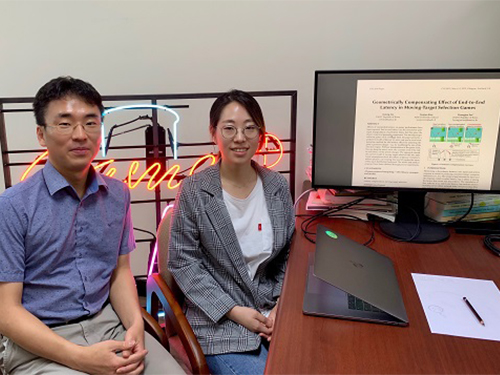 Play Games With No Latency
One of the most challenging issues for game players looks to be resolved soon with the introduction of a zero-latency gaming environment. A KAIST team developed a technology that helps game players maintain zero-latency performance. The new technology transforms the shapes of game design according to the amount of latency.
Latency in human-computer interactions is often caused by various factors related to the environment and performance of the devices, networks, and data processing. The term ‘lag’ is used to refer to any latency during gaming which impacts the user’s performance.
Professor Byungjoo Lee at the Graduate School of Culture Technology in collaboration with Aalto University in Finland presented a mathematical model for predicting players' behavior by understanding the effects of latency on players. This cognitive model is capable of predicting the success rate of a user when there is latency in a 'moving target selection' task which requires button input in a time constrained situation.
The model predicts the players’ task success rate when latency is added to the gaming environment. Using these predicted success rates, the design elements of the game are geometrically modified to help players maintain similar success rates as they would achieve in a zero-latency environment. In fact, this research succeeded in modifying the pillar heights of the Flappy Bird game, allowing the players to maintain their gaming performance regardless of the added latency.
Professor Lee said, "This technique is unique in the sense that it does not interfere with a player's gaming flow, unlike traditional methods which manipulate the game clock by the amount of latency. This study can be extended to various games such as reducing the size of obstacles in the latent computing environment.”
This research, in collaboration with Dr. Sunjun Kim from Aalto University and led by PhD candidate Injung Lee, was presented during the 2019 CHI Conference on Human Factors in Computing Systems last month in Glasgow in the UK.
This research was supported by the National Research Foundation of Korea (NRF) (2017R1C1B2002101, 2018R1A5A7025409), and the Aalto University Seed Funding Granted to the GamerLab respectively.
Figure 1. Overview of Geometric Compensation
Publication:
Injung Lee, Sunjun Kim, and Byungjoo Lee. 2019. Geometrically Compensating Effect of End-to-End Latency in Moving-Target Selection Games. In Proceedings of the 2019 CHI Conference on Human Factors in Computing Systems (CHI’19) . ACM, New York, NY, USA, Article 560, 12 pages. https://doi.org/10.1145/3290605.3300790
Video Material:
https://youtu.be/TTi7dipAKJs
Profile: Prof. Byungjoo Lee, MD, PhD
byungjoo.lee@kaist.ac.kr
http://kiml.org/
Assistant Professor
Graduate School of Culture Technology (CT)
Korea Advanced Institute of Science and Technology (KAIST)
http://kaist.ac.kr Daejeon 34141, Korea
Profile: Injung Lee, PhD Candidate
edndn@kaist.ac.kr
PhD Candidate
Interactive Media Lab
Graduate School of Culture Technology (CT)
Korea Advanced Institute of Science and Technology (KAIST)
http://kaist.ac.kr
Daejeon 34141, Korea
Profile: Postdoc. Sunjun Kim, MD, PhD
kuaa.net@gmail.com
Postdoctoral Researcher
User Interfaces Group
Aalto University
https://www.aalto.fi Espoo 02150, Finland
(END)
2019.06.11 View 47219
Play Games With No Latency
One of the most challenging issues for game players looks to be resolved soon with the introduction of a zero-latency gaming environment. A KAIST team developed a technology that helps game players maintain zero-latency performance. The new technology transforms the shapes of game design according to the amount of latency.
Latency in human-computer interactions is often caused by various factors related to the environment and performance of the devices, networks, and data processing. The term ‘lag’ is used to refer to any latency during gaming which impacts the user’s performance.
Professor Byungjoo Lee at the Graduate School of Culture Technology in collaboration with Aalto University in Finland presented a mathematical model for predicting players' behavior by understanding the effects of latency on players. This cognitive model is capable of predicting the success rate of a user when there is latency in a 'moving target selection' task which requires button input in a time constrained situation.
The model predicts the players’ task success rate when latency is added to the gaming environment. Using these predicted success rates, the design elements of the game are geometrically modified to help players maintain similar success rates as they would achieve in a zero-latency environment. In fact, this research succeeded in modifying the pillar heights of the Flappy Bird game, allowing the players to maintain their gaming performance regardless of the added latency.
Professor Lee said, "This technique is unique in the sense that it does not interfere with a player's gaming flow, unlike traditional methods which manipulate the game clock by the amount of latency. This study can be extended to various games such as reducing the size of obstacles in the latent computing environment.”
This research, in collaboration with Dr. Sunjun Kim from Aalto University and led by PhD candidate Injung Lee, was presented during the 2019 CHI Conference on Human Factors in Computing Systems last month in Glasgow in the UK.
This research was supported by the National Research Foundation of Korea (NRF) (2017R1C1B2002101, 2018R1A5A7025409), and the Aalto University Seed Funding Granted to the GamerLab respectively.
Figure 1. Overview of Geometric Compensation
Publication:
Injung Lee, Sunjun Kim, and Byungjoo Lee. 2019. Geometrically Compensating Effect of End-to-End Latency in Moving-Target Selection Games. In Proceedings of the 2019 CHI Conference on Human Factors in Computing Systems (CHI’19) . ACM, New York, NY, USA, Article 560, 12 pages. https://doi.org/10.1145/3290605.3300790
Video Material:
https://youtu.be/TTi7dipAKJs
Profile: Prof. Byungjoo Lee, MD, PhD
byungjoo.lee@kaist.ac.kr
http://kiml.org/
Assistant Professor
Graduate School of Culture Technology (CT)
Korea Advanced Institute of Science and Technology (KAIST)
http://kaist.ac.kr Daejeon 34141, Korea
Profile: Injung Lee, PhD Candidate
edndn@kaist.ac.kr
PhD Candidate
Interactive Media Lab
Graduate School of Culture Technology (CT)
Korea Advanced Institute of Science and Technology (KAIST)
http://kaist.ac.kr
Daejeon 34141, Korea
Profile: Postdoc. Sunjun Kim, MD, PhD
kuaa.net@gmail.com
Postdoctoral Researcher
User Interfaces Group
Aalto University
https://www.aalto.fi Espoo 02150, Finland
(END)
2019.06.11 View 47219 -
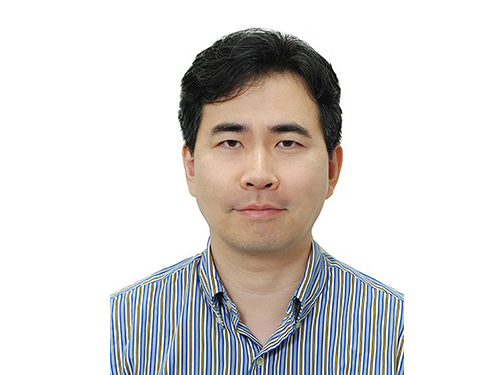 First Korean Member of OceanObs' Organizing Committee
Professor Sung Yong Kim from the Department of Mechanical Engineering became the first Korean to be elected as an organizing committee member of the international conference OceanObs’19’, specializing in the ocean observing field.
Professor Kim has been actively engaged in advisory panels, technical committees, and working groups for the North Pacific Marine Science Organization (PICES). Through numerous activities, he was recognized for his professionalism and academic achievements, which led him to be appointed as a member of the organizing committee.
The organizing committee is comprised of leading scholars and researchers from 20 countries, and Professor Kim will be the first Korean scientist to participate on the committee.
Since 1999, the conference has been held every decade. Global experts specializing in oceanic observation gather to discuss research directions for the next ten years by monitoring physical, biological, and chemical variables in regional, national, and global oceans and applying marine engineering.
This year, approximately 20 institutes including NASA’s Jet Propulsion Laboratory (JPL), the National Science Foundation, the National Oceanic and Atmospheric Administration, and the European Space Agency will support funds as well as high-tech equipment to the conference.
This year’s conference theme is the governance of global ocean observing systems such as underwater gliders, unmanned vehicles, remote sensing, and observatories. The conference will hold discussions on monitoring technology and information systems to ensure human safety as well as to develop and preserve food resources. Additionally, participants will explore ways to expand observational infrastructures and carry out multidisciplinary approaches.
There will also be collaborations with the Global Ocean Observing System (GOOS) and the Partnership for Observation of the Global Oceans (POGO) to organize ocean observing programs and discuss priorities.
Finally, they will set a long-term plan for solving major scientific issues, such as climate change, ocean acidification, energy, and marine pollution.
Professor Kim said, “Based on the outcomes drawn from the conference, I will carry out research on natural disasters and climate change monitoring by using unmanned observing systems. I will also encourage more multidisciplinary research in this field.”
2019.01.25 View 11845
First Korean Member of OceanObs' Organizing Committee
Professor Sung Yong Kim from the Department of Mechanical Engineering became the first Korean to be elected as an organizing committee member of the international conference OceanObs’19’, specializing in the ocean observing field.
Professor Kim has been actively engaged in advisory panels, technical committees, and working groups for the North Pacific Marine Science Organization (PICES). Through numerous activities, he was recognized for his professionalism and academic achievements, which led him to be appointed as a member of the organizing committee.
The organizing committee is comprised of leading scholars and researchers from 20 countries, and Professor Kim will be the first Korean scientist to participate on the committee.
Since 1999, the conference has been held every decade. Global experts specializing in oceanic observation gather to discuss research directions for the next ten years by monitoring physical, biological, and chemical variables in regional, national, and global oceans and applying marine engineering.
This year, approximately 20 institutes including NASA’s Jet Propulsion Laboratory (JPL), the National Science Foundation, the National Oceanic and Atmospheric Administration, and the European Space Agency will support funds as well as high-tech equipment to the conference.
This year’s conference theme is the governance of global ocean observing systems such as underwater gliders, unmanned vehicles, remote sensing, and observatories. The conference will hold discussions on monitoring technology and information systems to ensure human safety as well as to develop and preserve food resources. Additionally, participants will explore ways to expand observational infrastructures and carry out multidisciplinary approaches.
There will also be collaborations with the Global Ocean Observing System (GOOS) and the Partnership for Observation of the Global Oceans (POGO) to organize ocean observing programs and discuss priorities.
Finally, they will set a long-term plan for solving major scientific issues, such as climate change, ocean acidification, energy, and marine pollution.
Professor Kim said, “Based on the outcomes drawn from the conference, I will carry out research on natural disasters and climate change monitoring by using unmanned observing systems. I will also encourage more multidisciplinary research in this field.”
2019.01.25 View 11845 -
 Distinguished Professor Sang Yup Lee Announced as the Eni Award Recipient
(Distinguished Professor Sang Yup Lee)
Distinguished Professor Sang Yup Lee from the Department of Chemical and Biomolecular Engineering will be awarded the 2018 Eni Advanced Environmental Solutions Prize in recognition of his innovations in the fields of energy and environment. The award ceremony will take place at the Quirinal Palace, the official residence of Italian President Sergio Mattarella, who will also be attending on October 22.
Eni, an Italian multinational energy corporation established the Eni Award in 2008 to promote technological and research innovation of efficient and sustainable energy resources. The Advanced Environmental Solutions Prize is one of the three categories of the Eni Award. The other two categories are Energy Transition and Energy Frontiers. The Award for Advanced Environmental Solutions recognizes a researcher or group of scientists that has achieved internationally significant R&D results in the field of environmental protection and recovery. The Eni Award is referred to as the Nobel Award in the fields of energy and environment.
Professor Lee, a pioneering leader in systems metabolic engineering was honored with the award for his developing engineered bacteria to produce chemical products, fuels, and non-food biomass materials sustainably and with a low environmental impact. He has leveraged the technology to develop microbial bioprocesses for the sustainable and environmentally friendly production of chemicals, fuels, and materials from non-food renewable biomass.
The award committee said that they considered the following elements in assessing Professor Lee’s achievement: the scientific relevance and the research innovation level; the impact on the energy system in terms of sustainability as well as fairer and broader access to energy; and the adequacy between technological and economic aspects.
Professor Lee, who already won two other distinguished prizes such as the George Washington Carver Award and the PV Danckwerts Memorial Lecture Award this year, said, “I am so glad that the international academic community as well as global industry leaders came to recognize our work that our students and research team has made for decades.”
Dr. Lee’s lab has been producing a lot of chemicals in environmentally friendly ways. Among them, many were biologically produced for the first time and some of these processes have been already commercialized. “We will continue to strive for research outcomes with two objectives: First, to develop bio-based processes suitable for sustainable chemical industry. The other is to contribute to the human healthcare system through development of platform technologies integrating medicine and nutrition,” he added.
2018.09.12 View 8182
Distinguished Professor Sang Yup Lee Announced as the Eni Award Recipient
(Distinguished Professor Sang Yup Lee)
Distinguished Professor Sang Yup Lee from the Department of Chemical and Biomolecular Engineering will be awarded the 2018 Eni Advanced Environmental Solutions Prize in recognition of his innovations in the fields of energy and environment. The award ceremony will take place at the Quirinal Palace, the official residence of Italian President Sergio Mattarella, who will also be attending on October 22.
Eni, an Italian multinational energy corporation established the Eni Award in 2008 to promote technological and research innovation of efficient and sustainable energy resources. The Advanced Environmental Solutions Prize is one of the three categories of the Eni Award. The other two categories are Energy Transition and Energy Frontiers. The Award for Advanced Environmental Solutions recognizes a researcher or group of scientists that has achieved internationally significant R&D results in the field of environmental protection and recovery. The Eni Award is referred to as the Nobel Award in the fields of energy and environment.
Professor Lee, a pioneering leader in systems metabolic engineering was honored with the award for his developing engineered bacteria to produce chemical products, fuels, and non-food biomass materials sustainably and with a low environmental impact. He has leveraged the technology to develop microbial bioprocesses for the sustainable and environmentally friendly production of chemicals, fuels, and materials from non-food renewable biomass.
The award committee said that they considered the following elements in assessing Professor Lee’s achievement: the scientific relevance and the research innovation level; the impact on the energy system in terms of sustainability as well as fairer and broader access to energy; and the adequacy between technological and economic aspects.
Professor Lee, who already won two other distinguished prizes such as the George Washington Carver Award and the PV Danckwerts Memorial Lecture Award this year, said, “I am so glad that the international academic community as well as global industry leaders came to recognize our work that our students and research team has made for decades.”
Dr. Lee’s lab has been producing a lot of chemicals in environmentally friendly ways. Among them, many were biologically produced for the first time and some of these processes have been already commercialized. “We will continue to strive for research outcomes with two objectives: First, to develop bio-based processes suitable for sustainable chemical industry. The other is to contribute to the human healthcare system through development of platform technologies integrating medicine and nutrition,” he added.
2018.09.12 View 8182 -
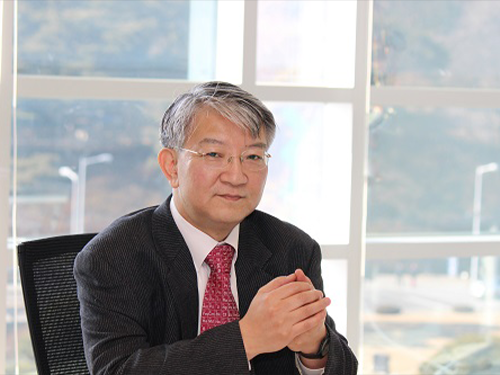 Distinguished Professor Lee Receives 2018 George Washington Carver Award
(Distinguished Professor Lee)
Distinguished Professor Sang Yup Lee from the Department of Chemical and Biomolecular Engineering will become the 11th recipient of the George Washington Carver Award. The award ceremony will be held during the 2018 Biotechnology Innovation Organization (BIO) World Congress on Industrial Biotechnology from July 16 through 19 at the Pennsylvania Convention Center in Philadelphia.
The annual Carver award recognizes an individual who has made a significant contribution to building the bio-based economy by applying industrial biotechnology to create environmentally sustainable products. It serves as a lasting memorial to the original vision of George Washington Carver who, over a century ago, pioneered bio-based products, materials, and energy derived from renewable agricultural feedstock. Previous recipients include the founder and CEO of POET Jeff Broin, the CEO of DuPont Ellen Kullman, and Professor Gregory Stephanopoulos at MIT.
Professor Lee is a pioneering scholar of systems metabolic engineering, leveraging technology to develop microbial bioprocesses for the sustainable and environment-friendly production of chemicals, fuels, and materials from non-food renewable biomass. He also serves as the dean of the multi-and interdisciplinary research center hub, KAIST Institute.Through his work, Professor Lee has garnered countless achievements, including being one of only 13 people in the world elected as a foreign member of both the National Academy of Sciences USA and the National Academy of Engineering USA.
He has actively promoted the importance of industrial biotechnology through engagement with the public, policymakers, and decision makers around the world. He currently serves as the co-chairman of the Global Future Council on Biotechnology for the World Economic Forum and served as the Chairman of the Emerging Technologies Council and Biotechnology Council for the World Economic Forum.
Upon the award announcement, Dr. Brent Erickson, executive vice president of BIO’s Industrial & Environmental Section lauded Professor Lee’s achievement, saying “Dr. Lee has advanced the bio-based economy by developing innovative products and processes that are sustainable and environmentally friendly. In doing so, he has become a leader in advocating on the importance of industrial biotechnology. His contributions to the advancement of the industry are a continuation of the legacy left behind by George Washington Carver.”
Professor Lee thanked his research team who has worked together for the past few decades, adding, “Industrial biotechnology is becoming increasingly important to help achieve the UN’s Sustainable Development Goals. We should continue to work together to advance the field and establish a solid foundation for the sustainable future.”
The George Washington Carver Award is sponsored by the Iowa Biotechnology Association. Joe Hrdlicka, executive director of the Iowa Biotechnology Association, said, “Dr. Sang Yup Lee’s significant contributions to the advancement of industrial biotechnology make him the perfect recipient for the George Washington Carver Award. Having published more than 575 peer-reviewed papers, contributed to 82 books, and holding 636 patents, the culmination of Dr. Lee’s work has led to the establishment of sustainable systems for bio-based production of chemicals, fuels, and materials, thus reducing environmental impact and improving quality of life for all.”
2018.07.12 View 12471
Distinguished Professor Lee Receives 2018 George Washington Carver Award
(Distinguished Professor Lee)
Distinguished Professor Sang Yup Lee from the Department of Chemical and Biomolecular Engineering will become the 11th recipient of the George Washington Carver Award. The award ceremony will be held during the 2018 Biotechnology Innovation Organization (BIO) World Congress on Industrial Biotechnology from July 16 through 19 at the Pennsylvania Convention Center in Philadelphia.
The annual Carver award recognizes an individual who has made a significant contribution to building the bio-based economy by applying industrial biotechnology to create environmentally sustainable products. It serves as a lasting memorial to the original vision of George Washington Carver who, over a century ago, pioneered bio-based products, materials, and energy derived from renewable agricultural feedstock. Previous recipients include the founder and CEO of POET Jeff Broin, the CEO of DuPont Ellen Kullman, and Professor Gregory Stephanopoulos at MIT.
Professor Lee is a pioneering scholar of systems metabolic engineering, leveraging technology to develop microbial bioprocesses for the sustainable and environment-friendly production of chemicals, fuels, and materials from non-food renewable biomass. He also serves as the dean of the multi-and interdisciplinary research center hub, KAIST Institute.Through his work, Professor Lee has garnered countless achievements, including being one of only 13 people in the world elected as a foreign member of both the National Academy of Sciences USA and the National Academy of Engineering USA.
He has actively promoted the importance of industrial biotechnology through engagement with the public, policymakers, and decision makers around the world. He currently serves as the co-chairman of the Global Future Council on Biotechnology for the World Economic Forum and served as the Chairman of the Emerging Technologies Council and Biotechnology Council for the World Economic Forum.
Upon the award announcement, Dr. Brent Erickson, executive vice president of BIO’s Industrial & Environmental Section lauded Professor Lee’s achievement, saying “Dr. Lee has advanced the bio-based economy by developing innovative products and processes that are sustainable and environmentally friendly. In doing so, he has become a leader in advocating on the importance of industrial biotechnology. His contributions to the advancement of the industry are a continuation of the legacy left behind by George Washington Carver.”
Professor Lee thanked his research team who has worked together for the past few decades, adding, “Industrial biotechnology is becoming increasingly important to help achieve the UN’s Sustainable Development Goals. We should continue to work together to advance the field and establish a solid foundation for the sustainable future.”
The George Washington Carver Award is sponsored by the Iowa Biotechnology Association. Joe Hrdlicka, executive director of the Iowa Biotechnology Association, said, “Dr. Sang Yup Lee’s significant contributions to the advancement of industrial biotechnology make him the perfect recipient for the George Washington Carver Award. Having published more than 575 peer-reviewed papers, contributed to 82 books, and holding 636 patents, the culmination of Dr. Lee’s work has led to the establishment of sustainable systems for bio-based production of chemicals, fuels, and materials, thus reducing environmental impact and improving quality of life for all.”
2018.07.12 View 12471 -
 The Center for Anthropocene Studies (CAS) Opens
KAIST will start Anthropocene research, a convergence field of study, to address issues related to the commencement of human activities that have had scientific, industrial, and economic impacts on the Earth’s ecosystem. The National Research Foundation (NRF) of Korea endorsed the KAIST Center for Anthropocene Studies as its Convergence Research Center project.
Anthropocene refers to a new geological age in which various polluting materials that humans have made during the post-industrial revolution era have made a significant impact on the Earth and the lives of humankind. The studies expand the diverse socio-economic and environmental sectors for responding to climate change, natural disasters, ecological destruction, the polarization of the inequality and wealth, and many others.
The KAIST research group at the center, in collaboration with the Graduate School of Science and Technology Policy, the Graduate School of Culture Technology, the School of Humanities & Social Sciences, the Department of Industrial Design, the School of Electrical Engineering, the Satellite Technology Research Center (SaRTec), and the KAIST Initiative for Disaster Studies will conduct multidisciplinary research to address intriguing challenges with complex but creative approaches incorporating the fields of engineering, socioeconomics, and art.
The group will investigate topics such as▲ surface and marine changes to the Earth by applying satellite data ▲disaster prediction and governance system building through AI modeling ▲sustainable housing, transportation, and lifestyles ▲ engineering and artistic approaches for envisioning a new future for humankind and the Earth.
Professor Buhm Soon Park, who is in charge of the center, said, “This pioneering research work will inspire the re-creation of a new paradigm of convergence studies in science, engineering, humanities, and social science. We will contribute to making the world better by designing new technologies and social policies.
2018.06.05 View 12643
The Center for Anthropocene Studies (CAS) Opens
KAIST will start Anthropocene research, a convergence field of study, to address issues related to the commencement of human activities that have had scientific, industrial, and economic impacts on the Earth’s ecosystem. The National Research Foundation (NRF) of Korea endorsed the KAIST Center for Anthropocene Studies as its Convergence Research Center project.
Anthropocene refers to a new geological age in which various polluting materials that humans have made during the post-industrial revolution era have made a significant impact on the Earth and the lives of humankind. The studies expand the diverse socio-economic and environmental sectors for responding to climate change, natural disasters, ecological destruction, the polarization of the inequality and wealth, and many others.
The KAIST research group at the center, in collaboration with the Graduate School of Science and Technology Policy, the Graduate School of Culture Technology, the School of Humanities & Social Sciences, the Department of Industrial Design, the School of Electrical Engineering, the Satellite Technology Research Center (SaRTec), and the KAIST Initiative for Disaster Studies will conduct multidisciplinary research to address intriguing challenges with complex but creative approaches incorporating the fields of engineering, socioeconomics, and art.
The group will investigate topics such as▲ surface and marine changes to the Earth by applying satellite data ▲disaster prediction and governance system building through AI modeling ▲sustainable housing, transportation, and lifestyles ▲ engineering and artistic approaches for envisioning a new future for humankind and the Earth.
Professor Buhm Soon Park, who is in charge of the center, said, “This pioneering research work will inspire the re-creation of a new paradigm of convergence studies in science, engineering, humanities, and social science. We will contribute to making the world better by designing new technologies and social policies.
2018.06.05 View 12643 -
 KAIST to Host the THE Innovation & Impact Summit in 2019
KAIST and Times Higher Education (THE) agreed to co-host the THE Innovation & Impact Summit at KAIST from April 1 to 3, 2019.
Global leaders from higher education, government, and industry will gather at KAIST to discuss how universities can better innovate for creating a greater impact.
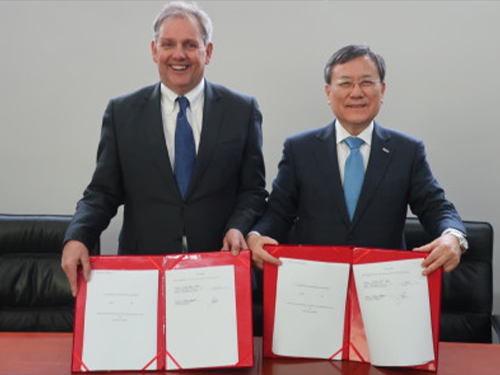
(from left: THE Managing Director Trevor Barratt and KAIST President Sung-Chul Shin)
President Sung-Chul Shin and Trevor Barratt, managing director at the THE, signed an agreement to host the 2019 THE Innovation & Impact Summit at KAIST next April. The agreement was signed on February 6 during the THE Asia Universities Summit held at SUSTech in Shenzhen in China. Phil Baty, editorial director at the THE was also present during the agreement.
By hosting the 2019 THE Innovation & Impact Summit, KAIST has a chance to introduce its innovative research and performance and its educational environment and startup ecosystem to the world. Having educational and industrial leaders meet at KAIST will add more power to the global status and capacity of KAIST.
The THE Innovation & Impact Summit, first held in 2017, is one in the seven presidential summit series held by THE. During the second summit at KAIST, THE will launch their world university innovation rankings for the first time.
As innovation at universities and its impact have been a crucial indicator in building an institutional brand and reputation, leading universities are gearing up to encourage startups and entrepreneurship education. Even more, innovation at universities is emerging as one of the growth engines of economies.
The innovation indicators of KAIST have been highly recognized by many global ranking institutions in terms of the volume of patents and the patents-to-article citation impact. Thomson Reuters has recognized KAIST for two consecutive years as the most innovative university in Asia, and sixth in the world.
President Shin has high expectations for the hosting of the Innovation & Impact Summit at KAIST. He explained, “Innovation makes up the DNA of KAIST and it has been our institutional mission from the start in 1971. KAIST was commissioned to make innovation for industrialization and economic development through education and research. I do not see any university more suitable than KAIST to host this innovation summit. I hope the summit at KAIST will serve as a global platform to provide very creative ideas for making innovation and collaboration among the leading universities for all the participants.”
Meanwhile, at the THE Asia Universities Summit in Shenzhen, how to respond to the implications of the Fourth Industrial Revolution was the key agenda piercing the two-day sessions.
As a panelist, President Shin shared his experiences on innovative strategies viable for spearheading university reform for the Fourth Industrial Revolution, along with Vice-Chancellor of the University of Sheffield Sir Keith Burnett, President of Monash University Margaret Gardner, and President of Hong Kong Polytechnic University President Timothy W. Tong. He said that universities should foster young talents by equipping them with creativity, collaboration, and convergent minds. To swiftly respond to the new industrial environment, President Shin said that universities should remove the high barriers between departments and establish cross- and inter-disciplinary education systems, convergence research and technology commercialization.
2018.02.06 View 9580
KAIST to Host the THE Innovation & Impact Summit in 2019
KAIST and Times Higher Education (THE) agreed to co-host the THE Innovation & Impact Summit at KAIST from April 1 to 3, 2019.
Global leaders from higher education, government, and industry will gather at KAIST to discuss how universities can better innovate for creating a greater impact.
(from left: THE Managing Director Trevor Barratt and KAIST President Sung-Chul Shin)
President Sung-Chul Shin and Trevor Barratt, managing director at the THE, signed an agreement to host the 2019 THE Innovation & Impact Summit at KAIST next April. The agreement was signed on February 6 during the THE Asia Universities Summit held at SUSTech in Shenzhen in China. Phil Baty, editorial director at the THE was also present during the agreement.
By hosting the 2019 THE Innovation & Impact Summit, KAIST has a chance to introduce its innovative research and performance and its educational environment and startup ecosystem to the world. Having educational and industrial leaders meet at KAIST will add more power to the global status and capacity of KAIST.
The THE Innovation & Impact Summit, first held in 2017, is one in the seven presidential summit series held by THE. During the second summit at KAIST, THE will launch their world university innovation rankings for the first time.
As innovation at universities and its impact have been a crucial indicator in building an institutional brand and reputation, leading universities are gearing up to encourage startups and entrepreneurship education. Even more, innovation at universities is emerging as one of the growth engines of economies.
The innovation indicators of KAIST have been highly recognized by many global ranking institutions in terms of the volume of patents and the patents-to-article citation impact. Thomson Reuters has recognized KAIST for two consecutive years as the most innovative university in Asia, and sixth in the world.
President Shin has high expectations for the hosting of the Innovation & Impact Summit at KAIST. He explained, “Innovation makes up the DNA of KAIST and it has been our institutional mission from the start in 1971. KAIST was commissioned to make innovation for industrialization and economic development through education and research. I do not see any university more suitable than KAIST to host this innovation summit. I hope the summit at KAIST will serve as a global platform to provide very creative ideas for making innovation and collaboration among the leading universities for all the participants.”
Meanwhile, at the THE Asia Universities Summit in Shenzhen, how to respond to the implications of the Fourth Industrial Revolution was the key agenda piercing the two-day sessions.
As a panelist, President Shin shared his experiences on innovative strategies viable for spearheading university reform for the Fourth Industrial Revolution, along with Vice-Chancellor of the University of Sheffield Sir Keith Burnett, President of Monash University Margaret Gardner, and President of Hong Kong Polytechnic University President Timothy W. Tong. He said that universities should foster young talents by equipping them with creativity, collaboration, and convergent minds. To swiftly respond to the new industrial environment, President Shin said that universities should remove the high barriers between departments and establish cross- and inter-disciplinary education systems, convergence research and technology commercialization.
2018.02.06 View 9580