people
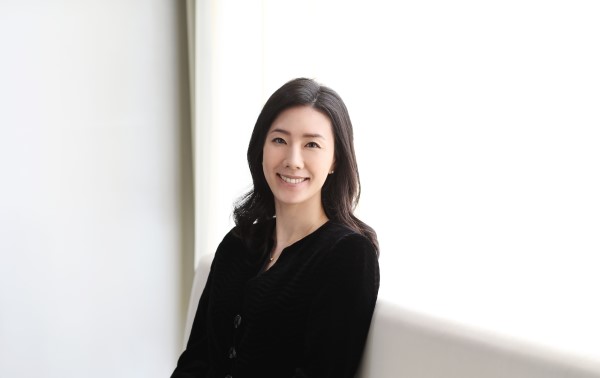
< Professor Jiyun Lee >
Professor Jiyun Lee from the Department of Aerospace Engineering became the first professor of Korean university to be selected as a council member of the Institute of Navigation (ION), serving specifically as a technical representative.
ION is a world-leading organization established in 1945 and dedicated to advancing Positioning, Navigation and Timing (PNT) technologies. ION’s international membership is drawn not only from professionals in the fields of navigation, engineering, astronomy, education, and general aviation and the airline industry, but also from various supporting institutions, corporations, and government agencies.
Professor Lee has been actively engaged in the Institute’s academic and community activities as a technical advisor for the Satellite Division in the Asia-Pacific region, a chair of the International Technical Meeting, as well as a section chair of the Global Navigation Satellite System (GNSS+) Conference. She has also published 34 papers in numerous ION journals and conference proceedings over the past 10 years while serving as an associate editor of the ION Navigation Journal.
From these activities, Professor Lee was recognized for her academic achievements and committed leadership, which led her to be appointed as the first professor from a Korean university to participate on the Council. She will serve her term over the next two years, and conduct day-to-day operations for the Institute mainly related to developing new programs and strategies for the advancement of PNT technologies and discovering new distinguished members.
-
research KAIST Develops Transistor-Based Encryption That Controls When Information Can Be Read
Some information, such as exam questions or bid prices, must remain unreadable until an agreed time, even if it has already been delivered. KAIST researchers have used changes in the electric current inside a semiconductor to develop encryption in which information is revealed only after a set amount of time has passed, or can be read correctly only at a specific time. In addition to the key needed to restore the original information, the technology adds a second condition: when the informatio
2026-10-14 -
research KAIST Finds a Way to Redirect Cell Fate with Just a Single Stimulus
Which genes need to be controlled to guide a stem cell toward a desired cell type, or to modulate an immune cell's inflammatory response? A Korean research team has developed a general-purpose computational framework that identifies the key targets needed to steer a cell toward a desired state with a single temporary intervention, without permanently altering its genes. KAIST (President Choongsik Bae) announced on September 23 that a research team led by Professor Kwang-Hyun Cho from the Depa
2026-09-23 -
research KAIST Develops a Strategy to Balance Radical Generation and Catalyst Regeneration, Enabling Challenging Chemical Reactions
Radicals, atoms or molecules that readily react with other substances to form new bonds, are useful tools for building complex substances such as pharmaceuticals. But even when a radical is generated efficiently, the reaction cannot continue unless the catalyst returns to its original state. A KAIST research team has developed a new strategy that balances radical generation and catalyst regeneration, broadening the possibility of using even substrates that are difficult to activate to synthesi
2026-09-21 -
research Weak Hydrogen Bonds Dethrone Copper's Stability, Opening a New Path for Ion Selection
Copper has been knocked off the top of a stability ranking it had dominated for decades. Without altering the atoms directly bonded to the metal, a KAIST research team reversed the longstanding trend in which copper generally forms the most stable complexes by tuning only the weak hydrogen bonds in its surrounding environment. The findings could open new avenues for selective metal separation and recognition, as well as catalyst design. KAIST (President Choongsik Bae) announced on September 6
2026-09-07 -
research KAIST Develops Smartphone-Based Technology to Detect Hidden Cameras
A smartphone can now be transformed into a “hidden-camera detector.” KAIST researchers have developed an AI technology that can detect hidden cameras using only a smartphone and a low-cost LED device. This new security technology enables users to protect their privacy more easily and is expected to help prevent illegal filming in everyday spaces such as hotels and short-term rentals. KAIST (President Choongsik Bae) announced on August 30 that a research team led by Professor Jun
2026-08-31