people
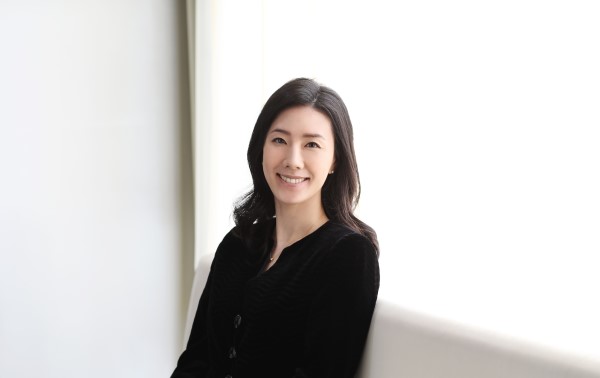
< Professor Jiyun Lee >
Professor Jiyun Lee from the Department of Aerospace Engineering became the first professor of Korean university to be selected as a council member of the Institute of Navigation (ION), serving specifically as a technical representative.
ION is a world-leading organization established in 1945 and dedicated to advancing Positioning, Navigation and Timing (PNT) technologies. ION’s international membership is drawn not only from professionals in the fields of navigation, engineering, astronomy, education, and general aviation and the airline industry, but also from various supporting institutions, corporations, and government agencies.
Professor Lee has been actively engaged in the Institute’s academic and community activities as a technical advisor for the Satellite Division in the Asia-Pacific region, a chair of the International Technical Meeting, as well as a section chair of the Global Navigation Satellite System (GNSS+) Conference. She has also published 34 papers in numerous ION journals and conference proceedings over the past 10 years while serving as an associate editor of the ION Navigation Journal.
From these activities, Professor Lee was recognized for her academic achievements and committed leadership, which led her to be appointed as the first professor from a Korean university to participate on the Council. She will serve her term over the next two years, and conduct day-to-day operations for the Institute mainly related to developing new programs and strategies for the advancement of PNT technologies and discovering new distinguished members.
-
research New and Highly Efficient Recycling Technology to Turn Used Tires into Raw Materials for Rubber and Nylon
< (From left) Kyungmin Choi (MS-Ph.D. integrated course, Department of Chemistry), Dr. Beomsoon Park, Professor Soon Hyeok Hong, Dr. Kyoungil Cho > Approximately 1.5 billions of tires are discarded globally every year, and this is identified as one of the major causes of serious environmental pollution. The research team at the Department of Chemistry at KAIST has achieved a breakthrough by selectively converting waste tires into high-purity cyclic alkenes, valuable chemical buildin
2025-06-26 -
research KAIST's Li-Fi - Achieves 100 Times Faster Speed and Enhanced Security of Wi-Fi
- KAIST-KRISS Develop 'On-Device Encryption Optical Transmitter' Based on Eco-Friendly Quantum Dots - New Li-Fi Platform Technology Achieves High Performance with 17.4% Device Efficiency and 29,000 nit Brightness, Simultaneously Improving Transmission Speed and Security - Presents New Methodology for High-Speed and Encrypted Communication Through Single-Device-Based Dual-Channel Optical Modulation < Photo 1. (Front row from left) Seungmin Shin, First Author; Professor Himchan Cho; (Bac
2025-06-24 -
event KAIST to Lead the Way in Nurturing Talent and Driving S&T Innovation for a G3 AI Powerhouse
* Focusing on nurturing talent and dedicating to R&D to become a G3 AI powerhouse (Top 3 AI Nations). * Leading the realization of an "AI-driven Basic Society for All" and developing technologies that leverage AI to overcome the crisis in Korea's manufacturing sector. * 50 years ago, South Korea emerged as a scientific and technological powerhouse from the ashes, with KAIST at its core, contributing to the development of scientific and technological talent, innovative technology, national
2025-06-24 -
people Distinguished Professor Sang Yup Lee Wins 2025 Global Metabolic Engineering Award
< Distinguished Professor Sang Yup Lee (Senior Vice President for Research) from the Department of Chemical & Biomolecular Engineering > KAIST announced on the 20th that Professor Sang Yup Lee, who serves as the Vice President for Research and a Distinguished Professor at our university, has been awarded the '2025 Gregory N. Stephanopoulos Award for Metabolic Engineering' by the International Metabolic Engineering Society (IMES). Professor Lee delivered his award lecture at the 16
2025-06-20 -
research KAIST Develops Glare-Free, Heat-Blocking 'Smart Window'... Applicable to Buildings and Vehicles
• Professor Hong Chul Moon of the Department of Chemical and Biomolecular Engineering develops RECM, a next-generation smart window technology, expecting cooling energy savings and effective indoor thermal management. • When using the developed RECM, a significantly superior temperature reduction effect is observed compared to conventional windows. • With a 'pedestrian-friendly smart window' design that eliminates glare by suppressing external reflections, it is expected to be a
2025-06-20