people
Joonho Suh of the Aerospace Engineering Department and Jiho Suh of the Mechanical Engineering Department are both brothers and undergraduates at KAIST.
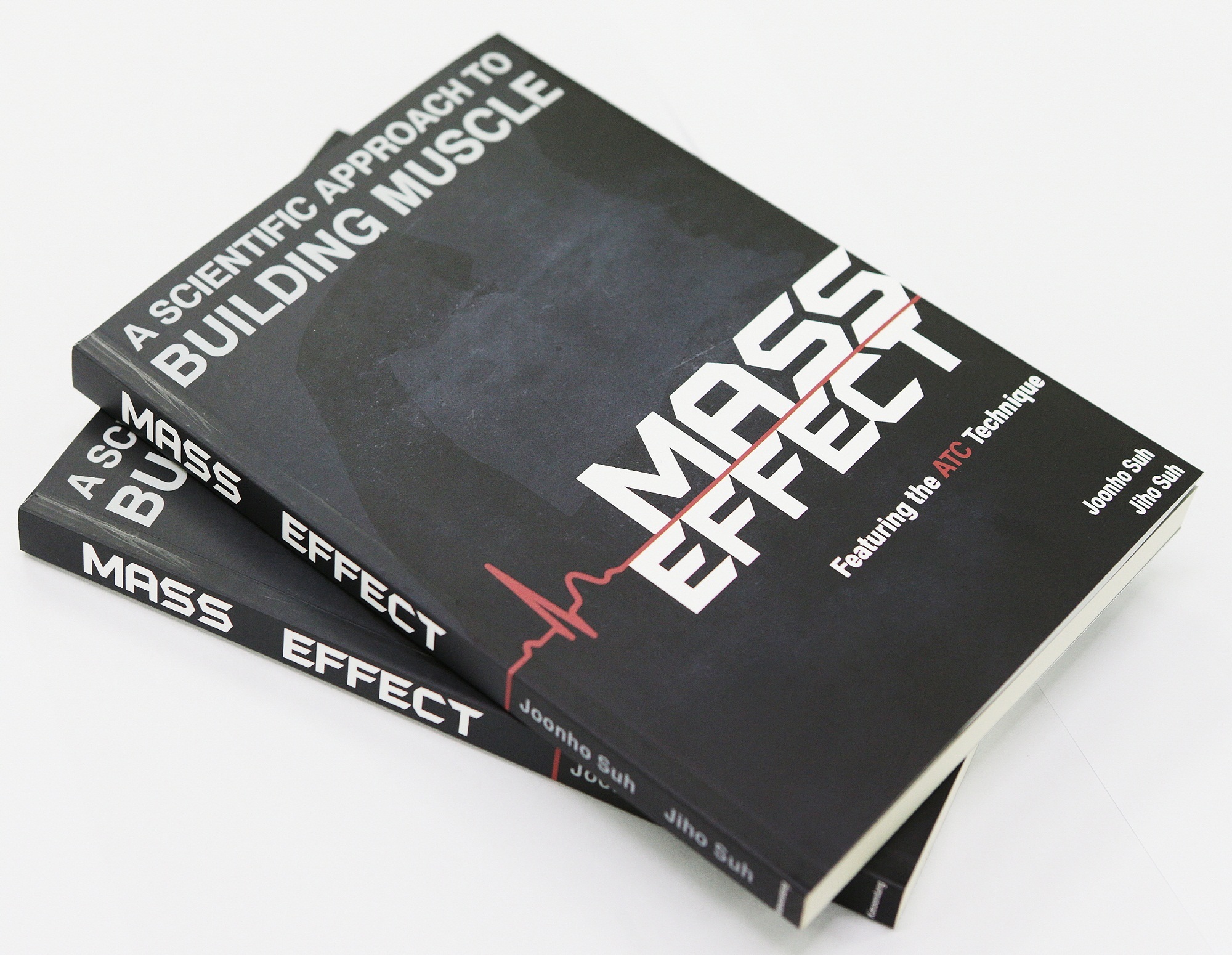
The Suh brothers, who are three years apart, have recently published a self-help book in English on staying healthy entitled “A Scientific Approach to Building Muscle: Mass Effect.”
The book introduces techniques to build muscles, adapting them from an engineering concept called "Active Torque Control (ACT)," the management of turning forces imposed on a vehicle. Just as ACT influences the performance of a vehicle, good exercise involves the right degree of body angles and the right direction of body movements to keep the best posture necessary for burning calories and strengthening muscles.
In the book, they also suggest healthy diet plans based on scientific knowledge and data that the writers borrowed from such fields as anatomy, physiology, and motor mechanics to maintain a healthy weight.
Joonho Suh said,
“If we understand the mechanism of how our body works, the chances are high we will have good muscle tone and a balanced diet. We used a great deal of scientific knowledge and turned it into a health management program that can be customized per individual needs.”
The younger brother, Jiho, added,
“In fact, we applied our methods in the book to beginners who took weight training and fitness for one hour a day for one month, we learned that their muscle mass increased by 1-1.5 kg while losing body fat by 2-3 kg.”
The brothers said they planned to publish a Korean language version of the book next year.
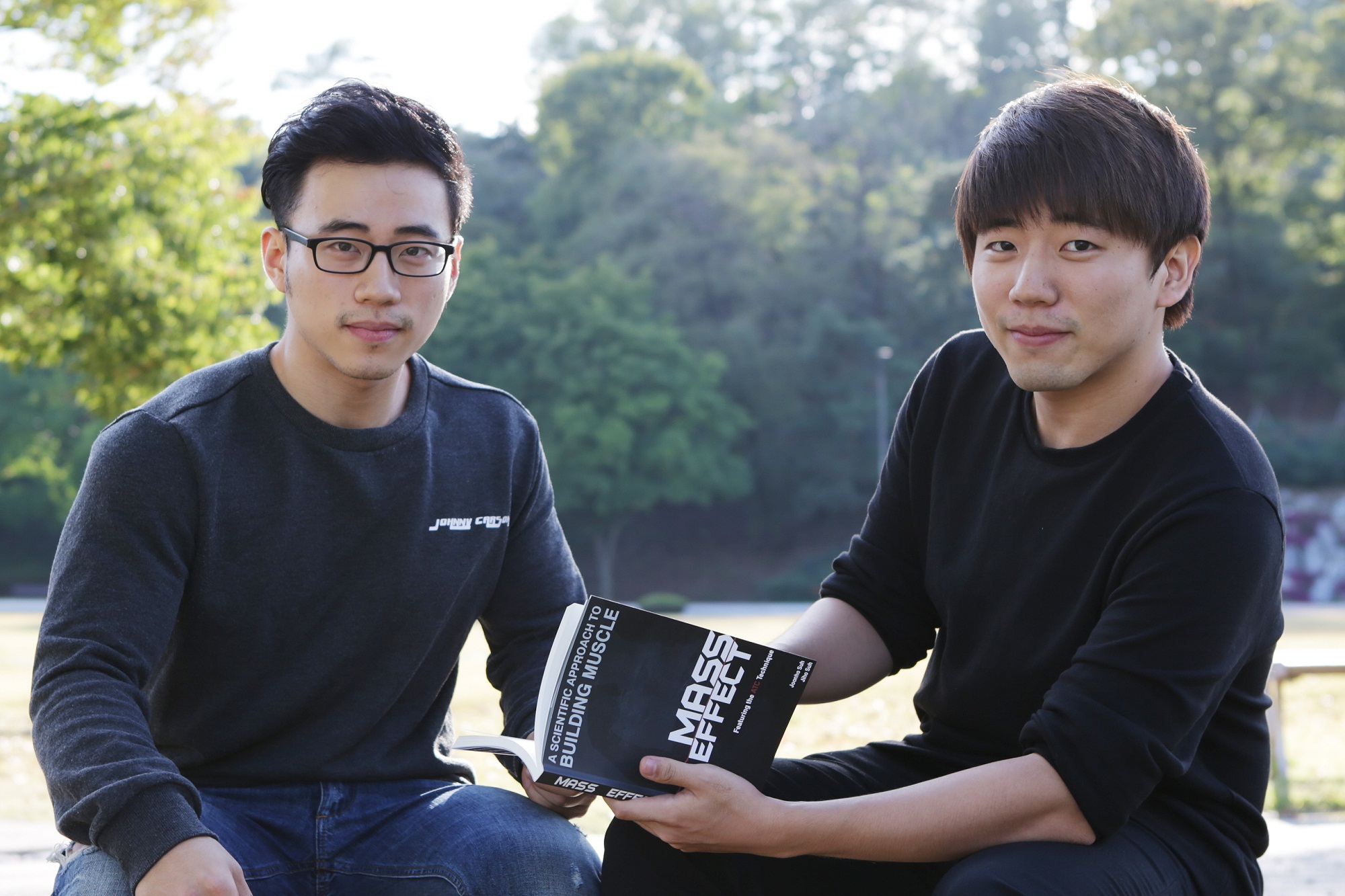
The authors of "Mass Effect": Joonho Suh (left) and Jiho Suh (right)
-
research KAIST Develops a Genetic Switch That Works in Both Bacteria and Yeast
Microbial cell factories that produce pharmaceutical ingredients and other useful compounds include both the bacterium Escherichia coli and yeast, the organism used to leaven bread and ferment alcohol. The two organisms turn genes on by different rules, so a production design built for one has been hard to transfer to the other. A KAIST research team has now built a gene control element that works in both and tested it using a green pigment whose production requires several genes working toget
2026-09-28 -
research KAIST Develops a Strategy to Balance Radical Generation and Catalyst Regeneration, Enabling Challenging Chemical Reactions
Radicals, atoms or molecules that readily react with other substances to form new bonds, are useful tools for building complex substances such as pharmaceuticals. But even when a radical is generated efficiently, the reaction cannot continue unless the catalyst returns to its original state. A KAIST research team has developed a new strategy that balances radical generation and catalyst regeneration, broadening the possibility of using even substrates that are difficult to activate to synthesi
2026-09-21 -
research KAIST Develops Microbially Produced Adhesive Materials from Glucose Instead of Petroleum
KAIST researchers have demonstrated the potential of using microorganisms to produce a bio-based alternative to petroleum-derived materials for hot-melt adhesives. These heat-activated glues are widely used in packaging, furniture, electronics, and automobiles. Using Escherichia coli, the team produced a new polymer from glucose and demonstrated adhesive performance and thermal properties that support its potential use as a hot-melt adhesive. KAIST (President Choongsik Bae) announced on Septe
2026-09-17 -
research KAIST Identifies Cause of Artifacts in Battery Nanoscale Analysis, Paving the Way for More Reliable Measurements
A signal that appears to show ions moving inside a battery may, in fact, be an illusion caused by an uneven surface. A KAIST research team has identified the origin of this type of artifacts, which can lead researchers to misinterpret what is happening inside a battery, and has developed a method to reduce it. The findings are expected to enable more accurate analysis of ion movement and improve the reliability of next-generation battery-material development, including that of solid-state and
2026-09-07 -
research KAIST Opens the Era of Industrial-Scale Microbial Foods, Proposing Growth Strategies for the Next-Generation Protein Market
The question is no longer whether microbial foods can be made. The question now is who can turn them into an industry first. KAIST researchers have comprehensively analyzed the conditions required for the microbial food industry to succeed across manufacturing, markets, and regulation, and have proposed growth strategies for the next-generation protein industry. KAIST (President Choongsik Bae) announced on the 31st of July that a research team led by Distinguished Professor Sang Yup Lee from
2026-08-31