people
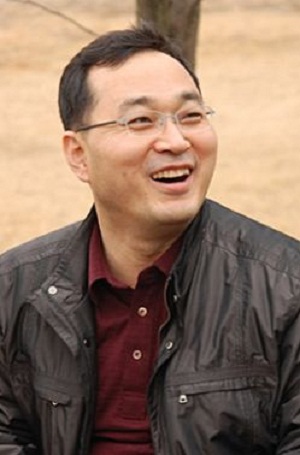
Professor Junehwa Song from the Schooling of Computing at KAIST has been appointed the general chair of the organizing committee of ACM SenSys—the American Computing Machine (ACM) Conference on Embedded Networked Sensor Systems.
ACM SenSys held its first conference in 2003 to promote research on wireless sensor networks and embedded systems. Since then, it has expanded into an influential international conference especially with the increasing importance in sensor technologies. Recently the committee has expanded its field of interest to mobile sensors, the Internet of Things, smart device system, and security.
Professor Song is considered a world-renown researcher in mobile and ubiquitous computing system. He presented numerous research papers at various conferences organized by ACM. He is also a member of the editorial committee of the Institute of Electrical and Electronics Engineers (IEEE) Transactions on Mobile Computing journal. For his achievements in the field and flair for coordinating and planning conferences, he is now the first Korean researcher to be appointed the chair of ACM SenSys.
Professor Song said that, as the chair, he would help discover new technology in and applications of networked, wireless sensors that would meet the demands of our modern society.
The 13th ACM SenSys will take place in Seoul—the first one to be held in Asia. The event will begin on November 1, 2015 and last four days. More information about this year’s event can be found at http://sensys.acm.org/2015/.
-
research “3D sketch” Your Ideas and Bring Them to Life, Instantly!
Professor Seok-Hyung Bae’s research team at the Department of Industrial Design developed a novel 3D sketching system that rapidly creates animated 3D concepts through simple user interactions like sketching on a piece of paper or playing a toy. Foldable drones, transforming vehicles, and multi-legged robots from sci-fi movies are now becoming commonplace thanks to technological progress. However, designing them remains a difficult challenge even for skilled experts, because complex de
2022-11-23 -
people Yuji Roh Awarded 2022 Microsoft Research PhD Fellowship
KAIST PhD candidate Yuji Roh of the School of Electrical Engineering (advisor: Prof. Steven Euijong Whang) was selected as a recipient of the 2022 Microsoft Research PhD Fellowship. < KAIST PhD candidate Yuji Roh (advisor: Prof. Steven Euijong Whang) > The Microsoft Research PhD Fellowship is a scholarship program that recognizes outstanding graduate students for their exceptional and innovative research in areas relevant to computer science and related fields. This year, 36 peop
2022-10-28 -
people Professor Juho Kim’s Team Wins Best Paper Award at ACM CHI 2022
The research team led by Professor Juho Kim from the KAIST School of Computing won a Best Paper Award and an Honorable Mention Award at the Association for Computing Machinery Conference on Human Factors in Computing Systems (ACM CHI) held between April 30 and May 6. ACM CHI is the world’s most recognized conference in the field of human computer interactions (HCI), and is ranked number one out of all HCI-related journals and conferences based on Google Scholar’s h-5 index. Best pap
2022-06-13 -
event Professor Sung-Ju Lee’s Team Wins the Best Paper and the Methods Recognition Awards at the ACM CSCW
A research team led by Professor Sung-Ju Lee at the School of Electrical Engineering won the Best Paper Award and the Methods Recognition Award from ACM CSCW (International Conference on Computer-Supported Cooperative Work and Social Computing) 2021 for their paper “Reflect, not Regret: Understanding Regretful Smartphone Use with App Feature-Level Analysis”. Founded in 1986, CSCW has been a premier conference on HCI (Human Computer Interaction) and Social Computing. This year, 340
2021-11-22 -
people Taesik Gong Named Google PhD Fellow
PhD candidate Taesik Gong from the School of Computing was named a 2020 Google PhD Fellow in the field of machine learning. The Google PhD Fellowship Program has recognized and supported outstanding graduate students in computer science and related fields since 2009. Gong is one of two Korean students chosen as the recipients of Google Fellowships this year. A total of 53 students across the world in 12 fields were awarded this fellowship. Gong’s research on condition-independent mobil
2020-10-15