people
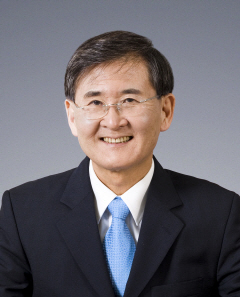
President Steve Kang of KAIST has been appointed to the Chairman of the Global Agenda Council (GAC) on the Future of Electronics of the World Economic Forum (WEF). He will serve the position for two years until September 2016.
President Kang and WEF council members co-hosted, with the government of the United Arab Emirates (UAE), the Future Circles Initiative, a future-focused, innovative brainstorming conference to help find strategies and ideas for the development of UAE. The conference took place on November 11-12, 2014 at the Mina Al Salam Hotel in Dubai.
WEF has about 80 GACs. Each council consists of 15 experts and thought leaders from the academia, industry, government, business, and non-profit sector and deals with specific issues that are important and relevant to the global community such as ageing, artificial intelligence and robotics, brain research, food and nutrition security, education, social media, and future of chemicals, advanced materials and biotechnology.
President Kang was recognized for his contribution to the advancement of science and higher education as an engineer, scholar, and professor. He led the development of the world’s premier CMOS 32-bit microprocessors while working at the AT&T Bell Laboratories. He also taught and conducted research at the University of California, Santa Cruz, and the University of Illinois, Urbana-Champaign. President Kang served as the chancellor of the University of California at Merced from March 2007 to June 2011.
-
research KAIST Develops Customized Tactile Sensor That Can Detect Light Breath, Pressure and Sound
< Photo 1. (From left) Professor Inkyu Park of KAIST Department of Mechanical Engineering (ME), Dr. Jungrak Choi of ETRI, Ph.D. Candidate Donho Lee and M.S. Graduate Chankyu Han of KAIST ME > When a robot grabs an object or a medical device detects a pulse, the tactile sensor is the technology that senses pressure like a fingertip. Existing sensors had disadvantages, such as slow responses or declining accuracy after repeated use, but Korean researchers have succeeded in developing a
2025-06-23 -
research High-Resolution Spectrometer that Fits into Smartphones Developed by KAIST Researchers
- Professor Mooseok Jang's research team at the Department of Bio and Brain Engineering develops an ultra-compact, high-resolution spectrometer using 'double-layer disordered metasurfaces' that generate unique random patterns depending on light's color. - Unlike conventional dispersion-based spectrometers that were difficult to apply to portable devices, this new concept spectrometer technology achieves 1nm-level high resolution in a device smaller than 1cm, comparable in size to a fingernail
2025-06-13 -
research KAIST Turns an Unprecedented Idea into Reality: Quantum Computing with Magnets
What started as an idea under KAIST’s Global Singularity Research Project—"Can we build a quantum computer using magnets?"—has now become a scientific reality. A KAIST-led international research team has successfully demonstrated a core quantum computing technology using magnetic materials (ferromagnets) for the first time in the world. KAIST (represented by President Kwang-Hyung Lee) announced on the 6th of May that a team led by Professor Kab-Jin Kim from the Department of P
2025-06-12 -
research KAIST Successfully Develops High-Performance Water Electrolysis Without Platinum, Bringing Hydrogen Economy Closer
< Photo 1. (Front row, from left) Jeesoo Park (Ph.D. Candidate), Professor Hee-Tak Kim (Back row, from left) Kyunghwa Seok (Ph.D. Candidate), Dr. Gisu Doo, Euntaek Oh (Ph.D. Candidate) > Hydrogen is gaining attention as a clean energy source that emits no carbon. Among various methods, water electrolysis, which splits water into hydrogen and oxygen using electricity, is recognized as an eco-friendly hydrogen production method. Specifically, proton exchange membrane water electrolysis
2025-06-11 -
research KAIST Research Team Develops Electronic Ink for Room-Temperature Printing of High-Resolution, Variable-Stiffness Electronics
A team of researchers from KAIST and Seoul National University has developed a groundbreaking electronic ink that enables room-temperature printing of variable-stiffness circuits capable of switching between rigid and soft modes. This advancement marks a significant leap toward next-generation wearable, implantable, and robotic devices. < Photo 1. (From left) Professor Jae-Woong Jeong and PhD candidate Simok Lee of the School of Electrical Engineering, (in separate bubbles, from left) Pr
2025-06-04