people
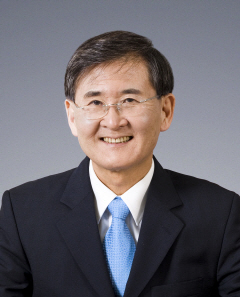
President Steve Kang of KAIST has been appointed to the Chairman of the Global Agenda Council (GAC) on the Future of Electronics of the World Economic Forum (WEF). He will serve the position for two years until September 2016.
President Kang and WEF council members co-hosted, with the government of the United Arab Emirates (UAE), the Future Circles Initiative, a future-focused, innovative brainstorming conference to help find strategies and ideas for the development of UAE. The conference took place on November 11-12, 2014 at the Mina Al Salam Hotel in Dubai.
WEF has about 80 GACs. Each council consists of 15 experts and thought leaders from the academia, industry, government, business, and non-profit sector and deals with specific issues that are important and relevant to the global community such as ageing, artificial intelligence and robotics, brain research, food and nutrition security, education, social media, and future of chemicals, advanced materials and biotechnology.
President Kang was recognized for his contribution to the advancement of science and higher education as an engineer, scholar, and professor. He led the development of the world’s premier CMOS 32-bit microprocessors while working at the AT&T Bell Laboratories. He also taught and conducted research at the University of California, Santa Cruz, and the University of Illinois, Urbana-Champaign. President Kang served as the chancellor of the University of California at Merced from March 2007 to June 2011.
-
research KAIST Develops Microbial Liquid Egg Substitute
A team of researchers published a paper on developing a substitute for eggs using microorganisms, grabbing international attention. It is expected that the development of egg substitutes using non-animal raw materials will solve the problems of factory farming, which causes problems like increased emission of greenhouse gas and waste, and contribute to building a sustainable food system that allows easy protein intake. KAIST (President Kwang-Hyung Lee) announced that Research Professor Kyeong R
2024-07-05 -
event KAIST and Merck Sign MOU to Boost Biotech Innovation
< (From left) KAIST President Kwang-Hyung Lee and Merck CEO Matthias Heinzel > KAIST (President Kwang-Hyung Lee) signed a Memorandum of Understanding (MOU) with Merck Life Science (CEO Matthias Heinzel) on May 29 to foster innovation and technology creation in advanced biotechnology. Since May of last year, the two institutions have been discussing multidimensional innovation programs and will now focus on industry-academia cooperation to tackle bioindustry challenges with this MOU a
2024-05-30 -
research The World’s First Hacking-preventing Cryptographic Semiconductor Chip
With the dramatic increase in the amount of information exchanged between components or devices in the 5G/6G era, such as for the Internet of Things (IoT) and autonomous driving, hacking attacks are becoming more sophisticated. Consequently, enhancing security functions is essential for safely transmitting data between and among devices. On February 29th, a KAIST research team led by Professors Yang-gyu Choi and Seung-tak Ryu from the School of Electrical Engineering announced the successful
2024-03-07 -
research A Korean research team develops a new clinical candidate for fatty liver disease
A team of Korean researchers have succeeded in developing a new drug candidate for the treatment of non-alcoholic fatty liver disease (NAFLD) acting on peripheral tissues. To date, there has not been an optimal treatment for non-alcoholic steatohepatitis (NASH), and this discovery is expected to set the grounds for the development of new drugs that can safely suppress both liver fat accumulation and liver fibrosis at the same time. A joint research team led by Professor Jin Hee Ahn from Gwang
2024-02-21 -
event World-renowned Soprano Sumi Jo and Broadcom CEO Hock Tan awarded honorary doctorate from KAIST
< (From left) Sumi Jo, Distinguished Visiting Professor at the Graduate School of Culture and Technology, and Broadcom President and CEO Hock Tan > KAIST (President Kwang-Hyung Lee) announced that it awarded honorary doctorates to world-renowned soprano Sumi Jo, a distinguished visiting professor at the Graduate School of Culture and Technology, and the President and Chief Executive Officer of Broadcom Inc., Hock Tan, at the graduation ceremony held on the 16th of February, 2024. P
2024-02-17