people
KAIST PhD candidate Yuji Roh of the School of Electrical Engineering (advisor: Prof. Steven Euijong Whang) was selected as a recipient of the 2022 Microsoft Research PhD Fellowship.
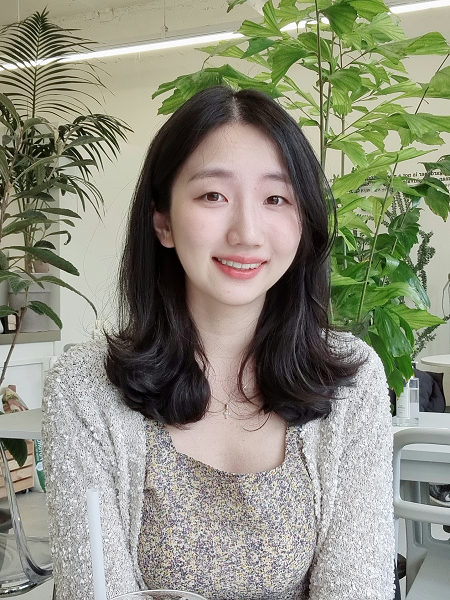
< KAIST PhD candidate Yuji Roh (advisor: Prof. Steven Euijong Whang) >
The Microsoft Research PhD Fellowship is a scholarship program that recognizes outstanding graduate students for their exceptional and innovative research in areas relevant to computer science and related fields. This year, 36 people from around the world received the fellowship, and Yuji Roh from KAIST EE is the only recipient from universities in Korea. Each selected fellow will receive a $10,000 scholarship and an opportunity to intern at Microsoft under the guidance of an experienced researcher.
Yuji Roh was named a fellow in the field of “Machine Learning” for her outstanding achievements in Trustworthy AI. Her research highlights include designing a state-of-the-art fair training framework using batch selection and developing novel algorithms for both fair and robust training. Her works have been presented at the top machine learning conferences ICML, ICLR, and NeurIPS among others. She also co-presented a tutorial on Trustworthy AI at the top data mining conference ACM SIGKDD. She is currently interning at the NVIDIA Research AI Algorithms Group developing large-scale real-world fair AI frameworks.
The list of fellowship recipients and the interview videos are displayed on the Microsoft webpage and Youtube.
The list of recipients: https://www.microsoft.com/en-us/research/academic-program/phd-fellowship/2022-recipients/
Interview (Global): https://www.youtube.com/watch?v=T4Q-XwOOoJc
Interview (Asia): https://www.youtube.com/watch?v=qwq3R1XU8UE
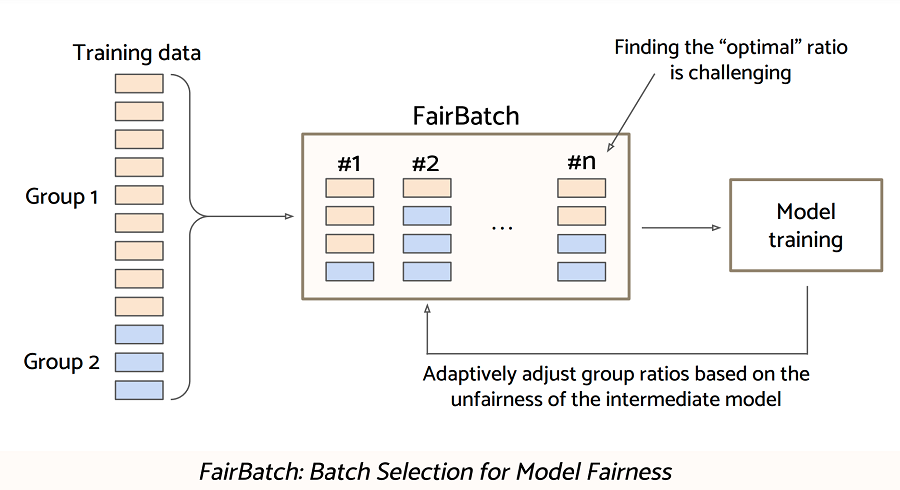
[Highlighted research achievements by Yuji Roh: Fair batch selection framework]
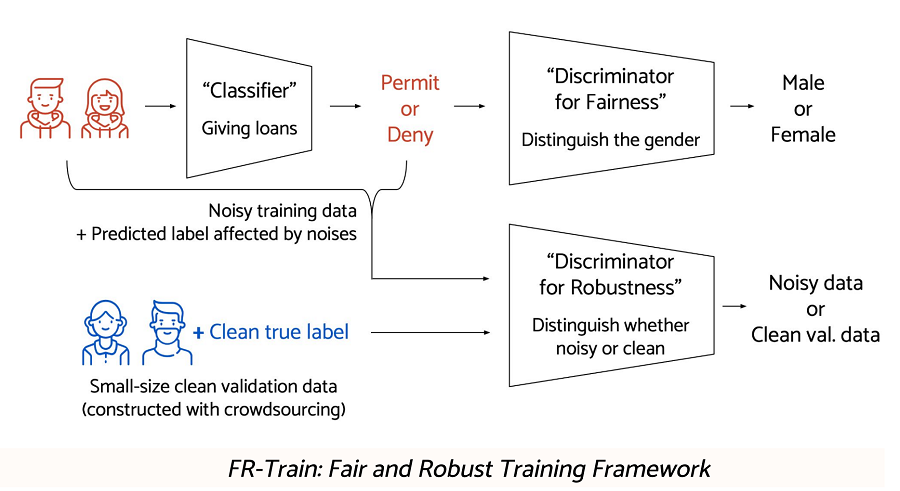
[Highlighted research achievements by Yuji Roh: Fair and robust training framework]
-
event KAIST Launches Korea's First Artificial General Intelligence (AGI) Research Institute
Moving beyond today’s AI, which excels at solving problems similar to those encountered during training, KAIST has launched a dedicated research institute to develop foundational technologies for Artificial General Intelligence (AGI) that can make decisions and adapt independently when faced with unfamiliar problems and environments. KAIST announced that it officially launched the AGI Research Institute under the KAIST AI Research Institute (AIRI) on September 18, following the completi
2026-09-22 -
research KAIST Researchers Uncover How Neurons Deliver RNA to Where It Is Needed
Much like a courier reading an address on a package, neurons must deliver RNA to the precise locations where it is needed. A KAIST research team has discovered how a small chemical modification on RNA acts as a “delivery tag,” helping selected RNAs travel to distant regions of neurons. The findings provide a basis for investigating RNA “delivery errors” in brain disorders—cases in which RNA is produced normally but fails to reach its intended destination—an
2026-09-14 -
research Neural Implant in Korea Remotely Controlled from the United States, Bringing Brain Research into the IoT Era
A researcher in Chicago remotely controls a miniaturized brain implant in Daejeon, Korea — over the internet. Korean researchers have developed a wireless device that can deliver drugs and light to precisely modulate targeted neurons from anywhere in the world. The technology is expected to overcome the constraints of distance and location, supporting long-term studies of brain disorders and the future development of therapeutic devices. KAIST (President Choongsik Bae) announced on Augu
2026-08-27 -
people Twelve Years Later, KAIST’s Undergraduate Research Program Continues to Shape World-Class Talent
KAIST’s undergraduate research programs have helped launch the careers of professors at world-leading universities and experts in global industry in just over a decade. Three students featured as undergraduate researchers in 2014 have since built distinguished careers: two are now professors at leading universities in the United States, while the third works as an open innovation expert at a global pharmaceutical company. Their career paths demonstrate the lasting impact of KAIST’s
2026-08-10 -
research KAIST Professor Sooel Son Selected for Microsoft Funding for AI Safety and Security Research
KAIST (President Choongsik Bae) announced on the 28th of July that Professor Sooel Son has been selected as the only researcher in Korea to receive funding from Microsoft for research on artificial intelligence safety and security. The funding was awarded through the External Red Team Alliance (EXTRA), a new program established by Microsoft’s AI Red Team, which examines the safety and security vulnerabilities of AI systems. EXTRA is a global initiative designed to strengthen AI safety
2026-07-28