PAC
-
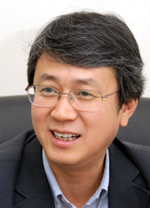
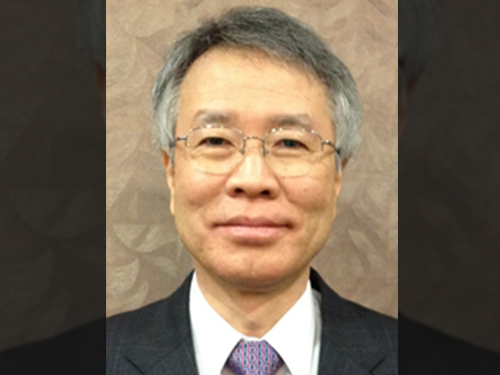 Professor Kyu-Young Whang receives the PAKDD Distinguished Contributions Award
Professor Kyu-Young Whag
Dr. Kyu-Young Whang, Distinguished Professor from the Department of Computer Science, KAIST, has received the 2014 Distinguished Contributions Award from the Pacific-Asia Conference on Knowledge Discovery and Data Mining (PAKDD). PAKDD is the leading academic international conference on data mining held in Asia/Pacific. This year’s international conference was held from 13th to 15th May at Tainan, Taiwan.
As a life member of the PAKDD Steering Committee, Professor Whang worked for the development of the data mining field in the Asia-Pacific region, and his contribution to the international database and data-mining field has been widely recognized.
The PAKDD Distinguished Contributions Award has been awarded to a total of six people until now, including Professor Whang, and he is the first Korean to receive this award.
Professor Whang has also a history of receiving the Outstanding Contributions Award in 2011 from the Database Systems for Advanced Applications (DASFAA), the prestigious database academic conference in the Asia-Pacific region. The database and data mining field in the region was barren 20 years ago, but through the efforts and contributions of many researchers, including Professor Whang, it has now leapt to the level of being the equal of North American and European researchers.
In fact, three academic organizations in the current international database field are led by professors in the Asia-Pacific region. The IEEE ICDE (Institute of Electrical and Electronics Engineers Technical Committee on Data Engineering) is led by Professor Whang; the VLDB (Very Large Data Base) Endowment by Professor Beng Chin Ooi from National University of Singapore (NUS); and the ACM SIGMOD (Association for Computing Machinery Special Interest Group on Management of Data) by Professor Don Kossmann from ETH Zurich.
2014.05.26 View 7371
Professor Kyu-Young Whang receives the PAKDD Distinguished Contributions Award
Professor Kyu-Young Whag
Dr. Kyu-Young Whang, Distinguished Professor from the Department of Computer Science, KAIST, has received the 2014 Distinguished Contributions Award from the Pacific-Asia Conference on Knowledge Discovery and Data Mining (PAKDD). PAKDD is the leading academic international conference on data mining held in Asia/Pacific. This year’s international conference was held from 13th to 15th May at Tainan, Taiwan.
As a life member of the PAKDD Steering Committee, Professor Whang worked for the development of the data mining field in the Asia-Pacific region, and his contribution to the international database and data-mining field has been widely recognized.
The PAKDD Distinguished Contributions Award has been awarded to a total of six people until now, including Professor Whang, and he is the first Korean to receive this award.
Professor Whang has also a history of receiving the Outstanding Contributions Award in 2011 from the Database Systems for Advanced Applications (DASFAA), the prestigious database academic conference in the Asia-Pacific region. The database and data mining field in the region was barren 20 years ago, but through the efforts and contributions of many researchers, including Professor Whang, it has now leapt to the level of being the equal of North American and European researchers.
In fact, three academic organizations in the current international database field are led by professors in the Asia-Pacific region. The IEEE ICDE (Institute of Electrical and Electronics Engineers Technical Committee on Data Engineering) is led by Professor Whang; the VLDB (Very Large Data Base) Endowment by Professor Beng Chin Ooi from National University of Singapore (NUS); and the ACM SIGMOD (Association for Computing Machinery Special Interest Group on Management of Data) by Professor Don Kossmann from ETH Zurich.
2014.05.26 View 7371 -
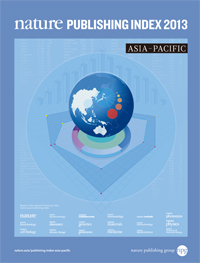 KAIST Top in the Nature Publishing Index 2013 Asia-Pacific
The Nature Publishing Index 2013 Asia-Pacific has been released today. The index is a supplement to Nature, which measures the output of research articles from nations and institutes published in the 18 Nature-branded primary research journals over the calendar year.
A press release from the Nature Publishing Group follows below:
South Korea regains scientific impetus
PRESS RELEASE FROM NATURE PUBLISHING GROUP
Embargoed until 03.00 KST on Thursday 27 March 2014
South Korea ranks fourth for scientific research output in the region, according to the Nature Publishing Index 2013 Asia-Pacific released today.
In 2013, the nation significantly increased its NPI output following a slight drop in 2012.
Named a possible ‘one to watch’ by the supplement editors, with high levels of investment in science and technology announced by both government and private enterprise, its NPI output is growing faster than China’s.
The Korea Advanced Institute of Science and Technology has risen two places to take top spot above Seoul National University, which has retained second place. Pohang University of Science and Technology has leapt from eighth to third, with a more-than-threefold increase in corrected count, adjusted for the proportional contribution of collaborative institutions.
Last year’s number one, Yonsei University, could not maintain its exceptional 2012 NPI output and has dropped to seventh spot.
It is now just above a newcomer, the Institute for Basic Science (IBS), funded as part of the government’s increased investment in basic science. IBS plans to open 50 research centres by 2017 and will no doubt provide increasing contributions in the next few years.
To see the latest results for the region, and the Nature Publishing Index Global Top 100, visit the Index website at
www.natureasia.com/en/publishing-index.
The data posted on the website is updated every week with a moving window of 12 months of data.
2014.03.27 View 6208
KAIST Top in the Nature Publishing Index 2013 Asia-Pacific
The Nature Publishing Index 2013 Asia-Pacific has been released today. The index is a supplement to Nature, which measures the output of research articles from nations and institutes published in the 18 Nature-branded primary research journals over the calendar year.
A press release from the Nature Publishing Group follows below:
South Korea regains scientific impetus
PRESS RELEASE FROM NATURE PUBLISHING GROUP
Embargoed until 03.00 KST on Thursday 27 March 2014
South Korea ranks fourth for scientific research output in the region, according to the Nature Publishing Index 2013 Asia-Pacific released today.
In 2013, the nation significantly increased its NPI output following a slight drop in 2012.
Named a possible ‘one to watch’ by the supplement editors, with high levels of investment in science and technology announced by both government and private enterprise, its NPI output is growing faster than China’s.
The Korea Advanced Institute of Science and Technology has risen two places to take top spot above Seoul National University, which has retained second place. Pohang University of Science and Technology has leapt from eighth to third, with a more-than-threefold increase in corrected count, adjusted for the proportional contribution of collaborative institutions.
Last year’s number one, Yonsei University, could not maintain its exceptional 2012 NPI output and has dropped to seventh spot.
It is now just above a newcomer, the Institute for Basic Science (IBS), funded as part of the government’s increased investment in basic science. IBS plans to open 50 research centres by 2017 and will no doubt provide increasing contributions in the next few years.
To see the latest results for the region, and the Nature Publishing Index Global Top 100, visit the Index website at
www.natureasia.com/en/publishing-index.
The data posted on the website is updated every week with a moving window of 12 months of data.
2014.03.27 View 6208 -
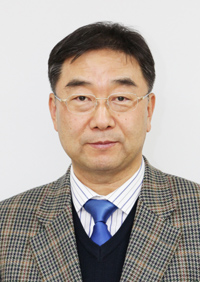 Professor Kyung-Wook Paik Receives the Best Presentation Award from 2014 Pan Pacific Symposium
The Surface Mount Technology Association (SMTA) hosted its 19th Annual Pan Pacific Microelectronics Symposium on February 11-13, 2014 in Hawaii.
The 2014 conference, promoting international technical exchange and extensive networking among microelectronics professionals from around the world, presented over 50 papers from 17 countries.
Professor Kyung-Wook Paik of Materials Science Engineering at KAIST received the Best Presentation Award for his paper titled, “Novel Nanofiber Anisotropic Films for Nine Pitch Assembly” at the conference.
SMTA is an international network of professionals in electronics assembly technologies, including Microsystems, emerging technologies, and related business operations.
2014.03.17 View 7613
Professor Kyung-Wook Paik Receives the Best Presentation Award from 2014 Pan Pacific Symposium
The Surface Mount Technology Association (SMTA) hosted its 19th Annual Pan Pacific Microelectronics Symposium on February 11-13, 2014 in Hawaii.
The 2014 conference, promoting international technical exchange and extensive networking among microelectronics professionals from around the world, presented over 50 papers from 17 countries.
Professor Kyung-Wook Paik of Materials Science Engineering at KAIST received the Best Presentation Award for his paper titled, “Novel Nanofiber Anisotropic Films for Nine Pitch Assembly” at the conference.
SMTA is an international network of professionals in electronics assembly technologies, including Microsystems, emerging technologies, and related business operations.
2014.03.17 View 7613 -
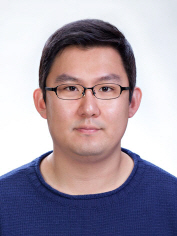 Tae-Wan Kim, a doctoral candidate, receives the best paper award from ECTC
The 2014 Electronic Components and Technology Conference (ECTC) will take place on May 27-30 in Florida, USA. Tae-Wan Kim, a Ph.D. candidate at the Department of Materials Science Engineering (MSE), KAIST, will receive the Intel Best Student Paper Award at the conference.ECTC is the premier international conference that brings together the best researchers and engineers in packaging, components and microelectronic systems science, technology and education in an environment of cooperation and technical exchange. The conference is sponsored by the Components, Packaging and Manufacturing Technology (CPMT) Society of IEEE (Institute of Electrical and Electronics Engineering).The paper describes research on novel nanofiber anisotropic conductive films for ultra fine pitch electronic package application, which was written under the guidance of Professor Kyung-Wook Paik of the MSE Department. In the past ten years, two of his students have received the best paper award from ECTC.
2014.03.14 View 9069
Tae-Wan Kim, a doctoral candidate, receives the best paper award from ECTC
The 2014 Electronic Components and Technology Conference (ECTC) will take place on May 27-30 in Florida, USA. Tae-Wan Kim, a Ph.D. candidate at the Department of Materials Science Engineering (MSE), KAIST, will receive the Intel Best Student Paper Award at the conference.ECTC is the premier international conference that brings together the best researchers and engineers in packaging, components and microelectronic systems science, technology and education in an environment of cooperation and technical exchange. The conference is sponsored by the Components, Packaging and Manufacturing Technology (CPMT) Society of IEEE (Institute of Electrical and Electronics Engineering).The paper describes research on novel nanofiber anisotropic conductive films for ultra fine pitch electronic package application, which was written under the guidance of Professor Kyung-Wook Paik of the MSE Department. In the past ten years, two of his students have received the best paper award from ECTC.
2014.03.14 View 9069 -
 Rechargeable Lithium Sulfur Battery for Greater Battery Capacity
Professor Do Kyung Kim from the Department of Material Science and Engineering and Professor Jang Wook Choi from the Graduate School of EEWS have been featured in the lead story of the renowned nanoscience journal Advanced Materials for their research on the lithium sulfur battery. This new type of battery developed by Professor Kim is expected to have a longer life battery life and [higher] energy density than currently commercial batteries.
With ample energy density up to 2100Wh/kg—almost 5.4 times that of lithium ion batteries—lithium sulfur batteries can withstand the sharp decrease in energy capacity resulting from charging and discharging—which has been considered the inherent limitation of the conventional batteries.
Professor Kim and his research team used one-dimensional, vertical alignment of 75nm tick, 15μm long sulfur nanowires to maximize electric conductivity. Then, to prevent loss of battery life, they carbon-coated each nanowire and prohibited direct contact between the sulfur and electrolyte.
The result was one of the most powerful batteries in terms of both energy performance and density. Compared to conventional batteries which suffer from continuous decrease in energy capacity after being discharged, the lithium sulfur battery maintained 99.2% of its initial capacity after being charged and discharged 300 times and up to 70% even after 1000 times.
Professor Kim claims that his new battery is an important step forward towards a high-performance rechargeable battery which is a vital technology for unmanned vehicles, electric automobiles and energy storage. He hopes that his research can solve the problems of battery-capacity loss and contribute to South Korea’s leading position in battery technology. Professor Kim’s research team has filed applications for one domestic and international patent for their research.
2013.12.11 View 9978
Rechargeable Lithium Sulfur Battery for Greater Battery Capacity
Professor Do Kyung Kim from the Department of Material Science and Engineering and Professor Jang Wook Choi from the Graduate School of EEWS have been featured in the lead story of the renowned nanoscience journal Advanced Materials for their research on the lithium sulfur battery. This new type of battery developed by Professor Kim is expected to have a longer life battery life and [higher] energy density than currently commercial batteries.
With ample energy density up to 2100Wh/kg—almost 5.4 times that of lithium ion batteries—lithium sulfur batteries can withstand the sharp decrease in energy capacity resulting from charging and discharging—which has been considered the inherent limitation of the conventional batteries.
Professor Kim and his research team used one-dimensional, vertical alignment of 75nm tick, 15μm long sulfur nanowires to maximize electric conductivity. Then, to prevent loss of battery life, they carbon-coated each nanowire and prohibited direct contact between the sulfur and electrolyte.
The result was one of the most powerful batteries in terms of both energy performance and density. Compared to conventional batteries which suffer from continuous decrease in energy capacity after being discharged, the lithium sulfur battery maintained 99.2% of its initial capacity after being charged and discharged 300 times and up to 70% even after 1000 times.
Professor Kim claims that his new battery is an important step forward towards a high-performance rechargeable battery which is a vital technology for unmanned vehicles, electric automobiles and energy storage. He hopes that his research can solve the problems of battery-capacity loss and contribute to South Korea’s leading position in battery technology. Professor Kim’s research team has filed applications for one domestic and international patent for their research.
2013.12.11 View 9978 -
 KAIST student wins Aerospace Student Papers Grand Prize
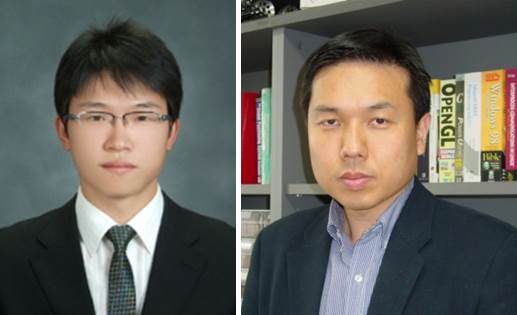
Dong-Il Yoo, a doctoral candidate under Professor Hyun-Chul Shim, at the Department of Aerospace Engineering, KAIST, has been awarded the Second Prize Award at the 11th Korea Aerospace Industries (KAI) Paper Contest. The award ceremony was held on October 30th at the media conference room at the KINTEX ADEX 2013 Exhibition in Seoul.
Yoo"s paper, titled "A Study on Virtual Pursuit Point-based Autonomous Air Combat Guidance Law for UCAV," is highly regarded for originality and creativity. The Field Robotics Center at the KAIST Institute, where Yoo conducted his research, also received the first prize at the 7th KAI Paper Contest.
The KAI Paper Contest was first organized in 2003 to promote academic interest and advance research and development in aerospace engineering among university students.
The KAI Paper Contest is one of the most prestigious contests in Korea. It is sponsored by the Ministry of Trade, Industry and Energy, the Ministry of Land, Infrastructure and Transport, the Korean Society for Aeronautical and Space Sciences, the Korea Aerospace Industries Association, and the Korea Civil Aviation Development Association.
Dong-Il Yoo (left) and Professor Hyun-Chul Shim (right)
2013.11.11 View 9981
KAIST student wins Aerospace Student Papers Grand Prize
Dong-Il Yoo, a doctoral candidate under Professor Hyun-Chul Shim, at the Department of Aerospace Engineering, KAIST, has been awarded the Second Prize Award at the 11th Korea Aerospace Industries (KAI) Paper Contest. The award ceremony was held on October 30th at the media conference room at the KINTEX ADEX 2013 Exhibition in Seoul.
Yoo"s paper, titled "A Study on Virtual Pursuit Point-based Autonomous Air Combat Guidance Law for UCAV," is highly regarded for originality and creativity. The Field Robotics Center at the KAIST Institute, where Yoo conducted his research, also received the first prize at the 7th KAI Paper Contest.
The KAI Paper Contest was first organized in 2003 to promote academic interest and advance research and development in aerospace engineering among university students.
The KAI Paper Contest is one of the most prestigious contests in Korea. It is sponsored by the Ministry of Trade, Industry and Energy, the Ministry of Land, Infrastructure and Transport, the Korean Society for Aeronautical and Space Sciences, the Korea Aerospace Industries Association, and the Korea Civil Aviation Development Association.
Dong-Il Yoo (left) and Professor Hyun-Chul Shim (right)
2013.11.11 View 9981 -
 Core Technology for Lithium Air Secondary Battery Developed
KAIST-Kyonggi University joint research team developed composite catalyst out of nano fiber and graphene
Five times improvement in capacity compared to lithium-ion secondary battery, driving 800 km at maximum
The core technology for lithium air secondary battery, the next generation high capacity battery, has been developed.
A research team formed by KAIST Department of Materials Science’s Professors Il-Doo Kim and Seokwoo Jeon, and Kyonggi University Department of Materials Science’s Professor Yong-Joon Park has created a lithium air secondary battery, with five times greater storage than the lithium-ion secondary battery, by developing a nano fiber-graphene composite catalyst. The research results are published in the August 8th online edition of Nano Letters.
A cathode of a lithium-ion battery consists of graphite and an anode of the battery consists of a lithium transition metal oxide. Lithium-ion batteries are widely used in mobile phones and laptops. However, lithium-ion batteries cannot support electric vehicles, providing energy for only 160 kilometers on one full charge. The lithium air secondary battery just developed by the research team uses lithium on the cathode and oxygen on the anode. It is earning a popular acknowledgement among the next generation secondary battery research community for having lightweight mass and high energy density.
However, lithium-ion batteries remain difficult to commercialize because of their short lifespan. Lithium and oxygen meet up to form lithium oxide (Li2O2) at discharge, and decompose again at charge. In a traditional lithium air battery, this cycle does not occur smoothly and results in high resistance, thereby reducing the lifespan of the battery. It is thus essential to develop high efficiency catalyst that facilitates the formation and decomposition of lithium oxides.
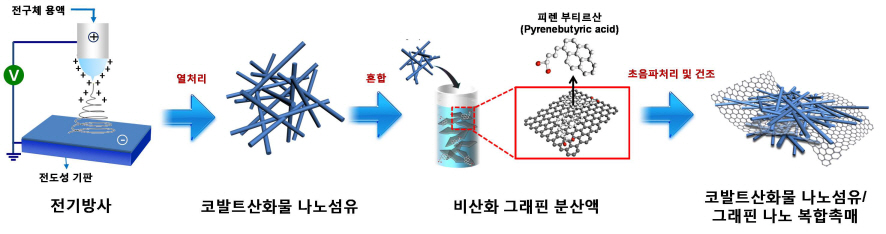
The research team used electric radiation to develop a nano composite catalyst by mixing cobalt oxide nano fiber and graphene. The performance of the battery has been maximized by settling nonoxidative graphene, which has high specific surface area and electrical conductivity, on catalyst active cobalt oxide nano fiber. Applying the nano composite catalyst on both poles of the lithium air battery resulted in an improved lifespan of over 80 recharge cycles with capacity greater than 100mAh/g, five times greater than a lithium ion battery. The newly discovered charge-discharge property is the highest among the reported performances of the lithium air battery so far.
The lithium air battery is cheap to make, as the main materials are metal oxide and graphene. “There are yet more issues to resolve such as stability, but we will collaborate with other organizations to open up the era of electronic vehicles,” said Professor Il-Doo Kim. “We hope to contribute to vitalizing the fields of next generation lithium air battery by leading nanocatalyst synthesis technology, one of the core materials in the fields of secondary battery,” Professor Kim spoke of his aspiration.
The graduate students participated in the research are Won-Hee Ryu, a postdoctorate at KAIST Department of Materials Science, Sungho Song, a PhD candidate at KAIST Department of Materials Science, and Taek-Han Yoon, a graduate student at Kyonggi University.
Picture I: Schematic Diagram of Lithium Air Battery Made of Nano Composite Catalysts
Picture II: Images of Cobalt Oxide Nano Fibers and Graphene Nano Composite Catalysts
Picture III: Images of Manufacturing Process of Cobalt Oxide Nano Fibers and Graphene Nano Composite Catalysts for Lithium Air Battery
2013.10.18 View 10108
Core Technology for Lithium Air Secondary Battery Developed
KAIST-Kyonggi University joint research team developed composite catalyst out of nano fiber and graphene
Five times improvement in capacity compared to lithium-ion secondary battery, driving 800 km at maximum
The core technology for lithium air secondary battery, the next generation high capacity battery, has been developed.
A research team formed by KAIST Department of Materials Science’s Professors Il-Doo Kim and Seokwoo Jeon, and Kyonggi University Department of Materials Science’s Professor Yong-Joon Park has created a lithium air secondary battery, with five times greater storage than the lithium-ion secondary battery, by developing a nano fiber-graphene composite catalyst. The research results are published in the August 8th online edition of Nano Letters.
A cathode of a lithium-ion battery consists of graphite and an anode of the battery consists of a lithium transition metal oxide. Lithium-ion batteries are widely used in mobile phones and laptops. However, lithium-ion batteries cannot support electric vehicles, providing energy for only 160 kilometers on one full charge. The lithium air secondary battery just developed by the research team uses lithium on the cathode and oxygen on the anode. It is earning a popular acknowledgement among the next generation secondary battery research community for having lightweight mass and high energy density.
However, lithium-ion batteries remain difficult to commercialize because of their short lifespan. Lithium and oxygen meet up to form lithium oxide (Li2O2) at discharge, and decompose again at charge. In a traditional lithium air battery, this cycle does not occur smoothly and results in high resistance, thereby reducing the lifespan of the battery. It is thus essential to develop high efficiency catalyst that facilitates the formation and decomposition of lithium oxides.
The research team used electric radiation to develop a nano composite catalyst by mixing cobalt oxide nano fiber and graphene. The performance of the battery has been maximized by settling nonoxidative graphene, which has high specific surface area and electrical conductivity, on catalyst active cobalt oxide nano fiber. Applying the nano composite catalyst on both poles of the lithium air battery resulted in an improved lifespan of over 80 recharge cycles with capacity greater than 100mAh/g, five times greater than a lithium ion battery. The newly discovered charge-discharge property is the highest among the reported performances of the lithium air battery so far.
The lithium air battery is cheap to make, as the main materials are metal oxide and graphene. “There are yet more issues to resolve such as stability, but we will collaborate with other organizations to open up the era of electronic vehicles,” said Professor Il-Doo Kim. “We hope to contribute to vitalizing the fields of next generation lithium air battery by leading nanocatalyst synthesis technology, one of the core materials in the fields of secondary battery,” Professor Kim spoke of his aspiration.
The graduate students participated in the research are Won-Hee Ryu, a postdoctorate at KAIST Department of Materials Science, Sungho Song, a PhD candidate at KAIST Department of Materials Science, and Taek-Han Yoon, a graduate student at Kyonggi University.
Picture I: Schematic Diagram of Lithium Air Battery Made of Nano Composite Catalysts
Picture II: Images of Cobalt Oxide Nano Fibers and Graphene Nano Composite Catalysts
Picture III: Images of Manufacturing Process of Cobalt Oxide Nano Fibers and Graphene Nano Composite Catalysts for Lithium Air Battery
2013.10.18 View 10108 -
 KAIST unveils foldable micro electric car, Armadillo-T
The small and light electric car completely folds in half when parking, making it a perfect fit for public or private transportation in an urban environment.
Looking for a parking space for hours at a busy shopping mall or being stuck on roads jammed with cars releasing large amounts of carbon dioxide are all-too-familiar scenes for city dwellers.
A group of researchers at the Korea Advanced Institute of Science and Technology (KAIST) recently developed a possible solution to such problems: a foldable, compact electric vehicle that can be utilized either as a personal car or part of the public transit system to connect major transportation routes within a city.
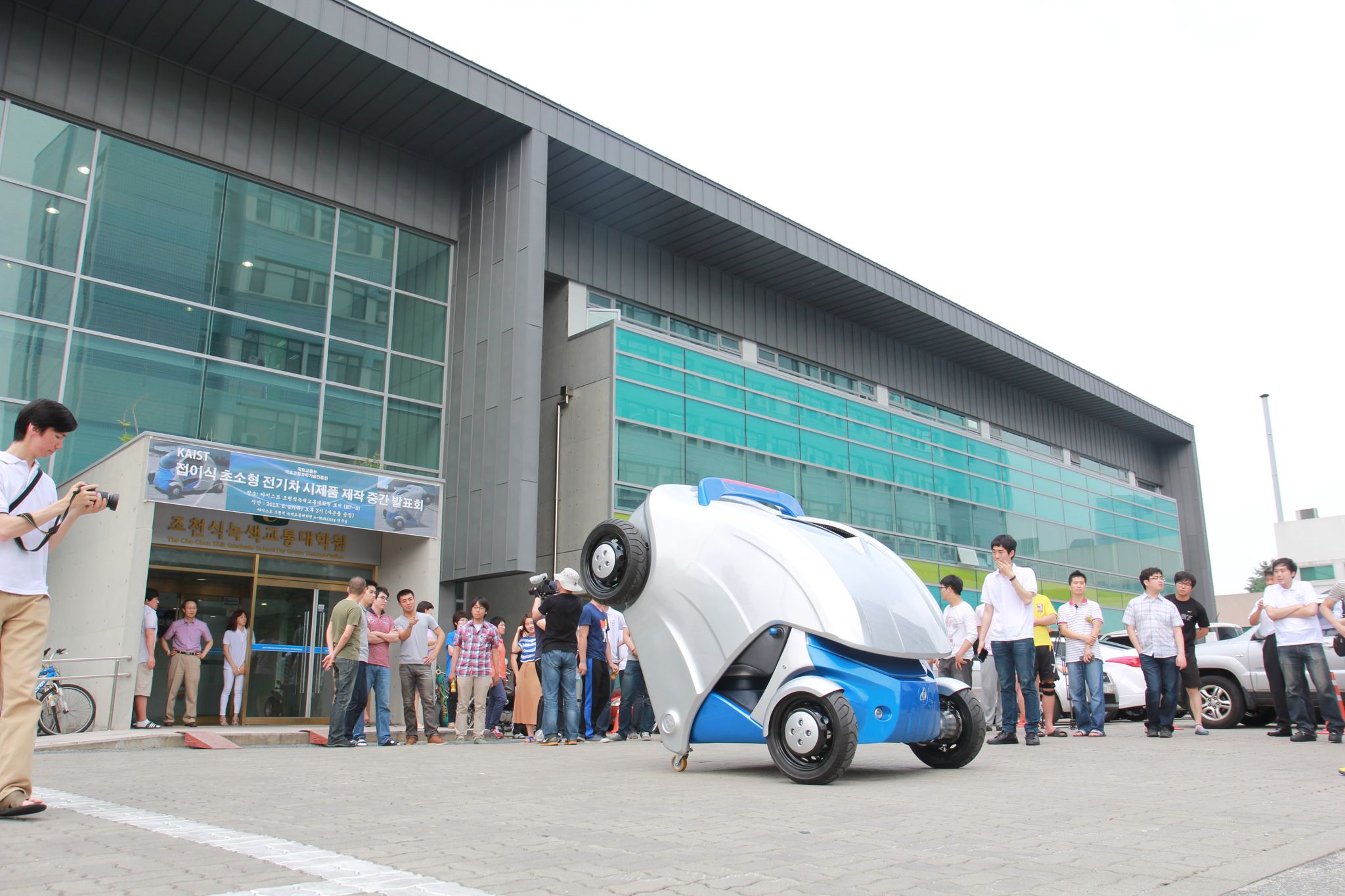
In-Soo Suh, associate professor of the Graduate School for Green Transportation at KAIST, and his research team introduced a prototype micro electric car called "Armadillo-T," whose design is based on a native animal of South America, the armadillo, a placental mammal with a leathery armor shell.
The research team imitated the animal"s distinctive protection characteristic of rolling up into a ball when facing with threat from predators. Just as armadillos hide themselves inside the shell, Armadillo-T tucks its rear body away, shrinking its original size of 2.8 meters (110 inches) down to almost half, 1.65 meters (65 inches), when folding.
Armadillo-T is a four-wheel-drive, all-electric car with two seats and four in-wheel motors. Since the motors are installed inside the wheels, and the 13.6 kWh capacity of lithium-ion battery pack is housed on the front side, the battery and motors do not have to change their positions when the car folds. This not only optimizes the energy efficiency but also provides stability and ample room to drivers and passengers.
Once folded, the small and light (weighs 450 kg) electric vehicle takes up only one-third of a 5-meter parking space, the standard parking size in Korea, allowing three of its kind to be parked. With a smartphone-interfaced remote control on the wheels, the vehicle can turn 360 degrees, enhancing drivers" convenience to park the car, even in an odd space in a parking lot, the corner of a building, for example.
Professor In-Soo Suh said, "I expect that people living in cities will eventually shift their preferences from bulky, petro-engine cars to smaller and lighter electric cars. Armadillo-T can be one of the alternatives city drivers can opt for. Particularly, this car is ideal for urban travels, including car-sharing and transit transfer, to offer major transportation links in a city. In addition to the urban application, local near-distance travels such as tourist zones or large buildings can be another example of application."
The concept car has loads of smart features on board, too: the cameras installed inside the car eliminate the need for side mirrors and increase the driver"s ability to see the car"s right and left side, thereby reducing blind spots. With a smartphone, the driver can control Armadillo-T and enable remote folding control. The car has a maximum speed of 60 km/h, and with a ten-minute fast charge, it can run up to 100 km.
Professor Suh explained that the concept of Armadillo-T was originally initiated in 2011 as he focused his research interest on the sub-A segment of personal mobility vehicles (PMVs), which are smaller and lighter than the current compact cars, as a new personalized transport mode.
"In coming years, we will see more mega-size cities established and face more serious environmental problems. Throughout the world, the aging population is rapidly growing as well. To cope with climate, energy, and limited petroleum resources, we really need to think outside the box, once again, to find more convenient and eco-friendly transportation, just as the Ford Model T did in the early 1920s. A further level of R&D, technical standards, and regulatory reviews are required to have these types of micro vehicles or PMVs on the market through test-bed evaluations, but we believe that Armadillo-T is an icon toward the future transport system with technology innovation."
The research project has been supported by the Korean government, the Ministry of Land, Infrastructure and Transport and the Korea Agency for Infrastructure Technology Advancement, since December 2012.Youtube Link: http://www.youtube.com/watch?v=8DoZH7Y-sR0
2013.08.21 View 12782
KAIST unveils foldable micro electric car, Armadillo-T
The small and light electric car completely folds in half when parking, making it a perfect fit for public or private transportation in an urban environment.
Looking for a parking space for hours at a busy shopping mall or being stuck on roads jammed with cars releasing large amounts of carbon dioxide are all-too-familiar scenes for city dwellers.
A group of researchers at the Korea Advanced Institute of Science and Technology (KAIST) recently developed a possible solution to such problems: a foldable, compact electric vehicle that can be utilized either as a personal car or part of the public transit system to connect major transportation routes within a city.
In-Soo Suh, associate professor of the Graduate School for Green Transportation at KAIST, and his research team introduced a prototype micro electric car called "Armadillo-T," whose design is based on a native animal of South America, the armadillo, a placental mammal with a leathery armor shell.
The research team imitated the animal"s distinctive protection characteristic of rolling up into a ball when facing with threat from predators. Just as armadillos hide themselves inside the shell, Armadillo-T tucks its rear body away, shrinking its original size of 2.8 meters (110 inches) down to almost half, 1.65 meters (65 inches), when folding.
Armadillo-T is a four-wheel-drive, all-electric car with two seats and four in-wheel motors. Since the motors are installed inside the wheels, and the 13.6 kWh capacity of lithium-ion battery pack is housed on the front side, the battery and motors do not have to change their positions when the car folds. This not only optimizes the energy efficiency but also provides stability and ample room to drivers and passengers.
Once folded, the small and light (weighs 450 kg) electric vehicle takes up only one-third of a 5-meter parking space, the standard parking size in Korea, allowing three of its kind to be parked. With a smartphone-interfaced remote control on the wheels, the vehicle can turn 360 degrees, enhancing drivers" convenience to park the car, even in an odd space in a parking lot, the corner of a building, for example.
Professor In-Soo Suh said, "I expect that people living in cities will eventually shift their preferences from bulky, petro-engine cars to smaller and lighter electric cars. Armadillo-T can be one of the alternatives city drivers can opt for. Particularly, this car is ideal for urban travels, including car-sharing and transit transfer, to offer major transportation links in a city. In addition to the urban application, local near-distance travels such as tourist zones or large buildings can be another example of application."
The concept car has loads of smart features on board, too: the cameras installed inside the car eliminate the need for side mirrors and increase the driver"s ability to see the car"s right and left side, thereby reducing blind spots. With a smartphone, the driver can control Armadillo-T and enable remote folding control. The car has a maximum speed of 60 km/h, and with a ten-minute fast charge, it can run up to 100 km.
Professor Suh explained that the concept of Armadillo-T was originally initiated in 2011 as he focused his research interest on the sub-A segment of personal mobility vehicles (PMVs), which are smaller and lighter than the current compact cars, as a new personalized transport mode.
"In coming years, we will see more mega-size cities established and face more serious environmental problems. Throughout the world, the aging population is rapidly growing as well. To cope with climate, energy, and limited petroleum resources, we really need to think outside the box, once again, to find more convenient and eco-friendly transportation, just as the Ford Model T did in the early 1920s. A further level of R&D, technical standards, and regulatory reviews are required to have these types of micro vehicles or PMVs on the market through test-bed evaluations, but we believe that Armadillo-T is an icon toward the future transport system with technology innovation."
The research project has been supported by the Korean government, the Ministry of Land, Infrastructure and Transport and the Korea Agency for Infrastructure Technology Advancement, since December 2012.Youtube Link: http://www.youtube.com/watch?v=8DoZH7Y-sR0
2013.08.21 View 12782 -
 Novel material that prevents health decline with age found
Professor Kim Dae Soo (Department of Biological Science), his research team, the Choong Nam University Medicine School, and various companies conducted collaborative research succeeded in developing a novel material that prevents health decline with age. The result was published in PLoS One Journal with the title “Beta-lapachone, a modulator of NAD metabolism, prevents health declines in aged mice”.
Longevity and health can be obtained with reducing consumption of food and aerobic exercise.
Professor Kim’s team focused on the fact that reduced consumption of food and aerobic exercise increase the coenzyme (NAD+) which suppresses the aging of cells. The research team discovered that by activating NQO1 enzyme with Beta-lapachone, the amount of NAD+ in the body increases even without reduction of food consumption or aerobic exercise.
Even consumption of Beta-lapachone by aging mice caused an improved on the brain and exercise ability of the mice. It is expected that commercialization of Beta-lapachone will be possible as it is a chemical that is commonly found in herbs used in both the orient and the oxidant.
2012.12.21 View 6701
Novel material that prevents health decline with age found
Professor Kim Dae Soo (Department of Biological Science), his research team, the Choong Nam University Medicine School, and various companies conducted collaborative research succeeded in developing a novel material that prevents health decline with age. The result was published in PLoS One Journal with the title “Beta-lapachone, a modulator of NAD metabolism, prevents health declines in aged mice”.
Longevity and health can be obtained with reducing consumption of food and aerobic exercise.
Professor Kim’s team focused on the fact that reduced consumption of food and aerobic exercise increase the coenzyme (NAD+) which suppresses the aging of cells. The research team discovered that by activating NQO1 enzyme with Beta-lapachone, the amount of NAD+ in the body increases even without reduction of food consumption or aerobic exercise.
Even consumption of Beta-lapachone by aging mice caused an improved on the brain and exercise ability of the mice. It is expected that commercialization of Beta-lapachone will be possible as it is a chemical that is commonly found in herbs used in both the orient and the oxidant.
2012.12.21 View 6701 -
Professor Hwang Gyu Young Elected as Chairman of IEEE TCDE.
Professor Hwang Gyu Young (Department of Computer Science) was elected as the Chairman of IEEE (Institute of Electrical and Electronics Engineers) TCDE (Technical Committee on Data Engineering).
IEEE TCDE is one of the three academic organizations (including VLDB Endowment, ACM SIGMOD) and Professor Hwang is the first to be elected as Chairman from the Asia-Pacific region.
Professor Hwang’s tenure begins on New Year’s Day for two years.
IEEE TCDE holds the world’s most prestigious academic competition IEEE ICDE and hosts the Working Group and publishes the IEEE Data Engineering Bulletin.
2012.12.21 View 7800
-
Professor Moon Song Chun appointed representative director of European IT society
Professor Moon Song Chun from the College of business at KAIST was appointed as the representative director of Asia for the European IR society EUROMICRO at its 35th general meeting in Lille, France.
Professor Moon is highly regarded in his work in popularization of IT in 3rd world countries and has published the largest number of papers in the history of EUROMICRO. For the next two years, Professor Moon will work to introduce Asia’s IT capabilities to the world and to increase the recognition of the society in the region.
Professor Moon, who is also known as the first Computer Science Doctor (PhD) in Korea, has worked to popularize IT by initiating IT volunteer services in Africa, the Middle East, Central and South America, South East Asia and Eastern Europe. He has also helped in the recognition of Korea’s IT capacity, working as a Korean Delegate for the UN International Y2K Cooperation Center, a Distinguished Scholar at Hungarian Academy of Sciences, and a Visiting Scholar at Cambridge University.
2012.09.25 View 7827
-
First Annual CanSat Idea Exhibition held
The Ministry of Education, Science, and Technology held the ‘CanSat’ Exhibition in order to increase interest and understanding of satellites in primary, secondary, and high school level students.
The exhibition, hosted by KAIST Satellite Research Center and funded by Korea Aerospace Institute, was held in SaeJeong City.
90 primary, secondary school teams, 57 high school teams, and 14 university teams submitted their applications for participation. Of these teams 20 primary, secondary school teams, 5 high school teams, and 5 university teams were selected after thorough document valuation and presentation assessment.
The 20 primary, secondary school teams participated in the science camp to gain firsthand experience in the construction and launch of a simple satellite system.
The high school and university teams were evaluated by the level of completion of the task given and the level of creativity involved.
The CanSat Exhibition has been held in aerospace powerhouses and this was the first time such an exhibition was held in Korea.
2012.08.21 View 7509