%4d%53%55
-
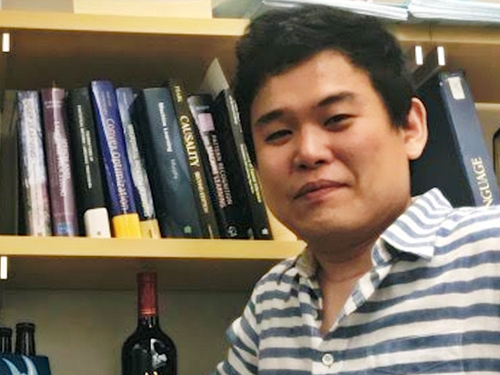 KAIST Alumnus NYU Professor Supports Female AI Researchers
A KAIST alumnus and an associate professor at New York University (NYU), Dr. Kyunghyun Cho donated 3,000 USD to the KAIST Graduate School of AI to support female AI researchers.
Professor Cho spoke as a guest lecturer at the 2019 Samsung AI Forum on November 4 and received 3,000 USD as an honorarium. He donated this honorarium to the KAIST Graduate School of AI with a special request to support the school’s female PhD students attending the 2020 International Conference on Learning Representations (ICLR), where he serves as a program co-chair.
Professor Cho received his BS degree from KAIST’s School of Computing in 2009 and is now serving as an associate professor at NYU’s Computer Science Department and Center for Data Science. His research mainly covers machine learning and natural language processing.
Professor Cho said that he decided to make this donation because “In Korea and even in the US, women in science, technology, engineering, and mathematics (STEM) lack opportunities and environments that allow them to excel.”
Professor Song Chong, the Head of the KAIST Graduate School of AI, responded, “We are so grateful for Professor Kyunghyun Cho’s contribution and we will also use funds from the school in addition to the donation to support our female PhD students who will attend the ICLR.”
(END)
2019.11.15 View 18485
-
 Algorithm Identifies Optimal Pairs for Composing Metal-Organic Frameworks
The integration of metal-organic frameworks (MOFs) and other metal nanoparticles has increasingly led to the creation of new multifunctional materials. Many researchers have integrated MOFs with other classes of materials to produce new structures with synergetic properties.
Despite there being over 70,000 collections of synthesized MOFs that can be used as building blocks, the precise nature of the interaction and the bonding at the interface between the two materials still remains unknown. The question is how to sort out the right matching pairs out of 70,000 MOFs.
An algorithmic study published in Nature Communications by a KAIST research team presents a clue for finding the perfect pairs. The team, led by Professor Ji-Han Kim from the Department of Chemical and Biomolecular Engineering, developed a joint computational and experimental approach to rationally design MOF@MOFs, a composite of MOFs where an MOF is grown on a different MOF.
Professor Kim’s team, in collaboration with UNIST, noted that the metal node of one MOF can coordinately bond with the linker of a different MOF and the precisely matched interface configurations at atomic and molecular levels can enhance the likelihood of synthesizing MOF@MOFs.
They screened thousands of MOFs and identified optimal MOF pairs that can seamlessly connect to one another by taking advantage of the fact that the metal node of one MOF can form coordination bonds with the linkers of the second MOF. Six pairs predicted from the computational algorithm successfully grew into single crystals.
This computational workflow can readily extend into other classes of materials and can lead to the rapid exploration of the composite MOFs arena for accelerated materials development. Even more, the workflow can enhance the likelihood of synthesizing MOF@MOFs in the form of large single crystals, and thereby demonstrated the utility of rationally designing the MOF@MOFs.
This study is the first algorithm for predicting the synthesis of composite MOFs, to the best of their knowledge. Professor Kim said, “The number of predicted pairs can increase even more with the more general 2D lattice matching, and it is worth investigating in the future.”
This study was supported by Samsung Research Funding & Incubation Center of Samsung Electronics.
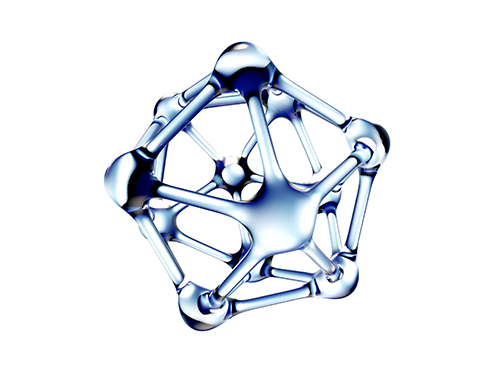
(Figure: An example of a rationally synthesized MOF@MOFs (cubic HKUST-1@MOF-5 ))
2019.08.30 View 25481
-
 Two Alumni Win the Korea Best Scientist and Technologist Awards
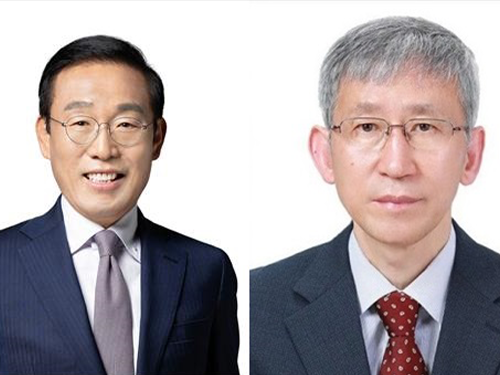
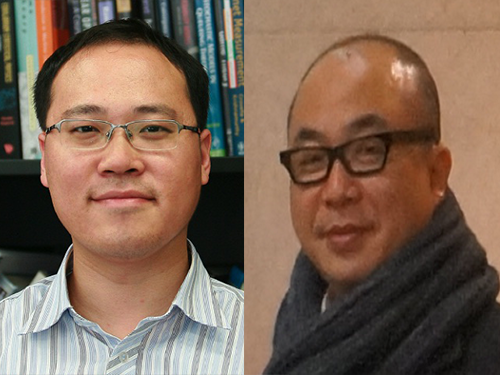
Vice Chairman Ki-Nam Kim (Left) and Distinguished Professor Sukbok Chang (Right)
<ⓒ Photo by MSIT and KOFST>
Distinguished KAIST Professor Sukbok Chang from the Department of Chemistry and Vice Chairman Ki-Nam Kim of Samsung Electronics were selected as the winners of the “2019 Korea Best Scientist and Technologist Awards” by the Ministry of Science and ICT (MSIT) and the Korean Federation of Science and Technology Societies (KOFST). The awards, which were first handed out in 2003, are the highest honor bestowed to the two most outstanding scientists in Korea every year, and this year’s awardees are of greater significance as they are both KAIST alumni.
Professor Chang was recognized for his pioneering achievements and lifetime contributions to the development of carbon-hydrogen activation strategies, especially for carbon-carbon, carbon-nitrogen, and carbon-oxygen formations. His research group has also been actively involved in the development of highly selective catalytic systems allowing the controlled defunctionalization of bio-derived platform substrates under mild conditions, and opening a new avenue for the utilization of biomass-derived platform chemicals. The results of his study have been introduced worldwide through many prestigious journals including Science, Nature Chemistry, and Nature Catalysis, making him one of the world's top 1% researchers by the number of references made to his papers by his peers over four consecutive years from 2015 to 2018.
Vice Chairman Kim, who received his M.E. degree from KAIST’s School of Electrical Engineering in 1983, has been credited with playing a leading role in the development of system semiconductors.
The awards were conferred on July 4 at the opening ceremony of the 2019 Korea Science and Technology Annual Meeting.
(END)
2019.07.09 View 22599
-
 KAIST Develops Analog Memristive Synapses for Neuromorphic Chips
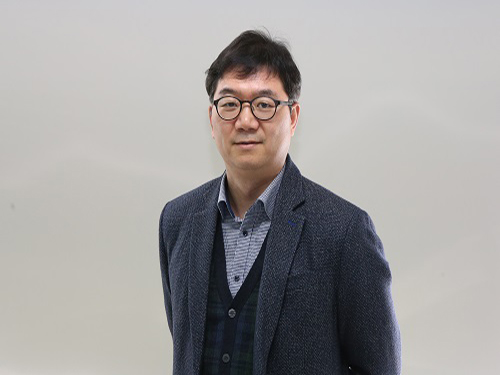
(Professor Sung-Yool Choi from the School of Electrical Engineering)
A KAIST research team developed a technology that makes a transition of the operation mode of flexible memristors to synaptic analog switching by reducing the size of the formed filament. Through this technology, memristors can extend their role to memristive synapses for neuromorphic chips, which will lead to developing soft neuromorphic intelligent systems.
Brain-inspired neuromorphic chips have been gaining a great deal of attention for reducing the power consumption and integrating data processing, compared to conventional semiconductor chips. Similarly, memristors are known to be the most suitable candidate for making a crossbar array which is the most efficient architecture for realizing hardware-based artificial neural network (ANN) inside a neuromorphic chip.
A hardware-based ANN consists of a neuron circuit and synapse elements, the connecting pieces. In the neuromorphic system, the synaptic weight, which represents the connection strength between neurons, should be stored and updated as the type of analog data at each synapse.
However, most memristors have digital characteristics suitable for nonvolatile memory. These characteristics put a limitation on the analog operation of the memristors, which makes it difficult to apply them to synaptic devices.
Professor Sung-Yool Choi from the School of Electrical Engineering and his team fabricated a flexible polymer memristor on a plastic substrate, and found that changing the size of the conductive metal filaments formed inside the device on the scale of metal atoms can make a transition of the memristor behavior from digital to analog.
Using this phenomenon, the team developed flexible memristor-based electronic synapses, which can continuously and linearly update synaptic weight, and operate under mechanical deformations such as bending.
The team confirmed that the ANN based on these memristor synapses can effectively classify person’s facial images even when they were damaged. This research demonstrated the possibility of a neuromorphic chip that can efficiently recognize faces, numbers, and objects.
Professor Choi said, “We found the principles underlying the transition from digital to analog operation of the memristors. I believe that this research paves the way for applying various memristors to either digital memory or electronic synapses, and will accelerate the development of a high-performing neuromorphic chip.”
In a joint research project with Professor Sung Gap Im (KAIST) and Professor V. P. Dravid (Northwestern University), this study was led by Dr. Byung Chul Jang (Samsung Electronics), Dr. Sungkyu Kim (Northwestern University) and Dr. Sang Yoon Yang (KAIST), and was published online in Nano Letters (10.1021/acs.nanolett.8b04023) on January 4, 2019.
Figure 1. a) Schematic illustration of a flexible pV3D3 memristor-based electronic synapse array. b) Cross-sectional TEM image of the flexible pV3D3 memristor
2019.02.28 View 16514
-
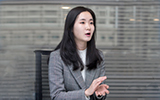 First Female Grand Prize Awardee of Samsung Humantech
Yeunhee Huh, PhD candidate (Professor Gyu-Hyeong Cho) from the School of Electrical Engineering received the grand prize of the 24th Humantech Paper Award. She is the first female recipient of this prize since its establishment in 1994. The Humantech Paper Award is hosted by Samsung Electronics and sponsored by the Ministry of Science and ICT with JoongAng Daily Newspaper. Her paper is titled, ‘A Hybrid Structure Dual-Path Step-Down Converter with 96.2% Peak Efficiency using 250mΩ Large-DCR Inductor’. Electronic devices require numerous chips and have a power converter to supply energy adequately. She proposed a new structure to enhance energy efficiency by combining inductors and capacitors. Enhancing energy efficiency can reduce energy loss, which prolongs battery hours and solves overheating of devices; for instance, energy loss leads to the overheating issue affecting phone chargers. This technology can be applied to various electronic devices, such as cell phones, laptops, and drones. Huh said, “Power has to go up in order to meet customers’ needs; however the overheating problem emerges during this process. This problem affects surrounding circuits and causes other issues, such as malfunctions of electronic devices. This technology may vary according to the conditions, but it can enhance energy efficiency up to 4%.”During the ceremony, about eight hundred million KRW worth cash prizes was conferred to 119 papers. KAIST (44 papers) and Gyeonggi Science High School (6 papers) received special awards given to the schools.
2018.02.12 View 17276
-
 KAIST Researchers Receive the 2016 IEEE William R. Bennett Prize
A research team led by Professors Yung Yi and Song Chong from the Electrical Engineering Department at KAIST has been awarded the 2016 William R. Bennett Prize of the Institute of Electrical and Electronics Engineers (IEEE), which is the most prestigious award in the field of communications network. The IEEE bestows the honor annually and selects winning papers from among those published in the past three years for its quality, originality, scientific citation index, and peer reviews.
The IEEE award ceremony will take place on May 24, 2016 at the IEEE International Conference on Communications in Kuala Lumpur, Malaysia.
The team members include Dr. Kyoung-Han Lee, a KAIST graduate, who is currently a professor at Ulsan National Institute of Science and Technology (UNIST) in Korea, Dr. Joo-Hyun Lee, a postdoctoral researcher at Ohio State University in the United States, and In-Jong Rhee, a vice president of the Mobile Division at Samsung Electronics. The same KAIST team previously received the award back in 2013, making them the second recipient ever to win the IEEE William R. Bennett Prize twice.
Past winners include Professors Robert Gallager of the Massachusetts Institute of Technology (MIT), Sachin Katti of Stanford University, and Ion Stoica of the University of California at Berkeley.
The research team received the Bennett award for their work on “Mobile Data Offloading: How Much Can WiFi Deliver?” Their research paper has been cited more than 500 times since its publication in 2013. They proposed an original method to effectively offload the cellular network and maximize the Wi-Fi network usage by analyzing the pattern of individual human mobility in daily life.
2016.05.02 View 21594
-
 KAIST's graduate, the first Ph.D. holder in games, is appointed professor at Michigan State University in East Lansing
Dr. Tae-Woo Park
The academic community recognizes the study in games as a field for research
Dr. Tae-Woo Park, a graduate of KAIST, has been appointed a professor at Michigan State University (MSU) in East Lansing. He will start working in August at the Department of Telecommunications, Information Studies, and Media, the College of Communications Arts, MSU.
Dr. Park received a doctoral degree in games, the first of its kind in KAIST. His research focus is game design, research, and development.
Dr. Park has strived to enhance user experience by incorporating various aspects of everyday life into games and made efforts to introduce measures limiting or preventing game addiction, a major concern among young people in South Korea. Professor Joon-Hwa Song of Computer Science at KAIST, Dr. Park's advisor, commented that "KAIST graduates have been the main actors in the development of Korea's gaming industry. Our efforts to systemize the field of games into an academic discipline have been recognized through Dr. Park's appointment."
Dr. Park said that he plans "to apply mobile device and ubiquitous technology and develop games that will not only entertain users but also help them have a better life.”
2014.05.29 View 18381
-
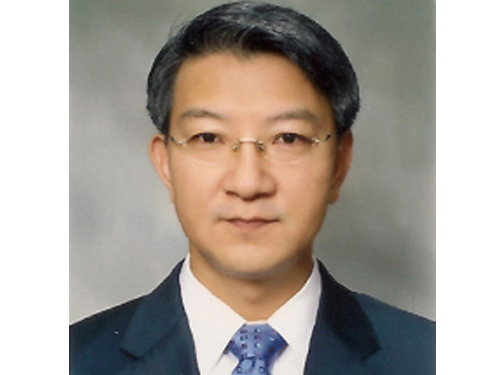 Professor Sang-Yup Lee Named the Winner of the Ho-Am Prize in 2014
The Ho-Am Prize, awarded by Samsung Group’s Ho-Am Foundation, was announced on April 2, 2014 in Seoul. Professor Sang-Yup Lee of Chemical and Biomolecular Engineering at KAIST was among the five recipients.
The prize is presented to Koreans who have made great contributions to the development of Korea in the field of science, engineering, medicine, arts, and philanthropy.
Professor Lee received the award in recognition of his pioneering research on systems metabolic engineering.
For the story written by Korea Joongang Daily, please go to the link below:
Ho-Am Foundation Names Annual Prize Winners
Korea Joongang Daily
April 3, 2014
http://koreajoongangdaily.joins.com/news/article/Article.aspx?aid=2987332
2014.04.03 View 15836
-
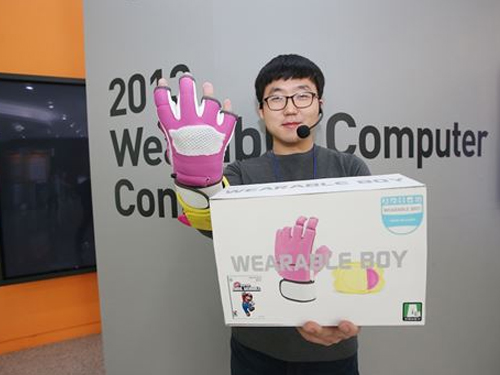 KAIST Holds 'Wearable Computer Contest'
Application for ‘2014 Wearable Computer Contest’ until May 23rd
KAIST is holding the 2014 Wearable Computer Contest (WCC) sponsored by Samsung Electronics in November and is currently receiving applications until May 23rd.
Wearable Computer is a device that can be worn on body or clothing, which allows users to be connected while on the move. It is currently receiving attention as the next generation of computer industry that will replace smart phones.
The Wearable Computer Contest will be held under the topic “Smart Fashion to Simple Life” and will be divided into a designated topic contest and an idea contest.
In the “designated topic contest,” each group will compete with their prototypes based on their own ideas about a wearable computer that combines IT and fashion. A total of 15 teams that enter the finals after a document review will be provided with USD 1,400 for a prototype production, Samsung's smart IT devices, and a systematic training program.
For the “idea contest,” competitors will present their ideas for a wearable computer in a poster format. The teams qualified to continue onto the finals will be given an opportunity to create and exhibit a life-sized model.
Chairman of the Wearable Computer Contest (WCC), Professor Hoejun Yoo from the KAIST Department of Electrical Engineering said, “Wearable Computer is the major future growth industry that will lead IT industry after smart phones. I hope WCC will help nurture the future professionals in the field of wearable computer industry.”
The applications for the Wearable Computer Contest can be found on the main website (http://www.ufcom.org) until May 23rd. Both undergraduate and graduate students can participate as a team for the “designated topic contest,” and there are no qualifications required for those who enter the “idea contest.”
Last year, a total of 104 teams from universities all around Korea has participated in the Wearable Computer Contest. The finalist, team 'Jump' from Chungnam University, received the Award of the Minister of Science, ICT and Future Planning, Republic of Korea.
2014.03.28 View 16721
-
 KAIST Student Awarded Prize from Energy Saving Contest
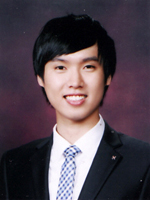
Jun-Min Kwon, an undergraduate student in the Department of Chemistry at KAIST, was awarded a prize from the Ministry of Trade, Industry and Energy, Republic of Korea, at the 35th Energy Saving Contest which was held on November 20.
The student club he has been leading was also selected as one of the best groups by the Save Energy Save Earth (SESE), a volunteer organization supported by the Korea Energy Management Corporation and the Ministry of Knowledge Economy, Republic of Korea.
Kwon began promoting energy conservation through a blog and participated in related meetings and workshops as a high school student to improve the understanding on the importance of energy saving and recycling.He also received awards from the Second National Assembly Forum on Climate Change, the Korean National Science Fair, as well as the Samsung Human Tech Paper Award.
2013.12.24 View 22069
-
 Graduate Student at KAIST Awarded Best Prize at the 9th Inside Edge
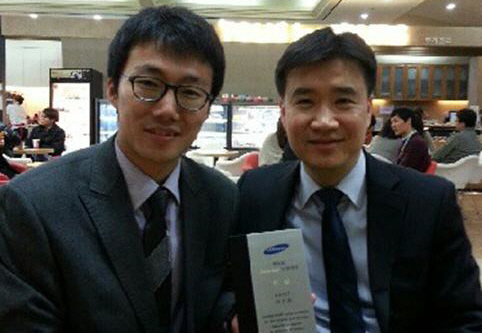
Sun-Jin Choi, a Ph. D. candidate in the Department of Materials Science and Engineering at KAIST, under the guidance of Professor Il-Doo Kim, won the best prize at the 9th Inside Edge Contest hosted by Samsung Electro-Mechanics.
Choi was awarded prize money totaling fifteen million won at the award ceremony held on November 22 at the Mirae Hall at the headquarters of Samsung Electro-Mechanics in Suwon.
Choi’s research, titled “Exhaled Breath Sensor Arrays for the Non-invasive and Real-time Diagnosis of Diabetes by Detection of Acetone,” was recognized for its creativity and uniqueness.The Inside Edge is an international thesis competition which was started in 2005 to encourage and support creative research and potential technological development among young scientists and engineers.
Sun-Jin Choi (left) and Professor Il-Doo Kim (right).
2013.12.11 View 15715
-
 Wearable computer follows suit of smart phones
KAIST hosts “Wearable Computer Competition” in KI Building, Daejeon Campus, on the 7th-8th of November
“Computer that controls smart phones with the movement of facial muscles” and 12 other wearable computers to be presented
As technology transitions to “Wearable Computers,” KAIST is hosting its 9th “Wearable Computer Competition.” The competition will take place over two days, 7th-8th of November, in KI building, on the main Daejeon Campus.
The “wearable computer” is designed to enable users to use the computer whilst moving by limiting its weight and size so that it can be worn as a part of the body and clothing. Wearable computers have been considered the future of information technology (IT) ever since smart phones and other miniaturized IT devices made an appearance.
The “Wearable Computer Competition” has been held since 2005 under the leadership of Professor Hoi-Jun Yoo from the KAIST Department of Electrical Engineering. It is the only competition in the nation where undergraduate students use their unique ideas and newest technology to produce computers that seem to be existed only in sci-fi movies and comic books.
A total of 15 teams out of 70 made the competition and went through a rigorous selection process based on written applications and interviews to enter the final. The teams at the final received USD 1,400 and IT devices including smart phones to produce a wearable computer.
KAIST increased the number of finalists from the last year"s 10 to 15 this year as the wearable computer industry is extending, and there is growing interest in the computer around the world after the launch of Google Glass and Samsung Galaxy Gear.
This year’s entries included a product for quadriplegic patients to control smart phones with the movement of facial muscles, which attracted public interest. The product in the form of a headband can be worn by quadriplegic patients or someone with limited hand movement. The user can activate the product by clenching their molars and move the mouse on the smart phones with the movement of muscles in their face.
Furthermore, a wearable band shaped device that can control smart phones with simple hand movements is also attracting interest. Broad hand movements of the user allows him/her to receive calls and take photos, and handshakes between users control sharing of files. Body communication can be used to protect private information without a password or locking the device.
In addition, gloves and shoes that can sense the user’s movement to play an instrument without the instrument being present; a cane for the blind that converts visual information to tactile; a belt that protects children from sexual crimes; and a game where the user can be Super Mario to play and other practical products are presented.
The chairman of the competition, Professor Yoo said, “As you can see from the launch of Samsung Galaxy Gear, wearable computers will follow smart phones as the leader of IT devices in the next generation.” He continued, “This competition and workshop is an opportunity to increase public interest in wearable computers and serves as a communication platform for experts to view the present and the future of wearable computers.”
The “Wearable Computer Workshop” will be held this year as well. The workshop under the theme of “the present and the future of wearable computers” invited Professor Kyu-Ho Park, Vice President of KAIST, as a keynote speaker to talk on “ubiquitous, fashionable computers.” Moreover, Samsung’s Dong-Jun Geum and the Electronics and Telecommunications Research Institute’s Hyeon-Tae Jeong will lecture on the “trend and direction of progress of wearable devices” and the “technological trend and prospect of industry of wearable computers,” respectively.
To participate in the competition or the workshop, please visit the website (http://www.ufcom.org)
for further information.
2013.11.28 View 15709