Engineering
-
 Cross-Generation Collaborative Labs Open
KAIST opened two cross-generation collaborative labs last month. This novel approach will pair up senior and junior faculty members for sustaining research and academic achievements even after the senior researcher retires.
This is one of the Vision 2031 innovation initiatives established to extend the spectrum of knowledge and research competitiveness. The selected labs will be funded for five years and the funding will be extended if necessary. KAIST will continue to select new labs every year.
A five-member selection committee including the Nobel Laureates Professor Klaus Von Klitzing at the Max-Planck Institute for Solid State Research and Dr. Kurt Wüthrich from ETH Zürich selected the first two labs with senior-junior pairs in March.
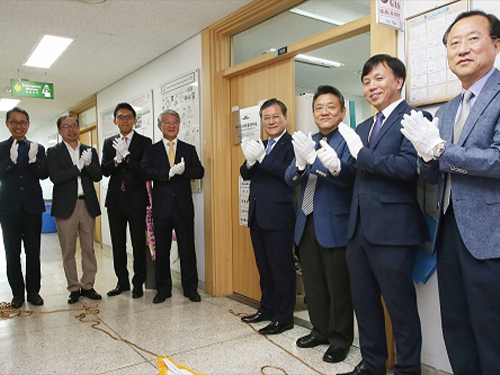
(Two renowned scholars' Cross-Generation Collaborative Labs which opened last month.
Distinguished Professor Lee's lab (above) andChair Professor Sung's lab)
Both labs are run by world-renowned scholars: the Systems Metabolic Engineering and Systems Healthcare Laboratory headed by Distinguished Professor Sang-Yup Lee in the Department of Chemical and Biomolecular Engineering and the Acousto-Microfluidics Research Center for Next-Generation Healthcare led by Chair Professor Hyung Jin Sung in the Department of Mechanical Engineering.
Distinguished Professor Lee will be teamed up with Professor Hyun Uk Kim, and their lab aims to mass produce new eco-friendly chemical materials as well as higher-value-added materials which will be used for medicine. The new platform technologies created in the lab are expected to provide information which will benefit human healthcare.
Meanwhile, the Acousto-Microfluidics Research Center for Next-Generation Healthcare will team up with Professors Hyoungsoo Kim and Yeunwoo Cho under Chair Professor Sung. The lab will conduct research on controlling fluids and objects exquisitely on a micro-nano scale by using high-frequency acoustic waves. The lab plans to develop a next-generation healthcare platform for customized diagnoses as well as disease treatment.
KAIST President Sung-Chul Shin, who introduced this novel idea in his research innovation initiative, said that he hopes the Cross-Generation Collaborative Labs will contribute to honoring senior scholars’ research legacies and passing knowledge down to junior researchers in order to further develop their academic achievements. He said, “I sincerely hope the labs will make numerous research breakthroughs in the very near future.”
2018.05.03 View 13612
Cross-Generation Collaborative Labs Open
KAIST opened two cross-generation collaborative labs last month. This novel approach will pair up senior and junior faculty members for sustaining research and academic achievements even after the senior researcher retires.
This is one of the Vision 2031 innovation initiatives established to extend the spectrum of knowledge and research competitiveness. The selected labs will be funded for five years and the funding will be extended if necessary. KAIST will continue to select new labs every year.
A five-member selection committee including the Nobel Laureates Professor Klaus Von Klitzing at the Max-Planck Institute for Solid State Research and Dr. Kurt Wüthrich from ETH Zürich selected the first two labs with senior-junior pairs in March.
(Two renowned scholars' Cross-Generation Collaborative Labs which opened last month.
Distinguished Professor Lee's lab (above) andChair Professor Sung's lab)
Both labs are run by world-renowned scholars: the Systems Metabolic Engineering and Systems Healthcare Laboratory headed by Distinguished Professor Sang-Yup Lee in the Department of Chemical and Biomolecular Engineering and the Acousto-Microfluidics Research Center for Next-Generation Healthcare led by Chair Professor Hyung Jin Sung in the Department of Mechanical Engineering.
Distinguished Professor Lee will be teamed up with Professor Hyun Uk Kim, and their lab aims to mass produce new eco-friendly chemical materials as well as higher-value-added materials which will be used for medicine. The new platform technologies created in the lab are expected to provide information which will benefit human healthcare.
Meanwhile, the Acousto-Microfluidics Research Center for Next-Generation Healthcare will team up with Professors Hyoungsoo Kim and Yeunwoo Cho under Chair Professor Sung. The lab will conduct research on controlling fluids and objects exquisitely on a micro-nano scale by using high-frequency acoustic waves. The lab plans to develop a next-generation healthcare platform for customized diagnoses as well as disease treatment.
KAIST President Sung-Chul Shin, who introduced this novel idea in his research innovation initiative, said that he hopes the Cross-Generation Collaborative Labs will contribute to honoring senior scholars’ research legacies and passing knowledge down to junior researchers in order to further develop their academic achievements. He said, “I sincerely hope the labs will make numerous research breakthroughs in the very near future.”
2018.05.03 View 13612 -
 Animal Cyborg: Behavioral Control by 'Toy' Craving Circuit
Children love to get toys from parents for their birthday present. This craving toward items also involves object hoarding disorders and shopping addiction. However, the biological meaning of why the brain pursues objects or items has remained unknown. Part of the answer may lie with a neural circuit in the hypothalamus associated with “object craving,” says neuroscientist Daesoo Kim from the Department of Biological Sciences at KAIST.
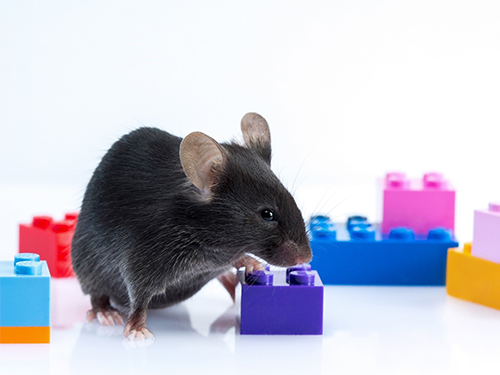
His research team found that some neurons in the hypothalamus are activated during playing with toys in mice. Thanks to optogenetics, they proved that these neurons in the hypothalamus actually governs obsessive behavior toward non-food objects in mice.
“When we stimulate a neuron in the hypothalamus of mice, they anxiously chased target objects. We found evidence that the neural circuits in the medial preoptic area (MPA) modulate “object craving,” the appetite for possessing objects” said Professor Kim.
Researchers also proved that the MPA circuit facilitate hunting behavior in response to crickets, a natural prey to mice, showing the role of this circuit for catching prey. Further, the MPA nerves send excitatory signals to the periaqueductal gray (PAG), located around the cerebral aqueduct, to create such behavior. The team named this circuit the ‘MPA-PAG’ circuit.
The team showed that they could control mammalian behavior for the first time with this scheme of MPA-Induced Drive Assisted Steering (MIDAS), in which a mouse chase the target objects in the front of head during stimulation of the MPA-PAG circuit. MIDAS allows mice to overcome obstacles to move in a desired path using optogenetics.
(Professor Daesoo Kim)
Professor Kim, who teamed up with Professor Phill Seung Lee in the Department of Mechanical Engineering, explained the significance of the research, “This study provides evidence to treat brain disorders such as compulsive hoarding and kleptomania. It also contributes to the development of technology to control the behavior of animals and humans using strong innate motivation, and thus could impact neuro-economics, defense, and disaster relief.”
He said the team would like to complete the neural circuit map governing behaviors of possession and hunting in the near future by exploring correlations with other neural behaviors controlling possessing and hunting activities.
This research was funded by the Samsung Science and Technology Foundation and published in Nature Neuroscience in March 2018.
(Figure 1: Schematics showing possessive behavior induced by the MPA neural circuit)
(Figure 2: Schematics of the MIDAS system that controls mammals behavior using the desire to possess. A MIDAS mouse is following the bait object controlled wirelessly.)
2018.04.23 View 10535
Animal Cyborg: Behavioral Control by 'Toy' Craving Circuit
Children love to get toys from parents for their birthday present. This craving toward items also involves object hoarding disorders and shopping addiction. However, the biological meaning of why the brain pursues objects or items has remained unknown. Part of the answer may lie with a neural circuit in the hypothalamus associated with “object craving,” says neuroscientist Daesoo Kim from the Department of Biological Sciences at KAIST.
His research team found that some neurons in the hypothalamus are activated during playing with toys in mice. Thanks to optogenetics, they proved that these neurons in the hypothalamus actually governs obsessive behavior toward non-food objects in mice.
“When we stimulate a neuron in the hypothalamus of mice, they anxiously chased target objects. We found evidence that the neural circuits in the medial preoptic area (MPA) modulate “object craving,” the appetite for possessing objects” said Professor Kim.
Researchers also proved that the MPA circuit facilitate hunting behavior in response to crickets, a natural prey to mice, showing the role of this circuit for catching prey. Further, the MPA nerves send excitatory signals to the periaqueductal gray (PAG), located around the cerebral aqueduct, to create such behavior. The team named this circuit the ‘MPA-PAG’ circuit.
The team showed that they could control mammalian behavior for the first time with this scheme of MPA-Induced Drive Assisted Steering (MIDAS), in which a mouse chase the target objects in the front of head during stimulation of the MPA-PAG circuit. MIDAS allows mice to overcome obstacles to move in a desired path using optogenetics.
(Professor Daesoo Kim)
Professor Kim, who teamed up with Professor Phill Seung Lee in the Department of Mechanical Engineering, explained the significance of the research, “This study provides evidence to treat brain disorders such as compulsive hoarding and kleptomania. It also contributes to the development of technology to control the behavior of animals and humans using strong innate motivation, and thus could impact neuro-economics, defense, and disaster relief.”
He said the team would like to complete the neural circuit map governing behaviors of possession and hunting in the near future by exploring correlations with other neural behaviors controlling possessing and hunting activities.
This research was funded by the Samsung Science and Technology Foundation and published in Nature Neuroscience in March 2018.
(Figure 1: Schematics showing possessive behavior induced by the MPA neural circuit)
(Figure 2: Schematics of the MIDAS system that controls mammals behavior using the desire to possess. A MIDAS mouse is following the bait object controlled wirelessly.)
2018.04.23 View 10535 -
 KAIST to Host FinTech Conference 2018
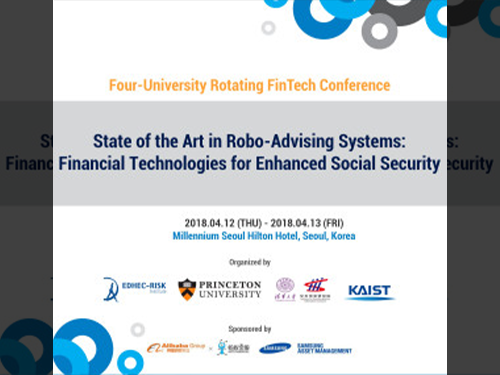
KAIST will be hosting a FinTech Conference with Princeton University (USA), Tsinghua University (China), and EDHEC Business School (France) in Seoul from April 12 to 13 titled State of the Art in Robo-Advising Systems: Financial Technologies for Enhanced Social Security.
The Bendhein Center for Finance and Department of Operations Research and Financial Engineering from Princeton University, Fintech Lab from Tsinghua University, and the Risk Institute from EDHEC will participate as co-hosting organizations in this conference organized by the Department of Industrial & Systems Engineering and the KAIST Center for Wealth Management Technologies.
The conference will discuss issues required for providing customized asset management to the public in terms of theory, technology, and industry.
During the conference, KAIST President Sung-Chul Shin and Chairman and CEO of the National Pension Service Sung Joo Kim will deliver welcoming addresses.
Professor John Mulvey from Princeton University, Professor Michael Dempster from Cambridge University, Professors Wei Xu and Changle Lin from Tsinghua University, Professor Lionel Martellini from EDHEC, and Professor Woo Chang Kim from KAIST are some of the invited speakers at the event.
Moreover, renowned experts in related fields will also participate in the conference, including Founder of Vanguard Group John Bogle, Jin Lee from Ant Financial, Youngsuh Cho from Shinhan Financial Group, Jung-Hwan Lee from Samsung Asset Management, and Hye Young Sung from the National Pension Service Research Institute.
Professor Kim said, “Only a small number of wealthy people can receive life-cycle customized asset management services due to the high cost structure; however, new technology derived from the Fourth Industrial Revolution can reduce the service price in an innovative manner, ultimately leading it to be popularized.”
“In an era with the poverty rate of older people reaching almost 50%.Fintech can enable individuals to manage their assets in an active manner, reinforcing social security without additional social costs in the period,” he added.
These four universities have been hosting the FinTech Conference since 2017. China will host the conference this fall, followed by France next year.
Samsung Asset Management, Alibaba Group, and Ant Financial will sponsor the conference. Anyone interested in this event can find more details at http://wmt.kaist.ac.kr/conference.html.
2018.04.02 View 9385
KAIST to Host FinTech Conference 2018
KAIST will be hosting a FinTech Conference with Princeton University (USA), Tsinghua University (China), and EDHEC Business School (France) in Seoul from April 12 to 13 titled State of the Art in Robo-Advising Systems: Financial Technologies for Enhanced Social Security.
The Bendhein Center for Finance and Department of Operations Research and Financial Engineering from Princeton University, Fintech Lab from Tsinghua University, and the Risk Institute from EDHEC will participate as co-hosting organizations in this conference organized by the Department of Industrial & Systems Engineering and the KAIST Center for Wealth Management Technologies.
The conference will discuss issues required for providing customized asset management to the public in terms of theory, technology, and industry.
During the conference, KAIST President Sung-Chul Shin and Chairman and CEO of the National Pension Service Sung Joo Kim will deliver welcoming addresses.
Professor John Mulvey from Princeton University, Professor Michael Dempster from Cambridge University, Professors Wei Xu and Changle Lin from Tsinghua University, Professor Lionel Martellini from EDHEC, and Professor Woo Chang Kim from KAIST are some of the invited speakers at the event.
Moreover, renowned experts in related fields will also participate in the conference, including Founder of Vanguard Group John Bogle, Jin Lee from Ant Financial, Youngsuh Cho from Shinhan Financial Group, Jung-Hwan Lee from Samsung Asset Management, and Hye Young Sung from the National Pension Service Research Institute.
Professor Kim said, “Only a small number of wealthy people can receive life-cycle customized asset management services due to the high cost structure; however, new technology derived from the Fourth Industrial Revolution can reduce the service price in an innovative manner, ultimately leading it to be popularized.”
“In an era with the poverty rate of older people reaching almost 50%.Fintech can enable individuals to manage their assets in an active manner, reinforcing social security without additional social costs in the period,” he added.
These four universities have been hosting the FinTech Conference since 2017. China will host the conference this fall, followed by France next year.
Samsung Asset Management, Alibaba Group, and Ant Financial will sponsor the conference. Anyone interested in this event can find more details at http://wmt.kaist.ac.kr/conference.html.
2018.04.02 View 9385 -
 The 8th KINC Fusion Research Awardees
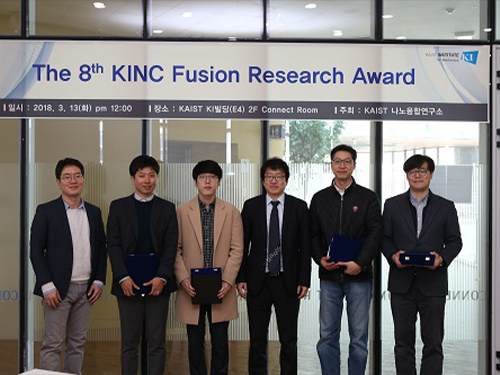
The KAIST Institute for NanoCentury held the 8th KINC Fusion Research Award in order to encourage professors’ convergence studies and instill students’ willingness to research. The award ceremony took place in the KI Building at KAIST on March 13.
The KINC Fusion Research Award selects the most outstanding convergence studies among research undertaken last year, and awards researchers who participated in that research.
The 8th KINC Fusion Research Award went to Professor Yoon Sung Nam from the Department of Materials Science and Engineering and Professor Inkyu Park from the Department of Mechanical Engineering. Their research reported the spontaneous self-biomineralization of palladium (Pd) ions on a filamentous virus to form ligand-free Pd nanowires without reducing reagents or using additional surface stabilizers (Title: Virus-Templated Self-Mineralization of Ligand-Free Colloidal Palladium Nanostructures for High Surface Activity and Stability, Advanced Functional Materials (2017)).
Professor Hee-Tae Jung, the Director of KAIST Institute for the NanoCentury and the host of the KINC Fusion Research Award said, “Convergence will be the crucial keyword that will lead to revolutionary change. Hence, the importance of convergence study should be improved. We will put every effort into creating a research environment for increasing convergence study.
The KAIST Institute for the NanoCentury was established in June 2006 under the KAIST Institute with a mission of creating convergence study by tearing down boarders among departments and carrying out interdisciplinary joint research. Currently, approximately 90 professors from 14 departments participate the institute. It aims to become a hub of university institutes for nano-fusion research.
2018.03.19 View 14329
The 8th KINC Fusion Research Awardees
The KAIST Institute for NanoCentury held the 8th KINC Fusion Research Award in order to encourage professors’ convergence studies and instill students’ willingness to research. The award ceremony took place in the KI Building at KAIST on March 13.
The KINC Fusion Research Award selects the most outstanding convergence studies among research undertaken last year, and awards researchers who participated in that research.
The 8th KINC Fusion Research Award went to Professor Yoon Sung Nam from the Department of Materials Science and Engineering and Professor Inkyu Park from the Department of Mechanical Engineering. Their research reported the spontaneous self-biomineralization of palladium (Pd) ions on a filamentous virus to form ligand-free Pd nanowires without reducing reagents or using additional surface stabilizers (Title: Virus-Templated Self-Mineralization of Ligand-Free Colloidal Palladium Nanostructures for High Surface Activity and Stability, Advanced Functional Materials (2017)).
Professor Hee-Tae Jung, the Director of KAIST Institute for the NanoCentury and the host of the KINC Fusion Research Award said, “Convergence will be the crucial keyword that will lead to revolutionary change. Hence, the importance of convergence study should be improved. We will put every effort into creating a research environment for increasing convergence study.
The KAIST Institute for the NanoCentury was established in June 2006 under the KAIST Institute with a mission of creating convergence study by tearing down boarders among departments and carrying out interdisciplinary joint research. Currently, approximately 90 professors from 14 departments participate the institute. It aims to become a hub of university institutes for nano-fusion research.
2018.03.19 View 14329 -
 KAIST Professors Selected as Y-KAST Members
Professor YongKeun Park, Professor Bumjoon Kim, Professor Keon Jae Lee, and Professor Young Seok Ju were selected as the newest members of the Young Korean Academy of Science and Technology (Y-KAST).
The Korean Academy of Science and Technology, an academic institution of professional experts, selected 26 promising scientists under the age of 43 to join Y-KAST. and four KAIST professors were included in the list.
The newest members were conferred on February 26.
Research Field
Name
Natural Sciences
YongKeun Park (Dept. of Physics)
Engineering
Bumjoon Kim (Dept. of Chemical and Biomolecular Engineering)
Agricultural & Fishery Sciences
Keon Jae Lee (Dept. of Materials Science and Engineering)
Medical Sciences
Young Seok Ju (Graduate School of Medical Science and Engineering)
2018.03.05 View 10605
KAIST Professors Selected as Y-KAST Members
Professor YongKeun Park, Professor Bumjoon Kim, Professor Keon Jae Lee, and Professor Young Seok Ju were selected as the newest members of the Young Korean Academy of Science and Technology (Y-KAST).
The Korean Academy of Science and Technology, an academic institution of professional experts, selected 26 promising scientists under the age of 43 to join Y-KAST. and four KAIST professors were included in the list.
The newest members were conferred on February 26.
Research Field
Name
Natural Sciences
YongKeun Park (Dept. of Physics)
Engineering
Bumjoon Kim (Dept. of Chemical and Biomolecular Engineering)
Agricultural & Fishery Sciences
Keon Jae Lee (Dept. of Materials Science and Engineering)
Medical Sciences
Young Seok Ju (Graduate School of Medical Science and Engineering)
2018.03.05 View 10605 -
 Professor Jungwon Kim Wins Haerim Optics and Photonics Award
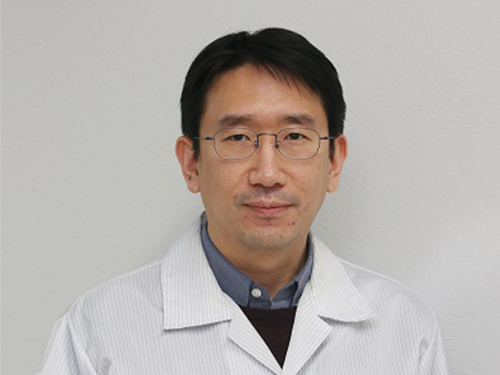
(Professor Jungwon Kim)
Professor Jungwon Kim from the Department of Mechanical Engineering received the 8th Haerim Optics and Photonics Award from the Optical Society of Korea (OSK).
He was recognized for his dedication to pioneering the field of microwave photonics by developing ultra-low noise fiber photonics lasers.
The Haerim Optics and Photonics Award is given to an outstanding researcher who has made academic contributions in the field of optics and photonics for the last five years.
The name of the award (Haerim) comes from the pen-name of the renowned scholar, Professor Un-Chul Paek, because it is maintained using funds he contributed to the OSK.
The OSK will confer the award on February 8 during the 29th OSK Annual Meeting and Winter Conference of 2018.
2018.02.07 View 9039
Professor Jungwon Kim Wins Haerim Optics and Photonics Award
(Professor Jungwon Kim)
Professor Jungwon Kim from the Department of Mechanical Engineering received the 8th Haerim Optics and Photonics Award from the Optical Society of Korea (OSK).
He was recognized for his dedication to pioneering the field of microwave photonics by developing ultra-low noise fiber photonics lasers.
The Haerim Optics and Photonics Award is given to an outstanding researcher who has made academic contributions in the field of optics and photonics for the last five years.
The name of the award (Haerim) comes from the pen-name of the renowned scholar, Professor Un-Chul Paek, because it is maintained using funds he contributed to the OSK.
The OSK will confer the award on February 8 during the 29th OSK Annual Meeting and Winter Conference of 2018.
2018.02.07 View 9039 -
 Three Professors Named KAST Fellows
(Professor Dan Keun Sung at the center)
(Professor Y.H. Cho at the center)
(Professor K.H. Cho at the center)
The Korean Academy of Science and Technology (KAST) inducted three KAIST professors as fellows at the New Year’s ceremony held at KAST on January 12. They were among the 24 newly elected fellows of the most distinguished academy in Korea. The new fellows are Professor Dan Keun Sung of the School of Electrical Engineering, Professor Kwang-Hyun Cho of the Department of Bio and Brain Engineering, and Professor Yong-Hoon Cho of the Department of Physics.
Professor Sung was recognized for his lifetime academic achievements in fields related with network protocols and energy ICT. He also played a crucial role in launching the Korean satellites KITSAT-1,2,3 and the establishment of the Satellite Technology Research Center at KAIST.
Professor Y.H.Cho has been a pioneer in the field of low-dimensional semiconductor-powered quantum photonics that enables quantum optical research in solid state. He has been recognized as a renowned scholar in this field internationally.
Professor K.H.Cho has conducted original research that combines IT and BT in systems biology and has applied novel technologies of electronic modeling and computer simulation analysis for investigating complex life sciences. Professor Cho, who is in his 40s, is the youngest fellow among the newly inducted fellows.
2018.01.16 View 16296
Three Professors Named KAST Fellows
(Professor Dan Keun Sung at the center)
(Professor Y.H. Cho at the center)
(Professor K.H. Cho at the center)
The Korean Academy of Science and Technology (KAST) inducted three KAIST professors as fellows at the New Year’s ceremony held at KAST on January 12. They were among the 24 newly elected fellows of the most distinguished academy in Korea. The new fellows are Professor Dan Keun Sung of the School of Electrical Engineering, Professor Kwang-Hyun Cho of the Department of Bio and Brain Engineering, and Professor Yong-Hoon Cho of the Department of Physics.
Professor Sung was recognized for his lifetime academic achievements in fields related with network protocols and energy ICT. He also played a crucial role in launching the Korean satellites KITSAT-1,2,3 and the establishment of the Satellite Technology Research Center at KAIST.
Professor Y.H.Cho has been a pioneer in the field of low-dimensional semiconductor-powered quantum photonics that enables quantum optical research in solid state. He has been recognized as a renowned scholar in this field internationally.
Professor K.H.Cho has conducted original research that combines IT and BT in systems biology and has applied novel technologies of electronic modeling and computer simulation analysis for investigating complex life sciences. Professor Cho, who is in his 40s, is the youngest fellow among the newly inducted fellows.
2018.01.16 View 16296 -
 Ultra-Low Power Flexible Memory Using 2D Materials
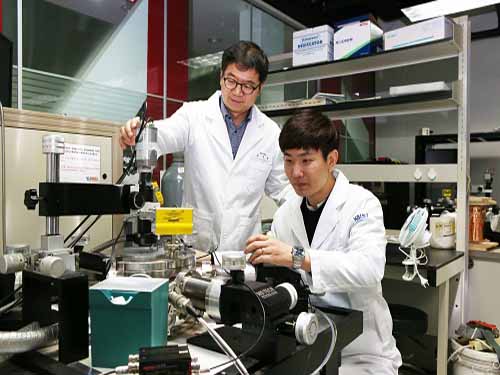
(Professor Choi and Ph.D. candidate Jang)
KAIST research team led by Professor Sung-Yool Choi at School of Electrical Engineering and Professor Sung Gap Im at the Department of Chemical and Biomolecular Engineering developed high-density, ultra-low power, non-volatile, flexible memory technology using 2D materials. The team used ultrathin molybdenum disulfide (MoS2) with atomic-scale thickness as the channel material and high-performance polymeric insulator film as the tunneling dielectric material. This research was published on the cover of Advanced Functional Materials on November 17. KAIST graduate Myung Hun Woo, a researcher at Samsung Electronics and Ph.D. candidate Byung Chul Jang are first authors.
The surge of new technologies such as Internet of Things (IoT), Artificial Intelligence (AI), and cloud server led to the paradigm shift from processor-centric computing to memory-centric computing in the industry, as well as the increase in demand of wearable devices. This led to an increased need for high-density, ultra-low power, non-volatile flexible memory. In particular, ultrathin MoS2 as semiconductor material has been recently regarded as post-silicon material. This is due to its ultrathin thickness of atomic-scale which suppresses short channel effect observed in conventional silicon material, leading to advantages in high- density and low-power consumption. Further, this thickness allows the material to be flexible, and thus the material is applicable to wearable devices.
However, due to the dangling-bond free surface of MoS2 semiconductor material, it is difficult to deposit the thin insulator film to be uniform and stable over a large area via the conventional atomic layer deposition process. Further, the currently used solution process makes it difficult to deposit uniformly low dielectric constant (k) polymeric insulator film with sub-10 nm thickness on a large area, thus indicating that the memory device utilizing the conventional solution-processed polymer insulator film cannot be operated at low-operating voltage and is not compatible with photolithography.
The research team tried to overcome the hurdles and develop high-density, ultra-low power, non-volatile flexible memory by employing a low-temperature, solvent-free, and all-dry vapor phase technique named initiated chemical vapor deposition (iCVD) process. Using iCVD process, tunneling polymeric insulator film with 10 nm thickness was deposited uniformly on MoS2 semiconductor material without being restricted by the dangling bond-free surface of MoS2. The team observed that the newly developed MoS2-based non-volatile memory can be operated at low-voltage (around 10V), in contrast to the conventional MoS2-based non-volatile memory that requires over 20V.
Professor Choi said, “As the basis for the Fourth Industrial revolution technologies including AI and IoT, semiconductor device technology needs to have characteristics of low-power and flexibility, in clear contrast to conventional memory devices.” He continued, “This new technology is significant in developing source technology in terms of materials, processes, and devices to contribute to achieve these characteristics.”
This research was supported by the Global Frontier Center for Advanced Soft Electronics and the Creative Materials Discovery Program by funded the National Research Foundation of Korea of Ministry of Science and ICT.
( Figure 1. Cover of Advanced Functional Materials)
(Figure 2. Concept map for the developed non-volatile memory material and high-resolution transmission electron microscopy image for material cross-section )
2018.01.02 View 10292
Ultra-Low Power Flexible Memory Using 2D Materials
(Professor Choi and Ph.D. candidate Jang)
KAIST research team led by Professor Sung-Yool Choi at School of Electrical Engineering and Professor Sung Gap Im at the Department of Chemical and Biomolecular Engineering developed high-density, ultra-low power, non-volatile, flexible memory technology using 2D materials. The team used ultrathin molybdenum disulfide (MoS2) with atomic-scale thickness as the channel material and high-performance polymeric insulator film as the tunneling dielectric material. This research was published on the cover of Advanced Functional Materials on November 17. KAIST graduate Myung Hun Woo, a researcher at Samsung Electronics and Ph.D. candidate Byung Chul Jang are first authors.
The surge of new technologies such as Internet of Things (IoT), Artificial Intelligence (AI), and cloud server led to the paradigm shift from processor-centric computing to memory-centric computing in the industry, as well as the increase in demand of wearable devices. This led to an increased need for high-density, ultra-low power, non-volatile flexible memory. In particular, ultrathin MoS2 as semiconductor material has been recently regarded as post-silicon material. This is due to its ultrathin thickness of atomic-scale which suppresses short channel effect observed in conventional silicon material, leading to advantages in high- density and low-power consumption. Further, this thickness allows the material to be flexible, and thus the material is applicable to wearable devices.
However, due to the dangling-bond free surface of MoS2 semiconductor material, it is difficult to deposit the thin insulator film to be uniform and stable over a large area via the conventional atomic layer deposition process. Further, the currently used solution process makes it difficult to deposit uniformly low dielectric constant (k) polymeric insulator film with sub-10 nm thickness on a large area, thus indicating that the memory device utilizing the conventional solution-processed polymer insulator film cannot be operated at low-operating voltage and is not compatible with photolithography.
The research team tried to overcome the hurdles and develop high-density, ultra-low power, non-volatile flexible memory by employing a low-temperature, solvent-free, and all-dry vapor phase technique named initiated chemical vapor deposition (iCVD) process. Using iCVD process, tunneling polymeric insulator film with 10 nm thickness was deposited uniformly on MoS2 semiconductor material without being restricted by the dangling bond-free surface of MoS2. The team observed that the newly developed MoS2-based non-volatile memory can be operated at low-voltage (around 10V), in contrast to the conventional MoS2-based non-volatile memory that requires over 20V.
Professor Choi said, “As the basis for the Fourth Industrial revolution technologies including AI and IoT, semiconductor device technology needs to have characteristics of low-power and flexibility, in clear contrast to conventional memory devices.” He continued, “This new technology is significant in developing source technology in terms of materials, processes, and devices to contribute to achieve these characteristics.”
This research was supported by the Global Frontier Center for Advanced Soft Electronics and the Creative Materials Discovery Program by funded the National Research Foundation of Korea of Ministry of Science and ICT.
( Figure 1. Cover of Advanced Functional Materials)
(Figure 2. Concept map for the developed non-volatile memory material and high-resolution transmission electron microscopy image for material cross-section )
2018.01.02 View 10292 -
 Distinguished Professor Sang Yup Lee Named NAI Fellow
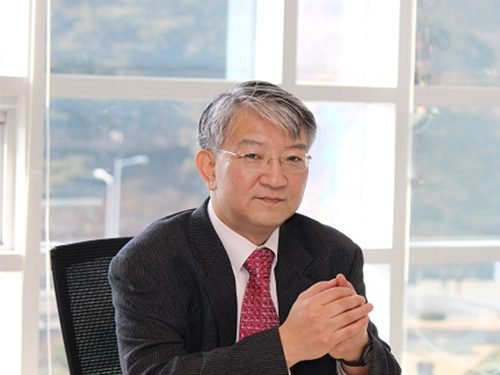
(Distinguished Professor Sang Yup Lee)
Distinguished Professor Sang Yup Lee of the Department of Chemical and Biomolecular Engineering was named to the National Academy of Inventors in the US. He is the first Korean scholar ever elected as a NAI fellow.
The NAI is a non-profit member organization with over 4,000 individual inventors and fellows spanning more than 250 institutions worldwide. It is comprised of universities as well as governmental and non-profit research institutes. The academy was founded in 2010 to recognize and encourage inventors with patents from the US Patent and Trademark Office. So far, 575 fellows from 229 institutions have been elected.
The academy said Professor Lee has been recognized for fellowship induction as he has demonstrated a highly prolific spirit of innovation in creating or facilitating outstanding inventions that have made a tangible impact on quality of life, economic development, and the welfare of society.
Distinguished Professor Lee, a pioneering researcher and scholar in the field of systems metabolic engineering, was ranked in the top 1% of highly cited researchers (HCR) this year. Over the past 11 years, he published more than 130,000 articles in prestigious journals around the world. He has been cited more than 34,000 times since he started working at KAIST in 1994.
He is also the first Korean ever elected to both the National Academy of Sciences (NAS) and the National Academy of Engineering (NAE) in the US, becoming the one of 13 foreign scholars in the world holding two prestigious institutions’ fellowships.
Dr. Lee is currently the dean of KAIST Institutes, the world-leading institute for multi and interdisciplinary research. He is also serving as co-chair of the Global Council on Biotechnology and is a member of the Global Future Council on the Fourth Industrial Revolution at the World Economic Forum.
2017.12.13 View 10007
Distinguished Professor Sang Yup Lee Named NAI Fellow
(Distinguished Professor Sang Yup Lee)
Distinguished Professor Sang Yup Lee of the Department of Chemical and Biomolecular Engineering was named to the National Academy of Inventors in the US. He is the first Korean scholar ever elected as a NAI fellow.
The NAI is a non-profit member organization with over 4,000 individual inventors and fellows spanning more than 250 institutions worldwide. It is comprised of universities as well as governmental and non-profit research institutes. The academy was founded in 2010 to recognize and encourage inventors with patents from the US Patent and Trademark Office. So far, 575 fellows from 229 institutions have been elected.
The academy said Professor Lee has been recognized for fellowship induction as he has demonstrated a highly prolific spirit of innovation in creating or facilitating outstanding inventions that have made a tangible impact on quality of life, economic development, and the welfare of society.
Distinguished Professor Lee, a pioneering researcher and scholar in the field of systems metabolic engineering, was ranked in the top 1% of highly cited researchers (HCR) this year. Over the past 11 years, he published more than 130,000 articles in prestigious journals around the world. He has been cited more than 34,000 times since he started working at KAIST in 1994.
He is also the first Korean ever elected to both the National Academy of Sciences (NAS) and the National Academy of Engineering (NAE) in the US, becoming the one of 13 foreign scholars in the world holding two prestigious institutions’ fellowships.
Dr. Lee is currently the dean of KAIST Institutes, the world-leading institute for multi and interdisciplinary research. He is also serving as co-chair of the Global Council on Biotechnology and is a member of the Global Future Council on the Fourth Industrial Revolution at the World Economic Forum.
2017.12.13 View 10007 -
 CLKIP Bearing Fruit in China
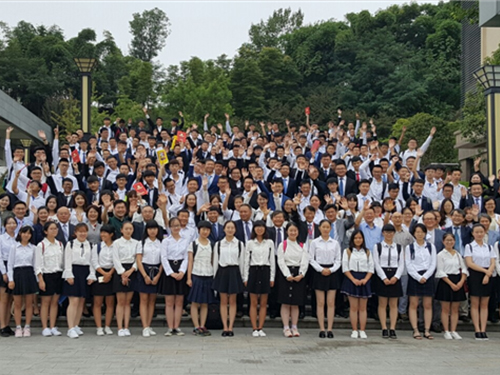
The Chongqing Liangjiang KAIST International Program (CLKIP) is rapidly gaining steam in China. CLKIP, an educational program operated in Chongqing internationally by KAIST since 2015, offers two majors, Electronic Information Engineering and Computer Science and Technology, applying the same curriculum as at KAIST.
To operate the program, KAIST assigns professors from the School of Electrical Engineering and the School of Computing to the program every year. They are in charge of one-third of the major courses, and transfer KAIST’s educational curriculum and know-how.
A total of 13 professors from Chongqing University of Technology (CQUT) have received or are receiving training on advanced education methodologies and technical know-how, including an on and offline integrated learning program, called Education 4.0 and large-scale internet open learning.As CLKIP is gaining in popularity, the number of students for its undergraduate courses keeps increasing, from 66 in 2015 to 172 in 2016 and 200 students in 2017, achieving the student volume for enrollment annually.
CLKIP selected seven exchange undergraduate students and five dual-degree students this fall, and they are currently studying in KAIST for either one semester or one full year.
CLKIP is located in Chongqing, one of the major direct-controlled municipalities and a focal point for notable government projects. The Korea-China industrial zone is also located in this area.
Considering its location, CLKIP is more than just an international programs for educational cooperation. The program will provide opportunities to cooperate with Korean enterprises including Hyundai, SK Hynix, LG Chem and Hankook Tire. While cooperating in research and development as well as technical assistance, KAIST hopes that these enterprises will play a bridging role for KAIST alumni entering the Chinese market.
President Sung-Chul Shin said, “The success of CLKIP shows that KAIST programs for fostering future manpower and developing cutting-edge technologies do work in other countries. Based on this case, KAST will put more effort into transferring our innovative education systems abroad. We are also pushing ahead to establish a joint institute between KAIST and CQUT by 2018, which will become a foundation for facilitating the entry of KAIST’s cutting-edge technologies into the Chinese market.”
“KAIST aims to become an entrepreneurial university that creates value through technology commercialization. In this sense, KAIST plans to transfer advanced technologies to domestic and international companies located in the Liangjiang district,” he added.
2017.12.12 View 12884
CLKIP Bearing Fruit in China
The Chongqing Liangjiang KAIST International Program (CLKIP) is rapidly gaining steam in China. CLKIP, an educational program operated in Chongqing internationally by KAIST since 2015, offers two majors, Electronic Information Engineering and Computer Science and Technology, applying the same curriculum as at KAIST.
To operate the program, KAIST assigns professors from the School of Electrical Engineering and the School of Computing to the program every year. They are in charge of one-third of the major courses, and transfer KAIST’s educational curriculum and know-how.
A total of 13 professors from Chongqing University of Technology (CQUT) have received or are receiving training on advanced education methodologies and technical know-how, including an on and offline integrated learning program, called Education 4.0 and large-scale internet open learning.As CLKIP is gaining in popularity, the number of students for its undergraduate courses keeps increasing, from 66 in 2015 to 172 in 2016 and 200 students in 2017, achieving the student volume for enrollment annually.
CLKIP selected seven exchange undergraduate students and five dual-degree students this fall, and they are currently studying in KAIST for either one semester or one full year.
CLKIP is located in Chongqing, one of the major direct-controlled municipalities and a focal point for notable government projects. The Korea-China industrial zone is also located in this area.
Considering its location, CLKIP is more than just an international programs for educational cooperation. The program will provide opportunities to cooperate with Korean enterprises including Hyundai, SK Hynix, LG Chem and Hankook Tire. While cooperating in research and development as well as technical assistance, KAIST hopes that these enterprises will play a bridging role for KAIST alumni entering the Chinese market.
President Sung-Chul Shin said, “The success of CLKIP shows that KAIST programs for fostering future manpower and developing cutting-edge technologies do work in other countries. Based on this case, KAST will put more effort into transferring our innovative education systems abroad. We are also pushing ahead to establish a joint institute between KAIST and CQUT by 2018, which will become a foundation for facilitating the entry of KAIST’s cutting-edge technologies into the Chinese market.”
“KAIST aims to become an entrepreneurial university that creates value through technology commercialization. In this sense, KAIST plans to transfer advanced technologies to domestic and international companies located in the Liangjiang district,” he added.
2017.12.12 View 12884 -
 In Jin Cho Earned the Best Poster Prize at ME Summit 2017
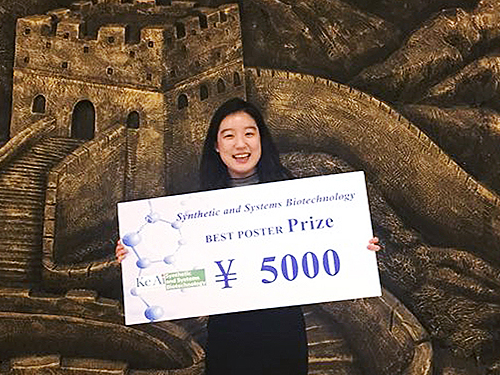
In Jin Cho, a Ph.D. student in the Department of Chemical and Biomolecular Engineering at KAIST received the best poster prize at the International Metabolic Engineering Summit 2017 held on October 24 in Beijing, China.
The International Metabolic Engineering Summit is a global conference where scientists and corporate researchers in the field of metabolic engineering present their latest research outcomes and build networks.
At this year’s summit, about 500 researchers from around the world participated in active academic exchanges, including giving keynote speeches and presenting posters.
During the poster session, the summit selects one person for the KeAi-synthetic and Systems Biotechnology Poster Award, two for Microbial Cell Factories Poster Awards, and three for Biotechnology Journal Poster Awards among the posters presented by graduate students, post-doctoral fellows and researchers. Cho received the KeAi-synthetic and Systems Biotechnology Poster Award. Her winning poster is on the biotransformation of p-xylene to terephthalic acid using engineered Escherichia coli.
Terephthalic acid is generally produced by p-xylene oxidation; however, this process requires a high temperature and pressure as well as a toxic catalyst during the reaction process.
Cho and Ziwei Luo, a Ph.D. student at KAIST, co-conducted the research and developed a successful biological conversion process. Compared to the existing chemical process, it does not require a high temperature and pressure; and it is environmentally friendly with a relatively high conversion rate of approximately 97%.
Cho’s advisor, Distinguished Professor Sang Yup Lee said, “Further research on glucose-derived terephthalic acid will enable us to produce biomass-based eco-friendly terephthalic acid through engineered Escherichia coli.”
2017.10.31 View 11546
In Jin Cho Earned the Best Poster Prize at ME Summit 2017
In Jin Cho, a Ph.D. student in the Department of Chemical and Biomolecular Engineering at KAIST received the best poster prize at the International Metabolic Engineering Summit 2017 held on October 24 in Beijing, China.
The International Metabolic Engineering Summit is a global conference where scientists and corporate researchers in the field of metabolic engineering present their latest research outcomes and build networks.
At this year’s summit, about 500 researchers from around the world participated in active academic exchanges, including giving keynote speeches and presenting posters.
During the poster session, the summit selects one person for the KeAi-synthetic and Systems Biotechnology Poster Award, two for Microbial Cell Factories Poster Awards, and three for Biotechnology Journal Poster Awards among the posters presented by graduate students, post-doctoral fellows and researchers. Cho received the KeAi-synthetic and Systems Biotechnology Poster Award. Her winning poster is on the biotransformation of p-xylene to terephthalic acid using engineered Escherichia coli.
Terephthalic acid is generally produced by p-xylene oxidation; however, this process requires a high temperature and pressure as well as a toxic catalyst during the reaction process.
Cho and Ziwei Luo, a Ph.D. student at KAIST, co-conducted the research and developed a successful biological conversion process. Compared to the existing chemical process, it does not require a high temperature and pressure; and it is environmentally friendly with a relatively high conversion rate of approximately 97%.
Cho’s advisor, Distinguished Professor Sang Yup Lee said, “Further research on glucose-derived terephthalic acid will enable us to produce biomass-based eco-friendly terephthalic acid through engineered Escherichia coli.”
2017.10.31 View 11546 -
 Distinguished Professor Lee Named International Fellow of the CAS
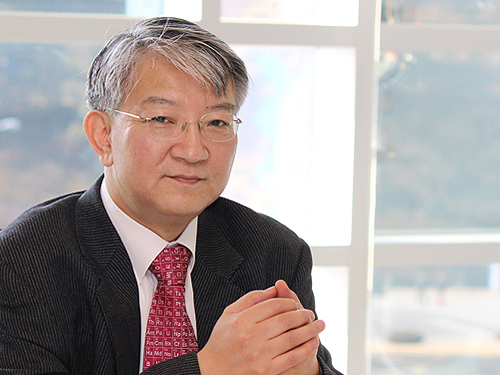
Distinguished Professor Sang Yup Lee from the Department of Chemical and Biomolecular Engineering at KAIST was awarded the title of distinguished professor and international fellow from the Chinese Academy of Sciences (CAS), and honorary professor from its affiliated organization the Tianjin Institute of Industrial Biotechnology (TIB).
The CAS recognized Distinguished Professor Lee for his significant contributions to biotechnology. He has made significant pioneering academic achievements in the area of systems metabolic engineering, which produces useful chemicals from microorganisms. Not only did he develop the first and best source technology in that field, but also came out with processes for the production of biofuel and environmentally-friendly chemicals.”
As a global leader in systems metabolic engineering, Distinguished Professor Lee has also been appointed as an honorary professor at Jiangnan University in Wuxi, China.
Distinguished Professor Lee was listed in the ‘Top 20 Translational Researchers of 2014’ selected by the renowned international journal Nature Biotechnology. Moreover, he was the first Asian recipient of the James E. Bailey Award in 2016 and Marvin J. Johnson Award in 2012, which are given to scholars in the field of biotechnology.
He is also one of 13 global scientists who are foreign members of the renowned academic societies the National Academy of Engineering and the National Academy of Sciences in the US. Furthermore, he received the ‘2017 Korea Best Scientist Award’ from the president of Korea in July. Finally, his founding field, systems metabolic engineering, was chosen as one of the ‘Top 10 Emerging Technologies of 2016’ by the World Economic Forum.
The Chinese Academy of Sciences, established in November 1949, is an academic organization that carries out research on basic sciences and natural sciences in China. It defined its science and technology system to include the fields of basic sciences, natural sciences, and high technology. While having a base in Beijing, its branch academies are located in 12 main cities along with 117 affiliates and 100 national key labs.
2017.10.26 View 13329
Distinguished Professor Lee Named International Fellow of the CAS
Distinguished Professor Sang Yup Lee from the Department of Chemical and Biomolecular Engineering at KAIST was awarded the title of distinguished professor and international fellow from the Chinese Academy of Sciences (CAS), and honorary professor from its affiliated organization the Tianjin Institute of Industrial Biotechnology (TIB).
The CAS recognized Distinguished Professor Lee for his significant contributions to biotechnology. He has made significant pioneering academic achievements in the area of systems metabolic engineering, which produces useful chemicals from microorganisms. Not only did he develop the first and best source technology in that field, but also came out with processes for the production of biofuel and environmentally-friendly chemicals.”
As a global leader in systems metabolic engineering, Distinguished Professor Lee has also been appointed as an honorary professor at Jiangnan University in Wuxi, China.
Distinguished Professor Lee was listed in the ‘Top 20 Translational Researchers of 2014’ selected by the renowned international journal Nature Biotechnology. Moreover, he was the first Asian recipient of the James E. Bailey Award in 2016 and Marvin J. Johnson Award in 2012, which are given to scholars in the field of biotechnology.
He is also one of 13 global scientists who are foreign members of the renowned academic societies the National Academy of Engineering and the National Academy of Sciences in the US. Furthermore, he received the ‘2017 Korea Best Scientist Award’ from the president of Korea in July. Finally, his founding field, systems metabolic engineering, was chosen as one of the ‘Top 10 Emerging Technologies of 2016’ by the World Economic Forum.
The Chinese Academy of Sciences, established in November 1949, is an academic organization that carries out research on basic sciences and natural sciences in China. It defined its science and technology system to include the fields of basic sciences, natural sciences, and high technology. While having a base in Beijing, its branch academies are located in 12 main cities along with 117 affiliates and 100 national key labs.
2017.10.26 View 13329