department+of+physics
-
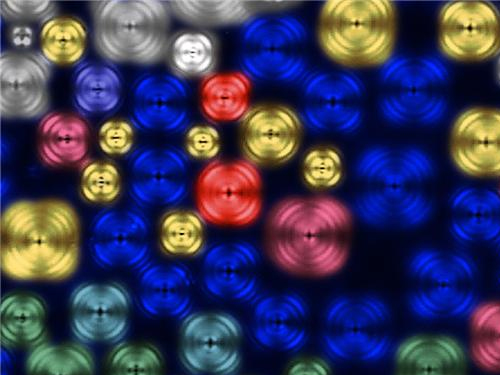 Dr. Se-Jung Kim Receives the Grand Prize at the International Photo and Image Contest on Light
Dr. Se-Jung Kim of the Physics Department at KAIST received the Grand Prize at the 2015 Photo and Image Contest of the International Year of Light and Light-based Technologies.
The United Nations has designated the year 2015 as the International Year of Light and Light-based Technologies.
The Optical Society of Korea celebrated the UN’s designation by hosting an international photo and image contest on the theme of light and optics related technology.
Dr. Kim presented a photo of images taken from a liquid crystal, which was entitled “A Micro Pinwheel.” She took pictures of liquid crystal images with a polarizing microscope and then colored the pictures. The liquid crystal has self-assembled circle domain structures, and each domain can form vortex optics. Her adviser for the project is Professor Yong-Hoon Cho of the Physics Department.
Her work was exhibited during the annual conference of the Optical Society of Korea, which was held on July 13-15, 2015 at Gyeong-Ju Hwabaek International Convention Center. It will also be exhibited at the National Science Museum in Gwacheon and the Kim Dae-Jung Convention Center in Gwangju.
Picture: A Micro Pinwheel
2015.07.31 View 12012
Dr. Se-Jung Kim Receives the Grand Prize at the International Photo and Image Contest on Light
Dr. Se-Jung Kim of the Physics Department at KAIST received the Grand Prize at the 2015 Photo and Image Contest of the International Year of Light and Light-based Technologies.
The United Nations has designated the year 2015 as the International Year of Light and Light-based Technologies.
The Optical Society of Korea celebrated the UN’s designation by hosting an international photo and image contest on the theme of light and optics related technology.
Dr. Kim presented a photo of images taken from a liquid crystal, which was entitled “A Micro Pinwheel.” She took pictures of liquid crystal images with a polarizing microscope and then colored the pictures. The liquid crystal has self-assembled circle domain structures, and each domain can form vortex optics. Her adviser for the project is Professor Yong-Hoon Cho of the Physics Department.
Her work was exhibited during the annual conference of the Optical Society of Korea, which was held on July 13-15, 2015 at Gyeong-Ju Hwabaek International Convention Center. It will also be exhibited at the National Science Museum in Gwacheon and the Kim Dae-Jung Convention Center in Gwangju.
Picture: A Micro Pinwheel
2015.07.31 View 12012 -
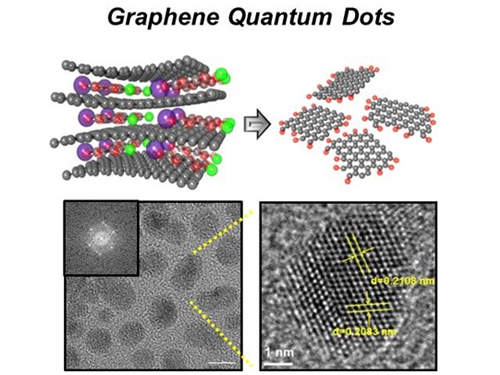 News Article on the Development of Synthesis Process for Graphene Quantum Dots
Before It's News, an international online news agency, highlighted the recent research conducted by KAIST professors (Seokwoo Jeon of the Department of Materials Science and Engineering, Yong-Hoon Cho of the Department of Physics, and Seunghyup Yoo of the Department of Electrical Engineering) on the development of synthesis process for graphene quantum dots, nanometer-sized round semiconductor nanoparticles that are very efficient at emitting photons. If commercialized, this synthetic technology will lead the way to the development of paper-thin displays in the future.
For the article, please go to the link below:
Before It’s News, September 3, 2014“Graphene quantum dots prove highly efficient in emitting light”
http://beforeitsnews.com/science-and-technology/2014/09/graphene-quantum-dots-prove-highly-efficient-in-emitting-light-2718190.html
2014.09.07 View 15357
News Article on the Development of Synthesis Process for Graphene Quantum Dots
Before It's News, an international online news agency, highlighted the recent research conducted by KAIST professors (Seokwoo Jeon of the Department of Materials Science and Engineering, Yong-Hoon Cho of the Department of Physics, and Seunghyup Yoo of the Department of Electrical Engineering) on the development of synthesis process for graphene quantum dots, nanometer-sized round semiconductor nanoparticles that are very efficient at emitting photons. If commercialized, this synthetic technology will lead the way to the development of paper-thin displays in the future.
For the article, please go to the link below:
Before It’s News, September 3, 2014“Graphene quantum dots prove highly efficient in emitting light”
http://beforeitsnews.com/science-and-technology/2014/09/graphene-quantum-dots-prove-highly-efficient-in-emitting-light-2718190.html
2014.09.07 View 15357 -
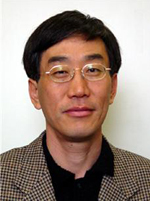 Professor Yong-Hee Lee of Physics Received the Humboldt Research Award
In recognition of his past accomplishments in research and teaching, Professor Yong-Hee Lee of Physics at KAIST received the Humboldt Research Award in November 2013. The Humboldt Research Award is annually given by the Alexander von Humboldt Foundation to internationally renowned scientists and scholars in the fields of biology, chemistry, computer science, economics, linguistics, management, mathematics, medicine, philosophy, and physics. The winners of the award are offered with 60,000 Euros of research grant as well as an opportunity to undertake prolonged periods of research in collaboration with researchers in Germany.Professor Lee, who may be the first Korean physicist receiving the award, plans to conduct joint research with colleagues at the Technical University of Berlin and University of Würzburg.
2014.01.05 View 10042
Professor Yong-Hee Lee of Physics Received the Humboldt Research Award
In recognition of his past accomplishments in research and teaching, Professor Yong-Hee Lee of Physics at KAIST received the Humboldt Research Award in November 2013. The Humboldt Research Award is annually given by the Alexander von Humboldt Foundation to internationally renowned scientists and scholars in the fields of biology, chemistry, computer science, economics, linguistics, management, mathematics, medicine, philosophy, and physics. The winners of the award are offered with 60,000 Euros of research grant as well as an opportunity to undertake prolonged periods of research in collaboration with researchers in Germany.Professor Lee, who may be the first Korean physicist receiving the award, plans to conduct joint research with colleagues at the Technical University of Berlin and University of Würzburg.
2014.01.05 View 10042 -
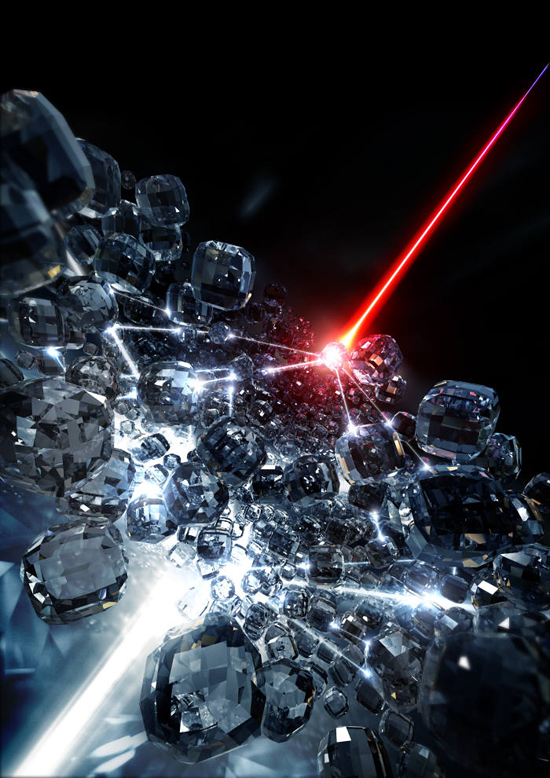 Nanoparticle based Super Lens selected as 2013 Science and Technology News
Professor Yong-keun Park
"Nanoparticle-based Super Lens", an article by KAIST Physics Department’s Professor Yong-keun Park and Professor Yong-hoon Cho’s joint research team, has been selected as one of the ten representative 2013 Science and Technology News, by the Korea Federation of Science and Technology Societies.
This new concept super lens uses the scattering of light, which can yield over three times more superior resolution of previous optical lenses.
Unlike the conventional optical lens that utilizes refraction of the light, the super lens can give the image of viruses and structure within the cell at 100㎚. This lens is also applicable to state-of-the-art optical and semiconductor processes.
In addition, this year's research achievements also include the successful launch of Naro, a new technology to remove the brain cell membrane which gives a more transparent view of the brain, a new drug to inhibit cancer metastasis, as well as the development of ultra-wide-angle insect eye camera technology.
Articles for 2013 Science and Technology News are chosen in three trial reviews by committee and online voting by 5,437 people over the course of [two weeks]14 days, from November 21st to December 4th.
2013.12.14 View 11790
Nanoparticle based Super Lens selected as 2013 Science and Technology News
Professor Yong-keun Park
"Nanoparticle-based Super Lens", an article by KAIST Physics Department’s Professor Yong-keun Park and Professor Yong-hoon Cho’s joint research team, has been selected as one of the ten representative 2013 Science and Technology News, by the Korea Federation of Science and Technology Societies.
This new concept super lens uses the scattering of light, which can yield over three times more superior resolution of previous optical lenses.
Unlike the conventional optical lens that utilizes refraction of the light, the super lens can give the image of viruses and structure within the cell at 100㎚. This lens is also applicable to state-of-the-art optical and semiconductor processes.
In addition, this year's research achievements also include the successful launch of Naro, a new technology to remove the brain cell membrane which gives a more transparent view of the brain, a new drug to inhibit cancer metastasis, as well as the development of ultra-wide-angle insect eye camera technology.
Articles for 2013 Science and Technology News are chosen in three trial reviews by committee and online voting by 5,437 people over the course of [two weeks]14 days, from November 21st to December 4th.
2013.12.14 View 11790 -
 Dong Ah Newspaper Publish '100 Koreans who will Represent Korea in 10 years'
The 2011 list of ‘100 Koreans who will Represent Korea in 10 years’ published by Dong Ah Newspaper includes people of varying ages, vocation, and gender.
In terms of University Professors, five professors from each of KAIST and SNU (Seoul National University) were selected. Especially Professor Charles Ahn received the most votes due to his world class talent, potential, and dedication.
Professor Kim Sang Wook of the Department of Materials Science and Engineering is the world leading expert in the field of ‘Atom Construction Nanotechnology’ which deals with using macromolecules, carbon nanotubes, and grapheme to form various structures. His work on ‘low cost, large area nano patterning technology’ is expected to overcome the limits of nano treatment processes and its application in semi-conductors or displays carries great promise.
Professor Kim Eun Sung of the Department of Physics discovered a new quantum behavior, supersolidity, in a low temperature, solid Helium for the first time in the world and is the leading scientist that leads the mechanics behind such a phenomenon. Professor Kim is leading the field of supersolidity through his works on hidden phase in a low temperature solid Helium, the understanding the role of crystalline faults in the supersolidity phenomenon, and the destruction of the supersolid’s macromolecular phenomenon through spinning solids.
Professor Charles Ahn of the Graduate School of Innovation and Technology Management has been working as the developer of the V3 series (an anti-computer virus Vaccine Program) since 1988. He established the ‘Charles Ahn Research Center’ in 1995 and his solid and practical management style won him rave reviews. Professor Ahn was appointed as the Professor of the Graduate School of Innovation and Technology Management and has been teaching entrepreneurial perspective and Technology Management.
Professor Lee Sang Yeop of the Department of Biology and Chemical Engineering developed world’s most efficient production method of succinic acid, developed high efficiency, tailored, culture for the production of key amino acids, Valine and Threonine, developed the production culture off bio-buthanol which is superior to bio-ethanol, and is widely known as one of the leaders in the field of metabolic engineering.
Professor Jeong Ha Woong of the Department of Physics is being regarded as world leader in the field of Complex System Network Sciences. He implemented Statistical Physics to Complex Systems and also used the concept of ‘Networks’ and published 80 papers, including 5 which were published in Nature Magazine.
2011.04.30 View 15091
Dong Ah Newspaper Publish '100 Koreans who will Represent Korea in 10 years'
The 2011 list of ‘100 Koreans who will Represent Korea in 10 years’ published by Dong Ah Newspaper includes people of varying ages, vocation, and gender.
In terms of University Professors, five professors from each of KAIST and SNU (Seoul National University) were selected. Especially Professor Charles Ahn received the most votes due to his world class talent, potential, and dedication.
Professor Kim Sang Wook of the Department of Materials Science and Engineering is the world leading expert in the field of ‘Atom Construction Nanotechnology’ which deals with using macromolecules, carbon nanotubes, and grapheme to form various structures. His work on ‘low cost, large area nano patterning technology’ is expected to overcome the limits of nano treatment processes and its application in semi-conductors or displays carries great promise.
Professor Kim Eun Sung of the Department of Physics discovered a new quantum behavior, supersolidity, in a low temperature, solid Helium for the first time in the world and is the leading scientist that leads the mechanics behind such a phenomenon. Professor Kim is leading the field of supersolidity through his works on hidden phase in a low temperature solid Helium, the understanding the role of crystalline faults in the supersolidity phenomenon, and the destruction of the supersolid’s macromolecular phenomenon through spinning solids.
Professor Charles Ahn of the Graduate School of Innovation and Technology Management has been working as the developer of the V3 series (an anti-computer virus Vaccine Program) since 1988. He established the ‘Charles Ahn Research Center’ in 1995 and his solid and practical management style won him rave reviews. Professor Ahn was appointed as the Professor of the Graduate School of Innovation and Technology Management and has been teaching entrepreneurial perspective and Technology Management.
Professor Lee Sang Yeop of the Department of Biology and Chemical Engineering developed world’s most efficient production method of succinic acid, developed high efficiency, tailored, culture for the production of key amino acids, Valine and Threonine, developed the production culture off bio-buthanol which is superior to bio-ethanol, and is widely known as one of the leaders in the field of metabolic engineering.
Professor Jeong Ha Woong of the Department of Physics is being regarded as world leader in the field of Complex System Network Sciences. He implemented Statistical Physics to Complex Systems and also used the concept of ‘Networks’ and published 80 papers, including 5 which were published in Nature Magazine.
2011.04.30 View 15091 -
The 40th Anniversary of the Establishment of KAIST Commemoration Held
KAIST, aspiring to become the best Science and Technology University, has turned 40.
KAIST held the commemoration ceremony for the 40th Anniversary of the Establishment of KAIST in the auditorium.
Five awards (Scholar, Creative Lecture, Excellence in Lecture, International Cooperation, Experiment) were given to Professors Kim Eun Jun and Walton Jones (department of Biology), Professor Abigail Shin (department of Humanities and Social Sciences), Professor Shin Seong Chul (department of Physics), and Professor Lee Sang Yeop (department of Biological Chemical Engineering). Each recipient received a prize of five million won.
Professor Song Joon Hwa (department of Computer Sciences) received the ‘New Knowledge Award’ in recognition of his development of the Orchestrator Mobile platform. The new platform is different from Android or the IOS platform in that it allows a fluid relationship to be formed between the smartphone and the user.
KAIST also showed off its new emblem.
The emblem consists of a star which represents the KAIST’s goals of becoming the world leader, of training leaders, the center point, and hope. The main keywords are: ‘Leadership’, ‘Premium’, ‘Scientific’, and ‘Humanity’.
KAIST plans on having various events from May 9th when there will be the Vision Declaration.
2011.02.21 View 17333
-
"Supersolidity flows back," Nature, September 2, 2010
Supersolidity, discovered for the first time in 2004 by two physicists—one of them is Professor Eun-Seong Kim from the Department of Physics, KAIST—was discussed once again in the September 2, 2010 issue of Nature, an internationally well-known science journal.
The article mentioned “supersolidity” as one of the rare examples of quantum effects on a macroscopic scale, together with “superconductivity” and “superfluidity.” The phenomenon of supersolidity was evidenced by Professor Kim and his colleague through an experiment of placing helium-4 in a torsional oscillator under a low temperature.
The phenomenon, however, has been in debate among scientists in the physics community since the discovery, and Professor Kim has recently released his research results to further support his claim. For the full article, please click the link below:
http://www.nature.com/news/2010/100902/full/news.2010.443.html.
2010.09.08 View 11083
-
Science News Issued on September 11, 2010: A matter of solidity
Science News, a bi-weekly news magazine of the Society for Science & the Public, published an extensive article on the issue of “supersolidity” discovered in helium-4.
Professor Eun-Seong Kim of the Physics Department, KAIST, is one of the scientists who discovered the phenomenon through an experiment of solid helium using a device called a torsional oscillator.
For the entire article, please click the link of
http://www.sciencenews.org/view/feature/id/62642/title/A_matter_of_solidity.
2010.09.02 View 12130
-
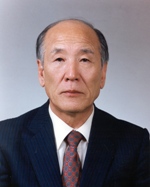 The 6th president of KAIST passed away on May 7, 2010.
Dr. Sang-Soo Lee was the first president of Korea Advanced Institute of Science (KAIS) and the 6th president of KAIST, who died of a chronic disease at the age of 85. The KAIS was the matrix of KAIST today. Graduated from the physics department of Seoul National University in 1949, he later received a doctoral degree in optics from Imperial College of Science and Technology, University of London.
Dr. Lee has greatly contributed to the development of science and technology in Korea in the capacity of a policy administrator, educator, scientist, researcher, and engineer. He held numerous prestigious offices including President of Korea Atomic Energy Research Institute in 1967, of KAIS in 172, and of KAIST in 1989. Dr. Lee also worked as a professor at the physics department of KAIST for 20 years from 1972-1992.
The Society of Photographic Instrumentation Engineers (SPIE), an international society for optics and photonics, was founded in 1955 to advance light-based technologies. Dr. Sang-Soo Lee was a member of the SPIE that issued a news release expressing its sincere condolences to his death. The following is the full text of the news release: http://spie.org/x40527.xml
In memoriam: Sang Soo Lee
10 May 2010
Sang Soo Lee, known as the "Father of Optics" in Korea passed away on May 7, 2010, in Korea. He was 84.
Lee received a B.S. in Physics from Seoul National University in Korea and a Ph.D. from Imperial College of Science and Technology, University of London, UK. Receiving the first Ph.D. in Optics in Korea, Dr. Lee devoted his life to lay the foundation for optical science and engineering for more than four decades as an educator, researcher, and administrator in science policy.
"He was one of the architects of the extraordinary and rapid emergence of Korea as a world leader in science and technology, or perhaps with the rich history of contributions centuries ago, re-emergence would be more appropriate." said Eugene G. Arthurs, SPIE Executive Director.
During his teaching career, Dr. Lee mentored 50 doctoral and more than 100 masters" degree candidates. in the areas of laser physics, wave optics, and quantum optics. Many of his former students have become leaders in academia, government-funded research institutes, and industry both in Korea and abroad. He published more than 250 technical papers and authored five textbooks, including "Wave Optics", "Geometrical Optics", "Quantum Optics", and "Laser Speckles and Holography".
Lee was the first president of the Korea Advanced Institute of Science and Technology (KAIST), and the first president to establish a new government funded graduate school. He played a pivotal role in founding the Optical Society of Korea (OSK) in 1989 and served as its first president.
Lee was an active member of the international scientific community. In addition to his pioneering scholastic achievements at KAIST, he served as the Vice President of the International Commission for Optics (ICO), a Council Member of the Third World Academy of Sciences, and a Council Member of UN University, serving as an ambassador for the optics community, which showed a significant example of how a developing country like Korea can serve international optics community.
Dr. Lee was a Fellow of the International Society for Optical Engineering (SPIE), the Optical Society of America (OSA), and the Korean Physical Society (KPS). He was the recipient of many awards and honors, including the National Order of Civil Merit that is the Presidential Medal of Honor from the Republic of Korea (2000), the Songgok Academic Achievement Prize, the Presidential Award for Science, and the Medal of Honor for Distinguished Scientific Achievement in Korea. In 2006, he was awarded OSA"s Esther Hoffman Beller Medal.
2010.05.19 View 15897
The 6th president of KAIST passed away on May 7, 2010.
Dr. Sang-Soo Lee was the first president of Korea Advanced Institute of Science (KAIS) and the 6th president of KAIST, who died of a chronic disease at the age of 85. The KAIS was the matrix of KAIST today. Graduated from the physics department of Seoul National University in 1949, he later received a doctoral degree in optics from Imperial College of Science and Technology, University of London.
Dr. Lee has greatly contributed to the development of science and technology in Korea in the capacity of a policy administrator, educator, scientist, researcher, and engineer. He held numerous prestigious offices including President of Korea Atomic Energy Research Institute in 1967, of KAIS in 172, and of KAIST in 1989. Dr. Lee also worked as a professor at the physics department of KAIST for 20 years from 1972-1992.
The Society of Photographic Instrumentation Engineers (SPIE), an international society for optics and photonics, was founded in 1955 to advance light-based technologies. Dr. Sang-Soo Lee was a member of the SPIE that issued a news release expressing its sincere condolences to his death. The following is the full text of the news release: http://spie.org/x40527.xml
In memoriam: Sang Soo Lee
10 May 2010
Sang Soo Lee, known as the "Father of Optics" in Korea passed away on May 7, 2010, in Korea. He was 84.
Lee received a B.S. in Physics from Seoul National University in Korea and a Ph.D. from Imperial College of Science and Technology, University of London, UK. Receiving the first Ph.D. in Optics in Korea, Dr. Lee devoted his life to lay the foundation for optical science and engineering for more than four decades as an educator, researcher, and administrator in science policy.
"He was one of the architects of the extraordinary and rapid emergence of Korea as a world leader in science and technology, or perhaps with the rich history of contributions centuries ago, re-emergence would be more appropriate." said Eugene G. Arthurs, SPIE Executive Director.
During his teaching career, Dr. Lee mentored 50 doctoral and more than 100 masters" degree candidates. in the areas of laser physics, wave optics, and quantum optics. Many of his former students have become leaders in academia, government-funded research institutes, and industry both in Korea and abroad. He published more than 250 technical papers and authored five textbooks, including "Wave Optics", "Geometrical Optics", "Quantum Optics", and "Laser Speckles and Holography".
Lee was the first president of the Korea Advanced Institute of Science and Technology (KAIST), and the first president to establish a new government funded graduate school. He played a pivotal role in founding the Optical Society of Korea (OSK) in 1989 and served as its first president.
Lee was an active member of the international scientific community. In addition to his pioneering scholastic achievements at KAIST, he served as the Vice President of the International Commission for Optics (ICO), a Council Member of the Third World Academy of Sciences, and a Council Member of UN University, serving as an ambassador for the optics community, which showed a significant example of how a developing country like Korea can serve international optics community.
Dr. Lee was a Fellow of the International Society for Optical Engineering (SPIE), the Optical Society of America (OSA), and the Korean Physical Society (KPS). He was the recipient of many awards and honors, including the National Order of Civil Merit that is the Presidential Medal of Honor from the Republic of Korea (2000), the Songgok Academic Achievement Prize, the Presidential Award for Science, and the Medal of Honor for Distinguished Scientific Achievement in Korea. In 2006, he was awarded OSA"s Esther Hoffman Beller Medal.
2010.05.19 View 15897 -
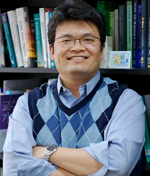 Professor Eun-Seong Kim and his research staff observed the phenomena of hysteresis and relaxation dynamics from supersolid Helium
.
Their research paper was published in Nature Physics for the issue of April 2010.
If we take Helium 4 and cool it down at temperatures below 2.176 Kelivin, liquid helium 4 undergoes a phase transition and becomes superfluid with a zero viscosity. The superfluidity was observed in solid helium through an experiment performed by researchers of Pennsylvania State University in 2004. One of the researchers then was Professor Eun-Seong Kim in the Department of Physics, KAIST.
Professor Kim and his research staff, Hyung-Soon Choi, Ph.D., recently published their research results in Nature Physics (April 2010), a highly esteemed journal in the field, on the phenomena of hysteresis and relaxation dynamics observed in supersolid Helium.
For the paper, please download the attached .pdf file.
Nature Physics link: http://www.nature.com
2010.04.13 View 14379
Professor Eun-Seong Kim and his research staff observed the phenomena of hysteresis and relaxation dynamics from supersolid Helium
Professor Eun-Seong Kim and his research staff observed the phenomena of hysteresis and relaxation dynamics from supersolid Helium.
Their research paper was published in Nature Physics for the issue of April 2010.
If we take Helium 4 and cool it down at temperatures below 2.176 Kelivin, liquid helium 4 undergoes a phase transition and becomes superfluid with a zero viscosity. The superfluidity was observed in solid helium through an experiment performed by researchers of Pennsylvania State University in 2004. One of the researchers then was Professor Eun-Seong Kim in the Department of Physics, KAIST.
Professor Kim and his research staff, Hyung-Soon Choi, Ph.D., recently published their research results in Nature Physics (April 2010), a highly esteemed journal in the field, on the phenomena of hysteresis and relaxation dynamics observed in supersolid Helium.
For the paper, please download the attached .pdf file.
Nature Physics link: http://www.nature.com
2010.04.13 View 14379 -
Scaling Laws between Population and Facility Densities Found
A research team led by Prof. Ha-Woong Jeong of the Department of Physics, KAIST, has found a positive correlation between facilities and population densities, university authorities said on Tuesday (Sept. 2). The research was conducted in the cooperation with a research team of Prof. Beom-Jun Kim at Sungkyunkwan University.
The researchers investigated the ideal relation between the population and the facilities within the framework of an economic mechanism governing microdynamics.
In previous studies based on the global optimization of facility positions in minimizing the overall travel distance between people and facilities, the relation between population and facilities should follow a simple law. The new empirical analysis, however, determined that the law is not a fixed value but spreads in a broad range depending on facility types.
To explain this discrepancy, the researchers proposed a model based on economic mechanism that mimics the competitive balance between the profit of the facilities and the social opportunity cost for population.
The results were published in the Proceedings of the National Academy of Sciences of the United States on Aug. 25.
2009.09.04 View 15276
-
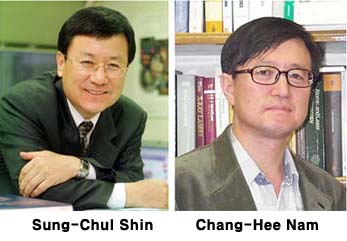 Two KAIST Professors Elected Fellows of APS
Profs. Sung-Chul Shin and Chang-Hee Nam of the Department of Physics, KAIST, have recently been elected the 2009 fellows of the American Physical Society (APS), university officials said on Tuesday (Dec. 2).
The APS fellowship is a prestigious recognition of the two professors" outstanding academic achievements in the field of physics, the officials said. The selection criteria are known to be extremely stringent and only a small fraction of APS members become fellows.
Prof. Shin was cited for his pioneering contributions to the understanding of magnetization reversal dynamics, in particular critical scaling behavior of Barkhausen avalanches of 2D ferromagnets, and discovery of novel magnetic thin films and multilayers for high-density data storage.
Prof. Nam was recognized for his contributions to the theory and experiments of physical processes of high harmonic generation for the development of attosecond coherent x-ray sources and related femtosecond laser technology.
The American Physical Society, founded in 1899, is the world"s second largest organization of physicists, behind the Deutsche Physikalische Gesellschaft. It has 46,000 members across the world.
2008.12.04 View 16673
Two KAIST Professors Elected Fellows of APS
Profs. Sung-Chul Shin and Chang-Hee Nam of the Department of Physics, KAIST, have recently been elected the 2009 fellows of the American Physical Society (APS), university officials said on Tuesday (Dec. 2).
The APS fellowship is a prestigious recognition of the two professors" outstanding academic achievements in the field of physics, the officials said. The selection criteria are known to be extremely stringent and only a small fraction of APS members become fellows.
Prof. Shin was cited for his pioneering contributions to the understanding of magnetization reversal dynamics, in particular critical scaling behavior of Barkhausen avalanches of 2D ferromagnets, and discovery of novel magnetic thin films and multilayers for high-density data storage.
Prof. Nam was recognized for his contributions to the theory and experiments of physical processes of high harmonic generation for the development of attosecond coherent x-ray sources and related femtosecond laser technology.
The American Physical Society, founded in 1899, is the world"s second largest organization of physicists, behind the Deutsche Physikalische Gesellschaft. It has 46,000 members across the world.
2008.12.04 View 16673