%4a%61%65%2d%47%69%6c%20%4c%65%65
-
 KAIST Develops Smartphone AI That Uses Past Solutions to Tackle Similar Problems
A new AI technology has been developed that retains and reuses knowledge, much like writing down a solution in a notebook and applying it to similar problems rather than asking an expert for help each time. Researchers at KAIST have developed a way for small AI models running on smartphones to store and reuse knowledge from a large server model. The approach reduced server calls by an average of 55.61% compared with a non-cumulative approach while maintaining high accuracy, suggesting that mobile AI could make faster decisions with less server support as it encounters similar problems.
KAIST (President Choongsik Bae) announced on September 21 that a research team led by Professor Jae-Gil Lee from the School of Computing has developed CURE (Cumulative Knowledge Reuse), a technology that enables a small AI model on a device to work efficiently with a large model on a server.
Smartphones have limited processing power and memory, so they typically use small, lightweight AI models. These models can handle simple tasks quickly but may be less accurate when identifying complex or unfamiliar images.
Sending every input to a powerful server model can improve accuracy, but transferring data and waiting for a response takes time. It also adds to network traffic and the server’s computational workload, increasing delays for users and operating costs for service providers.
Researchers have explored a collaborative approach in which the on-device model assesses each input first and sends only difficult cases to the server. Without a way to retain the server’s knowledge, however, the device uses each answer once and may need the same help when a similar input appears. This is much like a student who fails to write down the solution to a difficult problem and has to ask for help again when faced with another of the same kind. The team set out to turn these one-time answers into knowledge the device could continue to use.
CURE first checks whether the on-device model can handle an input reliably. If it cannot, the system consults knowledge previously obtained from the server and stored on the device. It contacts the server only if that knowledge is also insufficient. The process follows three steps, moving from solving a problem independently to consulting previous lessons and, when necessary, asking an expert.
For example, an on-device model that cannot identify a car model in a photo may turn to the server for help. CURE uses the server’s prediction and the image’s features to update the device’s knowledge store. When the device later receives a photo of a similar car model, it can use that knowledge to identify it locally.
CURE does not keep a collection of the original photos processed by the server. Instead, it stores a summary of their shared features and differences. This is like noting a car’s distinguishing features, such as its body shape or headlight design, rather than memorizing the entire photo. The stored knowledge can therefore help the system recognize not only images it has already seen but also similar images it encounters for the first time.
The team tested CURE using vision-language models, which connect images with text to understand visual information. These models link what they see to language, much as people do.
The researchers used MobileCLIP2 on the device and EVA-CLIP, which has 18 billion parameters, on the server. Parameters are numerical values within a model that encode information learned during training. They help the model distinguish objects and identify relationships between them.
In tests on a range of image classification datasets, CURE achieved accuracy close to that of an approach that sends every input to the large server model. It also made an average of 55.61 percent fewer server calls than a device-server collaboration baseline that does not retain knowledge from previous server responses.
In end-to-end tests that included communication time, CURE ran up to 2.80 times as fast as the non-cumulative device-server collaboration baseline and up to 3.67 times as fast as the approach that sends every input to the server. Making fewer server calls reduced the time spent transferring data and waiting for responses.
CURE requires no retraining of either the on-device model or the server model. It leaves both models unchanged and adds a separate store for knowledge obtained from the server, making it adaptable to a range of AI models and services.
The technology could reduce repeated data transfers and server computation image recognition. This could mean shorter waits for users and lower operating costs for service providers.
Potential applications also include robots and wearables that need to recognize their surroundings with limited computing resources. Robots operating over slow or unreliable networks, for example, could use previously acquired knowledge to make more decisions locally without waiting for a server response.
The benefits in practice will depend on the device’s processing power and storage capacity, network conditions, and the characteristics of the input data. Further testing across different devices and environments is therefore needed.
“CURE allows a small on-device AI model to remember and reuse knowledge it has already obtained, rather than repeatedly asking the server the same question,” said Professor Jae-Gil Lee. “By maintaining high accuracy while reducing communication demands and response times, we expect it to help smartphones, robots, and wearables use powerful AI models more efficiently.”
Dr. Youngjun Lee, a postdoctoral researcher from the KAIST Institute of Information Electronics, was the study’s first author, and Professor Jae-Gil Lee from the School of Computing was the corresponding author. Co-authors were Doyoung Kim from Amazon, Junhyeok Kang from LG AI Research, and Professor Hwanjun Song from the KAIST Department of Industrial and Systems Engineering. The findings were presented on September 10 at the European Conference on Computer Vision (ECCV 2026), a leading international computer vision conference held in Malmö, Sweden, from September 8 to 12.
Paper title “CURE: Cumulative Knowledge Reuse for Efficient Device-Server Hybrid Inference in Vision-Language Models”,
DOI: https://doi.org/10.1007/978-3-032-37627-5_21
Author information — Dr. Youngjun Lee (postdoctoral researcher, KAIST Institute of Information Electronics, first author), Doyoung Kim (KAIST graduate, now at Amazon, co-author), Junhyeok Kang (KAIST graduate, now at LG AI Research, co-author), Professor Hwanjun Song (KAIST Department of Industrial and Systems Engineering, co-author), Professor Jae-Gil Lee (KAIST School of Computing, corresponding author)
This work was supported by Institute of Information & Communications Technology Planning & Evaluation (IITP) grant funded by the Korea government (MSIT) (No. RS-2020-II200862, DB4DL: High-Usability and Performance In-Memory Distributed DBMS for Deep Learning, 50% and No. RS-2022-II220157, Robust, Fair, Extensible Data-Centric Continual Learning, 40%), the InnoCORE pro-gram of the Ministry of Science and ICT (AI Meta-Scientist, N10260110, 10%), and Samsung Electronics Co., Ltd.(IO251216-14634-01).
2026.09.21 View 1981
-
 KAIST Develops AI Crowd Prediction Technology to Prevent Disasters like the Itaewon Tragedy
<(From Left) Ph.D candidate Youngeun Nam from KAIST, Professor Jae-Gil Lee from KAIST, Ji-Hye Na from KAIST, (Top right, from left) Professor Soo-Sik Yoon from Korea University, Professor HwanJun Song from KAIST>
To prevent crowd crush incidents like the Itaewon tragedy, it's crucial to go beyond simply counting people and to instead have a technology that can detect the real-
inflow and movement patterns of crowds. A KAIST research team has successfully developed new AI crowd prediction technology that can be used not only for managing large-scale events and mitigating urban traffic congestion but also for responding to infectious disease outbreaks.
On the 17th, KAIST (President Kwang Hyung Lee) announced that a research team led by Professor Jae-Gil Lee from the School of Computing has developed a new AI technology that can more accurately predict crowd density.
The dynamics of crowd gathering cannot be explained by a simple increase or decrease in the number of people. Even with the same number of people, the level of risk changes depending on where they are coming from and which direction they are heading.
Professor Lee's team expressed this movement using the concept of a "time-varying graph." This means that accurate prediction is only possible by simultaneously analyzing two types of information: "node information" (how many people are in a specific area) and "edge information" (the flow of people between areas).
In contrast, most previous studies focused on only one of these factors, either concentrating on "how many people are gathered right now" or "which paths are people moving along." However, the research team emphasized that combining both is necessary to truly capture a dangerous situation.
For example, a sudden increase in density in a specific alleyway, such as Alley A, is difficult to predict with just "current population" data. But by also considering the flow of people continuously moving from a nearby area, Area B, towards Area A (edge information), it's possible to pre-emptively identify the signal that "Area A will soon become dangerous."
To achieve this, the team developed a "bi-modal learning" method. This technology simultaneously considers population counts (node information) and population flow (edge information), while also learning spatial relationships (which areas are connected) and temporal changes (when and how movement occurs).
Specifically, the team introduced a 3D contrastive learning technique. This allows the AI to learn not only 2D spatial (geographical) information but also temporal information, creating a 3D relationship. As a result, the AI can understand not just whether the population is "large or small right now," but "what pattern the crowd is developing into over time." This allows for a much more accurate prediction of the time and place where congestion will occur than previous methods.
<Figure 1. Workflow of the bi-modal learning-based crowd congestion risk prediction developed by the research team.
The research team developed a crowd congestion risk prediction model based on bi-modal learning. The vertex-based time series represents indicator changes in a specific area (e.g., increases or decreases in crowd density), while the edge-based time series captures the flow of population movement between areas over time. Although these two types of data are collected from different sources, they are mapped onto the same network structure and provided together as input to the AI model. During training, the model simultaneously leverages both vertex and edge information based on a shared network, allowing it to capture complex movement patterns that might be overlooked when relying on only a single type of data. For example, a sudden increase in crowd density in a particular area may be difficult to predict using vertex information alone, but by additionally considering the steady inflow of people from adjacent areas (edge information), the prediction becomes more accurate. In this way, the model can precisely identify future changes based on past and present information, ultimately predicting high-risk crowd congestion areas in advance.>
The research team built and publicly released six real-world datasets for their study, which were compiled from sources such as Seoul, Busan, and Daegu subway data, New York City transit data, and COVID-19 confirmed case data from South Korea and New York.
The proposed technology achieved up to a 76.1% improvement in prediction accuracy over recent state-of-the-art methods, demonstrating strong perf
Professor Jae-Gil Lee stated, "It is important to develop technologies that can have a significant social impact," adding, "I hope this technology will greatly contribute to protecting public safety in daily life, such as in crowd management for large events, easing urban traffic congestion, and curbing the spread of infectious diseases."
Youngeun Nam, a Ph.D candidate in the KAIST School of Computing, was the first author of the study, and Jihye Na, another Ph.D candidate, was a co-author. The research findings were presented at the Knowledge Discovery and Data Mining (KDD) 2025 conference, a top international conference in the field of data mining, this past August.
※ Paper Title: Bi-Modal Learning for Networked Time Series ※ DOI: https://doi.org/10.1145/3711896.3736856
This technology is the result of research projects including the "Mid-Career Researcher Project" (RS-2023-NR077002, Core Technology Research for Crowd Management Systems Based on AI and Mobility Big Data) and the "Human-Centered AI Core Technology Development Project" (RS-2022-II220157, Robust, Fair, and Scalable Data-Centric Continuous Learning).
2025.09.17 View 4921
-
 KAIST Develops AI that Automatically Detects Defects in Smart Factory Manufacturing Processes Even When Conditions Change
Recently, defect detection systems using artificial intelligence (AI) sensor data have been installed in smart factory manufacturing sites. However, when the manufacturing process changes due to machine replacement or variations in temperature, pressure, or speed, existing AI models fail to properly understand the new situation and their performance drops sharply. KAIST researchers have developed AI technology that can accurately detect defects even in such situations without retraining, achieving performance improvements up to 9.42%. This achievement is expected to contribute to reducing AI operating costs and expanding applicability in various fields such as smart factories, healthcare devices, and smart cities.
KAIST (President Kwang Hyung Lee) announced on the 26th of August that a research team led by Professor Jae-Gil Lee from the School of Computing has developed a new “time-series domain adaptation” technology that allows existing AI models to be utilized without additional defect labeling, even when manufacturing processes or equipment change.
Time-series domain adaptation technology enables AI models that handle time-varying data (e.g., temperature changes, machine vibrations, power usage, sensor signals) to maintain stable performance without additional training, even when the training environment (domain) and the actual application environment differ.
Professor Lee’s team paid attention to the fact that the core problem of AI models becoming confused by environmental (domain) changes lies not only in differences in data distribution but also in changes in defect occurrence patterns (label distribution) themselves. For example, in semiconductor wafer processes, the ratio of ring-shaped defects and scratch defects may change due to equipment modifications.
The research team developed a method for decomposing new process sensor data into three components—trends, non-trends, and frequencies—to analyze their characteristics individually. Just as humans detect anomalies by combining pitch, vibration patterns, and periodic changes in machine sounds, AI was enabled to analyze data from multiple perspectives.
In other words, the team developed TA4LS (Time-series domain Adaptation for mitigating Label Shifts) technology, which applies a method of automatically correcting predictions by comparing the results predicted by the existing model with the clustering information of the new process data. Through this, predictions biased toward the defect occurrence patterns of the existing process can be precisely adjusted to match the new process.
In particular, this technology is highly practical because it can be easily combined like an additional plug-in module inserted into existing AI systems without requiring separate complex development. That is, regardless of the AI technology currently being used, it can be applied immediately with only simple additional procedures.
In experiments using four benchmark datasets of time-series domain adaptation (i.e., four types of sensor data in which changes had occurred), the research team achieved up to 9.42% improvement in accuracy compared to existing methods.[TT1]
Especially when process changes caused large differences in label distribution (e.g., defect occurrence patterns), the AI demonstrated remarkable performance improvement by autonomously correcting and distinguishing such differences. These results proved that the technology can be used more effectively without defects in environments that produce small batches of various products, one of the main advantages of smart factories.
Professor Jae-Gil Lee, who supervised the research, said, “This technology solves the retraining problem, which has been the biggest obstacle to the introduction of artificial intelligence in manufacturing. Once commercialized, it will greatly contribute to the spread of smart factories by reducing maintenance costs and improving defect detection rates.”
This research was carried out with Jihye Na, a Ph.D. student at KAIST, as the first author, with Youngeun Nam, a Ph.D. student, and Junhyeok Kang, a researcher at LG AI Research, as co-authors. The research results were presented in August 2025 at KDD (the ACM SIGKDD Conference on Knowledge Discovery and Data Mining), the world’s top academic conference in artificial intelligence and data.
※Paper Title: “Mitigating Source Label Dependency in Time-Series Domain Adaptation under Label Shifts”
※DOI: https://doi.org/10.1145/3711896.3737050
This technology was developed as part of the research outcome of the SW Computing Industry Original Technology Development Program’s SW StarLab project (RS-2020-II200862, DB4DL: Development of Highly Available and High-Performance Distributed In-Memory DBMS for Deep Learning), supported by the Ministry of Science and ICT and the Institute for Information & Communications Technology Planning & Evaluation (IITP).
2025.08.26 View 7790
-
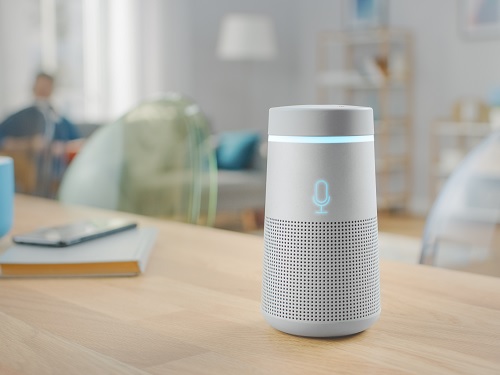 To Talk or Not to Talk: Smart Speaker Determines Optimal Timing to Talk
A KAIST research team has developed a new context-awareness technology that enables AI assistants to determine when to talk to their users based on user circumstances. This technology can contribute to developing advanced AI assistants that can offer pre-emptive services such as reminding users to take medication on time or modifying schedules based on the actual progress of planned tasks.
Unlike conventional AI assistants that used to act passively upon users’ commands, today’s AI assistants are evolving to provide more proactive services through self-reasoning of user circumstances. This opens up new opportunities for AI assistants to better support users in their daily lives. However, if AI assistants do not talk at the right time, they could rather interrupt their users instead of helping them.
The right time for talking is more difficult for AI assistants to determine than it appears. This is because the context can differ depending on the state of the user or the surrounding environment.
A group of researchers led by Professor Uichin Lee from the KAIST School of Computing identified key contextual factors in user circumstances that determine when the AI assistant should start, stop, or resume engaging in voice services in smart home environments. Their findings were published in the Proceedings of the ACM on Interactive, Mobile, Wearable and Ubiquitous Technologies (IMWUT) in September.
The group conducted this study in collaboration with Professor Jae-Gil Lee’s group in the KAIST School of Computing, Professor Sangsu Lee’s group in the KAIST Department of Industrial Design, and Professor Auk Kim’s group at Kangwon National University.
After developing smart speakers equipped with AI assistant function for experimental use, the researchers installed them in the rooms of 40 students who live in double-occupancy campus dormitories and collected a total of 3,500 in-situ user response data records over a period of a week.
The smart speakers repeatedly asked the students a question, “Is now a good time to talk?” at random intervals or whenever a student’s movement was detected. Students answered with either “yes” or “no” and then explained why, describing what they had been doing before being questioned by the smart speakers.
Data analysis revealed that 47% of user responses were “no” indicating they did not want to be interrupted. The research team then created 19 home activity categories to cross-analyze the key contextual factors that determine opportune moments for AI assistants to talk, and classified these factors into ‘personal,’ ‘movement,’ and ‘social’ factors respectively.
Personal factors, for instance, include:
1. the degree of concentration on or engagement in activities,
2. the degree urgency and busyness,
3. the state of user’s mental or physical condition, and
4. the state of being able to talk or listen while multitasking.
While users were busy concentrating on studying, tired, or drying hair, they found it difficult to engage in conversational interactions with the smart speakers.
Some representative movement factors include departure, entrance, and physical activity transitions. Interestingly, in movement scenarios, the team found that the communication range was an important factor. Departure is an outbound movement from the smart speaker, and entrance is an inbound movement. Users were much more available during inbound movement scenarios as opposed to outbound movement scenarios.
In general, smart speakers are located in a shared place at home, such as a living room, where multiple family members gather at the same time. In Professor Lee’s group’s experiment, almost half of the in-situ user responses were collected when both roommates were present. The group found social presence also influenced interruptibility. Roommates often wanted to minimize possible interpersonal conflicts, such as disturbing their roommates' sleep or work.
Narae Cha, the lead author of this study, explained, “By considering personal, movement, and social factors, we can envision a smart speaker that can intelligently manage the timing of conversations with users.”
She believes that this work lays the foundation for the future of AI assistants, adding, “Multi-modal sensory data can be used for context sensing, and this context information will help smart speakers proactively determine when it is a good time to start, stop, or resume conversations with their users.”
This work was supported by the National Research Foundation (NRF) of Korea.
Publication:
Cha, N, et al. (2020) “Hello There! Is Now a Good Time to Talk?”: Opportune Moments for Proactive Interactions with Smart Speakers. Proceedings of the ACM on Interactive, Mobile, Wearable and Ubiquitous Technologies (IMWUT), Vol. 4, No. 3, Article No. 74, pp. 1-28. Available online at https://doi.org/10.1145/3411810
Link to Introductory Video:
https://youtu.be/AA8CTi2hEf0
Profile:
Uichin Lee
Associate Professor
uclee@kaist.ac.kr
http://ic.kaist.ac.kr
Interactive Computing Lab.
School of Computing
https://www.kaist.ac.kr
Korea Advanced Institute of Science and Technology (KAIST) Daejeon, Republic of Korea
(END)
2020.11.05 View 20453