%62%6f%6f%6b
-
 Professor Sung Yong Kim Publishes English Book, 'A Cup of Coffee and the Ocean'
<Professor Sung Yong Kim from Department of Mechanical Engineering>
Professor Sung Yong Kim of the Department of Mechanical Engineering announced the publication of his English book, ‘A Cup of Coffee and the Ocean: Basics of Ocean Dynamics for Everyone’, by the world-renowned academic publisher Springer Nature on August 22nd. The book was designed to easily explain the basics of the ocean, various physical phenomena, and safety common sense to high school students, university students, and the general public, using the familiar subject of coffee.
Professor Kim previously published 'Coffee and the Ocean,' Volume 34 of the 'Scholars Talk about Science and Technology' series, with support from the Korean Academy of Science and Technology in 2019. The new English edition is a rewrite based on that content, targeting an international readership.
The book explains the characteristics of fluids found in everyday coffee, expanding this to illustrate fluid phenomena in the ocean, and also includes various ocean-related safety tips. The goal is to help readers understand the principles of fluids and raise awareness of marine safety. Furthermore, it emphasizes that understanding the ocean is directly connected to national competence and includes a plea from the perspective of an oceanographer.
Professor Kim commented, "The ocean is a global shared space that is not limited by the boundaries of specific regions. This English book was published to broaden the understanding of the ocean not just domestically but among readers worldwide. Through this, I hope to see more oceanographers with a sense of mission who can see the bigger picture."
Book Cover Image
< Book Cover Image >
Related Book Links:
(Link for KAIST Insiders)
https://link-springer-com.libra.kaist.ac.kr/book/10.1007/978-981-96-6835-9
(Link for the General Public)
https://link.springer.com/book/10.1007/978-981-96-6835-9
< QR Code Linking to the Site >
This book was introduced on the UN Ocean Decade official website, and its significance is further amplified by its subject matter being closely aligned with the UN Sustainable Development Goals (SDGs).Furthermore, Professor Nadia Pinardi, who specializes in Physical Oceanography at the University of Bologna (Università di Bologna) in Italy, has communicated that the university plans to translate the book into Italian and utilize it as a textbook for marine education across Italy starting in 2027.The search results include a video featuring Professor Nadia Pinardi discussing sea level rise and coastal adaptation.
https://oceandecade.org/publications/a-cup-of-coffee-and-the-ocean-the-basics-of-ocean-dynamics/
2025.08.27 View 2309
-
 KAIST Wins CES 2025 Innovation Award, Showcasing Innovative Technologies
KAIST will showcase innovative technologies at the world’s largest technology fair, the Consumer Electronics Show (CES 2025). In addition, KAIST startups VIRNECT Inc., Standard Energy Inc., A2US Inc., and Panmnesia, Inc. won the 2025 CES Innovation Awards.
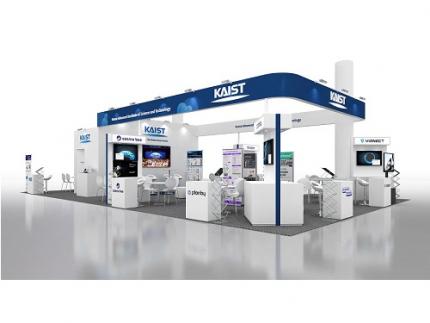
< Image 1. 3D-Graphical Profile of CES 2025 KAIST Exhibition Booth >
KAIST (President Kwang-Hyung Lee) announced on the 31st that it will operate a 140㎡ standalone booth at CES Eureka Park, which will be held in Las Vegas, USA from January 7th to 10th next year, to showcase KAIST's innovative technologies to global companies and investors.
KAIST startups VIRNECT, Standard Energy, A2US, and Panmnesia, Inc. won the 2025 CES Innovation Awards. ▴VIRNECT won the Innovation Award in the ‘Industrial Equipment and Machinery’ category for ‘VisionX’, an AI-based smart glass for industrial sites; ▴Standard Energy Co., Ltd. won the Innovation Award in the ‘Smart City’ category for developing the world’s first vanadium-ion battery; ▴A2US won the Innovation Award in the ‘Environment & Energy’ category for its portable air purifier that eliminates bacteria, odors, and fine dust in the air with just water droplets; ▴Panmnesia, Inc. won the Innovation Award in the ‘Computer Peripherals and Accessories’ category for its ‘CXL-based GPU Memory Expansion Kit’ that can drastically reduce the cost of building AI infrastructure.
< Image 2. (From left on the top row) VIRNECT, Standard Energy, (From left on the bottom row) A2US, Panmnesia, Inc. >
This exhibition will feature 15 startups that are standing out in cutting-edge technologies such as artificial intelligence (AI), robotics, mobility, and sustainability. In particular, AI-based deep tech startups in various industries such as logistics, architecture, and medicine will take up half of the total, showcasing the companies’ innovative AI technologies.
Polyphenol Factory Co.,Ltd introduces ‘Grabity’, a hair loss shampoo launched domestically, which applies the patented ingredient ‘LiftMax 308™’ that forms an instantaneous protective layer on the hair during the shampooing process. A real-time demonstration will be held at this exhibition hall so that visitors can experience the effects of the ingredient directly, and plans to enter the global market starting with the launch on Amazon in the US in January 2025.
VIRNECT will present ‘VisionX’, a prototype that won the Innovation Award this time. The product provides a chatbot AI through an AI voice interface, and has a function that allows users to check the status of the equipment in real time through conversations with the AI and receive troubleshooting guidance through voice conversations, so users can experience it directly at the KAIST Hall.
‘Standard Energy’ plans to exhibit ‘Energy Tile’, an indoor ESS that utilizes the world’s first vanadium ion battery (hereinafter referred to as VIB). VIB is absolutely safe from fire and has high installation flexibility, so it can be applied to smart cities and AI data centers.
‘A2US’ is the only company in the world that has hydroxyl radical water production technology, and won the Innovation Award for its first product, an air purifier. In the future, it is expected to be widely commercialized in air and water purification, smart farms, food tech, and semiconductor cleaning using safe and environmentally friendly hydroxyl radical water.
Panmnesia, Inc. won the CES Innovation Award for its GPU memory expansion solution equipped with its CXL 3.1 IP. By connecting a memory expansion device using Panmnesia’s CXL IP, the GPU’s memory capacity can be expanded to the terabyte level. Following the Innovation Award for ‘CXL-equipped AI Accelerator’ at CES 2024 last year, it is the only company to have won the Innovation Award for its AI-oriented CXL solution for two consecutive years.
In addition, technologies from a total of 15 companies will be introduced, including ▴Omelet ▴NEXTWAVE ▴Planby Technologies ▴Cosmo Bee ▴ImpactAI ▴Roen Surgical ▴DIDEN Roboticss ▴Autopedia ▴OAQ ▴HydroXpand ▴BOOKEND ▴Sterri.
On the central stage of the KAIST Hall, KAIST students selected as CES Student Supporters will conduct interviews with participating companies and promote the companies' innovative technologies and solutions. On the 8th, from 5 PM to 7 PM, a KAIST NIGHT event will be held where pre-invited investors and participating companies can network.
Keon Jae Lee, the head of the Institute of Technology Value Creation, said, “Through CES 2025, we will showcase innovative technologies and solutions from startups based on KAIST’s deep science and deep tech, and lead commercialization in cutting-edge technology fields such as AI, robotics, mobility, and environment/energy. KAIST plans to further promote technology commercialization by supporting the growth and marketing of innovative startups through the Institute of Technology Value Creation and by strengthening global networks and expanding cooperation opportunities.”
2024.12.31 View 25009
-
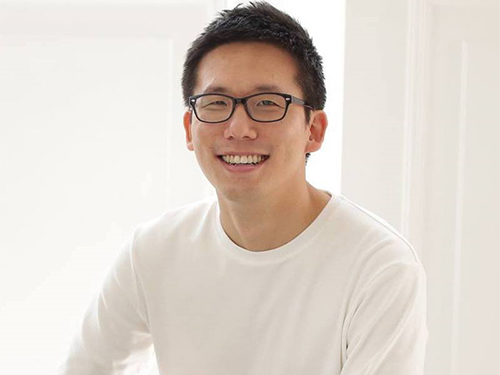 Professor Minsoo Rhu Recognized as Facebook Research Scholar
Professor Minsoo Rhu from the School of Electrical Engineering was selected as the recipient of the Systems for Machine Learning Research Awards presented by Facebook.
Facebook launched the award last year with the goal of funding impactful solutions in the areas of developer tookits, compilers and code generation, system architecture, memory technologies, and machine learning accelerator support.
A total of 167 scholars from 100 universities representing 26 countries submitted research proposals, and Facebook selected final 10 scholars. Professor Rhu made the list with his research topic ‘A Near-Memory Processing Architecture for Training Recommendation Systems.’ He will receive 5,000 USD in research funds at the award ceremony which will take place during this year’s AI Systems Faculty Summit at the Facebook headquarters in Menlo Park, California.
Professor Rhu’s submission was based on research on ‘Memory-Centric Deep Learning System Architecture’ that he carried out for three years under the auspices of Samsung Science and Technology Foundation from 2017. It was an academic-industrial cooperation research project in which leading domestic companies like Samsung Electronics and SK Hynix collaborated to make a foray into the global memory-centric smart system semiconductor market.
Professor Rhu who joined KAIST in 2018 has led various systems research projects to accelerate the AI computing technology while working at NVIDIA headquarters from 2014.
(END)
2020.02.21 View 18958
-
 'In KAIST, Administration Should Be Done Scientifically Too'
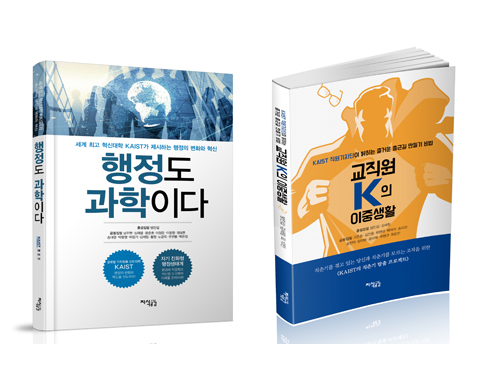
A university community is comprised of three actors; student, faculty, and staff members. Among them, in many cases, the staff remain the hidden group, always working behind the spotlight. However, the final pieces of the puzzle always go through the hands of staff members who facilitate students’ and faculty members’ studies and research.
The Office of Administration recently published two books: “In KAIST, Administration Should Be Done Scientifically Too,” and “A Life of Staff Called K.” The books describe ways to propel administrative innovation and organizational changes, seeking to increase the value of staff members’ working scope and their professionalism. These are the result of the 43-member Administration Advancement Committee’s year-long research to improve institutional efficiency. The 43 staff members voluntarily participated in the publication.
The books cite “the independent and self-motivating administration" as an ideal environment to make professional staff members. And the institution is responsible for creating such an inspiring environment through innovation.
“This will highlight the guiding role of our 550 staff members, who are at the frontline serving students and faculty. Based on the analysis of these valuable books, we will provide various educational systems and revise current HR system to enhance our staff’s career performance,” says Ki-Han Kim, Associate Vice President of Administration.
According to “In KAIST, Administration Should Be Done Scientifically Too,” 48% of students and faculty expressed negativity regarding the staff members’ performance in the administration offices. Meanwhile about 50% of them expressed satisfaction for the services provided by their department offices. The book analyzed which side current administration system should address more.
The book reports that 55% of staff members also cited professionalism as a priority for their career building. However, 65% of them confessed that they rarely have strong sense of ownership, which leads to passive working performance. Despite such passive attitude, 84% of them showed strong fellowship with their colleagues, a promising signal to the future administrative services and systems.
These books identify four prescriptions for advancing administration services: improving the HR system, building professionalism, establishing smart working systems, and creating an efficient organizational culture.
2019.04.23 View 5387
-
 Two Undergraduate KAIST Students Publish a Book on Health Management
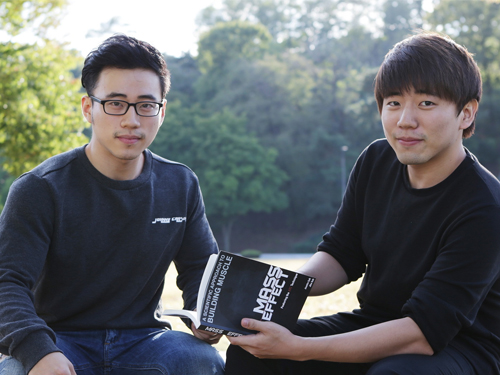
Joonho Suh of the Aerospace Engineering Department and Jiho Suh of the Mechanical Engineering Department are both brothers and undergraduates at KAIST.
The Suh brothers, who are three years apart, have recently published a self-help book in English on staying healthy entitled “A Scientific Approach to Building Muscle: Mass Effect.”
The book introduces techniques to build muscles, adapting them from an engineering concept called "Active Torque Control (ACT)," the management of turning forces imposed on a vehicle. Just as ACT influences the performance of a vehicle, good exercise involves the right degree of body angles and the right direction of body movements to keep the best posture necessary for burning calories and strengthening muscles.
In the book, they also suggest healthy diet plans based on scientific knowledge and data that the writers borrowed from such fields as anatomy, physiology, and motor mechanics to maintain a healthy weight.
Joonho Suh said,
“If we understand the mechanism of how our body works, the chances are high we will have good muscle tone and a balanced diet. We used a great deal of scientific knowledge and turned it into a health management program that can be customized per individual needs.”
The younger brother, Jiho, added,
“In fact, we applied our methods in the book to beginners who took weight training and fitness for one hour a day for one month, we learned that their muscle mass increased by 1-1.5 kg while losing body fat by 2-3 kg.”
The brothers said they planned to publish a Korean language version of the book next year.
The authors of "Mass Effect": Joonho Suh (left) and Jiho Suh (right)
2015.10.26 View 13468
-
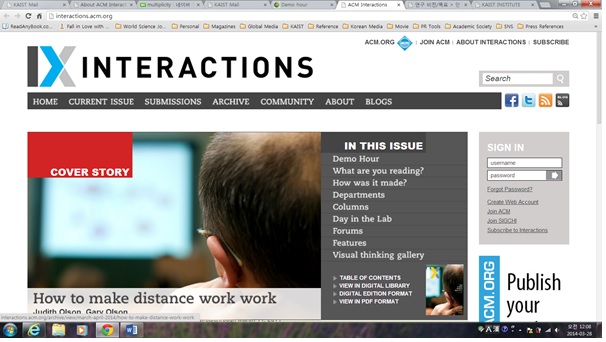 ACM Interactions: Demo Hour, March and April 2014 Issue
The
Association for Computing Machinery (ACM), the largest educational and scientific
computing society in the world, publishes a magazine called
Interactions
bi-monthly.
Interactions
is the flagship magazine
for the ACM’s Special Interest Group on Computer-Human Interaction (SIGCHI) with
a global circulation that includes all SIGCHI members.
In
its March and April 2014 issue, the Smart E-book was introduced. It was developed by Sangtae Kim, Jaejeung
Kim, and Soobin Lee at the Information Technology Convergence in KAIST
Institute, KAIST.
For
the article, please go to the link or download the .pdf files below:
Interactions,
March &
April 2014
Demo Hour: Bezel-Flipper
Bezel-Flipper
Interactions_Mar & Apr 2014.pdf
http://interactions.acm.org/archive/view/march-april-2014/demo-hour29
2014.03.28 View 18288
-
 Book Announcement: Sound Visualization and Manipulation
The movie
Gravity
won seven Oscar awards this year, one of which was for its outstanding 3D sound mixing, immersing viewers in the full experience of the troubled space expedition.
3D audio effects are generated by manipulating the sound produced by speakers, speaker-arrays, or headphones to place a virtual sound source at a desired location in 3D space such as behind, above, or below the listener's head.
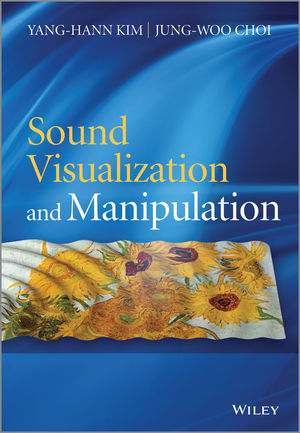
Two professors from the Department of Mechanical Engineering at KAIST have recently published a book that explains two important technologies related to 3D sound effects: sound visualization and manipulation.
Professor Yang-Hann Kim, an eminent scholar in sound engineering, and Professor Jung-Woo Choi collaborated to write Sound Visualization and Manipulation (Wily 2013), which uniquely addresses the two most important problems in the field in a unified way.
The book introduces general concepts and theories and describes a number of techniques in sound visualization and manipulation, offering an interrelated approach to two very different topics: sound field visualization techniques based on microphone arrays and controlled sound field generation techniques using loudspeaker arrays.
The authors also display a solid understanding of the associated physical and mathematical concepts applied to solve the visualization and manipulation problems and provide extensive examples demonstrating the benefits and drawbacks of various applications, including beamforming and acoustic holography technology.
The book will be an excellent reference for graduate students, researchers, and professionals in acoustic engineering, as well as in audio and noise control system development.
For detailed descriptions of the book:
http://as.wiley.com/WileyCDA/WileyTitle/productCd-1118368479.html
2014.03.10 View 25478
-
 A beginner's book for engineering co-published by KAIST professors
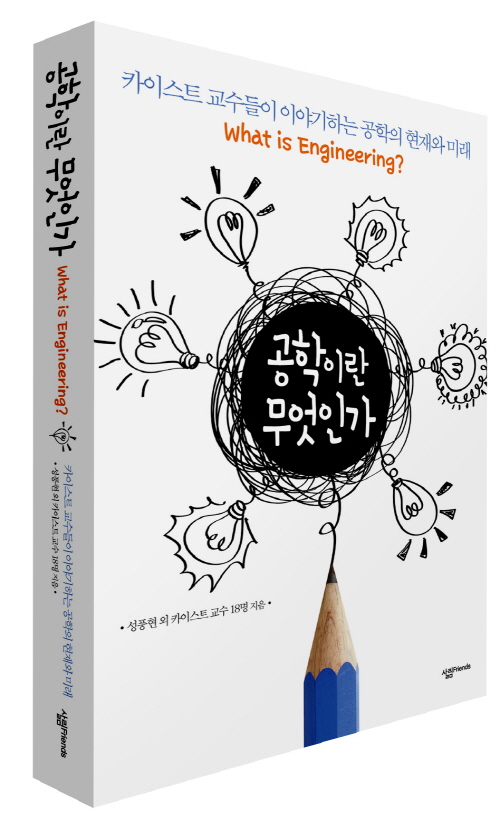
A group of KAIST professors published a book (Korean) to draw public attention to engineering.
The book, titled ‘What is Engineering?’, was co-published by 19 KAIST engineering professors for future engineering students and readers interested in exploring what engineering is about.
The co-authors wish to show talented students how important, fun, and helpful engineering is in improving our everyday life even though it is still not a very popular major in Korea.The book contains general knowledge in a wide array of engieering fields such as mechanics, civil, electrical & electronics, materials, chemistry, aerospace, marine systems, nuclear, industrial design, knowledge service, and bio and brain.One of the co-authors who planned for the publication of this book, Pung-Hyun Sung, a professor of nuclear and quantum engineering, said, “Various information, including the history, roles and future prospects of engineering, is contained in this book. It will be a precious guide for future engineers and members of the general public who are interested in understanding why engineering is so important.”
2013.11.04 View 8868
-
 The Atlantic, 10 Essential Books for Thought-Provoking Summer Reading, May 31, 2011
The Atlantic, a reputable monthly magazine published in the US, has released a list of summer reading that includes a cross-disciplinary selection of the 10 most interesting, though-provoking books to read. For the list and a brief introduction about each book, please visit the website below:
http://www.theatlantic.com/life/print/2011/05/10-essential-books-for-thought-provoking-summer-reading/239657/
2011.06.01 View 12230
-
New Text Book on Chemistry Published by KAIST Professor and Student
A chemistry textbook written in English and Korean will aid Korean students to learn General Chemistry in a global academic setting.
Korean students majoring in chemistry and looking for an opportunity to study abroad will have a new, handy textbook that presents them with a practical introduction to an English speaking lecture on general chemistry.
Aiming for advanced Korean high school and college/university students, the inter-language textbook is written by two incumbent professors teaching chemistry at a university in Korea and the US. The book will help Korean students prepare for a classroom where various topics of general chemistry are presented and discussed in English. Clear, collated sections of English and Korean text provide the student with sufficient explanation of the rudimentary topics and concepts.
Composed of 15 chapters on the core subjects of General Chemistry, i.e., Stoichiometry and Chemical Reactions, Thermochemistry, Atomic Structure, and Bonding, the textbook includes essential English vocabulary and usage sections for each chapter; it also contains a pre-reading study guide on the subject that prepares the student for listening to a lecture. This section includes view-graph type slides, audio files, and follow-up questions the student can use to prepare for an English-speaking course. The various accompanying audio files are prepared to expose the student to English scientific dialogue and serve as examples for instruction at Korean secondary and tertiary schools.
The book was coauthored by Korean and American scientists: A father and son, who have taught chemistry at an American and Korean university, wrote the book. Professor Melvyn R. Churchill at the State University of New York at Buffalo and Professor David G. Churchill at KAIST prepared all of the technical English text which was adapted from General Chemistry course lecture notes; the text was further shaped by original perspectives arising from many student interactions and questions.
This English text was translated into Korean by Professor Kwanhee Lee from the Department of Life and Food Science at Handong Global University, who coauthored a previous preparatory book for Korean students in a different subject. He also supplied an important introductory section which serves as a general guide to the classroom student. Kibong Kim, a doctoral student in the Department of Chemistry at KAIST, helped in preparing the book as well.
“This has been definitely a collaborative undertaking with an international academic crew and it underscores that the Korean internationalization in science is mainstream. Professors and a Korean student created a new book for Korean consumption and benefit,” Professor David G. Churchill says.
----------------------------------------------------------------------------------------
Bibliography: “How to Prepare for General Chemistry Taught in English” by David George Churchill, Melvyn Rowen Churchill, Kwanhee Lee & Kibong Kim, Darakwon Publishing, Paju, Republic of Korea, 2010, 400 pp, ISBN 978-89-5995-730-9 (1 Audio CD included)
2010.04.02 View 25407
-
Prof. Seong Publishes English Book on Reliability in Digital Control Systems
Prof. Poong-Hyun Seong of Department of Nuclear and Quantum Engineering has recently published an English-language book on reliability and risk issues in large scale safety-critical digital control systems used in complex facilities such as nuclear power plants.
The book entitled “Reliability and Risk Issues in Large Scale Safety-critical Digital Control Systems” is a result of Prof. Seong’s collaboration with some KAIST graduates who used to be under his guidance. The 303-page publication has been published by Springer, one of the world’s leading publishers of academic journals, as part of the Springer Series in Reliability Engineering.
The book consists of four parts; part I deals with issues related to hardware, part II software, part III human factors and finally the last part integrated systems. It can be purchased through some on-line book stores such as Amazon.com.
Prof. Seong served as an editor-in-chief for Nuclear Engineering and Technology (NET), an international journal of Korean Nuclear Society (KNS), from 2003 to 2008. He also worked as a chair of the Human Factors Division (HFD) of American Nuclear Society (ANS) from 2006 to 2007. Prof. Seong is now a commissioner of Korea Nuclear Safety Commission which is the nation’s highest committee on Nuclear Safety.
2008.12.26 View 27849