people
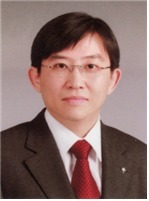
Professor Sang Ouk Kim
Sang Ouk Kim, a professor of Materials Science and Engineering at KAIST, received the 2014 Prime Minister Award from the Korean government for his nano research. The award ceremony, Nano Korea 2014, was held on July 2, 2014 at Coex in Seoul, Korea.
Professor Kim was recognized for his research on the control of various shapes of ultra-fine nano-structures using molecular assembly with ductile materials, such as polymers and carbon nano materials, and for his contribution to the growth of the nano field in Korea.
He developed a new molecular assembly control technology, for the first time in the world, which produced large-scale, ultra-fine nanopatterns through controlling the molecular arrangement of block copolymers. Using this technology, he further created a new semiconductor nanotechnology to reinforce the existing lithographic process of semiconductor manufacturing.
In addition, Professor Kim has focused on making a new type of three-dimensional carbon nano-materials by assembling carbon nanotubes or graphene at the molecular level. Developing a new process to produce nano-materials through the chemical doping process of carbon materials, which can be widely applied to solar cells or energy devices, is one of his research interests as well.
Professor Kim has published a total of 124 papers in international journals, such as Nature, Science, Nature Materials, Nature Communications, Advanced Materials, and Nano Letters. He was recently invited by Advanced Materials to contribute a review article for its 25th anniversary issue.
Professor Kim received both the KAIST Academic Award and the 13th Young Scientist Award of Korea in 2010. Since March 2014, he has served as one of the chair professors of KAIST.
Most recently, he was selected as the Scientist of the Month in June 2014 by the Ministry of Science, ICT and Future Planning, Republic of Korea, and the National Research Foundation of Korea.
-
research KAIST Makes Virtual Roughness Visible to Improve VR Collaboration
What if you could see how rough an object feels, even without touching it? A KAIST research team has developed a technique that makes the roughness of virtual objects visible through changes in the outline of a virtual hand. By allowing users without haptic devices to perceive roughness information visually, the technique enables more effective collaboration in virtual reality (VR) between people using different equipment. KAIST (President Choongsik Bae) announced on October 29 that researche
2026-11-03 -
research KAIST Team Wins IEEE RA-L Best Paper Award for Second Year in a Row
A research team led by Professor Jee-Hwan Ryu of the Department of Civil and Environmental Engineering at KAIST has received the Best Paper Award from IEEE Robotics and Automation Letters (RA-L), one of the world's most prestigious journals in robotics, for the second consecutive year. KAIST(President Kwang Hyung Lee) announced on June 22 that Professor Ryu's team received the award during ICRA 2026, held in Vienna, Austria, with the award ceremony taking place on June 4. Following its recogn
2026-06-22 -
event KAIST Professor S. Josephine Suh Receives the 2026 Frontiers of Science Award
<Professor S. Josephine Suh> Professor S. Josephine Suh wins the Frontiers of Science Award for the second consecutive year following last year - Honored for her paper published in November 2017, targeting research papers that have achieved significant results within the last 10 years - Recognized internationally for leading research achievements in the fields of quantum gravity and quantum field theory KAIST announced on June 12th that a co-authored research paper by Professor S. Jose
2026-06-15 -
research Humanoid Robot Pilot PIBOT Wins Best Paper Award at the World’s Most Prestigious Robotics Magazine
< (From left of the award recipients) Ph. D candidate Sungjae Min, Ph. D candidate Gyuree Kang, Professor David Hyunchul Shim, Ph.D candidate Hyungjoo Kim > KAIST announced on June 5th that a paper proposing an aircraft autonomous piloting framework based on the humanoid robot pilot ‘PIBOT,’ developed by a research team led by Professor David Hyunchul Shim of the School of Electrical Engineering, was selected as the Best Paper Award among the papers published in the IEEE R
2026-06-05 -
event Professor Hoon Sohn of the Department of Civil and Environmental Engineering Selected as the June Winner of the 'Korea Scientist and Engineer Award'
Professor Hoon Sohn from KAIST Department of Civil and Environmental Engineering has been selected as the June winner of the 'Korea Scientist and Engineer Award.' The Korea Scientist and Engineer Award is presented monthly by the Ministry of Science and ICT (MSIT) and the National Research Foundation of Korea (NRF) to a researcher who has made significant contributions to the advancement of science and technology through original research achievements over the past three years. The award incl
2026-06-04