-
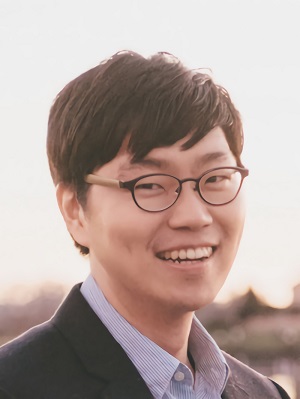 Professor Juho Kim’s Team Wins Best Paper Award at ACM CHI 2022
The research team led by Professor Juho Kim from the KAIST School of Computing won a Best Paper Award and an Honorable Mention Award at the Association for Computing Machinery Conference on Human Factors in Computing Systems (ACM CHI) held between April 30 and May 6.
ACM CHI is the world’s most recognized conference in the field of human computer interactions (HCI), and is ranked number one out of all HCI-related journals and conferences based on Google Scholar’s h-5 index. Best paper awards are given to works that rank in the top one percent, and honorable mention awards are given to the top five percent of the papers accepted by the conference.
Professor Juho Kim presented a total of seven papers at ACM CHI 2022, and tied for the largest number of papers. A total of 19 papers were affiliated with KAIST, putting it fifth out of all participating institutes and thereby proving KAIST’s competence in research.
One of Professor Kim’s research teams composed of Jeongyeon Kim (first author, MS graduate) from the School of Computing, MS candidate Yubin Choi from the School of Electrical Engineering, and Dr. Meng Xia (post-doctoral associate in the School of Computing, currently a post-doctoral associate at Carnegie Mellon University) received a best paper award for their paper, “Mobile-Friendly Content Design for MOOCs: Challenges, Requirements, and Design Opportunities”.
The study analyzed the difficulties experienced by learners watching video-based educational content in a mobile environment and suggests guidelines for solutions. The research team analyzed 134 survey responses and 21 interviews, and revealed that texts that are too small or overcrowded are what mainly brings down the legibility of video contents. Additionally, lighting, noise, and surrounding environments that change frequently are also important factors that may disturb a learning experience.
Based on these findings, the team analyzed the aptness of 41,722 frames from 101 video lectures for mobile environments, and confirmed that they generally show low levels of adequacy. For instance, in the case of text sizes, only 24.5% of the frames were shown to be adequate for learning in mobile environments. To overcome this issue, the research team suggested a guideline that may improve the legibility of video contents and help overcome the difficulties arising from mobile learning environments.
The importance of and dependency on video-based learning continue to rise, especially in the wake of the pandemic, and it is meaningful that this research suggested a means to analyze and tackle the difficulties of users that learn from the small screens of mobile devices. Furthermore, the paper also suggested technology that can solve problems related to video-based learning through human-AI collaborations, enhancing existing video lectures and improving learning experiences. This technology can be applied to various video-based platforms and content creation.
Meanwhile, a research team composed of Ph.D. candidate Tae Soo Kim (first author), MS candidate DaEun Choi, and Ph.D. candidate Yoonseo Choi from the School of Computing received an honorable mention award for their paper, “Stylette: styling the Web with Natural Language”.
The research team developed a novel interface technology that allows nonexperts who are unfamiliar with technical jargon to edit website features through speech. People often find it difficult to use or find the information they need from various websites due to accessibility issues, device-related constraints, inconvenient design, style preferences, etc. However, it is not easy for laymen to edit website features without expertise in programming or design, and most end up just putting up with the inconveniences. But what if the system could read the intentions of its users from their everyday language like “emphasize this part a little more”, or “I want a more modern design”, and edit the features automatically?
Based on this question, Professor Kim’s research team developed ‘Stylette’, a system in which AI analyses its users’ speech expressed in their natural language and automatically recommends a new style that best fits their intentions. The research team created a new system by putting together language AI, visual AI, and user interface technologies. On the linguistic side, a large-scale language model AI converts the intentions of the users expressed through their everyday language into adequate style elements. On the visual side, computer vision AI compares 1.7 million existing web design features and recommends a style adequate for the current website. In an experiment where 40 nonexperts were asked to edit a website design, the subjects that used this system showed double the success rate in a time span that was 35% shorter compared to the control group.
It is meaningful that this research proposed a practical case in which AI technology constructs intuitive interactions with users. The developed technology can be applied to existing design applications and web browsers in a plug-in format, and can be utilized to improve websites or for advertisements by collecting the natural intention data of users on a large scale.
2022.06.13 View 3712
Professor Juho Kim’s Team Wins Best Paper Award at ACM CHI 2022
The research team led by Professor Juho Kim from the KAIST School of Computing won a Best Paper Award and an Honorable Mention Award at the Association for Computing Machinery Conference on Human Factors in Computing Systems (ACM CHI) held between April 30 and May 6.
ACM CHI is the world’s most recognized conference in the field of human computer interactions (HCI), and is ranked number one out of all HCI-related journals and conferences based on Google Scholar’s h-5 index. Best paper awards are given to works that rank in the top one percent, and honorable mention awards are given to the top five percent of the papers accepted by the conference.
Professor Juho Kim presented a total of seven papers at ACM CHI 2022, and tied for the largest number of papers. A total of 19 papers were affiliated with KAIST, putting it fifth out of all participating institutes and thereby proving KAIST’s competence in research.
One of Professor Kim’s research teams composed of Jeongyeon Kim (first author, MS graduate) from the School of Computing, MS candidate Yubin Choi from the School of Electrical Engineering, and Dr. Meng Xia (post-doctoral associate in the School of Computing, currently a post-doctoral associate at Carnegie Mellon University) received a best paper award for their paper, “Mobile-Friendly Content Design for MOOCs: Challenges, Requirements, and Design Opportunities”.
The study analyzed the difficulties experienced by learners watching video-based educational content in a mobile environment and suggests guidelines for solutions. The research team analyzed 134 survey responses and 21 interviews, and revealed that texts that are too small or overcrowded are what mainly brings down the legibility of video contents. Additionally, lighting, noise, and surrounding environments that change frequently are also important factors that may disturb a learning experience.
Based on these findings, the team analyzed the aptness of 41,722 frames from 101 video lectures for mobile environments, and confirmed that they generally show low levels of adequacy. For instance, in the case of text sizes, only 24.5% of the frames were shown to be adequate for learning in mobile environments. To overcome this issue, the research team suggested a guideline that may improve the legibility of video contents and help overcome the difficulties arising from mobile learning environments.
The importance of and dependency on video-based learning continue to rise, especially in the wake of the pandemic, and it is meaningful that this research suggested a means to analyze and tackle the difficulties of users that learn from the small screens of mobile devices. Furthermore, the paper also suggested technology that can solve problems related to video-based learning through human-AI collaborations, enhancing existing video lectures and improving learning experiences. This technology can be applied to various video-based platforms and content creation.
Meanwhile, a research team composed of Ph.D. candidate Tae Soo Kim (first author), MS candidate DaEun Choi, and Ph.D. candidate Yoonseo Choi from the School of Computing received an honorable mention award for their paper, “Stylette: styling the Web with Natural Language”.
The research team developed a novel interface technology that allows nonexperts who are unfamiliar with technical jargon to edit website features through speech. People often find it difficult to use or find the information they need from various websites due to accessibility issues, device-related constraints, inconvenient design, style preferences, etc. However, it is not easy for laymen to edit website features without expertise in programming or design, and most end up just putting up with the inconveniences. But what if the system could read the intentions of its users from their everyday language like “emphasize this part a little more”, or “I want a more modern design”, and edit the features automatically?
Based on this question, Professor Kim’s research team developed ‘Stylette’, a system in which AI analyses its users’ speech expressed in their natural language and automatically recommends a new style that best fits their intentions. The research team created a new system by putting together language AI, visual AI, and user interface technologies. On the linguistic side, a large-scale language model AI converts the intentions of the users expressed through their everyday language into adequate style elements. On the visual side, computer vision AI compares 1.7 million existing web design features and recommends a style adequate for the current website. In an experiment where 40 nonexperts were asked to edit a website design, the subjects that used this system showed double the success rate in a time span that was 35% shorter compared to the control group.
It is meaningful that this research proposed a practical case in which AI technology constructs intuitive interactions with users. The developed technology can be applied to existing design applications and web browsers in a plug-in format, and can be utilized to improve websites or for advertisements by collecting the natural intention data of users on a large scale.
2022.06.13 View 3712 -
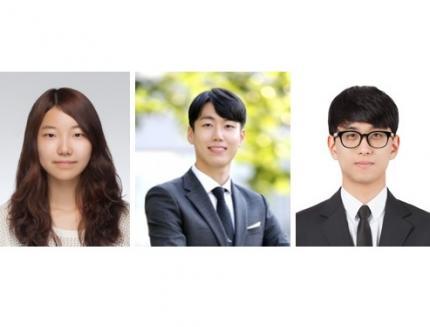 3 KAIST PhD Candidates Selected as the 2021 Google PhD Fellows
PhD candidates Soo Ye Kim and Sanghyun Woo from the KAIST School of Electrical Engineering and Hae Beom Lee from the Kim Jaechul Graduate School of AI were selected as the 2021 Google PhD Fellows. The Google PhD Fellowship is a scholarship program that supports graduate school students from around the world that have produced excellent achievements from promising computer science-related fields. The 75 selected fellows will receive ten thousand dollars of funding with the opportunity to discuss research and receive one-on-one feedback from experts in related fields at Google.
Kim and Woo were named fellows in the field of "Machine Perception, Speech Technology and Computer Vision" with research of deep learning based super-resolution and computer vision respectively. Lee was named a fellow in the field of "Machine Learning" for his research in meta-learning.
Kim's research includes the formulation of novel methods for super-resolution and HDR video restoration and deep joint frame interpolation and super-resolution methods. Many of her works have been presented in leading conferences in computer vision and AI such as CVPR, ICCV, and AAAI. In addition, she has been collaborating as a research intern with the Vision Group Team at Adobe Research to study depth map refinement techniques.
(Kim's research on deep learning based joint super-resolution and inverse tone-mapping framework for HDR videos)
Woo’s research includes an effective deep learning model design based on the attention mechanism and learning methods based on self-learning and simulators. His works have been also presented in leading conferences such as CVPR, ECCV, and NeurIPS. In particular, his work on the Convolutional Block Attention Module (CBAM) which was presented at ECCV in 2018 has surpassed over 2700 citations on Google Scholar after being referenced in many computer vision applications. He was also a recipient of Microsoft Research PhD Fellowship in 2020.
(Woo's research on attention mechanism based deep learning models)
Lee’s research focuses effectively overcoming various limitations of the existing meta-learning framework. Specifically, he proposed to deal with a realistic task distribution with imbalances, improved the practicality of meta-knowledge, and made meta-learning possible even in large-scale task scenarios. These various studies have been accepted to numerous top-tier machine learning conferences such as NeurIPS, ICML, and ICLR. In particular, one of his papers has been selected as an oral presentation at ICLR 2020 and another as a spotlight presentation at NeurIPS 2020.
(Lee's research on learning to balance and continual trajectory shifting)
Due to the COVID-19 pandemic, the award ceremony was held virtually at the Google PhD Fellowship Summit from August 31st to September 1st. The list of fellowship recipients is displayed on the Google webpage.
2021.10.18 View 3436
3 KAIST PhD Candidates Selected as the 2021 Google PhD Fellows
PhD candidates Soo Ye Kim and Sanghyun Woo from the KAIST School of Electrical Engineering and Hae Beom Lee from the Kim Jaechul Graduate School of AI were selected as the 2021 Google PhD Fellows. The Google PhD Fellowship is a scholarship program that supports graduate school students from around the world that have produced excellent achievements from promising computer science-related fields. The 75 selected fellows will receive ten thousand dollars of funding with the opportunity to discuss research and receive one-on-one feedback from experts in related fields at Google.
Kim and Woo were named fellows in the field of "Machine Perception, Speech Technology and Computer Vision" with research of deep learning based super-resolution and computer vision respectively. Lee was named a fellow in the field of "Machine Learning" for his research in meta-learning.
Kim's research includes the formulation of novel methods for super-resolution and HDR video restoration and deep joint frame interpolation and super-resolution methods. Many of her works have been presented in leading conferences in computer vision and AI such as CVPR, ICCV, and AAAI. In addition, she has been collaborating as a research intern with the Vision Group Team at Adobe Research to study depth map refinement techniques.
(Kim's research on deep learning based joint super-resolution and inverse tone-mapping framework for HDR videos)
Woo’s research includes an effective deep learning model design based on the attention mechanism and learning methods based on self-learning and simulators. His works have been also presented in leading conferences such as CVPR, ECCV, and NeurIPS. In particular, his work on the Convolutional Block Attention Module (CBAM) which was presented at ECCV in 2018 has surpassed over 2700 citations on Google Scholar after being referenced in many computer vision applications. He was also a recipient of Microsoft Research PhD Fellowship in 2020.
(Woo's research on attention mechanism based deep learning models)
Lee’s research focuses effectively overcoming various limitations of the existing meta-learning framework. Specifically, he proposed to deal with a realistic task distribution with imbalances, improved the practicality of meta-knowledge, and made meta-learning possible even in large-scale task scenarios. These various studies have been accepted to numerous top-tier machine learning conferences such as NeurIPS, ICML, and ICLR. In particular, one of his papers has been selected as an oral presentation at ICLR 2020 and another as a spotlight presentation at NeurIPS 2020.
(Lee's research on learning to balance and continual trajectory shifting)
Due to the COVID-19 pandemic, the award ceremony was held virtually at the Google PhD Fellowship Summit from August 31st to September 1st. The list of fellowship recipients is displayed on the Google webpage.
2021.10.18 View 3436 -
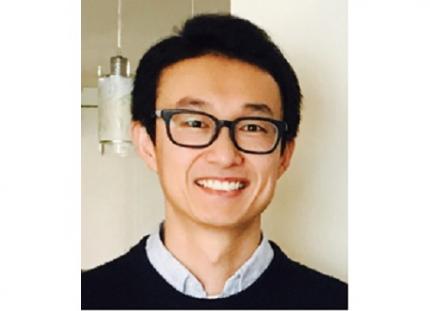 Prof. Sang Wan Lee Selected for 2021 IBM Academic Award
Professor Sang Wan Lee from the Department of Bio and Brain Engineering was selected as the recipient of the 2021 IBM Global University Program Academic Award. The award recognizes individual faculty members whose emerging science and technology contains significant interest for universities and IBM.
Professor Lee, whose research focuses on artificial intelligence and computational neuroscience, won the award for his research proposal titled A Neuroscience-Inspired Approach for Metacognitive Reinforcement Learning. IBM provides a gift of $40,000 to the recipient’s institution in recognition of the selection of the project but not as a contract for services.
Professor Lee’s project aims to exploit the unique characteristics of human reinforcement learning. Specifically, he plans to examines the hypothesis that metacognition, a human’s ability to estimate their uncertainty level, serves to guide sample-efficient and near-optimal exploration, making it possible to achieve an optimal balance between model-based and model-free reinforcement learning.
He was also selected as the winner of the Google Research Award in 2016 and has been working with DeepMind and University College London to conduct basic research on decision-making brain science to establish a theory on frontal lobe meta-enhance learning.
"We plan to conduct joint research for utilizing brain-based artificial intelligence technology and frontal lobe meta-enhanced learning technology modeling in collaboration with an international research team including IBM, DeepMind, MIT, and Oxford,” Professor Lee said.
2021.06.25 View 6193
Prof. Sang Wan Lee Selected for 2021 IBM Academic Award
Professor Sang Wan Lee from the Department of Bio and Brain Engineering was selected as the recipient of the 2021 IBM Global University Program Academic Award. The award recognizes individual faculty members whose emerging science and technology contains significant interest for universities and IBM.
Professor Lee, whose research focuses on artificial intelligence and computational neuroscience, won the award for his research proposal titled A Neuroscience-Inspired Approach for Metacognitive Reinforcement Learning. IBM provides a gift of $40,000 to the recipient’s institution in recognition of the selection of the project but not as a contract for services.
Professor Lee’s project aims to exploit the unique characteristics of human reinforcement learning. Specifically, he plans to examines the hypothesis that metacognition, a human’s ability to estimate their uncertainty level, serves to guide sample-efficient and near-optimal exploration, making it possible to achieve an optimal balance between model-based and model-free reinforcement learning.
He was also selected as the winner of the Google Research Award in 2016 and has been working with DeepMind and University College London to conduct basic research on decision-making brain science to establish a theory on frontal lobe meta-enhance learning.
"We plan to conduct joint research for utilizing brain-based artificial intelligence technology and frontal lobe meta-enhanced learning technology modeling in collaboration with an international research team including IBM, DeepMind, MIT, and Oxford,” Professor Lee said.
2021.06.25 View 6193 -
 KAIST and Google Partner to Develop AI Curriculum
Two KAIST professors, Hyun Wook Ka from the School of Transdisciplinary Studies and Young Jae Jang from the Department of Industrial and Systems Engineering, were recipients of Google Education Grants that will support the development of new AI courses integrating the latest industrial technology. This collaboration is part of the KAIST-Google Partnership, which was established in July 2019 with the goal of nurturing AI talent at KAIST.
The two proposals -- Professor Ka’s ‘Cloud AI-Empowered Multimodal Data Analysis for Human Affect Detection and Recognition’ and Professor Jang’s ‘Learning Smart Factory with AI’-- were selected by the KAIST Graduate School of AI through a school-wide competition held in July. The proposals then went through a final review by Google and were accepted. The two professors will receive $7,500 each for developing AI courses using Google technology for one year.
Professor Ka’s curriculum aims to provide a rich learning experience for students by providing basic knowledge on data science and AI and helping them obtain better problem solving and application skills using practical and interdisciplinary data science and AI technology.
Professor Jang’s curriculum is designed to solve real-world manufacturing problems using AI and it will be field-oriented. Professor Jang has been managing three industry-academic collaboration centers in manufacturing and smart factories within KAIST and plans to develop his courses to go beyond theory and be centered on case studies for solving real-world manufacturing problems using AI.
Professor Jang said, “Data is at the core of smart factories and AI education, but there is often not enough of it for the education to be effective. The KAIST Advanced Manufacturing Laboratory has a testbed for directly acquiring data generated from real semiconductor automation equipment, analyzing it, and applying algorithms, which enables truly effective smart factory and AI education.”
KAIST signed a partnership with Google in July 2019 to foster global AI talent and is operating various programs to train AI experts and support excellent AI research for two years.
The Google AI Focused Research Award supports world-class faculty performing cutting-edge research and was previously awarded to professors Sung Ju Hwang from the Graduate School of AI and Steven Whang from the School of Electrical Engineering along with Google Cloud Platform (GCP) credits. These two professors have been collaborating with Google teams since October 2018 and recently extended their projects to continue through 2021.
In addition, a Google Ph.D. Fellowship was awarded to Taesik Gong from the School of Computing in October this year, and three Student Travel Grants were awarded to Sejun Park from the School of Electrical Engineering, Chulhyung Lee from the Department of Mathematical Sciences, and Sangyun Lee from the School of Computing earlier in March. Five students were also recommended for the Google Internship program in March.
(END)
2020.12.11 View 7302
KAIST and Google Partner to Develop AI Curriculum
Two KAIST professors, Hyun Wook Ka from the School of Transdisciplinary Studies and Young Jae Jang from the Department of Industrial and Systems Engineering, were recipients of Google Education Grants that will support the development of new AI courses integrating the latest industrial technology. This collaboration is part of the KAIST-Google Partnership, which was established in July 2019 with the goal of nurturing AI talent at KAIST.
The two proposals -- Professor Ka’s ‘Cloud AI-Empowered Multimodal Data Analysis for Human Affect Detection and Recognition’ and Professor Jang’s ‘Learning Smart Factory with AI’-- were selected by the KAIST Graduate School of AI through a school-wide competition held in July. The proposals then went through a final review by Google and were accepted. The two professors will receive $7,500 each for developing AI courses using Google technology for one year.
Professor Ka’s curriculum aims to provide a rich learning experience for students by providing basic knowledge on data science and AI and helping them obtain better problem solving and application skills using practical and interdisciplinary data science and AI technology.
Professor Jang’s curriculum is designed to solve real-world manufacturing problems using AI and it will be field-oriented. Professor Jang has been managing three industry-academic collaboration centers in manufacturing and smart factories within KAIST and plans to develop his courses to go beyond theory and be centered on case studies for solving real-world manufacturing problems using AI.
Professor Jang said, “Data is at the core of smart factories and AI education, but there is often not enough of it for the education to be effective. The KAIST Advanced Manufacturing Laboratory has a testbed for directly acquiring data generated from real semiconductor automation equipment, analyzing it, and applying algorithms, which enables truly effective smart factory and AI education.”
KAIST signed a partnership with Google in July 2019 to foster global AI talent and is operating various programs to train AI experts and support excellent AI research for two years.
The Google AI Focused Research Award supports world-class faculty performing cutting-edge research and was previously awarded to professors Sung Ju Hwang from the Graduate School of AI and Steven Whang from the School of Electrical Engineering along with Google Cloud Platform (GCP) credits. These two professors have been collaborating with Google teams since October 2018 and recently extended their projects to continue through 2021.
In addition, a Google Ph.D. Fellowship was awarded to Taesik Gong from the School of Computing in October this year, and three Student Travel Grants were awarded to Sejun Park from the School of Electrical Engineering, Chulhyung Lee from the Department of Mathematical Sciences, and Sangyun Lee from the School of Computing earlier in March. Five students were also recommended for the Google Internship program in March.
(END)
2020.12.11 View 7302 -
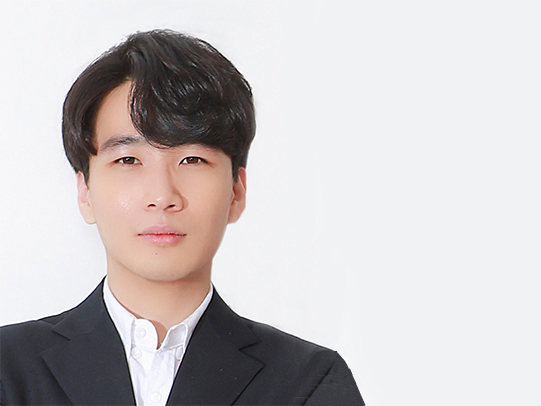 Taesik Gong Named Google PhD Fellow
PhD candidate Taesik Gong from the School of Computing was named a 2020 Google PhD Fellow in the field of machine learning.
The Google PhD Fellowship Program has recognized and supported outstanding graduate students in computer science and related fields since 2009. Gong is one of two Korean students chosen as the recipients of Google Fellowships this year. A total of 53 students across the world in 12 fields were awarded this fellowship.
Gong’s research on condition-independent mobile sensing powered by machine learning earned him this year’s fellowship. He has published and presented his work through many conferences including ACM SenSys and ACM UbiComp, and has worked at Microsoft Research Asia and Nokia Bell Labs as a research intern. Gong was also the winner of the NAVER PhD Fellowship Award in 2018.
(END)
2020.10.15 View 6782
Taesik Gong Named Google PhD Fellow
PhD candidate Taesik Gong from the School of Computing was named a 2020 Google PhD Fellow in the field of machine learning.
The Google PhD Fellowship Program has recognized and supported outstanding graduate students in computer science and related fields since 2009. Gong is one of two Korean students chosen as the recipients of Google Fellowships this year. A total of 53 students across the world in 12 fields were awarded this fellowship.
Gong’s research on condition-independent mobile sensing powered by machine learning earned him this year’s fellowship. He has published and presented his work through many conferences including ACM SenSys and ACM UbiComp, and has worked at Microsoft Research Asia and Nokia Bell Labs as a research intern. Gong was also the winner of the NAVER PhD Fellowship Award in 2018.
(END)
2020.10.15 View 6782 -
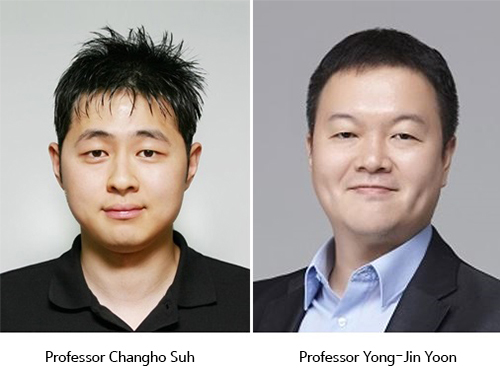 KAIST and Google Jointly Develop AI Curricula
KAIST selected the two professors who will develop AI curriculum under the auspices of the KAIST-Google Partnership for AI Education and Research. The Graduate School of AI announced the two authors among the 20 applicants who will develop the curriculum next year. They will be provided 7,500 USD per subject.
Professor Changho Suh from the School of Electrical Engineering and Professor Yong-Jin Yoon from the Department of Mechanical Engineering will use Google technology such as TensorFlow, Google Cloud, and Android to create the curriculum.
Professor Suh’s “TensorFlow for Information Theory and Convex Optimization “will be used for curriculum in the graduate courses and Professor Yoon’s “AI Convergence Project Based Learning (PBL)” will be used for online courses. Professor Yoon’s course will explore and define problems by utilizing AI and experiencing the process of developing products that use AI through design thinking, which involves product design, production, and verification. Professor Suh’s course will discus“information theory and convergence,” which uses basic sciences and engineering as well as AI, machine learning, and deep learning.
2019.12.04 View 8388
KAIST and Google Jointly Develop AI Curricula
KAIST selected the two professors who will develop AI curriculum under the auspices of the KAIST-Google Partnership for AI Education and Research. The Graduate School of AI announced the two authors among the 20 applicants who will develop the curriculum next year. They will be provided 7,500 USD per subject.
Professor Changho Suh from the School of Electrical Engineering and Professor Yong-Jin Yoon from the Department of Mechanical Engineering will use Google technology such as TensorFlow, Google Cloud, and Android to create the curriculum.
Professor Suh’s “TensorFlow for Information Theory and Convex Optimization “will be used for curriculum in the graduate courses and Professor Yoon’s “AI Convergence Project Based Learning (PBL)” will be used for online courses. Professor Yoon’s course will explore and define problems by utilizing AI and experiencing the process of developing products that use AI through design thinking, which involves product design, production, and verification. Professor Suh’s course will discus“information theory and convergence,” which uses basic sciences and engineering as well as AI, machine learning, and deep learning.
2019.12.04 View 8388 -
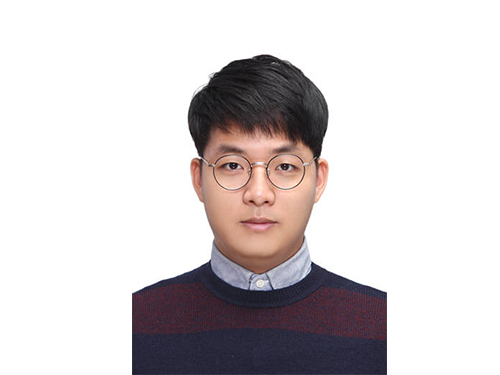 Sungjoon Park Named Google PhD Fellow
PhD candidate Sungjoon Park from the School of Computing was named a 2019 Google PhD Fellow in the field of natural language processing. The Google PhD fellowship program has recognized and supported outstanding graduate students in computer science and related fields since 2009. Park is one of three Korean students chosen as the recipients of Google Fellowships this year. A total of 54 students across the world in 12 fields were awarded this fellowship.
Park’s research on computational psychotherapy using natural language processing (NLP) powered by machine learning earned him this year’s fellowship. He presented of learning distributed representations in Korean and their interpretations during the 2017 Annual Conference of the Association for Computational Linguistics and the 2018 Conference on Empirical Methods in Natural Language Processing. He also applied machine learning-based natural language processing into computational psychotherapy so that a trained machine learning model could categorize client's verbal responses in a counseling dialogue. This was presented at the Annual Conference of the North American Chapter of the Association for Computational Linguistics.
More recently, he has been developing on neural response generation model and the prediction and extraction of complex emotion in text, and computational psychotherapy applications.
2019.09.17 View 5167
Sungjoon Park Named Google PhD Fellow
PhD candidate Sungjoon Park from the School of Computing was named a 2019 Google PhD Fellow in the field of natural language processing. The Google PhD fellowship program has recognized and supported outstanding graduate students in computer science and related fields since 2009. Park is one of three Korean students chosen as the recipients of Google Fellowships this year. A total of 54 students across the world in 12 fields were awarded this fellowship.
Park’s research on computational psychotherapy using natural language processing (NLP) powered by machine learning earned him this year’s fellowship. He presented of learning distributed representations in Korean and their interpretations during the 2017 Annual Conference of the Association for Computational Linguistics and the 2018 Conference on Empirical Methods in Natural Language Processing. He also applied machine learning-based natural language processing into computational psychotherapy so that a trained machine learning model could categorize client's verbal responses in a counseling dialogue. This was presented at the Annual Conference of the North American Chapter of the Association for Computational Linguistics.
More recently, he has been developing on neural response generation model and the prediction and extraction of complex emotion in text, and computational psychotherapy applications.
2019.09.17 View 5167 -
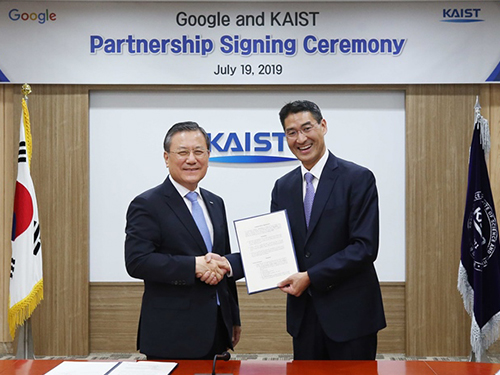 KAIST-Google Partnership for AI Education and Research
Google has agreed to support KAIST students and professors in the fields of AI research and education. President Sung-Chul Shin and Google Korea Country Director John Lee signed the collaboration agreement during a ceremony on July 19 at KAIST.
Under the agreement, Google will fund the Google AI-Focused Research Awards Program, the PhD Fellowship Program, and Student Travel Grants for KAIST. In addition, Google will continue to provide more academic and career building opportunities for students, including Google internship programs.
KAIST and Google has been collaborating for years. Professor Steven Whang at the School of Electrical Engineering and Professor Sung Ju Hwang at the School of Computing won the AI-Focused Award in 2018 and conduct their researches on "Improving Generalization and Reliability of Any Deep Neural Networks" and "Automatic and Acitionable Model Analysis for TFX," respectively. Outstanding PhD students have been recognized through the PhD Fellowship Program. However, this new collaboration agreement will focus on research, academic development, and technological innovation in AI.
Google plans to support research in the fields of deep learning, cloud machine learning, and voice technologies. Google will fund the development of two educational programs based on Google open source technology each year for two years that will be used in the new AI Graduate School opening for the fall semester.
John Lee of Google Korea said, “This partnership lays a solid foundation for deeper collaboration.” President Shin added, “This partnership will not only advance Korea’s global competitiveness in AI-powered industries but also contribute to the global community by nurturing talents in this most extensive discipline.”
2019.07.22 View 5148
KAIST-Google Partnership for AI Education and Research
Google has agreed to support KAIST students and professors in the fields of AI research and education. President Sung-Chul Shin and Google Korea Country Director John Lee signed the collaboration agreement during a ceremony on July 19 at KAIST.
Under the agreement, Google will fund the Google AI-Focused Research Awards Program, the PhD Fellowship Program, and Student Travel Grants for KAIST. In addition, Google will continue to provide more academic and career building opportunities for students, including Google internship programs.
KAIST and Google has been collaborating for years. Professor Steven Whang at the School of Electrical Engineering and Professor Sung Ju Hwang at the School of Computing won the AI-Focused Award in 2018 and conduct their researches on "Improving Generalization and Reliability of Any Deep Neural Networks" and "Automatic and Acitionable Model Analysis for TFX," respectively. Outstanding PhD students have been recognized through the PhD Fellowship Program. However, this new collaboration agreement will focus on research, academic development, and technological innovation in AI.
Google plans to support research in the fields of deep learning, cloud machine learning, and voice technologies. Google will fund the development of two educational programs based on Google open source technology each year for two years that will be used in the new AI Graduate School opening for the fall semester.
John Lee of Google Korea said, “This partnership lays a solid foundation for deeper collaboration.” President Shin added, “This partnership will not only advance Korea’s global competitiveness in AI-powered industries but also contribute to the global community by nurturing talents in this most extensive discipline.”
2019.07.22 View 5148 -
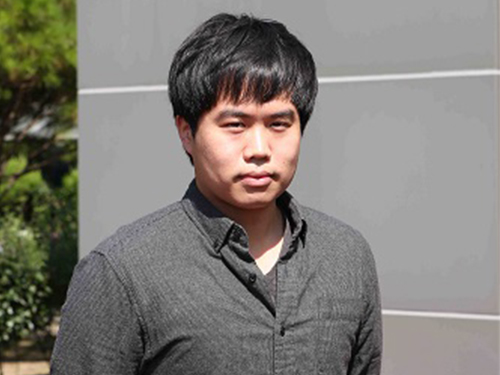 Sangeun Oh Recognized as a 2017 Google Fellow
Sangeun Oh, a Ph.D. candidate in the School of Computing was selected as a Google PhD Fellow in 2017. He is one of 47 awardees of the Google PhD Fellowship in the world.
The Google PhD Fellowship awards students showing outstanding performance in the field of computer science and related research. Since being established in 2009, the program has provided various benefits, including scholarships worth $10,000 USD and one-to-one research discussion with mentors from Google.
His research work on a mobile system that allows interactions among various kinds of smart devices was recognized in the field of mobile computing. He developed a mobile platform that allows smart devices to share diverse functions, including logins, payments, and sensors. This technology provides numerous user experiences that existing mobile platforms could not offer. Through cross-device functionality sharing, users can utilize multiple smart devices in a more convenient manner. The research was presented at The Annual International Conference on Mobile Systems, Applications, and Services (MobiSys) of the Association for Computing Machinery in July, 2017.
Oh said, “I would like to express my gratitude to my advisor, the professors in the School of Computing, and my lab colleagues. I will devote myself to carrying out more research in order to contribute to society.”
His advisor, Insik Shin, a professor in the School of Computing said, “Being recognized as a Google PhD Fellow is an honor to both the student as well as KAIST. I strongly anticipate and believe that Oh will make the next step by carrying out good quality research.”
2017.09.27 View 8122
Sangeun Oh Recognized as a 2017 Google Fellow
Sangeun Oh, a Ph.D. candidate in the School of Computing was selected as a Google PhD Fellow in 2017. He is one of 47 awardees of the Google PhD Fellowship in the world.
The Google PhD Fellowship awards students showing outstanding performance in the field of computer science and related research. Since being established in 2009, the program has provided various benefits, including scholarships worth $10,000 USD and one-to-one research discussion with mentors from Google.
His research work on a mobile system that allows interactions among various kinds of smart devices was recognized in the field of mobile computing. He developed a mobile platform that allows smart devices to share diverse functions, including logins, payments, and sensors. This technology provides numerous user experiences that existing mobile platforms could not offer. Through cross-device functionality sharing, users can utilize multiple smart devices in a more convenient manner. The research was presented at The Annual International Conference on Mobile Systems, Applications, and Services (MobiSys) of the Association for Computing Machinery in July, 2017.
Oh said, “I would like to express my gratitude to my advisor, the professors in the School of Computing, and my lab colleagues. I will devote myself to carrying out more research in order to contribute to society.”
His advisor, Insik Shin, a professor in the School of Computing said, “Being recognized as a Google PhD Fellow is an honor to both the student as well as KAIST. I strongly anticipate and believe that Oh will make the next step by carrying out good quality research.”
2017.09.27 View 8122 -
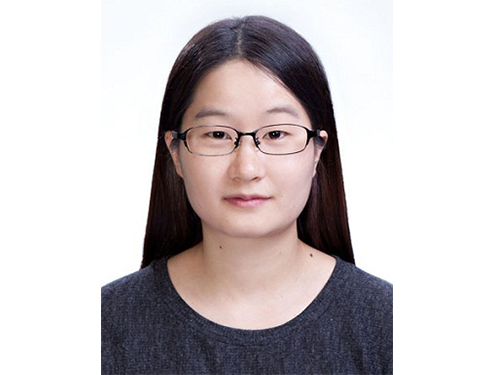 KAIST's Doctoral Candidate Receives the 2015 Google Ph.D. Fellowship
Shin-Ae Woo, a doctoral student of Professor Su-Bok Moon of KAIST’s School of Computer Engineering, has received the 2015 Google Ph.D. Fellowship.
The fellowship’s term lasts one year, starting September 2015.
The fellowship awarded Ms. Woo with USD 10,000 of cash prize, an opportunity to meet a Google research mentor, and a summer internship at the company.
Created in 2009, the Google Ph.D. Fellowship annually recognizes outstanding doctoral students around the world in computer science and its related fields.
This year, a total of 44 doctoral students including Ms. Woo, who is studying networking and distributed system, have been nominated.
She has also received the NSDI (Networked Systems Design and Implementation) 2015 Community Award and the 2014 Samsung Human Technology Journal Silver Prize for her research work on “Design and Implementation of Highly Scalable User-level TCP Stack for Multicore Systems” and “Comparison of Caching Strategies in Modern Cellular Backhaul Networks.”
Currently, Ms. Woo is working with UC Berkeley faculty on next-generation data centers for a research exchange program.
2015.09.15 View 4827
KAIST's Doctoral Candidate Receives the 2015 Google Ph.D. Fellowship
Shin-Ae Woo, a doctoral student of Professor Su-Bok Moon of KAIST’s School of Computer Engineering, has received the 2015 Google Ph.D. Fellowship.
The fellowship’s term lasts one year, starting September 2015.
The fellowship awarded Ms. Woo with USD 10,000 of cash prize, an opportunity to meet a Google research mentor, and a summer internship at the company.
Created in 2009, the Google Ph.D. Fellowship annually recognizes outstanding doctoral students around the world in computer science and its related fields.
This year, a total of 44 doctoral students including Ms. Woo, who is studying networking and distributed system, have been nominated.
She has also received the NSDI (Networked Systems Design and Implementation) 2015 Community Award and the 2014 Samsung Human Technology Journal Silver Prize for her research work on “Design and Implementation of Highly Scalable User-level TCP Stack for Multicore Systems” and “Comparison of Caching Strategies in Modern Cellular Backhaul Networks.”
Currently, Ms. Woo is working with UC Berkeley faculty on next-generation data centers for a research exchange program.
2015.09.15 View 4827 -
 Wearable computer follows suit of smart phones
KAIST hosts “Wearable Computer Competition” in KI Building, Daejeon Campus, on the 7th-8th of November
“Computer that controls smart phones with the movement of facial muscles” and 12 other wearable computers to be presented
As technology transitions to “Wearable Computers,” KAIST is hosting its 9th “Wearable Computer Competition.” The competition will take place over two days, 7th-8th of November, in KI building, on the main Daejeon Campus.
The “wearable computer” is designed to enable users to use the computer whilst moving by limiting its weight and size so that it can be worn as a part of the body and clothing. Wearable computers have been considered the future of information technology (IT) ever since smart phones and other miniaturized IT devices made an appearance.
The “Wearable Computer Competition” has been held since 2005 under the leadership of Professor Hoi-Jun Yoo from the KAIST Department of Electrical Engineering. It is the only competition in the nation where undergraduate students use their unique ideas and newest technology to produce computers that seem to be existed only in sci-fi movies and comic books.
A total of 15 teams out of 70 made the competition and went through a rigorous selection process based on written applications and interviews to enter the final. The teams at the final received USD 1,400 and IT devices including smart phones to produce a wearable computer.
KAIST increased the number of finalists from the last year"s 10 to 15 this year as the wearable computer industry is extending, and there is growing interest in the computer around the world after the launch of Google Glass and Samsung Galaxy Gear.
This year’s entries included a product for quadriplegic patients to control smart phones with the movement of facial muscles, which attracted public interest. The product in the form of a headband can be worn by quadriplegic patients or someone with limited hand movement. The user can activate the product by clenching their molars and move the mouse on the smart phones with the movement of muscles in their face.
Furthermore, a wearable band shaped device that can control smart phones with simple hand movements is also attracting interest. Broad hand movements of the user allows him/her to receive calls and take photos, and handshakes between users control sharing of files. Body communication can be used to protect private information without a password or locking the device.
In addition, gloves and shoes that can sense the user’s movement to play an instrument without the instrument being present; a cane for the blind that converts visual information to tactile; a belt that protects children from sexual crimes; and a game where the user can be Super Mario to play and other practical products are presented.
The chairman of the competition, Professor Yoo said, “As you can see from the launch of Samsung Galaxy Gear, wearable computers will follow smart phones as the leader of IT devices in the next generation.” He continued, “This competition and workshop is an opportunity to increase public interest in wearable computers and serves as a communication platform for experts to view the present and the future of wearable computers.”
The “Wearable Computer Workshop” will be held this year as well. The workshop under the theme of “the present and the future of wearable computers” invited Professor Kyu-Ho Park, Vice President of KAIST, as a keynote speaker to talk on “ubiquitous, fashionable computers.” Moreover, Samsung’s Dong-Jun Geum and the Electronics and Telecommunications Research Institute’s Hyeon-Tae Jeong will lecture on the “trend and direction of progress of wearable devices” and the “technological trend and prospect of industry of wearable computers,” respectively.
To participate in the competition or the workshop, please visit the website (http://www.ufcom.org)
for further information.
2013.11.28 View 7879
Wearable computer follows suit of smart phones
KAIST hosts “Wearable Computer Competition” in KI Building, Daejeon Campus, on the 7th-8th of November
“Computer that controls smart phones with the movement of facial muscles” and 12 other wearable computers to be presented
As technology transitions to “Wearable Computers,” KAIST is hosting its 9th “Wearable Computer Competition.” The competition will take place over two days, 7th-8th of November, in KI building, on the main Daejeon Campus.
The “wearable computer” is designed to enable users to use the computer whilst moving by limiting its weight and size so that it can be worn as a part of the body and clothing. Wearable computers have been considered the future of information technology (IT) ever since smart phones and other miniaturized IT devices made an appearance.
The “Wearable Computer Competition” has been held since 2005 under the leadership of Professor Hoi-Jun Yoo from the KAIST Department of Electrical Engineering. It is the only competition in the nation where undergraduate students use their unique ideas and newest technology to produce computers that seem to be existed only in sci-fi movies and comic books.
A total of 15 teams out of 70 made the competition and went through a rigorous selection process based on written applications and interviews to enter the final. The teams at the final received USD 1,400 and IT devices including smart phones to produce a wearable computer.
KAIST increased the number of finalists from the last year"s 10 to 15 this year as the wearable computer industry is extending, and there is growing interest in the computer around the world after the launch of Google Glass and Samsung Galaxy Gear.
This year’s entries included a product for quadriplegic patients to control smart phones with the movement of facial muscles, which attracted public interest. The product in the form of a headband can be worn by quadriplegic patients or someone with limited hand movement. The user can activate the product by clenching their molars and move the mouse on the smart phones with the movement of muscles in their face.
Furthermore, a wearable band shaped device that can control smart phones with simple hand movements is also attracting interest. Broad hand movements of the user allows him/her to receive calls and take photos, and handshakes between users control sharing of files. Body communication can be used to protect private information without a password or locking the device.
In addition, gloves and shoes that can sense the user’s movement to play an instrument without the instrument being present; a cane for the blind that converts visual information to tactile; a belt that protects children from sexual crimes; and a game where the user can be Super Mario to play and other practical products are presented.
The chairman of the competition, Professor Yoo said, “As you can see from the launch of Samsung Galaxy Gear, wearable computers will follow smart phones as the leader of IT devices in the next generation.” He continued, “This competition and workshop is an opportunity to increase public interest in wearable computers and serves as a communication platform for experts to view the present and the future of wearable computers.”
The “Wearable Computer Workshop” will be held this year as well. The workshop under the theme of “the present and the future of wearable computers” invited Professor Kyu-Ho Park, Vice President of KAIST, as a keynote speaker to talk on “ubiquitous, fashionable computers.” Moreover, Samsung’s Dong-Jun Geum and the Electronics and Telecommunications Research Institute’s Hyeon-Tae Jeong will lecture on the “trend and direction of progress of wearable devices” and the “technological trend and prospect of industry of wearable computers,” respectively.
To participate in the competition or the workshop, please visit the website (http://www.ufcom.org)
for further information.
2013.11.28 View 7879